Moonshot AI released Kimi K2.7 Code on June 12, 2026, and it is one of the largest open-weight coding models you can download right now, though it has since been eclipsed in scale by Moonshot’s newer Kimi K3 flagship. It packs 1 trillion total parameters, activates 32 billion of them per token, runs a 256K-token context window, and ships with open weights on Hugging Face under a Modified MIT license. It is also part of a wave of Chinese coding models making headlines this month, alongside ByteDance’s Seed 2.1 Pro, which just ranked #8 on Code Arena: Frontend. The headline pitch is efficiency, with Moonshot claiming the model uses about 30% fewer reasoning tokens than the previous K2.6 while scoring higher on its coding tests.
Kimi K2.7 Code is part of the fast-moving open source AI scene, where labs publish their model weights for anyone to download and self-host.
This is a coding-first, agentic model, built to plan, edit files, run tools, and debug across many steps rather than to chat. That focus matters, because the benchmark gains Moonshot published are impressive but entirely self-reported, and some practitioners already say the numbers do not match what they see in real repos. Here you will get the full specs, the benchmark claims and the honest caveats, the real pricing, and a clear comparison against Claude Opus 4.8 and DeepSeek V4 so you can decide whether it is worth testing.
Kimi K2.7 Code earns a place in our ranking of the best open source AI models, where we weigh its self-reported scores against fully verified rivals.
The Key Takeaways
- Released June 12, 2026 by Moonshot AI as an open-weight, coding-focused model.
- 1 trillion total parameters, with 32B active per token across 384 experts and a 256K context window.
- Uses roughly 30% fewer reasoning tokens than Kimi K2.6 while posting higher scores on Moonshot’s own benchmarks.
- API pricing is $0.95 per 1M input tokens and $4.00 per 1M output, roughly 5x cheaper than Claude Opus 4.8.
- All benchmark gains are company-reported; there are no independent SWE-bench scores yet.
What Is Kimi K2.7 Code?
Kimi K2.7 Code is Moonshot AI’s open-weight coding model, released June 12, 2026. It is a Mixture-of-Experts system with 1 trillion total parameters that activates only 32 billion per token, which keeps it fast and cheaper to run than its size suggests. It is built for long, multi-step software work, the kind where the model reads a repo, plans a change, edits several files, runs the tests, and fixes what breaks.
The “Code” label is the key detail. This is not a general chat assistant like the consumer Kimi app, and it is not trying to be. Moonshot tuned it for agentic engineering tasks and tool use, which is the same lane that Claude and GPT-5.5 have been fighting over. It also has a MoonViT vision encoder, so it can read images as input, but the whole pitch centers on writing and maintaining code.
Kimi K2.7 Code Specs at a Glance
The architecture is large but efficient, and a few hard constraints set it apart from most coding APIs. Thinking mode is mandatory, so disabling it returns an API error, and sampling is locked to temperature 1.0 and top_p 0.95. Self-hosting is possible but heavy, since the weights take about 595 GB on disk.
| Spec | Kimi K2.7 Code |
|---|---|
| Total parameters | 1 trillion |
| Active per token | 32 billion |
| Experts | 384 (8 selected + 1 shared) |
| Context window | 256K tokens (262,144) |
| License | Modified MIT (open weights) |
| Release date | June 12, 2026 |
What Changed Since Kimi K2.6?
The story Moonshot is telling is “better and cheaper to run at the same time.” K2.7 Code keeps the same 256K context as K2.6 but cuts reasoning-token usage by about 30%, which directly lowers the cost of long agentic runs. On top of that, every published benchmark moved up. These are the gains Moonshot reported against K2.6.
| Benchmark | K2.6 | K2.7 Code | Change |
|---|---|---|---|
| Kimi Code Bench v2 | 50.9 | 62.0 | +21.8% |
| Program Bench | 48.3 | 53.6 | +11.0% |
| MLS Bench Lite | 26.7 | 35.1 | +31.5% |
| MCP Mark Verified | 72.8 | 81.1 | +11.4% |
Are Kimi K2.7’s Benchmarks Legit?
Here is the honest part that most launch coverage skips. Every number above comes from Moonshot’s own benchmarks, several of which are proprietary, and all of them were run with thinking mode enabled. There are no independent SWE-bench Verified or Terminal-Bench scores for K2.7 Code yet, which means a true apples-to-apples comparison with Claude, GPT, or DeepSeek does not exist as of mid-June 2026.
That gap is why VentureBeat reported that some practitioners say the benchmarks “don’t check out” against real-world coding. The sensible read is to treat the benchmark lift as a signal to test, not as proof a swap will improve your own projects. If you depend on a coding model, the real test is repo-specific task success, tool-call stability, and how often it introduces hidden defects, not a leaderboard.
Kimi K2.7 Code Pricing and How to Access It
You can use Kimi K2.7 Code two ways. The weights are free to download from Hugging Face under a Modified MIT license, so you can self-host it with vLLM, SGLang, or KTransformers if you have the hardware. Using Moonshot’s API is paid, with usage-based per-token billing and automatic context caching that cuts the cost of reused context.
On the Moonshot API, Kimi K2.7 Code costs $0.95 per million input tokens, $4.00 per million output tokens, and $0.19 per million cache-hit tokens. That undercuts the proprietary flagships by a wide margin, which is the model’s strongest selling point. There is no permanent free production tier, though the open weights and third-party hosts keep the door open for free experimentation. If you just want a no-cost way to write code with AI, our roundup of the best free AI for coding covers the easier consumer options. See how it stacks up across plans and hosts in our complete Kimi pricing guide.
Kimi K2.7 vs Claude Opus 4.8 vs DeepSeek V4
Price is where Kimi K2.7 Code wins clearly. On capability the picture is murkier, because Claude Opus 4.8 has proven independent scores (SWE-bench Verified around 88.6%) and a 1M context, while Kimi only has self-reported numbers. DeepSeek V4 remains the cheap open-weight option with established scores, so the three trade off cost, proof, and context in different ways.
| Model | Input /1M | Output /1M | Context | Open weights |
|---|---|---|---|---|
| Kimi K2.7 Code | $0.95 | $4.00 | 256K | Yes |
| Claude Opus 4.8 | $5.00 | $25.00 | 1M | No |
| DeepSeek V4 | Lower | Lower | 128K+ | Yes |
| GPT-5.5 | Mid | Mid | Large | No |
For cost-sensitive, high-volume agentic coding, K2.7 Code is a compelling option. For the hardest single-shot reasoning where hidden bugs are expensive, the Claude flagships still lead on proven reliability. If you want to weigh other open challengers, our Qwen 3.7 Max review and the breakdown of Rio 3.5 Open cover two more open-weight models competing in the same space alongside GLM 5.2, and Nvidia’s Nemotron 3 Ultra rounds out the open field.
Who Should Use Kimi K2.7 Code?
Kimi K2.7 Code makes the most sense for developers and students who run a lot of agentic coding through an API and care about token cost, or for teams that want an open-weight model they can self-host. It is an API and developer tool, not a polished consumer chat app, so casual users will find it harder to reach than ChatGPT or Claude. The thinking-only mode and locked sampling also mean less control than some workflows expect.
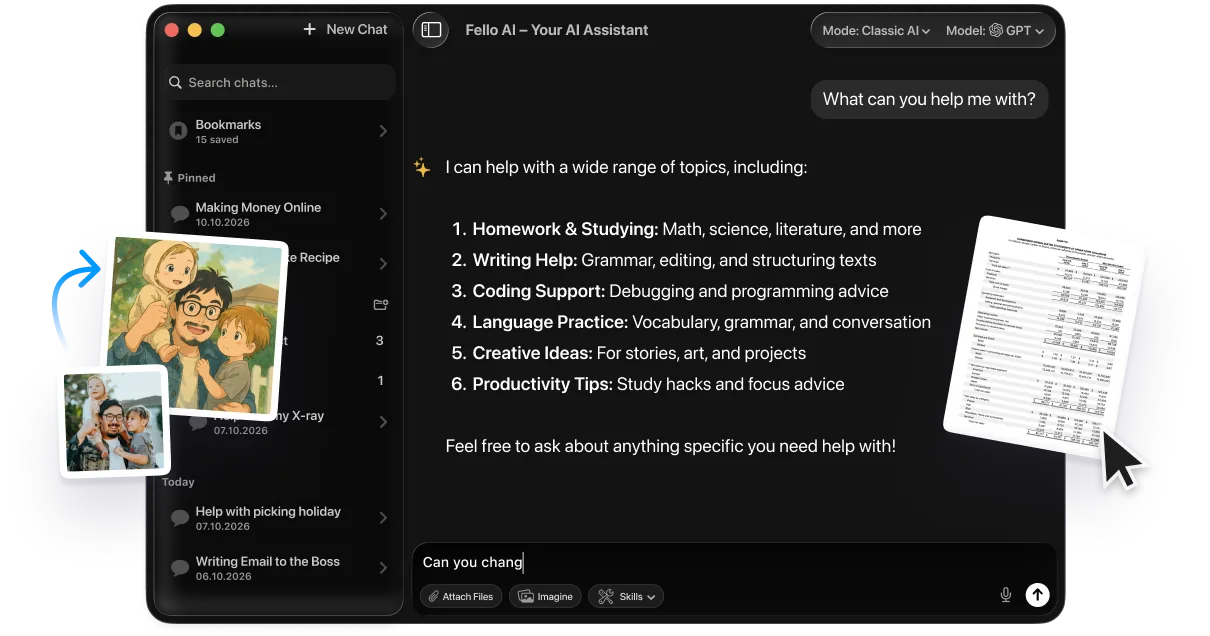
If you are not a coder and you just want top models in one place, an app like Fello AI gives you Claude, ChatGPT, Gemini, Grok, and DeepSeek on Mac under a single subscription, without API keys or self-hosting. On a Mac that is a native Kimi desktop client too, so you can still reach the model without touching a terminal. For the people who actually want to build agents on raw weights, Kimi K2.7 Code is one of the most aggressive open releases of the year.
The Bottom Line
Kimi K2.7 Code is a serious open-weight coding model that is cheaper to run than the proprietary flagships and noticeably more token-efficient than K2.6. The caveat is real though, since the benchmarks are all Moonshot’s own and independent scores are still missing. Treat it as a strong candidate worth a hands-on trial on your own repos, especially if you are cost-conscious, and recheck the leaderboards once third-party benchmarks land. For most readers, the smart next step is to test it on a real task rather than trust the launch numbers.
FAQ
When was Kimi K2.7 Code released?
Moonshot AI released Kimi K2.7 Code on June 12, 2026, with open weights on Hugging Face and access through the Kimi API.
How many parameters does Kimi K2.7 have?
It has 1 trillion total parameters and activates 32 billion per token, using a Mixture-of-Experts design with 384 experts.
Is Kimi K2.7 Code free?
The weights are free to download and self-host under a Modified MIT license. The Moonshot API is paid, at $0.95 per million input tokens and $4.00 per million output.
Is Kimi K2.7 better than Claude Opus 4.8?
It is far cheaper and posts strong self-reported scores, but Claude Opus 4.8 has proven independent benchmarks and a larger 1M context, so Claude still leads on verified reliability.
Are Kimi K2.7’s benchmarks reliable?
All published numbers are company-reported and were run with thinking enabled. There are no independent SWE-bench scores yet, so test it on your own code before trusting the claims.