Update, September 2026: Aktualisiert mit dem aufgeklärten Bewertungsrennen und den neuen Flaggschiff-Modellen. Anthropic schloss am 28. Mai 2026 eine Series H über 65 Milliarden Dollar bei einer Post-Money-Bewertung von 965 Milliarden Dollar ab und überholte OpenAI als wertvollstes KI-Start-up. Seitdem haben beide Labore neue Flaggschiffe veröffentlicht. Anthropics neuestes Modell ist Claude Opus 5.5, veröffentlicht am 22. September 2026, das Claude Opus 5 auf Anthropics Legacy-Liste verschoben hat, und das von OpenAI ist GPT-6 Astra, veröffentlicht am 3. September 2026.
Zum ersten Mal seit dem Launch von ChatGPT hat Anthropic OpenAI bei der Unternehmensadoption in den USA überholt. Der Ramp AI Index für April 2026, veröffentlicht am 13. Mai, setzt Anthropic bei 34,4 % der erfassten Enterprise-Ausgaben gegenüber OpenAIs 32,3 %. Anthropic legte in einem einzigen Monat 3,8 Prozentpunkte zu, während OpenAI 2,9 verlor. Vor einem Jahr lag OpenAI bei rund 32 % und Anthropic unter 8 %. Der Vorsprung hat seitdem gehalten, und der Trend ist eindeutig.
Wenn du zwischen Claude und ChatGPT wählst oder verstehen willst, auf welches Unternehmen du wirklich setzen möchtest, ist die ehrliche Antwort komplizierter als die Schlagzeile. OpenAI ist immer noch die größte KI-Marke der Welt mit rund 900 Millionen wöchentlichen ChatGPT-Nutzern und einer Bewertung von 852 Milliarden Dollar, auch wenn Sam Altman einräumt, dass die KI-Kosten inzwischen ein „riesiges Problem" sind. Anthropic ist bei den Nutzern kleiner, liegt aber beim Umsatzwachstum, dem Enterprise-Marktanteil und nun auch bei der Bewertung vorne, nachdem die 965-Milliarden-Dollar-Series-H OpenAI Ende Mai überflügelt hat. Dieser Leitfaden gliedert den Vergleich in die Punkte, die 2026 wirklich zählen: Geld, Marktanteil, Modelle, Sicherheit und wofür du persönlich bezahlen solltest.
Das Wichtigste in Kürze
- Enterprise-Adoption: Anthropic 34,4 % vs. OpenAI 32,3 % (Ramp, April 2026, US-Unternehmen).
- Bewertung: Anthropic 965 Mrd. $ Post-Money nach der 65-Mrd.-$-Series-H (28. Mai 2026), jetzt das wertvollste KI-Start-up, vor OpenAI mit 852 Mrd. $ (März 2026).
- Umsatz Q1 2026: OpenAI 5,7 Mrd. $; Anthropic rund 4,7 Mrd. $ (The Information). OpenAI vorne beim Trailing-Umsatz, Anthropic vorne beim Forward-ARR gemäß Sacras 43-Mrd.-$-Schätzung vom April.
- Reichweite bei Verbrauchern: ChatGPT rund 900 Mio. wöchentliche Nutzer; Claude ist eine deutlich kleinere, größtenteils zahlende, vor allem Entwickler- und Enterprise-Basis.
- Flaggschiff-Modelle: Claude Opus 5.5 (Anthropic) vs. GPT-6 Astra (OpenAI), beide in bezahlten Plänen und in der API des jeweiligen Labors. Opus 5.5 führt den Artificial Analysis Intelligence Index mit 57,6 auf v4.3.2 an, vor Claude Fable 5.1 mit 53,4, GPT-6 Astra mit 52,7 und Claude Opus 5 mit 50,8, und Anthropic-Modelle führen beide Coding-Boards der Arena an, Opus 5.5 bei WebDev und Fable 5.1 bei den Coding-Agenten.
Anthropic vs. OpenAI auf einen Blick
Wenn du nur 30 Sekunden hast, deckt diese Tabelle die wichtigsten Unterschiede im September 2026 ab. Jede Zahl ist mit einem Datum versehen, damit du siehst, wann sie veraltet ist.
| Kategorie | Anthropic | OpenAI | Vorne | Hinweise |
|---|---|---|---|---|
| Gegründet | 2021 | 2015 | OpenAI (älter) | Anthropic-Gründer sind Ex-OpenAI |
| Gründer | Dario Amodei, Daniela Amodei + Ex-OpenAI-Forscher | Sam Altman, Elon Musk, Greg Brockman, Ilya Sutskever u.a. | Unentschieden | Unterschiedliche Missionen, gleicher Talentpool |
| Flaggschiff-Modell (September 2026) | Claude Opus 5.5 (22. Sept.) | GPT-6 Astra (3. Sept.) | Anthropic | Opus 5.5 führt AA Intelligence 57,6 zu 52,7 auf v4.3.2, bei $4 / $20 gegen $10 / $50; Anthropic-Modelle führen beide Coding-Boards der Arena an |
| Aktuelle Bewertung | 965 Mrd. $ Post-Money (Series H, 28. Mai 2026) | 852 Mrd. $ (März 2026) | Anthropic | Anthropic hat OpenAI überholt; siehe Hinweis unten |
| Umsatz Q1 2026 | ca. 4,7 Mrd. $ (The Information) | 5,7 Mrd. $ (The Information) | OpenAI beim Trailing | OpenAI lag in Q1 rund 1 Mrd. $ vorne |
| Forward-ARR (April 2026) | ca. 43 Mrd. $ (Sacra-Schätzung) | ca. 25 Mrd. $ | Anthropic beim Momentum | Sacra ist eine Analystenschätzung, keine offizielle Zahl |
| US-Enterprise-Anteil | 34,4 % (April 2026) | 32,3 % (April 2026) | Anthropic | Erstmals überhaupt |
| Reichweite bei Verbrauchern | Kleiner, zahlungslastig, entwicklerlastig | ca. 900 Mio. wöchentliche ChatGPT-Nutzer | OpenAI | OpenAI dominiert den Verbrauchermarkt |
| Am besten für | Coding, lange Dokumente, regulierte Branchen | Multimodal, Bild/Video, Casual Chat, Agenten | Kommt auf den Anwendungsfall an | Siehe Fazit-Abschnitt |
Die Tabelle liest sich wie ein gespaltenes Urteil, weil es eines ist. Anthropic führt bei Geld und Enterprise; OpenAI führt bei Nutzern und Marke. Das ist die ganze 2026er-Geschichte in einem Satz.
Was sind Anthropic und OpenAI?
Anthropic und OpenAI sind die beiden größten US-amerikanischen generativen KI-Unternehmen. Anthropic, 2021 von ehemaligen OpenAI-Forschern Dario und Daniela Amodei gegründet, konzentriert sich auf KI-Sicherheit und Enterprise-Kunden und entwickelt die Claude-Modellfamilie. OpenAI, 2015 von Sam Altman und anderen gegründet, setzt auf Verbraucher-KI durch ChatGPT und einen breiteren Stack multimodaler Produkte wie ChatGPT Images und Codex.
Die interessante Besonderheit ist die Abstammung. Ein Großteil des Gründungsteams von Anthropic kam 2021 von OpenAI, wegen Meinungsverschiedenheiten darüber, wie aggressiv man kommerzialisieren und wie ernst man die Alignment-Forschung nehmen sollte. Dario war VP of Research bei OpenAI, bevor er das Unternehmen verließ. Diese Geschichte prägt alles, vom Produktdesign bis zu Investorenpitches, noch heute.
8 Unterschiede zwischen Anthropic und OpenAI in 2026
1. Mission und Ursprung
Anthropic versteht sich als Safety-First-Labor. Die Methode namens Constitutional AI trainiert Modelle anhand eines schriftlichen Prinzipiensatzes statt nur anhand menschlicher Bewerter. Das Versprechen an Enterprise-Kunden: Claude ist das Modell, das du bei einer Bank, einem Krankenhaus oder einer Behörde einsetzen kannst, ohne Probleme zu bekommen.
OpenAI versteht sich als Labor, das künstliche allgemeine Intelligenz zum möglichst breiten Nutzen entwickelt. Sicherheitsarbeit gibt es, aber das öffentliche Gesicht ist ein Verbraucher-Produktunternehmen, das schnell liefert, die Distribution ständig ausweitet und sich mit Microsoft, Apple und nun dem eigenen Beratungsarm DeployCo vernetzt. Microsoft hat inzwischen eigene MAI-Modelle gestartet, um die Abhängigkeit von OpenAI zu verringern. Im August 2026 ging OpenAI noch weiter und sagte TIME, bis Jahresende werde es ein internes System geben, das es als AGI bezeichnen würde. Wir prüfen diese Aussage in dem, was Altman tatsächlich versprochen hat.
Das ist kein Marketinggeschwätz. Es zeigt sich im Kundenmix.
2. Umsatz
Liest man die Umsatzfrage auf zwei Arten, bekommt man zwei verschiedene Gewinner. Beim Trailing-Umsatz in Q1 2026 lag OpenAI vorne: 5,7 Milliarden Dollar gegenüber Anthropics rund 4,7 Milliarden Dollar laut The Information. Das ist eine Momentaufnahme, und OpenAI hat aktuell immer noch das größere Geschäftsvolumen.
Beim annualisierten Forward Run Rate liegt Anthropic vorne. Sacra schätzt Anthropic auf rund 43 Milliarden Dollar ARR Stand April 2026, gegenüber rund 9 Milliarden Dollar Ende 2025. OpenAIs ARR liegt auf derselben Basis bei rund 25 Milliarden Dollar. Ein zentraler Treiber von Anthropics Wachstum ist Claude Code, der Entwickler-Agent, der im Februar 2026 einen annualisierten Umsatz von 2,5 Milliarden Dollar erreichte und seitdem laut Sacra mehr als verdoppelt hat.
Zwei Vorbehalte verdienen Aufmerksamkeit. Erstens ist ARR eine Hochrechnung des aktuellen Monatsumsatzes und kann sich stark bewegen, wenn das Wachstum beschleunigt oder stockt. Zweitens kommen beide Zahlen mit Fußnoten dazu, wie KI-Anbieter Umsatz zählen (Brutto vs. netto, committed vs. realisiert, Run Rate vs. Trailing). Ehrlich gelesen: OpenAI ist heute das größere Unternehmen, Anthropic das schneller wachsende.
3. Bewertung
OpenAI wird mit 852 Milliarden Dollar bewertet, nach einer 122-Milliarden-Dollar-Runde, die am 31. März 2026 abschloss und von Amazon (50 Mrd. $), Nvidia (30 Mrd. $) und SoftBank (30 Mrd. $) angeführt wurde. Das war bis dahin die höchste private Bewertung in der Tech-Geschichte. Anthropic schloss eine Series G über 30 Milliarden Dollar am 12. Februar 2026 bei einer Post-Money-Bewertung von 380 Milliarden Dollar ab, angeführt von GIC und Coatue mit Co-Investoren wie D.E. Shaw Ventures, Dragoneer, Founders Fund, ICONIQ und MGX.
Die größere Geschichte ist die folgende Runde. Am 28. Mai 2026 schloss Anthropic eine Series H über 65 Milliarden Dollar bei einer Post-Money-Bewertung von 965 Milliarden Dollar ab, mitgeführt von Altimeter Capital, Dragoneer, Greenoaks und Sequoia Capital. Damit überstieg Anthropic OpenAI als wertvollstes KI-Start-up der Welt und nähert sich einer Bewertung von 1 Billion Dollar, etwa ein Jahr, nachdem es nur einen Bruchteil von OpenAIs Größe ausmachte. Der Vorsprung, der diese Rivalität auf dem Papier definiert hatte, kippte innerhalb eines einzigen Quartals. Inzwischen bereitet Anthropic den Gang an die Börse vor, den berichteten Zeitplan verfolgt unser Artikel zum Börsengang von Anthropic.
4. Enterprise-Marktanteil
Das ist die Zahl, die im Mai 2026 für Aufruhr sorgte. Der Ramp AI Index misst den Anbieteranteil unter US-Unternehmen, die für KI-Tools über Ramps Corporate-Spend-Plattform zahlen. Die April-2026-Daten, veröffentlicht am 13. Mai, setzen Anthropic bei 34,4 % (plus 3,8 Prozentpunkte in einem Monat), OpenAI bei 32,3 % (minus 2,9 Prozentpunkte) und Google bei knapp unter 10 %, weit hinter beiden.
Das Jahrsbild ist noch dramatischer. Im vergangenen Jahr hat Anthropic die Unternehmensadoption vervierfacht, während OpenAI die Enterprise-Adoption um 0,3 % steigerte. Wie Axios berichtete, nannte Ramps Ökonom Ara Kharazian es „eine verblüffende Umkehr", warnte aber auch, dass ein Monat noch keinen Burggraben macht. Er hat recht. Trotzdem ist die Richtung unverkennbar.
Anthropics eigene Zahlen bestätigen das: mehr als 300.000 Geschäftskunden per Oktober 2025, mehr als 100.000 davon laufen Claude auf Amazon Bedrock per April 2026, und über 1.000 Kunden geben mehr als 1 Million Dollar pro Jahr aus, eine Zahl, die sich in zwei Monaten ungefähr verdoppelt hat.
5. Reichweite bei Verbrauchern
Diesen Punkt gewinnt OpenAI mit großem Abstand und wird das wohl noch Jahre so bleiben. ChatGPT bedient rund 900 Millionen wöchentlich aktive Nutzer, hat die meistgeladene KI-App auf iOS und Android und ist der Standard-Assistent in den Köpfen der meisten Menschen, wenn sie „KI" sagen.
Anthropic hat Claude.ai und die Claude-Apps, aber die Nutzerbasis ist kleiner und tendenziell Entwickler, technisch affin und zahlend. Anthropic veröffentlicht keine wöchentliche Nutzerzahl, und die meisten Drittanbieter-Verkehrsdaten setzen Claude deutlich unter ChatGPT und auch unter der Google-Gemini-App.
Wenn man misst, wer die meisten Menschen vor einer Chat-Oberfläche hat, ist OpenAI der klare Spitzenreiter. Deshalb brauchen Schlagzeilen wie „Anthropic überholt OpenAI" ein Sternchen: Es geht um Enterprise-Adoption, nicht um reine Nutzerzahlen.
6. Produkte und Plattform
OpenAI liefert mehr Produktfläche als Anthropic. Das OpenAI-Angebot umfasst ChatGPT in den Stufen Free, Go (8 $), Plus (20 $), Pro (100 $, 200 $ oder, seit dem 29. September, 500 $), Business und Enterprise, mit GPT-6 Astra seit dem 3. September 2026 an der Spitze. Astra antwortet im Chat-Fenster auf Pro, Business und Enterprise, erreicht Plus nur in ChatGPT Work und Codex, und für die Free-Stufe ist nichts angekündigt. GPT-6 Sol und Luna folgten am 22. September und senkten die API-Preise etwa um die Hälfte, sind aber noch nicht im Chat-Fenster angekommen. GPT-5.6 Sol und Luna sind dort weiterhin der Standard, wie seit dem breiten öffentlichen Rollout der Modellfamilie am 9. Juli 2026. Auf der kreativen Seite bietet OpenAI ChatGPT Images 2.5 für Bilder und Codex für Code, obwohl die Sora-Video-App am 26. April 2026 eingestellt wurde und die Sora-API am 24. September folgte. Dazu kommen die OpenAI API, Custom GPTs (die OpenAI zugunsten von Plugins einstellen will), ein Operator-artiger Agent und der neu ausgegliederte Beratungsarm DeployCo.
Anthropics Angebot ist schmaler, aber zunehmend Enterprise-tauglich: Claude in vier Größen (Opus 5.5 als Alltagsmodell für komplexes agentisches Coding und Enterprise-Arbeit, Fable 5.1 für die höchste verfügbare Leistung, Sonnet 5.5 und Haiku 5.5), mit Opus 5, Sonnet 5, Fable 5, Opus 4.8 und Haiku 4.5 als Legacy-Modellen, die Claude API, Claude Code, Claude Cowork für kollaborative Arbeit, Distribution über Amazon Bedrock, Google Cloud Vertex AI und Microsoft Foundry, sowie ein wachsendes Managed-Agents-Programm für langlebige Workflows.
So lässt es sich gut zusammenfassen: OpenAI versucht, jede Schicht des KI-Verbraucher-Stacks zu besetzen; Anthropic versucht, die Modellschicht zu sein, die jede andere Plattform einbettet.
7. Preise für einzelne Nutzer
Für einen privaten Nutzer auf Mac oder iPhone kosten die beiden Flaggschiff-Abonnements gleich viel. ChatGPT Plus kostet 20 $ im Monat, Claude Pro ebenfalls 20 $ im Monat. Die nächste Stufe unterscheidet sich: ChatGPT Pro kostet 100 $, 200 $ oder 500 $ im Monat, Claude Max 100 $ oder 200 $, die beiden Leitern decken sich also bis 200 $, und nur ChatGPT geht darüber hinaus.
OpenAIs API-Preise sind für ultraleichte Workloads günstiger, dank der Nano-Stufe ab 0,10 $ pro Million Input-Token. Anthropic bietet keine vergleichbare Budget-Stufe; das günstigste Haiku-Modell ist pro Token deutlich teurer. Für hochvolumige, günstige Inferenz gewinnt OpenAI beim Preis. Wenn du Qualität pro Dollar am oberen Ende zählen lässt, ist die Antwort näher beieinander.
8. Öffentliche Sicherheitshaltung
Anthropics Marke ist auf Sicherheit aufgebaut. Constitutional AI, eine veröffentlichte Responsible Scaling Policy, öffentliche Modellkarten und das 2026 angekündigte Claude Mythos-Cybersicherheitsprogramm sind die sichtbaren Artefakte. Enterprise-Käufer in regulierten Branchen nennen das als Grund für die Wahl von Claude. Im Juni 2026 brachte Anthropic eine abgesicherte Version seines Mythos-Klasse-Modells als Claude Fable 5 in die öffentliche Verfügbarkeit. Kurz darauf zogen US-Exportkontrollen Fable 5 zurück, was wiederum das virale Fake-Mistral-Meme Le Chaton Fat auslöste. Die Sperre hielt nicht lange. Anthropic gab am 30. Juni bekannt, dass die Exportkontrollen für Fable 5 und Mythos 5 aufgehoben wurden, und Fable 5 kehrte am nächsten Tag global zurück. Es ist wieder allgemein auf der Claude-Plattform, Claude.ai, Claude Code und den großen Clouds verfügbar. Dieser Eingriff war Teil eines breiteren Vorstoßes der US-Regierung, neue KI-Modelle vor der Veröffentlichung zu prüfen, der kurzzeitig auch OpenAIs GPT-5.6 vor seinem öffentlichen Launch am 9. Juli blockierte.
OpenAI hat ebenfalls stark in Sicherheit investiert, mit Red-Teaming-Programmen, Preparedness Frameworks und einem externen Safety Board. Aber OpenAIs Ruf hat durch wiederholte Executive-Abgänge wegen Sicherheitsmeinungsverschiedenheiten gelitten, sowie durch die breitere Wahrnehmung, das Unternehmen optimiere für Produktgeschwindigkeit. Ob das fair ist, hängt davon ab, wen man fragt. Was messbar ist: Risikosensible Käufer stimmen mit dem Geldbeutel ab, und sie stimmen häufiger für Anthropic als früher.
Anthropic vs. OpenAI: Umsatz und Bewertung in klaren Zahlen
Beide Unternehmen wachsen in absoluten Zahlen. Der Unterschied liegt in der Richtung.
OpenAI ist ein riesiges Unternehmen mit einem Quasi-Monopol auf den Verbraucher-KI-Mindshare. 5,7 Milliarden Dollar in einem einzigen Quartal ist keine kleine Zahl; das macht OpenAI zu einem der am schnellsten wachsenden Software-Unternehmen der Geschichte. Enterprise-Umsatz macht inzwischen über 40 % von OpenAIs Mix aus, gegenüber rund 30 % ein Jahr zuvor, und das Unternehmen ist auf Kurs, bis Jahresende bei Verbraucher-Enterprise-Parität anzukommen. Die DeployCo-Tochter, mit einem anfänglichen Investment von 4 Milliarden Dollar und 150 Ingenieuren aus der Tomoro-Übernahme, ist eine klare Wette auf die Beratungsschicht.
Anthropic ist die steilere Kurve auf dem Chart. Von 1 Mrd. auf 43 Mrd. Dollar ARR in 15 Monaten zu kommen, ist eine 30-fache Steigerung, fast vollständig getrieben durch Enterprise-Verträge und Claude-Code-Nachfrage. Die 965-Mrd.-$-Series-H Ende Mai 2026 markierte den Moment, in dem Anthropic OpenAI auf dem Papier als wertvollstes privates KI-Unternehmen überholte, eine Umkehrung, die den gesamten Vergleich neu rahmt.
Bewertungen sind nicht dasselbe wie Gewinne. Keines der Unternehmen ist im konventionellen Sinne profitabel. Beide geben Milliarden pro Quartal für Rechenleistung, Talente und Rechenzentren aus. Das Rennen um Umsatz ist auch ein Rennen um den Cashflow, der benötigt wird, um diese Verpflichtungen zu erfüllen.
Enterprise-Adoption: Warum Unternehmen zu Claude wechseln
Die Ramp-Zahl ist real, aber sie erklärt nicht das Warum. Im Gespräch mit Engineering-Leadern tauchen drei Gründe immer wieder auf:
Der erste ist Claude Code. Anthropics Entwickler-Agent ist zum Standard-Tool in vielen Engineering-Organisationen geworden, besonders für große Refactorings, autonome Aufgabenausführung und Codebase-Arbeit mit langem Kontext. Wenn das Entwickler-Team Claude wählt, folgt der Rest der Organisation meist nach.
Der zweite ist das Kontextfenster und die Verarbeitung langer Dokumente. Claudes Millionen-Token-Kontext, verfügbar bei Opus und Sonnet, macht es zur natürlichen Wahl für juristische Prüfungen, Finanzanalysen und jeden Workflow, bei dem man ein Dokument nicht sinnvoll aufteilen kann.
Der dritte ist Markensicherheit. Compliance-, Legal- und Risk-Teams haben es leichter, einen Anbieter zu genehmigen, der Sicherheit in seinem Marketing an erste Stelle stellt und weniger öffentliche Vorfälle hat. Ob das ein echter dauerhafter Vorteil oder ein vorübergehender Wahrnehmungsvorsprung ist, es bewegt heute Budgets. Makellos ist dieser Vorsprung allerdings nicht: Anthropic zahlte 1,5 Milliarden Dollar, um eine Sammelklage von Autorinnen und Autoren beizulegen, und Gerichtsakten legten später das Programm zur Vernichtung von Büchern hinter Claudes Trainingsdaten offen.
OpenAI kämpft stark zurück. DeployCo, erweiterte Microsoft-Foundry-Distribution, Enterprise-exklusive Modellvarianten und aggressive Preise bei GPT-5.5 Instant sind alles Teil der Antwort. Jede neue monatliche Ramp-Lesung seitdem hat Anthropic vorne gehalten, der Umschwung hat also bis jetzt gehalten statt zurückzuprallen.
Reichweite bei Verbrauchern: ChatGPT vs. Claude im täglichen Einsatz
Wenn du nicht für ein Unternehmen kaufst, ist der Verbrauchervergleich der relevante. Für alltägliche Fragen, Brainstorming, Schreibhilfe und Bildgenerierung bleibt ChatGPT das breiteste Tool. Das Produkt hat mehr Oberfläche, mehr Integrationen, eingebaute Bildgenerierung, Sprachmodus, ein Plugin-Verzeichnis und eine Mobile-App-Politur, die Claude noch nicht erreicht hat.
Für lange Dokumente, dichte Überlegungen, sorgfältiges Schreiben und jede Aufgabe, bei der du ein Modell willst, das nuancierte Anweisungen über tausende Wörter hinweg befolgt, ist Claude der bessere tägliche Begleiter. Die Oberfläche ist ruhiger, die Antworten sind typischerweise sorgfältiger, und das Modell lässt sich schwerer dazu verleiten, Dinge zu erfinden.
Wer den tieferen Feature-für-Feature-Vergleich möchte, findet ihn in unserem Claude vs. ChatGPT Vergleich. Dieser Artikel handelt von den Unternehmen; jener von den Produkten.
Sicherheit: Constitutional AI vs. RLHF
Beide Unternehmen verwenden Reinforcement Learning from Human Feedback (RLHF) als Basis. Der Unterschied liegt darin, was sie darüber hinaus ergänzen.
Anthropics Constitutional AI trainiert Modelle darin, ihre eigenen Ausgaben anhand eines schriftlichen Prinzipiensatzes zu kritisieren und zu überarbeiten, und verwendet diese Selbstkritiken zur Feinabstimmung des Verhaltens. Das Ziel ist, Alignment über das hinaus zu skalieren, was menschliche Bewerter Prompt für Prompt prüfen können, und die Werte des Modells explizit und prüfbar zu machen statt in Millionen von Präferenzpaaren verborgen.
OpenAI setzt auf einen mehrschichtigen Ansatz: Pre-Training-Filter, RLHF, Instruction Tuning, Deliberative Alignment und externes Red-Teaming, unterstützt durch das Preparedness Framework, das Modelle anhand gefährlicher Fähigkeitskategorien vor der Veröffentlichung bewertet. Das ist weniger markengeprägt, deckt aber ähnliches Terrain in anderer Sprache ab.
Für einen Verbraucher, der zwischen Claude Pro und ChatGPT Plus wählt, ist der praktische Sicherheitsunterschied gering. Für einen Fortune-500-Käufer, der einen mehrjährigen Vertrag unterzeichnet, ist die Wahrnehmung von Sicherheitsführerschaft einer der Gründe, warum der Ramp-Chart so aussieht, wie er aussieht.
Wer sollte Anthropic nutzen und wer OpenAI
Bezahl für Claude, wenn du viel programmierst und Claude Code willst, du lange Dokumente schreibst, du mit sensiblem Material arbeitest, das sorgfältige Behandlung braucht, oder du festgestellt hast, dass ChatGPT bei deiner Art von Arbeit zu aggressiv halluziniert. Claude belohnt Menschen, die detaillierte Prompts schreiben und sich um die Qualität langer Ausgaben kümmern.
Bezahl für ChatGPT, wenn du das breiteste einzelne KI-Tool willst, dir Bildgenerierung im selben Produkt wichtig ist, du den Sprachmodus regelmäßig nutzt, du Nischen-Workflows über Plugins anbindest oder ein Gelegenheitsnutzer bist, dem Schnelligkeit und Breite über Tiefe gehen.
Bezahl für beide, wenn du 40 $ im Monat investieren kannst und das Beste aus beiden Welten willst, was viele Power-User tatsächlich tun. Die elegantere Alternative, besonders auf Mac und iPhone, ist eine einzige Multi-Modell-App, die dir alle unter einem Abo bietet.
Anthropic vs. OpenAI auf Mac und iPhone
Beide Unternehmen liefern native Mac- und iOS-Apps, und beide sind gut. ChatGPTs Mac-App ist polierter, hat Apple-Intelligence-Integration über die System-Extension und bietet Sprachmodus und Bildgenerierung in einem Fenster. Claudes Mac-App ist schlanker und schneller, fokussiert auf Text- und Dokumentenarbeit und passt gut zu Terminal-Workflows, in denen Claude Code involviert ist. Als Standard-KI auf dem iPhone lässt sich allerdings keine von beiden festlegen. Über das Extensions-System, das das erlauben würde, wurde zwar berichtet, angekündigt hat Apple es nie, und die optionale Siri-Übergabe an ChatGPT bleibt die einzige Integration, die wirklich ausgeliefert wird.
Wenn du nicht wählen möchtest, ist die dritte Option eine App, die beide mitbringt. Claude Pro und ChatGPT Plus kosten je 20 $, das Paar schlägt also mit rund 40 $ im Monat zu Buche, und du wechselst den ganzen Tag zwischen zwei Apps.
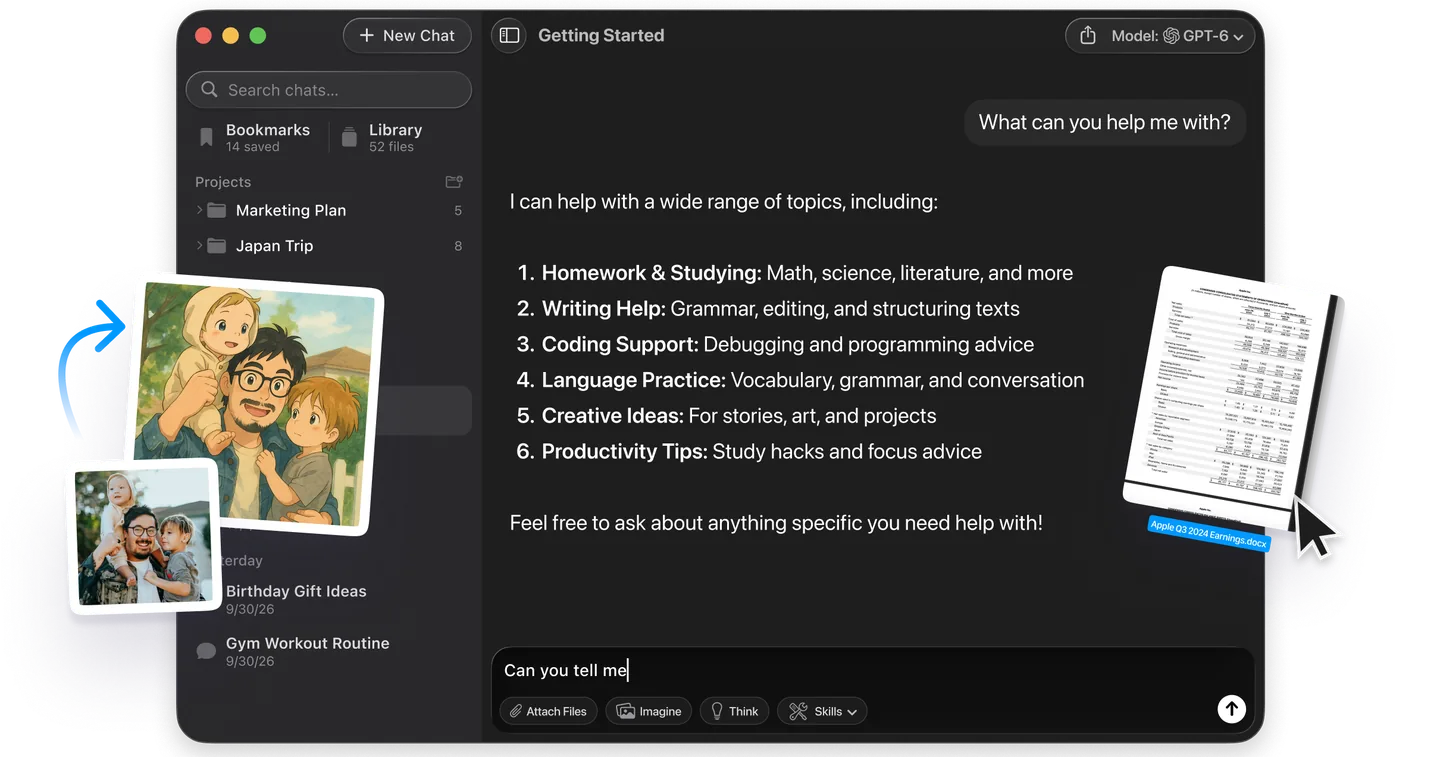
Fello AI ist eine native Mac-, iPhone- und iPad-App, die Claude und ChatGPT unter einem Abo vereint, dazu Gemini, Grok, DeepSeek, Perplexity, Kimi, GLM und Qwen. Sie startet bei 9,99 $ im Monat, etwa einem Viertel dessen, was die beiden Abos einzeln kosten, mit einer kostenlosen Stufe zum Ausprobieren und 4,7 Sternen aus über 27.000 Bewertungen. Du wechselst das Modell mitten im Gespräch, statt dich einmal für ein Unternehmen zu entscheiden, und genau darauf läuft dieser Vergleich immer wieder hinaus: Jedes Labor gewinnt in einer anderen Disziplin, also ist das Setup nützlich, das dich nicht wählen lässt.
Eine Chronik des Rennens 2025–2026
Der Wandel geschah nicht über Nacht. So verlief er im Jahresverlauf. Die Benchmark-Werte stehen so da, wie sie am jeweiligen Tag veröffentlicht wurden, und Artificial Analysis hat seinen Intelligence Index seitdem neu skaliert, weshalb die Zahlen vom Launch-Tag unten nicht direkt mit den heutigen vergleichbar sind.
| Datum | Unternehmen | Meilenstein |
|---|---|---|
| April 2025 | OpenAI / Anthropic | OpenAI hält laut Ramp rund 32 % der US-Enterprise-KI-Adoption. Anthropic liegt bei etwa 8 %. |
| Mitte 2025 | Anthropic | Enterprise-Pipeline wächst stark, getrieben von der Claude-Familie und der frühen Claude-Code-Beta. |
| Ende 2025 | Anthropic / OpenAI | Anthropics ARR erreicht laut Sacra rund 9 Mrd. $. OpenAI skaliert weiter ChatGPT-Verbraucherumsatz und dringt tiefer ins Enterprise vor. |
| 12. Februar 2026 | Anthropic | Schließt Series G über 30 Mrd. $ bei einer Post-Money-Bewertung von 380 Mrd. $ ab. CFO Krishna Rao: „Claude wird zunehmend unverzichtbar für Unternehmen." |
| Februar 2026 | OpenAI | ChatGPT erreicht 900 Millionen wöchentlich aktive Nutzer und 50 Millionen zahlende Abonnenten. |
| 31. März 2026 | OpenAI | Schließt eine Runde über 122 Mrd. $ bei einer Bewertung von 852 Mrd. $ ab, angeführt von Amazon, Nvidia und SoftBank. |
| 23. April 2026 | OpenAI | Lanciert GPT-5.5, das starke Benchmark-Zahlen erzielt und das Standard-ChatGPT-Modell wird. |
| April 2026 (Daten) | Anthropic / OpenAI | Ramp-Anbieteranteil: Anthropic 34,4 %, OpenAI 32,3 %. Anthropics ARR laut Sacra auf 43 Mrd. $ geschätzt. OpenAIs Q1-2026-Umsatz bei 5,7 Mrd. $, rund 1 Mrd. $ vor Anthropic in Q1 laut The Information. |
| 13. Mai 2026 | Anthropic | Ramp veröffentlicht April-Daten. Axios und andere bringen die Schlagzeile „Anthropic überholt OpenAI". |
| 22. Mai 2026 | Anthropic / OpenAI | Bloomberg berichtet, Anthropics nächste Finanzierung stehe kurz vor dem Abschluss bei über 900 Mrd. $ Bewertung. Anthropics Flaggschiff ist Claude Opus 4.8. OpenAI lanciert Beratungstochter DeployCo mit anfänglichem Investment von 4 Mrd. $ nach der Tomoro-Übernahme. |
| 28. Mai 2026 | Anthropic | Schließt Series H über 65 Mrd. $ bei einer Post-Money-Bewertung von 965 Mrd. $ ab und überholt OpenAI als wertvollstes KI-Start-up; liefert Claude Opus 4.8. |
| 9. Juli 2026 | OpenAI | Startet den breiten öffentlichen Rollout von GPT-5.6 (Sol, Terra, Luna) nach einer staatlich kontrollierten Vorschau im Juni. |
| 24. Juli 2026 | Anthropic | Liefert Claude Opus 5 zum Preis von $5 / $25 pro Million Token, gleicher Preis wie Opus 4.8. Es wird das Standard-Modell auf Claude Max und das stärkste Modell auf Claude Pro und erreicht Platz 1 auf dem Artificial Analysis Intelligence Index mit 61. |
| 1. September 2026 | Anthropic | Liefert Claude Fable 5.1 und das nur auf Einladung verfügbare Claude Mythos 5.1 zum Preis von $10 / $50 pro Million Token, mit um 75 % auf $0,25 gesenkten Cache-Reads. Fable 5.1 erreicht Platz 1 auf dem Artificial Analysis Intelligence Index mit 66, vor Opus 5 mit 63. |
| 3. September 2026 | OpenAI | Startet GPT-6 Astra zum Preis von $10 / $50 pro Million Token und nennt es state of the art bei Computernutzung, Software-Engineering und Cybersicherheit. Es erreicht ChatGPT Plus, Pro und Business; für die Free-Stufe ist nichts angekündigt. |
| 22. September 2026 | Anthropic / OpenAI | Anthropic liefert Claude Opus 5.5 zum Preis von $4 / $20 pro Million Token, erreicht Platz 1 auf dem Artificial Analysis Intelligence Index mit 57,6 auf dem neu skalierten v4.3.2 und verschiebt Opus 5 und Fable 5 auf die Legacy-Liste. Rund 90 Minuten später liefert OpenAI GPT-6 Sol und GPT-6 Luna und senkt die API-Preise etwa um die Hälfte. |
Die nächsten wirklich relevanten Datenpunkte sind die kommenden Ramp-Lesungen und die Frage, ob OpenAIs Produktgeschwindigkeit, die GPT-6-Linie und der DeployCo-Vorstoß den Enterprise-Umschwung umkehren oder ob Anthropic den Vorsprung ausbaut.
Fazit: Wer gewinnt wirklich?
Es gibt keinen einzigen Gewinner. Das Ergebnis hängt vom Blickwinkel ab.
Wenn „gewinnen" Umsatzwachstum bedeutet, gewinnt Anthropic, und der Abstand wächst. Wenn es um den Trailing-Quartalsumsatz geht, liegt OpenAI noch mit rund 1 Mrd. $ vorne per Q1 2026. Beim Enterprise-Marktanteil unter US-Unternehmen gewinnt Anthropic, mit einem Einmonats-Vorsprung, der halten kann oder nicht. Bei der Bewertung liegt Anthropic jetzt vorne, nach der 965-Mrd.-$-Series-H im Mai gegenüber OpenAIs 852 Mrd. $. Und bei der Reichweite bei Verbrauchern gewinnt OpenAI um Größenordnungen und zeigt kein Anzeichen, langsamer zu werden.
Für die meisten Leser ist die praktische Schlussfolgerung einfacher. Bezahl für Claude, wenn du programmierst, viel schreibst oder mit sensiblem Material arbeitest. Bezahl für ChatGPT, wenn du das breiteste einzelne KI-Tool mit eingebautem Multimodal willst. Hol dir beide, wenn du kannst; nutze eine Multi-Modell-App wie Fello AI, wenn du lieber eine Rechnung und Zugang zu jedem großen Modell auf Mac oder iPhone möchtest. Die Wahl des Unternehmens nur aus Bewertungsgründen triff nur, wenn du Investor bist, und selbst dann könnten die nächsten zwölf Monate die Antwort zweimal ändern.
Das Wettrüsten setzt sich auch bei Talenten fort. Im Mai 2026 trat OpenAI-Gründungsmitglied Andrej Karpathy Anthropics Pre-Training-Team bei, ein deutliches Signal, wo einige Spitzenforscher die Dynamik sehen.
Wer tiefer in den Produktvergleich einsteigen möchte, findet den Feature-für-Feature-Vergleich in unserem Claude vs. ChatGPT Leitfaden oben. Für das breitere Feld einschließlich Google und der chinesischen Herausforderer siehe unseren Best AI Models 2026 Hub.
Die chinesischen Herausforderer sind keine Hypothese. Im gleichen Mai-2026-Zeitfenster lancierte Alibaba Qwen3.7-Max und MiniMax präsentierte MiniMax M3, beide mit Effizienz bei langem Kontext als neuem Differenzierungsmerkmal. Anthropic vs. OpenAI ist noch immer das Hauptrennen, aber es ist kein Zwei-Pferde-Rennen mehr.
FAQ
Gehört Anthropic zu OpenAI?
Nein. Anthropic ist ein unabhängiges Unternehmen. Die Gründer Dario und Daniela Amodei arbeiteten zuvor bei OpenAI und verließen das Unternehmen 2021, um Anthropic zu gründen. Die beiden Unternehmen sind direkte Konkurrenten.
Gehört Amazon Anthropic?
Nein, aber Amazon ist ein Hauptinvestor und Anthropics primärer Cloud-Partner. Amazon hat über mehrere Runden Milliarden in Anthropic investiert und bietet Claude über Amazon Bedrock an. Anthropic bleibt ein unabhängiges Unternehmen mit eigenem Board und eigener Führung.
Wer hat Anthropic gegründet und warum?
Anthropic wurde 2021 von Dario Amodei, Daniela Amodei und weiteren ehemaligen OpenAI-Forschern gegründet, hauptsächlich wegen Meinungsverschiedenheiten über das Tempo der Kommerzialisierung und wie ernst man Alignment- und Sicherheitsforschung priorisieren sollte.
Ist Anthropic jetzt größer als OpenAI?
Das hängt vom Maßstab ab. Nach US-Enterprise-Adoption per April 2026: ja, mit einem knappen Vorsprung von 34,4 % zu 32,3 % laut Ramp. Nach dem annualisierten Forward Run Rate liegt Anthropic vorne mit geschätzten 43 Mrd. $ vs. OpenAIs rund 25 Mrd. $ laut Sacra. Beim Trailing-Umsatz in Q1 2026 lag OpenAI rund 1 Mrd. $ vorne. Bei der aktuellen Bewertung führt Anthropic ebenfalls mit 965 Mrd. $ nach der May-2026-Series-H gegenüber OpenAIs 852 Mrd. $. Bei den reinen Verbraucherzahlen ist OpenAI noch weit größer.
Sollte ich 2026 Claude oder ChatGPT abonnieren?
Beide kosten 20 $ im Monat in der Standardstufe. Wähle Claude für Coding, lange Dokumente und sorgfältiges Schreiben. Wähle ChatGPT für multimodalen Einsatz, Bildgenerierung, Sprachmodus und Breite. Wenn du beide Arten von Arbeit machst, ist die eleganteste Lösung auf Mac und iPhone eine Multi-Modell-App wie Fello AI, die dir Claude, ChatGPT, Gemini, Grok und DeepSeek unter einem Abo bietet.