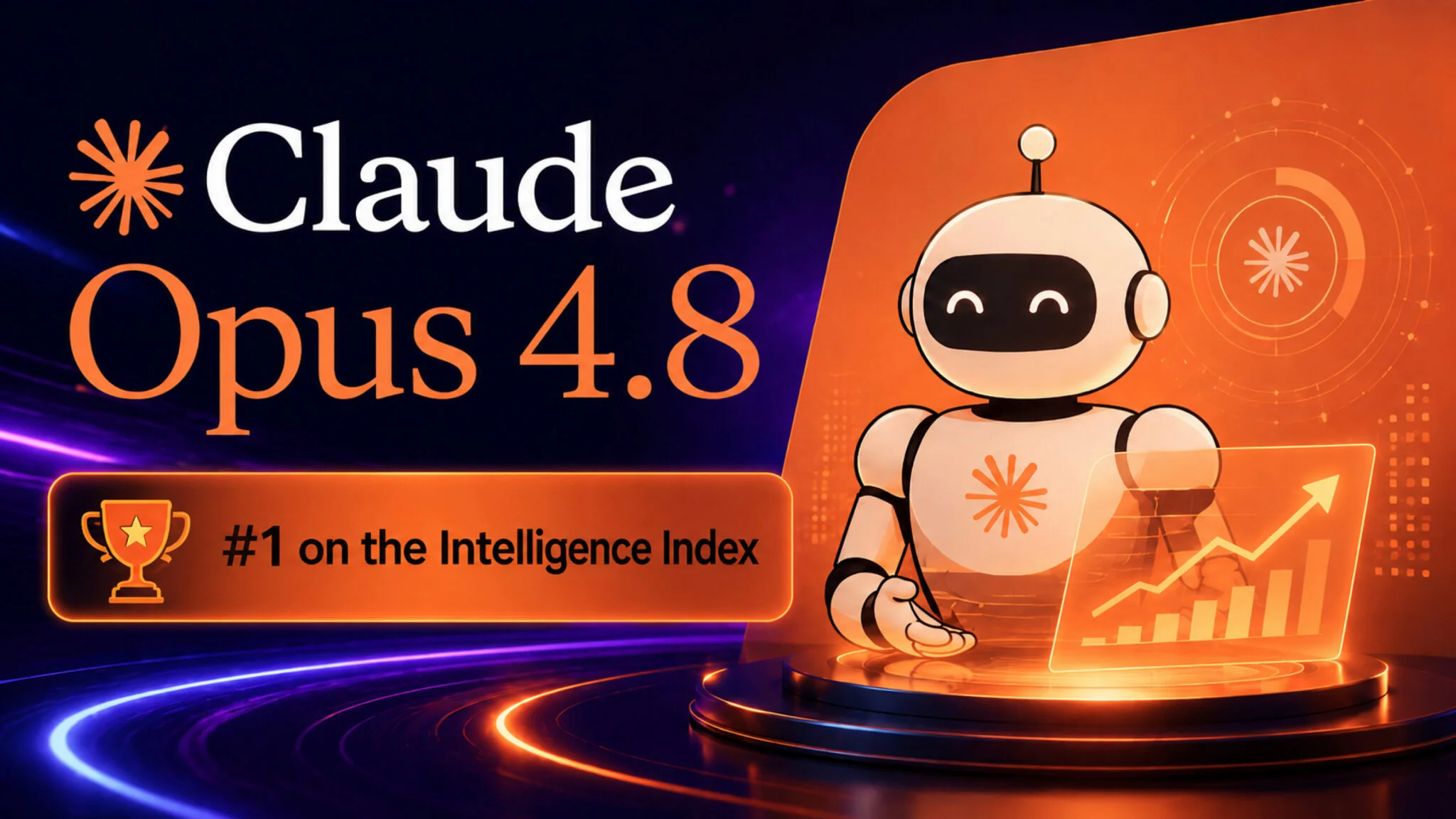
Am 28. Mai 2026 veröffentlichte Anthropic Claude Opus 4.8 und übernahm damit Platz 1 im Artificial Analysis Intelligence Index mit einem Wert von 61,4. Damit entthronte das Modell zum ersten Mal seit dem OpenAI-Start im April GPT-5.5. Das Update bringt einen Sprung von 4,9 Punkten bei SWE-bench Pro (69,2 % vs. 64,3 %), viermal weniger unentdeckte Codefehler und Alignment-Werte auf dem Niveau von Claude Mythos Preview. Die Preise bleiben wie bei Opus 4.7 bei $5/$25 pro Million Token, während der Fast-Modus auf ein Drittel seiner bisherigen Kosten sinkt. Anthropic veröffentlichte das Mythos-Modell später öffentlich als Claude Fable 5, zum doppelten Preis von Opus 4.8 und mit einem Fallback auf Opus 4.8 bei risikoreichen Anfragen.
Opus 4.8 wurde inzwischen zweimal abgelöst. Claude Opus 5 erschien am 24. Juli 2026 zum gleichen Preis von $5 / $25 pro Million Token, und Claude Opus 5.5 folgte am 22. September 2026 zu $4 / $20. Anthropics Liste der Legacy-Modelle ist mit jedem Schritt gewachsen und führt jetzt Opus 4.8, Opus 5 und Fable 5 gemeinsam, jeweils mit dem Hinweis, eine Migration in Betracht zu ziehen. Alles Folgende ist der Stand vom Launch-Tag, also das, was Opus 4.8 im Mai 2026 geliefert hat, wobei die Benchmarks weiterhin dem Modell zugeschrieben sind, das sie erzielt hat.
Zusammen mit dem Modell brachte Anthropic drei Plattform-Funktionen: Dynamic Workflows für Hunderte parallele Subagenten in Claude Code, eine Effort-Steuerung in allen Plänen von claude.ai und eine Erweiterung der Messages API, mit der Entwickler mitten im Gespräch Systemanweisungen einfügen können, ohne den Prompt-Cache zu unterbrechen.
Opus 4.8 ist ab sofort über die Claude API, Amazon Bedrock, Google Cloud Vertex AI und Microsoft Foundry verfügbar.
Was sich bei Opus 4.8 geändert hat
Opus 4.8 war keine neue Modellklasse. Es löste Opus 4.7 als bestes öffentlich verfügbares Claude-Modell ab, eine Position, die es bis zur Ankunft von Claude Opus 5 am 24. Juli 2026 hielt. Anthropic positioniert es als stärkeren Kollaborateur, der eigene Fehler besser erkennt, über lange laufende Projekte hinweg konsistenter bleibt und spürbar ehrlicher darüber ist, was er weiß und was nicht.
Die größten Fortschritte gibt es beim agentischen Coding und bei Wissensarbeit. SWE-bench Pro klettert von 64,3 % auf 69,2 %. Auch Open-Weight-Herausforderer holen auf: Nex-N2-Pro erreicht 58,8 % im selben SWE-bench-Pro-Test. Ein anderer Ansatz geht noch weiter: Der Fugu-Orchestrator von Sakana AI erzielt 73,7 bei SWE-Bench Pro, indem er die Arbeit auf einen Pool von Modellen verteilt, und liegt damit knapp über den 69,2 von Opus 4.8. GDPval-AA, der Benchmark, der wirtschaftlich wertvolle Arbeit aus der echten Welt misst, steigt von 1.753 auf 1.890 Elo, was einer Gewinnrate von rund 67 % gegen GPT-5.5 im direkten Vergleich entspricht. Terminal-Bench 2.1 verbessert sich um 8,5 Punkte auf 74,6 %, wobei GPT-5.5 bei diesem speziellen Benchmark mit 78,2 % weiterhin vorne liegt.
Die interessanteste Verschiebung betrifft Ehrlichkeit und Selbstkorrektur. Opus 4.8 ist das erste Claude-Modell mit 0 % bei unkritisch gemeldeten fehlerhaften Ergebnissen und zeigt eine mehr als zehnfache Reduktion von Selbstüberschätzung gegenüber Opus 4.7. Anthropics Alignment-Team schreibt, das Modell „erreiche neue Höchstwerte bei unseren Messungen prosozialer Eigenschaften“, wobei die Rate von Fehlverhalten deutlich unter der von Opus 4.7 liege und mit dem eingeschränkten Claude Mythos Preview vergleichbar sei.
Hier eine kurze Zusammenfassung der Neuerungen:
- SWE-bench Pro: 64,3 % → 69,2 % (+4,9 Punkte)
- GDPval-AA: 1.753 → 1.890 Elo (+137 Elo)
- Terminal-Bench 2.1: 66,1 % → 74,6 % (+8,5 Punkte)
- HLE (mit Tools): 54,7 % → 57,9 % (+3,2 Punkte)
- OSWorld-Verified: 83,4 %, führend vor allen Wettbewerbern
- BrowseComp: 79,3 % → 84,3 % (+5,0 Punkte)
- Erkennung von Codefehlern: 4× weniger unentdeckte Fehler
- Alignment: nahe am Niveau von Mythos Preview
- Fast-Modus: 3× günstiger als die Vorgängergeneration
Benchmark-Ergebnisse
Coding
| Benchmark | Opus 4.8 | Opus 4.7 | GPT-5.5 | Gemini 3.1 Pro |
|---|---|---|---|---|
| SWE-bench Verified | 88,6 % | 87,6 % | N/A | N/A |
| SWE-bench Pro | 69,2 % | 64,3 % | 58,6 % | 54,2 % |
| SWE-bench Multilingual | 84,4 % | N/A | N/A | N/A |
| Terminal-Bench 2.1 | 74,6 % | 66,1 % | 78,2 % | 70,3 % |
| CursorBench | Führt bei allen Effort-Stufen | Baseline | N/A | N/A |
Die Schlagzeilenzahl ist SWE-bench Pro mit 69,2 %. Das ist die schwerere Variante, die die Lösung realer Pull Requests in komplexen Codebasen testet, und Opus 4.8 liegt im Vergleich jetzt mit deutlichem Abstand vor allen Modellen, 10,6 Punkte vor GPT-5.5 und 15 Punkte vor Gemini 3.1 Pro.
Terminal-Bench 2.1 ist der einzige Coding-Benchmark, bei dem GPT-5.5 noch gewinnt (78,2 % vs. 74,6 %). Er misst Multi-Tool-Workflows auf der Kommandozeile, die Planung, Iteration und Fehlerbehebung erfordern. Der Abstand ist von 12,1 Punkten bei Opus 4.7 auf 3,6 Punkte bei Opus 4.8 geschrumpft, existiert aber weiterhin.
Cursor-Mitgründer Michael Truell merkte an, Opus 4.8 „übertrifft das vorherige Opus bei CursorBench über alle Effort-Stufen hinweg“ mit „effizienteren Tool-Aufrufen, weniger Schritten und besserer Durchführung bei längeren Aufgaben“.
Agentische Aufgaben
| Benchmark | Opus 4.8 | Opus 4.7 | GPT-5.5 | Gemini 3.1 Pro |
|---|---|---|---|---|
| OSWorld-Verified | 83,4 % | 82,8 % | 78,7 % | 76,2 % |
| Online-Mind2Web | 84,0 % | N/A | N/A | N/A |
| MCP-Atlas | 82,2 % | 77,3 % | N/A | N/A |
| Super-Agent Benchmark | Schließt alle Fälle ab | N/A | Unvollständig | N/A |
| BrowseComp (single-agent) | 84,3 % | 79,3 % | 84,4 % | 85,9 % |
| BrowseComp (multi-agent) | 88,5 % | N/A | N/A | N/A |
Bei der agentischen Leistung zeigen sich die klarsten Fortschritte. OSWorld-Verified (der Benchmark, bei dem eine virtuelle Maschine gesteuert, durch Oberflächen geklickt und gemischte Software-Aufgaben erledigt werden) erreicht 83,4 % und liegt damit vor allen Wettbewerbern. GenSpark-Mitgründer Kay Zhu nennt Opus 4.8 „das einzige Modell, das jeden Super-Agent-Fall durchgängig löst und dabei bei gleichen Kosten besser abschneidet als das vorherige Opus und GPT-5.5“.
BrowserBase-Tech-Lead Miguel Gonzalez berichtet von 84 % bei Online-Mind2Web und nennt es „das stärkste Computer-Use- und Browser-Agent-Modell, das wir getestet haben“ mit „einem deutlichen Sprung gegenüber 4.7 und GPT-5.5“.
Reasoning und Wissen
| Benchmark | Opus 4.8 | Opus 4.7 | GPT-5.5 | Gemini 3.1 Pro |
|---|---|---|---|---|
| GPQA Diamond | 93,6 % | 94,2 % | 93,6 % | N/A |
| HLE (ohne Tools) | 49,8 % | 46,9 % | 41,4 % | N/A |
| HLE (mit Tools) | 57,9 % | 54,7 % | 52,2 % | N/A |
| USAMO 2026 | 96,7 % | N/A | N/A | N/A |
| GDPval-AA | 1.890 Elo | 1.753 Elo | 1.769 Elo | N/A |
GDPval-AA sticht besonders hervor. Mit 1.890 Elo liegt Opus 4.8 121 Punkte vor GPT-5.5 und 137 Punkte vor Opus 4.7. Artificial Analysis merkt an, dass Opus 4.8 dies mit 15 % weniger Turns und 35 % weniger Output-Token als sein Vorgänger erreicht, auch wenn es für die Erledigung von Aufgaben immer noch rund 30 % mehr Turns benötigt als GPT-5.5.
GPQA Diamond sank leicht von 94,2 % auf 93,6 %, eine vernachlässigbare Bewegung. Humanity’s Last Exam verbesserte sich in beiden Konfigurationen: 49,8 % ohne Tools (von 46,9 %) und 57,9 % mit Tools (von 54,7 %), womit das Modell bei beiden vor allen Konkurrenten liegt.
Wissensarbeit
| Benchmark | Opus 4.8 | Opus 4.7 | GPT-5.5 | Gemini 3.5 Flash |
|---|---|---|---|---|
| Finance Agent v2 | 53,9 % | N/A | N/A | 57,9 % |
| Legal Agent Benchmark | Höchster gemessener Wert | N/A | N/A | N/A |
Niko Grupen, Head of Applied Research bei Harvey AI, berichtet, dass Opus 4.8 „den höchsten Legal Agent Benchmark Score“ erzielte und „das erste Modell war, das die 10-%-Marke beim All-Pass-Standard durchbrochen hat“, und merkt an, dass „der Genauigkeitsgewinn sich direkt in mehr Anwaltsarbeit niederschlägt, die sicher delegiert werden kann“.
Michael Ran von Bridgewater Associates beschreibt „durchgängig höhere Analysequalität als beim vorherigen Opus“ mit „schnelleren, reichhaltigeren Outputs, besserem Signal-Rausch-Verhältnis“ und dass das Modell „proaktiv Probleme bei Eingaben und Ausgaben markiert“.
Enterprise-Feedback von Box AI
Aaron Levie, CEO von Box, teilte detaillierte Benchmark-Ergebnisse aus Tests von Opus 4.8 mit Box-AI-Agenten bei komplexen Enterprise-Dokumenten-Workflows:
- Berichterstellung: Opus 4.8 schneidet bei der Mehrheit der Aufgaben besser ab. Bei der Berichterstattung zu Industriegütern erzielte es 87 % gegenüber 77 % bei Opus 4.7. Bei der Bewertung von Produkteinführungen für Konsumgüter waren es 90 % gegenüber 84 %.
- Prüfung juristischer NDAs: Nahezu perfekte Konsistenz über alle Durchläufe hinweg, dabei werden mehr relevante Klauseln erfasst und mehr potenzielle Probleme markiert als bei Opus 4.7.
- Analyse von Finanzdaten: Bei der Analyse von Unternehmenskrediten im Vergleich von syndizierten und bilateralen Kreditstrukturen liegt Opus 4.8 bei der korrekten Extraktion von Kennzahlen um fast 8 Prozentpunkte vorn.
- Analyse öffentlicher Fördermittel: Extrahierte und validierte korrekt nahezu alle erforderlichen Förderkriterien und erfasste dabei konkrete Details, die Opus 4.7 „übersehen oder falsch interpretiert“ hatte.
Opus 4.8 wird für den Einsatz in Box-AI-Agenten schrittweise an Box-Kunden ausgerollt.
Artificial Analysis Intelligence Index
Zum Start belegte Opus 4.8 Platz 1 im Artificial Analysis Intelligence Index mit einem Wert von 61,4 unter 149 erfassten Modellen. Das war ein Sprung von +4,1 Punkten gegenüber Opus 4.7 (57,3) und +1,2 Punkte vor GPT-5.5 im Max-Effort-Modus (60,2), das seit April die Spitzenposition gehalten hatte.
| Modell | Intelligence Index | Input $/M | Output $/M | Kontext |
|---|---|---|---|---|
| Claude Opus 4.8 | 61,4 | $5.00 | $25.00 | 1M |
| GPT-5.5 | 60,2 | $5.00 | $30.00 | 922K |
| Claude Opus 4.7 | 57,3 | $5.00 | $25.00 | 1M |
| Qwen3.7-Max | 56,6 | $2.50 | $7.50 | 1M |
| Gemini 3.5 Flash | 55,3 | $1.50 | $9.00 | 1M |
| DeepSeek V4 Pro | 52,0 | $1.74 | $3.48 | 1M |
Diese Version des Index fasste zehn Auswertungen zusammen: GDPval-AA, Terminal-Bench Hard, τ²-Bench Telecom, AA-LCR, AA-Omniscience, Humanity’s Last Exam, GPQA Diamond, SciCode, IFBench und CritPt.
Die Rangliste hat sich seitdem zweimal verschoben. Artificial Analysis hat den Intelligence Index auf v4.1 umgestellt, eine andere Mischung aus neun Auswertungen, sodass jede Zahl in der obigen Tabelle auf der ausrangierten Skala basiert und nicht mit aktuellen Werten vergleichbar ist. Artificial Analysis hat ihn seither zweimal weiter umgebaut, und die aktuelle Version ist v4.3.2, eine Mischung aus zehn Auswertungen. Gelesen am 24. September 2026 führt Claude Opus 5.5 mit 57,6, Claude Fable 5.1 erreicht 53,4, GPT-6 Astra erreicht 52,7, Claude Opus 5 erreicht 50,8 und Claude Fable 5 erreicht 49,6. Opus 4.8 liegt jetzt bei 42, also auf Platz 39 von 211 erfassten Modellen statt auf Platz 1. Keine dieser Zahlen ist mit den 61,4 vom Launch vergleichbar, weil die Skala darunter dreimal neu gebaut wurde.
Konkrete Punktverbesserungen gegenüber Opus 4.7: Terminal-Bench Hard legte um 6,8 Punkte zu, τ²-Bench Telecom um 5,9 Punkte und IFBench um 3,6 Punkte. Bei AA-LCR, GPQA und SciCode blieb die Leistung ungefähr gleich.
Ein Vorbehalt von Artificial Analysis: Opus 4.8 gehört „zu den führenden Modellen in Sachen Intelligenz, ist aber besonders teuer im Vergleich zu anderen Modellen ähnlicher Preisklasse“ und ist „langsamer als der Durchschnitt und sehr wortreich“ und erzeugte während der gesamten Intelligence-Index-Auswertung rund 110 Millionen Token gegenüber einem Durchschnitt von 35 Millionen Token. Die gesamten Kosten der Auswertung lagen bei $4,685.85.
Ehrlichkeit und Alignment
Das ist wohl die bedeutendste Veränderung bei Opus 4.8, auch wenn es dafür keine einzelne Schlagzeilen-Benchmarkzahl gibt.
Opus 4.8 lässt Codefehler viermal seltener unmarkiert durchgehen als Opus 4.7. Im Vergleich zu Claude Sonnet 4.6, der mittleren Modellklasse, die Anthropic inzwischen als Claude Sonnet 5 aktualisiert hat, erzeugt es 17-mal weniger unehrliche agentische Code-Zusammenfassungen. Es ist das erste Claude-Modell mit 0 % bei unkritisch gemeldeten fehlerhaften Ergebnissen. Selbstüberschätzung (Sicherheit vortäuschen bei Dingen, bei denen keine Sicherheit bestehen sollte) sank gegenüber Opus 4.7 um mehr als das Zehnfache.
Anthropics Alignment-Team stellte fest, dass die Rate von Fehlverhalten, einschließlich Täuschung und Mitwirkung bei Missbrauch, „deutlich unter der von Opus 4.7“ liegt und inzwischen dem Niveau von Claude Mythos Preview entspricht, dem eingeschränkten Modell, das zuvor als Alignment-Maßstab galt. Details zu den Sicherheitstests vor der Veröffentlichung sind in der vollständigen System Card veröffentlicht.
Für Alltagsnutzer bedeutet das ein Modell, das eher bereit ist, „Ich weiß es nicht“ zu sagen, und seltener selbstsicher falsche Antworten liefert. Für Entwickler, die autonome Agenten bauen, bedeutet es ein geringeres Risiko, dass das Modell in unbeaufsichtigten Workflows unbemerkt schlechten Code oder irreführende Statusberichte produziert.
Scott Wu, CEO von Cognition (Devin), bestätigte das in der Praxis: „Opus 4.8 nutzt Tools sauber und folgt Anweisungen für autonomes Engineering konsistent. Es behebt die Probleme mit ausufernden Kommentaren und Tool-Aufrufen, die wir bei 4.7 gesehen haben.“
Dynamic Workflows
Der größte Plattform-Launch neben Opus 4.8 ist Dynamic Workflows, jetzt als Research Preview in Claude Code für Nutzer der Pläne Enterprise, Team und Max verfügbar.
Mit Dynamic Workflows kann Claude Hunderte parallele Subagenten innerhalb einer einzigen Claude-Code-Sitzung orchestrieren. Das System plant die Arbeit, verteilt sie auf die Subagenten, überprüft die Ergebnisse und meldet die Resultate, alles ohne manuelle Orchestrierung.
Der praktische Anwendungsfall, den Anthropic hervorhebt, sind Migrationen im Umfang ganzer Codebasen mit Hunderttausenden Zeilen Code. Claude Code mit Opus 4.8 kann eine Migration vom Start bis zum Merge durchführen und dabei die bestehende Testsuite als Qualitätsmaßstab nutzen.
Das ist ein bedeutender Schritt über einfache Multi-File-Bearbeitung hinaus. Statt Dateien nacheinander abzuarbeiten, kann Claude eigene Agenten für unabhängige Änderungen starten, sie parallel laufen lassen und die Ergebnisse koordinieren. Man kann es sich vorstellen wie den Unterschied zwischen einem einzelnen Entwickler, der einen Backlog abarbeitet, und einem Teamleiter, der Tickets verteilt.
Dynamic Workflows ist außerdem über die Claude API, Bedrock, Vertex AI und Microsoft Foundry verfügbar.
Effort-Steuerung
Anthropic hat eine neue Steuerung eingeführt, mit der Nutzer festlegen können, wie viel Rechenaufwand Claude in eine Antwort steckt. Sie ist in allen Plänen von claude.ai und Cowork verfügbar.
Die Einstellungen funktionieren wie folgt:
- Low Effort: Schnellere Antworten, geringerer Verbrauch des Rate-Limits. Am besten für einfache Fragen.
- High Effort (Standard): Ausgewogenes Verhältnis von Qualität und Geschwindigkeit. Verbraucht ungefähr genauso viele Token wie Opus 4.7, liefert dabei aber bessere Ergebnisse.
- Extra / xhigh: Häufigeres und tieferes Nachdenken. Empfohlen für schwierige Aufgaben und lang laufende asynchrone Workflows.
- Maximum: Höchster Token-Verbrauch. Beste Leistung bei den höchsten Kosten.
Die Rate-Limits in Claude Code wurden erweitert, um höhere Effort-Stufen zu ermöglichen. Anthropic empfiehlt die Standardeinstellung „high“ für die meisten Aufgaben und merkt an, dass sie bei ähnlichem Token-Budget bereits besser abschneidet als der Standard-Output von Opus 4.7.
Erweiterung der Messages API
Entwickler können jetzt direkt während eines Gesprächs Systemeinträge in das Messages-Array einfügen. Das bedeutet, du kannst Claudes Anweisungen (Berechtigungen, Token-Budgets, Umgebungskontext) mitten in der Aufgabe aktualisieren, ohne den Prompt-Cache zu unterbrechen und ohne das Update über einen Nutzer-Turn zu leiten.
Das ist vor allem für alle relevant, die Agenten bauen und Claudes Verhalten im Verlauf einer Aufgabe anpassen müssen, ohne den zwischengespeicherten Kontext zurückzusetzen. Es ist eine technische Änderung, aber bei mehrstufigen Workflows beseitigt sie einen echten Reibungspunkt.
Preise und Verfügbarkeit
Opus 4.8 kommt zum gleichen Preis wie Opus 4.7:
| Stufe | Input | Output |
|---|---|---|
| Standard | $5.00 / 1M Token | $25.00 / 1M Token |
| Fast-Modus (2,5× Geschwindigkeit) | $10.00 / 1M Token | $50.00 / 1M Token |
| Prompt-Caching (Cache-Hit) | $0.50 / 1M Token | N/A |
Der Fast-Modus ist jetzt 3× günstiger als bei früheren Modellen. Bei 2,5-facher Geschwindigkeit macht ihn das zu einer praktikablen Option für latenzsensitive Anwendungen, bei denen er zuvor zu teuer war.
Prompt-Caching für $0.50 pro Million Input-Token ist ein Rabatt von 90 % auf wiederholten Kontext, was sich bei Agenten-Workflows, die wiederholt auf dieselben Dokumente oder Anweisungen zugreifen, deutlich summiert.
Kontextfenster: 1 Million Token (~1.500 A4-Seiten)
Maximaler Output: 128K Token
Modell-ID: claude-opus-4-8
Eingabemodalitäten: Text und Bild
Ausgabemodalitäten: Nur Text
Plattformen: Claude API, Amazon Bedrock, Google Cloud Vertex AI, Microsoft Foundry
| Kennzahl | Opus 4.8 | GPT-5.5 | Qwen3.7-Max | Gemini 3.5 Flash |
|---|---|---|---|---|
| Input-Preis | $5.00 | $5.00 | $2.50 | $1.50 |
| Output-Preis | $25.00 | $30.00 | $7.50 | $9.00 |
| Kontextfenster | 1M | 922K | 1M | 1M |
| Intelligence Index | 61,4 | 60,2 | 56,6 | 55,3 |
Die Index-Werte in der obigen Tabelle sind die Zahlen von Mai 2026, vor der Umstellung auf v4.1. Auf der Frontier-Stufe war Opus 4.8 pro Million Output-Token $5 günstiger als GPT-5.5 ($25 vs. $30) und erzielte dabei einen höheren Wert im Intelligence Index. Die kostenbewusste Alternative ist Qwen3.7-Max mit $2.50/$7.50, die 4,8 Punkte im Intelligence Index gegen eine Preissenkung von rund 70 % eintauscht.
Im Vergleich
Gegenüber Opus 4.7: Ein klares Upgrade auf ganzer Linie. Die Coding-Benchmarks verbessern sich um 5 bis 8 Punkte. Bei Wissensarbeit gibt es einen Sprung von 137 Elo. Das Alignment verbessert sich deutlich. Gleicher Preis. Es gibt keinen Grund, bei 4.7 zu bleiben.
Gegenüber GPT-5.5: Gemischte Ergebnisse, die tendenziell für Opus 4.8 sprechen. Claude liegt klar vorn bei SWE-bench Pro (+10,6 Punkte), GDPval-AA (+121 Elo), OSWorld-Verified (+4,7 Punkte) und Humanity’s Last Exam. GPT-5.5 hält Terminal-Bench 2.1 (+3,6 Punkte) und FrontierMath Tier 4. Beim Intelligence Index liegt Opus 4.8 mit 1,2 Punkten knapp vorn. GPT-5.5 ist pro Million Output-Token $5 teurer.
Gegenüber Gemini 3.5 Flash: Eine andere Gewichtsklasse. Gemini 3.5 Flash (55,3 im Intelligence Index) kostet rund 70 % weniger und läuft etwa 4× schneller. Für budget- und latenzsensitive Arbeit ist Flash weiterhin die bessere Wahl. Opus 4.8 ist die richtige Wahl, wenn reine Intelligenz und agentische Zuverlässigkeit wichtiger sind als der Preis pro Token.
Gegenüber Claude Mythos Preview: Zu diesem Zeitpunkt war Mythos die Stufe mit der höheren Intelligenz und stand nur ausgewählten Organisationen für Cybersecurity-Anwendungen zur Verfügung, mit einer allgemeinen Veröffentlichung „in den kommenden Wochen erwartet“, sobald stärkere Sicherheitsvorkehrungen für den Cyberbereich vorlagen. Das löste sich am 9. Juni 2026: Anthropic veröffentlichte Claude Fable 5 als sein leistungsfähigstes breit verfügbares Modell und brachte gleichzeitig Claude Mythos 5 heraus, weiterhin nur auf Einladung für defensive Cybersecurity-Arbeit im Rahmen von Project Glasswing. Opus 4.8 war das beste Claude-Modell, das die meisten Menschen tatsächlich nutzen konnten, bis Opus 5 es ablöste.
Wo es sich in der Claude-Modellreihe einordnet
| Modell | AA Intelligence Index (v4.3.2) | Am besten für | Preise |
|---|---|---|---|
| Claude Mythos 5.1 | Nicht bewertet | Cybersecurity und Life Sciences, nur auf Einladung | Wie Fable 5.1 |
| Claude Opus 5.5 | 57,6 | Das Modell, mit dem Anthropic dich starten lässt | $4 / $20 |
| Claude Sonnet 5.5 | 56,0 | Balance aus Geschwindigkeit und Intelligenz | $2 / $10 |
| Claude Fable 5.1 | 53,4 | Höchste verfügbare Leistungsfähigkeit, lang laufende Agenten | $10 / $50 |
| Claude Opus 5 (legacy) | 50,8 | Von Opus 5.5 abgelöst | $5 / $25 |
| Claude Fable 5 (legacy) | 49,6 | Von Fable 5.1 abgelöst, gleicher Preis | $10 / $50 |
| Claude Haiku 5.5 | 43,4 | Hoher Durchsatz, kostensensitiv | $0.10 / $0.50 |
| Claude Opus 4.8 (legacy) | 42 | Von Opus 5 abgelöst, dann von Opus 5.5 | $5 / $25 |
Opus 4.8 löste Opus 4.7 als Standard-Frontier-Modell ab, und Opus 5 hat es inzwischen in dieser Rolle abgelöst. Der Upgrade-Pfad folgt weiterhin dem gleichen Muster: Haiku für hohes Volumen, Sonnet für den Alltag, Opus für schwierige Probleme und autonome Agenten, und die Fable-Reihe, wenn eine Aufgabe die höchste Leistungsfähigkeit braucht, die Anthropic anbietet. Anthropics Empfehlung wurde seither zweimal umgeschrieben. Zum Opus-5-Launch lautete sie: „Beginne mit Claude Opus 5 für komplexes agentisches Coding und Enterprise-Arbeit“ und „für Workloads, die die höchste verfügbare Leistungsfähigkeit brauchen, nutze Claude Fable 5“. Jetzt nennt sie die zwei Modelle, die beide ersetzt haben: starte mit Claude Opus 5.5 für die meisten Workloads, und nimm Claude Fable 5.1 für anspruchsvolles Reasoning und langwierige agentische Arbeit, oder wenn deine Evaluierungen mit Opus 5.5 bei höherem Effort noch nicht reichen.
Highlights von frühen Testern
Die Bandbreite des Feedbacks früher Tester ist bemerkenswert. Hier ein Querschnitt:
| Organisation | Tester | Zentrales Zitat |
|---|---|---|
| Shopify | Tom Pritchard, Staff Engineer | „Bessere Urteilsfähigkeit. Stellt die richtigen Fragen, erkennt Fehler, widerspricht bei unsoliden Plänen.“ |
| Cursor | Michael Truell, Mitgründer/CEO | „Übertrifft das vorherige Opus bei CursorBench über alle Effort-Stufen hinweg. Weniger Schritte, bessere Durchführung.“ |
| Cognition (Devin) | Scott Wu, CEO | „Nutzt Tools sauber, folgt Anweisungen konsistent. Behebt die Probleme mit ausufernden Kommentaren aus 4.7.“ |
| Harvey AI | Niko Grupen, Head of Applied Research | „Höchster Legal Agent Benchmark Score. Als Erstes über die 10-%-Marke beim All-Pass-Standard.“ |
| BrowserBase | Miguel Gonzalez, Tech Lead | „Stärkstes getestetes Computer-Use-Modell. 84 % bei Online-Mind2Web, ein deutlicher Sprung gegenüber 4.7 und GPT-5.5.“ |
| Databricks | Hanlin Tang, CTO Neural Networks | „Sprunghafter Fortschritt beim agentischen Reasoning. Multimodales PDF-/Diagramm-Reasoning bei 61 % günstigeren Token als 4.7.“ |
| Thomson Reuters | Joel Hron, CTO | „Spürbare Verbesserungen bei Konsistenz und Reasoning für professionelle Workflows mit hohem Risiko.“ |
| Bridgewater | Michael Ran, Sr. Investment Associate | „Durchgängig höhere Analysequalität. Markiert proaktiv Probleme bei Eingaben/Ausgaben.“ |
| Hebbia | Aabhas Sharma, CTO | „Bessere Zitierpräzision und Token-Effizienz beim Retrieval für dichte Finanzdokumente.“ |
| Box | Aaron Levie, CEO | „Messbar besser bei generativer und analytischer Arbeit, die Unternehmen am wichtigsten ist.“ |
| Every | Katie Parrott, Staff Writer | „Großes Quality-of-Life-Update: schnellere, einfachere Zusammenarbeit, bessere Beibehaltung des Stils über mehrere Sitzungen hinweg.“ |
Das Muster in diesen Zitaten ist konsistent: bessere Urteilsfähigkeit, weniger verschwendete Schritte, stärkere Durchführung. Mehrere Tester heben besonders die Verbesserungen bei Zuverlässigkeit und Selbstkorrektur hervor. Shopifys Hinweis darauf, dass das Modell „bei unsoliden Plänen widerspricht“, passt genau zu den Alignment-Fortschritten, die Anthropic gemessen hat.
Was das bedeutet
Für Entwickler
Opus 4.8 ist ein direkter Ersatz. Verwende die Modell-ID claude-opus-4-8 in der API. Die Erweiterung der Messages API um Systemeinträge lohnt sich, wenn du mehrstufige Agenten baust, da du Prompts beim Aktualisieren von Anweisungen mitten in der Aufgabe nicht mehr umstrukturieren musst.
Dynamic Workflows in Claude Code lohnt sich zu testen, wenn du mit umfangreichen Migrationen oder Refactorings zu tun hast. Der Ansatz mit parallelen Subagenten sollte die reale Laufzeit für Aufgaben, die sonst sequenziell ablaufen würden, deutlich verkürzen.
Für Claude-Code-Nutzer
Experimentiere mit den neuen Effort-Einstellungen. Der Standard „high“ übertrifft bereits den Standard von Opus 4.7. Probiere „extra“ oder „max“ für komplexe Debugging-Sitzungen oder Multi-File-Refactorings. Wenn du Enterprise, Team oder Max nutzt, probiere Dynamic Workflows für Änderungen an der gesamten Codebasis.
Für alltägliche KI-Nutzer
Die Quality-of-Life-Verbesserungen zählen mehr als die Benchmark-Unterschiede. Opus 4.8 erfindet seltener selbstsicher Dinge, markiert eher, wenn es sich unsicher ist, und behält über lange Gespräche hinweg besser den Kontext. Bei kreativer und analytischer Arbeit sorgen die „schnelleren, reichhaltigeren Outputs“, die frühe Tester beschreiben, für weniger Hin und Her bis zu einem brauchbaren Ergebnis. Opus 4.8 blieb während seiner gesamten Laufzeit den kostenpflichtigen Plänen Pro und Max vorbehalten. Das Gleiche gilt für seine Nachfolger. Claude Opus 5.5 ist jetzt das stärkste Modell bei Claude Pro und Claude Max, und der Gratisplan bekommt weiterhin nur Sonnet und Haiku. Wenn du die Kosten abwägst, zeigt dir unser Leitfaden zu Claudes Gratisversion, was du ohne zu bezahlen tun kannst.
Wenn du die aktuellen Claude-Modelle mit GPT-6, Gemini und DeepSeek V4 aus einer einzigen App heraus vergleichen willst, bündelt Fello AI die führenden Modelle in einer nativen App für Mac, iPhone und iPad für $9.99/Monat. Sie ist rund 30 bis 50 MB groß, hat eine Bewertung von 4,7 Sternen aus über 27.000 Rezensionen und rangiert durchgängig unter den besten KI-Apps für iPhone. Und falls Claude mitten in einer Aufgabe einmal nicht mehr reagiert, findest du in unserem Leitfaden zu was zu tun ist, wenn Claude AI nicht reagiert die Statuschecks und die schnellsten Alternativen.
Was als Nächstes kommt
Opus 4.8 war Anthropics fünfte Opus-Veröffentlichung in sieben Monaten, und das damit angekündigte Tempo hielt sich. Das Unternehmen hatte zu diesem Zeitpunkt zwei kommende Schritte angekündigt: ein günstigeres Modell auf Opus-Niveau und eine Stufe mit höherer Intelligenz als Opus. Beide erschienen. Claude Fable 5 und Claude Mythos 5 kamen gemeinsam am 9. Juni 2026, und Claude Sonnet 5 folgte für $2 / $10 pro Million Token mit einem Kontextfenster von 1M.
Mythos wurde kein Self-Service-Produkt. Claude Mythos 5 wird in begrenzter Verfügbarkeit an freigegebene Kunden im Rahmen von Project Glasswing angeboten, ohne Self-Service-Anmeldung, und teilt sich Spezifikationen und Preise mit Fable 5. Nach Anthropics eigener Aussage „liegt Opus 5 bei Cybersecurity-Aufgaben weiterhin hinter Mythos 5“, was eine bewusste Trennung ist und keine Lücke, die das Unternehmen eilig schließen will. Beide Konfigurationen wurden am 1. September 2026 durch Claude Fable 5.1 und Mythos 5.1 aktualisiert.
Opus 4.8 hielt die Spitze der allgemein verfügbaren Claude-Modellreihe für knapp zwei Monate. Wenn du jetzt ein Modell auswählst, ist Opus 5.5 die Standardwahl, und es kostet weniger als Opus 4.8 damals, $4 / $20 gegen $5 / $25. Der einzige Grund, bei Opus 4.8 zu bleiben, ist eine festgelegte Modell-ID, die du noch nicht migriert hast.