Artificial Intelligence is already reshaping industries, economies, and daily life at a pace no previous technology has matched. PwC estimates AI will contribute $15.7 trillion to the global economy by 2030 — more than the current output of China and India combined. That scale of impact brings both enormous opportunity and serious risk, and understanding both sides is essential for anyone navigating the next decade.
This article covers AI’s most significant opportunities across key industries, the risks that deserve serious attention, and the lessons history teaches us about managing major technological transitions. If you are thinking about what this means for employment specifically, our piece on whether AI will hurt graduates in the job market goes deeper on that question.
What History Tells Us About AI and Jobs
Every major technological shift has triggered the same fear: that automation will eliminate work faster than new roles can emerge. The Industrial Revolution threatened hand-weavers. The automobile disrupted blacksmiths and carriage makers. The rise of computers and the internet prompted predictions of mass unemployment that never materialized — instead, millions of new roles emerged in IT support, digital marketing, and software development.
AI follows this pattern, but at greater speed. The World Economic Forum has projected that AI and automation will displace tens of millions of jobs globally while simultaneously creating new categories of work that do not yet exist. The critical factor, as in every previous transition, is adaptability. Workers who develop skills that complement AI — judgment, creativity, domain expertise, and communication — will be better positioned than those who compete directly with it.
The Biggest Opportunities AI Is Creating
Healthcare
AI’s role in healthcare is expanding rapidly. Beyond diagnostics, AI systems can assist in patient care management, predict patient deterioration before symptoms are obvious, and support surgical procedures through precision robotics. AI-driven analysis of data from wearable devices is enabling a shift from reactive treatment to proactive health management, catching risk patterns that would be invisible to even experienced clinicians reviewing standard checkups.
Education
The traditional one-size-fits-all model of education is giving way to AI-powered personalization. Platforms using AI can deliver real-time feedback to students, adapt content difficulty dynamically, and give educators data-driven insight into which students need intervention and where specific lessons are falling short. The result is a feedback loop that benefits learners and teachers simultaneously.
Creative Industries and Gaming
AI is not replacing creativity — it is changing what creativity looks like at scale. In gaming, AI-driven narrative systems allow storylines to adapt to player decisions, producing genuinely different experiences across playthroughs. In content creation, AI accelerates production of drafts, imagery, and code, letting creators focus on the higher-order decisions that require human judgment. Copyright law has not caught up with these changes, and the legal debate about AI-generated content and intellectual property rights is still very much unresolved.
The Risks That Deserve Serious Attention
Disinformation and Deepfakes
Deepfakes — AI-generated videos that convincingly superimpose one person’s likeness onto another — have moved from a niche concern to a mainstream threat. The same underlying technology that produces impressive creative outputs can fabricate realistic footage of public figures saying things they never said. Detecting these fakes reliably at scale remains an unsolved problem, and the implications for journalism, elections, and personal reputations are significant. Platforms and researchers are developing detection tools, but it is a persistent arms race.
Voice Cloning
AI can now replicate a person’s voice from a short audio sample — capturing speech patterns, intonation, and emotional nuance with high accuracy. This capability is already being exploited in fraud schemes, where callers impersonate family members or executives to extract money or sensitive information. Awareness of this threat is one of the most practical defenses available right now.
Algorithmic Bias
AI systems learn from historical data, which means they can inherit and amplify the biases embedded in that data. Documented examples include hiring algorithms that disadvantaged women, facial recognition systems with significantly lower accuracy for darker-skinned faces, and predictive policing tools that concentrated enforcement in already over-policed communities. These are not theoretical risks — they have caused real harm. Addressing them requires diverse training data, ongoing audits, and organizational accountability, not just good intentions at the design stage. These high-risk uses, hiring, biometrics, and policing, are exactly what Europe’s first comprehensive AI law, the EU AI Act, now regulates most tightly.
Existential and Long-Term Risks
Beyond near-term harms, a growing number of AI researchers take seriously the question of what sufficiently advanced AI systems might do in the long run. The concept of p(doom) — the probability that advanced AI leads to catastrophic outcomes for humanity — is now a genuine topic of debate among leading AI labs. For a detailed look at this question, see our explainer on what p(doom) is and how seriously to take it.
How to Think About AI’s Impact on Your Life and Work
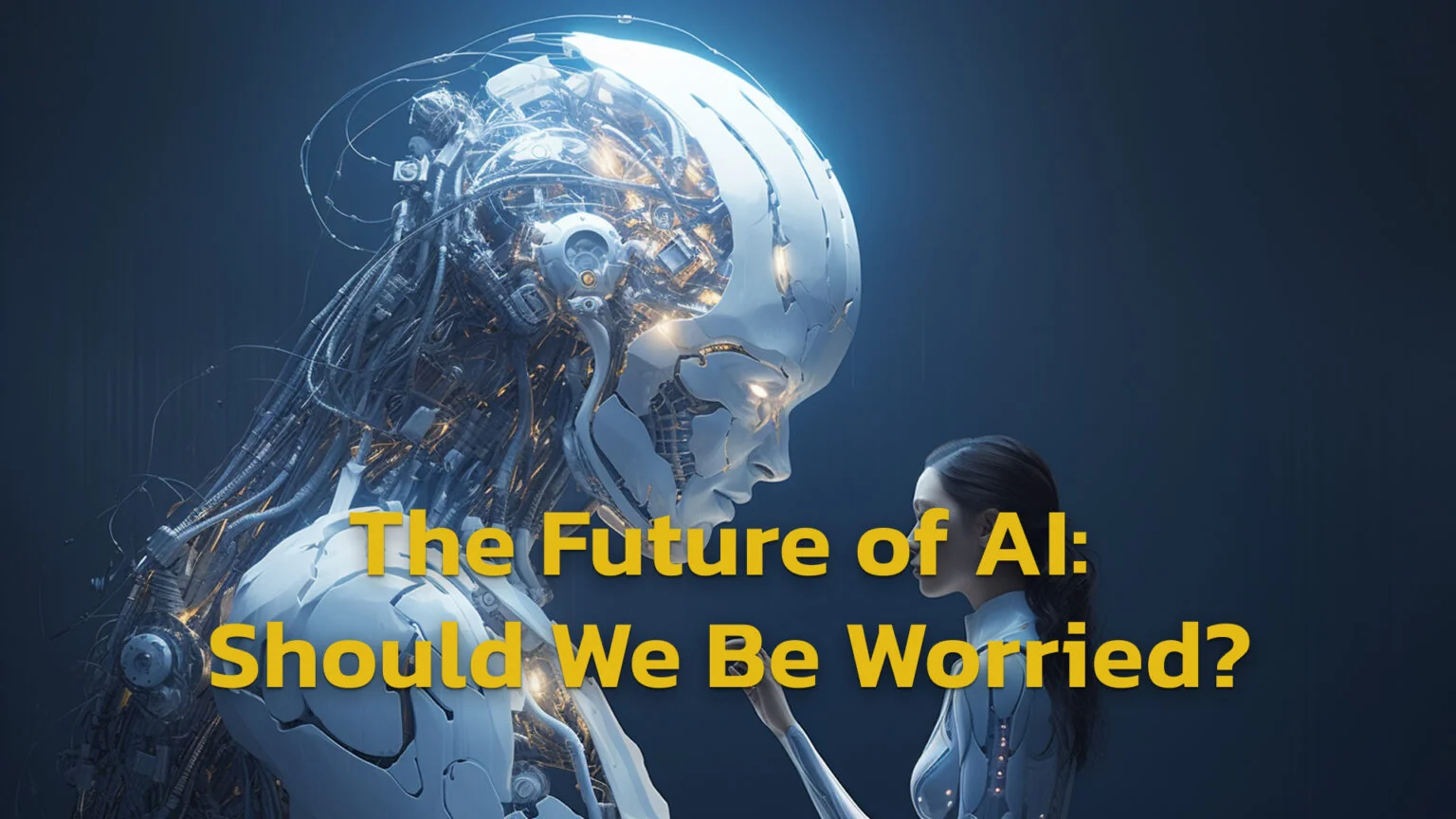
The future of AI is not a single trajectory — it is a set of choices being made now by companies, governments, and individuals. The technology itself is neutral; its impact depends on how it is deployed, governed, and used. In September 2026 the largest labs made one of those choices in public, and what each of them actually committed to is the useful measure of how seriously to take it. The most useful posture is neither uncritical enthusiasm nor blanket fear, but informed engagement.
For individuals, that means staying current on how AI is affecting your specific field, developing skills that are hard to automate, and being a critical consumer of AI-generated content. For organizations, it means investing in bias audits, being transparent about AI use in consequential decisions, and actively planning for workforce transitions rather than reacting to them.
Conclusion
AI is the most consequential technology of this generation, and its impact will be felt across every sector of the economy and every aspect of daily life. The opportunities are real and significant. So are the risks. The historical record suggests that societies that invest in adaptation — in education, regulation, and workforce development — navigate technological transitions better than those that either resist change or embrace it without scrutiny.
The decisions being made about AI right now will shape its trajectory for decades. Staying informed is not optional.
FAQ
Will AI take most jobs in the next decade?
AI will automate many specific tasks and eliminate some roles, but the historical pattern of technological transitions suggests new job categories will emerge. The net effect on employment depends heavily on how quickly education and policy adapt. Roles requiring judgment, creativity, and interpersonal skills are more resilient.
What is a deepfake and why does it matter?
A deepfake is an AI-generated video or audio clip that convincingly replicates a real person saying or doing something they did not. The technology is advancing faster than detection tools, making it an increasing threat to information integrity in politics, journalism, and personal contexts.
Is algorithmic bias a serious problem?
Yes. Documented cases across hiring, facial recognition, and predictive policing show real harm from biased AI systems. Fixing it requires diverse training data, ongoing auditing, and accountability structures — not just awareness.
Which industries will benefit most from AI?
Healthcare, education, financial services, and any field involving large-scale data analysis are seeing the most significant near-term gains. Creative industries are also being reshaped, though the implications for copyright and creative work are still being debated.
Should I be worried about AI and my personal security?
Voice cloning and AI-enabled phishing are real and growing threats. Being skeptical of unexpected calls or messages requesting sensitive information, even from familiar-sounding voices, is a practical defense. Strong verification habits matter more now than they did five years ago.