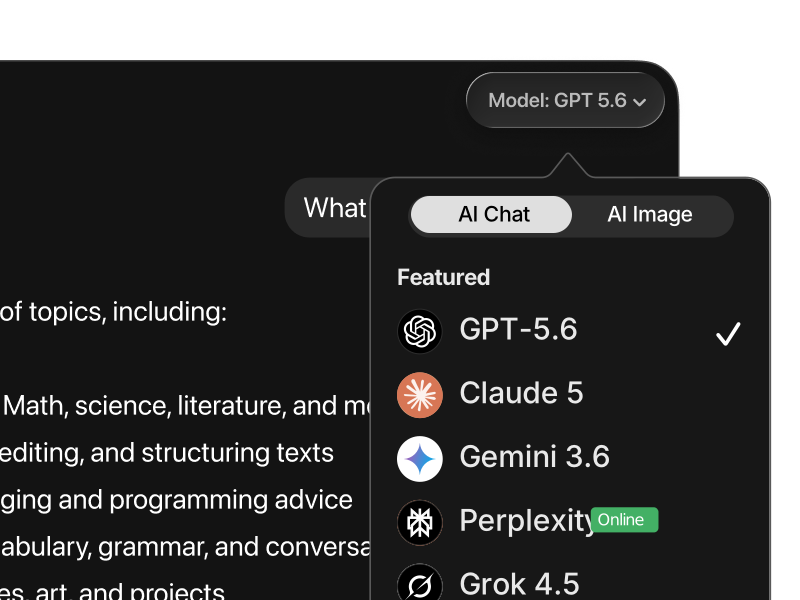
The AI landscape in 2026 is crowded with strong contenders. Gemini 3.1 Pro leads most academic reasoning benchmarks, Claude Opus 4.8 excels at complex coding and structured writing, and Grok 4.5 brings real-time data from X. Where does ChatGPT, powered by GPT-5.6, actually stand?
The short answer: GPT-5.6 is the strongest model for everyday use, computer-control tasks, and knowledge-work documents. It is built to operate software and finish real desktop work, not just answer questions.
Below is a clear, use-case-driven comparison.
ChatGPT (GPT-5.6) vs. Gemini 3.1 Pro
Google’s Gemini 3.1 Pro is one of the most factually reliable models available. It leads most academic reasoning benchmarks, scores 94.3% on GPQA Diamond (graduate-level science questions), and ships with native Google Search grounding for real-time fact access. It is the safest default for research, scientific writing, and any task where factual accuracy matters most.
GPT-5.6 takes a different approach.
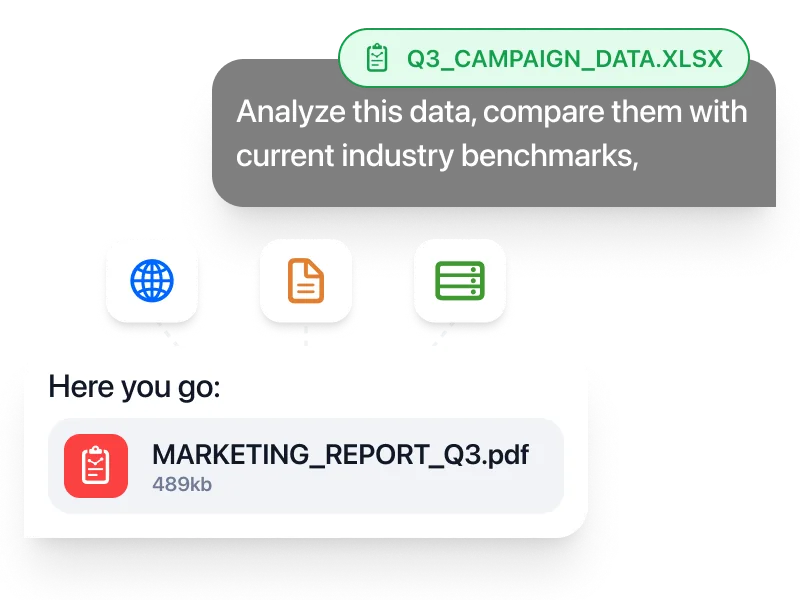
Where Gemini focuses on accuracy and reasoning depth, GPT-5.6 excels in execution and computer use. It can operate software, fill out forms, manage files, and complete multi-step desktop workflows autonomously, and it is especially strong on knowledge-work documents.
Practical takeaway:
- Use Gemini 3.1 Pro for research, scientific accuracy, and long-context document analysis.
- Use ChatGPT (GPT-5.6) when you want the model to operate software, complete documents, or execute multi-step desktop tasks.
Gemini is the researcher. GPT-5.6 is the operator.
ChatGPT (GPT-5.6) vs. Claude Opus 4.8
Anthropic’s Claude Opus 4.8 is one of the strongest models for complex coding and structured engineering work. It is a top performer on real-world coding benchmarks like SWE-bench Verified and supports parallel sub-agent coordination through Claude Code, letting it tackle multi-file refactors and large codebase work that single-context models struggle with.
GPT-5.6 approaches the same tasks differently.
Instead of heavy planning and multi-agent orchestration, GPT-5.6 prioritizes momentum and tool use. It is stronger for developers who need rapid prototyping, IDE automation, and direct computer-use tasks like UI navigation, with efficient tool calling that keeps token costs down in agentic workflows.
Practical takeaway:
- Choose Claude Opus 4.8 for complex multi-file engineering, structured planning, and long-form professional writing.
- Choose ChatGPT (GPT-5.6) for rapid prototyping, IDE automation, and tool-heavy agentic workflows.
Claude is the architect. GPT-5.6 is the sprinter.
ChatGPT (GPT-5.6) vs. Grok 4.5
xAI’s Grok 4.5 takes a structurally different approach. It leans on real-time data from X and the broader web, plus a multi-agent style of deliberation that fact-checks itself before answering. That makes Grok 4.5 useful for brainstorming, current events, and creative tasks where divergence from the expected answer is a feature, not a bug. It is also priced aggressively at the API level.
GPT-5.6 is less stylistically experimental, but more reliable once tasks become technical or multi-step. It maintains better internal consistency across longer workflows, especially in code, computer-use tasks, and structured document work.
Practical takeaway:
- Use Grok 4.5 for brainstorming, real-time information, and creative work where unexpected ideas matter.
- Use ChatGPT (GPT-5.6) when correctness, execution, and follow-through matter.
ChatGPT (GPT-5.6) vs. Perplexity
Perplexity is not a direct competitor in the same category.
Perplexity is optimized for search-first answers with citations. It shines when the goal is to verify facts, explore sources, or quickly understand a topic with references, essentially functioning as an AI-powered research tool rather than a general-purpose assistant.
GPT-5.6 is stronger at transformation and execution: turning information into code, plans, summaries, finished documents, or completed software workflows.
Practical takeaway:
- Use Perplexity to gather facts and sources.
- Use ChatGPT (GPT-5.6) to act on those facts.
ChatGPT (GPT-5.6) vs. DeepSeek
DeepSeek V4 is among the strongest open-weight models, with reasoning and coding abilities competitive with frontier closed models. Its API pricing undercuts most proprietary models by a wide margin. For developers building cost-sensitive automation or organizations with data-privacy requirements, it is a genuinely viable alternative to closed models.
GPT-5.6 still leads in consistency, ecosystem integration, and computer-use capabilities, especially in production-level tasks where predictability matters. It is also more deeply integrated with third-party tools, GitHub Copilot, and the broader macOS environment.
Practical takeaway:
- Use DeepSeek when cost, privacy, or self-hosting matter most.
- Use ChatGPT (GPT-5.6) when reliability, ecosystem, and execution quality are the priority.
Use All of Them in One App
The honest reality is that no single AI model is best at everything. The most effective setups use two or three models in parallel, routing each task to whichever model handles it best.
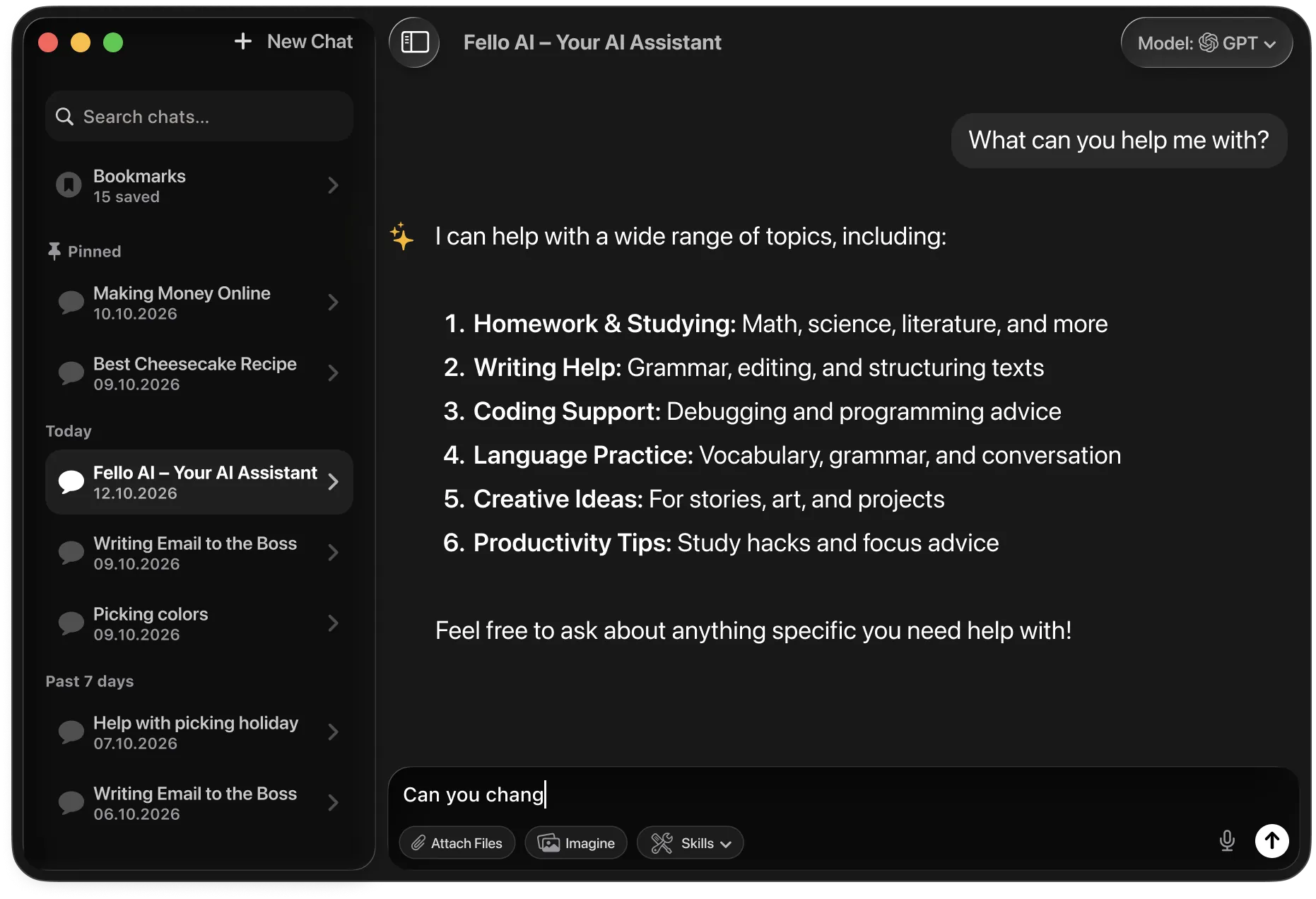
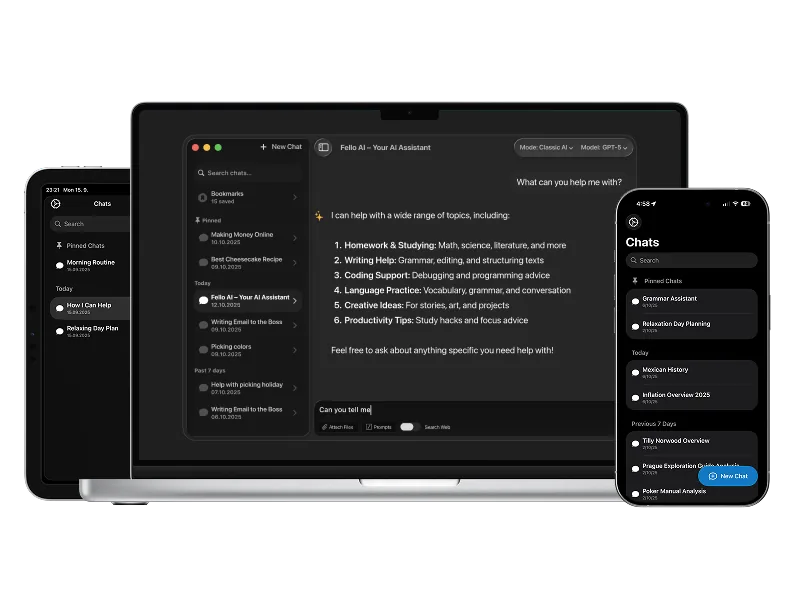
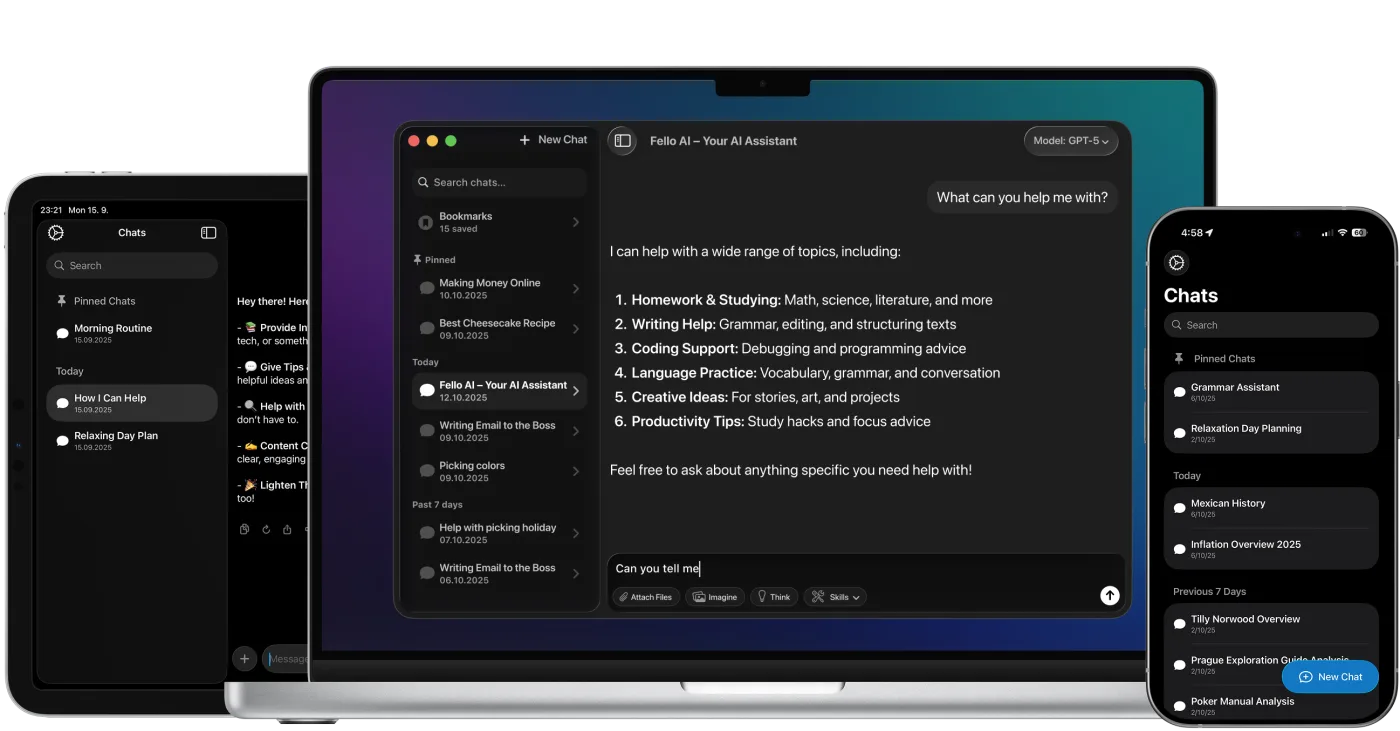
That’s exactly what Fello AI is built for. Instead of managing separate subscriptions, logins, and apps for ChatGPT, Claude, Gemini, Grok, Perplexity, and DeepSeek, you get all of them in one native app for Mac, iPhone, and iPad, for one price, starting at $9.99/month with a free tier available. Models are added and updated regularly, so you always have access to the latest versions without waiting or paying extra.
For a full, regularly updated comparison of all major AI models with current benchmarks and pricing, see our Best AI Models page.
See also: Claude · Gemini · Grok · Perplexity · DeepSeek · LLaMA