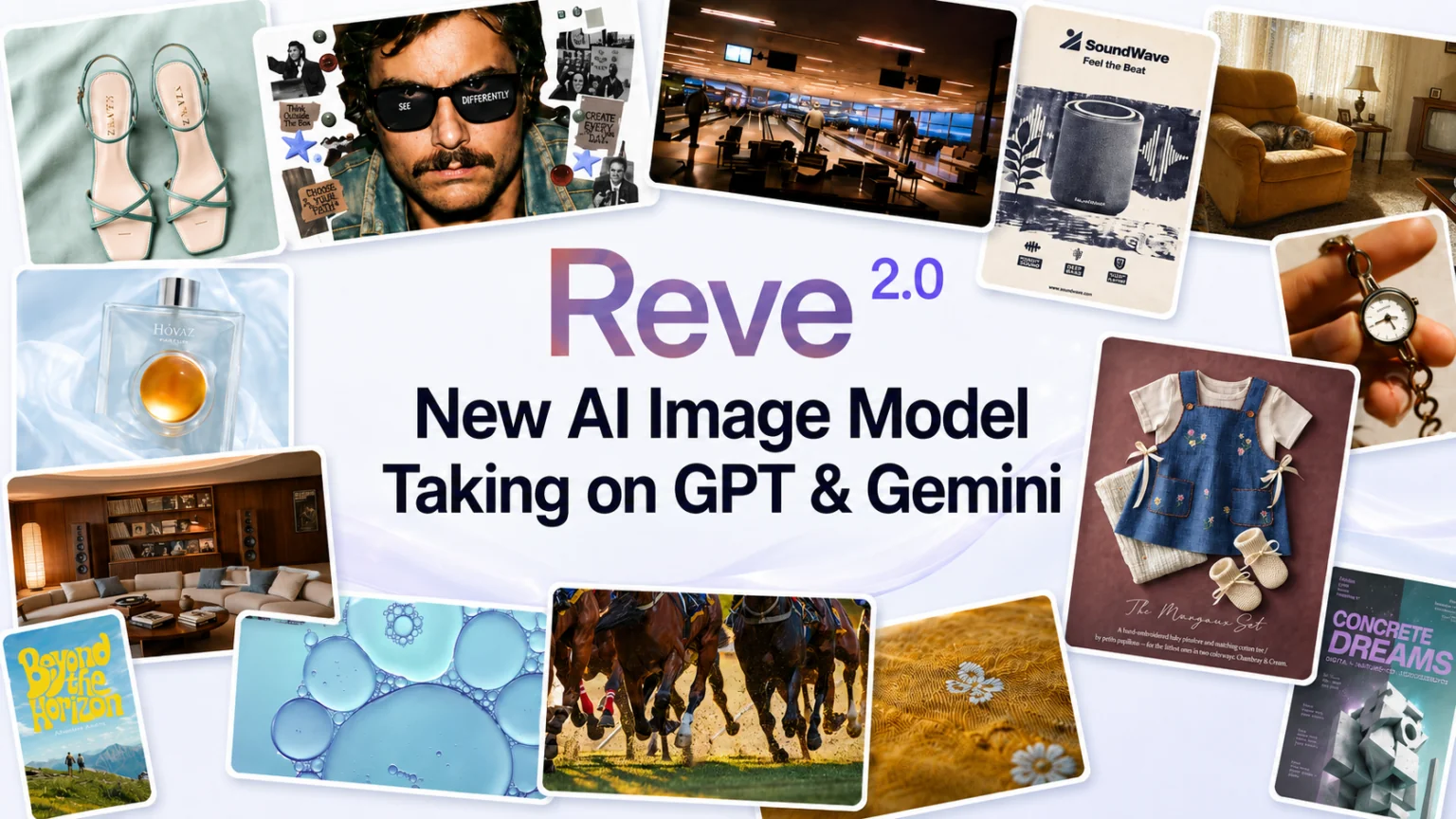
Le 3 juin 2026, un laboratoire de recherche de Palo Alto appelé Reve a publié Reve 2.0, un modèle de génération d'images qui fait quelque chose que presque tous les autres grands générateurs d'images refusent de faire. Au lieu de transformer votre prompt directement en pixels, il construit d'abord un plan structuré et éditable de l'image, appelé mise en page, puis seulement il effectue le rendu. Reve résume le résultat en trois mots. Des images que vous pouvez toucher.
Il ne s'agit pas d'un slogan marketing plaqué sur un modèle de diffusion ordinaire. C'est toute l'architecture, que Reve détaille dans son annonce. Et le pari semble payant. Reve 2.0 a fait ses débuts à la deuxième place du classement Arena Text-to-Image, devant Nano Banana 2 de Google et un ancien modèle d'image OpenAI, derrière GPT-Image-2 uniquement. Le laboratoire affirme avoir obtenu ce résultat en s'entraînant sur environ dix fois moins de GPU que la concurrence valorisée à mille milliards de dollars.
Cet article présente une analyse complète de Reve 2.0. Ce que c'est vraiment, en quoi la génération basée sur des mises en page diffère du pipeline prompt-puis-diffusion utilisé par tout le monde, ses performances sur les benchmarks, qui l'a créé, ce qu'il coûte, où cette approche présente encore des limites, et pourquoi deux des laboratoires d'images les plus respectés ont pivoté vers la même idée dans la même semaine.
TL;DR
Reve 2.0 est un modèle de génération et d'édition d'images de pointe, construit autour d'une architecture que l'entreprise appelle Large Layout Model. Trois éléments le distinguent des modèles que la plupart des gens utilisent aujourd'hui.
Premièrement, il planifie avant de peindre. Une mise en page structurée s'intercale entre votre requête et les pixels finaux, décrivant où va chaque élément, sa taille et son contenu. Deuxièmement, il effectue le rendu en 4K natif par 4K, soit 16 mégapixels réels, sans étape d'agrandissement séparée. Troisièmement, parce que cette mise en page est lisible et ressemble à du code, vous (ou un agent IA) pouvez modifier le plan directement au lieu de réécrire un prompt et d'espérer le meilleur.
Le résultat, c'est le contrôle. Vous pouvez déplacer un objet, recolorer une zone ou corriger un texte sans que le reste de l'image se transforme. Cette seule capacité est le Graal de la génération d'images depuis ses débuts.
Pourquoi les prompts textuels atteignent leurs limites
Pour comprendre pourquoi Reve a fait ce pari, il faut voir comment fonctionne un modèle d'image moderne classique. Vous tapez un prompt. Un modèle de langage le développe en un long paragraphe dense décrivant la scène. Un modèle de diffusion lit ensuite ce paragraphe et génère les pixels.
Le texte est merveilleusement expressif, mais aussi ambigu, subjectif et imprécis. Cette ambiguïté est l'ennemie du contrôle. Quiconque a passé du temps sérieux avec des outils comme Midjourney connaît cette frustration bien précise. Vous obtenez enfin une image que vous aimez, vous changez trois mots pour corriger un petit détail, et toute la composition se réorganise. Demandez une nuance de vert exacte, ou qu'un objet se place dans le coin supérieur gauche, et l'anglais courant vous laisse régulièrement tomber.
La thèse de Reve est que le problème n'est pas l'intelligence du modèle. C'est la représentation. Passer directement du prompt aux pixels, soutiennent-ils, c'est comme générer une application entière sans jamais écrire le code. C'est rapide à lancer, mais opaque, presque impossible à piloter, et ça exclut le créateur du processus dès que ça démarre. Le laboratoire appelle les quatre premières années de la génération d'images la phase feux d'artifice. Mettre autant de matière que possible dans le tube, allumer, et apprécier ce qui se matérialise. Impressionnant, mais pas contrôlable.
L'histoire de la technologie, note Reve, tend à se dérouler en deux phases. L'humanité libère d'abord une force puissante. Puis elle apprend à la maîtriser. L'imprimerie a existé des siècles avant que la presse la rende configurable. Les gens ont construit des planeurs pendant cent ans avant que les frères Wright maîtrisent le contrôle sur trois axes. La génération d'images, dans cette perspective, quitte enfin sa phase feux d'artifice pour entrer dans sa phase de contrôle. L'instrument de ce contrôle est la mise en page.
Ce qu'est concrètement une mise en page
Une mise en page est une description structurée et hiérarchique d'une image. Chaque élément y possède un emplacement, une taille et une description locale, ainsi que des attributs optionnels comme une valeur de couleur ou une image de référence. En résumé, c'est le plan de l'image avant que la moindre peinture ne soit appliquée.
L'analogie la plus claire est celle que Reve utilise lui-même. Une mise en page est à une image ce que HTML est à une page web, ou ce que SVG est à un graphique vectoriel. Elle sépare l'intention sémantique, c'est-à-dire ce que l'image est censée contenir et comment elle est agencée, du rendu en pixels, c'est-à-dire comment elle est finalement dessinée. Cette séparation est l'idée la plus importante de tout le système.
Parce que la mise en page est structurée et lisible par l'humain, elle devient une interface partagée. Une personne peut la modifier à la main en faisant glisser une zone ou en réécrivant la description d'un élément. Un agent IA peut lire la même structure et raisonner dessus. Et le modèle peut la raffiner à partir d'instructions en langage naturel. Vous disposez de trois façons de contrôler la même image : écrire une instruction, modifier directement la structure, ou la confier à un agent. Aucune ne vous oblige à tout régénérer.
Comment fonctionne le Large Layout Model
Travailler avec des mises en page requiert un nouveau type de modèle, que Reve a donc entraîné lui-même. Le système fonctionne en trois étapes conceptuelles.
- Entrée. Le modèle accepte toute combinaison de mises en page, d'instructions en langage naturel et d'images de référence. Vous pouvez lui fournir les trois à la fois, ou un seul.
- Réflexion. Il dérive une mise en page à partir d'une trace de raisonnement interne, planifiant toute la composition avant qu'un seul pixel n'existe. C'est l'étape de pensée visuelle.
- Rendu. Un moteur de rendu séparé et performant transforme la mise en page finalisée en une image 4K native.
La recette d'entraînement est remarquable. Reve a construit un pipeline de données sur des milliards d'images, amorcé à partir d'annotations humaines denses, pour apprendre au système à quoi ressemblent de bonnes mises en page. Il a ensuite effectué un pré-entraînement continu et un post-entraînement sur des grands modèles de langage open source de la famille Qwen, les modèles publiés par l'équipe Qwen d'Alibaba, afin d'inculquer un raisonnement spatial autour de sa représentation en mises en page. En termes simples, le cerveau planificateur de Reve 2.0 est un modèle de langage ré-entraîné pour raisonner dans l'espace, et le moteur de rendu est un moteur séparé optimisé uniquement pour la qualité et la vitesse des images.
Cette séparation est le cœur architectural de Reve 2.0. Les modèles de diffusion produisent de belles images mais sont difficiles à diriger. Les modèles de langage autorégressifs sont très intelligents mais lents et pas particulièrement esthétiques, leur modalité native étant le texte, pas les pixels. En séparant la planification du rendu, Reve utilise chaque type de modèle pour ce qu'il fait vraiment bien, plutôt que de forcer l'un à mal faire les deux tâches.
Les preuves que les mises en page l'emportent
Une idée brillante ne vaut que par ses résultats, c'est pourquoi Reve a mené une ablation à grande échelle comparant les modèles de mises en page à des générateurs basés sur des prompts de taille égale. Le laboratoire indique que les modèles de mises en page ont gagné sur toute la ligne, produisant des images nettement meilleures. Deux résultats spécifiques portent l'essentiel du poids.
La reconstruction continue de s'améliorer à mesure que vous ajoutez des zones. Un prompt textuel simple ne peut jamais reconstruire parfaitement une vraie photographie, quelle que soit la longueur et le détail de la description. Le résultat dérive toujours de l'original. Une mise en page se comporte différemment. À mesure que le nombre de zones labellisées augmente, Reve 2.0 reconstruit des détails de plus en plus fins, et ce sans aucun pixel en entrée, en travaillant uniquement à partir de la structure. Lorsque vous fournissez des pixels, les mises en page deviennent encore plus puissantes, car vous pouvez définir exactement ce qui change et où.
Les lois d'échelle s'appliquent aux mises en page. La qualité des images augmente avec la taille du modèle, ce qui est attendu. Mais elle augmente aussi lorsque le modèle peut produire plus de zones, ce qui élargit effectivement son contexte de pensée visuelle. Plus de détails de planification produit une meilleure image finale. C'est une propriété utile, car elle signifie que la qualité peut s'acheter avec de la structure, pas seulement avec une taille de modèle brute.
4K natif et la fin de la roulette de l'agrandissement
Reve 2.0 effectue le rendu en 4K par 4K nativement, ce que le laboratoire affirme en faire le modèle d'images 4K le plus rapide au monde. À 16 mégapixels, la sortie est prête pour l'impression directement depuis le modèle, sans passe d'agrandissement séparée.
Ce détail compte plus qu'il n'y paraît de prime abord. L'agrandissement a toujours été un dernier coup de dés au bout d'une longue série de coups de dés. Vous passez une heure à peaufiner une image, vous la faites passer dans un agrandisseur, et vous regardez des détails subtils se modifier discrètement. La réponse de Reve n'est pas un meilleur agrandisseur. C'est d'itérer à pleine résolution dès le départ, afin que ce que vous voyez durant le processus créatif corresponde réellement à ce que vous obtenez à la fin. Pour les supports physiques et les travaux d'impression de haute qualité, où 16 mégapixels est véritablement utile, cela supprime une source récurrente de frustration.
Édition sans dégradation
L'itération est là où l'approche par mises en page révèle un deuxième avantage majeur, en résolvant un problème qui ronge silencieusement tous les workflows de diffusion.
Les modèles d'images classiques pénalisent l'itération. Chaque image générée comporte de petits artefacts de diffusion et de compression. Lorsque vous réinjectez cette image comme référence pour la génération suivante, ces artefacts sont repris, et une nouvelle couche s'ajoute par-dessus. Au fil d'une longue session d'édition, ils ne s'accumulent pas simplement, ils se combinent, et l'image se dégrade progressivement en bouillie. Reve 2.0 combat ce phénomène de deux façons.
| Workflow | Ce qui se passe dans Reve 2.0 |
|---|---|
| Édition avec références d'images | Une nouvelle architecture de rendu résiste à cet effondrement, de sorte que les modifications restent stables lors de longues sessions itératives |
| Édition sans références d'images | La génération à partir de la mise en page verrouille les éléments en place, donc l'accumulation d'artefacts est nulle |
Le deuxième cas est le plus frappant. Parce que l'image est effectivement définie par du code, la régénérer depuis la mise en page revient à relancer le même programme. La même entrée structurée produit la même sortie verrouillée, sans dérive. Reve soutient que cela transforme l'édition générative, qui était une série de paris, en un vrai processus créatif itératif, plus proche de la façon dont le design fonctionne réellement.
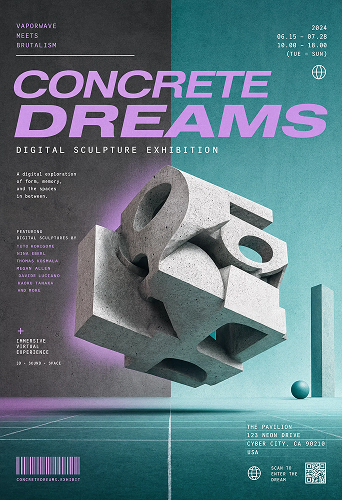
Un bénéficiaire concret est le texte et la typographie. Parce que la composition, le positionnement et l'espacement sont définis dans la mise en page avant le rendu, Reve 2.0 peut placer le texte avec précision et gérer la typographie environnementale, enseignes, emballages, étiquettes, menus, plaques d'immatriculation, d'une façon qui paraît bien moins synthétique que les lettres déformées qui ont rendu les modèles d'images tristement célèbres, l'un des moyens les plus faciles de savoir si une photo est générée par IA. Le design graphique et les travaux à forte dominante visuelle sont les premiers gagnants évidents.
Les performances de Reve 2.0 sur les benchmarks
Sur le classement Arena text-to-image daté du 3 juin 2026, Reve 2.0 a obtenu un score de 1 280, à plus ou moins 11 points, sur la base de 3 455 votes. Cela le place deuxième au classement général et représente un bond d'environ 125 points par rapport au Reve 1.5 précédent.
| Position | Modèle | Laboratoire | Notes |
|---|---|---|---|
| 1 | GPT-Image-2 | OpenAI | Leader de ce classement de juin avec une large avance |
| 2 | Reve 2.0 | Reve | 1 280, laboratoire sous un billion de dollars, bien moins de calcul |
| En dessous | Nano Banana 2 | Également connu sous le nom de Gemini 3.1 Flash Image Preview | |
| En dessous | MAI-Image-2.5 | Microsoft | |
| En dessous | GPT-Image-1.5 | OpenAI | Variante haute fidélité |
Le contexte compte autant que le classement. Reve décrit son résultat comme celui du meilleur modèle d'images de toute entreprise valorisée à moins d'un billion de dollars, obtenu avec environ dix fois moins de GPU que ses rivaux plus importants. Battre le Nano Banana Pro de Google et un ancien modèle d'image OpenAI sur un classement de préférence humaine en aveugle, avec ce budget de calcul, c'est ce qui a fait tourner les têtes. Les scores Arena sont basés sur des personnes choisissant entre deux images sans savoir quel modèle les a produites, donc un bon classement reflète ce que les vrais utilisateurs préfèrent réellement, plutôt qu'une métrique synthétique.
Il convient de garder le résultat en proportion. Reve 2.0 était numéro deux de ce classement, pas numéro un, et GPT-Image-2 gardait une avance claire. Mais l'écart entre un petit laboratoire et la frontière a rarement été aussi étroit. Les deux extrémités du classement ont bougé depuis. ChatGPT Images 2.5 d'OpenAI occupe désormais la première place du classement text-to-image d'Arena, et Reve a publié la version 2.1.
Le laboratoire derrière le modèle
Reve est un laboratoire de recherche de Palo Alto fondé en 2023 par une équipe d'anciens chercheurs d'Adobe et de Stability. Parmi les fondateurs figurent Michaël Gharbi, ancien chercheur chez Adobe Research titulaire d'un doctorat du MIT CSAIL, et Taesung Park, également ancien d'Adobe Research avec un doctorat de l'UC Berkeley, bien connu dans le domaine pour ses travaux fondamentaux sur la traduction d'image à image. Christian Cantrell, ancien vice-président produit chez Stability AI, fait aussi partie du groupe fondateur, avec le soutien de Mike Speiser de Sutter Hill.
Ce pedigree n'est pas anecdotique. La lignée de recherche de Park porte précisément sur la transformation de représentations structurées en images, ce qui est exactement le problème que posent les mises en page. Une équipe issue de la recherche en imagerie d'Adobe et du monde produit de Stability est exceptionnellement bien placée pour parier que l'avenir de la génération d'images ressemble davantage à des outils de design qu'à une boîte de prompt.
Le laboratoire est bien financé pour sa taille. Reve a levé environ 350 millions de dollars pour une valorisation proche de 1,9 milliard de dollars en novembre 2025, dans un tour mené par Top Harvest Capital, avec un soutien antérieur d'investisseurs dont Basis Set Ventures. Son premier modèle, Reve Image 1.0, nom de code Halfmoon, a été lancé en mars 2025 et a rapidement atteint la première place sur l'Image Arena, se forgant une réputation pour son excellente adhérence aux prompts et sa typographie inhabituellement propre. Fait crucial, Reve 1.0 était déjà entraîné sur des structures de données détaillées plutôt que sur de simples légendes, ce qui a d'abord prouvé la thèse des mises en page. Reve 2.0 amplifie cette idée avec environ trois fois plus de paramètres, bien plus de données, et le moteur de rendu 4K dédié.
Tarifs et comment l'essayer
Reve 2.0 est disponible sur reve.com, qui fait aussi office d'éditeur. C'est voulu. Parce que le modèle et le produit ont été construits ensemble autour de la même représentation en mises en page, chaque partie d'une image est adressable, ce qui a permis à Reve de construire des outils d'édition par manipulation directe sur la structure exacte que le modèle génère. Le modèle est le code, et reve.com est l'éditeur de ce code.
Les abonnements web sont échelonnés par crédits mensuels.
| Formule | Prix | Crédits par mois |
|---|---|---|
| Starter | $6.90 | 100 |
| Standard | $19.90 | 700 |
| Premium | $39.90 | Quota plus large |
Une API développeur est disponible en version bêta via la console de Reve pour les équipes souhaitant intégrer le modèle dans leurs propres pipelines. Parce que la représentation sous-jacente ressemble à du code, Reve positionne le modèle comme natif pour les agents, ce qui signifie que les systèmes automatisés peuvent à la fois voir les images et raisonner sur leur structure, pas seulement recevoir une image plate.
Là où les mises en page ont encore leurs limites
Une évaluation honnête doit nommer les compromis, et il y en a quelques-uns.
Les affirmations de performance phares, moins de GPU, moteur de rendu 4K le plus rapide, meilleur modèle sous un billion de dollars, proviennent toutes de l'annonce de Reve et n'ont pas encore été vérifiées de façon indépendante. Elles sont plausibles et le classement Arena est tiers, mais les chiffres de calcul et de vitesse doivent pour l'instant être lus comme les affirmations du laboratoire.
Les mises en page ajoutent aussi une couche de complexité conceptuelle. Pour un utilisateur occasionnel qui veut juste une image rapide, taper un prompt reste plus simple que de penser en zones et en structure. La puissance des mises en page apparaît surtout quand vous avez besoin de précision et d'itération, c'est-à-dire pour du travail professionnel et du design, pas nécessairement pour une image ponctuelle pour un post sur les réseaux, où un générateur et éditeur de photos IA gratuit peut suffire.
Et le modèle est numéro deux, pas numéro un. GPT-Image-2 domine encore confortablement le classement, ce qui rappelle qu'une meilleure représentation réduit l'écart avec l'échelle mais ne l'a pas encore effacé.
L'industrie évolue dans la même direction
Reve 2.0 n'est pas arrivé de façon isolée. Dans la même semaine, Ideogram a lancé Ideogram 4 autour d'une idée très proche, utilisant des boîtes englobantes et un contrôle structurel plutôt que de s'appuyer sur des prompts toujours plus denses. Deux des laboratoires d'images les plus respectés ont conclu indépendamment que la voie vers une génération contrôlable passe par des représentations structurées et éditables, la même course qui a attiré de nouveaux modèles chinois comme Seedream qui poursuivent la même frontière de qualité d'image.
Cette convergence est le vrai signal. Reve considère les mises en page comme seulement la première étape vers le traitement de la génération d'images comme une synthèse de programmes, un monde où les humains et les agents lisent, écrivent et raisonnent sur une couche sémantique partagée, semblable à du code. La prochaine étape de sa feuille de route est de faire évoluer les modèles de langage qui font la planification. Si le pari tient, la boîte de prompt pourrait finir par ressembler à une interface de transition, comme l'étaient autrefois les cartes perforées, et l'édition visuelle structurée pourrait devenir la façon habituelle de faire du travail d'image sérieux.
Ce que cela signifie si vous utilisez l'IA au quotidien
Pour la plupart des gens, l'enseignement pratique est que le vrai contrôle visuel arrive enfin. Placez le texte exactement où il doit être. Corrigez un seul objet sans régénérer toute la scène. Itérez en haute résolution sans regarder vos détails se dégrader discrètement. Si vous faites du design, du marketing, des maquettes de produits ou des travaux d'impression, c'est la capacité qui manquait.
Le lancement souligne aussi la rapidité avec laquelle le paysage des modèles évolue. En une seule journée, un petit laboratoire a introduit une nouvelle architecture et rebattu un classement dominé par OpenAI, Google et Microsoft. Le meilleur modèle pour une tâche donnée ne cesse de changer, parfois d'une semaine à l'autre, et aucun fournisseur ne reste au sommet longtemps.
C'est précisément le problème que Fello AI résout côté langage. Plutôt que de jongler avec des abonnements séparés à chaque modèle de pointe, Fello AI regroupe Claude, GPT, Gemini et les autres dans une seule application native légère pour Mac, iPhone et iPad, pour que vous puissiez passer au modèle qui gagne cette semaine sans gérer cinq identifiants ou cinq factures. À mesure que les modèles d'images et de langage continuent de se dépasser mutuellement, avoir un seul endroit pour les atteindre tous est le moyen le plus simple de rester à jour sans miser tout son workflow sur un seul laboratoire.
À retenir
Reve 2.0 rappelle que la frontière ne tient pas seulement à l'échelle. Une petite équipe d'anciens chercheurs d'Adobe et de Stability, entraînée sur une fraction de la puissance de calcul, a atteint la deuxième place mondiale en changeant la représentation plutôt qu'en ajoutant des paramètres. Son pari est que les images se comprennent mieux comme du code que comme de la prose, et que les humains et les agents IA devraient collaborer sur une structure partagée et éditable plutôt que d'échanger des suppositions à travers une boîte de prompt.
Que la génération basée sur des mises en page devienne la norme de l'industrie ou simplement une approche solide parmi d'autres, Reve 2.0 a déjà prouvé le point le plus important. Dans un domaine qui semble souvent appartenir à une poignée de géants, une meilleure idée peut encore faire bouger le classement en une seule journée.