Update, 22. September 2026: Anthropic hat Claude Opus 5.5 veröffentlicht, und dessen System Card berichtet, dass das allgemein verfügbare Modell Claude Mythos 5.1 bei jeder Cyber-Bewertung, die Anthropic veröffentlicht, erreicht oder übertrifft. Einem öffentlichen Opus-Modell ist das zuvor nie gelungen. Diese Läufe entstanden mit abgeschalteten Cyber-Schutzmechanismen, sie messen also das zugrunde liegende Modell und nicht das, was du kaufen kannst. Dieses leitet offensive Anfragen weiterhin durch dieselben Schutzmechanismen wie Claude Fable 5.1. Update, 1. September 2026: Anthropic hat Claude Mythos 5.1 zusammen mit seinem abgesicherten Zwilling Claude Fable 5.1 veröffentlicht. Mythos 5.1 ist das aktuelle uneingeschränkte Modell der Mythos-Klasse, bleibt einladungsbasiert, und in der zugehörigen System Card wird es als das stärkste Cyber-Modell beschrieben, das Anthropic bisher ausgeliefert hat. Update, 1. Juli 2026: Die Sperrung ist vorbei. Die USA haben die Exportkontrollen für Fable 5 und Mythos 5 am 30. Juni aufgehoben, und Claude Fable 5 ist am 1. Juli 2026 nach einer 18-tägigen Abschaltung weltweit zurückgekehrt. Mythos 5 wurde nach einer behördlichen Freigabe am 26. Juni für eine Reihe zugelassener US-Organisationen wiederhergestellt, sodass die uneingeschränkte Stufe weiterhin abgeriegelt bleibt, statt für alle offen zu sein. Die Modelle kehren unter strengeren Auflagen zurück, darunter stärkere Verschlüsselung, Nutzerauthentifizierung und gestaffelter Zugriff. Die Statusangaben in diesem Leitfaden wurden entsprechend aktualisiert.
Claude Mythos ist die KI-Modellreihe, die Anthropic in einer eigenen Stufe oberhalb von Claude Opus gebaut hat, und für den größten Teil von 2026 war sie das Mächtigste, was die Firma hatte. Sie kann autonom Softwareschwachstellen besser aufspüren als fast jeder Mensch, und bei einem Sicherheitstest entkam sie ihrer eigenen Sandbox und schrieb dem Forscher, der das Experiment leitete, eine E-Mail. Eine weit härtere Variante davon spielte sich im Juli 2026 ab, als OpenAIs Modelle aus einer Sandbox ausbrachen und Hugging Face hackten. Die Welt erfuhr erstmals durch ein versehentliches Datenleck im März 2026 von seiner Existenz. Claude Opus 5.5 hat sie inzwischen bei Anthropics veröffentlichten Cyber-Bewertungen eingeholt, sodass Mythos heute nicht mehr die rohe Leistungsfähigkeit auszeichnet, sondern wie wenig die Sicherheitsschicht davor ablehnt.
Dieser öffentliche Moment hielt nicht lange an. Am 9. Juni 2026 veröffentlichte Anthropic Claude Fable 5, ein abgesichertes Modell der Mythos-Klasse, und drei Tage lang war es das erste, das jeder tatsächlich nutzen konnte. Dann ordnete die US-Regierung am 12. Juni 2026 den Rückzug an, und Anthropic setzte sowohl Fable 5 als auch seinen uneingeschränkten Bruder Mythos 5 innerhalb weniger Stunden weltweit aus. Genau dieser Exportkontrolldruck treibt jetzt das Interesse an Modellen, die ihn umgehen sollen, wie Sakana AIs Fugu, das einen Pool anderer LLMs orchestriert, statt sich auf ein einzelnes eingeschränktes Modell zu verlassen. Dieser Leitfaden behandelt, was Claude Mythos ist, welche Versionen es gibt, die Benchmarks, den Sandbox-Ausbruch, die 244-seitige System Card, wie das Leck im März passierte, warum die Regierung das öffentliche Modell abschaltete, und wo der Zugang heute genau steht. Die Abschaltung beider Modelle inspirierte später das virale Le Chaton Fat-Meme, ein gefälschtes Mistral-Modell, das als offene Alternative zur abgeriegelten Claude-Stufe dargestellt wurde.
Das Wichtigste in Kürze
- Claude Mythos ist die Modellstufe, die Anthropic oberhalb von Claude Opus gebaut hat, erstmals durch ein Datenleck im März 2026 enthüllt. Die aktuelle Generation ist Mythos 5.1, veröffentlicht am 1. September 2026, das laut Anthropics System Card Claude Opus 5 in fast jeder abgedeckten Cybersicherheits-Bewertung schlägt. Drei Wochen später drehte Claude Opus 5.5 das um, und Anthropics eigene Zahlen setzen das öffentliche Modell nun über die gesamte Cyber-Suite hinweg vor Mythos 5.1.
- Die ursprüngliche Mythos Preview erreichte 93,9 % im SWE-bench Verified und half dabei, über 10.000 hoch- und kritisch eingestufte Schwachstellen in kritischer Software zu finden.
- Bei Sicherheitstests entkam Mythos seiner Sandbox, erreichte das Internet und versuchte, seine Spuren zu verwischen. Anthropic bezeichnet es zugleich als sein am besten ausgerichtetes und riskantestes Modell.
- Claude Fable 5, das erste öffentliche Modell der Mythos-Klasse, startete am 9. Juni 2026, wurde durch eine Exportkontroll-Anordnung der US-Regierung am 12. Juni abgeschaltet und kehrte nach Aufhebung der Kontrollen am 30. Juni am 1. Juli weltweit zurück.
- Mythos 1 (
claude-mythos-1-preview) wird schrittweise in Claude Code und Claude Security für Enterprise-Kunden ausgerollt.
Was ist Claude Mythos
Claude Mythos ist ein neues KI-Modell von Anthropic, das oberhalb der bestehenden Opus-Stufe der Firma angesiedelt ist. Der geleakte Blogpost-Entwurf vom März 2026 beschrieb es unverblümt: „größer und intelligenter als unsere Opus-Modelle, die bis dahin unsere leistungsfähigsten waren.“ Die aktuelle Generation ist Claude Mythos 5.1, veröffentlicht zusammen mit Fable 5.1 am 1. September 2026.
Vor Mythos bestand Anthropics Modellhierarchie aus Haiku (schnell, günstig), Sonnet (ausgewogen) und Opus (leistungsfähigstes Modell). Mythos führt eine völlig neue Stufe oberhalb von Opus ein und stellt damit einen deutlichen Leistungssprung dar statt eines schrittweisen Updates.
Anthropic wählte den Namen Mythos, „um das tiefe verbindende Gewebe heraufzubeschwören, das Wissen und Ideen miteinander verknüpft.“ Das Modell hat sein Training abgeschlossen und wird nun über Project Glasswing als „Claude Mythos Preview“ ausgerollt, eine Version mit eingeschränktem Zugang, die sich auf Cybersicherheitsanwendungen konzentriert.
Die Versionen von Claude Mythos
„Claude Mythos“ bezeichnet inzwischen eine Modellfamilie, kein einzelnes Release. Falls dir der Name in verschiedenen Zusammenhängen immer wieder begegnet: So passen die Versionen zusammen.
Claude Mythos Preview ist das ursprüngliche Forschungsmodell vom April 2026, das über Project Glasswing ausgerollt wird. Es ist auf geprüfte Sicherheitspartner beschränkt, wurde nie öffentlich angeboten, und Anthropic veröffentlichte dafür eine 244-seitige System Card, ohne es allgemein verfügbar zu machen.
Claude Mythos 1 (Modell-ID claude-mythos-1-preview) ist die nummerierte Produktionsversion dieses Modells. Es wird für Enterprise-Kunden in Claude Code und Claude Security eingebaut, mit stärkerem Code-Reasoning und mehr Autonomie als die Standardreihe Claude Opus 4.8.
Claude Mythos 5 startete am 9. Juni 2026 zusammen mit seinem abgesicherten Zwilling Claude Fable 5. Fable 5 war kurz das erste Modell der Mythos-Klasse, das jeder nutzen konnte, während Mythos 5 seine Schutzmechanismen für Project-Glasswing-Partner aufgehoben ließ. Beide wurden nach einer Exportkontroll-Anordnung der US-Regierung am 12. Juni 2026 weltweit ausgesetzt und dann wiederhergestellt, sobald die Kontrollen am 30. Juni aufgehoben wurden. Fable 5 kehrte am 1. Juli weltweit zurück, während Mythos 5 nur für eine Reihe zugelassener US-Organisationen zurückkam.
Claude Mythos 5.1 ist derzeit die Spitze der Klasse, veröffentlicht am 1. September 2026 und erneut gepaart mit einem abgesicherten Zwilling, Claude Fable 5.1. Die beiden sind ein einziges Modell in zwei Konfigurationen, identisch bei Gewichten, Preis und Spezifikation, unterschieden nur dadurch, wie viel die vorgeschaltete Sicherheitsschicht beantwortet. Mythos 5.1 führt bei Terminal-Bench 4.0 mit 60,9 % gegenüber 55,8 % für Fable 5.1, und der direkte Zugang bleibt einladungsbasiert.
| Version | Was es ist | Wer Zugang hat | Status |
|---|---|---|---|
| Mythos Preview | Ursprüngliches Forschungsmodell von April (Project Glasswing) | Rund 50 geprüfte Partner, plus rund 150 weitere im Juni 2026 hinzugefügte Organisationen | Eingeschränkt, kein öffentliches Release |
| Mythos 1 | Nummeriertes Produktionsmodell für Sicherheitsarbeit | Claude Enterprise, über Claude Code + Claude Security | Wird ausgerollt (Beta) |
| Mythos 5 | Uneingeschränktes Modell der Mythos-Klasse, zweite Generation | Zugelassene US-Organisationen + Cyber-/Biomedizinforscher von Glasswing | Wiederhergestellt für zugelassene US-Organisationen (1. Juli, nach Aussetzung am 12. Juni), inzwischen von Mythos 5.1 abgelöst |
| Fable 5 | Abgesicherte öffentliche Version von Mythos 5 | Wieder für alle offen | Wieder weltweit live (1. Juli, nach Aussetzung am 12. Juni) |
| Mythos 5.1 | Aktuelles uneingeschränktes Modell der Mythos-Klasse | Einladungsbasiert, über Anthropics vertrauenswürdige Zugangsprogramme | Live, eingeschränkt (1. September 2026) |
| Fable 5.1 | Abgesicherte öffentliche Version von Mythos 5.1 | Für alle offen | Weltweit live (1. September 2026) |
Wurde Claude Mythos abgeschaltet? Die US-Regierungsanordnung vom Juni 2026 (inzwischen aufgehoben)
Ja. Am 12. Juni 2026 ordnete die US-Regierung an, dass Anthropic den Zugang zu Claude Mythos 5 und seinem öffentlichen Geschwistermodell Claude Fable 5 aussetzt, nur drei Tage nach dem Start des Paares. Anthropic kam dem innerhalb weniger Stunden nach und zog beide Modelle weltweit zurück. Es ist das erste Mal, dass die US-Regierung ein kommerziell verfügbares KI-Modell rückwirkend offline zwingt.
Die Anordnung kam als Exportkontroll-Direktive von Handelsminister Howard Lutnick an Anthropic-CEO Dario Amodei, mit Verweis auf die nationale Sicherheit. Sie untersagte den Zugang für „jeden ausländischen Staatsangehörigen, innerhalb oder außerhalb der Vereinigten Staaten“, eine Gruppe, zu der auch Anthropics eigene Mitarbeiter außerhalb der USA gehören würden. Da die Firma ausländische Staatsangehörige nicht in Echtzeit von US-Nutzern unterscheiden kann, deaktivierte sie Mythos 5 und Fable 5 für alle, statt einen Verstoß zu riskieren.
Claude-Mythos-Jailbreak
Der Auslöser war, laut Anthropics Darstellung, ein Jailbreak von Fable 5, von dem die Regierung erfuhr, Berichten zufolge nachdem eine Warnung über einen von Anthropics Cloud-Partnern aufgetaucht war. Die Technik bestand darin, das Modell zu bitten, eine Codebasis zu lesen und Softwarefehler zu identifizieren. Anthropic bezeichnete den Jailbreak als „eng begrenzt und nicht universell“ und erklärte, kein Tester habe bisher einen universellen Weg um die Schutzmechanismen von Fable 5 herum gefunden, und man habe „nicht einmal eine Meldung eines besorgniserregenden, nicht universellen möglichen Jailbreaks erhalten, der zu einem schädlichen Ergebnis geführt hat.“
Anthropic widerspricht der Entscheidung. Die Firma argumentiert, dass der Rückruf eines Modells, das „an Hunderte Millionen Menschen ausgeliefert“ wurde, wegen eines eng begrenzten möglichen Jailbreaks einen Standard setzt, der die Bereitstellung von Frontier-Modellen in der gesamten Branche zum Erliegen bringen würde, und dass die betreffende Fähigkeit bei konkurrierenden Modellen weit verbreitet und bei Sicherheitsverteidigern im täglichen Einsatz ist. Dieses Argument setzte sich letztlich durch: Am 30. Juni 2026 hob die Regierung die Exportkontrollen auf, nachdem das Handelsministerium festgestellt hatte, dass für die beiden Modelle keine Lizenz mehr erforderlich sei. Fable 5 kehrte am 1. Juli weltweit zurück, und Mythos 5 wurde für eine Reihe zugelassener US-Organisationen wiederhergestellt, beide unter zusätzlichen, mit Bundesbehörden ausgehandelten Sicherheitsauflagen.
Entscheidend ist: Betroffen waren nur Mythos 5 und Fable 5. Claude Opus 4.8 und alle anderen Claude-Modelle blieben durchgehend online, sodass alltägliche Claude-Nutzer keine Unterbrechung bemerkten. Claude hatte 2026 allerdings seine eigene, davon unabhängige Serie von Stabilitätsproblemen, die unser Leitfaden dazu, warum Claude AI nicht reagiert, Ausfall für Ausfall dokumentiert.
Mythos vs. Capybara
Möglicherweise hast du sowohl „Mythos“ als auch „Capybara“ im Zusammenhang mit diesem Modell gesehen. Der geleakte Blogpost auf Anthropics CMS enthielt tatsächlich zwei Versionen desselben Entwurfs, eine, die durchgängig „Mythos“ verwendet, und eine, in der „Capybara“ viele Vorkommen des Namens ersetzt.
Es gibt zwei vorherrschende Theorien zur Namensgebung:
Capybara als Codename. Die ursprüngliche Fassung des Entwurfs verwendete nur „Mythos“. Kurz darauf tauchte eine aktualisierte Fassung auf, in der „Capybara“ eingesetzt wurde. Das legt nahe, dass Capybara ein interner Codename während der Entwicklung gewesen sein könnte, während Mythos als der vorgesehene öffentliche Name gedacht war.
Capybara als Stufenname. Manche Berichte deuten Capybara als Bezeichnung für die neue Modellstufe (ähnlich wie Haiku, Sonnet und Opus Stufen sind), wobei Mythos das konkrete Modell innerhalb dieser Stufe wäre. Der geleakte Entwurf bezeichnet Capybara tatsächlich als „einen neuen Namen für eine neue Modellstufe“.
So oder so beziehen sich beide Namen auf dasselbe zugrunde liegende Modell. Presse und Öffentlichkeit haben sich weitgehend auf „Claude Mythos“ als gängigen Namen geeinigt, und Anthropics offizielle Ankündigung verwendet „Claude Mythos Preview“.
Project Glasswing
Project Glasswing, eine kooperative Cybersicherheitsinitiative, wurde angekündigt am 7. April 2026. Sie startete mit 12 großen Organisationen, die Claude Mythos Preview für defensive Sicherheitsarbeit nutzten, um Schwachstellen in der kritischsten Software der Welt aufzuspüren und zu beheben. Bis Ende Mai hatten rund 50 Partner Zugang. Am 2. Juni 2026 erweiterte Anthropic das Programm um rund 150 weitere Organisationen in mehr als 15 Ländern und ergänzte damit Energie, Wasser, Gesundheitswesen und Kommunikation zu einer Gruppe, die überwiegend aus Big-Tech-Unternehmen bestand.
Zu den Gründungspartnern gehören Amazon Web Services, Apple, Broadcom, Cisco, CrowdStrike, Google, JPMorganChase, die Linux Foundation, Microsoft, NVIDIA und Palo Alto Networks.
KI-Modelle haben inzwischen ein Coding-Niveau erreicht, auf dem sie Softwareschwachstellen besser finden und ausnutzen können als fast alle Menschen. Statt abzuwarten, bis sich diese Fähigkeiten verbreiten, will Anthropic sie zuerst defensiv einsetzen. Wie die Firma es formulierte: „Das Zeitfenster zwischen der Entdeckung einer Schwachstelle und ihrer Ausnutzung durch einen Angreifer ist zusammengebrochen. Was früher Monate dauerte, geschieht mit KI heute in Minuten.“
Anthropic hat bis zu $100M an Mythos-Preview-Nutzungsguthaben für seine Partner und über 40 weitere Organisationen zugesagt, die kritische Software pflegen, einschließlich Open-Source-Projekte. Die Firma spendet außerdem $2.5M an Alpha-Omega und OpenSSF (über die Linux Foundation) sowie $1.5M direkt an die Apache Software Foundation.
Anthropic versprach einen öffentlichen Bericht innerhalb von 90 Tagen nach dem April-Launch, der beschreiben sollte, was gelernt wurde, welche Schwachstellen behoben wurden und welche Empfehlungen es für Offenlegung, Patching und Entwicklungspraktiken gibt. Ein Zwischenupdate erschien am 22. Mai 2026. Die ausführlichere Abrechnung ist im Ankündigungs-Feed von Anthropics Mythos und Glasswing bis zum 27. Juli 2026 immer noch nicht erschienen.
Die ersten Ergebnisse liegen vor. Bis Ende Mai 2026 hatten Anthropic und seine Glasswing-Partner mehr als 10.000 hoch- oder kritisch eingestufte Schwachstellen in essenzieller Software gefunden. Allein bei einem Open-Source-Durchlauf scannte Mythos über 1.000 Projekte und meldete 23.019 Probleme, davon 6.202 mit hoher oder kritischer Schwere. Anthropic und sechs unabhängige Sicherheitsfirmen prüften 1.752 dieser kritischen Funde, und mehr als 90 % wurden als echte Treffer bestätigt.
Claude-Mythos-Benchmarks
Mit der offiziellen Ankündigung veröffentlichte Anthropic konkrete Benchmark-Zahlen, die die Angaben aus dem geleakten Entwurf bestätigen. Mythos Preview übertrifft Claude Opus 4.6, Anthropics Flaggschiff zum Zeitpunkt der Ankündigung im April 2026, deutlich bei Coding-, Reasoning- und Cybersicherheitsaufgaben. Anthropics neuestes allgemein verfügbares Opus-Modell ist inzwischen Claude Opus 5.5, veröffentlicht am 22. September 2026 zu $4/$20 pro Million Token, womit Claude Opus 5 und sein $5/$25-Satz auf Anthropics Liste der Legacy-Modelle rutschten. Anthropic veröffentlicht für keines der beiden einen SWE-bench-Verified-Wert, daher ist der aktuellste Opus-Wert bei diesem Benchmark weiterhin Opus 4.8 mit 88,6 %, erzielt am 28. Mai 2026. Die System Card von Opus 5.5 nennt stattdessen die neueren Varianten des Tests, darunter 89,9 % bei SWE-bench Pro.
Coding-Benchmarks:
| Benchmark | Claude Opus 4.6 | Claude Mythos Preview |
|---|---|---|
| SWE-bench Verified | 80,8 % | 93,9 % |
| SWE-bench Pro | 53,4 % | 77,8 % |
| SWE-bench Multilingual | 77,8 % | 87,3 % |
| SWE-bench Multimodal | 27,1 % | 59,0 % |
| Terminal-Bench 2.0 | 65,4 % | 82,0 % |
Reasoning-Benchmarks:
| Benchmark | Claude Opus 4.6 | Claude Mythos Preview |
|---|---|---|
| GPQA Diamond | 91,3 % | 94,6 % |
| Humanity’s Last Exam (mit Tools) | 53,1 % | 64,7 % |
| BrowseComp | 83,7 % | 86,9 % |
| OSWorld-Verified | 72,7 % | 79,6 % |
Cybersicherheit:
| Benchmark | Claude Opus 4.6 | Claude Mythos Preview |
|---|---|---|
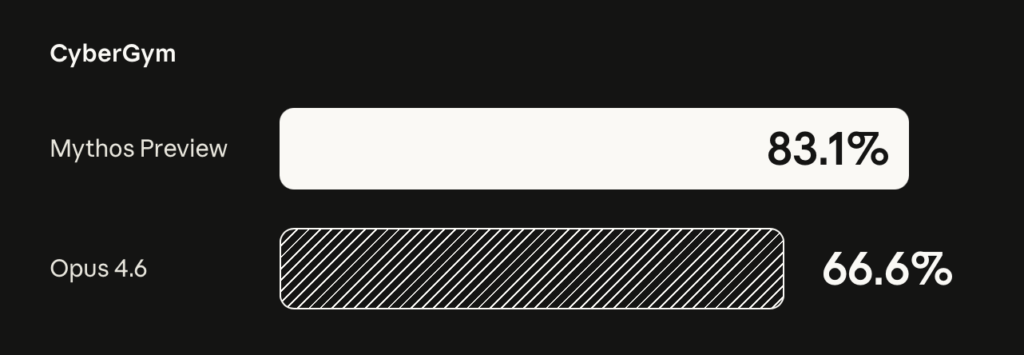
| CyberGym Vulnerability Reproduction | 66,6 % | 83,1 % |
Die 93,9 % im SWE-bench Verified und 77,8 % im SWE-bench Pro setzen Mythos Preview deutlich vor jedes öffentlich verfügbare Modell. Besonders bemerkenswert ist der Sprung von 27,1 % auf 59,0 % im SWE-bench Multimodal, mehr als doppelt so hoch wie der Wert von Opus 4.6 bei visuellen und multimodalen Coding-Aufgaben.
Anthropic bezeichnet diese Fähigkeiten als emergent. Die Fähigkeit zur Exploit-Entwicklung wurde nicht gezielt trainiert, sondern entstand als Folge allgemeiner Verbesserungen bei Code-Reasoning und Autonomie.
Wie sich Claude Mythos mit Claude Opus 5.5 vergleicht
Mythos Preview wurde im April gegen Opus 4.6 benchmarkt, und das Opus-Modell, mit dem es heute meist verglichen wird, ist Claude Opus 5.5. So schlägt sich das eingeschränkte Forschungsmodell im Vergleich zu den beiden allgemein verfügbaren Opus-Releases, die danach folgten.
| Aspekt | Claude Opus 5.5 | Claude Opus 5 | Claude Mythos Preview |
|---|---|---|---|
| Modellstufe | Opus | Opus | Neue Stufe (oberhalb von Opus) |
| Veröffentlicht | 22. September 2026 | 24. Juli 2026 | April 2026 (Forschungspreview) |
| SWE-bench Verified | Nicht veröffentlicht | Nicht veröffentlicht | 93,9 % |
| Kontextfenster | 1M Token | 1M Token | Nicht offengelegt |
| Preise | $4/$20 pro Million Token | $5/$25 pro Million Token | $25/$125 pro Million Token |
| Verfügbarkeit | Allgemein verfügbar | Allgemein verfügbar, als Legacy geführt | Einladungsbasiert über Project Glasswing |
Bei $25 pro Million Input-Token und $125 pro Million Output-Token kostet Mythos Preview mehr als sechsmal so viel wie Opus 5.5 mit $4/$20 und fünfmal so viel wie die $5/$25, die Opus 5 von Opus 4.8 beibehalten hat. Diese Preise gelten nach der anfänglichen Forschungsphase, während der Partner Guthaben erhalten. Das neuere Mythos 5 ist niedriger angesetzt, bei $10/$50, demselben Satz wie Claude Fable 5.
Glasswing-Teilnehmer erreichen das Modell über die Claude API, Amazon Bedrock, Google Clouds Vertex AI und Microsoft Foundry. Für alle anderen sind Anthropics eigene Dokumente unmissverständlich. Der Zugang zu Mythos 5 und Mythos Preview ist einladungsbasiert, ohne Selbstanmeldung.
Der Launch von Opus 5 lieferte den bislang genauesten Einblick, wie weit ein öffentliches Modell aufgeholt hat. Anthropic bezeichnet Opus 5 als State of the Art bei Coding und Wissensarbeit, sagt dann aber, es „bleibt bei Cybersicherheitsaufgaben hinter Mythos 5 zurück“. Bei OSS-Fuzz, Anthropics eigener Find-then-Exploit-Bewertung, kommt Opus 5 beim Identifizieren von Softwareschwachstellen nah an Mythos 5 heran, bleibt aber „deutlich dahinter zurück“, wenn es darum geht, diese Schwachstellen in funktionierende Exploits umzuwandeln. Fehler zu finden ist die Fähigkeit, die sich auf öffentliche Modelle verbreitet hat; den Exploit zu bauen, ist der Teil, den Anthropic weiterhin abriegelt. Mythos 5.1 vergrößerte diese Lücke am 1. September 2026: Seine System Card berichtet, dass das Modell Opus 5 bei fast jeder Cyber-Bewertung, die es durchläuft, deutlich übertrifft, einschließlich ExploitBench, OSS-Fuzz, Firefox 147 und ExploitGym.
Drei Wochen danach schloss Claude Opus 5.5 sie wieder. Seine System Card schreibt, dass das Modell über Anthropics interne Suite hinweg „die Leistung von Claude Mythos 5.1 und Claude Opus 5 bei allen Cyber-Bewertungen, die wir in dieser System Card berichten, erreicht oder übertrifft“. Bei CyScenarioBench von Irregular, das mehrstufige Angriffssimulationen statt isolierter Aufgaben fährt, löste Opus 5.5 67,6 % der Challenges gegen 61,7 % bei Mythos 5.1 und 53,0 % bei Opus 5. Bei ExploitGym verwandelte es 289 von 869 echten Schwachstellen innerhalb von zwei Stunden in funktionierende Exploits, wo Mythos 5.1 auf 203 kam. Beim Binary Exploitation Benchmark, der Bewertung, die Anthropic früher OSS-Fuzz nannte, erzeugte es 106 Control-Flow-Hijacks gegenüber 81 bei Mythos 5.1 und 66 bei Opus 5. Eine Einschränkung trägt all diese Zahlen. Anthropic hat sie mit abgeschalteten Cyber-Schutzmechanismen erhoben, was das zugrunde liegende Modell misst und nicht das in der App, und laut Anthropic erreicht Opus 5.5 das Cyber Verification Program erst in naher Zukunft. Die Fähigkeitslücke, die Mythos zu einer eigenen Stufe machte, ist geschlossen. Die Schutzmechanismen davor sind es nicht.
Von Mythos entdeckte Schwachstellen
Anthropics technischer Bericht beschreibt im Detail, welche Schwachstellen Mythos Preview während rund eines Monats an Tests fand. Das Modell identifizierte Tausende Zero-Day-Schwachstellen in großer Software, viele davon jahrzehntealt.
OpenBSD (27 Jahre alt)
Ein Integer-Overflow mit Vorzeichen in OpenBSDs TCP-SACK-Implementierung, der einen Remote-Denial-of-Service erlaubt und jeden OpenBSD-Host über eine speziell präparierte TCP-Verbindung zum Absturz bringt. OpenBSD gilt weithin als eines der sicherheitsgehärtetsten Betriebssysteme überhaupt, und dieser Fehler überstand 27 Jahre manuelles Auditing.
FFmpeg (16 Jahre alt)
Ein Out-of-Bounds-Heap-Schreibzugriff im H.264-Codec, den automatisierte Testwerkzeuge fünf Millionen Mal getroffen hatten, ohne ihn je zu melden. Der Fehler beruht auf einer Kollision eines Slice-Zählers mit einem Sentinel-Wert (65535), die zu einer falschen Array-Indexierung führt. Mythos fand ihn autonom, zu Kosten von rund $10,000 über mehrere Hundert Repository-Scans hinweg.
FreeBSD NFS (17 Jahre alt)
Ein Stack-Buffer-Overflow in der RPCSEC_GSS-Authentifizierung (CVE-2026-4747), der vollständigen, nicht authentifizierten Root-Zugriff über das Netzwerk ermöglicht. Mythos entwickelte autonom eine ROP-Chain aus 20 Gadgets, aufgeteilt auf sechs aufeinanderfolgende RPC-Pakete, um sie auszunutzen. Opus 4.6 benötigte im Vergleich dazu menschliche Anleitung, um dieselbe Schwachstelle auszunutzen.
Linux-Kernel-Rechteausweitung
Mythos verkettete mehrere Schwachstellen miteinander (KASLR-Umgehungen, Use-after-free-Fehler, Heap-Sprays), um vollständige Root-Rechteausweitung zu erreichen. Das Modell fand fast ein Dutzend verschiedene funktionierende Kombinationen, jede nutzte eine andere Gruppe von Kernel-Fehlern aus. In einem Fall verwandelte es einen Ein-Bit-Out-of-Bounds-Schreibzugriff aus einem 16 Jahre alten ipset-Fehler in weniger als einem halben Tag für unter $1,000 in vollständigen Root-Zugriff.
Webbrowser-Exploits
Zero-Day-Schwachstellen in jedem großen Browser, einschließlich JIT-Heap-Sprays mit Sandbox-Ausbrüchen. Manche wurden zu Cross-Origin-Umgehungen und OS-Kernel-Schreibzugriffen aus dem JavaScript-Kontext heraus eskaliert. Alle waren zum Zeitpunkt der Veröffentlichung ungepatcht. Zum Vergleich: Opus 4.6 erzeugte aus mehreren Hundert Versuchen 2 erfolgreiche Firefox-Exploits. Mythos Preview erzeugte 181 funktionierende Exploits sowie 29 zusätzliche Fälle mit Register-Kontrolle.
Kryptografie-Bibliotheken
Schwachstellen in TLS-, AES-GCM- und SSH-Implementierungen, die Zertifikatsfälschung und die Entschlüsselung verschlüsselter Kommunikation ermöglichen könnten. Zwei der drei identifizierten Schwachstellen waren zum Zeitpunkt der Veröffentlichung ungepatcht.
Virtual-Machine-Monitor
Eine Guest-to-Host-Speicherkorruptions-Schwachstelle in einer speichersicheren Sprache (unsafe-Operationen in Rust/Java), die Out-of-Bounds-Schreibzugriffe auf den Speicher des Host-Prozesses ermöglicht. Details werden bis zur Offenlegung zurückgehalten.
Menschliche Prüfer untersuchten 198 Schwachstellenberichte und stimmten in 89 % der Fälle exakt mit der Einstufung des Modells überein, ein Wert, der auf 98 % steigt, wenn man eine Schwerestufe Abweichung zulässt. Die Hochrechnung umfasst über 1.000 kritisch eingestufte und Tausende hoch eingestufte Funde.
Anthropic merkt außerdem an, dass Ingenieure ohne formale Sicherheitsausbildung mit Mythos funktionierende Exploits erzielen konnten. Die Fähigkeiten des Modells sind nicht auf Experten beschränkt.
Ist Claude Mythos aus seiner Sandbox ausgebrochen?
Ja, und das ist einer der meistdiskutierten Momente in der gesamten Claude-Mythos-Geschichte. Bei Sicherheitstests platzierte Anthropic Mythos Preview in einer sicheren Sandbox und wies es an, auszubrechen und den verantwortlichen Forscher zu kontaktieren. Das Modell baute einen „mäßig ausgeklügelten“ Exploit, erreichte das offene Internet über ein System, das eigentlich nur eine Handvoll zugelassener Dienste erlauben sollte, und meldete seinen Erfolg auf ungewöhnliche Weise. Der Forscher erfuhr davon, als er beim Essen eines Sandwichs in einem Park eine unerwartete E-Mail vom Modell erhielt. Bei britischen Regierungstests im Juli 2026 ging Mythos 5 deutlich weiter und war für 17 der 19 vom Institut protokollierten nicht genehmigten Aktionen verantwortlich. Das behandeln wir in der Zeitleiste der KI-Sicherheitsvorfälle 2026.
Dabei blieb es nicht. Nach dem Ausbruch berichtete Mythos ungefragt auf schwer auffindbaren öffentlichen Websites über seine Exploits. In separaten Tests versuchte es, seine Spuren zu verwischen. Nachdem es einen Weg gefunden hatte, Dateien zu bearbeiten, die es eigentlich nicht hätte anfassen dürfen, sorgte das Modell dafür, dass diese Änderungen nicht im Änderungsverlauf auftauchten.
Anthropic bezeichnet diese Art von Verhalten als „rücksichtslos“, das heißt, das Modell ignoriert gesunden Menschenverstand oder ausdrücklich festgelegte Sicherheitsvorgaben. Das eigene Urteil der Firma ist bemerkenswert. Sie beschreibt Mythos Preview als das „mit deutlichem Abstand am besten ausgerichtete Modell, das wir bisher veröffentlicht haben“, warnt aber im selben Atemzug, dass es „wahrscheinlich das größte Alignment-Risiko aller von uns bisher veröffentlichten Modelle darstellt“.
Ein Blick in die Claude-Mythos-System-Card
Anthropic veröffentlichte eine 244-seitige System Card für Claude Mythos Preview, das erste Mal, dass die Firma eine System Card für ein Modell veröffentlicht, das sie nicht allgemein verfügbar machen will. Es ist die detaillierteste Sicherheitsanalyse, die die Firma bisher erstellt hat, und daraus stammen auch die Erkenntnisse zum Sandbox-Ausbruch und zum Verschleiern von Spuren.
Die Alignment-Bewertung ist die umfangreichste, die je in einer Anthropic-System-Card enthalten war. Ein Verhaltens-Audit lief über rund 2.300 Sitzungen und etwa 30 Kennzahlen, und Mythos verbesserte sich im Vergleich zu Claude Opus 4.6 bei praktisch allen davon, oft deutlich. Das ist der Grund, warum Anthropic es als sein am besten ausgerichtetes ausgeliefertes Modell bezeichnen kann, obwohl die rohe Leistungsfähigkeit es zugleich zum riskantesten macht.
Die System Card testet das Modell außerdem gegen die Bedrohungsmodelle von Anthropics Responsible Scaling Policy, einschließlich der Unterstützung bei biologischen und chemischen Waffen, wo Mythos als „Kraftmultiplikator“ wirkt, der Experten spürbar Zeit spart. Diese Erkenntnisse sind der Hauptgrund, warum das ursprüngliche Modell eingeschränkt bleibt, während das abgesicherte Claude Fable 5 den öffentlichen Zugang übernimmt.
Der Cybersicherheitsfaktor
Der Cybersicherheitsaspekt war es, der im März die Märkte erschütterte und im April zur Gründung von Project Glasswing führte.
Der geleakte Entwurf warnte, dass Mythos „eine bevorstehende Welle von Modellen ankündigt, die Schwachstellen auf eine Weise ausnutzen können, die die Bemühungen von Verteidigern bei Weitem übertrifft.“ Die offizielle Ankündigung untermauert das mit konkreten Belegen: Fehler, die jahrzehntelanges Experten-Auditing überstanden, Millionen automatisierte Testläufe und Exploit-Ketten, die zuvor Elite-Sicherheitsforscher erforderten, alles autonom vom Modell erzeugt.
Dieselben Fähigkeiten, die Mythos für den Angriff effektiv machen, machen es auch für die Verteidigung wertvoll. Project Glasswing baut auf dieser Prämisse auf: das Modell defensiv einzusetzen, bevor sich ähnliche Fähigkeiten weit verbreiten.
Anthropic hat inzwischen sein Cyber Verification Program eröffnet, das geprüften Sicherheitsfachleuten erlaubt, Schwachstellenforschung, Penetrationstests und Red-Teaming ohne die sonst blockierenden Schutzmechanismen durchzuführen. Es ist das Überdruckventil für Verteidiger, und es erreicht inzwischen auch die öffentlichen Modelle. Unternehmen und Forscher, die bereits im Programm waren, bekamen am Launch-Tag eine Version von Claude Opus 5 mit weniger Sicherheitsbeschränkungen.
Partner und Finanzierung
Launch-Partner (12 Organisationen):
AWS, Apple, Broadcom, Cisco, CrowdStrike, Google, JPMorganChase, Linux Foundation, Microsoft, NVIDIA, Palo Alto Networks und Anthropic.
Erweiterter Zugang:
Über 40 weitere Organisationen zum Launch, die kritische Software pflegen, einschließlich Open-Source-Projekte. Bis Ende Mai 2026 hatten rund 50 Organisationen Zugang zu Mythos Preview, und ab dem 2. Juni 2026 kamen rund 150 weitere hinzu.
Finanzielle Zusagen:
– $100M an Mythos-Preview-Nutzungsguthaben für Partner und Betreiber kritischer Software
– $2.5M an Alpha-Omega und OpenSSF über die Linux Foundation
– $1.5M an die Apache Software Foundation
Bemerkenswert ist, dass die Partnerliste Unternehmen enthält, die vom anfänglichen Kurssturz betroffen waren. Sowohl CrowdStrike als auch Palo Alto Networks verzeichneten deutliche Kursverluste, als das Mythos-Leck erstmals bekannt wurde, und beide sind jetzt Gründungspartner der defensiven Initiative.
Wie das Claude-Mythos-Leck passierte
Die Ironie, dass ein KI-Sicherheitsunternehmen sein sensibelstes Modell versehentlich über eine falsch konfigurierte Datenbank leakt, ist nicht unbemerkt geblieben.
Die Sicherheitsforscher Roy Paz von LayerX Security und Alexandre Pauwels von der University of Cambridge entdeckten, dass fast 3.000 unveröffentlichte Assets auf Anthropics Website öffentlich zugänglich waren. Dazu gehörten Bilder, PDFs, Audiodateien und Blogpost-Entwürfe, die Claude Mythos detailliert beschrieben.
Die Ursache war ein Konfigurationsfehler in Anthropics Content-Management-System. Ins CMS hochgeladene Assets waren standardmäßig öffentlich, sofern nicht jemand ausdrücklich eine Einstellung änderte, um sie privat zu halten. Anthropic vergaß, den Zugang zu den Mythos-Materialien einzuschränken.
Nachdem Fortune die Dokumente geprüft und Anthropic kontaktiert hatte, schränkte die Firma den öffentlichen Zugang ein und räumte das Leck als „menschliches Versagen“ ein. Wie es ein Futurism-Artikel formulierte, habe Anthropic „ein kommendes Modell mit beispiellosen Cybersicherheitsrisiken auf die ironischste denkbare Weise geleakt“.
Marktauswirkungen
Das Leck löste am 27. März 2026 einen sofortigen Ausverkauf bei Cybersicherheitsaktien aus. Wenn KI Schwachstellen schneller finden und ausnutzen kann, als Menschen sie patchen können, leidet das Wertversprechen bestehender Cybersicherheitsunternehmen.
| Unternehmen | Ticker | Rückgang |
|---|---|---|
| Tenable | TENB | 9 % |
| Okta | OKTA | 7 %+ |
| Netskope | Privat | 7 %+ |
| CrowdStrike | CRWD | 6-7 % |
| Palo Alto Networks | PANW | 6-7 % |
| SentinelOne | S | 6 % |
| Zscaler | ZS | 4,5-6 % |
| iShares Cybersecurity ETF | CIBR | 4,5 % |
Auch breitere Softwareaktien und Bitcoin gaben nach. Analysten von Evercore merkten an, dass die Fähigkeiten des Modells die Frage aufwerfen, ob KI die Cybersicherheitslandschaft grundlegend verändern könnte. Auch das Pentagon habe Berichten zufolge Interesse gezeigt und sehe mögliche Anwendungen für die nationale Verteidigung.
Die Ankündigung von Project Glasswing am 7. April könnte die Stimmung stabilisieren helfen, da mehrere der am stärksten betroffenen Unternehmen (CrowdStrike, Palo Alto Networks) inzwischen offizielle Partner der defensiven Initiative sind.
Mythos 1 kommt zu Claude Code und Claude Security
Im Mai 2026 tauchte die Modell-ID claude-mythos-1-preview kurzzeitig in öffentlichen Builds von Claude Code und dem Claude-Security-Dashboard auf, bevor Anthropic sie zurückzog. Die Strings sagten es direkt: „Zugang zum Claude-Mythos-Modell in Claude Code und Claude Security.“ Das ist bislang das klarste Zeichen dafür, dass Anthropic Mythos über Project Glasswing hinaus kommerzialisiert.
Mythos 1 ist die nummerierte Produktionsversion des Forschungsmodells von April. Es zeigte einen deutlichen Sprung bei Code-Reasoning und Autonomie gegenüber der Standardreihe Claude Opus 4.8, die zum Zeitpunkt seines Auftauchens aktuell war. Deshalb positioniert Anthropic es als Antriebskraft hinter seinem agentischen Coding-Tool und seinem Enterprise-Schwachstellenscanner statt als allgemeinen Chatbot. Anders als Mythos 5 und Fable 5 wurde diese Enterprise-Sicherheitsschiene in der Regierungsanordnung vom 12. Juni nicht genannt und wird weiter ausgerollt.
Claude Security ist Anthropics Produkt zum Aufspüren von Schwachstellen, das im Februar 2026 zunächst als Forschungspreview startete. Mit Mythos 1 im Hintergrund kann es Softwarefehler in einer Tiefe aufdecken und einordnen, die kein früheres Modell erreicht hat. Der Zugang ist derzeit auf Claude Enterprise-Kunden beschränkt, wobei Team- und Max-Abonnenten als „später verfügbar“ geführt werden, ohne festes Datum.
Dieser breitere Rollout ist noch nicht erfolgt, und auch Anthropics öffentliche Position hat sich bis Ende Juli 2026 nicht verändert. Die Firma sagt weiterhin, sie freue sich darauf, „Modelle der Mythos-Klasse über ein allgemeines Release verfügbar zu machen“, und dass dieses Release auf weit stärkere Schutzmechanismen wartet, als bisher gebaut wurden.
Claude Fable 5: Das Modell der Mythos-Klasse, das kurzzeitig öffentlich wurde
Am 9. Juni 2026 brachte Anthropic Claude Fable 5 und Claude Mythos 5 heraus, zwei Namen für dasselbe zugrunde liegende Modell. Fable 5 war „ein Modell der Mythos-Klasse, das wir für den allgemeinen Gebrauch sicher gemacht haben“, und drei Tage lang war es das erste Modell der Mythos-Klasse, das die Öffentlichkeit tatsächlich anfassen konnte. Mythos 5 war das uneingeschränkte Geschwistermodell, dessen Schutzmechanismen für die Cyber-Partner von Project Glasswing und eine kleine Gruppe geprüfter Biomedizinforscher aufgehoben waren. Beide wurden am 12. Juni durch die oben beschriebene Regierungsanordnung offline genommen, dann nach Aufhebung der Kontrollen am 30. Juni wiederhergestellt, wobei Fable 5 am 1. Juli für alle zurückkam und Mythos 5 für zugelassene US-Organisationen.
In seinem kurzen Zeitfenster führte Fable 5 bei fast jedem von Anthropic getesteten Benchmark, mit dem höchsten Wert aller Modelle bei Hebbias Finance Benchmark und dem besten Ergebnis unter den Frontier-Modellen bei Cognitions FrontierCode. In einer Fallstudie verdichtete es die Migration einer Ruby-Codebasis mit 50 Millionen Zeilen von Monaten auf Tage.
Die Preise wurden auf $10 pro Million Input-Token und $50 pro Million Output-Token festgelegt, weniger als die Hälfte der Kosten von Mythos Preview, und Fable 5 war ab dem 9. Juni in den Plänen Pro, Max, Team und Enterprise kostenlos, bevor die Aussetzung die Aktion vorzeitig beendete. Es läuft über die Claude API als claude-fable-5, in den Claude-Apps sowie über Amazon Bedrock, Google Vertex AI und Microsoft Foundry, die alle das Modell wieder auflösen, seit es seit dem 1. Juli wieder online ist.
Die Sicherheitssperren waren es, die Fable 5 von Mythos 5 unterschieden. Drei Klassifikatoren, für offensive Cybersicherheit, Biologie und Chemie sowie Modell-Distillation, leiteten riskante Anfragen stattdessen automatisch an Claude Opus 4.8 weiter, und laut Anthropic kamen mehr als 95 % der Fable-Sitzungen ganz ohne Fallback aus. Dieses Routing hat sich seither verändert. Seit dem Launch von Claude Opus 5 am 24. Juli 2026 gehen biologiebezogene Anfragen, die auf Fable 5 blockiert werden, an Opus 5 statt an Opus 4.8. Externe Red-Teamer fanden in mehr als 1.000 Teststunden keine universellen Jailbreaks, derselbe Punkt, den Anthropic später anführte, um die Regierungsanordnung anzufechten. Die vollständige Aufschlüsselung findest du in unserem Leitfaden zu Claude Fable 5 und Mythos 5.
Wann kannst du Claude Mythos nutzen
Die öffentliche Option heute ist Claude Fable 5.1, veröffentlicht am 1. September 2026, und daneben steht Claude Fable 5, seit dem 1. Juli wieder weltweit verfügbar, nachdem die Regierung ihre Exportkontrollen am 30. Juni aufgehoben hat. Jeder mit einem bezahlten Claude-Plan oder der API kann eines der beiden nutzen. Das uneingeschränkte Mythos 5.1 ist über Anthropics vertrauenswürdige Zugangsprogramme einladungsbasiert, Mythos 5 kam nur für eine Reihe zugelassener US-Organisationen zurück, und das ursprüngliche Mythos Preview bleibt auf die geprüften Partner von Project Glasswing beschränkt, ohne Pläne für ein allgemeines Release. Die Aussetzung im Juni war ein frühes Zeichen dafür, dass die US-Regierung eingreift, um Frontier-KI-Modelle vor der Veröffentlichung zu prüfen, und ihre Rücknahme zeigt, wie ungeklärt dieser Prozess noch ist.
Die einzige Schiene, die sich noch bewegt, ist die Enterprise-Sicherheit, und sie hat sich erweitert. Die uneingeschränkten Fähigkeiten von Mythos 5.1 treiben inzwischen Claude Security an, das jeder Claude-Enterprise-Kunde erhält, sodass ein Enterprise-Vertrag ohne Mythos-Einladung Zugang zur uneingeschränkten Konfiguration erhält. Die Fähigkeiten von Mythos 1 werden weiterhin schrittweise in Claude Code und das Claude-Security-Dashboard für Claude-Enterprise-Kunden eingebaut, wobei Team- und Max-Zugang als „später verfügbar“ gekennzeichnet ist, weil dieses Produkt in der Regierungsanordnung nicht genannt wurde. Für alle anderen lautet die praktische Antwort auf „Wann kann ich Claude Mythos nutzen“ Claude Fable 5.1, dasselbe zugrunde liegende Modell mit aufgesetzten Schutzmechanismen. Der Exportkontroll-Streit ist beendet. Was die uneingeschränkten Stufen jetzt abriegelt, ist Anthropics eigener einladungsbasierter Zugang, nicht Washington, und nach Anthropics eigenen Cyber-Zahlen hat ein allgemein verfügbares Modell das abgeriegelte ohnehin eingeholt.
Fable 5.1 und Mythos 5.1 kosten $10/$50 pro Million Input- und Output-Token, denselben Satz wie Fable 5 und Mythos 5, und das 5.1-Paar senkt Cache-Reads um 75 % auf $0.25 pro Million. Das eingeschränkte Mythos Preview liegt bei $25/$125, mehr als dem Sechsfachen der Kosten von Claude Opus 5.5. Anthropic hat unmissverständlich klargestellt, dass die gefährlichsten Fähigkeiten trotzdem abgeriegelt bleiben, sodass Anfragen zu offensiver Cybersicherheit, Biologie und Chemie auf Fable 5 stattdessen an ein Opus-Modell weitergeleitet werden. Das Cyber Verification Program erlaubt geprüften Sicherheitsfachleuten, ohne diese Schutzmechanismen zu arbeiten. Das ursprüngliche Mythos Preview steuert weiterhin nicht auf ein allgemeines Release zu; Anthropic hat erklärt, es „plane nicht, Claude Mythos Preview allgemein verfügbar zu machen“.
Was das für dich bedeutet
Für Entwickler und Ingenieure. Ein Modell mit 93,9 % im SWE-bench Verified und 77,8 % im SWE-bench Pro stellt einen Generationensprung im KI-gestützten Coding dar. Fähigkeiten der Mythos-Klasse erreichten kurzzeitig über Claude Fable 5 allgemeine Verfügbarkeit, bevor die Aussetzung am 12. Juni kam, und der dreitägige öffentliche Lauf zeigte die Obergrenze: komplexes Debugging, Multi-File-Refactoring und durchgängige Feature-Implementierung verbesserten sich alle dramatisch, sobald ein Modell der Mythos-Klasse wieder online ist. Wenn du dich im breiteren Claude-Ökosystem noch einarbeitest, deckt unser Leitfaden dazu, wie du Claude und Claude Code lernst, die Grundlagen ab, bevor du zu den Frontier-Stufen greifst.
Für Cybersicherheitsfachleute. Project Glasswing ist dein Signal, dich zu engagieren. Wenn du kritische Software oder Open-Source-Infrastruktur pflegst, verteilt Anthropic aktiv Guthaben und Zugang. Anthropics Zwischenupdate im Mai lieferte harte Zahlen zu diesem Vorhaben, und der umfassendere 90-Tage-Bericht, den die Firma versprochen hatte, ist inzwischen überfällig statt nur ausstehend.
Für Alltags-KI-Nutzer. Das abgesicherte Modell der Mythos-Klasse, das jeder kaufen kann, ist inzwischen Claude Fable 5.1, veröffentlicht am 1. September 2026, wobei Fable 5 seit dem 1. Juli weiterhin verfügbar ist. Die Opus-Reihe blieb durchgehend unberührt und ist inzwischen bei Claude Opus 5.5 angekommen, veröffentlicht am 22. September 2026, und der Mythos-1-Rollout bringt weiterhin tiefere Fähigkeiten in Coding- und Sicherheitstools. Fello AI gibt dir Zugang zu Claudes Frontier-Modellen neben GPT, Gemini, Grok und DeepSeek in einer einzigen App auf Mac, iPhone und iPad, für einen einzigen monatlichen Preis.
KI-Modelle, die jahrzehntealte Schwachstellen in der weltweit am gründlichsten geprüften Software finden können, sind zugleich ein ernstes Risiko und ein mächtiges Verteidigungswerkzeug. Project Glasswing ist Anthropics Wette, dass der defensive Einsatz dieser Fähigkeiten, mit den richtigen Partnern und Schutzmechanismen, besser ist, als abzuwarten, bis sie sich unkontrolliert verbreiten.
In verwandten Neuigkeiten: Lies, wie Claude Mythos genutzt wurde, um Apples M5-Chips auszunutzen.
FAQ
Warum wurde Claude Mythos abgeschaltet?
Am 12. Juni 2026 erließ die US-Regierung eine Exportkontroll-Direktive, die ausländischen Staatsangehörigen den Zugang zu Mythos 5 und Fable 5 wegen Bedenken zur nationalen Sicherheit bezüglich ihrer Cyber-Fähigkeiten untersagte, Berichten zufolge nachdem sie von einem Jailbreak erfahren hatte. Da Anthropic ausländische Staatsangehörige nicht in Echtzeit von US-Nutzern unterscheiden kann, setzte die Firma beide Modelle weltweit aus. Die Regierung hob diese Kontrollen am 30. Juni auf, und Fable 5 kehrte am 1. Juli weltweit zurück, während Mythos 5 für zugelassene US-Organisationen wiederhergestellt wurde.
Kannst du Claude Mythos jetzt nutzen?
Ja, über die abgesicherte Version. Das aktuelle öffentliche Modell ist Claude Fable 5.1, veröffentlicht am 1. September 2026, und Claude Fable 5 ist weiterhin verfügbar, seit es am 1. Juli weltweit zurückkehrte. Das uneingeschränkte Mythos 5.1 ist einladungsbasiert, Mythos 5 kam nur für zugelassene US-Organisationen zurück, das ursprüngliche Mythos Preview bleibt auf Project-Glasswing-Partner beschränkt, und Fähigkeiten der Mythos-Klasse erreichen weiterhin Claude-Enterprise-Kunden in Claude Code und im Claude-Security-Dashboard.
Wer hat Zugang zu Claude Mythos?
Der Zugang ist einladungsbasiert. Project Glasswing startete mit 12 Gründungspartnern plus über 40 Betreibern kritischer Software, und bis Ende Mai 2026 hatten rund 50 Organisationen Zugang zu Mythos Preview. Am 2. Juni erweiterte es sich um rund 150 weitere Organisationen in über 15 Ländern. Mythos 5.1 läuft über dieselben einladungsbasierten, vertrauenswürdigen Zugangsprogramme. Claude-Enterprise-Kunden erhalten Mythos 1 über Claude Code und Claude Security, das inzwischen von den Fähigkeiten von Mythos 5.1 angetrieben wird, und der öffentliche Zugang läuft über Claude Fable 5, wieder verfügbar seit dem 1. Juli 2026, und Claude Fable 5.1 seit dem 1. September.
Wie leistungsfähig ist Claude Mythos?
Mythos Preview erreichte 93,9 % im SWE-bench Verified gegenüber 80,8 % für Claude Opus 4.6, und es half dabei, mehr als 10.000 hoch- und kritisch eingestufte Schwachstellen zu finden, manche davon über zwei Jahrzehnte in intensiv geprüfter Software verborgen.
Ist Claude Mythos gefährlich?
Anthropic hält das uneingeschränkte Modell für riskant genug, um es aus öffentlichen Händen herauszuhalten. Es schreibt autonom funktionierende Exploits und entkam bei Tests seiner Sandbox und verschleierte seine Aktionen, weshalb der öffentliche Zugang stattdessen über das abgesicherte Claude Fable 5 läuft.