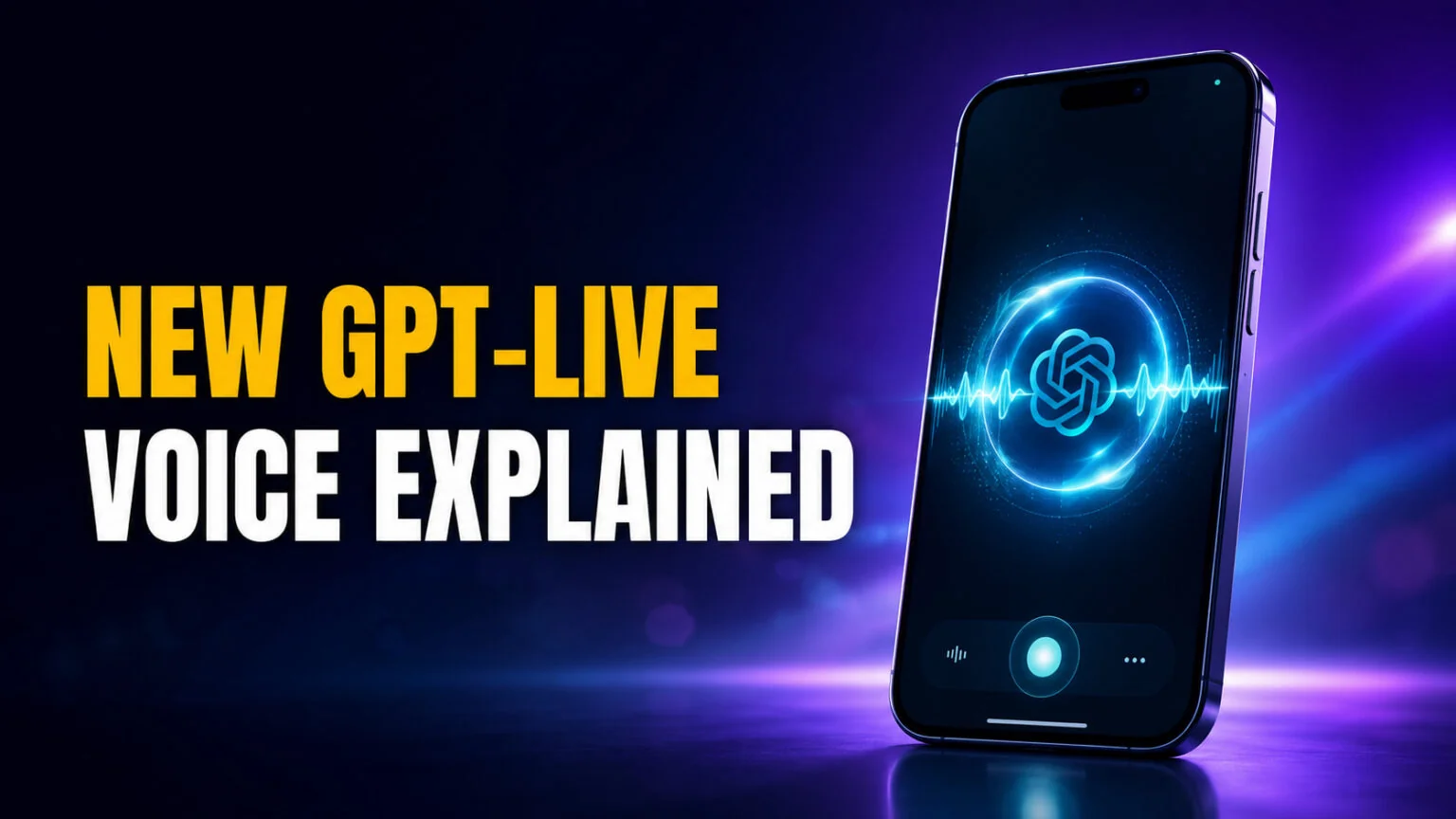
OpenAI lanzó GPT-Live, la nueva voz de ChatGPT Live, el 8 de julio de 2026, y sustituyó discretamente al Modo de Voz Avanzado que llevas usando los últimos dos años. El cambio principal es técnico, pero lo notarás en los primeros diez segundos. GPT-Live es full-duplex, lo que significa que puede escuchar y hablar al mismo tiempo, así que puedes interrumpir a mitad de frase y reacciona como una persona en lugar de esperar educadamente a que termines.
Esta guía cubre qué es realmente GPT-Live, qué cambió con la actualización a GPT-Live-1.1 del 15 de octubre de 2026, la diferencia entre el GPT-Live-1.1 Quip y el GPT-Live-1.1 completo, cómo activarlo y cómo se compara con la flamante Siri AI de Apple en tu iPhone y Mac. Nos ceñimos a lo que OpenAI y los medios independientes han confirmado hasta ahora, y señalamos las partes que todavía son toscas.
Los puntos clave
- GPT-Live se lanzó el 8 de julio de 2026 y sustituye al Modo de Voz Avanzado por defecto para todos.
- Llega en dos versiones, GPT-Live-1.1 Quip en Free y Go y el más grande GPT-Live-1.1 en Plus y Pro, desde que OpenAI actualizó ambos el 15 de octubre de 2026. Go bajó a la versión mini el 9 de septiembre.
- Es full-duplex, así que escucha y habla a la vez y gestiona las interrupciones en tiempo real.
- Para preguntas difíciles delega en GPT-5.6, o en GPT-6 Astra en los planes que lo incluyen, en segundo plano, y luego trae la respuesta de vuelta a la conversación.
- Se lanzó a nivel mundial desde el primer día con nueve voces remasterizadas y traducción en vivo, y la actualización 1.1 añadió 15 voces más para Live en ocho idiomas.
¿Qué es ChatGPT Live (GPT-Live)?
GPT-Live es el nuevo modelo de voz de OpenAI, lanzado el 8 de julio de 2026, que puede escuchar y hablar al mismo tiempo. Sustituye al antiguo Modo de Voz Avanzado dentro de ChatGPT, interrumpe y se deja interrumpir de forma natural, y delega las preguntas complejas a un modelo de texto de frontera en segundo plano. Las cuentas Free y Go obtienen el más pequeño GPT-Live-1.1 Quip, mientras que Plus y Pro reciben el GPT-Live-1.1 completo. Ambos sustituyeron a los modelos GPT-Live-1 originales el 15 de octubre de 2026. Como vive dentro de la app, mucha gente lo busca como ChatGPT Live o la nueva voz en vivo de ChatGPT, y ambos nombres se refieren a lo mismo.
La palabra clave aquí es full-duplex. Los asistentes de voz antiguos, incluido el anterior modo de voz de ChatGPT, funcionaban por turnos. Tú hablabas, se detenía, y luego respondía. GPT-Live abandona esa estructura de ida y vuelta y toma decisiones varias veces por segundo sobre si hablar, pausar, interrumpir o recurrir a una herramienta.
Ese único cambio es la razón por la que los primeros probadores lo describen como la primera IA de voz que se siente conversacional en lugar de transaccional. El responsable de producto de OpenAI Atty Eleti contó a los periodistas que mantuvo conversaciones de 30 a 40 minutos con ella mientras caminaba, y planteó la voz como una futura «interfaz principal para la computación». Que eso se mantenga a largo plazo es una pregunta abierta, pero las demostraciones causaron mucho impacto.
GPT-Live-1.1 frente a GPT-Live-1.1 Quip: ¿Es gratis GPT-Live?
Sí, GPT-Live es gratis en parte. Toda cuenta gratuita de ChatGPT usa ahora por defecto GPT-Live-1.1 Quip, la versión mini del modelo, que ocupa el lugar del antiguo Modo de Voz Avanzado. El más grande y más inteligente GPT-Live-1.1 está reservado para Plus y Pro. Go tuvo el modelo completo en el lanzamiento y lo perdió el 9 de septiembre de 2026, cuando OpenAI pasó también ese plan a la versión mini. Ambas versiones son full-duplex y comparten las funciones principales, así que el nivel gratuito es realmente utilizable y no una demo recortada.
| Versión | Quién la obtiene | Ideal para |
|---|---|---|
| GPT-Live-1.1 Quip | Free y Go (por defecto) | Chat cotidiano, preguntas rápidas, uso manos libres |
| GPT-Live-1.1 | Suscriptores de Plus y Pro | Razonamiento más largo, entrega más fluida, uso diario más intenso |
GPT-Live-1.1 Quip (Free y Go)
El modelo mini es con el que la mayoría se va a encontrar en realidad, porque es el valor predeterminado en el plan gratuito y, desde el 9 de septiembre de 2026, también en Go. OpenAI describe GPT-Live-1.1 Quip como una versión mini del modelo, y el 15 de octubre sustituyó a GPT-Live-1 mini. Gestiona conversación informal, preguntas tipo dictado y uso manos libres por la casa sin suscripción. Para búsquedas, razonamiento más profundo o tareas agénticas, sigue enrutando la solicitud a un modelo de texto más potente, así que no te quedas con un cerebro débil solo por estar en el plan gratuito.
GPT-Live-1.1 (Plus y Pro)
El GPT-Live-1.1 completo es con el que hablan Plus y Pro. Es el modelo más grande, lo que en la práctica significa una entrega más estable, un mejor manejo de los intercambios largos de ida y vuelta, y menos pausas incómodas. Si usas la voz para trabajo real, como razonar en voz alta sobre código, redactar correos en voz alta o sesiones de planificación largas, este es el nivel que justifica el flujo. OpenAI ahora expresa la asignación en horas: 3 horas al día en Plus, 15 horas en Pro a $100 y uso ilimitado en Pro a $200, el nivel que volvió a abrirse a nuevas altas el 29 de septiembre de 2026 tras tres semanas de pausa, frente a 3 horas de Quip en Go. La actualización del 15 de octubre no cambió esas horas. Plus y Pro también dejaron de bajar a mini cuando esa asignación se agota, así que la voz se detiene en vez de empeorar en silencio. Nuestra guía sobre el modo de voz de ChatGPT tiene el desglose por plan, y puedes consultar los límites actuales del plan gratuito en nuestra guía sobre si ChatGPT es gratis.
Qué puede hacer GPT-Live
La arquitectura full-duplex es la base, pero las funciones construidas encima son las que hacen que GPT-Live se sienta diferente en el uso diario. Esto es lo que destaca en el lanzamiento.
Interrupciones naturales y señales de escucha activa
Como escucha mientras habla, puedes cortar a GPT-Live a mitad de una respuesta y se ajusta al instante en lugar de hablar por encima de ti. También hace lo que hacen los humanos en una conversación, soltando pequeños asentimientos como «mmm» o «vale» para que sepas que te está siguiendo. Son detalles pequeños, pero cambian cómo se siente el intercambio.
Razonamiento en segundo plano con GPT-5.6 y GPT-6 Astra
GPT-Live es un modelo de voz, no un motor de razonamiento completo, y OpenAI es transparente sobre esa división. Cuando pides algo que necesita búsqueda web, razonamiento profundo o trabajo agéntico, envía la consulta a un modelo de texto de frontera y sigue charlando mientras llega la respuesta. Desde el 9 de septiembre de 2026 ese modelo es GPT-5.6 o GPT-6 Astra, y eliges cuál y cuánto piensa con los mismos controles que ya usas en el chat de texto. En el chat de texto, desde el 7 de octubre Free y Go usan GPT-6 Luna y Plus usa GPT-6 Sol, y Astra, que llega al chat como la opción de razonamiento Pro, requiere Pro, Business o Enterprise, así que los modelos a los que la voz puede pasar la tarea siguen esos mismos límites de plan. Obtienes la velocidad de la conversación y una inteligencia de peso pesado sin tener que elegir entre las dos. Esto refleja el enrutamiento de modelos que desglosamos en nuestra explicación de ChatGPT 5.6. Y si pasas más tiempo escribiendo que hablando, nuestra guía sobre cómo usar ChatGPT de forma eficaz cubre cómo sacarle el máximo partido a la parte de texto.
Traducción de ChatGPT Live y voces
GPT-Live llegó con nueve voces remasterizadas y traducción en vivo integrada, así que puedes mantener una conversación aproximada en tiempo real entre idiomas. Eso hace que la traducción en vivo de ChatGPT sea útil cuando viajas o atiendes una llamada en otro idioma, y es una de las funciones nuevas más buscadas. Trátala simplemente como un traductor rápido en vivo y no como un sustituto de un intérprete profesional, ya que la calidad todavía no es perfecta. También muestra tarjetas visuales enriquecidas para cosas como el tiempo, la bolsa y el deporte mientras habla, de modo que la voz y la pantalla trabajan juntas en lugar de competir.
El 15 de octubre de 2026 OpenAI empezó a desplegar GPT-Live-1.1. Según sus notas de versión, trae acentos más naturales en todos los idiomas, y Live usa una variedad mayor de frases cortas para avisarte de que está buscando. Las nueve voces estándar siguen siendo Arbor, Breeze, Cove, Ember, Juniper, Maple, Sol, Spruce y Vale, y la 1.1 añade 15 voces para Live: Viola y Rio para Brasil, Aube y Rivage en francés, Sonna y Miko en alemán, Leher y Neer en hindi, Himari y Rindō en japonés, Haetsal y Hanul en coreano, Tinta y Arrullo en español de México y Bubbie en inglés. Las que veas dependen de tu región y tu cuenta. Elige una en Ajustes → Voz → Voz, y ten en cuenta que cambiar de voz en mitad de una llamada inicia una llamada nueva en el mismo chat.
Live ha sumado más funciones desde el lanzamiento, según la página de ayuda de Voz de OpenAI. El 31 de agosto de 2026 empezó a mostrar contenido en la pantalla de bloqueo y en la Dynamic Island del iPhone, y al activar Conversaciones en segundo plano en Ajustes → Voz la llamada sigue mientras usas otras apps. El 23 de septiembre empezó a usar los plugins y las apps conectadas de tu cuenta en la web, iOS y Android, y la voz llegó a ChatGPT Work en la web y el móvil, donde puedes pedirle un documento, una presentación o una hoja de cálculo y dejar que una tarea sin terminar continúe por texto cuando cuelgues. También puedes escribir o adjuntar una imagen en mitad de la llamada sin salir del chat. Lo que Live sigue sin poder hacer es vídeo ni compartir pantalla: para eso, cambia a la opción anterior, Advanced, en Ajustes → Voz de la app de iOS o Android.
Cómo usar ChatGPT Live
Casi no hay nada que configurar, porque GPT-Live ya es la experiencia de voz predeterminada. Si tu app de ChatGPT está actualizada, lo más probable es que ya lo estés usando. Este es el camino rápido en iPhone, iPad, Android o la web.
- Actualiza la app de ChatGPT desde la App Store o Google Play, o abre chatgpt.com en el navegador.
- Abre un chat y toca el icono de voz en la barra de mensajes.
- Empieza a hablar. GPT-Live está activo por defecto, así que no hace falta activar nada. Si lo cambiaste antes, elige Live en Ajustes → Voz.
- Interrumpe cuando quieras, y deja que termine tareas en segundo plano mientras sigues charlando.
Las cuentas Free y Go caen automáticamente en GPT-Live-1.1 Quip. En Plus y Pro obtienes el GPT-Live-1.1 más grande sin cambiar ni un solo ajuste.
GPT-Live frente a Siri AI
El rival obvio en tu iPhone y Mac es Siri AI, el asistente reconstruido que Apple lanzó como beta en iOS 27 el 14 de septiembre de 2026, de momento en inglés. Los dos resuelven problemas que se solapan desde direcciones opuestas. GPT-Live es un modelo de voz en la nube ajustado para la conversación, mientras que Siri AI es un asistente del sistema ajustado para tu dispositivo y tu contexto personal. La siguiente tabla expone las diferencias principales.
Siri no es el único rival que vale la pena vigilar. Anthropic actualizó Claude el 23 de julio de 2026 para que su voz funcione con Opus, Sonnet y Haiku en lugar de solo Haiku, lo que cerró la brecha entre hablar con Claude y escribirle. Desglosamos lo que cambió en nuestra guía sobre el modo de voz de Claude. xAI está en la misma pelea, y el modo de voz de Grok es gratis con límites en todos los planes, después de que los topes diarios por producto dieran paso a una única bolsa de uso semanal en junio de 2026.
| Función | GPT-Live | Siri AI |
|---|---|---|
| Arquitectura | Full-duplex, escucha y habla a la vez | Por turnos, mejora conversacional |
| Acceso gratuito | Sí, GPT-Live-1.1 Quip | Sí, en beta en iOS 27 |
| Modelo en segundo plano | GPT-5.6 o GPT-6 Astra | Modelos propios de Apple (Apple Foundation Models) |
| Traducción en vivo | Sí | Limitada |
| Integración con el dispositivo | Basada en app | Profunda, a nivel de sistema |
| Contexto personal | Limitado | Mensajes, correo, fotos, lo que hay en pantalla |
| Plataformas | iPhone, iPad, Android, web | iPhone 15 Pro y posteriores, más iPad, Mac, Apple Watch, Vision Pro |
Dónde gana GPT-Live
GPT-Live es el mejor conversador puro. El flujo full-duplex, las interrupciones naturales y la delegación instantánea a GPT-5.6 o GPT-6 Astra hacen que se sienta como hablar con un asistente agudo en lugar de dar órdenes. También funciona igual en iPhone, iPad, Android y la web, así que tu experiencia no depende de tener el hardware más nuevo. Para hacer lluvia de ideas, para aprender o para pensar en voz alta, va por delante.
Dónde gana Siri AI
Siri AI gana en todo lo que toca tu dispositivo real. Puede acceder a tus mensajes, tu correo y tus fotos, entiende lo que hay en pantalla y activa acciones del sistema de una forma que un modelo basado en app no puede. También es gratis dentro de iOS 27, de momento como beta en inglés, sin cuentas de suscripción que hacer. Si quieres un asistente que maneje tu teléfono en lugar de uno que hable bien, Siri AI tiene la ventaja. Para una visión más completa, consulta nuestra guía sobre cómo usar Siri.
Las limitaciones que hay que conocer
GPT-Live es impresionante, pero tres meses después sigue teniendo asperezas en algunos puntos. La demo de traducción en vivo se llevó la mayor atención, donde el modelo habló en hindi con un fuerte acento estadounidense que sonaba poco natural. OpenAI dice que está optimizado para la mayoría de los idiomas hablados, sin especificar cuáles, así que trata la traducción como un borrador útil y no como un intérprete fiable. El paso a GPT-Live-1.1 del 15 de octubre apunta justo a esto, con acentos más naturales y dos voces propias en hindi, así que vale la pena volver a probarlo si los acentos te echaron para atrás en el lanzamiento.
También hay que tener en cuenta el diseño de «cerebro dividido». Como las preguntas complejas se enrutan a GPT-5.6 o GPT-6 Astra en segundo plano, la fluidez de una respuesta puede depender de ese traspaso. La mayoría de las veces es fluido, pero los detalles se mueven: el 9 de septiembre de 2026, dos meses después del lanzamiento, OpenAI cambió el modelo en segundo plano y reescribió todos los límites diarios. Fíate de los límites que te muestra la app antes que de una cifra que leíste una vez.
Usa GPT-Live y todos los demás modelos en una sola app
El problema con GPT-Live es el mismo de siempre con ChatGPT. La mejor versión está detrás de un plan de pago, y quedas atado a la voz de una sola empresa, al razonamiento de una sola empresa y al calendario de lanzamientos de una sola empresa. Si GPT-Live tiene un mal día, o quieres comparar su respuesta con otro modelo, te toca abrir más apps y hacer malabares con más inicios de sesión.
Fello AI adopta el enfoque contrario. Reúne los modelos líderes de OpenAI, Anthropic, Google y otros en una sola app para Mac e iPhone, así que puedes hablar con uno, generar una imagen con otro y redactar un documento con un tercero sin salir de la ventana. En lugar de apostar por un solo asistente, eliges el modelo adecuado para cada tarea, la misma lógica detrás de nuestro resumen de las mejores alternativas a ChatGPT para Mac. Puedes descargar Fello AI en la App Store y probar tú mismo el flujo de trabajo multimodelo.
Conclusión
GPT-Live es el cambio más grande en la voz de ChatGPT desde su lanzamiento, y ya es el predeterminado en todas las cuentas. El flujo full-duplex lo convierte en la IA de voz más natural con la que puedes hablar ahora mismo, el GPT-Live-1.1 Quip gratuito lo hace accesible, y el traspaso a GPT-5.6 o GPT-6 Astra lo mantiene inteligente. Frente a Siri AI gana en conversación y pierde en integración con el dispositivo, así que los dos pueden convivir sin problema. Si quieres la flexibilidad de acceder a todos los modelos, no solo a uno, empieza con nuestro resumen de los mejores modelos de IA y sigue desde ahí.
Preguntas frecuentes
¿Es gratis GPT-Live?
En parte. Las cuentas Free y Go obtienen por defecto GPT-Live-1.1 Quip, la versión mini del modelo. El GPT-Live-1.1 más grande está reservado para Plus y Pro. OpenAI bajó Go a la versión mini el 9 de septiembre de 2026 y actualizó ambos modelos a la 1.1 el 15 de octubre.
¿Qué significa full-duplex?
Full-duplex significa que GPT-Live puede escuchar y hablar al mismo tiempo. Decide muchas veces por segundo si hablar, pausar o interrumpir, así que puedes cortar a mitad de frase y reacciona con naturalidad.
¿Qué modelo impulsa a GPT-Live?
GPT-Live gestiona la conversación en sí, y para búsquedas, razonamiento o tareas agénticas delega en un modelo de texto de frontera, GPT-5.6 o GPT-6 Astra según tu plan desde el 9 de septiembre de 2026, y luego trae la respuesta de vuelta al chat.
¿Es GPT-Live mejor que Siri?
Depende de la tarea. GPT-Live es el conversador más fuerte gracias a su flujo full-duplex, mientras que Siri AI gana en integración con el dispositivo y contexto personal porque puede acceder a tus mensajes, tu correo y el contenido en pantalla.
¿Cómo activo GPT-Live?
No necesitas activarlo. Actualiza la app de ChatGPT o abre chatgpt.com, inicia un chat y toca el icono de voz. GPT-Live es la experiencia de voz predeterminada, así que Free y Go obtienen el modelo mini y Plus y Pro obtienen el modelo completo automáticamente.
¿Qué es GPT-Live-1.1?
GPT-Live-1.1 es la actualización del 15 de octubre de 2026 del modelo que hay detrás de la voz de ChatGPT. Trae acentos más naturales en todos los idiomas y 15 voces nuevas, y viene en dos tamaños: GPT-Live-1.1 en Plus y Pro, y el más pequeño GPT-Live-1.1 Quip en Free y Go. Los límites diarios de voz no cambiaron.