Almost every DeepSeek vs Claude comparison online prices DeepSeek at $0.14 per million input tokens and $0.28 per million output tokens. That rate no longer exists. DeepSeek retired it at 16:00 UTC on 16 August 2026, replacing flat pricing with peak and off-peak rates, and output prices roughly quadrupled at peak. The saving is still real, but it is closer to 5x than to the 97% figure that keeps getting copied from one comparison to the next, and it narrowed again on 22 September when Anthropic cut its own flagship rate.
This guide compares the two on what the vendors actually charge today, what one neutral leaderboard measures when it runs both models through the same harness, and what each one is actually better at. It also covers the part almost nobody writes about: how the two behave on a Mac, where the difference is larger than any benchmark.
The Key Takeaways
- DeepSeek raised prices on 16 August 2026: V4-Pro output went from a flat $0.87 per million tokens to $1.98 off-peak and $3.96 at peak. Peak is 01:00 to 04:00 and 06:00 to 10:00 UTC, Monday to Friday.
- Claude is measurably more capable: on the Artificial Analysis Intelligence Index v4.3.2, Claude Opus 5.5 scores 57.6 against 36.0 for DeepSeek V4-Pro 0813 and 39.5 for V4.1-Flash, which now outscores DeepSeek's own flagship.
- DeepSeek is dramatically faster to respond: first token arrives in 0.92 seconds on V4.1-Flash against 141.9 seconds for Opus 5.5 at extra-high effort.
- For individuals the price argument mostly collapses: Claude Pro is $17 a month billed yearly, or $20 month to month, which beats API billing for almost any personal workload.
- Claude has a native Mac app and DeepSeek has none, which decides the question for a lot of people before a single benchmark matters.
DeepSeek vs Claude at a Glance
| Dimension | DeepSeek | Claude |
|---|---|---|
| Flagship model | DeepSeek-V4-Pro | Claude Opus 5.5, since 22 Sept 2026 |
| Architecture | 1.6T parameter Mixture-of-Experts, 49B activated | Not disclosed |
| Context window | 1 million tokens | 1 million tokens (Opus 5.5, Fable 5.1, Sonnet 5.5) |
| Max output | 384K tokens | 128K tokens |
| Weights | Open, MIT licence | Closed |
| Billing | Peak and off-peak, since 16 Aug 2026; Flash cut 10 Sept | Flat per token |
| Intelligence Index v4.3.2 | 36.0 (V4-Pro 0813), 39.5 (V4.1-Flash) | 57.6 (Opus 5.5) |
| Time to first token | 0.92s to 1.66s | 141.9s at extra-high effort |
| Consumer plans | Free web chat | Free, Pro $17 yearly or $20 monthly, Max from $100 |
| Native Mac app | None | Yes |
| Best for | High volume, open weights, speed | Hard problems, long writing, regulated work |
The Price Gap Is Real, But It Is Not 97%
This is where nearly every ranking page is wrong, so it is worth being precise. DeepSeek announced the change on 13 August and it took effect three days later, with off-peak rates set at exactly half the peak rates. On 10 September it cut the Flash tier again and retired the old V4-Flash model ID, so those calls now run on DeepSeek-V4.1-Flash. Here is what DeepSeek's own pricing page shows today, in US dollars per million tokens.
| Model | Input, cache miss | Output |
|---|---|---|
| V4.1-Flash, off-peak | $0.15 | $0.60 |
| V4.1-Flash, peak | $0.30 | $1.20 |
| V4-Pro, off-peak | $0.66 | $1.98 |
| V4-Pro, peak | $1.32 | $3.96 |
One row in that table is worth pausing on. DeepSeek will write 384K tokens in a single response against Claude's 128K, so for anything that has to come out in one very long piece, the cheaper model is also the more capable one.
Claude, by contrast, moved in the other direction.
Anthropic's rates, from its pricing page, stay flat with no peak window, and on 22 September the flagship got cheaper: Opus 5.5 at $4 in and $20 out, where Opus 5 had been $5 and $25. Sonnet 5.5 is $2 and $10, and Fable 5.1 $10 and $50. At the small end, Haiku 5.5 replaced Haiku 4.5 ($1 and $5) on 7 October at $0.10 in and $0.50 out for prompts up to 100K tokens, under even DeepSeek's off-peak V4.1-Flash rate, rising to $0.50 and $2.50 above that. Opus 5 still runs at its old rate, but Anthropic now lists it as a legacy model.
What the Real Multiple Looks Like
Compare like with like. Opus 5.5 output at $20 against V4-Pro at $3.96 during peak hours is a 5x gap. Against V4-Pro off-peak it is 10x. Against the cheaper V4.1-Flash it stretches to about 17x at peak and 33x off-peak. Those are big numbers, and none of them is 97%, or the 28x that the coding blogs quote from the retired price list.
Set Claude Sonnet 5.5 against V4-Pro instead and the gap almost disappears: $10 output against $3.96 is 2.5x. If your comparison is a mid-tier Claude model rather than the flagship, the cost argument for switching gets thin quickly.
A Worked Monthly Example
Take a steady workload of 10 million input tokens and 2 million output tokens a month. On V4-Pro at peak that is $21.12. Off-peak it is $10.56. On Opus 5.5 it is $80, and on Sonnet 5.5 it is $40. So DeepSeek saves you between $19 and $69 a month at that volume, which matters at scale and is close to irrelevant for one person.
That last point deserves saying plainly, because the comparison articles all miss it. Claude Pro costs $17 a month if you pay $200 for the year, or $20 month to month, and covers far more than 2 million output tokens of ordinary use. For an individual, the API price gap is mostly theoretical. What you are really choosing between is a $20 subscription and a free web chat. Our guide to how Claude's usage limits actually work explains what that $20 does and does not buy, because Anthropic runs two meters at once and no longer publishes message counts.
Which Is Better, DeepSeek or Claude?
Neither wins outright, and anyone who tells you otherwise is selling something. The honest split is by task shape rather than by brand.
Choose Claude When
Pick Claude for work where a single wrong answer is expensive. That means repo-scale code changes, long client-facing writing, anything touching regulated or personal data, and any brief complicated enough that a model might drift halfway through it. It is also the better choice if you want the work to happen inside a finished product rather than through an API key.
Choose DeepSeek When
Pick DeepSeek when volume is the constraint, when you want weights you can download and run yourself, or when latency matters more than the last few points of quality. The MIT licence is not a detail. It means you can run DeepSeek V4 on your own hardware with no vendor in the middle, which is something Claude structurally cannot offer.
DeepSeek vs Claude for Coding
This is the most searched part of the comparison, and it is also where the published numbers are least trustworthy. The reason is simple and almost nobody states it: the two vendors do not run the same benchmarks.
Why the Two Benchmark Tables Do Not Line Up
DeepSeek's technical report benchmarks V4-Pro-Max against Claude Opus 4.6-Max, a model Anthropic has replaced four times over since. Anthropic's own launch material for Claude Opus 5.5 reports an entirely different set: Terminal-Bench 4.0, FrontierCode v1.1, CursorBench 4.0 and GDPval-AA v2.1. There is no row where both vendors report the same model on the same harness. Every comparison table you have seen that puts DeepSeek and Claude side by side on coding is stitching together two different experiments.
What DeepSeek Actually Reports
| Benchmark | V4-Pro-Max | Opus 4.6-Max | Source |
|---|---|---|---|
| LiveCodeBench | 93.5 | 88.8 | DeepSeek, vendor run |
| Codeforces rating | 3,206 | Not reported | DeepSeek, vendor run |
| SWE-bench Verified | 80.6 | 80.8 | DeepSeek, vendor run |
| SWE-bench Pro | 55.4 | 57.3 | DeepSeek, vendor run |
That table says something more interesting than a winner.
DeepSeek leads on competitive-programming style work, where problems are self-contained and the answer is a single file. On SWE-bench, which uses real repository issues, it trails a Claude model that is now two generations old. Single-file brilliance and repo-scale reliability are different skills, and the split is consistent across every independent write-up.
The Practical Answer for Coding
If you write algorithms, solve self-contained problems, or generate a lot of throwaway code, DeepSeek is competitive and costs a fraction as much. If you point a model at an existing codebase and ask it to change something without breaking three other things, Claude is still the safer instrument. Most people do both, which is the argument for not committing to either exclusively.
Speed, Latency and the Two-Minute Wait
One neutral source does run both models through the same harness. Artificial Analysis publishes both on its Intelligence Index, and the version matters because scores move between versions: the index has been rescaled twice since August, so the absolute numbers below are lower than the ones you will find in older comparisons. On v4.3.2, the current board, they look like this.
| Metric | V4.1-Flash | V4-Pro 0813 | Opus 5.5 |
|---|---|---|---|
| Intelligence Index v4.3.2 | 39.5 | 36.0 | 57.6 at max effort |
| Output speed | 232 tokens/s | 69.6 tokens/s | 91.5 tokens/s |
| Time to first token | 0.92s | 1.66s | 141.9s |
| Cost per Index task | $0.27 | $0.67 | $5.98 |
Artificial Analysis publishes no latency figures for Opus 5.5 at maximum effort, so the two speed rows in its column are the extra-high setting, one notch down.
Three things stand out. Claude is 21.6 points ahead of V4-Pro on measured capability, a wide margin on this index. DeepSeek answers almost immediately while Opus 5.5 spends over two minutes thinking before it says anything, which is not a fault but the reasoning setting doing its job. One is a fast conversational partner, the other is closer to submitting a job. And DeepSeek's cheap model now beats its expensive one: V4.1-Flash scores 39.5 against V4-Pro's 36.0, at a quarter of the price per task, which makes V4-Pro the harder model of the two to justify.
A useful detail hides in that cost column. The rates Artificial Analysis bills those runs at, $0.30 and $1.20 for V4.1-Flash and $1.32 and $3.96 for V4-Pro, are exactly DeepSeek's peak-hour prices, which independently confirms that the post-August rates are the ones now in force everywhere.
Privacy, Censorship and Where Your Data Goes
This is the part of the DeepSeek vs Claude question that benchmarks cannot answer, and for a lot of people it settles the matter.
Jurisdiction and Data Location
Claude is operated by a US company with the compliance paperwork that implies. DeepSeek's hosted service runs in China under Chinese law. If you handle client data, health data, or anything you would have to explain to a regulator, that difference is not a preference, it is a requirement. Our full breakdown of whether DeepSeek is safe for US and EU users covers what the terms actually say.
Content Filtering
DeepSeek's hosted model declines or deflects on politically sensitive topics defined by Chinese law. This is well documented and easy to reproduce. It matters less than people assume for coding and everyday work, and more than people assume for research, journalism and history. The open weights are the escape hatch: run the model yourself and the hosted filtering does not travel with it.
DeepSeek vs Claude on a Mac
Here the comparison stops being close. Claude has a native Mac app. DeepSeek has none. There is a web interface and there are third-party clients, but no first-party desktop application, no global hotkey, no proper file handling.
Running DeepSeek Locally
The one thing DeepSeek can do that Claude cannot is run on your own machine. The weights are MIT licensed and downloadable. In practice a 1.6 trillion parameter model is far beyond any laptop, so local use on Apple silicon means smaller distilled variants rather than V4-Pro itself. Treat local inference as a real option, but not as a way to get flagship performance for free.
The Obvious Workaround
The honest recommendation from this comparison is the one every vendor-adjacent article buries.
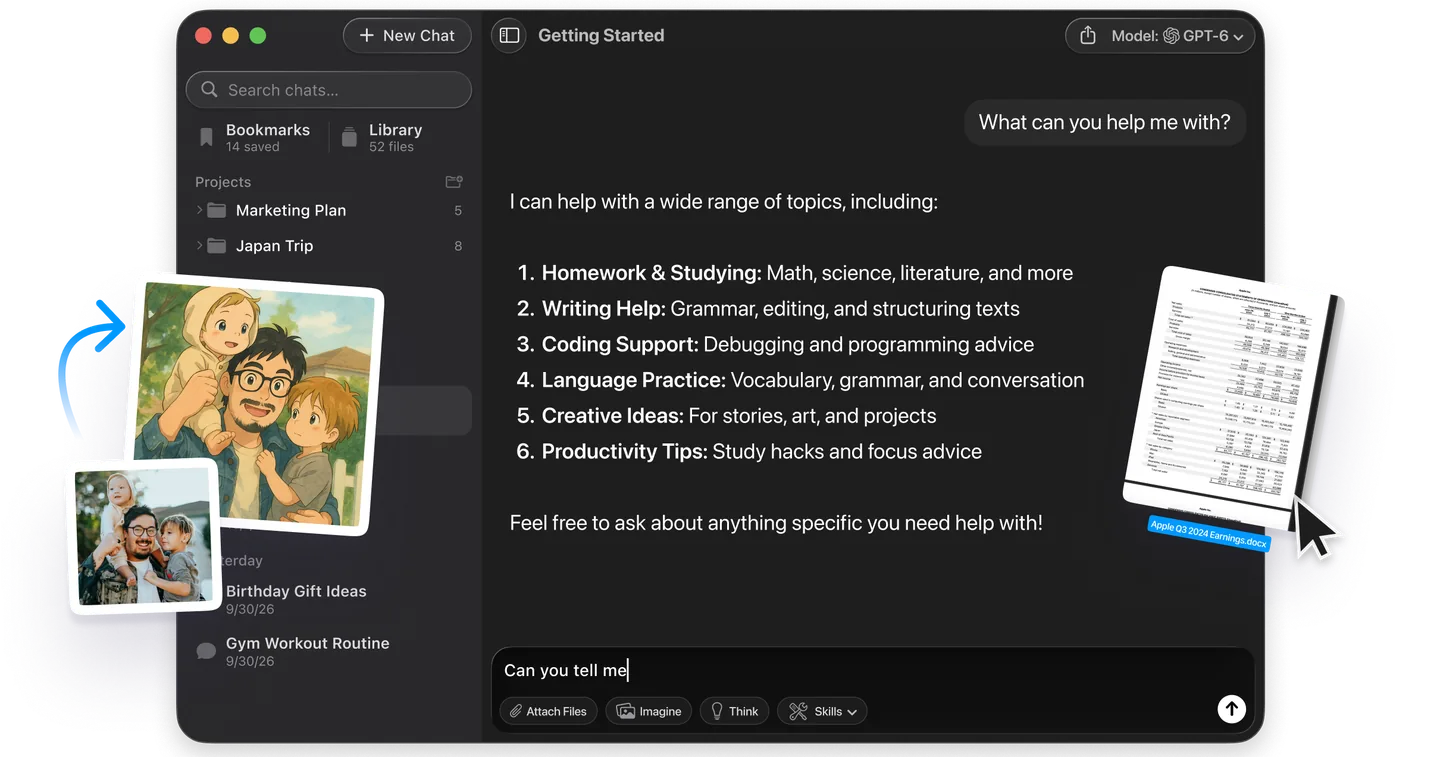
Use both. Send the volume to DeepSeek, send the hard problems to Claude, and stop paying for the model you are not currently using. Fello AI exists for exactly that, putting Claude, DeepSeek and the rest behind one hotkey in a single native Mac app, so switching between them costs a keystroke instead of a subscription.
Where ChatGPT Fits
Most people asking this question are really choosing between three models rather than two. ChatGPT sits between them on price and above DeepSeek on polish, and the comparison has its own shape and its own numbers. We cover that pairing in detail in DeepSeek vs ChatGPT, including where each tier lands once you account for what OpenAI now gives away for free.
The Verdict
Claude is the better model and DeepSeek is the better deal, and after 16 August the deal is roughly four times less good than the internet still believes. If you are one person deciding where $20 goes, take Claude Pro: the API saving that makes DeepSeek famous does not apply to you, and the native Mac app does. If you are running volume through an API, DeepSeek V4-Pro at off-peak rates is very hard to argue with, and the open weights mean you are never locked in.
And if you find yourself reaching for both, that is not indecision. It is the correct answer, and the only question left is whether you pay two subscriptions to act on it.
Frequently Asked Questions
Is DeepSeek better than Claude?
Not on measured capability. On the Artificial Analysis Intelligence Index v4.3.2, Claude Opus 5.5 scores 57.6 against 36.0 for DeepSeek V4-Pro. DeepSeek is better on price, speed and openness, and it is competitive on self-contained coding tasks. Claude is better on repo-scale code, long writing and anything involving regulated data.
How much cheaper is DeepSeek than Claude?
On output tokens, DeepSeek V4-Pro is about 5 times cheaper than Claude Opus 5.5 during peak hours and 10 times cheaper off-peak. Against Claude Sonnet 5.5 the gap narrows to about 2.5 times. The widely repeated 97% saving used DeepSeek's pre-August prices and is no longer accurate.
What are DeepSeek's peak and off-peak hours?
DeepSeek's pricing page lists peak hours as 01:00 to 04:00 and 06:00 to 10:00 UTC, Monday to Friday. Off-peak rates are exactly half the peak rates. The structure took effect at 16:00 UTC on 16 August 2026, alongside the V4 lineup release.
Is DeepSeek free to use?
The DeepSeek web chat is free. The API is not, and there is no zero-priced API tier despite what several comparison sites claim. Our full guide to whether DeepSeek is free explains why there is no paid consumer tier at all. Claude also has a free tier, with paid plans starting at $17 a month for Pro on an annual bill, $20 month to month, and $100 a month for Max.
Can I run DeepSeek on my Mac?
There is no official DeepSeek Mac app. The weights are MIT licensed and downloadable, but V4-Pro has 1.6 trillion parameters and sits far beyond a laptop, so local use means smaller distilled variants. A multi-model Mac client is the practical route to using DeepSeek and Claude side by side.