Google released four Gemini 4 models in five weeks: Argon on October 13, Carbon on November 10, Hydrogen on November 12 and Neon on November 18, 2026. The names are chemical elements, not sizes or versions. Nothing in them tells you which model is stronger, which is cheaper, or which one you are talking to in the Gemini app.
This guide compares the Gemini 4 models side by side. It shows which model each Gemini plan gets today, what each one costs on the API and how they score at the same settings. It also explains why Argon, the first Gemini 4 model, is no longer in the app at all. For every Gemini generation from 2.5 onward, see the parent guide, the ultimate Gemini model comparison.
The Key Takeaways
- Carbon is the strongest, Hydrogen the fastest and cheapest: Google calls Carbon its strongest model; Hydrogen is the only Gemini 4 model on the free API tier.
- Neon matches Carbon at High: both score 60 on the Artificial Analysis Intelligence Index v5.0.1, but Neon finishes a task in 14.8 minutes against Carbon's 36.6.
- Your plan decides your model: Free and Plus get Hydrogen, Pro adds Neon, and only Ultra gets Carbon.
- Argon is no longer in the app: since Neon arrived on November 18, Google lists Neon for Pro and no Argon on any plan. Argon is still sold on the API, at $4 / $20 per million tokens from December 1.
- Krypton is a rumor: no Krypton model exists in Google's API catalog as of November 19, 2026.
The Gemini 4 Models at a Glance
The four Gemini 4 models split into one flagship (Carbon), one fast mid-tier model (Neon), one everyday model (Hydrogen) and one retired-from-the-app original (Argon). All four take text, image, audio, video and PDF input and share a 1M-token context window, according to Google's API model list.
| Model | Released (GA) | Google's description | Gemini app | API price per 1M tokens (input / output) | Free API tier |
|---|---|---|---|---|---|
| Gemini 4 Carbon | Nov 10, 2026 | "Our strongest model", for advanced coding and long-horizon problems | Ultra only | $2 / $10 through Nov 30, then $4 / $20 | No |
| Gemini 4 Neon | Nov 18, 2026 | "Frontier-level intelligence" for deeper analysis | Pro and Ultra | $3 / $15 | No |
| Gemini 4 Hydrogen | Nov 12, 2026 | "A high-speed, capable model" | Every plan (Free through Auto) | $1.50 / $7.50 | Yes |
| Gemini 4 Argon | Oct 13, 2026 | "Efficient Gemini 4 frontier reasoning model" | No longer listed since Nov 18 | $2 / $10 through Nov 30, then $4 / $20 | No |
Release order is not power order. Argon came first and now ranks last of the four on Artificial Analysis. Hydrogen, the lightest element, is the everyday model, but Carbon is the top model and Neon sits between Hydrogen and Carbon. Each model has its own launch guide: Gemini 4 Carbon, Gemini 4 Neon, Gemini 4 Hydrogen and Gemini 4 Argon.
Which Gemini 4 Model You Get in the Gemini App
Your Google AI plan decides which Gemini 4 models you can pick. Google's About Gemini models help page lists the current lineup for personal Google Accounts:
| Plan (US price) | Models in chats | Models in tasks |
|---|---|---|
| No plan (free) | Auto only | Hydrogen |
| Google AI Plus ($4.99/month) | Auto, Hydrogen | Hydrogen |
| Google AI Pro ($19.99/month) | Auto, Hydrogen, Neon | Hydrogen, Neon |
| Google AI Ultra ($99.99 or $199.99/month) | Auto, Hydrogen, Neon, Carbon | Hydrogen, Neon, Carbon |
Auto is not a Gemini 4 model. Google says Auto routes each prompt between Hydrogen and "a fast, lightweight model", picking the thinking level for you, to save your usage. Free users therefore get Hydrogen only when Auto decides a prompt needs it. Work and school accounts follow their Workspace license instead of this table.
How to check which Gemini model you are using
- Open gemini.google.com and start a chat.
- Look at the model name at the bottom of the chat box. It reads Auto, Hydrogen, Neon or Carbon.
- Click it to see every model your plan includes. Models with a lock icon need a higher plan.
- After picking a model, check the thinking level. If you do not choose one, Gemini uses Low.
The last step matters more than most guides admit, because the thinking level changes a Gemini 4 model's score more than the model name does.
Why the Thinking Level Matters More Than the Model Name
A Gemini 4 model at Low thinking can score below a cheaper model at High. Google's help page says a manually selected model defaults to Low, and Artificial Analysis tests each Gemini 4 model at every setting. Here are the Intelligence Index v5.0.1 scores, read on November 19, 2026:
| Model | Low | Medium | High | Xhigh (API only) |
|---|---|---|---|---|
| Gemini 4 Carbon | 54 | 58 | 60 | Not tested |
| Gemini 4 Neon | 44 | 55 | 60 | 61 |
| Gemini 4 Hydrogen | 27 | 41 | 51 | 54 |
| Gemini 4 Argon | Not tested | 48 | 50 | Not tested |
Neon at its default Low scores 44, which is lower than Hydrogen at High (51). Hydrogen at Low scores 27, about half of its High score. Carbon loses the least when you turn it down: 54 at Low against 60 at High. The practical rule for the Gemini app: if you pick Neon or Hydrogen for real work, set the thinking level to High.
Higher thinking costs time. On the same index, Neon takes 3.7 minutes per task at Low, 14.8 at High and 21.5 at Xhigh. Google also says higher thinking levels use more of your plan's usage limit.
Gemini 4 Models on the API: Price and Free Tier
Hydrogen is the cheapest Gemini 4 model on the API and the only one on the free tier. The Gemini API pricing page lists these paid-tier rates per million tokens:
| Model | Input | Output (incl. thinking) | Cached input | Free tier |
|---|---|---|---|---|
| Hydrogen | $1.50 | $7.50 | $0.075 | Yes |
| Argon | $2.00, then $4.00 from Dec 1 | $10.00, then $20.00 | $0.10, then $0.20 | No |
| Carbon | $2.00, then $4.00 from Dec 1 | $10.00, then $20.00 | $0.10, then $0.20 | No |
| Neon | $3.00 | $15.00 | $0.15 | No |
The price order flips on December 1, 2026. Until November 30, Neon is the most expensive Gemini 4 model per token, because Carbon and Argon still run at an introductory $2 / $10. From December 1, Carbon and Argon double to $4 / $20 and Neon becomes the cheaper of the two High scorers. Per-token price is only half the bill. Artificial Analysis measured Carbon at High taking 36.6 minutes per task against Neon's 14.8. The Gemini pricing guide covers the consumer plans and older models.
Gemini 4 Models Head to Head
Each pairing below answers one question people search for, using the same Artificial Analysis settings on both sides.
Gemini 4 Neon vs Carbon
Neon matches Carbon at High and is much faster, but Carbon is stronger at lower thinking levels. Both score 60 at High on Artificial Analysis. Neon finishes a task in 14.8 minutes at about 101 tokens per second; Carbon needs 36.6 minutes at about 56. Google's Neon announcement adds that Neon at High costs 32% less per task than Carbon. At Low, Carbon keeps 54 while Neon drops to 44. In the app, Carbon needs Google AI Ultra, while Neon comes with Pro. Pick Carbon for long agentic coding runs where Google positions it; pick Neon for everything else.
Gemini 4 Hydrogen vs Argon
Hydrogen beats Argon on almost every practical measure. At High, Hydrogen scores 51 and Argon 50 on Artificial Analysis. Hydrogen finishes a task in 8.6 minutes against Argon's 29.5. It costs $1.50 / $7.50 per million tokens, against Argon's $2 / $10, which rises to $4 / $20 on December 1. Hydrogen is also on the free API tier and in every Gemini app plan, while Argon is now API-only.
Gemini 4 Neon vs Hydrogen
Neon is the smarter model and Hydrogen the faster one. At High, Neon scores 60 and Hydrogen 51; at Xhigh, Neon reaches 61 and Hydrogen 54. Hydrogen finishes in 8.6 minutes per task at High against Neon's 14.8, and costs half as much per token. In the app, Hydrogen comes with Google AI Plus ($4.99) and Neon needs Google AI Pro ($19.99). Use Hydrogen for quick questions and drafts, and switch to Neon at High for analysis you will act on.
Gemini 4 Argon vs Neon: where Argon went
Since Neon arrived in the Gemini app on November 18, 2026, Google's help page lists Neon for Pro and Ultra subscribers and no longer lists Argon on any plan. Argon had been the Gemini 4 model for Google AI Pro and Ultra since October 13. Google has not announced the change; it shows only in the help page. On the API, Argon is still sold with no deprecation notice in Google's changelog. From December 1 it costs $4 / $20, more per token than Neon, while Neon scores 60 at High against Argon's 50. The only reason to stay on Argon is an app or pipeline already pinned to it.
Gemini 4 Carbon vs Hydrogen
Carbon and Hydrogen sit at opposite ends of the lineup. Carbon scores 60 at High and Hydrogen 51. Hydrogen, though, answers at about 165 tokens per second, roughly three times Carbon's speed, and it is free on the API. Carbon is worth paying for only on the hardest problems, which is exactly how Google describes it.
How Google Changed the Gemini 4 Lineup in Five Weeks
The Gemini app's model list changed with almost every Gemini 4 release, which is why older articles disagree with each other. These are the dated changes, from Google's blog, API changelog and help page:
| Date (2026) | What happened | Gemini app after the change |
|---|---|---|
| Sept 30 | Argon announced, first for trusted cyber defenders and testers | No Gemini 4 model |
| Oct 13 | Argon generally available | Argon on Pro and Ultra |
| Oct 28 | Carbon announced | Unchanged |
| Nov 10 | Carbon generally available | Carbon on Ultra |
| Nov 12 | Hydrogen generally available | Hydrogen from Plus up; Argon on Pro and Ultra; Carbon on Ultra (Flash-Lite and Gemini Pro still listed too) |
| Nov 18 | Neon generally available | Hydrogen from Plus up; Neon on Pro and Ultra; Carbon on Ultra; Argon no longer listed |
Google's help page warns that the lineup "is subject to change without notice", so check the picker before trusting any table, this one included. The Gemini 4 tracker logs each change as it happens.
Is Gemini 4 Krypton Coming?
Gemini 4 Krypton is a rumor, not an announced model. As of November 19, 2026, the name does not appear in Google's Gemini API model list, API changelog, pricing page or Gemini blog feed. The claim comes from posts on X saying an internal Krypton checkpoint performs better than Carbon. No benchmark, model card or release date from Google backs that up, and blog posts that give late-November or December dates cite no primary source. If Google ships Krypton, this comparison will add it.
Which Gemini 4 Model Should You Pick?
Pick the strongest model your plan includes, and set its thinking level to High for anything that matters.
| You have | Pick for real work | Pick for quick questions |
|---|---|---|
| Free | Auto (it routes to Hydrogen when needed) | Auto |
| Google AI Plus | Hydrogen, set to High | Auto |
| Google AI Pro | Neon, set to High | Hydrogen or Auto |
| Google AI Ultra | Neon at High; Carbon for long coding or research runs | Hydrogen or Auto |
| Gemini API | Neon when quality matters; Carbon for the hardest agentic tasks | Hydrogen (free tier available) |
Argon is missing from the table on purpose: no app plan offers it, and on the API Neon beats it on score and, from December 1, on price.
For free access without a plan, the guide to what is free in Gemini covers the limits.
Gemini 4 without the plan maze
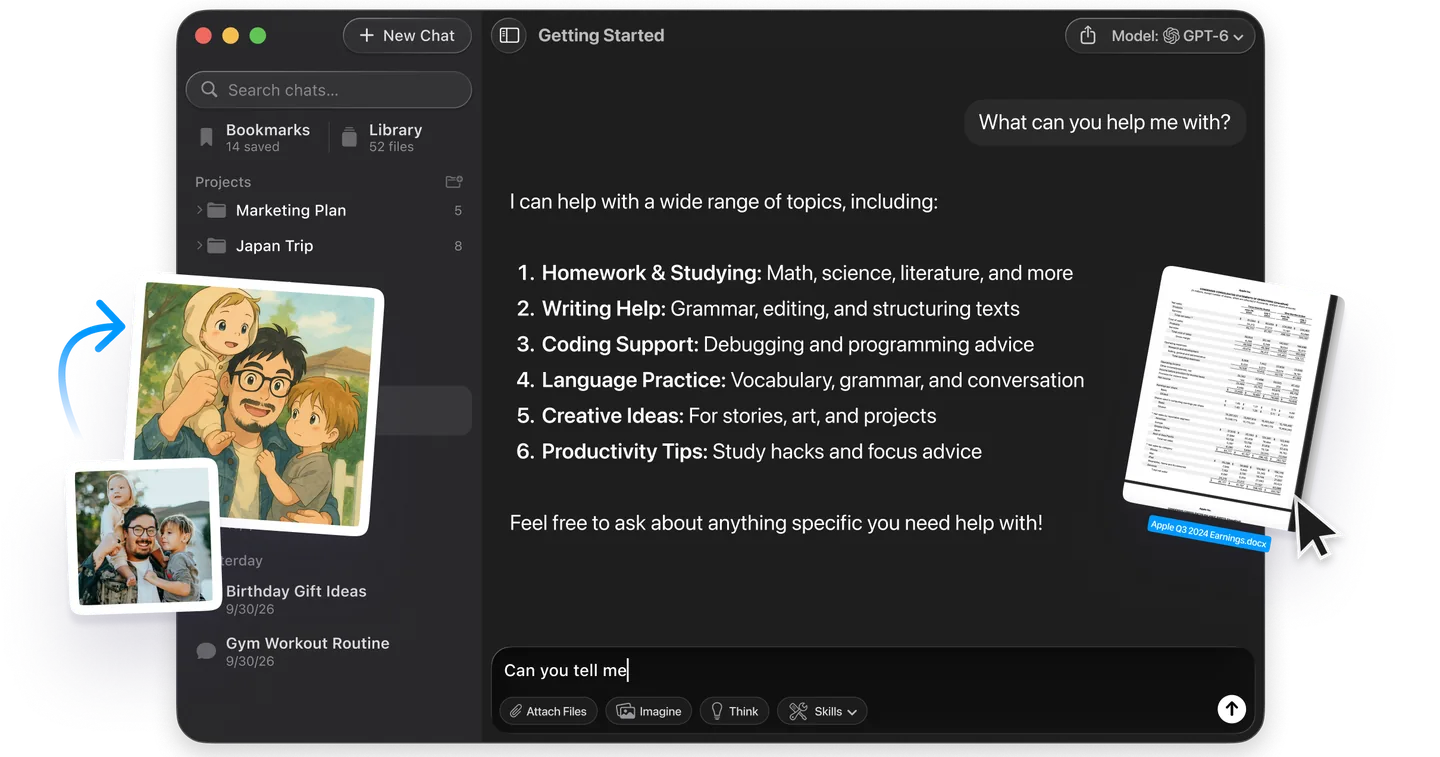
Most people do not want to learn which element their subscription unlocks. They want a strong Gemini answer and, sometimes, a second opinion from Claude or ChatGPT on the same question. Fello AI puts Gemini next to Claude and GPT in one Mac and iPhone app. Fello's Gemini 4 model is Argon, listed in the picker as Gemini 4. The model Google took out of its own app is still one click away, and there is no Google plan to choose.
The Bottom Line
The Gemini 4 lineup is simpler than its names suggest. Hydrogen is the everyday model everyone gets, Neon is the one most paying users should pick, and Carbon is the Ultra-only heavyweight. Argon is a leftover that costs more than Neon from December 1 while scoring less. The bigger trap is the thinking level: a Pro subscriber who picks Neon and leaves it on Low gets a weaker answer than Hydrogen at High. Choose your model, then choose High.
Frequently Asked Questions
What are the Gemini 4 models?
Google has four Gemini 4 models: Carbon (the strongest), Neon (a faster model that matches Carbon at High thinking), Hydrogen (the fast, cheap everyday model) and Argon (the first Gemini 4 model, now API-only). They were released between October 13 and November 18, 2026.
Which Gemini 4 model is the best?
Carbon and Neon tie at 60 at High thinking on the Artificial Analysis Intelligence Index v5.0.1, and Neon reaches 61 at Xhigh on the API. Google calls Carbon its strongest model for advanced coding and long-horizon problems. For most people, Neon is the better choice because it is faster and included with Google AI Pro.
Which Gemini 4 model is free?
Gemini 4 Hydrogen is the only free one. It is the only Gemini 4 model on the Gemini API free tier, and free Gemini app users can get it through Auto, which routes some prompts to Hydrogen. Neon, Carbon and Argon all need a paid plan or paid API access.
Is Gemini 4 Argon discontinued?
Argon is gone from the Gemini app but not from the API. Since Neon arrived on November 18, 2026, Google's help page no longer lists Argon on any plan, and Google AI Pro now lists Neon instead. The Gemini API still sells Argon, at $4 / $20 per million tokens from December 1, and the changelog has no deprecation notice for it.
Does Google AI Pro include Gemini 4 Carbon?
No. In the Gemini app, Carbon is available only on Google AI Ultra. Google AI Pro includes Hydrogen and Neon, and Google AI Plus includes Hydrogen.
Úvodní obrázek k tomuto článku vznikl s pomocí AI.