Anthropic launched Claude Tag on 23 June 2026 in its launch announcement, and it is not another chatbot window. You tag @Claude into a Slack channel and it takes on real work in front of everybody, using your organisation's connected tools and whatever context the channel has already built up. The whole team shares one Claude, so anyone can steer it or pick up where a colleague left off.
The part most guides still get wrong is the timing. It replaced the old Claude in Slack app, and that switchover already happened on 3 August 2026. This guide covers what Claude Tag actually does, who is allowed to use it, and what it costs. It also covers the August update, and what to do if your workspace was not ready for the handover.
The Key Takeaways
- What it is: a shared @Claude that lives in a Slack channel, keeps memory of that channel, and works asynchronously while you do something else.
- Who gets it: Team and Enterprise plans only, still in beta. Anthropic states it is not available on Free, Pro or Max.
- The date that already passed: Claude in Slack switched over to Claude Tag on 3 August 2026. Nothing carried across on its own.
- Who sets it up: an Owner in your Claude organisation, not a Slack admin. The Claude Admin role cannot do it.
- What it runs on: Anthropic says Claude Tag works with Opus 4.8, and channel work bills to the organisation while direct messages bill to you.
What Is Claude Tag?
It is Anthropic's way of putting Claude inside a Slack channel as a shared teammate rather than a private assistant. You mention @Claude with a request, and it works through the task while the entire exchange stays visible to everyone in the channel. Everybody in that channel talks to the same Claude, with the same memory and the same connected tools.
That sounds like a small change from a chatbot. It is not. A normal AI chat is one person in a private window, and the result only exists for them. It makes the work itself collective: the request, the reasoning and the output all land in a place your colleagues can read, correct and continue.
What Makes It Different From a Bot
Three things separate it from the usual Slack integration. It holds persistent memory of the channel, so it accumulates knowledge of the work instead of starting cold every time. It can reach connected tools and data sources that an administrator has attached to that channel. And it runs asynchronously, so a long job continues in the thread while everyone gets on with their day.
Claude Tag sits in the agent category, not the chatbot one. If that distinction is new to you, read what an AI agent actually is first.
How Claude Tag Works in a Slack Channel
In day-to-day use there are three surfaces. You can tag @Claude in a channel, where the work is shared and billed to the organisation. You can send it a direct message, which stays private and runs on your own Claude account. And you can reach it from Slack's assistant panel.
Permissions inherit downward in three tiers. Credentials set at the organisation level apply everywhere. Workspace-level access covers every public channel and inherits those organisation settings. A private channel can then be given extra credentials or repositories for sensitive work, without leaking them into the rest of the workspace.
Ambient Mode, and Why It Is Controversial
There is an ambient mode you can switch on. In Anthropic's own wording, if ambient behaviour is enabled then Claude "will proactively keep you updated about whatever it thinks you might need to know." In practice that means it can post without being tagged: flagging something from another channel, or chasing a thread everyone forgot.
This is the setting teams argue about, and reasonably so. An assistant that speaks only when spoken to is predictable. One that decides for itself when to interrupt is a different proposition, and it is the feature Anthropic has spent the most time reworking since launch.
What Changed in the August Update
This is the part no June-dated guide covers. Earlier in August 2026, Anthropic rebuilt how it decides whether to speak. The original design ran a lightweight classifier over each Slack message in isolation.
That classifier is gone.
Claude now reads the channel's full context, its memory and any standing instructions. It then picks one of four moves: reply inline, open deeper work in a thread, route the message into an existing workstream, or stay quiet. According to VentureBeat's report on the update, Anthropic says the change makes Claude roughly 30% better at judging when, and when not, to join a conversation unprompted.
The restraint is deliberate. Anthropic's framing, quoted in the same report, is that an annoying agent is worse than an unhelpful one, so Claude goes dormant in channels where it has nothing useful to add. The report also notes that the expanded channel context does not currently count against usage or spend limits, with the caveat that this could change.
Who Can Actually Use Claude Tag
Here is the answer most people are looking for, and it is restrictive. It is in beta on Team and Enterprise plans only. Anthropic's documentation is explicit that it is not available on individual plans, naming Free, Pro and Max, and not available for third-party deployments either.
So if you pay for Claude personally, however much you pay, you cannot turn this on. It is bought by an organisation, configured by an organisation, and billed to an organisation.
There is no individual path to it, and Anthropic has not signalled one.
| Plan | Claude Tag access |
|---|---|
| Free | No |
| Pro | No |
| Max | No |
| Team | Yes, in beta |
| Enterprise | Yes, in beta |
If you are weighing up which tier you are on and what it buys you, our breakdown of Claude pricing covers every plan and where the costs actually land.
What Happened on 3 August 2026
It did not launch alongside the old Claude in Slack app. It replaced it. Administrators got a 30-day window from the June launch to opt in. The official Claude Tag documentation now records the handover in the past tense: Claude in Slack switched over to the new Claude Tag experience on 3 August 2026.
This was not a rename.
The permission model, the memory behaviour and the eligible plans all changed, and existing tool connections and channel authorisations did not carry across. An administrator has to reconfigure channel access, tool connections and memory scope from scratch.
If Your Workspace Missed It
Nothing is lost permanently, but nothing is automatic either. A workspace that let the date pass without opting in simply has no Slack-based Claude until an Owner sets Claude Tag up. The fix is the same four-step setup below, just performed later than Anthropic intended. If @Claude vanished from your channels in early August and nobody could explain why, this is the reason.
How to Set Up Claude Tag
Before anything else, the role requirement, because this is where most write-ups are wrong. You must be an Owner in your Claude organisation to run setup. Anthropic's help centre adds that a Primary Owner or Owner can configure Claude Tag's access and channels, and that the Admin role cannot. Note that this is your Claude organisation role, not your Slack workspace role. They are separate systems and confusing them sends the wrong person to the wrong console.
Anthropic describes four provisioning steps:
- Pair Claude Tag with your Slack workspace.
- Give Claude access to the tools, data sources and repositories it will need.
- Set a monthly spend limit for your organisation.
- Test Claude in a private channel before rolling it out more widely.
Once that is done, end users configure nothing at all. Anyone in a channel where Claude Tag is switched on can tag @Claude immediately.
What It Costs
There is no standalone price, and it is worth being blunt about that rather than implying otherwise. It is consumption-based and billed against your organisation's usage balance. Anthropic issued an introductory launch credit to eligible Enterprise and Team organisations at launch, without publishing an amount.
The controls matter more than the headline number. Administrators can set a hard organisation-wide cap and per-channel limits, with new channels inheriting a default. Alerts fire at 75% and 95% of a limit. Work that would exceed the cap is declined outright rather than silently truncated. That is the right behaviour, though a badly set limit will stop a job dead.
One split catches people out. Channel work bills to the organisation. Direct messages do not.
A DM runs on the sender's own Claude account against that seat's usual limits, so the organisation's spend limit never applies to it. Owners can switch DMs off across the organisation if they want everything to sit inside the shared, auditable surface.
Claude Tag vs Claude in Slack
| Feature | Claude in Slack (retired) | Claude Tag |
|---|---|---|
| Model of use | One person, one private chat | One shared Claude per channel |
| Memory | Per conversation | Persistent channel and workspace memory |
| Unprompted posting | None | Optional ambient mode |
| Billing | Per user | Org for channels, personal for DMs |
| Admin controls | Minimal | Spend caps, channel scoping, audit log |
| Eligible plans | Wider | Team and Enterprise only |
| Status | Switched over 3 Aug 2026 | Beta |
What Most Guides Get Wrong About Claude Tag
Almost every guide ranking for this term was published in the last week of June 2026, and they share two errors.
The first is the deadline. They tell you to migrate before 3 August. That date is behind us, and the framing turns a completed change into a task you can still get ahead of. If you are reading a guide that treats the switchover as upcoming, it has not been touched since launch week, and it will not know about the August rework of ambient mode either.
The second is the Owner role, covered above: guides routinely describe it as a Slack Owner when Anthropic specifies an Owner in your Claude organisation.
Two smaller claims also circulate without support. Several pages state that a paid Slack plan is required, which no Anthropic source says, and several quote a setup time of roughly fifteen minutes, which appears to be invented. Treat both as unverified.
What to Use If You Cannot Get Claude Tag
Most individual readers fall outside the eligible plans, so the practical question is what to do instead. Claude Tag solves a team problem: shared context, shared output, shared bill. If what you actually want is Claude doing serious work for you personally, that is a different tool and the answer is not to wait for a Team seat.
For agentic work on your own machine, Claude Cowork covers the individual side of the same idea. For a broader view of where this category is heading, agentic AI compared against plain automation is a useful frame. And Anthropic says Claude Tag runs on Claude Opus 4.8, which you can reach directly today on far cheaper plans.
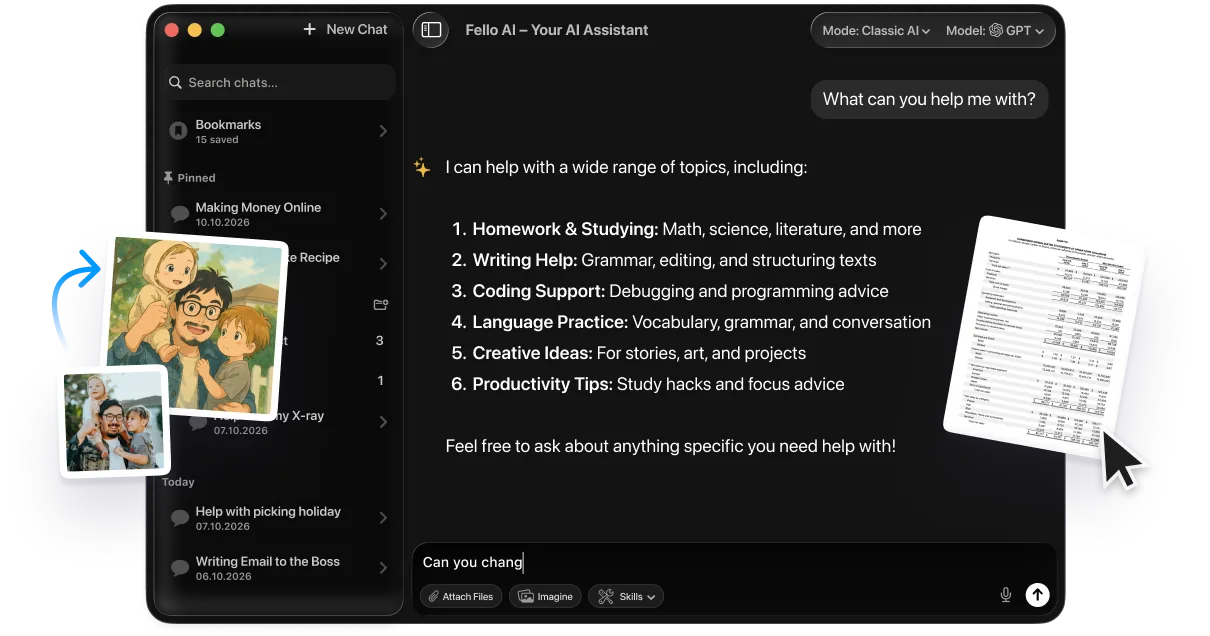
That last point is the one worth sitting with. The model behind Claude Tag is not gated. What Team and Enterprise buy is the shared surface, the memory and the governance, not smarter answers. If you work on a Mac and want Opus alongside other frontier models in one native app, Fello AI runs them side by side. Different problem, different answer.
Should You Turn It On?
If you are on Team or Enterprise and your work already happens in Slack threads, yes, with ambient mode off until you trust it. The shared-channel model beats everyone running private chats and pasting results around, and the audit log plus spend caps make it defensible to a security team.
Start in one private channel with a real workload and a low spend limit. Turn ambient mode on only once the team knows what Claude is good at there. The failure mode is not a wrong answer. It is a channel nobody wants to read any more. And if you are on an individual plan, this simply is not available to you yet, so plan around that rather than waiting.
Frequently Asked Questions
What is Claude Tag?
Claude Tag is Anthropic's Slack integration that puts a shared @Claude inside a channel. You tag it with a request and it does the work in the open, using the channel's memory and any tools an administrator has connected. Everyone in the channel works with the same Claude. It launched on 23 June 2026.
Is Claude Tag free?
No. It is available in beta on Claude Team and Enterprise plans only, and Anthropic states it is not available on Free, Pro or Max. There is no standalone price. Channel usage is consumption-based against your organisation's balance, with spend limits set by an administrator.
How do I tag Claude in Slack?
In any channel where Claude Tag has been switched on, type @Claude followed by your request. End users do not configure anything. If @Claude does not appear, an Owner in your Claude organisation has not yet given it access to that channel.
What happened to the old Claude in Slack app?
It switched over to Claude Tag on 3 August 2026. Administrators had a 30-day opt-in window from the June launch. Tool connections and channel authorisations did not carry across, so an Owner has to reconfigure access, tools and memory scope from scratch.
Can Claude Tag post without being tagged?
Only if ambient mode is enabled. Anthropic rebuilt this behaviour in August 2026, removing the per-message classifier so Claude reads full channel context before deciding whether to reply, open a thread, route the message, or stay silent. Anthropic says that made it roughly 30% better at judging when not to speak.
Claude Tag is the clearest signal yet of where Anthropic thinks this is going. Not a smarter chat window, but a coworker with a seat in the room, a memory of the project, and a bill attached to the team rather than the person.
If you have the plan for it, start in one private channel with a low spend cap and ambient mode off. Give it a fortnight before you judge it.