The Canva AI image generator turns a sentence into a finished, editable design in seconds, and it now spans three layers. The flagship is Dream Lab, built on Leonardo.ai’s Phoenix model after Canva bought Leonardo in 2024. Alongside it sits Magic Media, the classic generator inside the editor, plus a new conversational layer in the Canva AI 2.0 research preview that launched in April 2026. Every image you make drops straight onto your canvas, so a generated picture becomes part of a presentation, post, or poster without leaving Canva.
This guide shows you which tool to open, the exact steps to generate an image, what the free credit limits really are, and how good the output actually is compared with Midjourney and Flux. You will also see where Canva’s generator wins, where it struggles with faces and text, and who owns the images you make, on any plan. By the end you will know exactly when to reach for Dream Lab and when another tool fits better. This guide is about generating new images; to fix or retouch a photo you already have, see our guide to the Canva AI photo editor. For the allowance itself, see what Canva Free really gives you.
The Key Takeaways
- Canva runs three image layers: Dream Lab (Leonardo Phoenix), Magic Media (legacy in-editor), and the new conversational Canva AI 2.0 preview.
- The free plan gets one pool of up to 20 AI uses a month, shared by Standard and Premium tools. Pro gets up to 200 Premium uses and Business up to 400, and basic image generation is a Standard tool that paid plans do not count at all.
- Dream Lab offers around 15 styles plus a 2026 Style Transfer feature, and outputs editable Canva designs rather than flat images.
- Reviewers rate Canva as strong for stylized graphics but behind Midjourney v7 and Flux on photorealism, faces, and in-image text.
- You own the AI images you generate on any plan, Free included, and can use them for any lawful purpose, unless the output edits Canva library content.
What Model Powers the Canva AI Image Generator?
Canva does not run a single image model. It runs a stack, and which one you use depends on the tool you open. Understanding that stack is the fastest way to get better results, because each layer is tuned for a different job. For the wider picture of how these pieces connect, see our guide on what Canva AI can do. New to the platform entirely? Start with our overview of what Canva is.
Dream Lab (Leonardo Phoenix)
Dream Lab is the flagship generator, built on Leonardo.ai’s Phoenix model. Canva acquired Leonardo in 2024 and folded its image research straight into Magic Studio. Phoenix is tuned for prompt accuracy and detail, which is why Dream Lab handles complex scenes and specific styles far better than the older tools. In 2026 Canva added Style Transfer, so you can upload a reference image and have Dream Lab match its palette, mood, and composition.
Magic Media (the in-editor classic)
Magic Media is the original generator that lives inside an open design, reached through the Apps menu. Its image engine is a Stable Diffusion-based pipeline that Canva fine-tuned, and the same tool now generates video using Google’s Veo 3 model. Canva has not retired Magic Media, but it clearly promotes Dream Lab as the higher-quality path. Treat Magic Media as the quick option for a fast background or rough concept while you stay in the editor.
Canva AI 2.0 (the conversational newcomer)
In April 2026 Canva launched Canva AI 2.0 as a research preview, rolling out first to homepage users and expanding from there. You describe what you want in a chat, and it builds a fully editable design from individual objects while remembering the conversation. Its image generation runs on newer models including Lucid Origin and Proteus rather than Phoenix, and the heaviest features draw from the top Ultra AI credit tier. It is not generally available yet, so for now Dream Lab remains the reliable choice for most people.
How to Use the Canva AI Image Generator (Step by Step)
The hardest part for most people is finding the tool, because Canva spreads it across the home page and the editor. Once you know the two paths, generating an image takes seconds.
Generate an image in Dream Lab
- Open Dream Lab from the left menu on the Canva home page, or go straight to canva.com/dream-lab.
- Type a detailed prompt describing the subject, style, setting, and lighting.
- Pick a style and aspect ratio, such as photography, digital art, or fine art.
- Add a reference image if you want Style Transfer to match an existing look.
- Click Generate and wait a few seconds for a set of variations.
- Open the winner in a design to crop, restyle, or layer it like any other element.
Generate inside a design with Magic Media
- Open or create a design on canva.com or in the desktop or mobile app.
- Click the Apps icon in the left-hand editor toolbar.
- Select Magic Media, then the Image tab.
- Enter your prompt, choose a style, and click Generate.
- Click an image to drop it directly onto your canvas.
Where to find each tool
Dream Lab lives on the Canva home page and inside Magic Studio, while Magic Media only appears once you open a design. Canva also offers third-party generators like DALL-E and Imagen as separate Apps, each with its own limits. On mobile, both Canva tools sit in the same Apps menu, so the steps are nearly identical to desktop.
Is the Canva AI Image Generator Free? Credits and Limits
Yes, you can generate images on the free Canva plan, and every generation draws on one monthly pool of up to 20 Standard or Premium AI uses, shared with tools like the Image Upscaler and design generation. Magic Write and Translate sit outside that pool entirely. Image generation appears in all three of Canva’s AI tiers: according to Canva’s AI usage help page, more complex or higher-quality outputs use more advanced models and more of the allowance. If clips are what you are after, see our guide to Canva’s AI video generator.
The monthly Premium AI caps by plan
| Plan | Premium AI uses per month | What that means for images |
|---|---|---|
| Canva Free | Up to 20 (shared with Standard AI) | Roughly 20 image generations before the cap |
| Canva Pro | Up to 200 | 10x the free allowance |
| Canva Business | Up to 400 | 20x the free allowance |
What counts against your allowance
On paid plans the picture changes: Standard AI tools, basic image generation with Canva AI among them, stop counting against the allowance (fair-use limits apply), while Premium image tools such as Dream Lab draw on Pro’s 200 or Business’s 400 monthly uses. Complex prompts burn the allowance faster, and not every generation produces a keeper, so your real output runs lower than the raw allowance suggests. If you need more, Canva sells a paid AI Pass add-on for Pro and Business that expands the pool sharply. Note that legacy Canva Teams has folded into Canva Business, which is now the only team plan. For the full breakdown of tiers and what each one includes, see our guide to Canva’s pricing and credit tiers.
How Good Are Canva’s AI Images, Really?
Canva’s output sits in the mid-tier and keeps improving, but it is not a Midjourney killer. The honest verdict from reviewers is that it shines for stylized, on-brand graphics and stumbles on the things that demand precision. Knowing the split saves you wasted credits.
Where it is strong
Dream Lab is excellent for abstract backgrounds, marketing graphics, illustrations, and stylized concepts, with reviewers reporting around 85% usable results on abstract work. It comfortably beats DALL-E for stylized output and integrates better than any standalone tool, since the image lands directly in an editable design. For social posts, slides, and quick brand visuals, that workflow advantage often matters more than raw quality.
Where it falls short
Photorealism is the weak spot. Close-up faces still distort more often than they do in Midjourney v7 or Nano Banana Pro, and text inside generated images fails frequently, with one test seeing in-image text break roughly 60% of the time. Hands and fine detail remain hit-or-miss. For polished product photography or realistic portraits, a specialist model is still the safer bet.
Commercial Use and Your Rights
This is the detail most guides skip. Canva’s AI Product Terms, effective 26 June 2026, say you own your output and may use it for any lawful purpose, and they make no distinction between free and paid plans. The exception is output that edits or incorporates Canva library content: if you use AI to edit a stock photo from Canva’s library, you do not own the result, and the stock licence governs it. The same terms bar you from passing AI images off as human-made or stripping their C2PA provenance tags.
Two more points are worth knowing. The license is non-exclusive, and AI-generated images may not be copyrightable in the US, which limits how strongly you can protect them. Rights and training policy vary across the best Canva alternatives, so check them before committing. On data, Free and Pro accounts have AI training on by default with an opt-out, while Business, Enterprise, and Education content is never used for training.
Dream Lab vs Magic Media vs a Multi-Model Tool
If you only need an image to finish a Canva layout, the built-in generator is the obvious pick. If you want one tool that can produce the whole project, a multi-model assistant fits better. This table breaks down the trade-offs.
| Tool | Model | Best for | Free access | Editable in Canva |
|---|---|---|---|---|
| Dream Lab | Leonardo Phoenix | High-quality stylized images inside Canva | Yes, credit-capped | Yes |
| Magic Media | Stable Diffusion (fine-tuned) | Fast, simple in-editor generation | Yes, credit-capped | Yes |
| Fello AI | GPT, Claude, Gemini, Grok and more | Images, podcasts, docs, slides, and sheets in one chat | Yes, or $9.99/mo | No (export and import) |
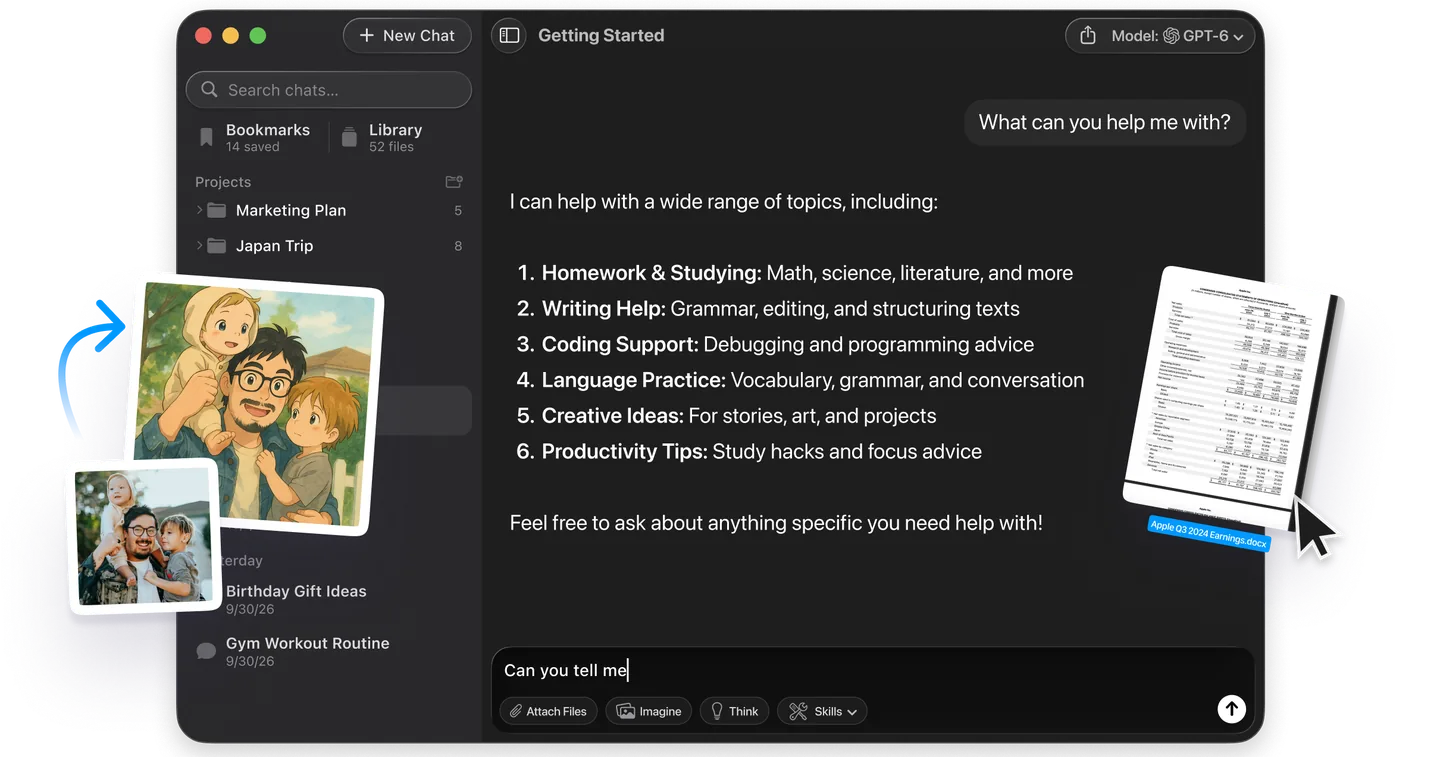
Fello AI does far more than images. In a single chat it can generate images, podcasts, PDFs, spreadsheets, presentations, and full documents, routing each request through several leading models. That means you can run most of a project inside Fello AI and turn to Canva only for the final polish or a more complex design job. Canva still owns the design canvas, but it no longer has to be where the work starts. If that workflow appeals, here is how to get started with Fello AI.
Prompt Tips for Better Canva AI Images
The quality of a Canva AI image depends almost entirely on your prompt. Describe the subject, the style, the setting, and the lighting in one clear sentence. “A golden retriever puppy on a beach at sunset, warm cinematic lighting, shallow depth of field” beats “cute dog” every time.
Match the style preset to your goal, since photography, digital art, and fine art produce very different looks from the same words. Treat the first batch as drafts, then change one element at a time so you can see what each tweak does. Avoid relying on the model for long in-image text, since that is where it fails most, and add wording in Canva afterward instead.
Conclusion
The Canva AI image generator is one of the fastest ways to put a custom image into a design, and Dream Lab with the Leonardo Phoenix model is a real step up from Magic Media. It is free to try, capped by credits, and strong enough for most social posts, slides, and marketing graphics, even if it trails Midjourney and Flux on photorealism and faces.
Pick your plan by how many images you generate, not by usage rights, since you own your output on Free as well. Then open Dream Lab on your next project, write one detailed prompt, and use a specialist tool when you need flawless faces or text. That combination gets you the speed of Canva without the quality ceiling holding you back.
FAQ
Is the Canva AI image generator free?
Yes, the free plan gives you one pool of up to 20 Standard or Premium AI uses a month, and image generation draws on it. Canva Pro gives up to 200 Premium uses and Business up to 400, while basic Standard image generation no longer counts on paid plans. You own free-plan images just as you own paid ones.
What model does Canva’s AI image generator use?
Dream Lab uses Leonardo.ai’s Phoenix model, which Canva acquired in 2024. Magic Media runs a fine-tuned Stable Diffusion pipeline, and the newer Canva AI 2.0 preview uses Lucid Origin and Proteus.
What is the difference between Dream Lab and Magic Media?
Dream Lab is the newer, higher-quality generator with more styles, finer control, and Style Transfer. Magic Media is the faster classic tool that lives inside a design. Both create editable Canva designs from a text prompt.
Where is the AI image generator in Canva?
Open Dream Lab from the left menu on the Canva home page or at canva.com/dream-lab. For Magic Media, open a design, click the Apps icon in the left toolbar, then select Magic Media.
Can I use Canva AI images commercially?
Yes, on any plan. Canva’s AI Product Terms say you own your output and may use it for any lawful purpose, except output that edits or incorporates Canva library content, which stays under the stock licence. You also may not present AI images as human-made.