You can learn Claude from zero to seriously useful in about a week of evenings, and you can do it without paying a cent. Anthropic runs its own free training portal, Anthropic Academy, where courses like Claude Code in Action (around 10 hours) and Claude Code 101 come with a free completion certificate you can put straight on LinkedIn. Add freeCodeCamp’s 12-hour video course and Frontend Masters’ free track, and the hard part is no longer access. It is knowing the order to learn things in.
This guide gives you that order. It starts with Claude the chat app at claude.ai, because most beginners should talk to Claude before they ever touch a terminal, then graduates you to Claude Code, Anthropic’s command-line coding agent. You will get a 5-step starter path, a table of the best free courses, a one-week schedule, and honest answers on how Claude Code compares to tools like Cursor and GitHub Copilot. No fluff, just the route. If you want options beyond Claude, our best free AI courses guide covers the top free picks across every major tool.
The Key Takeaways
- Anthropic Academy is free, including Claude Code in Action (~10 hours) and Claude Code 101, both with a free certificate; you only need an email to start.
- Start with chat, not code. Learn claude.ai first, then move to Claude Code once you are comfortable prompting.
- You do not need to be a developer to start Claude Code, but basic comfort with a terminal helps a lot.
- Budget about a week of evenings to go from install to folding Claude Code into a real workflow.
- The current Claude lineup is Fable 5.1, Opus 5.5, Sonnet 5.5, and Haiku 4.5; beginners should default to Sonnet 5.5, and the free plan gives you Sonnet and Haiku but not Opus. Fable 5, Opus 5, Sonnet 5 and Opus 4.8 are now legacy models.
What Claude and Claude Code Actually Are
Claude is Anthropic’s AI assistant, and it comes in two shapes you will use as a learner. The first is the chat app at claude.ai, where you type a message and get a response, the same way you would use any modern chat tool. The second is Claude Code, a terminal-native coding agent that reads, edits, and runs the files in your project through plain-English instructions.
The distinction matters because they suit different goals. If you want to write better, research faster, analyse documents, or draft code snippets, the chat app is your home base. If you want Claude to actually build and modify software across many files in a real project, Claude Code is the tool, and it expects you to work from a terminal. Most people should learn them in that order. To ground research in your own sources, pair Claude with a tool like NotebookLM; our explainer on what is NotebookLM shows how it works.
Both run on the same underlying models, and that lineup changed again on September 22, 2026. Claude Opus 5.5 arrived that day as the model Anthropic tells you to start with, and Claude Fable 5.1 sits beside it for the heaviest long-running work. Below those, Sonnet 5.5, released on September 28, is the everyday workhorse and Haiku 5.5 is the fast, cheap option. Opus 5, Sonnet 5, Fable 5, Opus 4.8, Sonnet 4.6 and Haiku 4.5 still work but Anthropic lists them as legacy. Haiku was the last tier to move: Anthropic promised Haiku 5.5 “in the coming weeks” on September 22, and it arrived on October 7.
When you are starting out, Sonnet 5.5 is the right default. It balances speed and intelligence without burning through your usage limits, and you can step up to Opus 5.5 for the tasks that actually need it. One thing to check before you plan around it: Anthropic’s plan table marks Opus as unavailable on the free tier, so Sonnet 5.5 and Haiku 4.5 are what a free account gets.
How to Start Using Claude Chat in 5 Steps
Before any course, just use the product. Spending an hour in the chat app teaches you more about how Claude thinks than a week of reading. Here is the fastest on-ramp for a complete beginner. It is free to start, and our guide on whether Claude is free covers the message limits before you sign up.
- Sign up at claude.ai with your email or a Google account. You are talking to Claude in under a minute, no install required.
- Pick a model from the dropdown. Choose Sonnet 5.5 unless you have a particularly hard reasoning task, where Opus 5.5 earns its slower responses.
- Type naturally. Talk to Claude like a knowledgeable coworker. Start with two sentences and see what comes back rather than writing a perfect prompt up front.
- Refine in steps. Follow up with “make it shorter,” “change the tone,” or “add a section about X.” Building up is easier than nailing it in one shot.
- Try Projects and Artifacts. Use Projects to keep related chats and files together, and watch Artifacts open a live side panel when you ask for code, documents, or apps.
The single biggest beginner mistake is treating Claude like a search engine. It is a reasoning partner, so give it context, examples, and a clear goal, and our collection of the best Claude prompts shows what that looks like in practice. Always sanity-check the output, because a confident answer is not always a correct one.
How to Start Learning Claude Code in 5 Steps
Once you are comfortable prompting in chat, Claude Code is the natural next step. It lives in your terminal and works directly on your local files, indexing your whole project so it can navigate, edit, and debug across many files at once. It also reads images, so an early trick worth learning is feeding it a screenshot of an error or a design mockup, which our guide on how to paste images into Claude Code walks through method by method. Here is the starter path that gets you productive fastest.
- Install Claude Code in your terminal following the official quickstart, then sign in with your Claude account.
- Create a CLAUDE.md file in your project. This is a plain-text file where you describe your project, its conventions, and what you want, and Claude Code reads it automatically as context.
- Ask it to explain existing code before you ask it to change anything. “Walk me through what this file does” is the perfect first task and builds your trust in the tool.
- Use Plan Mode before edits. Plan Mode makes Claude analyse the problem and lay out a step-by-step plan for your approval before it touches a single file, which is the safest way to learn.
- Approve changes and iterate. Claude Code asks permission for every file edit and command, so you stay in control. Review each change, accept or reject, and refine your instructions.
Which Model Claude Code Actually Uses
This used to trip people up when they compared notes with someone on a different plan, and as of Claude Code v2.1.280 it no longer does. Per Anthropic’s model configuration docs, the default setting now resolves to Opus 5.5 on Pro, Max, Team, Enterprise and the Anthropic API alike. Before that release it split by account type, with Pro and Team Standard on Sonnet 5 and the rest on Opus 5, so an older tutorial may still describe two answers where there is now one.
Two things worth knowing early. Opus 5.5 needs Claude Code v2.1.280 or later, so run claude update if it is missing from your model picker. And the opusplan alias is a good beginner setting, because it uses Opus for planning and switches to Sonnet for the actual code generation. Neither Fable model is the default on any account type, so you only get one by asking for it with /model fable, which now resolves to Fable 5.1.
Your First Week with Claude Code
A good first week looks like this. Day 1 is install and your first CLAUDE.md. Days 2 to 4 are low-risk tasks like explaining code, writing tests, and small reviews. Days 5 to 7 are real file edits and folding Claude Code into a project you actually care about. By the end you will have a working mental model of how the agent thinks.
The Best Free Claude Courses in 2026
You do not need a paid bootcamp. The strongest training is free, and most of it comes straight from Anthropic. The table below shows the options worth your time, with honest labels on length and certificates.
| Course | Provider | Length | Format | Free certificate? |
|---|---|---|---|---|
| Claude Code in Action | Anthropic Academy | ~10 hours | Self-paced lessons + quizzes | Yes |
| Claude Code 101 | Anthropic Academy | Short intro | Self-paced lessons | Yes |
| Claude Code for Beginners | freeCodeCamp | ~12 hours | YouTube video | No (video only) |
| Claude Code course | Frontend Masters | ~1.9 hours | Video course | Yes (completion) |
| Project-based Claude Code | claudecourse.dev | 17 lessons | Build-by-doing | No |
Anthropic Academy is the one to start with. It is first-party, free, broken into clear parts from basics to advanced topics like MCP servers, GitHub workflows, hooks, and the SDK, and the certificate carries real weight on a job application. You only need an email to sign up, and no paid Claude plan is required to take the courses. That certificate is a completion badge rather than a formal credential, so if you want to get Claude certified, Anthropic runs four separate proctored exams with their own eligibility rules. If you prefer video, the freeCodeCamp Claude Code course is the longest free option at around 12 hours.
A quick honesty note on the paid options. Coursera lists a Claude Code course, but it sits behind a subscription or audit limits, so it is not a true free pick. Stick with Anthropic Academy and freeCodeCamp first, and only pay for training once you know you want to go deeper.
Claude Code vs Cursor and GitHub Copilot
New learners always ask which AI coding tool to commit to, and the honest answer is that they overlap less than the hype suggests. Each one solves a different part of the job.
GitHub Copilot
GitHub Copilot lives inside your editor as an autocomplete and chat helper. It is the lowest-friction option because it works where you already type, and it is the easiest to keep running alongside something else.
Cursor
Cursor is a full AI-first code editor built around a chat-and-edit loop. You are adopting a new editor, not adding a plugin, which is a bigger commitment but a tighter experience if you like the workflow.
Claude Code
Claude Code is an agent that runs in the terminal and acts across your whole project rather than one open file. It is the only one of the three that plans a multi-file change and then executes it, which is exactly why it teaches you the most about agentic AI.
For a beginner, the practical takeaway is that these are complementary, not mutually exclusive. Many developers keep Copilot or Cursor for in-editor autocomplete and reach for Claude Code when they want an agent to plan and execute a multi-file change. Our Cursor vs Claude Code comparison shows how to run both on one Claude plan. Our Claude vs Copilot comparison shows that GitHub Copilot's $10 Pro plan already includes Claude's Sonnet models. If you are choosing just one to learn first as a student or hobbyist, Claude Code teaches you the most about how agentic AI actually works, and the skills transfer everywhere. For a wider view of how the underlying models stack up, see our rundown of the best AI models, and for the bigger lab rivalry there is our Anthropic vs OpenAI breakdown.
Practice Across Every Model with Fello AI
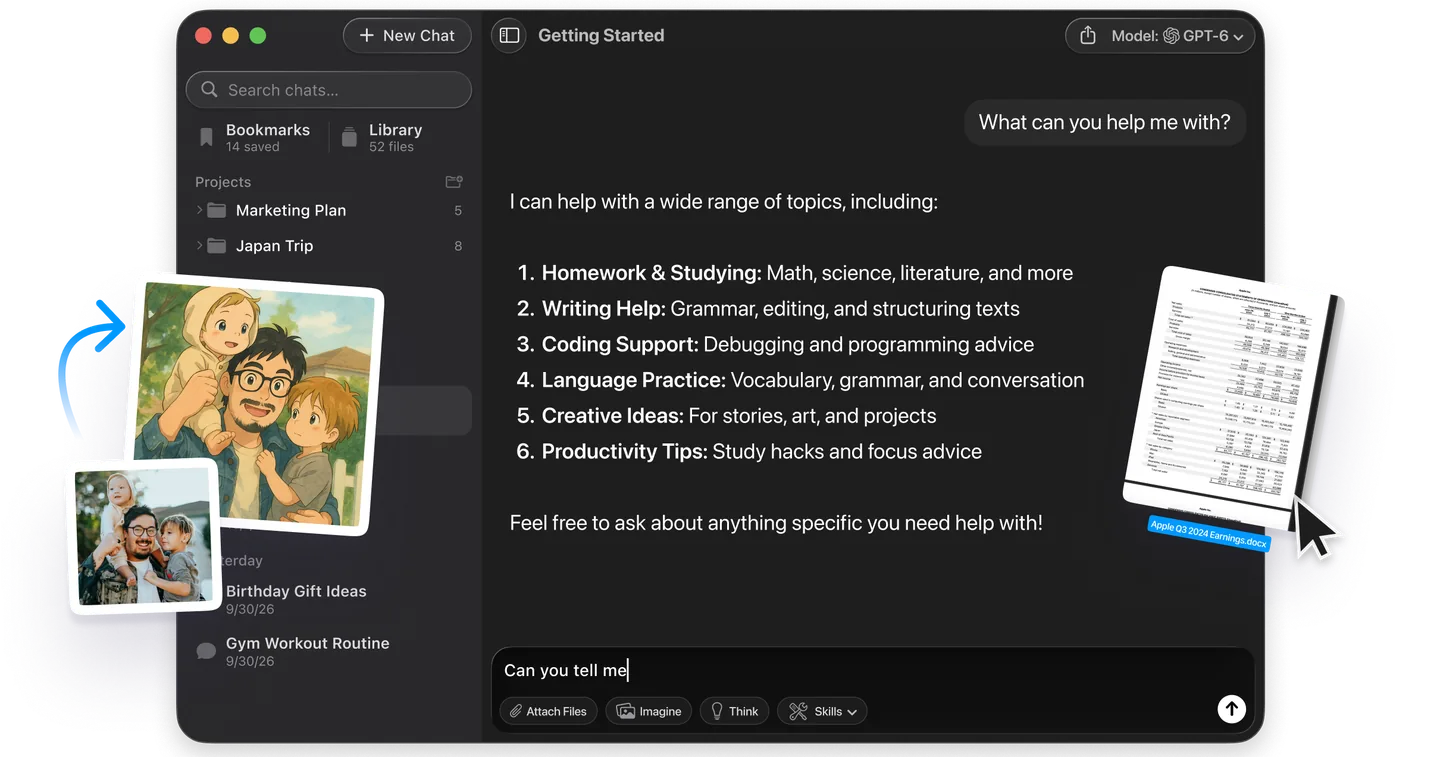
Learning sticks when you compare. The fastest way to understand why Claude feels different is to run the same prompt through Claude, ChatGPT, Gemini, Grok, and DeepSeek and watch how each one answers. If ChatGPT or Gemini is your other main tool, our guides on how to learn ChatGPT and how to learn Gemini cover them the same way. That is exactly what Fello AI is built for, a single Mac app that gives you every major model in one place for $9.99 per month.
For a learner, that means you practise prompting once and instantly see five perspectives, which is the quickest way to build an instinct for which model fits which job. There is no juggling five logins or five subscriptions. If you want to try it, the getting started with Fello AI guide walks you through setup in a few minutes.
It also pairs well with the free official courses. Take a lesson in Anthropic Academy, then practise the same task across models in Fello AI to see Claude’s strengths in context. If cost is your main worry while learning, our guide to AI free trials covers how to test the paid tiers without committing, and students should check the Claude student discount before paying full price.
Do You Need to Know How to Code First?
For Claude chat, no, not at all. The app is built for everyone, and writing, research, and analysis need no coding at all. Plenty of non-technical people use Claude every day and never open a terminal.
For Claude Code, the honest answer is that you do not need to be a developer, but a little comfort helps. You should be able to open a terminal, run a command, and read what comes back without panic. You do not need to know how to write the code yourself, because that is the agent’s job, but you do need to understand enough to review what it produces. The good news is that learning Claude Code is one of the better ways to pick up those basics, since you can ask it to explain every step as it goes.
Conclusion
The path to learning Claude is short and free. Start in the chat app to learn AI prompting instinct, move to Claude Code once you are comfortable, and lean on Anthropic Academy for structured, certificate-backed training that costs nothing. Give it a week of evenings and you will go from curious to capable. If you want the wider picture first, our guide on how to learn AI from scratch shows where a single assistant fits into the whole field.
The best next step is to actually start. Sign up at claude.ai today, run your first real prompt, and when you are ready to build, work through Claude Code in Action. To make practice faster, run your prompts across every major model in Fello AI and learn by comparison. On a Mac, our Claude desktop client guide for macOS shows how to keep Claude one keystroke away while you practise.
FAQ
Is there a free Claude course?
Yes. Anthropic Academy offers free official courses, including Claude Code in Action (around 10 hours) and Claude Code 101, both with a free completion certificate. freeCodeCamp and Frontend Masters add more free options, and you only need an email to start.
How long does it take to learn Claude Code?
Most beginners get productive in about a week of evenings. Day 1 is install and setup, days 2 to 4 are small tasks like explaining code and writing tests, and by the end of the week you are editing real files and folding it into your workflow.
Do I need to know how to code to use Claude Code?
No, but basic terminal comfort helps. You should be able to run a command and read the output, and you need to understand enough to review the changes Claude makes, even though the agent writes the actual code.
Which Claude model should I use as a beginner?
Default to Sonnet 5.5, which balances speed and intelligence for everyday work. Switch to Claude Opus 5.5, released September 22, 2026, for the hardest reasoning and agentic coding tasks, and use Haiku 5.5 when you want fast, lightweight responses. Opus 5, Sonnet 5, Fable 5, Opus 4.8, Sonnet 4.6 and Haiku 4.5 are legacy models now, and a free account does not include Opus at all.
Is Claude Code free to use?
The training courses are free, but using Claude Code itself requires a Claude plan with usage limits. It is bundled into Pro and Max rather than sold as a separate subscription. Our guide on whether Claude Code is free breaks down what each plan actually gives you.