Update, July 28, 2026: GLM 5.2 is no longer the strongest open-weight model. Kimi K3 shipped its weights on July 27, 2026 and outscores it on the Artificial Analysis Intelligence Index by 57 to 51. GLM 5.2 keeps a real advantage on licensing and hardware, and the benchmark section below has been rebased.
GLM 5.2 arrived on June 13, 2026 with three headline numbers. It is a 744-billion-parameter Mixture-of-Experts design with a 1-million-token context window, under an MIT license that makes the weights free for anyone to download and run. Chinese AI lab Zhipu AI (operating as Z.ai) shipped it as a coding-first frontier model, and the timing was not subtle. It went public just two days after the US ordered Anthropic to cut foreign access to its Fable 5 and Mythos 5 models. If you want the bigger picture, see how GLM measures up against other leading models like Claude, GPT and Gemini.
GLM 5.2 is no longer the top-ranked open model, but it is still the one most people should reach for. Our roundup of the best open source AI models now puts Kimi K3 first on raw capability, while GLM 5.2 stays the practical pick as the strongest model there carrying a plain MIT license. If the category itself is new to you, our explainer on what open source AI is covers how open weights and model licensing actually work. Below you’ll find the specs, how it differs from GLM 5.1, the benchmarks against rivals like ByteDance’s Seed 2.1 Pro, and what the GLM Coding Plan really costs.
The Key Takeaways
- GLM 5.2 launched June 13, 2026 as a 744B-parameter Mixture-of-Experts model with 40B active parameters per token.
- The 1-million-token context window is roughly 5x larger than GLM 5.1’s ~200K limit, with output up to 131,072 tokens.
- It ships under an MIT license, with open weights, a standalone API, and the Z.ai chatbot arriving the week after launch.
- GLM Coding Plan pricing starts at $18/month (Lite), with Pro at $72/month and Max at $160/month, and annual billing takes 20% off.
- GLM 5.2 scores 62.1 on SWE-bench Pro and 81.0 on Terminal-Bench 2.1, ahead of GPT-5.5 and behind Claude Opus 4.8, but Kimi K3 has since taken the open-weight lead.
What Is GLM 5.2?
GLM 5.2 is the latest flagship large language model from Zhipu AI, a Beijing-based lab that has become one of China’s most aggressive open-weight model publishers. It is the newest release in Zhipu’s full GLM model family. It is built on the GLM-5 base and uses a Mixture-of-Experts architecture with 744 billion total parameters, of which only 40 billion activate for any given token. That design keeps the running cost closer to a 40B model while drawing on the knowledge of a much larger one.
The release is squarely aimed at developers. Zhipu positioned GLM 5.2 around long-horizon coding and agentic work, the kind of multi-step tasks where a model writes, runs, and revises code across an entire project. It connects to popular coding clients through an Anthropic-compatible endpoint, so tools like Claude Code, Cline, OpenCode, and OpenClaw can point at it without a proprietary SDK.
One thing changed fast after launch. Zhipu shipped GLM 5.2 with no published benchmark scores, as noted in launch coverage from MarkTechPost, which left early “beats GPT-5” claims as vendor assertions. Within days, independent testers and the company’s technical card filled that gap, and the numbers landed well above the earlier GLM 5.1, which scored 58.4 on SWE-bench Pro. The full results are in the benchmark section below.
GLM 5.2 vs GLM 5.1: What Changed
The jump from GLM 5.1 (released April 7, 2026) to GLM 5.2 is incremental on paper but meaningful in one dimension, context. The new model handles five times more input, which changes what you can feed it in a single prompt. Here is the side-by-side.
| Spec | GLM 5.2 | GLM 5.1 | What changed | Why it matters |
|---|---|---|---|---|
| Release date | June 13, 2026 | April 7, 2026 | ~2 months apart | Fast iteration cycle |
| Parameters | 744B (40B active) | 744B (40B active) | Unchanged | Same per-token compute |
| Context window | 1,000,000 tokens | ~200,000 tokens | 5x larger | Whole repos in one prompt |
| Max output | 131,072 tokens | ~128K tokens | Roughly equal | Long code generations |
| Reasoning modes | High and Max | Single mode | Two effort levels | Tune depth vs cost |
| License | MIT (weights released) | MIT | Unchanged | Fully open weights |
| SWE-bench Pro | 62.1 | 58.4 | +3.7 points | Stronger coding |
The two reasoning modes are new and practical. High handles everyday generation, while Max is the setting Zhipu recommends for complex, multi-step coding, trading speed for deeper reasoning. The parameter count did not move between the two releases. Both are 744B total with 40B active, so per-token inference cost is unchanged. What Zhipu changed is the architecture around it. The model card names IndexShare, which reuses one indexer across every four sparse attention layers and cuts per-token FLOPs by 2.9x at a 1-million-token context. It also cites an improved MTP layer for speculative decoding that lifts acceptance length by up to 20%.
GLM 5.2 Benchmarks: How It Actually Performs
The launch left a hole, but the data filled it quickly. Zhipu’s own technical card and independent testers put GLM 5.2 close to the closed frontier on long-horizon coding. On some tests the gap to Claude Opus 4.8 narrows to roughly a single point, as detailed in coverage from The Decoder. That framing has since moved three times. Claude Opus 5 replaced Opus 4.8 as Anthropic’s flagship on July 24, 2026, Claude Fable 5.1 took that spot on September 1, 2026 and tops the Artificial Analysis Intelligence Index at 66 with Opus 5 at 63, and Kimi K3 took the open-weight lead at 57 against GLM 5.2’s 51. The table below keeps the comparison Zhipu actually ran, against Opus 4.8 and GPT-5.5.
| Benchmark | GLM 5.2 | Claude Opus 4.8 | GPT-5.5 | GLM 5.1 |
|---|---|---|---|---|
| SWE-bench Pro (coding) | 62.1 | 69.2 | 58.6 | 58.4 |
| Terminal-Bench 2.1, Terminus-2 (agentic) | 81.0 | 85 | 84 | 63.5 |
| FrontierSWE (long-horizon) | 74.4% | 75.1% | 72.6% | n/a |
The standout result is SWE-bench Pro, where GLM 5.2’s 62.1 beats GPT-5.5 at 58.6 and its own predecessor at 58.4, while trailing Claude Opus 4.8 at 69.2. On Terminal-Bench 2.1 it leapt to 81.0 from GLM 5.1’s 63.5 on the Terminus-2 harness, and on FrontierSWE it sits under a point behind Opus 4.8 while edging out GPT-5.5. Harness choice matters more than it sounds. Artificial Analysis, running Terminal-Bench 2.1 itself, scores GLM 5.2 at 77.9 against 85.0 for Kimi K3 and 84.6 for Opus 4.8, so read any single figure with the harness attached. It also posts a 99.2% on the AIME 2026 math test. For context on how far orchestration can push these numbers, Sakana AI’s Fugu reaches 73.7 on SWE-Bench Pro by routing tasks across a pool of models rather than running as one.
The economics are the real headline. GLM 5.2 matches or beats GPT-5.5 on these coding marathons for roughly one-sixth the cost. That reframes it from cheap alternative to serious contender. The one asterisk comes from independent platform Artificial Analysis, which found the model burns through far more tokens than rivals to reach those scores, making it one of the less token-efficient options in its class. Zhipu prices that appetite in directly. On the Coding Plan, GLM 5.2 usage is deducted at 3x during peak hours and 2x off-peak, with a limited-time 1x off-peak rate running to the end of September. On hard, single-shot reasoning tests like Humanity’s Last Exam it still trails Opus 4.8 and Gemini 3.1 Pro by several points, so this is a coding-and-agents specialist first.
Why the 1-Million-Token Context Window Matters
A 1-million-token context window means GLM 5.2 can hold roughly 750,000 words of input at once. In practical terms you can paste an entire mid-sized codebase, a full set of API docs, or a long research corpus and ask the model to reason over all of it without chunking. The model is labeled glm-5.2[1m] to flag the extended window, and Z.ai describes the capacity as “usable” rather than a marketing ceiling.
For coding specifically, this is the difference between feeding the model one file and feeding it the whole repository. Agentic tools that previously had to summarise or retrieve slices of a project can now keep far more in working memory. That reduces the errors which creep in when a model loses track of code it cannot see. That long-context strength is the same reason open models built for running on a Mac have grown popular with developers who want local control.
GLM 5.2 and the Export-Control Backdrop
The launch date matters. In the days just before the GLM 5.2 announcement, the US Commerce Secretary ordered Anthropic to block foreign access to Fable 5 and Mythos 5 within 48 hours under a new export-control directive. Anthropic disabled both models globally within hours, and you can read the full timeline in our coverage of the Fable 5 shutdown.
Zhipu framed GLM 5.2 as a direct counterweight. By releasing a frontier-class model under an MIT license with no regional restrictions, the company pitched open weights as insurance against any single nation or vendor controlling foundational AI. Investors responded fast, and Zhipu’s stock rose on the open-source announcement, according to the South China Morning Post. It is part of a broader wave of Chinese open releases that includes the Qwen family and DeepSeek V4.
GLM 5.2 Pricing and Availability
GLM 5.2 went live immediately across every GLM Coding Plan tier, with the standalone API, the Z.ai chatbot, and the downloadable MIT weights all released in the week after launch. The Coding Plan is a subscription that routes through the same Anthropic-compatible endpoint, billed monthly, with annual billing taking 20% off each tier. Every tier is metered in prompts, on a rolling 5-hour window and a weekly cap.
GLM Coding Plan Lite ($18/month)
The entry tier costs $18/month, or $172.80 a year, which works out at $14.40/month. It covers roughly 80 prompts every 5 hours and about 400 a week, which suits individual developers doing moderate coding assistance. It is the cheapest way to test GLM 5.2 inside a tool like Claude Code.
GLM Coding Plan Pro ($72/month)
Pro runs $72/month, or $691.20 a year at $57.60/month, and raises the ceiling to roughly 400 prompts every 5 hours and 2,000 a week. It is aimed at power users running multi-file refactors and agentic tasks daily.
GLM Coding Plan Max ($160/month)
Max costs $160/month, or $1,536 a year at $128/month, and allows roughly 1,600 prompts every 5 hours and 8,000 a week, for developers who keep an agent running through the workday. Team pricing is seat-based for organisations. For a sense of how that stacks up against rival open models, our breakdown of Rio 3.5 Open covers another Chinese open-weight release worth comparing.
Should You Use GLM 5.2?
If you write code and want a long-context model you can run yourself, GLM 5.2 is the strongest openly available model carrying a plain MIT license, which removes the usual restrictions on commercial use. Its successor, GLM 5.3, is the better coder but has no public weights yet, so GLM 5.2 remains the largest GLM you can actually self-host. Kimi K3 scores higher, but it ships under a custom Moonshot licence and weighs 1.56 TB to download against GLM 5.2’s 1.51 TB. The 1M-token context is a real advantage for repo-scale work, and the Anthropic-compatible endpoint means you can slot it into existing tools with minimal friction. Z.ai has since published GLM 5.3 Flash under MIT as well, a smaller 320B multimodal model that its own benchmarks put ahead of GLM 5.2, so the self-hosting choice is now between scale and efficiency.
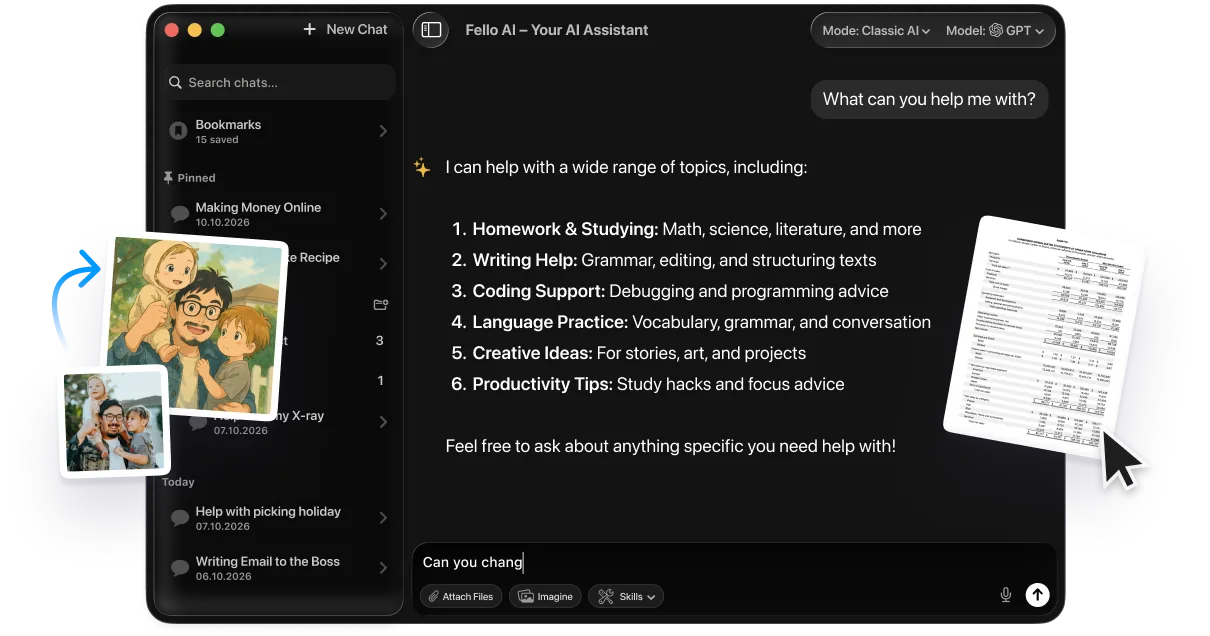
The benchmarks have settled the performance question, so the real considerations now are cost shape and data jurisdiction. GLM 5.2 is token-hungry, which means heavy agentic use can run up usage faster than the headline price suggests. And while the open weights let you self-host with full privacy, routing through the hosted Z.ai API sends your code to servers governed by Chinese data rules. That is a tradeoff worth weighing for sensitive or proprietary work. If you would rather not manage models at all, apps like Fello AI give you Claude, ChatGPT, Gemini, Grok, and DeepSeek through one $9.99/month subscription. You can compare outputs without juggling separate accounts or API keys. GLM 5.2 itself joined that lineup in the Fello AI 6.7.0 update. On a Mac it runs as a native GLM desktop client, so there is no browser tab and no API key to manage.
Conclusion
GLM 5.2 is a clear statement, a frontier-class, 1M-context, MIT-licensed model shipped within days of a major US export clampdown. And unlike at launch, the numbers now back the framing. It beats GPT-5.5 on SWE-bench Pro and closes to within a point of Claude Opus 4.8 on long-horizon tasks, all for roughly a sixth of the cost. What has changed since is the company it keeps, with Kimi K3 now ahead of it on the open-weight boards and Claude Opus 5 ahead of Opus 4.8 on the closed side. The remaining caveats are its heavy token appetite and the data-jurisdiction question around the hosted API. If you want to try it now, the cheapest path is the $18/month GLM Coding Plan Lite through a tool like Claude Code, with the open weights now available for self-hosting. Zhipu’s next release, GLM 5.5, is already expected later in 2026.
FAQ
Is GLM 5.2 free?
The weights are released under an MIT license, so self-hosting is free and unrestricted for commercial use. Using it through the GLM Coding Plan costs from $18/month, while the standalone API runs $1.40 per million input tokens, $0.26 on a cache hit, and $4.40 per million output.
How big is the GLM 5.2 context window?
It handles up to 1,000,000 input tokens, roughly five times GLM 5.1’s ~200,000-token limit, with output up to 131,072 tokens.
Who made GLM 5.2?
Zhipu AI, a Beijing-based lab operating as Z.ai, which is one of China’s leading open-weight model publishers.
Does GLM 5.2 beat GPT-5 or Claude?
On coding, partly yes. Benchmarks released after launch show GLM 5.2 scoring 62.1 on SWE-bench Pro, ahead of GPT-5.5 at 58.6 but behind Claude Opus 4.8 at 69.2. It was the strongest open-weight model available for about a month. Kimi K3 passed it in July 2026, and closed leaders including Claude Opus 5 still hold a clear edge on the hardest long-horizon tasks.
Can I use GLM 5.2 with Claude Code?
Yes. GLM 5.2 exposes an Anthropic-compatible endpoint, so Claude Code, Cline, OpenCode, and similar tools can connect to it directly.