The single skill that decides whether AI gives you a brilliant answer or a useless one is prompting, and you can start learning it today for free with zero coding. The gap between a vague request and a well-structured prompt is often the difference between a generic paragraph and exactly the output you needed. Prompting is now a core workplace skill, with prompt design, evaluation, and orchestration showing up across a large share of new AI-related job postings in 2026.
This guide walks you through AI prompting from absolute zero. You will learn what a prompt actually is, the anatomy of a good one, the three core techniques every beginner needs (zero-shot, few-shot, and chain-of-thought), the free resources worth your time, and the fastest way to practice by testing the same prompt across several AI models. No jargon, no paywalled course required. If you want structured options, our best free AI courses roundup ranks the top free picks with and without certificates.
The Key Takeaways
- AI prompting (prompt engineering) is the skill of writing clear instructions that guide an AI to a useful, accurate output, and it needs no coding.
- A strong prompt has four parts, a role, context, a specific instruction, and the format you want back.
- The three foundational techniques are zero-shot (no examples), few-shot (with examples), and chain-of-thought (show your reasoning steps).
- The fastest way to improve is to run the same prompt across multiple models and compare which one follows it best.
- Genuinely free resources exist from Learn Prompting, Microsoft, and Google Cloud, no payment needed to start.
What Is AI Prompting?
AI prompting, also called prompt engineering, is the skill of writing clear instructions that guide an AI model to produce an accurate, useful output. A good prompt gives the model a role, the context it needs, a specific instruction, and often an example of the format you want back. The clearer your instruction, the more reliable the result. If you want ready-made examples to practice with, browse our library of AI prompts.
Think of it as the difference between telling a new assistant “write something about our product” and giving them a brief with the audience, the goal, the tone, and a sample. The model has not changed, but the output will be far better with the second approach. Prompt engineering is simply the practice of writing that brief well, and getting better at it is mostly reps, not theory.
You do not need to be technical. Most prompting skill comes from being specific, giving context, and refining your wording when the first answer misses. That is something anyone can practice in an afternoon.
How to Learn AI Prompting in 6 Steps
You can build real prompting skill in about a week of light practice. Here is the order that works best for beginners.
- Learn the anatomy of a prompt. Understand the four parts, role, context, instruction, and format, before you worry about advanced techniques.
- Master zero-shot prompts first. Write a clear, direct instruction with no examples. This handles most everyday tasks.
- Add examples when you need consistency. When the format matters, show the model one or two samples. This is few-shot prompting.
- Use chain-of-thought for hard problems. Ask the model to reason step by step for math, logic, or multi-step tasks.
- Iterate. Treat the first answer as a draft, then refine your prompt based on what was wrong. Refinement is where most of the skill lives.
- Compare across models. Run your prompt through several AI models and study the differences. This teaches you faster than any single tool.
The 3 Core Prompting Techniques
Most of what beginners call “good prompting” comes down to three techniques. Learn these and you cover the vast majority of real use cases.
Zero-shot prompting is the most intuitive method. You simply describe the task with no examples and let the model rely on what it already knows. It is fast and works well for straightforward requests like summarizing an email or drafting a reply.
Few-shot prompting means giving the model one or more examples of the task before asking it to perform. This improves accuracy and locks in a consistent format, which is why it shines when you need structured, repeatable outputs. Choosing varied, representative examples matters more than the number of them.
Chain-of-thought (CoT) prompting structures the output into a sequence of reasoning steps so the model “thinks” through a problem methodically. It noticeably improves accuracy on math, logic, and any multi-step task. A simple way to trigger it is adding “think step by step” to your instruction.
| Technique | What it is | When to use | Example | Difficulty |
|---|---|---|---|---|
| Zero-shot | A direct instruction with no examples | Simple, everyday tasks | “Summarize this email in two sentences.” | Easy |
| Few-shot | An instruction plus 1-3 sample outputs | When format and consistency matter | “Sort these reviews as Positive/Negative. Example: ‘Loved it’ = Positive.” | Easy |
| Chain-of-thought | Asking the model to reason step by step | Math, logic, multi-step problems | “Solve this step by step, then give the final answer.” | Medium |
| Role prompting | Assigning the model a persona | Controlling tone and expertise | “Act as a financial advisor explaining to a beginner.” | Easy |
| Few-shot + CoT | Examples combined with step-by-step reasoning | Complex, high-accuracy tasks | “Here are two worked examples. Now solve this one the same way.” | Hard |
The Anatomy of a Great Prompt
A reliable prompt usually has four parts working together. Role tells the model who to be, such as “act as a copy editor.” Context gives the background it needs, like the audience or the goal. Instruction is the specific task, and format tells it how to deliver the answer, for example “as a bulleted list” or “in under 100 words.”
Here is the difference in practice. A weak prompt reads:
“Write about productivity.”
A strong version of the same request reads:
“Act as a productivity coach. Write a 150-word tip for busy parents who work from home. Use a warm, encouraging tone and end with one action they can take today.”
Same model, completely different result. The second prompt removes guesswork, so the model spends its effort on quality instead of trying to read your mind. Once you internalise these four parts, writing good prompts becomes automatic.
Prompting in Gemini, ChatGPT, and Claude
The core principles carry across every chatbot, but each model has its own personality, and some reward a different prompt shape entirely, as our guide to Claude-specific prompting shows. Gemini is strong with research-style tasks and integrates tightly with Google tools, and Google’s own free prompting guide is a good place to see its conventions. ChatGPT is a flexible all-rounder that responds well to role and format instructions. Claude often handles long documents and nuanced writing tasks gracefully and rewards detailed context. If you want to go deeper on a single model, see our guides on learning Claude and Claude Code, how to learn ChatGPT, and how to learn Gemini.
The practical takeaway is that the same prompt can produce noticeably different answers depending on the model, and it will vary between two runs of a single model as well, for reasons that have nothing to do with your wording. A few-shot prompt that nails the format in one model might need a tweak in another. That is exactly why comparing outputs side by side teaches you so much, you start to see how each model interprets your wording. If you want to see this in action, our breakdown of Grok vs ChatGPT shows how two models handle the same questions differently.
The Best Free Resources to Learn Prompting
You do not need to pay for a bootcamp to get good. Several genuinely free, high-quality options exist, and they are enough to take you from beginner to confident.
Learn Prompting is a free, non-technical guide that has taught more than 3 million people the basics, covering instruction, role, and shot-based prompting in plain language. Microsoft’s Generative AI for Beginners is a free course that walks through constructing, iterating on, and validating prompts. Google also publishes a free prompt engineering guide through Google Cloud. For a paid but beginner-friendly structured course, DeepLearning.AI’s AI Prompting for Everyone is taught by Andrew Ng.
Beyond courses, the best practice is hands-on. Free tools like NotebookLM give you a no-cost place to test prompts on your own documents, and if the tool is new to you, our explainer on what is NotebookLM covers the basics. If you are a student, it is also worth checking whether you qualify for discounted or free access to premium models, which makes daily practice much cheaper, and our guide to the Claude student discount covers one option.
The Fastest Way to Practice: Compare Models Side by Side
The single best practice habit is to run one prompt through several of the best AI models and compare the results. You learn which model follows instructions most closely, where each one drifts, and how small wording changes shift the output. Doing this across separate apps and subscriptions, though, gets expensive and tedious fast.
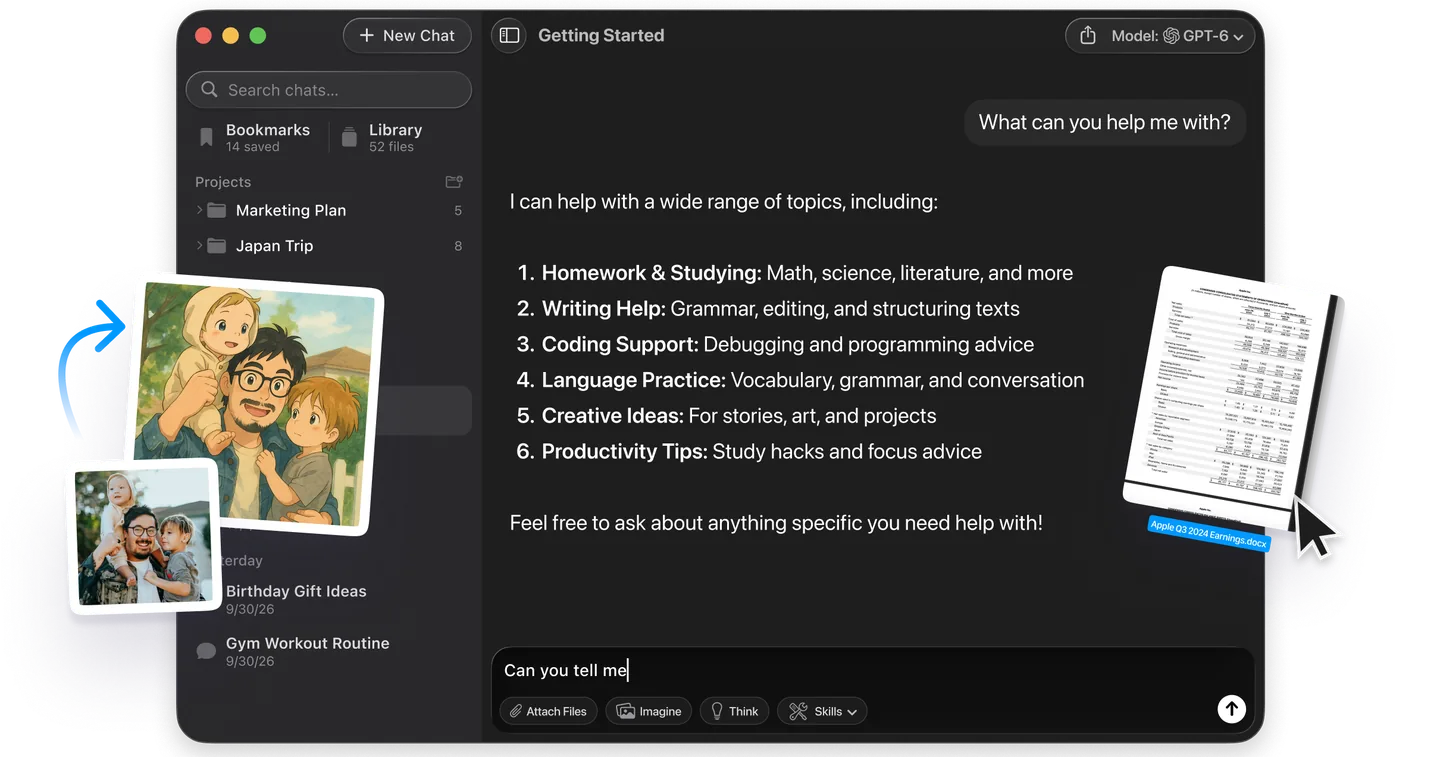
This is where Fello AI helps. It is a Mac app that gives you Claude, ChatGPT, Gemini, Grok, and DeepSeek in one place for a single $9.99/month. You can paste the same prompt into different models and compare answers without juggling five logins or five separate bills. Rated 4.7 stars across 25,000+ reviews, it turns “compare across models” from a chore into a single window.
For learning specifically, that side-by-side view is the fastest feedback loop you can get. You see immediately why a prompt that works in one model needs adjusting in another, and that intuition is exactly what separates a beginner from a confident prompter. You can get started with Fello AI and start comparing in minutes.
Common Prompting Mistakes to Avoid
The most common beginner mistake is being too vague. Asking the model to “make it better” gives it nothing to work with, so always say what “better” means, shorter, more formal, more persuasive, or whatever you actually want. Specificity is the entire game.
A second mistake is dumping a huge request in one go instead of breaking it into steps. Complex tasks work far better when you split them, ask for an outline first, then expand each section. A third is giving up after one try; the first answer is a starting point, not the final product, and a single follow-up instruction usually fixes most problems. Finally, many beginners forget to give the model a role or context, which leaves it guessing about tone and audience.
Conclusion
Learning AI prompting is one of the highest-return skills you can pick up right now, and it costs nothing but practice. It is also the second step in our roadmap for learning AI, so it slots into a bigger plan rather than standing alone. Start with the anatomy of a prompt, master zero-shot before few-shot and chain-of-thought, and refine relentlessly. The single fastest way to improve is to compare the same prompt across multiple models, which is exactly what an app like Fello AI makes painless. Pick one task you do often, write a proper prompt for it today, and iterate until the output is reliable.
FAQ
Is AI prompting hard to learn?
No. Prompting needs no coding and most of the skill comes from being specific and refining your wording. A beginner can learn the fundamentals in a few hours and get good with about a week of practice.
Do I need to pay for a course to learn prompt engineering?
No. Free, high-quality resources from Learn Prompting, Microsoft, and Google Cloud are enough to take you from beginner to confident. Paid courses like DeepLearning.AI’s add structure but are not required.
What is the difference between zero-shot and few-shot prompting?
Zero-shot means you give an instruction with no examples and let the model rely on its training. Few-shot means you include one or more sample outputs so the model matches a specific format or style.
What is the best way to practice AI prompting?
Run the same prompt through several AI models and compare the results. Seeing how each model interprets your wording teaches you faster than practicing in a single tool.
Is prompt engineering still a useful skill in 2026?
Yes. Prompt design and evaluation appear across a growing share of new AI-related roles, and the skill transfers to nearly every job that touches AI, regardless of whether “prompt engineer” is in your title.