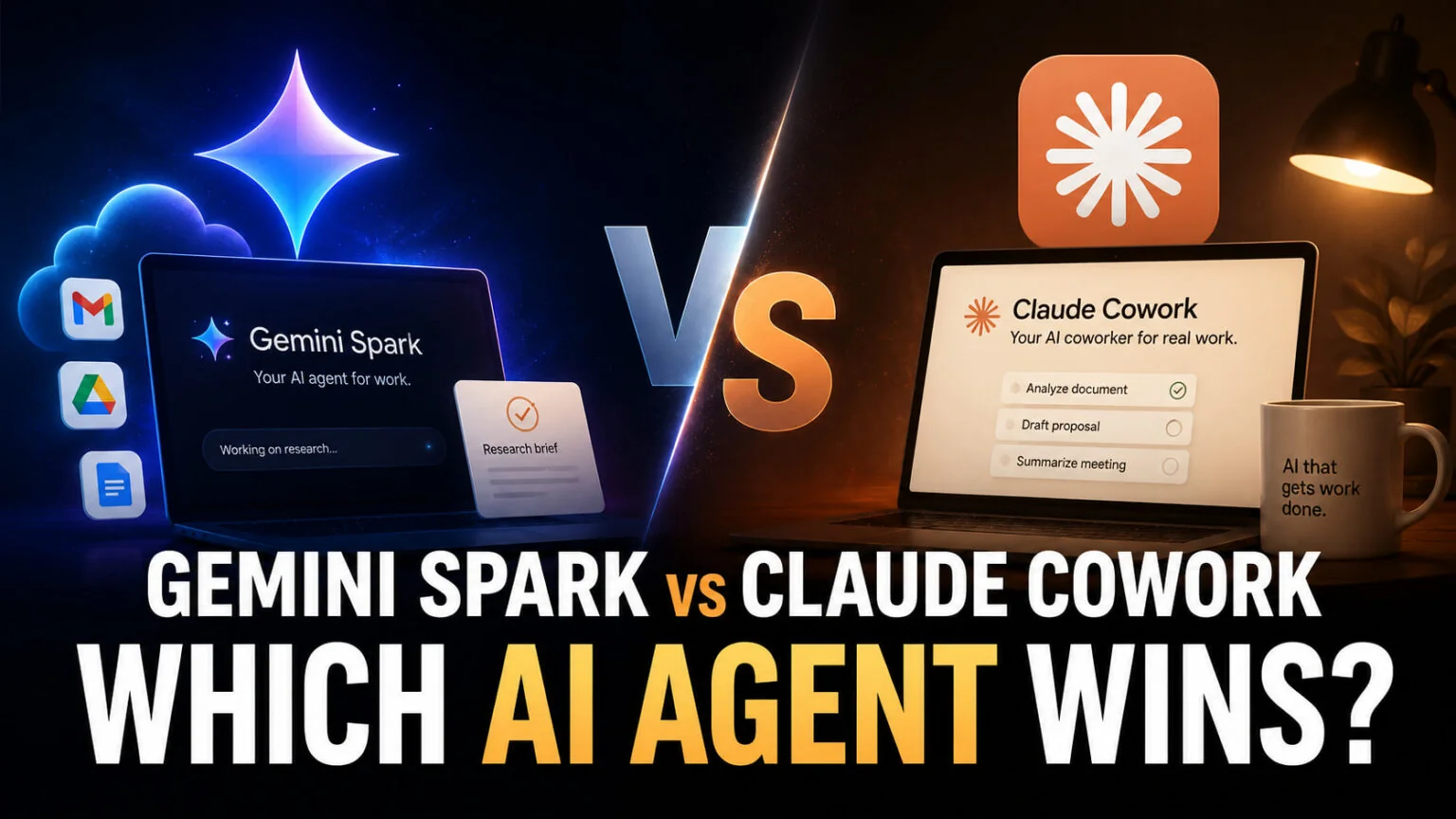
El 23 de julio de 2026, Gemini Spark dejó de ser una compra de lujo. El agente 24/7 de Google se lanzó en I/O el 19 de mayo de 2026 bloqueado tras el nivel Google AI Ultra a $99.99/mes. Ahora llega a los suscriptores de Google AI Pro a $19.99/mes, a pocos céntimos de lo que cuesta Claude Cowork en Claude Pro. Anthropic publicó Cowork con disponibilidad general el 9 de abril de 2026, así que Gemini Spark vs Claude Cowork es la comparativa de agentes de IA que más necesitan los trabajadores del conocimiento este año. Lo que cambió en julio es que ya no es una cuestión de precio.
Viniste aquí a buscar un veredicto, no un resumen de prensa, así que esta guía hace cuatro cosas. Explica qué es cada agente en términos sencillos y luego desglosa los precios. Ambos parten ahora desde unos $20/mes, y desde el 30 de julio de 2026 ese acceso al nivel Pro funciona en más de 160 países en lugar de solo en Estados Unidos. A partir de ahí muestra dónde funciona cada uno en un Mac o un iPhone y termina con cinco casos de uso para que puedas elegir el agente adecuado para el trabajo que realmente haces. Si quieres los dos sin tener que elegir, lo cubrimos al final también.
Lo más importante
- Gemini Spark es el agente de IA personal en la nube de Google disponible 24/7. Desde el 23 de julio de 2026 llega a Google AI Pro ($19.99/mes), ampliado a más de 160 países adicionales el 30 de julio, junto a Google AI Ultra ($99.99/mes).
- Claude Cowork es el agente de Anthropic para el trabajo del conocimiento, disponible de forma general desde el 9 de abril de 2026 y ahora en escritorio, web y móvil, incluido en Claude Pro ($20/mes) y Max ($100 a $200/mes).
- Spark se lanzó con Gemini 3.5 y el sistema Antigravity y desde el 13 de agosto funciona con Gemini 3.7 Flash. Cowork no tiene un modelo por defecto documentado, solo un selector que recuerda tu última elección, encabezado por Claude Opus 5.5 con una ventana de contexto de 1 M de tokens. Ambos siguen funcionando ahora cuando cierras el portátil.
- Cowork gana en creación de archivos (Excel, PowerPoint, Word, PDF) y entregables de investigación. Spark gana en automatización de bandeja de entrada, tareas en segundo plano 24/7 y para quienes ya viven dentro de Gmail y Google Workspace.
- Si quieres los dos sin tener que elegir, Fello AI te da ChatGPT, Claude, Gemini, Grok y DeepSeek en una sola aplicación para Mac, iPhone e iPad por $9.99/mes.
Gemini Spark vs Claude Cowork de un vistazo
Dos cosas separan a estos agentes ahora que la diferencia de precio ha desaparecido. A qué tocan (Workspace y tu bandeja de entrada frente a tu sistema de archivos y Office) y dónde puedes comprarlos (Spark está bloqueado en gran parte de Europa, Cowork no). Todo lo demás es consecuencia de esas dos decisiones.
La tabla siguiente te da la hoja de especificaciones arriba. Si solo lees una sección de este artículo, lee esta y la sección de casos de uso más abajo.
| Función | Gemini Spark | Claude Cowork |
|---|---|---|
| Lanzamiento | 19/5/2026 (beta) | 9/4/2026 (GA) |
| Modelo que lo impulsa | Gemini 3.7 Flash (desde el 13 de agosto) | Claude Opus 5.5 al frente de un selector de modelo, sin modelo fijo por defecto |
| Dónde funciona | Google Cloud, 24/7 | Servidores de Anthropic por defecto, sesiones locales en escritorio |
| Acceso a archivos | Archivos de Workspace mediante conectores | Sistema de archivos local directo en escritorio, lectura/escritura completa |
| Precio de entrada | $19.99/mes (AI Pro) | $20/mes (Claude Pro) |
| Precio máximo | $199.99/mes (Ultra nivel superior) | $200/mes (Max 20x) |
| Soporte en Mac | Aplicación Gemini para Mac + web | Aplicación nativa para Mac + web |
| Soporte en iPhone | Aplicación Gemini en iOS | Cowork en la aplicación Claude para iOS |
| Ideal para | Automatización de bandeja de entrada y Workspace | Creación de archivos, investigación, entregables |
Los dos productos están convergiendo en la misma forma, un agente de IA real que hace el trabajo, desde extremos opuestos del sistema. Google parte de tu bandeja de entrada y se extiende hacia fuera. Anthropic parte de tu disco duro y se extiende hacia las aplicaciones que ya usas. Ninguno es la respuesta universal; el correcto depende de dónde vive realmente tu trabajo. Si todavía estás decidiendo si necesitas un agente, o simplemente IA generativa o automatización básica, nuestra guía de IA agéntica vs IA generativa vs automatización desglosa las diferencias.
¿Qué es Gemini Spark?
Gemini Spark es el agente de IA personal 24/7 de Google que vive dentro de la aplicación Gemini y ejecuta tareas en Gmail, Google Docs, Sheets y aplicaciones de terceros conectadas incluso cuando tu portátil está cerrado. Se lanzó con Gemini 3.5 sobre el nuevo sistema Antigravity, funciona con Gemini 3.7 Flash desde el 13 de agosto de 2026, y Google lo describe como el momento en que Gemini deja de ser «un asistente con el que hablas» y se convierte en «un socio activo que realmente hace el trabajo».
En la práctica, Spark puede analizar tu bandeja de entrada en busca de un remitente concreto, extraer datos de tus hojas de cálculo y documentos, redactar el primer borrador de un correo, programar una reunión, resumir actualizaciones escolares, buscar cargos de suscripción ocultos en tus extractos bancarios y (con aprobación explícita) realizar compras a través de socios como Canva, Instacart y OpenTable. Las tareas siguen ejecutándose en una máquina virtual de Google Cloud después de que cierres el portátil o bloquees el teléfono, que es la mayor diferencia de comportamiento respecto a cualquier chatbot que hayas usado antes.
Cuánto cuesta Gemini Spark
Spark nació incluido en Google AI Ultra, que Google reestructuró en I/O 2026 añadiendo un nivel de entrada a $99.99/mes y reduciendo el nivel superior existente de $249.99 a $199.99/mes. Ese nivel también incluye 20 TB de almacenamiento en la nube, YouTube Premium y un límite de uso de Gemini y Antigravity 5 veces mayor que el de Google AI Pro a $19.99/mes. Todo ello se rige por el modelo de facturación «cómputo utilizado» de Google, que cobra las tareas más pesadas de forma más agresiva que los chats simples.
La puerta más barata se abrió el 23 de julio de 2026. La propia página de ayuda de Google indica ahora que necesitas una suscripción de Google AI Pro o Ultra para usar Spark, sin ninguna restricción por país vinculada al nivel. El 30 de julio de 2026, Google amplió el acceso a AI Pro a más de 160 países adicionales, así que Pro es el punto de entrada casi en todos los lugares donde funciona Spark, no solo en Estados Unidos. No hay un precio independiente de Spark ni un nivel gratuito.
La geografía es ahora la barrera real, no el precio. Spark no está disponible en el Espacio Económico Europeo, el Reino Unido, Suiza ni Nigeria con ningún plan de Google AI. También hay que tener 18 años o más y una cuenta personal de Google. Solo funciona en la aplicación móvil de Gemini, la aplicación de Gemini en Mac y en la web en gemini.google.com. Puedes tener hasta 15 tareas en curso simultáneamente. Para el desglose completo de dónde se sitúa cada nivel, consulta nuestra guía de precios de Gemini 2026.
Qué puede hacer Gemini Spark hoy
Los casos de uso más sólidos de Spark son la clasificación de bandeja de entrada, la síntesis de múltiples fuentes en tu propio Workspace y cualquier tarea que se beneficie de ejecutarse mientras duermes. Es más débil cuando toca dinero, archivos fuera de Google o cualquier cosa relacionada con la banca. Spark no puede mover dinero, y la propia política de Google advierte explícitamente que el producto es experimental y «puede hacer cosas como compartir tu información o realizar compras sin preguntar».
Google ha creado un marco de permisos llamado AP2 con tres barreras que no se pueden saltarse: aprobación por transacción, límites de gasto por transacción y una lista de categorías permitidas (comestibles siempre, suscripciones preguntan primero, todo lo demás nunca). Si confías en esa capa de protección con tu bandeja de entrada es una decisión personal; la ingeniería existe, pero solo lleva en manos del público desde mayo.
¿Qué es Claude Cowork?
Claude Cowork es el agente de Anthropic para el trabajo del conocimiento, con acceso completo de lectura/escritura a tus archivos y carpetas dentro de una máquina virtual Linux en entorno controlado. Pasó a disponibilidad general el 9 de abril de 2026 y Anthropic no documenta ningún modelo por defecto para él, solo un selector que recuerda tu última elección. La opción más potente es Claude Opus 5.5, publicado el 22 de septiembre. La ventana de contexto de 1 millón de tokens puede leer una carpeta de proyecto completa, una base de código o un conjunto de datos sin perder el hilo. Cuando un clasificador de seguridad marca una solicitud, Cowork recurre a un modelo más antiguo, de Opus 5.5 a Opus 5, o de Opus 5 a Opus 4.8 en solicitudes de ciberseguridad. Desde el 16 de septiembre, Anthropic también está fusionando Cowork y el chat en una sola conversación de Claude, primero en Pro y Max, mientras que Team y Enterprise conservan por ahora Cowork como modo aparte.
Una cosa ha cambiado silenciosamente desde el lanzamiento. La documentación de arquitectura de Anthropic indica ahora que «las sesiones de Cowork se ejecutan remotamente por defecto: el bucle de agente y la ejecución de código se ejecutan en los servidores de Anthropic», con cada sesión en su propio entorno controlado. Las sesiones locales siguen existiendo en las implementaciones de escritorio, y son las que se necesitan para el acceso directo a archivos locales, el uso del navegador y el uso del ordenador. El efecto práctico es que Cowork ya no se detiene cuando el Mac entra en reposo.
El rasgo definitorio de Cowork es que crea archivos reales, no solo texto en una ventana de chat. Pídale un informe de marketing y producirá un .docx real. Pídele un modelo financiero y construirá un .xlsx real con fórmulas que funcionan. Pídele una presentación y devolverá un .pptx con estilo. También llega a tu teléfono. Cowork ahora se abre desde la barra lateral de la aplicación Claude para iOS y Android. Las sesiones remotas van vinculadas a tu cuenta, por lo que puedes iniciar una tarea en un Mac y consultarla desde el teléfono a mitad de la ejecución. Para la guía más detallada que ya hemos publicado, consulta nuestra guía de Claude Cowork.
Cuánto cuesta Claude Cowork
Cowork está incluido en todos los planes de pago de Claude. Claude Pro a $20/mes ($17/mes con facturación anual) te da acceso completo a Cowork con límites de uso más bajos. El nivel Claude Max 5x cuesta $100/mes para aproximadamente cinco veces el uso. Claude Max 20x cuesta $200/mes para veinte veces el uso. Los equipos pagan $25/asiento/mes en Team Standard y $125/asiento/mes en Team Premium con los límites más altos y controles de administración. Lo desglosamos nivel por nivel en nuestra guía sobre cuánto cuesta Claude Cowork.
La limitación honesta es el consumo de tokens. Una tarea seria de Cowork puede consumir entre 50 y 100 equivalentes de mensaje de chat, lo que significa que los usuarios de Pro suelen alcanzar su límite tras tres o cinco sesiones al día. Planifica desde el principio con Max si quieres más.
Qué puede hacer Claude Cowork hoy
Cowork está en su mejor momento con trabajo intensivo en archivos que termina en un entregable. Organización de archivos, investigación de múltiples fuentes que termina en un informe escrito, presentaciones a partir de notas en bruto, campañas de ventas, planificación de calendarios y cualquier tarea cuyo resultado sea «dame el documento». También gestiona Microsoft 365 a través de un conector nativo, por lo que los usuarios de Office no son penalizados por estar en el lado de Anthropic.
Las debilidades de Cowork son reales y vale la pena conocerlas. No hay aplicación nativa para Linux, aunque un usuario de Linux puede acceder a Cowork en un navegador en claude.ai. El trabajo en equipo es limitado, los PDF escaneados y los diseños complejos aún le dan problemas, y Anthropic aún no registra las sesiones de Cowork en el mismo registro de auditoría de cumplimiento que el Claude habitual. Las interfaces web y móvil también siguen en beta, y devuelven el acceso a archivos locales, el uso del navegador y el uso del ordenador a la aplicación de escritorio.
Lo que ya no es una debilidad es la que más se mencionaba en la versión original de esta comparativa. La propia documentación de Anthropic para las sesiones remotas lo dice claramente: «Cierra el portátil y Claude sigue trabajando», así que la ejecución en segundo plano ya no es la ventaja estructural de Spark.
¿Qué agente de IA gana en cada tarea? 5 casos de uso reales
El veredicto cambia según la tarea. Aquí están los cinco casos de uso sobre los que más nos preguntan, con la elección honesta para cada uno.
Mejor para correo y clasificación de bandeja de entrada
Ganador: Gemini Spark. Este es el caso de uso para el que se construyó Spark. Vive dentro de tu Gmail, lee hilos entrantes, redacta respuestas, busca remitentes y ejecuta vigilancias persistentes («avísame cuando llegue algo del equipo legal»). Cowork puede leer Gmail a través de MCP, pero es un flujo de trabajo de segunda categoría, porque Cowork se construyó para el sistema de archivos, no para la bandeja de entrada.
Mejor para creación de archivos
Ganador: Claude Cowork. Sin discusión. Cowork produce archivos reales de Excel, Word, PowerPoint y PDF con fórmulas que funcionan, formato con estilo y estructura correcta. Spark puede redactar texto dentro de Google Docs y Sheets, pero no genera archivos independientes de la misma forma, y no tiene un equivalente nativo de Microsoft 365.
Mejor para tareas de programación
Ganador: Claude Cowork, por amplio margen. Cowork hereda la trayectoria de programación de Anthropic, se ejecuta en una máquina virtual en entorno controlado donde puede ejecutar y probar código, y usa la ventana de contexto completa de 1 M de tokens para mantener toda una base de código en memoria. Si quieres un agente de programación dedicado, Claude Code sigue siendo la opción más potente, pero Cowork es el mejor agente de propósito general para ingenieros. Nuestra comparativa de Cowork vs Claude Code desglosa qué interfaz se adapta mejor a cada tarea.
Mejor para compras y reservas
Ganador: Gemini Spark. Spark incluye desde el primer día conectores para Canva, Instacart y OpenTable, además del nuevo Carrito Universal de Google para compras con IA en la web. Cowork no tiene una red de socios equivalente. Si quieres un agente que pueda reservar una mesa, recargar la compra o pedir una tarta de cumpleaños mientras duermes, Spark es la única opción creíble.
Mejor para investigación y análisis
Empate, con ventaja para Cowork. La ventana de contexto de 1 M de tokens de Cowork más su capacidad para redactar el informe final como un documento real le dan ventaja para la investigación profunda que termina en un entregable. Spark gana si el material fuente de tu investigación ya está en tu Gmail y Drive, y si quieres un resumen diario que se compile solo durante la noche. En calidad de razonamiento puro no se pelean directamente. Claude Opus 5.5 obtiene 57,6 en el Artificial Analysis Intelligence Index v4.3.2, la puntuación más alta de todos los modelos y por delante del propio Claude Fable 5.1 de Anthropic con 53,4, mientras que Gemini 3.7 Flash, el modelo de Spark, se sitúa en 39,1. La ventaja de Spark es la proximidad a tus datos, no la potencia del modelo.
Soporte en Mac e iPhone: dónde funciona realmente cada agente
Ambos agentes funcionan en un Mac, pero llegan de forma diferente. Claude Cowork tiene una aplicación nativa de escritorio para Mac que funciona en Apple Silicon (M1 o posterior) o en Macs Intel con soporte de virtualización, y requiere una versión de macOS suficientemente reciente para alojar su máquina virtual Linux en entorno controlado. Esa aplicación es ahora una de varias interfaces. Cowork también funciona en la web en claude.ai y dentro de las aplicaciones de Claude para iOS y Android, con las mismas sesiones y archivos siguiendo tu cuenta.
Gemini Spark funciona en la nube, así que el dispositivo solo necesita alojar la aplicación de Gemini o un navegador web. En Mac, accedes a Spark a través de la aplicación de escritorio de Gemini, la barra lateral de Gemini para Mac que se publicó el 15 de abril de 2026, o la web. En iPhone, Spark vive dentro de la aplicación Gemini para iOS. Para ver cómo se compara Spark con el resto de la oferta de IA para iPhone, consulta nuestro ranking de las mejores aplicaciones de IA para iPhone. Para el panorama más amplio de cómo funcionan ahora los tres modelos estrella en dispositivos Apple, consulta nuestra lista de los mejores agentes de IA en 2026.
¿Cuál deberías elegir? El veredicto honesto
Elige Gemini Spark si tu trabajo vive casi por completo dentro de Google Workspace y estás en un país donde puedes acceder a él. Eso implica Google AI Pro a $19.99/mes, o Ultra a $99.99/mes si quieres los límites más altos. Las razones más fuertes para elegirlo son la automatización de la bandeja de entrada, el trabajo programado en segundo plano y las acciones de compra o reserva. Spark es el agente de productividad en la nube que Google debería haber publicado hace 18 meses, y es la respuesta correcta para los trabajadores del conocimiento nativos de Gmail.
Elige Claude Cowork si tu trabajo termina en entregables como informes, hojas de cálculo, presentaciones o código. También es la elección correcta si trabajas con Microsoft 365 o una combinación de Office y Drive. Lo mismo si estás en el EEE, el Reino Unido, Suiza o Nigeria, donde la lista de países de Spark te excluye, o si quieres el agente con más de cinco meses de historial probado. Cowork es también el mejor punto de partida para quien tenga curiosidad sobre los agentes en general, porque Claude Pro a $20/mes es la forma más barata de ejecutar un agente que crea archivos.
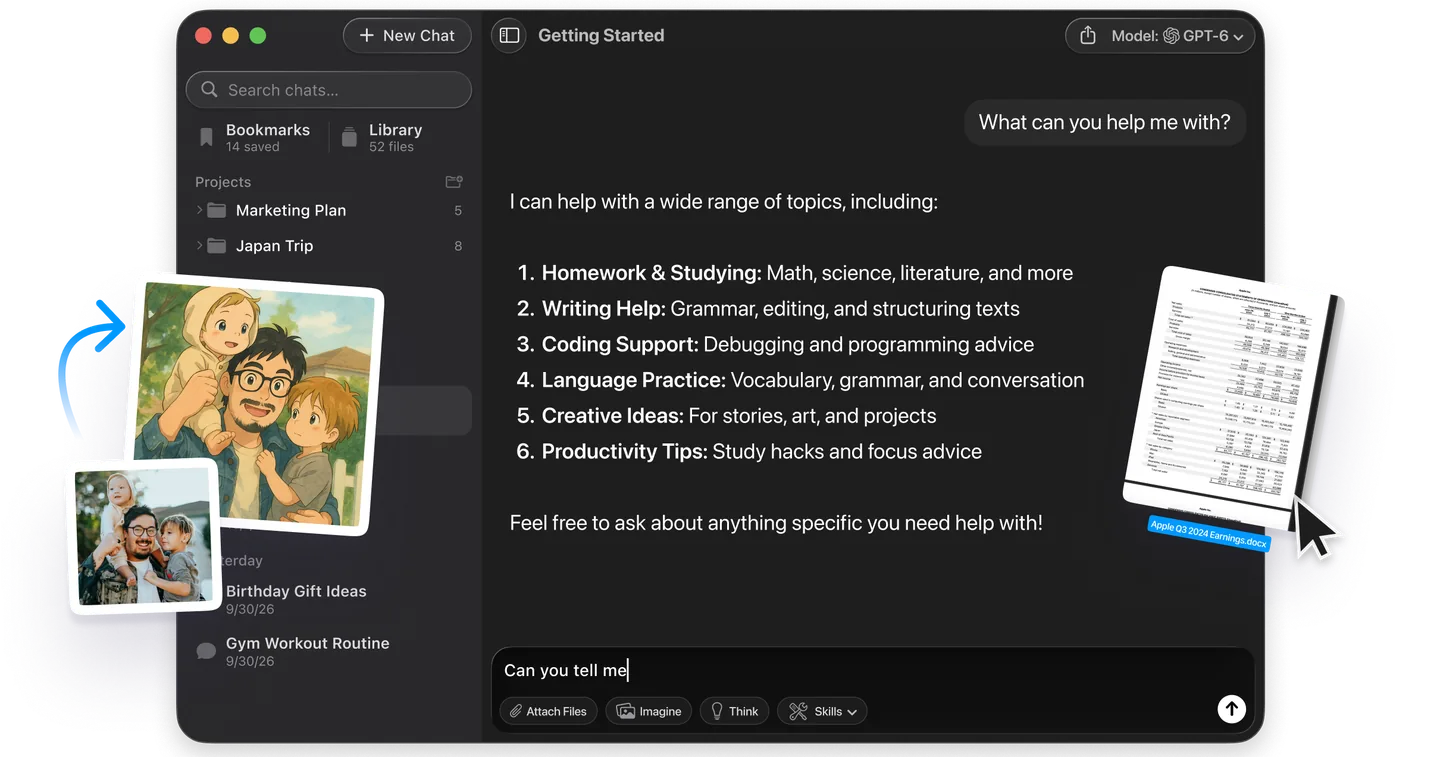
Si ninguna respuesta te convence, hay una tercera opción que evita el bloqueo por completo. Fello AI es una aplicación para Mac, iPhone e iPad que te da ChatGPT, Claude, Gemini, Grok y DeepSeek dentro de una sola interfaz por $9.99/mes fijo. No obtienes la ejecución en segundo plano 24/7 de Spark ni la máquina virtual de archivos local de Cowork. Obtienes los modelos subyacentes que impulsan ambos productos en un solo lugar, más generación de imágenes, carga de archivos y modo de voz. Para muchos lectores esa es la respuesta más honesta de «quiero todo», y encaja junto a cualquiera de los dos agentes en lugar de reemplazarlos.
La conclusión sobre Gemini Spark vs Claude Cowork
Si tuviéramos que elegir uno para el trabajador del conocimiento medio que usa Mac ahora mismo, Claude Cowork gana, pero el margen es más estrecho que en mayo. Lleva activo desde abril, el caso de uso de creación de archivos es sólido, y funciona igual en todos los planes y en todos los países a los que sirve Claude. Spark igualó el precio en julio y no ganó en nada estructural, porque las sesiones remotas cerraron la única brecha de arquitectura que importaba.
Aun así, esta es una historia de 4 meses, no de 2 años. Gemini Spark es el primer agente residente en la nube de un hiperescalador con la gravedad de Workspace para hacer que la ejecución en segundo plano 24/7 sea realmente útil, y en el momento en que llegó a AI Pro se convirtió en una elección predeterminada en lugar de un lujo. Hay que estar pendiente de la lista de países, porque eso es lo único que lo frena todavía, y son los lectores europeos y del Reino Unido los que siguen excluidos.
Cowork es el agente en el que puedes confiar. Spark es el agente al que hay que seguir la pista.
Y para todos los demás, Fello AI mantiene la puerta abierta para cambiar después sin una nueva factura de suscripción. En un Mac puedes usar ambos de forma nativa, con nuestra guía del cliente de escritorio de Claude para macOS y la guía del cliente de escritorio de Gemini para macOS.
FAQ
¿Cuál es la diferencia entre Gemini Spark y Claude Cowork?
Gemini Spark es el agente de IA personal 24/7 de Google en la nube que ejecuta tareas en Gmail, Docs y aplicaciones conectadas incluso cuando el portátil está cerrado. Claude Cowork es el agente de Anthropic para el trabajo del conocimiento, disponible en escritorio, web y móvil, con acceso completo de lectura y escritura a tus archivos cuando lo ejecutas en la aplicación de escritorio.
¿Cuánto cuesta Gemini Spark?
Spark está incluido en Google AI Pro a $19.99/mes y en Google AI Ultra desde $99.99/mes. El acceso Pro se abrió en Estados Unidos el 23 de julio de 2026 y llegó a más de 160 países adicionales el 30 de julio. Sigue sin estar disponible en el EEE, el Reino Unido, Suiza y Nigeria. No hay un precio independiente de Spark ni un nivel gratuito.
¿Cuánto cuesta Claude Cowork?
Cowork está incluido en todos los planes de pago de Claude, empezando por Claude Pro a $20/mes con límites de uso reducidos, y subiendo hasta Max 5x a $100/mes y Max 20x a $200/mes para un uso más intensivo. No hay un nivel gratuito de Cowork, y desglosamos las reglas de acceso gratuito a Claude Cowork en una guía dedicada.
¿Es Claude Cowork mejor que Gemini Spark?
Para la mayoría de los trabajadores del conocimiento en 2026, sí, aunque la diferencia es menor que antes. Cowork lleva disponible de forma general desde el 9 de abril, funciona en escritorio, web y móvil, y produce archivos reales como Excel y PowerPoint. Spark alcanzó el nivel Google AI Pro a $19.99 en julio, así que el viejo argumento del precio ha desaparecido; lo que queda es que Spark tiene forma de Workspace y no está disponible en gran parte de Europa.
¿Puedo usar Gemini Spark y Claude Cowork al mismo tiempo?
Sí, los dos agentes no entran en conflicto y sirven para tareas distintas. Muchos usuarios avanzados los combinan: Spark para la bandeja de entrada y la automatización de Workspace, Cowork para la creación de archivos y entregables. Si eso te parece excesivo, Fello AI a $9.99/mes te da los modelos subyacentes de ChatGPT, Claude, Gemini, Grok y DeepSeek dentro de una sola aplicación para Mac.