Google Flow da a cada cuenta 50 créditos al día, con o sin suscripción. Eso suena generoso hasta que consultas la lista de precios: un solo vídeo en Veo 3.1 Quality cuesta 100 créditos, los créditos nunca se acumulan y no hay forma de ahorrar los de dos días. El resultado es un muro que casi nadie menciona. Solo con la asignación diaria gratuita, Google Flow AI no producirá su mejor vídeo, y Google además bloquea por completo la generación de vídeo a los no suscriptores durante las horas de máxima demanda.
Esa diferencia entre lo que Flow promete y lo que realmente ofrece es toda la historia de esta herramienta ahora mismo. Google la ha reconstruido dos veces en un año. Ha cambiado el nombre de lo que es el producto, ha integrado otros dos productos en él y lo ha trasladado a una nueva dirección. La mayor parte de lo que leerás sobre Flow aún describe la versión que se lanzó en mayo de 2025. Esta guía cubre lo que es Google Flow hoy, lo que cuesta cada generación en créditos, lo que ofrece realmente el nivel gratuito y qué plan de pago merece la pena. Cada cifra aquí procede del centro de ayuda y de la página de planes de Google, comprobados el 19 de septiembre de 2026, con los costes en créditos, los paquetes de créditos y las condiciones para estudiantes revisados de nuevo el 10 de octubre de 2026.
Los puntos clave
- Todo el mundo recibe 50 créditos al día: Google lo dice sin rodeos, «con o sin suscripción». La renovación diaria se activa con tu primera generación, no a medianoche.
- Los créditos de suscripción son un extra: Google AI Pro añade 1000 créditos al mes más de los 50 diarios. No los sustituye, y es el dato que peor se explica sobre Flow.
- La asignación gratuita no puede llegar a Veo 3.1 Quality: cuesta 100 créditos para todos los usuarios, el límite diario es de 50, y nada se acumula. Existe una única forma documentada de evitarlo, y es votar en Flow Music.
- Google ahora vende Flow como un estudio creativo: su página de planes ofrece «acceso a nuestro estudio creativo de IA para crear escenas e historias cinematográficas», desde que Whisk e ImageFX se integraron el 25 de febrero de 2026. Su centro de ayuda todavía dice «nuestra herramienta de cine con IA».
- Los planes van de $0 a $4.99, $19.99 y $99.99: Gratis, Google AI Plus, Google AI Pro y Google AI Ultra, con un nivel superior de Ultra a $199.99 que incluye 25 000 créditos al mes.
- Puedes comprar más, en Pro y Ultra: los paquetes de créditos de IA de 2500, 5000 o 20 000 créditos se venden a través de Google One. Google solo muestra el precio al pagar.
- Los estudiantes obtienen el plan, no una cantidad de créditos garantizada: el año gratuito para estudiantes es Google AI Pro en EE. UU. y AI Plus en el resto del mundo, y sus condiciones advierten de que los límites de uso para estudiantes pueden ser distintos de los de un plan de pago.
¿Qué es Google Flow AI?
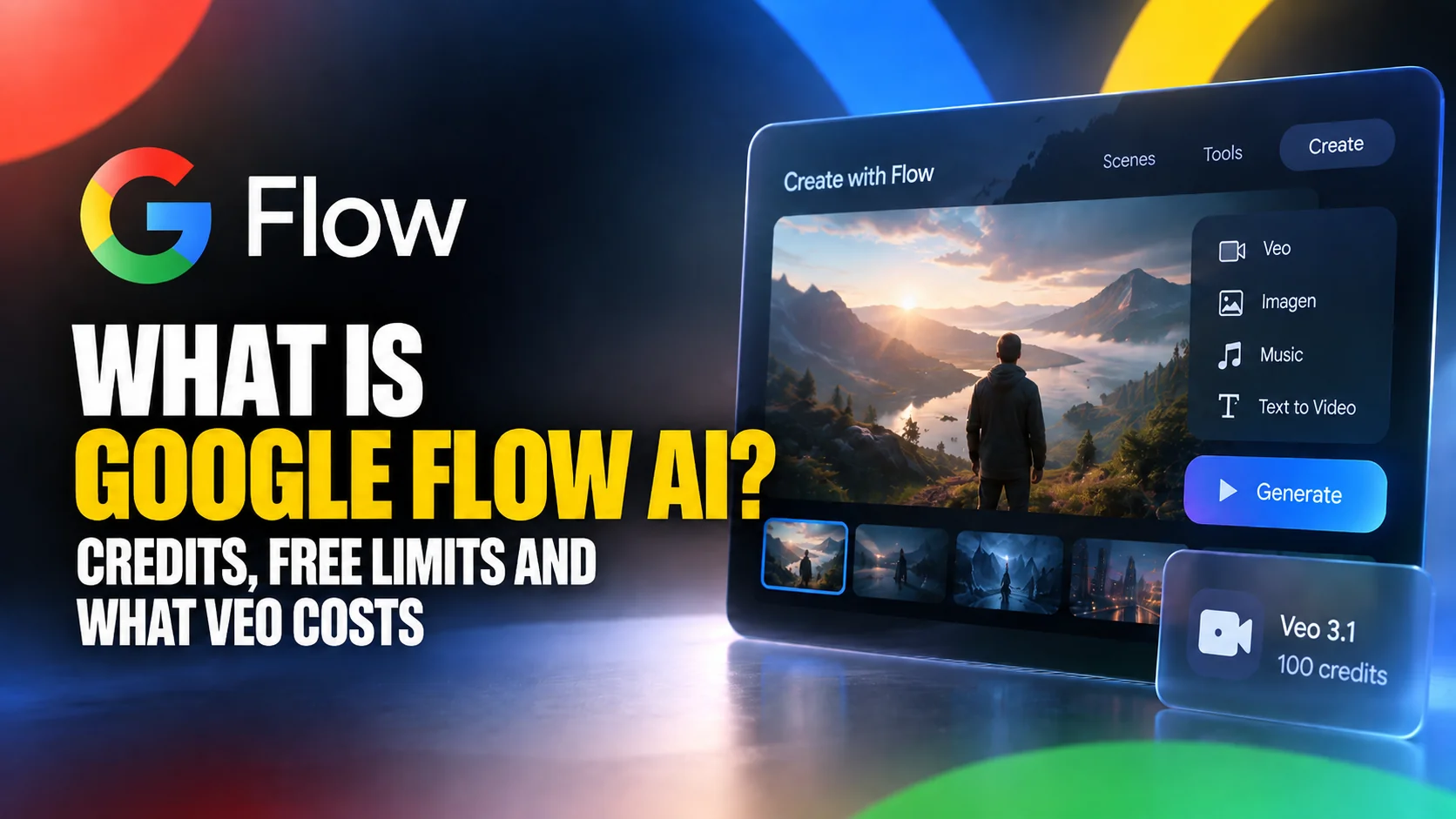
Google Flow es el estudio creativo de IA de Google para crear y editar vídeo e imágenes en un solo espacio de trabajo. Escribes un prompt, o sueltas una imagen, y Flow genera clips con sonido sincronizado, y luego te permite ampliarlos, editar objetos dentro de ellos y combinarlos en escenas. No es una función de chatbot y no forma parte de la app de Gemini. Es un producto independiente, con su propia dirección, sus propias apps y su propia moneda.
La propia presentación de Google sigue siendo la forma más clara de ver la interfaz, y además sirve como registro de cómo se presentó el producto en su origen. Mira cómo llama a Flow y luego compáralo con la página de planes actual.

La frase que hay que vigilar es estudio creativo. Casi todos los artículos que encontrarás llaman a Flow una «herramienta de cine con IA impulsada por Veo», porque es parecido a como lo llamó Google en el lanzamiento. La propia página de planes de Google ha avanzado, y ahora describe Flow como un «estudio creativo de IA para crear escenas e historias cinematográficas». Google no ha retirado el nombre antiguo, y su centro de ayuda todavía empieza con «nuestra herramienta de cine con IA», así que los dos conviven. Aun así, el cambio es real. Flow dejó de ser solo una herramienta de vídeo en el momento en que Google integró en ella sus productos de imagen.
Los modelos que hay dentro de Flow
Flow es una capa que coordina varios modelos de Google en lugar de ser un modelo propio. Veo 3.1 genera vídeo en tres niveles de calidad. Nano Banana se encarga de la generación de imágenes y ahora forma parte del núcleo de la experiencia, así que una imagen que creas se convierte en un ingrediente o en un fotograma para un vídeo sin salir de la app. Gemini Omni Flash se encarga de la edición conversacional, el flujo de háblale y cambia el plano. Flow Music, una app independiente de la misma familia, funciona con el modelo musical Lyria de Google, actualizado a Lyria 3.5 en julio de 2026.
¿Quieres el contexto del propio modelo de vídeo en lugar del estudio que lo rodea? Nuestra guía sobre Veo y la generación de audio nativo explica cómo ha llegado Google hasta aquí. Nuestra clasificación de los mejores generadores de vídeo con IA sitúa a Veo frente a sus rivales.
Dónde vive Google Flow ahora
Flow solía estar en labs.google/fx/tools/flow. Esa URL todavía funciona, pero ya no sirve nada: devuelve una redirección permanente 308 a flow.google.com, que es donde vive el producto ahora. Si tienes un marcador antiguo, o buscaste labs google flow y llegaste a una página que parece abandonada, esa redirección es el motivo. Flow se graduó de Google Labs y pasó a tener su propio dominio.
Cómo funcionan los créditos de Google Flow
Flow no te cobra en vídeos ni en minutos. Te cobra en créditos, y las reglas son inusualmente específicas, lo que es una buena noticia porque significa que puedes calcular exactamente lo que te puedes permitir antes de gastar nada.
Los 50 créditos diarios que recibe todo el mundo
La página de ayuda de Google sobre los créditos de Flow lo dice en una sola frase: «Con o sin suscripción, recibes 50 créditos de Google Flow al día». Esa es la base para todas las cuentas, de pago o no. Google añade que, sin suscripción, «solo recibes 50 créditos de Google Flow al día para probar Google Flow», lo que es la señal más clara de que el nivel gratuito está pensado como una prueba y no como un plan gratuito utilizable.
La renovación tiene una particularidad que conviene conocer. Tus créditos diarios no se reinician a medianoche. Google dice que «la renovación de tu crédito diario se activa con tu primera generación», y pone un ejemplo práctico: usas créditos por primera vez el 12 de agosto y tus siguientes 50 llegan el 13 de agosto. Tu reloj personal empieza cuando empiezas tú.
Los créditos de suscripción son un extra, no un sustituto
Aquí es donde se equivoca la mayoría de lo que se escribe sobre Flow. Leerás que Google AI Pro te da 1000 créditos de Flow al mes, presentados como la asignación que obtienes por tus $19.99. No es la asignación. Es un extra.
La formulación de Google es idéntica en los cuatro niveles de pago, y la palabra clave es extra: los suscriptores reciben una asignación extra de créditos cada mes, además de los 50 diarios. Plus añade 200, Pro añade 1000, Ultra a $99.99 añade 10 000 y Ultra a $199.99 añade 25 000. Todo eso se suma a los 50 que ya recibes cada día. Leído literalmente, los 1000 créditos mensuales que anuncia Pro son menos de lo que acumula la asignación diaria en ese mismo mes. Eso te dice algo útil. En el nivel Pro no compras tanto volumen como margen para los días en que lo necesitas.
Nada se acumula
Las dos reservas caducan. Google dice que si no usas los 50 completos en un día, «los créditos de Google Flow no usados no se acumulan», y, por separado, que «los créditos mensuales de Google Flow no usados no se acumulan al mes siguiente». Los créditos de suscripción se renuevan al inicio de tu ciclo de facturación, no el día uno del mes.
Esa única regla es lo que convierte el nivel gratuito de limitado en bloqueado. Para entender por qué, necesitas el precio de cada generación, y Google sí publica uno.
Cómo comprar más créditos de Google Flow
Comprar más créditos de Google Flow significa comprar créditos de IA a través de Google One, porque Flow gasta indistintamente «créditos de Google Flow o créditos de IA». La página de compra de créditos de IA de Google explica los pasos: abre la página de créditos de IA de Google One, haz clic en Obtener créditos de IA y elige una cantidad, con 2500, 5000 y 20 000 créditos como ejemplos. Google no indica un precio para ningún paquete en sus páginas de ayuda. El precio solo aparece al pagar, así que considera no verificada cualquier cifra por crédito que leas en otro sitio.
Tres reglas determinan si puedes comprar o no. Los créditos de IA solo se venden a los suscriptores de Google AI Pro y Google AI Ultra, no se venden en Japón, y en un grupo familiar solo puede comprarlos quien gestiona el plan. Los créditos comprados también caducan con su propio reloj: Google dice que «pueden caducar después de un determinado periodo, según se indique en el momento de adquirirlos», en lugar de al final de tu ciclo de facturación. Después de una primera compra puedes activar la recarga automática, que repone tu saldo cuando cae por debajo de un umbral, hasta cinco recargas al día, para usuarios de 18 años o más.
Google se contradice en un punto. Su página de créditos de Flow dice que «los suscriptores de Plus, Pro y Ultra pueden comprar créditos de IA», mientras que la página de compra de Google One dice que los créditos de IA «no están disponibles para su compra en los planes de Google AI Plus». La página de Google One es la que gestiona el pago, así que da por hecho que un plan Plus no puede comprar extras hasta que Google haga coincidir las dos páginas.
Lo que cuesta cada generación en Google Flow
Google publica una lista de precios completa en su página de ayuda sobre los créditos de Flow, y es la información más útil sobre Flow que casi nadie reproduce. Aquí está, a fecha de 10 de octubre de 2026. Google señala que «los límites pueden cambiar en cualquier momento», así que comprueba el panel de ajustes junto a tu cuadro de prompt antes de planear un proyecto grande en torno a estas cifras.
| Generación | Créditos (no Ultra) | Créditos (Ultra) | ¿Posible con 50 al día? |
|---|---|---|---|
| Veo 3.1 Lite, prioridad reducida | No disponible | 0 | No disponible |
| Veo 3.1 Lite | 10 | 5 | Sí, cinco al día |
| Veo 3.1 Fast | 20 | 10 | Sí, dos al día |
| Veo 3.1 Quality | 100 | 100 | No con los 50 diarios |
| Gemini Omni Flash 720p | de 7 a 15 según la duración | 7 a 15 | Sí |
| Gemini Omni Flash 360p | de 4 a 7 según la duración | 4 a 7 | Sí |
| Edición con Gemini Omni Flash | 40 | 40 | Una vez, con 10 restantes |
| Ampliación a 1080p | 0 para los suscriptores | 0 | No disponible |
| Ampliación a 4K | No disponible | 50 | No disponible |
Dos detalles de esta tabla merecen destacarse. Los suscriptores de Ultra pagan la mitad de precio en Veo 3.1 Lite y Fast, lo que es un descuento real y no solo una reserva más grande. Y Veo 3.1 Quality cuesta 100 créditos para todo el mundo, sin ningún descuento para Ultra.
La primera fila es lo más parecido que tiene Flow a créditos ilimitados. Veo 3.1 Lite con prioridad reducida cuesta cero créditos para los suscriptores de Ultra y los gestores de plan familiar, así que una cuenta Ultra puede hacer borradores con Lite sin tocar su saldo. Los miembros de la familia Ultra y cualquier plan que no sea Ultra no pueden usarlo en absoluto, y ningún plan hace gratis las generaciones Fast o Quality.
Esta tabla tiene una trampa que conviene conocer antes de planear nada en torno a ella. La lista de créditos cobra la función Extend dentro de Veo 3.1 Fast y Quality, pero la propia página de modelos de Google incluye los vídeos Extend entre las funciones no admitidas en esos dos niveles. Trata Lite como el nivel que continúa un plano.
Una restricción anterior también se ha levantado sin hacer ruido. El anuncio de Google de mayo de 2026 decía que Gemini Omni Flash estaba disponible «para los suscriptores de Google AI de todo el mundo», pero la página de ayuda de modelos actual afirma ahora que «todos los usuarios pueden acceder a los modelos Gemini Omni». La página de ayuda es el documento vigente, así que da eso por actual, aunque Google siga remitiendo a los suscriptores de Pro a «el último modelo Gemini Omni Flash».
¿Es gratis Google Flow AI? Lo que realmente permiten 50 créditos al día
Sí, Google Flow AI es gratis de usar, y Google incluye Flow en las funciones del plan gratuito, describiéndolo como acceso al estudio creativo de IA «incluido un acceso limitado a Nano Banana Pro». Las imágenes también son gratis: Google lo afirmó sin rodeos en su anuncio de Flow de febrero de 2026, «puedes generar imágenes gratis en Flow». El Flow Agent, el asistente de planificación añadido en mayo de 2026, está «disponible para todos los usuarios de Google Flow en todo el mundo», lo que te incluye a ti.
Google sí se contradice aquí, y conviene saber en qué página confiar. La página de ayuda sobre créditos tiene una sección titulada «Límites de generación para no suscriptores» y dice que los créditos llegan «con o sin suscripción». La página de primeros pasos dice que, para usar Flow, debes «estar suscrito a Google AI Plus, Google AI Pro o Google AI Ultra». Las dos son páginas de soporte de Google activas. La página de créditos es la que describe con detalle cómo se cobra a los no suscriptores, así que es casi con toda seguridad la más actual de las dos, pero si Flow te rechaza al iniciar sesión sin un plan, esa contradicción sin resolver es el motivo.
Lo que puedes crear cada día gratis
Cincuenta créditos son un presupuesto diario real una vez que conoces los precios, y se reparten de forma limpia. Así es como gastarlos en un día según lo que estés haciendo.
| Si quieres | Gástalos así | Total |
|---|---|---|
| Probar ideas de prompts rápido | Cinco clips con Veo 3.1 Lite a 10 cada uno | 50 |
| Conseguir dos tomas mejores | Dos clips con Veo 3.1 Fast a 20, más uno Lite | 50 |
| Hacer un storyboard barato | Doce clips con Gemini Omni Flash 360p a 4 | 48 |
| Arreglar un clip existente | Una edición con Omni Flash a 40, más uno Lite | 50 |
Un límite no tiene nada que ver con los créditos, y es lo primero que menciona la página de créditos de Google. Durante las horas de máxima demanda, que Google sitúa aproximadamente entre las 14:00 y las 17:00 UTC, los no suscriptores «pueden no poder generar vídeos», sin importar cuántos créditos tengan. La generación de imágenes y el Flow Agent siguen funcionando. Esa franja es última hora de la mañana en Nueva York y última hora de la tarde en Europa central, así que si Flow rechaza un vídeo entonces, mira el reloj antes de mirar tu saldo.
La regla práctica es hacer los borradores con Lite y gastar los créditos de Fast solo en el plano que ya sabes que quieres. Para aprender la herramienta, probar un estilo de prompt o producir unos cuantos clips para redes sociales a la semana, una cuenta gratuita basta, y no cuesta nada.
Lo que la asignación gratuita no puede alcanzar
Ahora llega el muro. Veo 3.1 Quality cuesta 100 créditos. Tu asignación diaria es de 50. Los créditos no usados no se acumulan. Ninguna cantidad de paciencia lleva un saldo gratuito a 100, así que el mejor modelo de vídeo de Flow no solo está racionado en el nivel gratuito, está fuera de alcance con la asignación diaria. Pagar para saltárselo tampoco funciona: Google limita las compras puntuales de créditos de IA a los «planes Google AI Pro y Google AI Ultra», excluyendo explícitamente a Plus.
Existe exactamente una vía documentada para evitarlo, y casi nadie escribe sobre ella. Flow gasta «créditos de Google Flow o créditos de IA», y Google tiene una función llamada Turntable dentro de Flow Music que reparte créditos de IA gratis: escuchas dos muestras de audio y votas por la que mejor se ajusta al prompt. Google no describe esos créditos como exclusivos de Flow Music. Si quieres una generación Quality sin pagar, ese es el único camino que documenta Google, y debes esperar que sea lento.
Toda guía que te dice que Flow es gratis con 50 créditos al día y se detiene ahí se ha dejado las dos mitades de esto: el techo, y la única forma de superarlo.
Los dos muros de la ampliación
La ampliación es donde los niveles dejan de ser reservas más grandes y se convierten en productos distintos. La ampliación a 1080p cuesta cero créditos a los suscriptores, una ventaja real. Para los no suscriptores, Google ni siquiera le pone precio. La función aparece como no disponible. Así que un usuario gratuito no solo tiene un límite de calidad al generar, tampoco puede mejorar después lo que ya generó. Si necesitas entregar algo en 1080p, la solución más barata es el plan Plus de $4.99, no un saldo de créditos más grande.
La misma barrera está en lo más alto de la escala. El ampliador a 4K cuesta 50 créditos y es solo para Ultra, así que un suscriptor de Pro con mil créditos de sobra sigue sin poder acceder a él. En los dos muros, el bloqueo es el nivel en el que estás, nunca el saldo que has ahorrado.
Planes y precios de Google Flow AI comparados
Flow no tiene suscripción propia. Funciona sobre los planes de Google AI, así que la decisión es en realidad sobre qué nivel de Gemini quieres. Los precios de abajo son los de los propios listados de planes de Google en EE. UU., comprobados el 19 de septiembre de 2026.
| Plan | Precio | Créditos de Flow | Ideal para |
|---|---|---|---|
| Gratis | $0 | 50 al día, nada más | Aprender la herramienta, clips Lite |
| Google AI Plus | $4.99/mes | 50 al día más 200 al mes | Desbloquear la ampliación a 1080p a bajo coste |
| Google AI Pro | $19.99/mes | 50 al día más 1000 al mes | Generaciones Quality habituales |
| Google AI Ultra | desde $99.99/mes | 50 al día más 10 000 al mes | Veo a mitad de precio, ampliación a 4K |
| Google AI Ultra nivel superior | $199.99/mes | 50 al día más 25 000 al mes | Volumen de producción profesional |
Qué plan merece realmente la pena
El nivel interesante es el más barato. Por $4.99, Google AI Plus añade solo 200 créditos al mes, que son dos vídeos de Veo 3.1 Quality, pero también hace que la ampliación a 1080p pase de no disponible a gratis. Si tu bloqueo es la calidad del resultado y no el volumen, Plus lo resuelve por el precio de un café y Pro es excesivo. Si quieres generaciones Quality como algo habitual y no como un capricho, los 1000 créditos extra de Pro dan diez al mes, y es el nivel en el que acaba la mayoría de la gente. Ultra solo tiene sentido si el precio reducido de Veo y el 4K te importan comercialmente. Nuestro desglose completo de los precios de Gemini en todos los planes cubre lo que incluye cada nivel, y lo que incluye el plan gratuito de Gemini profundiza en la opción sin coste.
Google Flow con la oferta para estudiantes de Gemini
La oferta para estudiantes de Gemini es la vía legítima más barata para conseguir más créditos de Flow, con una salvedad escrita en sus condiciones. Los estudiantes universitarios elegibles en Estados Unidos obtienen 12 meses de Google AI Pro gratis, y los estudiantes de más de 140 mercados obtienen Google AI Plus en su lugar, según la página para estudiantes de Google. Debes tener 18 años o más, verificarte a través de SheerID y canjear la oferta antes del 31 de diciembre de 2026, y en EE. UU. el plan se renueva a $19.99 al mes salvo que canceles. Nuestra guía sobre la oferta para estudiantes de Gemini cubre los requisitos y los pasos para canjearla.
En un plan de pago, Pro añade 1000 créditos de Flow al mes y Plus añade 200, además de los 50 diarios. La página para estudiantes no menciona Flow en absoluto, y las condiciones de la oferta para estudiantes dicen que los estudiantes «pueden experimentar límites de uso distintos de los de los miembros de Google One en un plan de pago». El año gratuito te da el plan, no un número de créditos garantizado. Después de canjearlo, comprueba tu saldo debajo de tu foto de perfil en Flow antes de planear un proyecto en torno a 1000 créditos.
Cuando quieres más modelos, no más créditos
Hay una pregunta distinta escondida detrás de la tabla de planes, y merece la pena separarla. Pagar más a Google te da más Google. Si lo que realmente quieres es dejar de depender de los modelos de una sola empresa, eso es una compra diferente. Fello AI pone Gemini junto a GPT, Claude, Grok, Perplexity, DeepSeek, Kimi, GLM y Qwen en una sola app nativa para Mac, iPhone y iPad por $11.99 al mes, con un nivel gratuito para probarla, y sin créditos que contar. No genera vídeo, así que no sustituye a Flow, pero para todo lo que rodea al trabajo de vídeo, el guion, la investigación, la redacción de prompts, significa una suscripción en lugar de cuatro. Hay más información sobre los modelos que incluye en nuestra guía de los mejores modelos de IA.
Cómo ha cambiado Google Flow dos veces en un año
La mayor parte de la confusión en torno a Flow viene de que internet describe tres productos distintos bajo un mismo nombre. Esta es la secuencia real.
Mayo de 2025: una herramienta de cine con IA
Flow se lanzó el 20 de mayo de 2025 como «la evolución de VideoFX, un experimento de Google Labs». Llegó con Camera Controls, Scenebuilder, Asset Management y Flow TV, y era explícitamente un producto de cine. El acceso estaba limitado a los suscriptores de Google AI Pro y Ultra en EE. UU., y Pro incluía 100 generaciones al mes. Cada uno de esos detalles ha cambiado desde entonces, por lo que citarlos hoy sería un error. Para octubre de 2025, Google informó de «más de 275 millones de vídeos generados en Flow».
Google Labs lo anunció exactamente con esas palabras, por lo que la frase se ha quedado pegada a Flow desde entonces.
Introducing Flow, a new AI filmmaking tool that is built with and for creatives to let you seamlessly create cinematic clips, scenes and stories using @GoogleDeepmind’s most advanced models: Veo + Imagen + Gemini.
— Google Labs (@GoogleLabs) May 20, 2025
Create now ➡️ http://flow.google
Febrero de 2026: Whisk e ImageFX desaparecen dentro de Flow
El 25 de febrero de 2026, Google integró dos productos independientes en Flow. En palabras de Google, las mejores capacidades de ambos «pasan directamente a Flow, así que ahora puedes generar, editar y animar todo en un espacio de trabajo unificado». Nano Banana pasó a formar parte del núcleo de la experiencia, llegaron una herramienta de lazo y la edición en lenguaje natural, y la generación de imágenes se volvió gratis. A partir de marzo, los usuarios pudieron optar por transferir sus antiguos proyectos de Whisk e ImageFX. Google situó el total acumulado en «más de 1500 millones de imágenes y vídeos» creados desde el lanzamiento. Esta es la versión que convirtió una herramienta de vídeo en un estudio creativo, y es la que los resultados de búsqueda se perdieron en su mayoría.
Mayo de 2026: agentes, apps móviles y Flow Music
El 19 de mayo de 2026 Google añadió el Flow Agent, un compañero de planificación disponible para todos los usuarios en todo el mundo, y Flow Tools, que permite crear flujos de trabajo a medida describiéndolos en lenguaje sencillo. Gemini Omni Flash llegó para los suscriptores. Llegaron las apps móviles. Y Flow Music se unió a la familia como app independiente, con Lyria 3 Pro. Google dijo que Flow se había «lanzado en más de 140 países de todo el mundo», retirando para siempre la limitación a EE. UU.
Apps de Google Flow, Flow Music e inicio de sesión
Buena parte de las búsquedas sobre Flow son en realidad preguntas de navegación. Aquí están las respuestas directas.
| Plataforma | Estado a 19 de septiembre de 2026 |
|---|---|
| Web | flow.google.com, todas las funciones, inicia sesión con una cuenta de Google |
| URL antigua de Labs | labs.google/fx/tools/flow devuelve una redirección 308 a flow.google.com |
| Flow en Android | Disponible en beta |
| Flow en iPhone | Todavía no, Google dice que llegará pronto |
| Flow Music en iOS | Disponible ya |
| Flow Music en Android | Todavía no, llegará pronto |
| Límite de edad | 18 años o más para Google Flow en todas partes, con verificación de edad |
| Países | Más de 140 según el anuncio de Google de mayo de 2026, y su centro de ayuda ya recoge más |
Google es explícito al decir que la versión web sigue siendo el lugar con todas las funciones: las apps móviles son para crear sobre la marcha, no para tener paridad completa de funciones. Google también recomienda «un ordenador de sobremesa con un navegador basado en Chromium», así que si tienes que elegir por dónde empezar, empieza en Chrome o Edge.
Esa presencia creció rápido. Cuatro días después del lanzamiento, Flow todavía era exclusivo de EE. UU. según el anuncio anterior, y Google Labs ya estaba publicando esto.
🚨 Flow, our AI filmmaking tool, is now available in 71 more countries 🌍 through the Google AI Pro and Ultra subscriptions. Also, Veo 3 is now available for Pro subscribers to try (create your videos with sound!), and we’ve increased capacity even more for Ultra subscribers. ✨ We can’t wait to see (and hear!) what you make! Create with Flow 👉 http://flow.google
— Google Labs (@GoogleLabs) May 24, 2025
La conclusión
Google Flow es mejor producto de lo que sugiere su nivel gratuito y peor negocio de lo que sugieren sus cifras de créditos, y ambas cosas se reducen a la misma regla: nada se acumula. La cuenta gratuita es una prueba genuina, no un plan gratuito, y su techo no es blando. Obtienes cinco clips Lite al día y nunca llegarás a tocar Veo 3.1 Quality.
Si Flow es algo que quieres usar y no solo probar, la recomendación honesta es dejar de mirar los totales de créditos y preguntarte qué te está bloqueando. Si es la calidad del resultado, Google AI Plus a $4.99 desbloquea la ampliación a 1080p gratis y lo arregla por casi nada. Si son las generaciones Quality, Pro a $19.99 te da diez al mes además de la asignación diaria. Y si te encuentras pagando tres suscripciones para acceder a los modelos de tres empresas, el problema nunca fue la lista de precios de Flow. Decidas lo que decidas, fíjate en la fecha de cada cifra aquí, porque Google ha cambiado la forma de este producto dos veces en doce meses y dice que sus límites pueden cambiar en cualquier momento.
FAQ
¿Es gratis Google Flow AI?
Sí. Google da a cada cuenta 50 créditos de Google Flow al día, con o sin suscripción, y la generación de imágenes en Flow es gratis. Dos pegas: los créditos no se acumulan, así que la asignación diaria no puede llegar a los 100 que cuesta un vídeo de Veo 3.1 Quality, y Google puede bloquear la generación de vídeo a los no suscriptores durante las horas de máxima demanda, aproximadamente entre las 14:00 y las 17:00 UTC.
¿Cuántos créditos cuesta un vídeo de Veo 3.1 en Google Flow?
Veo 3.1 Lite cuesta 10 créditos, o 5 para los suscriptores de Ultra. Veo 3.1 Fast cuesta 20, o 10 para Ultra. Veo 3.1 Quality cuesta 100 créditos para todo el mundo, sin descuento para Ultra. Google señala que estos límites pueden cambiar en cualquier momento.
¿Se acumulan los créditos de Google Flow?
No, ninguna de las dos reservas. Los créditos diarios no usados no se acumulan al día siguiente, y los créditos mensuales de suscripción no usados no se acumulan al mes siguiente. Tu renovación diaria se activa con tu primera generación y no a medianoche.
¿Se pueden comprar más créditos de Google Flow?
Sí, en Google AI Pro y Ultra. Compras créditos de IA a través de Google One en paquetes como 2500, 5000 o 20 000, y Flow los gasta como si fueran sus propios créditos. Google solo muestra el precio al pagar, las compras no están disponibles en Japón, y las propias páginas de Google no coinciden en si los suscriptores de Plus pueden comprarlos.
¿La oferta para estudiantes de Google incluye créditos de Flow?
Incluye el plan que los lleva. Los estudiantes universitarios de EE. UU. obtienen un año gratuito de Google AI Pro, que añade 1000 créditos de Flow al mes en un plan de pago, y los estudiantes de otros mercados obtienen AI Plus, que añade 200. Las condiciones para estudiantes de Google advierten de que los límites de uso para estudiantes pueden diferir de los de un plan de pago, así que comprueba tu saldo en Flow después de canjear la oferta.
¿Existe un plan ilimitado de Google Flow?
No para todos los modelos. Lo más parecido es Veo 3.1 Lite con prioridad reducida, que no cuesta ningún crédito a los suscriptores de Ultra ni a los gestores de plan familiar. Cualquier otra generación, incluidas Veo 3.1 Fast y Quality, gasta créditos en todos los planes.
¿Qué pasó con Whisk e ImageFX?
Google los integró en Flow el 25 de febrero de 2026, explicando que las mejores capacidades de ambos pasaban directamente a Flow para que los usuarios pudieran generar, editar y animar en un solo espacio de trabajo. A partir de marzo, los usuarios pudieron optar por transferir sus antiguos proyectos y recursos a su biblioteca de Flow.
¿Existe una app de Google Flow para iPhone?
Todavía no. A 19 de septiembre de 2026, la app de Flow está en Android en beta con iOS indicado como próximamente, mientras que la app independiente Flow Music ya está disponible en iOS, con Android próximamente. Las dos exigen 18 años o más, y la versión web en flow.google.com tiene todas las funciones.