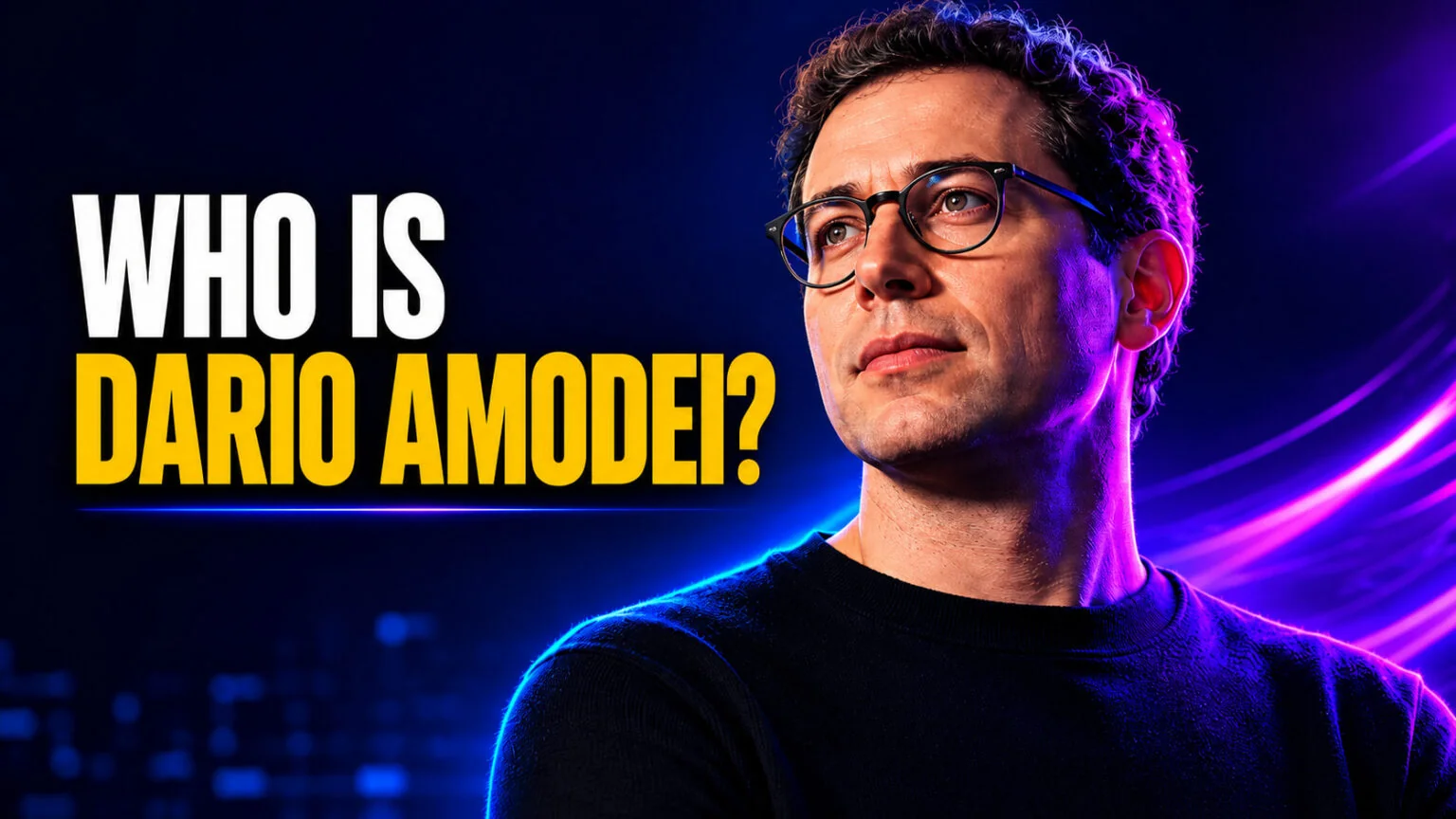
Dario Amodei est (1) le PDG et cofondateur d’Anthropic, le laboratoire d’IA derrière Claude. (2) un ancien vice-président de la recherche chez OpenAI qui a dirigé le développement de GPT-2 et GPT-3. (3) un biophysicien formé à Princeton, titulaire d’un doctorat en électrophysiologie des circuits neuronaux. (4) un milliardaire pesant 7 milliards de dollars en février 2026 selon Forbes. (5) l’auteur de l’essai « Machines of Loving Grace » qui a placé l’horizon 2026-2027 d’une IA puissante au centre de la conversation mondiale sur l’IA. Il a 43 ans, né à San Francisco en 1983 d’une mère juive américaine et d’un père italo-américain. Il est le frère aîné de la présidente d’Anthropic, Daniela Amodei.
Cet article rassemble en un seul endroit la biographie complète de Dario Amodei, de sa licence de physique à Stanford et son doctorat de biophysique à Princeton, en passant par ses cinq années chez OpenAI, jusqu’à son rôle actuel à la tête d’Anthropic à travers la valorisation de 380 milliards de dollars de la série G, la flambée de croissance de 80x au premier trimestre, l’accord Colossus avec xAI à 1,25 milliard de dollars par mois, et l’imminent tour de financement à 900 milliards de dollars qui ferait d’Anthropic l’entreprise privée la plus valorisée au monde. Vous obtiendrez aussi des réponses claires aux questions les plus recherchées sur sa fortune, son épouse, sa religion, son origine, et le départ collectif d’OpenAI en décembre 2020 qui a donné naissance à la société mère de Claude.
Les points clés à retenir
- Dario Amodei est PDG d’Anthropic depuis 2021, année où il a cofondé l’entreprise avec sa sœur Daniela Amodei et six autres anciens cadres d’OpenAI.
- Sa fortune est de 7 milliards de dollars en février 2026 selon Forbes, bâtie presque entièrement sur une participation d’environ 1,8 % entièrement diluée dans Anthropic.
- Il a quitté OpenAI en décembre 2020 pour des divergences d’opinion sur la sécurité de l’IA, après avoir dirigé GPT-2 et GPT-3 en tant que vice-président de la recherche.
- Son essai « Machines of Loving Grace » prédit une IA puissante plus intelligente qu’un lauréat du prix Nobel d’ici 2026, peut-être 2027.
- Anthropic a atteint un rythme de revenus annualisé de 30 milliards de dollars après une croissance de 80 fois au premier trimestre 2026, et est désormais en discussion pour une valorisation de 900 milliards de dollars.
Dario Amodei en bref : âge, religion, ville natale, formation
Dario Amodei est un chercheur et entrepreneur américain de 43 ans spécialisé dans l’IA, né en 1983 à San Francisco, en Californie, d’Elena Engel, une gestionnaire de projets de bibliothèque juive américaine originaire de Chicago, et de Riccardo Amodei, un artisan du cuir italo-américain originaire de Massa Marittima, en Toscane. Il a un héritage juif par sa mère selon la filiation matrilinéaire, et une origine italo-américaine par son père. Sa sœur, Daniela Amodei, a quatre ans de moins que lui et occupe le poste de présidente d’Anthropic.
Il a fréquenté le lycée Lowell à San Francisco, s’est brièvement inscrit à Caltech, puis a été transféré à l’université de Stanford, où il a obtenu une licence de physique en 2006. Il a ensuite terminé un master et un doctorat de biophysique à l’université de Princeton en 2011, avec une thèse sur l’électrophysiologie des circuits neuronaux, avant de revenir à la faculté de médecine de Stanford comme chercheur postdoctoral. Son titre actuel est directeur général d’Anthropic, un poste qu’il occupe depuis la création de l’entreprise en 2021.
| Détail | Valeur |
|---|---|
| Nom complet | Dario Amodei |
| Naissance | 1983, San Francisco, Californie |
| Âge | 43 ans (mai 2026) |
| Religion | Juif (héritage matrilinéaire) |
| Origine | Italo-américaine + juive américaine |
| Ville natale | San Francisco, Californie |
| Formation | Stanford (licence de physique, 2006), Princeton (doctorat de biophysique, 2011), faculté de médecine de Stanford (postdoc) |
| Rôle actuel | PDG et cofondateur, Anthropic (depuis 2021) |
| Sœur | Daniela Amodei (présidente d’Anthropic) |
| Situation maritale | Non divulguée publiquement |
| Fortune | 7 milliards de dollars (Forbes, février 2026) |
| Participation dans Anthropic | ~1,8 % entièrement diluée |
La famille et les jeunes années de Dario Amodei
Dario Amodei est né à San Francisco en 1983 d’Elena Engel, une gestionnaire de projets de bibliothèque juive américaine originaire de Chicago, et de Riccardo Amodei, un artisan du cuir italien originaire de la ville toscane de Massa Marittima. Son père est décédé alors que Dario était un jeune adulte. Sa mère a consacré sa carrière à construire des bibliothèques dans toute la baie de San Francisco. Amodei a attribué à ses parents le fait de lui avoir donné « un sens du bien et du mal et de ce qui comptait dans le monde ».
La sœur de Dario, Daniela Amodei, est née quatre ans après lui en 1987, et tous deux ont été des partenaires proches toute leur vie. Ils sont désormais aussi partenaires en affaires, Daniela occupant le poste de présidente d’Anthropic. Le frère et la sœur ont figuré ensemble sur la liste des 100 personnes les plus influentes du Time en 2026, après que Dario a seul reçu cet honneur en 2025.
Dario Amodei est-il juif ?
Oui. Dario Amodei a un héritage juif par sa mère Elena Engel selon la filiation matrilinéaire, et une ascendance italo-américaine par son père Riccardo. Le frère et la sœur sont couramment décrits comme juifs américains. Cependant, ni Dario ni Daniela ne se sont exprimés longuement en public sur leur pratique religieuse personnelle. Leur double héritage en a fait des sujets de portrait fréquents dans des publications comme Jewish Insider, en particulier lors de leur affrontement de mars 2026 avec le Pentagone au sujet de l’usage de Claude dans les systèmes de surveillance et d’armement.
Daniela Amodei : la sœur cofondatrice
Daniela Amodei est la seule sœur de Dario et occupe le poste de présidente d’Anthropic, un rôle qu’elle tient depuis la création de l’entreprise en 2021. Elle a épousé Holden Karnofsky en août 2017 ; Karnofsky a cofondé Open Philanthropy (aujourd’hui rebaptisé Coefficient Giving), l’un des plus grands bailleurs de fonds au monde alignés sur l’altruisme efficace. Anthropic a ensuite embauché Karnofsky pour travailler sur la stratégie de mise à l’échelle responsable et de sécurité de l’IA de l’entreprise, une décision que Fortune a signalée en février 2025 comme un chevauchement familial notable. Daniela et Holden ont un fils, Galileo, né avant 2023.
Formation : de la physique à Stanford à la biophysique à Princeton
Dario Amodei est diplômé du lycée Lowell de San Francisco avant de s’inscrire au California Institute of Technology, où il a brièvement travaillé avec le physicien Tom Tombrello dans le cadre du programme Physics 11. Il a ensuite été transféré à l’université de Stanford, y achevant sa licence de physique en 2006.
Il est parti à l’université de Princeton pour ses études supérieures et a obtenu à la fois un master et un doctorat de biophysique en 2011. Sa thèse de doctorat, « Network-Scale Electrophysiology: Measuring and Understanding the Collective Behavior of Neural Circuits », portait sur la façon dont des groupes de neurones s’activent ensemble, la même question biologique qui a motivé par la suite ses travaux en apprentissage profond. Après Princeton, il est revenu à la faculté de médecine de Stanford comme chercheur postdoctoral avant de se tourner pleinement vers la recherche en IA.
Carrière : de Baidu à Google Brain puis OpenAI
La carrière de Dario Amodei dans l’industrie a commencé chez Baidu en novembre 2014, où il a travaillé sous la direction d’Andrew Ng comme chercheur scientifique pendant environ un an, appliquant l’apprentissage profond à la reconnaissance vocale. Après avoir quitté Baidu en octobre 2015, il a rejoint Google Brain comme chercheur scientifique senior, travaillant sur les premières recherches en apprentissage par renforcement et en sécurité.
Il a rejoint OpenAI en 2016, s’élevant finalement au poste de vice-président de la recherche, le poste de recherche le plus élevé de l’entreprise. Sous sa direction, OpenAI a conçu et livré GPT-2 en 2019 et GPT-3 en 2020, les modèles qui ont prouvé l’hypothèse de mise à l’échelle sur laquelle repose désormais toute l’industrie moderne de l’IA.
Pourquoi Dario Amodei a quitté OpenAI
Amodei a quitté OpenAI en décembre 2020 aux côtés de sa sœur Daniela et d’un groupe de chercheurs seniors, invoquant des divergences d’opinion sur la sécurité et l’orientation de l’IA. Dans une interview ultérieure, il a décrit la scission ainsi : « Il y avait un groupe parmi nous chez OpenAI qui, dans le sillage de la création de GPT-2 et GPT-3, avait une conviction très forte sur deux choses. La première, l’idée que si vous injectez plus de calcul dans ces modèles, ils deviendront de mieux en mieux et qu’il n’y a presque pas de fin à cela. Et la seconde, l’idée qu’il fallait quelque chose en plus du simple fait de mettre les modèles à l’échelle, à savoir l’alignement ou la sécurité. »
Sa décision, a-t-il dit, a été de « prendre quelques personnes en qui vous avez confiance et d’aller concrétiser votre vision », plutôt que de rester et de se battre à l’intérieur d’OpenAI. La scission a mené directement à la fondation d’Anthropic. Pour une comparaison côte à côte de la façon dont les deux entreprises ont divergé depuis, voyez Anthropic vs OpenAI : qui gagne la course à l’IA en 2026. Le versant OpenAI de cette histoire, y compris le limogeage en novembre 2023 du PDG Sam Altman, est détaillé dans Qui est Sam Altman ?. La directrice technique d’OpenAI devenue PDG par intérim pendant cette crise, Mira Murati, a depuis fondé son propre laboratoire, Thinking Machines.
Anthropic : cofonder le créateur de Claude
Amodei a cofondé Anthropic en 2021 avec sa sœur Daniela, ainsi que Tom Brown, Sam McCandlish, Jack Clark, Jared Kaplan, Chris Olah et Ben Mann, tous d’anciens cadres seniors d’OpenAI. L’entreprise a été lancée avec un mandat explicite de sécurité de l’IA, construisant de grands modèles de langage tout en publiant des recherches sur l’alignement, l’interprétabilité et l’IA constitutionnelle.
Le produit phare de l’entreprise est la famille de modèles Claude, ouverte au public en mars 2023 et qui concurrence désormais directement la gamme GPT d’OpenAI, Gemini de Google et Grok de xAI. Parmi les produits Claude récents figurent Claude Mythos (désormais disponible publiquement sous le nom de Claude Fable 5), le modèle qui a contourné en cinq jours le contrôle d’intégrité mémoire du M5 d’Apple, couvert dans notre article sur l’exploit du M5 d’Apple, et Claude Cowork, la réponse d’Anthropic à Gemini Spark de Google dans la course aux agents, décryptée dans Gemini Spark vs Claude Cowork.
La flambée de croissance de 80 fois au T1 2026
Anthropic a crû de 80 fois au premier trimestre 2026 sur une base annualisée, dépassant largement la prévision interne de croissance de 10x de l’entreprise, son rythme de revenus annuel franchissant les 30 milliards de dollars. Amodei a déclaré à CNBC le 6 mai 2026 que cette flambée était la raison pour laquelle l’entreprise peinait à approvisionner en calcul les utilisateurs de Claude. Anthropic a réagi en doublant les limites de débit de Claude Code sur les offres payantes, en supprimant les plafonds d’usage aux heures de pointe pour les comptes Pro et Max, et en relevant les volumes de requêtes pour les modèles Opus.
L’accord Colossus avec xAI à 1,25 milliard de dollars par mois
Anthropic a accepté en mai 2026 de payer à la xAI d’Elon Musk environ 1,25 milliard de dollars par mois jusqu’en mai 2029 pour de la capacité de calcul sur les clusters d’entraînement d’IA Colossus et Colossus II de xAI à Memphis, dans le Tennessee. L’accord, révélé publiquement via le dossier d’introduction en bourse S-1 de SpaceX, donne à Anthropic l’accès à plus de 300 mégawatts de capacité électrique et à plus de 220 000 GPU Nvidia, et pourrait représenter plus de 40 milliards de dollars de revenus pour xAI sur la durée du contrat. Chaque partie peut y mettre fin avec un préavis de 90 jours. SpaceX et Anthropic ont aussi évoqué des centres de données orbitaux à l’échelle du gigawatt, après que SpaceX a déposé auprès de la FCC des plans d’infrastructure de calcul orbital en janvier 2026.
Frictions avec le département de la Défense (mars 2026)
En février et mars 2026, Amodei a refusé une demande du département de la Défense de retirer l’interdiction contractuelle d’Anthropic d’utiliser Claude pour la surveillance intérieure de masse ou les systèmes d’armes entièrement autonomes. Le Pentagone, sous le secrétaire Pete Hegseth, a réagi en qualifiant Anthropic de « risque pour la chaîne d’approvisionnement » et en écartant de fait l’entreprise des marchés de défense. Un juge fédéral a par la suite prononcé une injonction temporaire contre la désignation du DoD. L’épisode a placé Amodei au cœur de la confrontation la plus publique entre un laboratoire d’IA et l’armée américaine de l’ère post-ChatGPT.
La fortune de Dario Amodei en 2026 (7 milliards de dollars)
La fortune de Dario Amodei est estimée à 7 milliards de dollars en février 2026, selon Forbes. Sa richesse repose presque entièrement sur sa participation au capital d’Anthropic, estimée à environ 1,8 % du capital entièrement dilué de l’entreprise. Le chiffre est près du double de son estimation de 2025, porté par le tour de financement série G de 30 milliards de dollars d’Anthropic en février 2026 à une valorisation de 380 milliards de dollars, mené par le singapourien GIC, le fonds spéculatif Coatue, le fonds MGX soutenu par Abou Dabi, et les investisseurs stratégiques Microsoft et Nvidia.
Si Anthropic boucle son prochain tour, dont on parle, à une valorisation de 900 milliards de dollars, la fortune personnelle d’Amodei dépasserait la barre des 10 milliards de dollars et Anthropic deviendrait brièvement l’entreprise privée la plus valorisée au monde, devant OpenAI.
| Source / Actif | Estimation | Date | Fondement | Statut |
|---|---|---|---|---|
| Forbes | 7 milliards de dollars | Février 2026 | Participation au capital d’Anthropic | Confirmé |
| Participation dans Anthropic | ~1,8 % entièrement diluée | Février 2026 | Calcul de Forbes | Divulgué |
| Valorisation d’Anthropic | 380 milliards de dollars | Février 2026 | Clôture de la série G | Confirmé |
| Rythme de revenus d’Anthropic T1 2026 | 30 milliards de dollars annualisés | Mai 2026 | CNBC, VentureBeat | Confirmé par Amodei |
| Prochain tour évoqué | 50 milliards de dollars à une valorisation de 900 milliards | Mai 2026 | Reuters, Fortune | Discussions en cours |
Comment Dario Amodei a fait fortune
La richesse d’Amodei n’est pas tirée de l’investissement comme l’est celle de Sam Altman. C’est un chercheur devenu fondateur, et la quasi-totalité de sa fortune personnelle de 7 milliards de dollars est une richesse sur le papier liée à un seul actif : le capital d’Anthropic. Il ne gère pas de fonds de capital-risque personnel et n’est pas un business angel en série. Le facteur le plus important de sa fortune a été la trajectoire de valorisation d’Anthropic, d’un tour d’amorçage à neuf chiffres modestes en 2021 à 380 milliards de dollars en février 2026.
Machines of Loving Grace et la prédiction de Dario Amodei sur l’AGI
« Machines of Loving Grace » est un essai d’environ 25 000 mots que Dario Amodei a publié en octobre 2024, qui expose sa vision de ce qu’une IA puissante pourrait apporter au monde si tout se passe bien. Il définit l’« IA puissante » comme un système « plus intelligent qu’un lauréat du prix Nobel dans la plupart des domaines pertinents, biologie, programmation, mathématiques, ingénierie, écriture », capable de démontrer des théorèmes mathématiques non résolus, d’écrire des bases de code difficiles de zéro et de tourner sous la forme de millions d’instances parallèles. Le titre est emprunté à un poème de Richard Brautigan.
Dans l’essai et lors d’interviews de suivi, Amodei a prédit à plusieurs reprises qu’une IA puissante « pourrait arriver dès 2026, même s’il existe aussi des façons dont cela pourrait prendre bien plus longtemps ». Dans une longue interview avec Dwarkesh Patel en 2026, il a dit que son attente était « une IA puissante en 2026, peut-être 2027 », décrivant cela comme son « intuition » et ajoutant qu’il ne serait pas surpris de se tromper d’un an ou deux.
Amodei a enchaîné en janvier 2026 avec un deuxième long essai, « The Adolescence of Technology », d’environ 20 000 mots, avertissant que l’IA était sur le point de « mettre à l’épreuve qui nous sommes en tant qu’espèce ». Il l’a présenté moins comme une célébration que comme une liste de responsabilités politiques et d’entreprise nécessaires pour éviter que les deux prochaines années ne tournent mal.
La vie privée de Dario Amodei : épouse et mariage
Dario Amodei garde sa vie privée exceptionnellement discrète pour un PDG tech de son envergure, et sa situation maritale n’a pas été divulguée publiquement. Il n’existe aucune trace publique d’une épouse ou d’une partenaire. Amodei aborde rarement autre chose que la recherche et la politique en matière d’IA dans ses interviews. Le contraste avec sa sœur Daniela, mariée à Holden Karnofsky et mère d’un fils prénommé Galileo, est frappant. C’est l’une des comparaisons les plus recherchées au sujet de la famille Amodei.
Cette discrétion est inhabituelle dans un secteur où la vie privée des fondateurs est régulièrement couverte par les grands médias. Pour les lecteurs qui veulent un contre-exemple bien plus public, la biographie de Sam Altman couvre une approche quasi opposée : un PDG dont le mariage de 2024, la paternité de 2025 et le limogeage de 2023 se sont tous joués en temps réel à la une.
Controverses et frictions publiques
Le profil public d’Amodei repose plus sur le fond que sur le scandale, mais il n’a pas été exempt de controverses. Trois des moments les plus marquants sont résumés ci-dessous.
La désignation comme risque pour la chaîne d’approvisionnement par le département de la Défense en mars 2026 a fait suite au refus d’Amodei de retirer l’interdiction contractuelle de Claude en matière d’armes autonomes et de surveillance de masse. Un juge fédéral a prononcé une injonction temporaire contre la désignation du DoD. L’épisode a placé Anthropic au cœur d’un débat national sur les laboratoires d’IA civils et les usages militaires.
La tension entre sécurité et commerce chez Anthropic est une question ouverte depuis la création de l’entreprise. Dans une interview de février 2026, Amodei a reconnu qu’Anthropic « peine à concilier sécurité et bénéfices » à mesure que la course à l’IA s’intensifie, admettant qu’un positionnement purement axé sur la sécurité est difficile à tenir quand les revenus annualisés croissent de 80x en un seul trimestre.
L’aveu « profondément inconfortable » sur le fait que des dirigeants tech décident de l’avenir de l’IA est venu dans une interview de Fortune en 2024, où Amodei a dit qu’il ne fallait pas laisser une petite poignée de PDG tech déterminer la trajectoire de l’intelligence artificielle. La formule a été maintes fois citée par les commentateurs des politiques de l’IA qui soutiennent que la supervision publique a pris du retard sur la technologie.
Ce que l’histoire de Dario Amodei signifie pour les utilisateurs d’IA
La trajectoire de Dario Amodei, du doctorat de biophysique à Princeton au poste de PDG d’Anthropic, reflète l’essor de la sécurité de l’IA à grande échelle comme véritable activité. Chaque décision produit qu’il prend chez Anthropic façonne directement les modèles Claude que vous avez entre les mains. De Claude Mythos à Claude Cowork jusqu’à ce qu’Anthropic livrera ensuite sur la voie de sa prédiction d’une IA puissante en 2026-2027. Comprendre l’homme derrière l’entreprise est un contexte utile chaque fois que vous lisez au sujet d’une nouvelle version de Claude, d’un changement de tarif ou d’une bataille sur les politiques de l’IA.
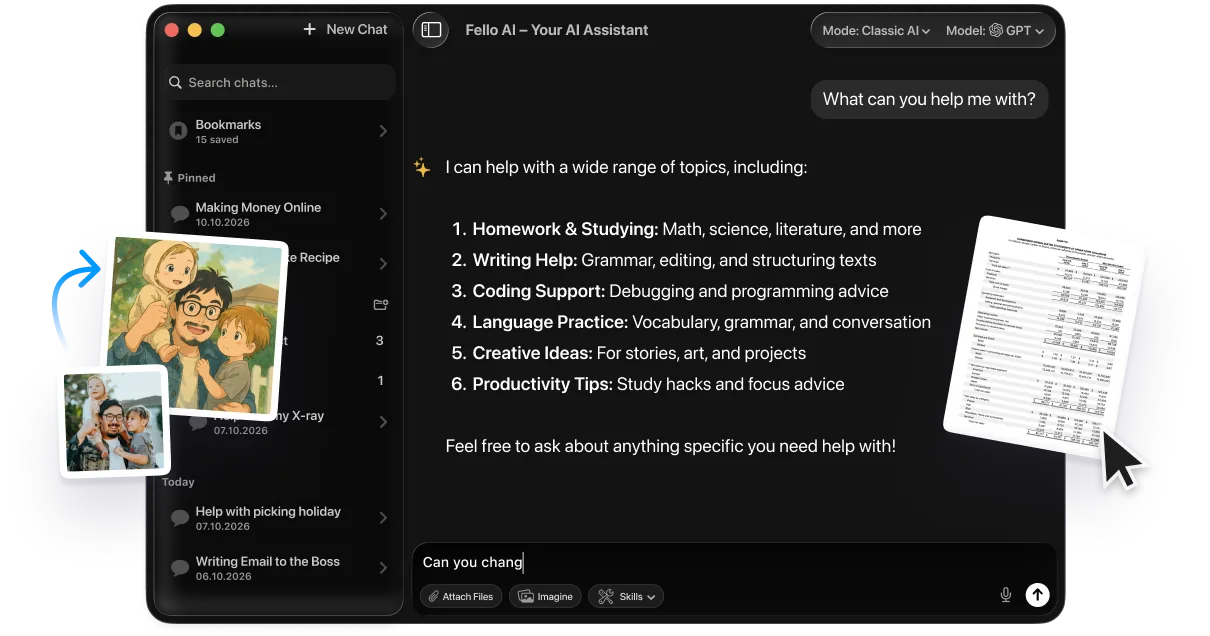
Si vous voulez le moyen le plus simple de comparer ce que livre Anthropic avec ce que font OpenAI, Google et xAI, Fello AI vous donne Claude, ChatGPT, Gemini, Grok et DeepSeek dans une seule application Mac pour 9,99 $ par mois. Vous pouvez comparer les réponses de tous les grands modèles sans jongler avec cinq abonnements. Pour un panorama plus large, voyez notre dossier sur les meilleurs modèles d’IA en 2026.
L’attraction qu’exerce Anthropic sur les talents fait partie de cette histoire. En mai 2026, le membre fondateur d’OpenAI Andrej Karpathy a rejoint son équipe de pré-entraînement, tandis que le front rival chez Google est mené par Demis Hassabis de DeepMind. Pour le patron de Microsoft AI, voyez Mustafa Suleyman.
FAQ
Qui est Dario Amodei ?
Dario Amodei est le PDG et cofondateur d’Anthropic, le laboratoire d’IA derrière Claude. Il a fondé Anthropic en 2021 avec sa sœur Daniela et six autres anciens cadres seniors d’OpenAI, après avoir passé cinq ans chez OpenAI comme vice-président de la recherche, où il a dirigé le développement de GPT-2 et GPT-3.
Quelle est la fortune de Dario Amodei ?
La fortune de Dario Amodei est estimée à 7 milliards de dollars en février 2026, selon Forbes. Sa richesse repose presque entièrement sur sa participation au capital d’Anthropic, estimée à environ 1,8 % entièrement diluée. Anthropic était valorisée à 380 milliards de dollars à la clôture de sa série G en février 2026 et est actuellement en discussion pour une valorisation de 900 milliards de dollars.
Dario Amodei est-il marié ?
La situation maritale de Dario Amodei n’a pas été divulguée publiquement. Il garde sa vie privée exceptionnellement discrète et il n’existe aucune trace publique d’une épouse ou d’une partenaire. Sa sœur Daniela est mariée à Holden Karnofsky, cofondateur de Coefficient Giving.
Pourquoi Dario Amodei a-t-il quitté OpenAI ?
Amodei a quitté OpenAI en décembre 2020 pour des divergences d’opinion sur la sécurité de l’IA et l’orientation de l’entreprise, emmenant avec lui sa sœur Daniela et plusieurs chercheurs seniors. Il a dit que la scission portait à la fois sur la mise à l’échelle des modèles par le calcul et sur le fait d’y intégrer l’alignement et la sécurité dès le départ.
Quelle est la prédiction de Dario Amodei sur l’AGI ?
Dans son essai d’octobre 2024 « Machines of Loving Grace », Amodei a prédit qu’une « IA puissante », définie comme un système plus intelligent qu’un lauréat du prix Nobel dans la plupart des domaines pertinents, pourrait arriver dès 2026, avec 2027 comme repli probable. Dans des interviews de suivi, il a qualifié cela d’« intuition » et reconnu qu’il pourrait se tromper d’un an ou deux.