FLUX 3 Video is Black Forest Labs’ first video model, and FLUX 3 Max is the faster version fal released on 19 October 2026. fal says Max renders a 10-second clip in about 12 seconds, while Seedance 2.5 needs 277.80 seconds. That is roughly 22 times faster, at what fal calls the same quality.
The numbers are less tidy than the headline. fal publishes three different render times for the same model, and the live leaderboard puts FLUX 3 Max second, not first.
This guide explains what FLUX 3 Video does and what Max changes. It also checks every launch number against its source and shows what a clip actually costs before the launch discount ends on 7 November.
The Key Takeaways
- Two models, one family: FLUX 3 is Black Forest Labs’ own video model, generally available since 4 August 2026. FLUX 3 Max is fal Research’s post-trained version, launched 19 October 2026.
- Speed: fal’s product page times a 10-second clip at 12.45 seconds, against 126.44 seconds for FLUX 3 and 277.80 seconds for Seedance 2.5. These are fal’s own benchmarks.
- Quality: On Artificial Analysis’s live image-to-video board, FLUX 3 Max is #2 at 1,138 Elo, statistically tied with MiniMax H3 and Seedance 2.5. On text-to-video it ranks #4.
- Price: FLUX 3 Max costs $0.0425 per second at 720p until 7 November, 75% off the $0.17 list price. A 10-second clip costs about $0.43 now and $1.70 later.
- Open weights: Neither video model is open. The open FLUX 3 Dev backbone is still “coming soon”, and only the image model FLUX 3 Image Klein ships weights today.
What Is FLUX 3 Video?
FLUX 3 Video is the video side of FLUX 3, a multimodal model from Black Forest Labs that generates clips of up to 20 seconds with sound. Black Forest Labs (BFL) is the German lab behind the FLUX image models. It announced FLUX 3 in early access on 23 July 2026 and made video generation generally available through the BFL API on 4 August 2026.
BFL trained FLUX 3 as one model across images, video and audio, instead of joining separate models together. The lab calls the approach Self-Flow. In practice, the soundtrack is rendered in the same pass as the picture, so a hammer strike lands with its ring on the right frame. Earlier FLUX releases, like the FLUX.2 image model, made still images only.
FLUX 3 Video takes six kinds of input. It works from a text prompt, a single image, a first and last frame, up to 10 keyframes pinned to exact times, or an existing clip to extend or edit. The core generation modes also have a cheap draft variant: you preview a shot, then re-render the take you like at full quality with the same seed and motion.
BFL lists lip-synced dialogue in at least 13 languages, from English and Chinese to Hindi and Punjabi. Resolution starts at HD (720p). On the BFL API it goes up to 4K, and BFL’s separate FLUX Video Upscale tool regenerates finished clips at higher resolution.
What Is FLUX 3 Max?
FLUX 3 Max is a faster, post-trained version of FLUX 3 Video, built by fal Research with Black Forest Labs and sold only through fal. fal is a generative media platform that serves image and video models through one API. It launched FLUX 3 Max on 19 October 2026.
What fal Changed
fal changed three things: it kept training FLUX 3, rewrote how the model executes, and tuned the serving path on its own inference engine. The extra training targeted visual fidelity, motion, prompt adherence and image-to-video quality. fal’s press release says that work lifted image-to-video Elo by 50 points over the base FLUX 3.
BFL presents Max as proof of its own strategy. “We built FLUX 3 as a foundation for others to build on,” said Robin Rombach, co-founder and CEO of Black Forest Labs, in the launch release. fal’s Head of Research, Kaan Oktay, said fal is “continuing to post-train the model to push performance even further,” so the launch numbers are a first iteration.
fal announced FLUX 3 Max from its official account, with the speed claim and the discount in one post:
Introducing FLUX 3 Max, the latest post-trained video model from fal Research in partnership with @bfl_ai.
— fal (@fal) October 19, 2026
FLUX 3 Max is tied for #1 in image-to-video quality on independent third-party benchmarks, generating a 10-second, 720/768p video in ~12 seconds.
For the next three weeks, FLUX 3 Max is 75% off, making it the most affordable frontier video model at its quality level.
FLUX 3 Max Specs
FLUX 3 Max makes clips of 5 to 20 seconds, in one-second steps, from text, a starting image or up to 10 keyframes. Output is 720p by default, with optional upscaling to 1080p. Audio is on by default, and you can switch it off. Aspect ratios run from 21:9 to 9:16, and the image-to-video endpoint takes an optional ending frame.
One setting matters for speed. FLUX 3 Max has a reasoning level of low or high, and high is the default. At high, the model expands your prompt before rendering, and fal’s documentation says higher effort increases generation time. Artificial Analysis says it ran its benchmark at the high level.
Is FLUX 3 Max Really 22x Faster?
Yes, by fal’s own stopwatch: 12.45 seconds against 277.80 seconds for Seedance 2.5 on a 10-second, 16:9 clip works out to 22.3 times faster. Nobody outside fal has published a competing timing yet. Every speed number in this section is a vendor benchmark, and fal’s own pages disagree on it.
Three Render Times for One Model
fal publishes three different render times for a 10-second FLUX 3 Max clip, and each one produces a different multiplier:
| fal page | Time for a 10 s clip | vs Seedance 2.5 | vs FLUX 3 |
|---|---|---|---|
| Product page (fal.ai/flux-3-max) | 12.45 s | about 22x | about 10x |
| Press release (19 Oct) | 10.95 s | 22x | 11.5x |
| API model page | about 11 s | more than 25x | not stated |
The maths behind the table is simple. 277.80 divided by 12.45 gives 22.3, and divided by 10.95 it gives 25.4. So the press release pairs its faster time with the smaller multiplier. The product page is the only one that states its method: an average for a 10-second, 16:9 clip at 720p or 768p.
The safest number to plan around is the slowest one, about 12 seconds. fal’s API page warns that actual time varies with request settings and operating conditions. A benchmark is not a guaranteed completion time.
What the Speed Is Good For
The speed changes how you work more than what you can make. A 12-second render means you can try twenty versions of a shot in the time Seedance 2.5 returns one. That turns video prompting into something closer to image prompting: change the camera move, look, change it again.
Early reactions focused on exactly that. Justine Moore, a partner at a16z, posted test clips and put the speed even lower than fal does. Her profile lists her as an investor in Black Forest Labs:
This new video model from @fal x @bfl_ai is remarkable.
— Justine Moore (@venturetwins) October 19, 2026
All of these clips were text-to-video, generated in <10 seconds (22x faster than Seedance 2.5 🤯).
AI video no longer needs to be painfully slow and expensive. We're entering a new era!
Her figure of under 10 seconds is faster than any time fal itself publishes. Short clips or the low reasoning level would explain it, but the post does not say which settings she used.
FLUX 3 Video Benchmarks: Is FLUX 3 Max #1?
FLUX 3 Max is statistically tied for first in image-to-video, but it is not first outright. On the live Artificial Analysis image-to-video leaderboard, checked on 20 October 2026, FLUX 3 Max sits second at 1,138 Elo. Its confidence interval overlaps the models on either side.
The Live Leaderboard
The live Artificial Analysis boards put FLUX 3 Max second for image-to-video and fourth for text-to-video. Artificial Analysis ranks video models by Elo, a rating built from blind pairwise votes: raters see two clips and pick the better one. Our guide to AI benchmarks explains how arena ratings work and why a two-point gap means little. The table shows both Artificial Analysis boards as of 20 October 2026:
| Model | Image-to-video (AA-Video-I2V v1.1) | Text-to-video (AA-Video-T2V v2.1) |
|---|---|---|
| MiniMax H3 (768p) | #1, 1,140 | #5, 1,158 |
| FLUX 3 Max (720p) | #2, 1,138 (±15) | #4, 1,159 |
| Dreamina Seedance 2.5 | #3, 1,138 | #3, 1,159 |
| Gemini Omni Flash 1.1 | #4, 1,132 | below top 7 |
| Wan 3.0 | #5, 1,127 | #1, 1,173 |
| Utopai X | not listed | #2, 1,166 |
| FLUX 3 (base) | #8, 1,086 | #7, 1,145 |
Two things stand out. First, “tied for #1” is true only for image-to-video, where Artificial Analysis gives FLUX 3 Max a possible rank of first to fifth. Second, Max beats its own base model clearly on both boards. Post-training worked.
Where FLUX 3 Max Wins
FLUX 3 Max wins on physics and on commercial work. On the text-to-video board, Artificial Analysis scored it highest of any model in the Physics capability and in the Marketing & Advertising and Live-Action Film use cases. For ads and product shots, those categories matter more than one overall rank.
Artificial Analysis posted the full breakdown on launch day, including its price-per-minute comparison:
FLUX 3 Max from @fal, a post-trained version of @bfl_ai's FLUX 3, ranks #2 on AA-Video-I2V v1.1 (statistically tied for #1) and #4 on AA-Video-T2V v2.1, ahead of the base FLUX 3 on both
— Artificial Analysis (@ArtificialAnlys) October 19, 2026
FLUX 3 Max generates 5 to 20 second, 720p videos with native audio from a text prompt or a starting image. fal reports that it generates a 10 second video in under 12 seconds. We benchmarked it at the high reasoning level.
FLUX 3 Max ranks #2 on AA-Video-I2V v1.1 and #4 on AA-Video-T2V v2.1, statistically tied with Dreamina Seedance 2.5 and MiniMax H3 (768p) on both, and ahead of its base model FLUX 3. On AA-Video-T2V v2.1, it scores highest of any model in the Physics capability, and in the Marketing & Advertising and Live-Action Film use cases.
fal prices FLUX 3 Max at $10.20/min for 720p video, compared to $17.40/min for FLUX 3, and $24.60/min for Dreamina Seedance 2.5 and $5.40/min for MiniMax H3 (768p) on Image to Video. For the first three weeks of launch, fal is offering 75% off, at $2.55/min.
Congratulations to @fal on the release!
See below for our detailed analysis and comparisons between FLUX 3 Max and other leading models on AA-Video-T2V v2.1 and AA-Video-I2V v1.1 🧵
fal’s launch materials quote an earlier, preliminary snapshot of the image-to-video board, with FLUX 3 Max at 1,139 and MiniMax H3 at 1,141. The live board has since moved a point or two as votes came in. Our Seedance 2.5 explainer covers the ByteDance model FLUX 3 Max ties with.
FLUX 3 Video Pricing: What a Clip Costs
FLUX 3 Max costs $0.0425 per second of 720p video until 7 November 2026, then $0.17. The base FLUX 3 on fal has the same $0.17 list price, so after the promotion Max is faster for the same money. Both bill per second of output with no subscription.
| Model and platform | 720p per second | 1080p per second | 10 s clip at 720p |
|---|---|---|---|
| FLUX 3 Max on fal, launch price | $0.0425 | $0.0725 | $0.43 |
| FLUX 3 Max on fal, list price | $0.17 | $0.29 | $1.70 |
| FLUX 3 on fal | $0.17 | $0.29 | $1.70 |
| FLUX 3 on BFL API | $0.17 (Draft HD $0.06) | $0.29 | $1.70 |
fal’s API page dates the discount from 15 October to 7 November, while the press release calls it “the first three weeks”. Plan on 7 November as the last day. After that, ten takes of a 10-second shot cost $17 instead of $4.25.
Seedance 2.5 costs far more at the same rating, and MiniMax H3 costs less. Artificial Analysis lists image-to-video at $24.60 a minute for Seedance 2.5 and $5.40 a minute for MiniMax H3, against $10.20 for FLUX 3 Max at list and $2.55 on promotion. Once the discount ends, MiniMax H3 is the cheaper option at a similar rating. Our MiniMax pricing guide breaks down its Hailuo plans and API rates.
The BFL API also sells FLUX 3 above 1080p. QHD costs $0.40 per second and 4K UHD $0.80, and audio is included at no extra charge. fal lists its own rates of $0.32 for 2K and $0.47 for 4K on the base FLUX 3, so check the platform before you price a 4K job.
FLUX 3 or FLUX 3 Max: Which One Should You Use?
Use FLUX 3 Max for fast text-to-video, image-to-video and keyframed shots at 720p. Use the base FLUX 3 when you need clip extension, video editing, cheap drafts or 4K. FLUX 3 Max drops those modes in exchange for speed.
| Feature | FLUX 3 (BFL) | FLUX 3 Max (fal) |
|---|---|---|
| Text and image to video | Yes | Yes |
| First and last frame | Yes | Yes (optional end image) |
| Keyframes | Up to 10 | Up to 10 |
| Extend or edit a clip | Yes | No |
| Draft previews | Yes | Not offered |
| Clip length | 5 to 20 s | 5 to 20 s |
| Top resolution | Up to 4K | 1080p (upscaled) |
| 10 s render time (fal) | 126.44 s | 12.45 s |
| Where to get it | BFL API, fal, partners | fal only |
The draft workflow is the base model’s quiet advantage. A FLUX 3 draft costs $0.06 a second on the BFL API, and you pay full price only for the take you keep, since Draft Enhance bills at the Full HD rate. FLUX 3 Max answers the same problem with raw speed, so every try is a finished render.
Is FLUX 3 Open Source?
No. Neither FLUX 3 Video nor FLUX 3 Max ships open weights. BFL says open-weight access to FLUX 3 Dev, a multimodal backbone for video, audio, image and action, is “coming soon”, with no date.
One FLUX 3 model is open today. BFL released FLUX 3 Image Klein on 15 October 2026, a 5.6-billion-parameter image model for generation and editing that runs on a single consumer GPU. Its FLUX Kommunity License allows free commercial use for individuals and companies with annual revenue under $5 million. It makes still images only, not video.
Until FLUX 3 Dev ships, FLUX 3 video runs only in the cloud. Our ranking of the best AI video generators compares the hosted alternatives.
How to Try FLUX 3 Video
The quickest way to try FLUX 3 Video is fal’s browser playground, where the base FLUX 3 text-to-video draft is free for five generations a day on a signed-in account. fal asks for a card on file to activate the account, but does not charge the free drafts to it. FLUX 3 Max runs in the same playground at the launch price, with no subscription. Developers call both through fal’s Python or JavaScript SDK.
BFL sells FLUX 3 directly through its dashboard and API on pay-as-you-go pricing. Picsart’s AI Playground carries it too. For free options beyond the daily drafts, see our list of free AI video generators. The FLUX 3 Max product page has a prompt box that opens straight into the playground.
How to Write a FLUX 3 Video Prompt
fal’s prompt guidance for FLUX 3 boils down to one clear event per shot. Say what the camera does, name how materials behave, and name the sound you want. Quiet, low-motion scenes are the likeliest to come back nearly silent, so give them an explicit audio cue. Split crowd scenes and full-body choreography into separate shots.
This prompt follows those rules. Paste it into the FLUX 3 Max text-to-video playground and set the duration to 10 seconds:
One continuous ten-second shot. A barista pours steamed milk into a flat white on a wooden counter, drawing a rosetta that settles as the cup slides toward the camera. Slow push-in at counter height, 50mm lens look, shallow depth of field. Warm morning window light from the left. Sound: the hiss of the steam wand fading out, a soft ceramic clink as the cup stops, quiet cafe chatter. No captions, logos or watermarks.For image-to-video, describe only what changes after the first frame. The image already sets the scene, so the prompt covers motion, camera and sound. Upload a product photo to the FLUX 3 Max image-to-video playground and use this:
The camera slowly orbits the product from left to right as soft studio light sweeps across its surface. A thin wisp of steam rises behind it and drifts out of frame. The background stays clean and out of focus. Sound: a low ambient hum and a single soft chime as the light reaches the front. No captions, logos or watermarks.Make the Start Frame First
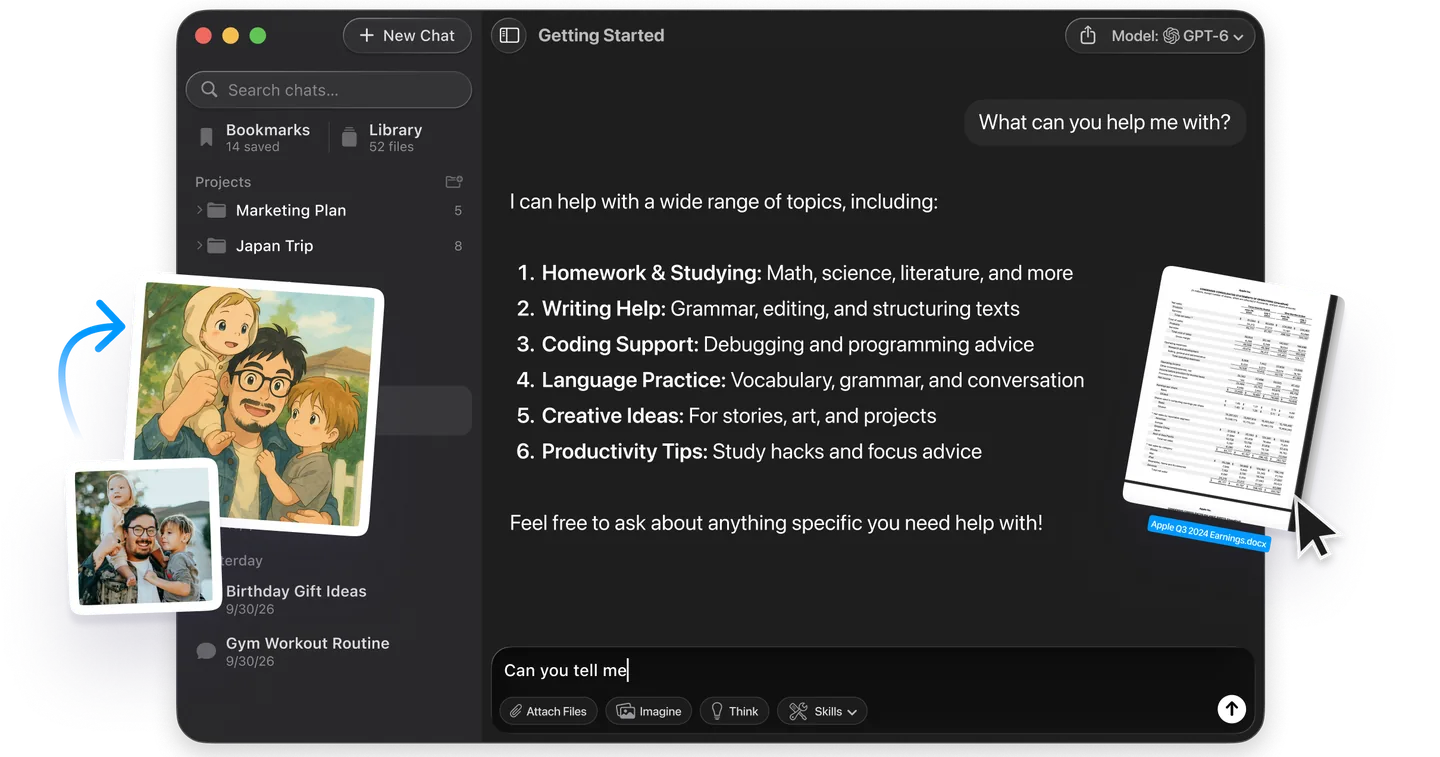
Image-to-video is where FLUX 3 Max ranks highest, and it needs a good opening still. If you do not have a photo for the shot, generate one. In Fello AI, you ask for the opening frame in the same chat where you drafted the prompt. The image comes back there, with no separate image tool to sign up for.
Fello AI generates images with GPT Image and puts GPT, Claude and Gemini side by side, so one model can write the motion prompt while another makes the still. It runs on Mac, iPhone and iPad, with a free tier.
Conclusion
FLUX 3 Max makes a top-tier video model fast enough to use like an image model. The “22x” headline survives scrutiny on fal’s own stopwatch. “#1” holds only as a statistical tie in image-to-video. The real argument is price and iteration: until 7 November, a 10-second clip costs about 43 cents and comes back in about 12 seconds. If you make short ads or product shots, run your next test batch on FLUX 3 Max before the discount ends. Use the base FLUX 3 when the shot needs extension, editing or 4K.
FAQ
What is the difference between FLUX 3 and FLUX 3 Max?
FLUX 3 is Black Forest Labs’ own video model, and FLUX 3 Max is fal’s post-trained version of it. fal times FLUX 3 Max at 12.45 seconds for a 10-second clip, against 126.44 seconds for FLUX 3. FLUX 3 keeps more modes, including clip extension, video editing, drafts and 4K.
Is FLUX 3 Video free?
Partly. fal offers five free FLUX 3 text-to-video draft generations a day, at 720p with sound, to signed-in users with a card on file. Full renders cost $0.17 per second at 720p, and FLUX 3 Max costs $0.0425 per second until 7 November 2026.
Is FLUX 3 open source or open weight?
No, not the video models. Black Forest Labs says an open FLUX 3 Dev backbone is coming soon, without a date. The only open FLUX 3 model today is FLUX 3 Image Klein, which makes still images.
How long can a FLUX 3 video be?
Up to 20 seconds in one generation, for both FLUX 3 and FLUX 3 Max. The minimum is 5 seconds. With the base FLUX 3, you can chain clips or extend an existing one for longer sequences.
Can I use FLUX 3 Max videos commercially?
Yes. fal says content generated through its API is usable in commercial projects, subject to fal’s terms of service. That covers the videos, not the model itself, which you cannot download.