Canva is a free, drag-and-drop online design platform that lets anyone create social media posts, presentations, posters, logos, videos, and documents without any design experience. Founded in Australia in 2013, it now has over 220 million members worldwide and was valued at roughly $42 billion in 2025, making it one of the most-used creative tools on the planet. For what the no-cost tier actually covers, see whether Canva is free.
If you have ever wondered what Canva is, why everyone from students to marketing teams swears by it, and whether you need to pay for it, this guide covers the essentials. You will learn what Canva does, what you can make with it, how the free and paid plans differ, where its built-in AI tools fit in, and how to start your first design in minutes.
The Key Takeaways
- Canva is a free, browser-based design app built on simple drag-and-drop editing, no Photoshop skills required.
- It is used by 220M+ people and was valued at about $42 billion in August 2025.
- You can make social posts, presentations, posters, logos, videos, resumes, and PDFs from thousands of templates.
- The free plan covers most everyday needs; Canva Pro and Canva Business add premium content, brand kits, and more AI credits.
- Magic Studio brings AI image, text, and video tools into the editor, and Canva Teams is now folded into Canva Business.
What Is Canva and How Does It Work?
Canva is an all-in-one design app that swaps the blank, intimidating canvas of traditional software for a huge library of ready-made templates. You start from a layout that already looks good, then make it yours by editing text, images, and colors. That single idea, design by editing instead of design from scratch, is what turned a niche Australian startup into a tool used by hundreds of millions of people. The sections below break down how the editor actually works and who is behind it.
How Canva Works
Canva is an online graphic design platform that runs in your browser or as an app on iPhone, Android, Mac, and Windows. Instead of starting with a blank, intimidating canvas, you pick a ready-made template, then swap text, photos, and colors with simple drag-and-drop edits. The whole point is to let people with zero design training produce clean, professional-looking visuals fast.
Under the hood, you get a template library, millions of stock photos and graphics, fonts, charts, and export options for everything from an Instagram story to a print-ready PDF. Every design starts as a sized canvas, so a “Presentation” template opens at 1920×1080 and an “Instagram Post” opens square, which means you never have to guess dimensions. You drag elements onto the page, snap them to alignment guides, and the editor keeps everything editable so you can tweak it later.
You can work solo or invite teammates to edit the same design in real time, leave comments, and share a single link instead of emailing files back and forth. That live collaboration, plus the fact that your work autosaves to the cloud, is why so many small businesses and classrooms adopted it. When a design is finished, you export it as a PNG, JPG, PDF, MP4, or GIF, or publish it straight to social media from inside Canva.
Who Built Canva
The company was founded in 2013 by Melanie Perkins, Cliff Obrecht, and Cameron Adams, with the goal of making design accessible to everyone. It works on a freemium model, so the core editor and a large library of templates are free, while premium content and advanced features sit behind paid plans. That mix is a big reason Canva grew to 220 million members and a $42 billion valuation in August 2025.
Canva has also grown by acquisition, buying the AI image startup Leonardo.AI and the professional design suite Affinity, then making Affinity free. That tells you the direction of travel: Canva wants to cover everything from a quick Instagram story to professional vector work, and to weave AI through all of it. For most people, though, the day-to-day experience is still the same simple editor it launched with.
What Is Canva Used For?
Because Canva is a general-purpose design tool, the list of things you can make with it is long, and most people only ever scratch the surface. You might open it for one task, a single Instagram post or a school slide deck, and slowly discover it handles dozens of other jobs just as well. Here is a look at the most common use cases and the kinds of people who rely on them.
The Most Common Design Jobs
The most common job is social media graphics for Instagram, TikTok, LinkedIn, and Facebook, where Canva’s preset template sizes match every platform exactly so nothing gets cropped awkwardly. Close behind are presentations and slide decks for school and work, plus print pieces like posters, flyers, and business cards for events and marketing. Each of these starts from a template, which is why a non-designer can finish one in minutes. If presentations are your main use, follow our step-by-step guide on how to make a presentation in Canva with AI.
Beyond that, people lean on Canva for logos and branding on new projects, videos and reels with simple edits and captions, and everyday documents, resumes, and PDFs that need a clean layout. It also handles printables and invitations such as planners, labels, and cards, plus infographics and charts that turn raw data into something readable. Canva even offers a print service, so you can order business cards or posters and have them shipped without leaving the app. On the AI front, Canva can now generate clips from a prompt; see how Canva’s AI video generator performs.
Who Uses Canva
Canva serves a wide audience. Students use it for assignments, posters, and club graphics; small business owners design their own marketing instead of hiring out; social media managers batch out a week of content in one sitting; and teachers build worksheets and classroom materials. Marketing teams use the brand kit features to keep fonts and colors consistent across everyone’s designs.
The common thread is that none of these people are trained designers, and they do not want to be. They want a finished, professional-looking result without learning Photoshop or InDesign. Because the same editor covers social posts, decks, documents, and print, you rarely need a second tool to get started, which is the core of Canva’s appeal. If you do design for a living and are weighing Canva against the rest of the AI tooling, we compare them in the best AI for designers.
Is Canva Free? Free vs Pro vs Business
Yes, Canva is genuinely free, and that free plan is the reason so many people start using it. Paid tiers exist for heavier users and teams, but a huge share of Canva’s members never pay a cent. If you still want to weigh it against the best Canva alternatives, one of them is now free outright. Here is how the free plan, Canva Pro, and Canva Business compare, and what happened to the old Teams plan.
What the Free Plan Includes
The free plan is more capable than most beginners expect. You get thousands of templates, millions of free photos and graphics, the full drag-and-drop editor, real-time collaboration, and 5GB of cloud storage, which is enough to run a small social account or build a school project. You also get a monthly allowance of AI credits to try the Magic Studio tools, so you can test the AI features before deciding whether you need more.
Here is a quick comparison of the three main plans. For exact prices and the full breakdown, see our complete guide to how much Canva costs.
| Plan | Best for | Key extras |
|---|---|---|
| Free | Beginners and casual users | Thousands of templates, stock photos, basic editing, 5GB storage |
| Canva Pro | Creators and freelancers | Premium content, brand kit, background remover, more AI credits, 1TB storage |
| Canva Business | Teams and companies | Everything in Pro, team brand controls, admin tools, the most AI credits |
What Pro and Business Add
Canva Pro is the upgrade most individuals consider. It unlocks the full premium template and photo library, the one-click Background Remover, brand kits to lock in your fonts and colors, the Magic Resize tool that reshapes a design for every platform at once, and a much larger pool of AI credits. Canva Business sits above it for teams, adding centralized brand controls, admin and billing management, and the highest AI allowance, so a whole marketing department stays on-brand.
What Happened to Canva Teams
One thing worth clearing up: Canva Teams is no longer a separate plan. Canva folded it into Canva Business, so if you are searching for “Canva Teams,” that functionality now lives inside the Business tier. The features did not disappear, they were just renamed and rolled into one team plan, which removes the old confusion about which option to pick.
Does Canva Have AI?
Yes, AI is now one of Canva’s biggest selling points, and it is bundled into the editor rather than sold as a separate app. The tools live under a banner called Magic Studio, and they reach into writing, images, video, and editing. Here is what that set actually includes and where the underlying models come from.
The Magic Studio Tools
Magic Studio covers Magic Write for drafting and rewriting copy, an AI image generator, Magic Edit and Magic Eraser for changing or removing parts of a photo, background removal, Magic Resize for reformatting a design, and AI video features that can turn a text prompt into a short clip, plus a built-in AI voice generator that reads text aloud as a voiceover. There is also a conversational assistant that can build a first draft of a design from a single description, so you can start a poster or deck just by typing what you want.
This article keeps things at a beginner level, so if you want the full picture of every tool and what it can do, read our deeper guide on what Canva AI can do. For image generation specifically, we break down the editor’s AI image generator separately, and for retouching photos you already have, see the Canva AI photo editor.
Where Canva’s AI Comes From
Canva did not build every model from scratch. It acquired Leonardo.AI in 2024, and Leonardo’s Phoenix model now powers the Dream Lab image generator inside Canva. Other features lean on a mix of partner models and Canva’s own technology. The practical takeaway for a beginner is that you do not need to know which model runs which tool; you just type a prompt or click a button, and the AI works inside the same editor you are already using.
How to Start Using Canva
Getting your first design out of Canva takes only a few minutes. The learning curve is gentle by design, and you do not need to install anything or enter a credit card to begin.
- Create a free account at canva.com or in the mobile app using an email or Google login.
- Search for a design type such as “Instagram post,” “presentation,” or “poster.”
- Pick a template that is close to what you want, then make it yours.
- Drag and drop to swap text, photos, colors, and fonts until it looks right.
- Download or share your design as a PNG, PDF, MP4, or a public link.
Templates are the fastest way to learn. Open a few, see how the elements are arranged, and you will quickly understand how spacing, fonts, and color work together. Once you are comfortable, try one of the Magic Studio tools on a real design, since the easiest way to learn the AI features is to use them on something you actually care about.
What Canva Is Not Great At
Canva is brilliant at fast, template-based design, but it is not the right tool for everything. Knowing where it runs out of road saves you frustration and points you to the right tool for the job. There are two situations in particular where you should reach for something else.
Where Canva Hits Its Limits
Professional illustrators and print designers still reach for tools like Affinity, which Canva now owns, or Adobe for complex vector and photo work. Canva can feel limiting once you need precise control over layers, advanced typography, color profiles, or large print files. It is built for speed and approachability, not for the pixel-level control a studio professional sometimes needs, so the more specialized your output, the sooner you will hit a wall.
When to Start in Fello AI Instead
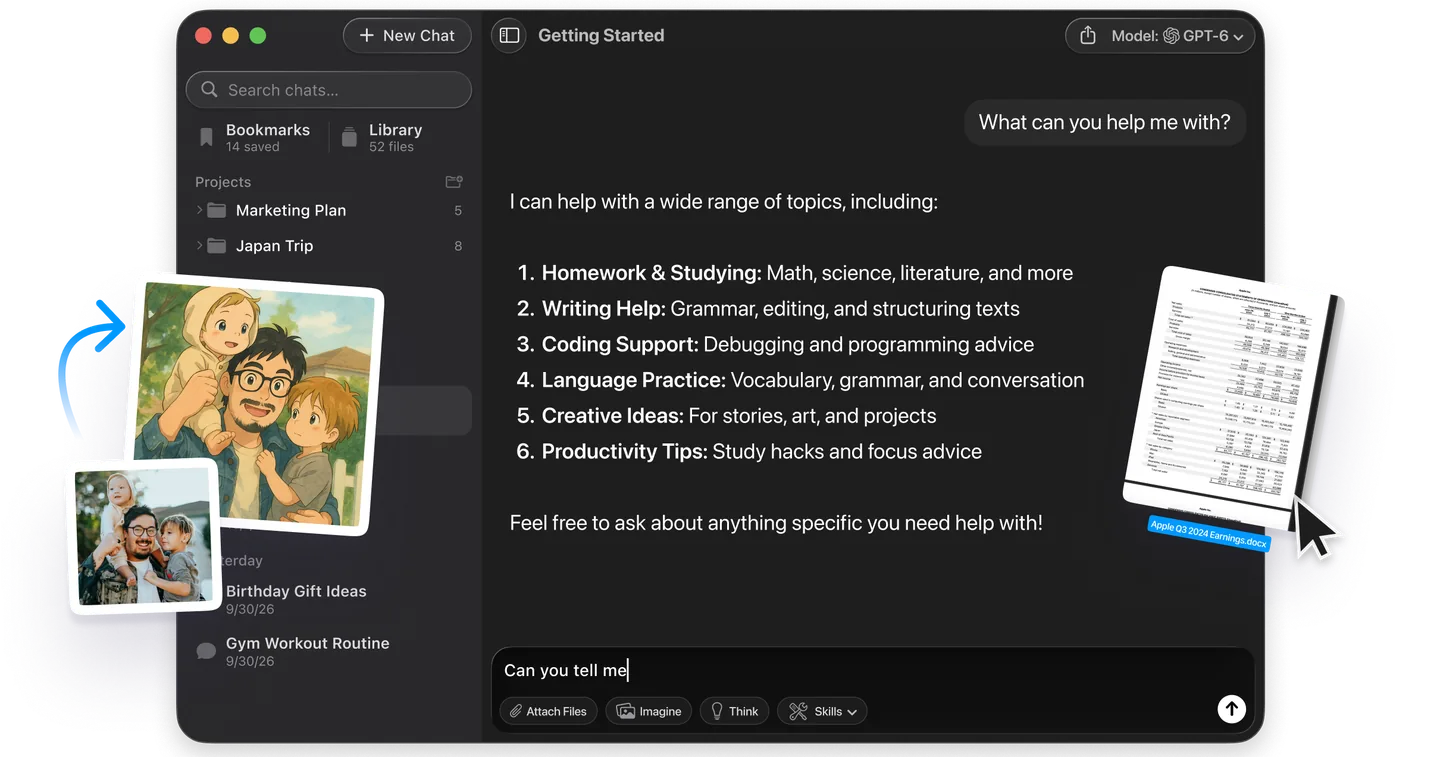
Canva is also design-first, not research-first. If your task starts with thinking, writing, and gathering information before you ever lay out a page, a different kind of tool fits better. Fello AI is a multi-model AI workspace that researches a topic, drafts the copy, and can generate images, presentations, documents, PDFs, and spreadsheets in one chat, all powered by a choice of models like GPT, Claude, and Gemini. A common workflow is to do the thinking and first drafts in Fello AI, then bring the result into Canva for layout and polish. If you want to try that approach, here is how to get started with Fello AI.
Conclusion
Canva is the easiest way to start designing if you have no background in it, and the free plan alone covers most everyday needs. Open it, pick a template, and you can have a finished graphic in minutes. When you are ready to go further, explore the paid plans or the AI tools inside Magic Studio to speed things up even more, and lean on a research-first workspace like Fello AI for the thinking and writing that comes before the design.
FAQ
What is the Canva app used for?
The Canva app is used to design graphics, presentations, videos, and documents from your phone or computer. It mirrors the web editor, so you can start a design on your laptop and finish it on your phone, which is handy for social media posts on the go.
Is Canva hard to learn?
No, Canva is designed for complete beginners. Because you start from a template and edit by dragging and dropping, most people make a usable design within their first session, with no prior design experience needed.
What is a Canva template?
A Canva template is a pre-made, editable design you can customize instead of starting from scratch. Templates cover everything from Instagram posts to resumes, and you simply replace the text and images with your own while keeping the professional layout.
What is the danger zone in Canva?
The danger zone refers to the area near the edges of a print design that may get cut off during trimming. Canva shows print margins and bleed guides so you keep important text and logos away from that zone, which prevents parts of your design from being chopped off.
Is Canva free to use?
Yes, Canva has a free forever plan with thousands of templates, stock photos, and editing tools. Paid plans, Canva Pro and Canva Business, add premium content, brand kits, and more AI credits, but many users never need to upgrade.
Who owns Canva?
Canva is a private Australian company founded in 2013 by Melanie Perkins, Cliff Obrecht, and Cameron Adams. It remains independent and was valued at around $42 billion in a 2025 employee share sale.