You can make a full presentation in Canva with AI in under a minute, and the first draft arrives already designed. Type a short prompt describing your topic, audience, and slide count, and Canva’s Magic Design builds a complete deck with a title slide, an outline, written content, and matching visuals. The catch is that the first draft is a starting point, not a finished deck, so the real skill is knowing how to prompt well and edit fast.
This guide walks through how to make a Canva presentation with AI step by step, using both the classic Magic Design flow and the new Canva AI 2.0 conversational assistant that launched in April 2026. You will get a reusable prompt formula, the exact button path, what it costs in AI credits, how to fix slides that come out generic, and where a multi-model tool like Fello AI fits if you want the research and writing done before you ever open the design canvas. And if you want moving slides, Canva can generate video too; here is how Canva’s AI video generator works.
The Key Takeaways
- Canva builds a first-draft deck in seconds from a single text prompt using Magic Design.
- Two AI paths exist in 2026: Magic Design (template-based) and the conversational Canva AI 2.0 assistant, in research preview since April 16, 2026.
- AI generation runs on a monthly credit pool: Canva Free gets 20 Premium AI uses, Pro gets 200, Business gets 400.
- Prompt quality decides everything, front-load topic, audience, slide count, and tone or you get generic filler.
- You still edit afterward, swapping copy, visuals, and applying a brand kit before you present or export to PowerPoint.
How to Make a Presentation in Canva With AI (Step by Step)
The fastest route is Magic Design, Canva’s template-based AI generator. It lives inside the presentation editor and turns one prompt into a fully laid-out deck you can refine. The whole flow takes a few minutes for a 10-slide deck, most of which is editing rather than generating.
Here is the exact path from a blank screen to a finished presentation.
- Open Canva and sign in, then click Create a design from the homepage and search for Presentation. Pick the standard Presentation (16:9) widescreen size used for most slide decks.
- Open the Design tab in the left sidebar of the editor, where the Magic Design prompt field sits at the top.
- Write a detailed prompt describing your topic, audience, slide count, and tone. You can type it or use the voice-prompt option to dictate the brief.
- Press Enter to generate template options, each one a full deck built around your prompt with content already written into the slides.
- Preview and pick a template, then click Apply all pages to drop the whole generated deck into your design.
- Edit the copy slide by slide, using Magic Write to rewrite or shorten any text block that reads as filler.
- Swap visuals and apply your brand kit, replacing stock images, adjusting colors, and adding your logo so the deck stops looking like a template.
- Present or export, either presenting directly from Canva or downloading to PDF or PowerPoint (PPTX export needs a paid plan).
That eight-step loop is the core skill. Generation is instant; the value you add is in steps six and seven, where a generic AI deck becomes something that looks like you made it on purpose. If you plan to record or share the deck as a video, you can also add an AI voiceover to each slide before you export.
Using Canva AI 2.0 to Build a Deck by Conversation
Canva AI 2.0 is the bigger shift. Announced at Canva Create on April 15, 2026 and rolling out as a research preview from April 16, it turns deck-building into a conversation instead of a one-shot prompt. Rather than generating once and editing manually, you talk to the assistant and keep refining the same deck step by step.
You start with an idea, a goal, a rough brief, or even an unfinished thought, and Canva AI works through it with you. Ask it to build a client presentation, then follow up with “make slide three punchier” or “add a pricing slide,” and it keeps context as the deck evolves. That memory across turns is the headline feature, and it makes iteration far faster than the old generate-then-edit grind.
Magic Design vs Canva AI 2.0: Which to Use
Both flows reach a finished deck, but they suit different moments. Magic Design is the reliable workhorse when you know roughly what you want and need a fast first draft. Canva AI 2.0 shines when you are still figuring out the structure and want to think out loud while the deck takes shape.
Because Canva AI 2.0 is still a research preview, not every account has the full conversational experience yet. If you do not see it, Magic Design covers the same job and is available to everyone.
Write a Better Prompt (the Part That Decides Quality)
The single biggest reason AI decks look generic is a lazy prompt. “Make a marketing presentation” gives the AI nothing to work with, so it defaults to filler. The fix is to front-load context, the more specific you are, the less room the tool has to guess.
Use this fill-in-the-blank formula as a starting point.
Create a [number]-slide presentation about [topic] for [audience]. Tone: [professional / playful / data-driven]. Cover: [point 1, point 2, point 3]. Include a title slide, an agenda, and a closing call to action.
A weak prompt is “a deck about our app.” A strong one is “Create a 12-slide investor pitch for a budgeting app aimed at Gen Z, confident and data-driven in tone, covering the problem, our solution, the market size, traction, and the funding ask, with a title slide and a closing call to action.” The second version gives Canva an outline to follow, so the draft comes back closer to usable.
What It Costs: AI Credits Explained
Canva’s AI tools share a monthly pool of Premium AI credits, and generating a presentation draws from that same pool as every other Magic Studio tool. The free plan is enough to test the feature, but heavy users hit the ceiling fast. What the free plan actually includes covers where that ceiling sits.
| Plan | Premium AI credits / month | Price | Best for |
|---|---|---|---|
| Free | 20 | $0 | Trying it out, the occasional deck |
| Pro | 200 | $18/mo or $144/yr | Regular creators and solo marketers |
| Business | 400 | $25/user/mo or $250/user/yr | Teams generating decks often |
One full deck generation can use several credits, so 20 on the free plan goes quickly if you regenerate a few times. For the full breakdown of plans, storage, and what each tier includes, see our guide to Canva pricing and AI credits. If you want to understand the whole AI toolset behind these credits, our explainer on what Canva AI can do covers Magic Studio end to end.
Why Your AI Presentation Looks Generic (and How to Fix It)
AI decks have a recognizable look, stock photos, safe layouts, and copy that says a lot without saying anything. Reviewers consistently flag that Canva’s output needs editing before it is presentation-ready. The good news is that three quick fixes cover most of the gap.
Replace the Stock Visuals
The default images are the fastest tell that a deck is AI-made. Swap them for your own photos, brand graphics, or AI-generated visuals built for your specific slides. Our guide to the Canva AI image generator walks through using Dream Lab to create images that actually match your topic instead of generic stock.
Tighten the Copy
Magic Design over-writes by default, filling slides with full sentences where a phrase would land harder. Cut each bullet to its core idea, and use Magic Write to shorten anything that rambles. Slides are signposts, not documents.
Apply Your Brand Kit
Nothing de-generics a deck faster than your own colors, fonts, and logo. Apply a brand kit so every slide pulls from a consistent palette, which instantly lifts the deck from “template” to “ours.”
Canva AI vs Fello AI for Presentations
Canva is a design-first tool, so its AI starts from the layout and pours content in. The weak point is the thinking, the research, the argument, and the narrative that make a deck persuasive. That is where a multi-model assistant like Fello AI takes a different angle, researching and drafting the substance before any slide exists.
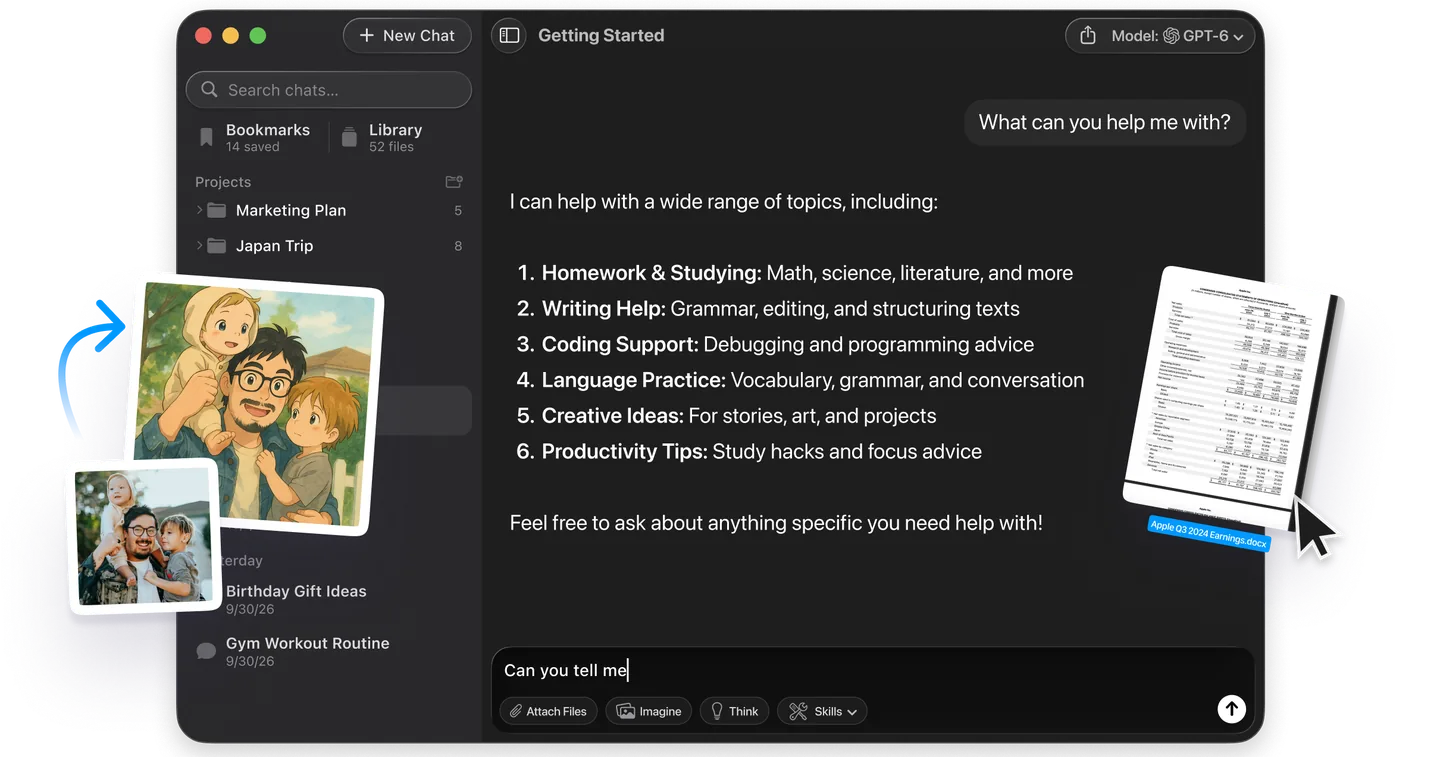
The split is simple. Use Fello AI to research the topic, build the outline, and write tight slide copy across multiple models (GPT-5.4, Claude, Gemini, Nano Banana and more for $9.99/month) Fello AI can also generate full presentations directly, so you can create your presentation from idea to ready made in one place.
| Tool | Best for | How you interact | Price |
|---|---|---|---|
| Magic Design | Fast template-based first draft | One prompt, then edit | Canva plan credits |
| Canva AI 2.0 | Iterating on structure by conversation | Back-and-forth chat | Canva plan credits |
| Fello AI | Research, outline, and writing the substance | Multi-model chat | $9.99/mo |
Most people get the best result by combining them, thinking and writing in Fello AI, then finishing the design in Canva.
Conclusion
Making a presentation in Canva with AI comes down to three moves, prompt well, generate with Magic Design or Canva AI 2.0, then edit the copy and visuals so the deck looks intentional. The AI handles the heavy lifting of layout and a first draft, but the polish is still yours. If your real bottleneck is the research and writing rather than the design, draft the substance in Fello AI first, then bring it into Canva for the final look.
FAQ
How do I make a presentation in Canva with AI?
Open Canva, click Create a design, and pick Presentation. Open the Design tab, type a detailed prompt describing your topic, audience, and slide count, then press Enter. Preview the AI-generated templates, click Apply all pages, edit the copy, swap visuals, and apply your brand kit before presenting or exporting.
Is the Canva AI presentation maker free?
Yes, Canva Free can generate AI presentations, but you share a monthly pool of 20 Premium AI credits across all Magic Studio tools. Canva Pro raises that to 200 credits for $18/month, and Business to 400 for $25 per user. See our Canva pricing guide for the full breakdown.
What is the best prompt for a Canva AI presentation?
Front-load the details: number of slides, topic, audience, tone, and the specific points to cover. A strong prompt looks like “Create a 12-slide investor pitch for a budgeting app aimed at Gen Z, data-driven in tone, covering the problem, solution, market, traction, and funding ask.” Specificity beats brevity every time.
Can I export a Canva AI presentation to PowerPoint?
Yes. Canva can download your deck as a PPTX file or PDF, or you can present directly from Canva. Note that PowerPoint export is a paid-plan feature, and animations or transitions often get stripped when you export to PPTX.
Is Canva AI better than other AI presentation tools?
Canva wins on design, templates, and a fast first draft, but its AI is weaker on research and narrative. A multi-model tool like Fello AI handles the research, outline, and writing, then you finish the visual design in Canva. Many creators use both rather than choosing one.