Update — August 10, 2026: Less than a year after this launch, OpenAI shut Atlas down on August 9, 2026. This page stands as the launch-day record. For the full story see what happened to ChatGPT Atlas, and for where to go instead, the best ChatGPT Atlas alternatives for Mac.
On October 21 2025, OpenAI formally announced ChatGPT Atlas: a web browser built from the ground up with its chatbot, ChatGPT, integrated into the core experience. The AI-native browser was pitched as a rethink of how people interact with the internet, combining traditional browsing with generative AI and promising a seamless experience that went beyond search into automation, memory, and intelligent task execution. What follows is how OpenAI presented Atlas on launch day.
The launch was OpenAI’s most direct challenge yet to Google Chrome and to other AI-enhanced browsers like Microsoft Edge, Dia/Arc, Perplexity’s Comet, and Brave.
A Browser Built Around AI
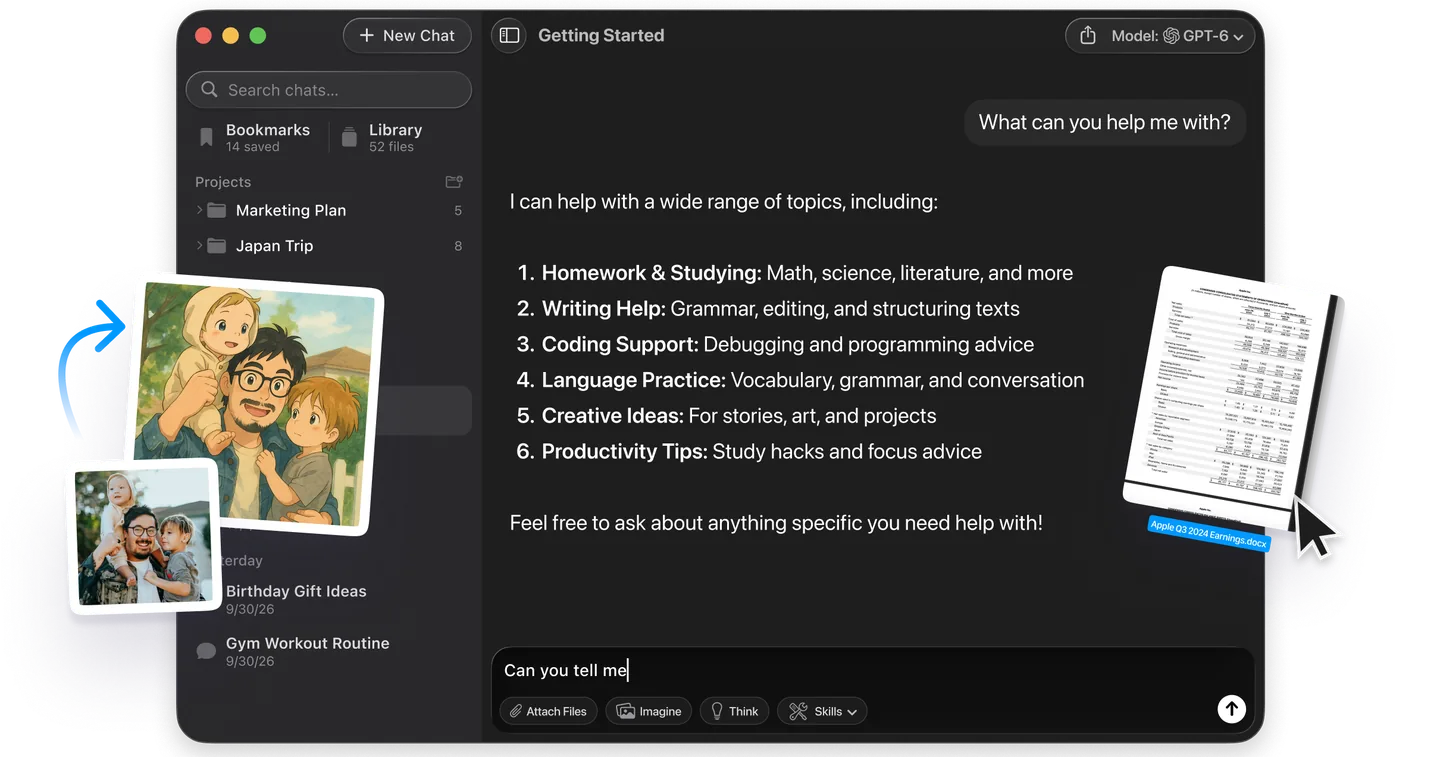
Atlas introduced a different approach to web browsing, built around AI as the default interface rather than a secondary tool. ChatGPT sat directly inside the browser window, where it could read the content you were viewing, assist with tasks in real time, and automate multi-step workflows like research, shopping, or summarization.
Instead of jumping between tabs and apps, users could ask questions, get contextual answers, or delegate tasks inside the same interface. Optional browser memory let ChatGPT recall relevant information from past sessions, while agent mode went further and interacted with websites on your behalf.
These were the major innovations and functional highlights that defined Atlas at launch.
Sidebar Chat & Smart Context
- Users could open a ChatGPT sidebar or panel while browsing and ask the chatbot questions about the page they were on, requesting summaries, comparisons or insights without copying and pasting content into a separate chat.
- The new tab page doubled as a ChatGPT entry point, so you could type a URL, ask a question, or jump into a conversation, blurring the lines between browsing and chatting.
Browser Memories
- Atlas could optionally record “browser memories”, meaning contextual data about the websites you had visited, searches you had run, or patterns of usage. It then used that information to give more tailored responses or suggestions.
- Control was emphasised. Users could toggle which sites ChatGPT saw, archive or delete memories, clear browser history (which deleted the associated memories), and disable memories entirely.
Agent Mode (Task Automation)
- For paid users (Plus, Pro, Business), Atlas supported an “agent mode” that let ChatGPT perform multi-step tasks on the user’s behalf, such as “Find a recipe, add ingredients to cart, order them”, all within the browser.
- OpenAI emphasised the limits. The agent could not install extensions, access other apps or your file system, or run arbitrary code in your browser, and it paused on sensitive sites such as banking.
Search Plus Link/Media Tabs
- The search experience in Atlas was reversed compared to typical browsers. When you searched, the chatbot answer appeared first, and links, images, videos and news sat behind tabs.
- That put AI-driven summarization front and centre, with traditional web link results secondary.
Privacy & Data Use
- By default, OpenAI said it did not use the content you browsed in Atlas to train its models. Opting in was required to allow model training from your browsing content.
- Standard browser functionality like incognito mode was supported, and ChatGPT’s visibility of page content could be toggled per site.

Market Context
OpenAI’s ChatGPT Atlas was pitched as more than a new browser; it was a direct challenge to Google Chrome’s roughly 70% market share. By centering browsing around chat and automation instead of search links, Atlas was meant to threaten the ad-driven model that funds Google’s profits, and competing AI browsers like Perplexity’s Comet and Brave’s AI modes suddenly faced a rival backed by ChatGPT’s user base. It did not play out that way. Atlas is the product that closed.
For users, Atlas signalled a shift toward agentic browsing, where the browser helps complete tasks rather than just display pages. That shift outlived the product. It moved into the ChatGPT desktop app and a Chrome extension instead of a standalone browser.
For OpenAI, Atlas was meant to deepen engagement across the 800 million weekly active ChatGPT users the company reported at the time, giving it richer data and new monetization routes beyond subscriptions. The risks were real too, because agent mode could make errors and browser memories raised privacy concerns despite OpenAI’s opt-in safeguards.
| Browser | Core AI model(s) | Agent-style actions | Privacy stance (as reported) | Platforms at launch |
|---|---|---|---|---|
| Atlas | ChatGPT (GPT-5 at the time) | Yes, built-in, preview | Memories opt-in; training off by default | macOS only. Windows, iOS and Android were announced on day one and never shipped |
| Chrome + Gemini | Gemini | Limited (side panel) | Google account data, sync opt-outs | Windows, macOS, Linux, mobile |
| Edge + Copilot | OpenAI models via Microsoft | Side panel; no full agent | Uses Microsoft account data | Windows, macOS, mobile |
| Perplexity Comet | Perplexity LLM stack | Yes | Local-only storage | Windows and macOS, free since early October 2025 |
The table above is the picture as we reported it on October 21, 2025, not today. Chrome’s dominance gave Google valuable ad-targeting data, while Atlas and Comet both aimed to keep users inside AI chats and divert search queries and ad dollars. Microsoft said it would evolve Edge “into a true agentic browser” rather than launch a separate product, signalling that agent features, not tabs, were the competitive frontier.
What Came Next for ChatGPT Atlas
At launch, OpenAI’s release notes promised multi-profile support, deeper dev tools, and ways for Apps SDK partners to surface inside Atlas. The open question was whether users would trade Chrome’s familiarity for an AI-first workflow. They did not. Atlas never left macOS, the Windows, iOS and Android builds announced on day one never shipped, and on July 9, 2026 OpenAI announced it was retiring the browser.
Atlas shut down on August 9, 2026. OpenAI folded the agentic browsing work into the ChatGPT desktop app, which carries its own built-in browser with tabs, downloads, logins and extensions, and into a ChatGPT Chrome extension for tasks that need an existing Chrome profile or signed-in session, as 9to5Mac reported ahead of the deadline. Bookmarks did not transfer automatically, and cookies and active sessions could not be imported at all. Our Atlas vs Perplexity Comet comparison covers what replaced it.
Closing Thoughts
Atlas tried to shift the browser from a static viewer to an active partner, with ChatGPT beside every page, ready to parse, explain, or act. Tabs became conversations; clicks became commands.
That trimmed real friction. Need a source, comparison, or booking? You typed the ask once and let the agent fetch, filter, and fill forms, so routine web chores collapsed into single prompts.
The power came with trade-offs. An always-watching assistant can misread intent, expose private data, or steer choices through unseen biases. Opt-in memories and per-site visibility toggles were good starts, and none of those questions went away when the browser did.
The competition kept accelerating. Google baked Gemini deeper into Chrome, Microsoft pushed Copilot further into Edge, and Perplexity shipped Comet across Windows, macOS, Android and iOS while Atlas stayed on the Mac. Reach, not features, is what settled it.
The idea outlived the app. Agentic browsing moved into the ChatGPT desktop app and a Chrome extension, which is the same bet without asking anyone to change browsers. If you are still running Atlas on your Mac, treat it as unsupported and unpatched rather than fine, and move your work somewhere current.