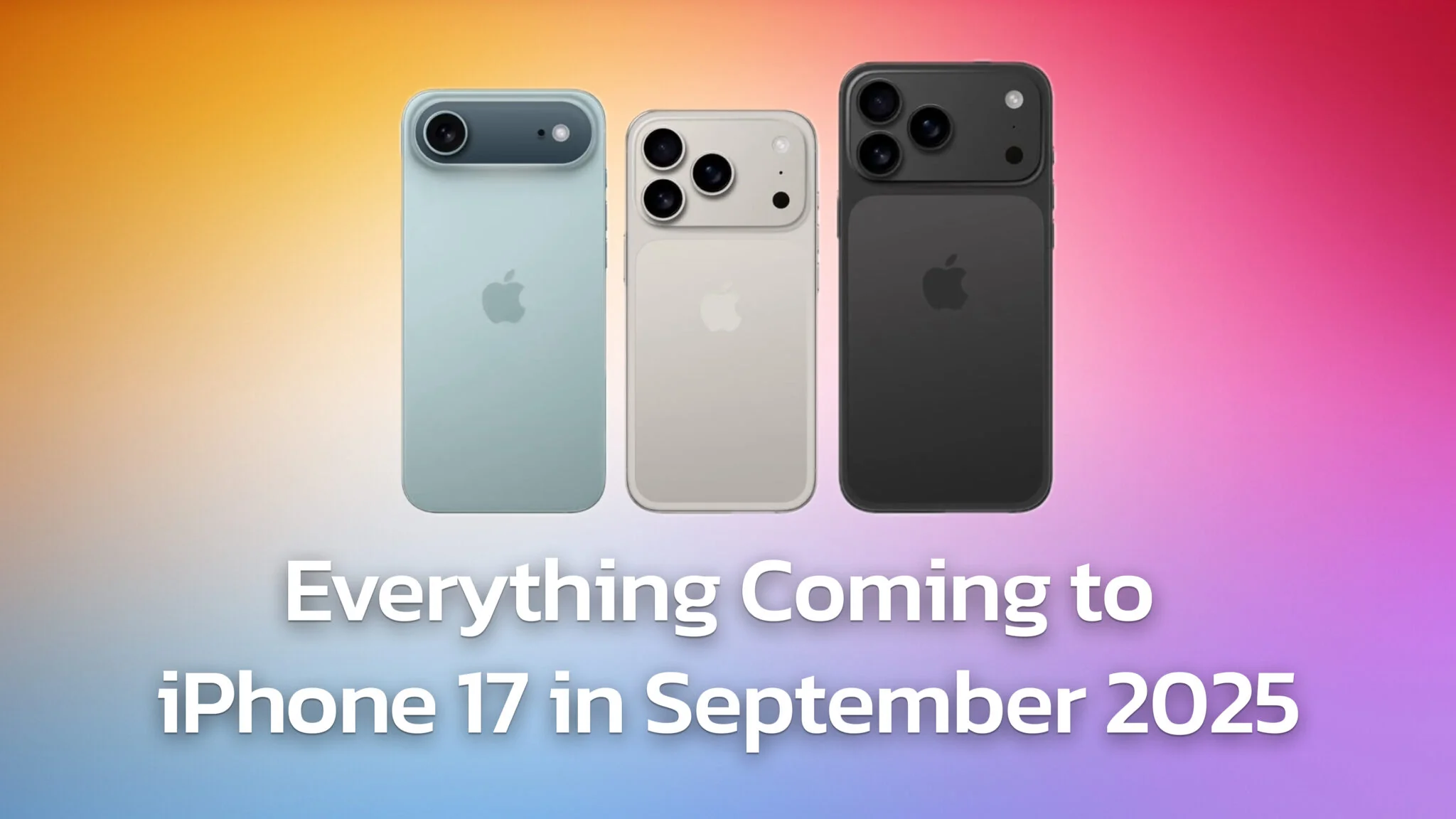
Apple is set to unveil its next-generation iPhone lineup in less than a week at the “Awe Dropping” event on September 9th, 2025, streaming live from Apple Park. This year’s keynote is expected to be all about AI—specifically, how Apple Intelligencefinally makes Siri useful, brings smarter camera features, and turns the iPhone into something that feels more like a personal assistant than ever before.
Here’s a breakdown of what we know, what’s likely, and what could change the way you use your iPhone—all based on leaks, expert analysis, and hands-on rumors. For the 2026 cycle, our iPhone buying guide covers what Apple launches this September and whether it is worth waiting.
When and Where to Watch
Apple has officially confirmed the date for its fall keynote: September 9, 2025, at 10 a.m. PT. As usual, the event will be streamed on Apple’s website, the Apple TV app, and their YouTube channel.
We’re expecting to see the full iPhone 17 lineup, new Apple Watch models, updates to AirPods, and most importantly, the official debut of Apple Intelligence—Apple’s take on on-device, privacy-first AI.

iPhone 17 Air
The biggest shakeup in this year’s iPhone lineup is the all-new iPhone 17 Air—set to replace the discontinued Plus model. It’s expected to be Apple’s thinnest and lightest iPhone ever, measuring just 5.5 to 6 mm thick and weighing around 145 grams, according to dummy leaks.
Despite its slim profile, the Air will feature a large 6.6-inch OLED display, the latest A19 chip, and 12GB of RAM, making it fully capable of running Apple Intelligence and other AI features. It will also get a redesigned horizontal camera bar, and possibly a single 48MP rear lens, aimed at simplifying the form while keeping strong photo quality.
However, the thinner body means a smaller 2800 mAh battery, which could limit battery life compared to other models. Still, for users wanting a powerful iPhone that’s light, sleek, and stylish, the Air may become the go-to choice—especially if the rumored $899 price holds.
Simply put, the iPhone 17 Air is Apple’s boldest design move in years—and easily the most anticipated model of the lineup.
Will Apple Intelligence Come to Life?
At WWDC 2025, Apple introduced Apple Intelligence, its long-anticipated AI layer designed to run mostly on-device for privacy reasons. But much of it was only demoed, not delivered. That’s about to change with the iPhone 17.
The goal is to make Siri feel more like ChatGPT’s Voice Mode—you speak naturally, it understands context, and can take real action inside apps, settings, or files. Think scheduling meetings, finding photos, or replying to texts without needing third-party tools. Whether Apple ships this in full or not, that’s the bar they’re being held to.
In fact, many in the tech community are already comparing the new iPhone’s AI features to Pixel 10’s Magic Cue, which automatically surfaces relevant data (like restaurant times from emails) while you’re replying to a message—no app-switching needed.
Apple has privacy on its side. The question is whether Apple Intelligence, which the company previewed in June, can match the speed, usefulness, and depth of what rivals like Google, Microsoft, and OpenAI are already delivering.
Hardware Built for AI
For Apple Intelligence to truly shine, it needs a solid foundation—and that’s exactly what Apple is building into the iPhone 17 lineup. Across the board, Apple is upgrading display technology, thermal systems, and internal memory to support more advanced on-device processing and smoother user experiences.
First, every iPhone 17 model is expected to feature ProMotion displays with adaptive refresh rates up to 120Hz. This will be the first time Apple brings high refresh rates to its entire iPhone lineup—not just the Pro models. It’s not just about scroll smoothness either. These displays also support Always-On Display, allowing useful AI-driven widgets like calendar previews, live translation, and weather updates to stay visible at a glance, without waking the phone. That alone makes the iPhone feel more intelligent and more proactive in day-to-day use.
Next, to handle real-time AI tasks without slowing down or overheating, Apple is introducing a new vapor chamber cooling system in both the Pro and Air models. This thermal upgrade is a big deal for power users who rely on live transcription, real-time translation, or heavy photo/video editing, especially since these processes now often run on-device rather than in the cloud.
Complementing the thermal system is a long-awaited memory boost: 12GB of RAM is rumored for the iPhone 17 Pro, Pro Max, and the new iPhone 17 Air. This opens the door for larger context windows, multi-app AI workflows, and faster switching between tasks that rely on Apple Intelligence. The base model will likely stay at 8GB, but should still benefit from system-wide optimizations.
Another major update is coming to wireless connectivity. The Pro models are expected to retain Qualcomm chips, but the Air model is rumored to ship with a custom Apple-designed 5G modem—their first step in replacing Qualcomm’s modems entirely. While it may not support ultra-fast mmWave, it will reportedly offer strong sub-6GHz performancewith better power efficiency—a crucial tradeoff for a thinner, lighter device. Combine that with system-wide support for Wi-Fi 7, and the iPhone 17 will be better equipped to handle cloud-assisted AI features with lower latency and more stable throughput.
Cameras Get Smarter
The iPhone has always been a camera-first device, but in 2025, cameras are also becoming AI playgrounds.
This year, Apple is expected to upgrade the front-facing camera to 24MP on all models. The Pro Max may include a 48MP periscope telephoto, and the Pro models might even support dual video recording and adjustable apertures—ideal for creators and pros.
Still, not everyone is thrilled about AI creeping too far into photography. As CNET’s Andrew Lanxon points out, some phones are replacing real optical improvements with AI tricks. Apple, he argues, has historically prioritized authenticity over generative gimmicks, and many professionals hope it stays that way.
So far, that seems likely. Expect AI to enhance real photos—with smarter exposure, scene understanding, and better zoom—not replace them with AI-generated landscapes.
Charging, Reverse Charging, and Battery Life
According to rumors, all iPhone 17 models will support Qi 2.2 wireless charging, bumping speeds from 15W to 25W with third-party accessories. And for the first time, the Pro models may offer reverse wireless charging, letting you juice up your AirPods or Apple Watch directly from your phone.
Battery sizes will vary. The super-thin Air model is expected to have a smaller battery (around 2800 mAh), which could impact runtime. But the Pro Max might ship with the largest battery Apple has ever made—promising multi-day performance if paired with efficient AI processes.
Another small but important change? The use of easier-to-remove adhesive across the iPhone 17 line. That means battery replacements could get cheaper and faster, especially outside of the U.S.
Final Take
With Apple Intelligence integrated across the system, Siri could finally move beyond being a reactive voice command tool and become something more useful—learning your habits, remembering past interactions, and acting before you ask. Whether it’s pulling up a file you need, replying to a message with relevant info, or translating in real time, these experiences would shift how we interact with the iPhone day-to-day.
Photography is also getting a major upgrade—but staying true to Apple’s philosophy. Rather than using generative AI to fabricate images, Apple seems focused on enhancing real photos—cleaner zoom, smarter exposure, better portraits, all without sacrificing authenticity. For most users, that’s exactly the kind of AI they want.
And all of this is backed by meaningful hardware improvements: ProMotion displays across the lineup, cooler thermals, faster chips, bigger batteries, and a bold new option in the form of the ultra-thin iPhone 17 Air.