Updated October 1, 2026: Google announced the first Gemini 4 model on September 30, and every section below now reflects it. Our Gemini 4 Argon guide covers its benchmarks, price and rollout in full.
Gemini 4 is here, but you probably cannot use it yet. On September 30, 2026, Google announced Gemini 4 Argon, the first Gemini 4 model, and gave it only to vetted cyber defenders in its Fairwind Program. The road there began on July 21, 2026, when Google wrote, in the announcement of a much smaller model, that “we have started our most ambitious pre-training run yet, for Gemini 4, and are excited by the progress”. That was the first time Google confirmed the name in its own words.
An announcement is not a public release, though, and the gap between the two is where most of the confusion now lives. Google says paid API customers and Google AI Ultra subscribers are next, without a date, and nothing it has published mentions the free Gemini app or Google AI Pro. This guide separates what Google has actually said from what the internet invented along the way. In it we answer whether Google Gemini 4 is released yet, what it can do, how the rumors turned out, and which AI models you should use until it reaches you.
The Key Takeaways
- Announced, Not Open: Google announced Gemini 4 Argon on September 30, 2026, but as of October 1, 2026 only cyber defenders in its Fairwind Program can use it. Paid API customers and Google AI Ultra subscribers come next, with no date.
- Price and Scores: Argon launches at an introductory $2 in / $10 out per million tokens, rising to $4 / $20 afterwards. Artificial Analysis scores it 53 on its Intelligence Index v4.3.2, against 41 for Gemini 3.8 Flash, still the newest Flash. Gemini 3.5 Pro, promised for June, is still unreleased.
- Bigger, Not Just Faster: On the July 22, 2026 earnings call, Sundar Pichai said the next leap needs “much larger base models” and named coding and agentic coding as the gap Google has to close.
- Use What Works: Until Argon reaches you, you can cover most of its workflows with Gemini 3.8 Flash on the API, or Gemini 3.1 Pro and Gemini Omni Flash in Fello AI.
Current status of Google Gemini 4
Gemini 4 has been announced, but it is not yet a public model. Google announced Gemini 4 Argon on September 30, 2026 and is rolling it out to “a set of trusted cyber defenders” through its Fairwind Program, starting wider access with “paid API customers and Google AI Ultra subscribers”. An announcement and a public release are two different things, and most of the confusion online comes from collapsing them. The fastest way to check whether Argon has reached you is the official documentation and the dated entries in the official release notes.
As of October 1, 2026, Google has not published an API model ID, a model card or a knowledge cutoff for Argon, and says it will make it available “to developers, enterprises, and consumers as soon as possible”. Google DeepMind’s Koray Kavukcuoglu told The Information on September 24 that Gemini 4 had entered post-training and that he hoped to release it “much earlier” than the end of 2026, 9to5Google reported. Until Argon opens up, the Gemini 3.8 generation is the newest you can call: gemini-3.8-live and gemini-3.8-live-extended-thinking, added on September 15, with Gemini 3.8 Flash as the newest Flash, Gemini 3.7 Flash and Gemini 3.6 Flash and Gemini 3.5 Flash and Gemini 3.5 Flash-Lite alongside it, the Gemini Omni series, Gemini 3.1 Pro still carrying its -preview suffix, and the Gemini 2.5 stable versions.
What changed recently (Official Timeline)
To understand where we are, look at the recent official release cadence from Google.
| Date | Release | What it added | Status |
|---|---|---|---|
| Sep 30, 2026 | Gemini 4 Argon | First Gemini 4 model: a reasoning model for long coding, knowledge-work and cyber-defense tasks, with output raised to 1M tokens and an introductory $2 / $10 price | Newest, Fairwind partners only |
| Sep 15, 2026 | Gemini 3.8 Live + 3.8 Live Extended Thinking | Live dialogue models: near real-time visual context, automatic switching across 97 languages, and tool calls that run in the background while the conversation continues | Live |
| Sep 10, 2026 | Gemini app for Windows | Native Windows app with an Alt + Space hotkey, five months after the Mac app | Live |
| Sep 2, 2026 | Gemini 3.8 Flash | Same specifications and the same $0.75 / $3.75 rate as 3.7 Flash, with higher scores on every published benchmark row; app access reported so far on AI Pro and Ultra | Newest Flash |
| Sep 1, 2026 | Agentic video understanding | Gemini 3.7 Flash, 3.6 Flash and 3.5 Flash-Lite search and inspect video segments instead of ingesting at a fixed frame rate, cutting tokens by up to 88% | Live |
| Aug 13, 2026 | Gemini 3.7 Flash | Coding scores up sharply on a 23-day cycle; introductory $0.75 input / $3.75 output. In the Gemini app it runs inside Spark only | Superseded by 3.8 Flash |
| Jul 21, 2026 | Gemini 3.6 Flash | Same $1.50 input, output cut to $7.50; about 17% fewer output tokens. Shipped alongside 3.5 Flash-Lite and 3.5 Flash Cyber. Later cut to $0.75 / $3.75 to match 3.7 and 3.8 Flash | Superseded on the API, still the free-app default |
| May 19, 2026 | Gemini 3.5 Flash + Gemini Omni | Frontier intelligence at Flash speed; new video creation series | Superseded by 3.6 Flash |
| Apr 15, 2026 | Gemini for macOS | Native desktop app | Live |
| Feb 19, 2026 | Gemini 3.1 Pro | Advanced reasoning for complex tasks | Newest Pro, still preview |
| Jan 29, 2026 | Computer Use | Browser and app control for Gemini 3 preview models | Live |
| Dec 17, 2025 | Gemini 3 Flash | New default model, fast PhD-level reasoning | Superseded |
| Nov 18, 2025 | Gemini 3 Pro | Most intelligent model, higher limits for Pro/Ultra | Superseded |
Official announcements vs social rumors
The internet is full of speculation. Even now that a real Gemini 4 announcement has happened, posts about the next Gemini 4 model or a wider release date are often predictions rather than facts. Google typically releases new models by updating their technical documentation and publishing a blog post on The Keyword.
It is important to understand the difference between a “model update” and a “new generation.” Google frequently pushes updates to existing models without changing the major version number, and the recent jump from Gemini 3 Pro to Gemini 3.1 Pro to Gemini 3.5 Flash is a perfect example. Google naming the model in a blog post, as it did on July 21, was a genuine signal, but a signal about the roadmap and not about availability. When the generation did arrive on September 30, it came with a post on The Keyword and announcements from Google DeepMind’s own accounts, but not with a product event or a public model ID, because the first release went to a closed group.
How to check for the release
If you want to know is Gemini 4 released for real, do not rely on trending hashtags. To confirm Gemini 4 availability, rely on official sources. Consumers should watch the dated Gemini release notes, developers should check the API model catalog and changelog for new model IDs, and enterprise users should monitor the official enterprise model lists and the Google AI plans page.
Expected features and capabilities
Note: Below is inference based on Google’s public direction in agents, creation, and computer use (e.g., Project Mariner (agent prototype)) and the current Gemini roadmap signals, not a leak.
We wrote these grounded expectations about Gemini 4 features before Argon was announced, and we have kept them, with each one checked against what Google published on September 30. The 3.5, 3.6, 3.7 and 3.8 Flash releases raised the bar with frontier intelligence at Flash speed, and Gemini Omni introduced native video generation. The next step will likely focus on how the AI acts and reasons over longer tasks, moving from “chatbots” to true “agents.” Pichai pointed the same way on the July 22, 2026 earnings call, calling coding and agentic coding an area where Google has “acknowledged we need to improve” and saying the next frontier depends on “much larger base models”.
Advances in reasoning and context
Users are hoping for a more powerful Gemini 4 context window. Current Gemini API models, 3.8 and 3.7 and 3.6 and 3.5 and 3.1 and 2.5 alike, generally support 1,048,576 input tokens (≈1M). Worth knowing before you plan around that number, Gemini 3.6 Flash retrieves only 54.0% on GDM-MRCR v2 at the full 1M mark, so a huge window is not the same as reliable recall across it. Earlier Gemini 1.5 Pro releases supported up to a 2M token context window historically, but today’s competitive focus has shifted to reasoning and tooling. We expect major improvements in deeper “System 2” thinking where the model takes time to reason before answering, better reliability with fewer hallucinations for enterprise use, and richer Computer Use that builds on the Gemini 2.5 Computer Use: automate your browser tools and the agentic gains already in the 3.7 and 3.8 Flash releases. The September 15 Live models are the first public look at that direction: Gemini 3.8 Live Extended Thinking reasons and speaks at the same time, narrating its progress through multi-step background tasks instead of going quiet while it works. How it landed: Google calls Argon “built to sustain deep reasoning across complex, long-horizon workflows”, and the biggest change is on the output side, up to 1 million tokens in a single response against 64,000 on earlier Gemini models.
Multimodal upgrades
We also expect Gemini 4 multimodal capabilities to push past today’s baseline. Gemini Omni Flash already accepts image, audio, video, and text input and generates editable video, and Google has since added a cybersecurity-tuned Gemini 3.5 Flash Cyber, so Gemini 4 will likely extend toward longer-form video, real-time streaming, and tighter integration with agents. Two September releases already move that way: agentic video understanding, added on September 1, lets Gemini search and inspect only the parts of a video it needs instead of ingesting every frame, and Gemini 3.8 Live reads visual input in near real time while it is still talking. Imagine showing the AI a video of a broken appliance and asking it how to fix it. A future Gemini 4 agent could watch the video, identify the part, and browse the web to find the replacement without prompting. How it landed: Google pitches Argon at coding, knowledge work, cybersecurity defense and creative writing rather than at media creation, but its own benchmarks show it reading long video well, with a state-of-the-art 91.7% on LVBench.
Rumors leaks and speculation
It is crucial to practice “rumor hygiene” when reading about a Gemini 4 leak. Not all sources are created equal.
Rumor Log: Confirmed vs. Unverified
| Claim | Source Type | Evidence | Status | Last Checked |
|---|---|---|---|---|
| “Pre-training for Gemini 4 has started” | Official | Google blog, July 21, 2026 | Confirmed | Oct 1, 2026 |
| “Gemini 4 is announced” | Official | Google blog, September 30, 2026: Gemini 4 Argon | Confirmed (Fairwind partners only) | Oct 1, 2026 |
| “Release in Late 2026” | Analysts | Historical Cadence | Partly confirmed (announced Sep 30, wider release undated) | Oct 1, 2026 |
| “New model ID in API” | Code Miners | Google has published no API model ID for Argon yet | Not yet | Oct 1, 2026 |
| “First Gemini 4 Pro checkpoint, public release in October” | Single X account, via aggregators | The first Gemini 4 model arrived on September 30 as Argon, not as a “Pro”, and went to Fairwind partners rather than the public. The same post’s Gemini 4 Flash-Lite for September did not appear | Wrong on the name, public timing still open | Oct 1, 2026 |
| “Google has cancelled Gemini 3.5 Pro” | Social, blogs | Google’s own July 21 post says 3.5 Pro is “currently testing with partners”. In September Kavukcuoglu said Google “took a little bit of a step back” to focus on Flash, without saying whether 3.5 Pro will ship | Unverified | Oct 1, 2026 |
| “Gemini 4 announced at I/O 2026” | Social, blogs | Official I/O recap and release notes | False (3.5 Flash + Omni shipped instead) | Aug 20, 2026 |
| “Computer Use Support” | Official | Release Notes | Confirmed (live in Gemini 3, 3.5, 3.6 and 3.7) | Aug 20, 2026 |
| “Project Mariner (Agent)” | Official | Found in official research | Confirmed (Prototype) | Aug 20, 2026 |
| “Gemini 4 needs a much larger base model” | Official | Sundar Pichai, Alphabet Q2 2026 earnings call, July 22, 2026 | Confirmed | Aug 20, 2026 |
Note on Project Mariner: This is evidence of Google’s agent direction (computer use), not Gemini 4 confirmation.
Pricing and developer access
Money matters. Google has announced Gemini 4 pricing for the API: Argon launches at an introductory $2 per million input tokens and $10 per million output tokens, with cached input 95% off, and moves to $4 and $20 after the introductory period, which has no announced end date. Which consumer plans get it is a separate question, and there the naming has already evolved.
Subscriptions are now described via Google AI plan tiers, and the current ladder runs Free at $0, Google AI Plus at $4.99, Google AI Pro at $19.99, and Google AI Ultra from $99.99 with a $199.99 tier on top for 20x the Pro limits. A free Flash-tier model is the consumer entry point, and Google’s plans page now reads “Access to 3.6 Flash” for the free tier. Google says Argon reaches Google AI Ultra subscribers first. Nothing Google has published so far mentions Google AI Pro or the free tier. Paid-first rollouts are already the pattern on the Flash line: in the Gemini app, Gemini 3.7 Flash reaches you only through Spark, which needs AI Pro or Ultra, and Google excludes the European Economic Area, the United Kingdom, Switzerland and Nigeria from that rollout. Gemini 3.8 Flash has followed the same shape so far, with app access reported only for Google AI Pro and Ultra and, as of September 17, no entry in the Gemini Apps release notes. You can also learn how to claim free Google AI Pro for students to stay ahead of these updates, and our Gemini pricing guide and wider AI pricing comparison cover the plans in detail.
While we wait for Google to say which plans get Argon after Ultra, it is highly probable that Google will maintain its multi-tiered approach to keep things accessible for casual users while providing high-end capabilities for power users and businesses. The shift from the old “AI Premium” to today’s “Pro” and “Ultra” levels suggests a more specialized future for Google’s subscription ecosystem.
Best alternatives to use today
You do not need to wait for Argon to reach your plan or API key to get work done. To understand what is already possible, see our Gemini 3.5 review of what Google launched at I/O 2026 and our explainer on Gemini 2.5 vs Gemini 3.
| Model | Status | Best For |
|---|---|---|
gemini-3.8-live | Newest live dialogue | Voice agents: near real-time visual context, 97 languages detected mid-conversation, and tool calls that finish in the background. Its sibling gemini-3.8-live-extended-thinking handles multi-step reasoning, and Google says it takes the top spot on Artificial Analysis’ Speech to Speech Quality Index at 82.6. |
gemini-3.8-flash | Newest Flash (stable) | Best all-round value: $0.75 input and $3.75 output until January 1, 2027, and an Artificial Analysis Intelligence Index of 41 against 39 for 3.7 Flash on the current v4.3 index. See our Gemini 3.8 Flash breakdown. |
gemini-3.7-flash | Stable, superseded | The same price, a step behind: identical $0.75 / $3.75 rate and specifications to 3.8 Flash, and an Intelligence Index of 39 against 41 on v4.3. See our Gemini 3.7 Flash breakdown. |
gemini-3.6-flash | Stable, superseded | The free-app default: now on the same $0.75 / $3.75 rate as 3.7 and 3.8 Flash, and still the model the free Gemini app runs. See our Gemini 3.6 Flash review. |
gemini-3.5-flash | Stable, superseded | Still solid: beat Gemini 3.1 Pro on coding, agentic, and multimodal benchmarks, and Google still lists it as stable. |
gemini-3.1-pro | Newest Pro, preview | Heavy reasoning: complex logic and long analysis. See our Gemini 3.1 Pro breakdown. |
| Gemini Omni Flash | New series | Video creation: image, audio, video, and text input to editable video output. See Gemini Omni. |
gemini-2.5-flash | Stable (GA) | Cost-Efficiency: best price/performance for production workloads. |
Note: Use *-latest aliases carefully, as they have automatically switched to newer Gemini models with each release.
Real workflows you can build now
You don’t need Gemini 4 to start high-value automation. You can already chat with PDFs using AI to analyze large documents or use our 7 best Gemini prompts for YouTube scripts to accelerate content creation.
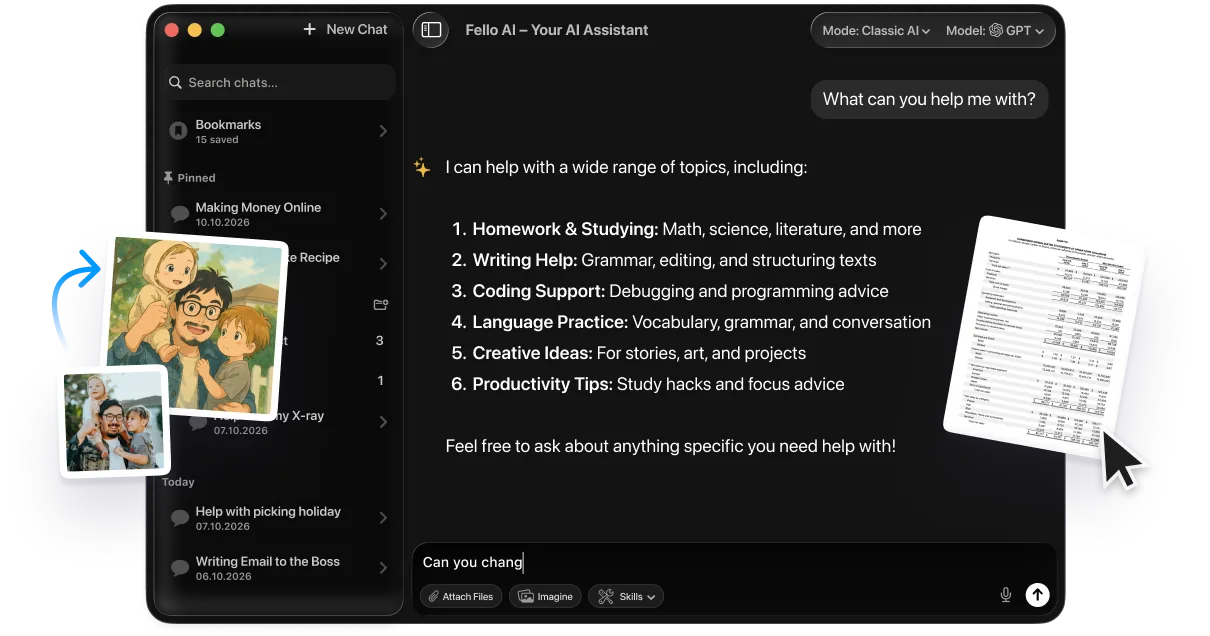
For those who want a seamless experience, the Gemini AI desktop client for macOS is the best way to integrate these models into your daily workflow.
Stable (GA) models have published guidance on model versions, and preview models can change or be deprecated quickly. If you are building a business, stick to the Gemini 2.5 Stable, Gemini 3.5 Flash, Gemini 3.6 Flash, Gemini 3.7 Flash or Gemini 3.8 Flash IDs, all five of which Google lists as stable, and treat anything carrying a -preview suffix as changeable.
Conclusion
The honest summary is that Google Gemini 4 has moved from roadmap to announcement, but not yet to your account. Google named it and confirmed pre-training on July 21, 2026, alongside the Gemini 3.6 Flash launch, said in late September that it had entered post-training, and announced Gemini 4 Argon on September 30 for Fairwind partners only. Set your expectations for the wider rollout by Google’s own track record, because Gemini 3.5 Pro was promised for June 2026 and has still not shipped. The smartest move is to master the tools that already exist, starting with Gemini 3.8 Flash, the 3.8 Live voice models and the Gemini Omni creation models, and to follow our Gemini 4 Argon guide for what is coming.
Next Step: You don’t have to wait to upgrade your workflow. Getting started with Fello AI is the best way to try the latest available Gemini models today, side by side with GPT and Claude in one app.
FAQ
Is Gemini 4 officially released?
Partly. Google announced Gemini 4 Argon, the first Gemini 4 model, on September 30, 2026, but as of October 1, 2026 only vetted cyber defenders in its Fairwind Program can use it. Paid API customers and Google AI Ultra subscribers come next, and Google has not given a date or published an API model ID. Until then, the newest Flash model you can use is Gemini 3.8 Flash from September 2.
When is the Gemini 4 release date?
Gemini 4 Argon was announced on September 30, 2026, but Google has not given a date for wider access. It says paid API customers and Google AI Ultra subscribers come next, followed by developers, enterprises and consumers “as soon as possible”, and Kavukcuoglu said before launch that he hoped for a release “much earlier” than the end of 2026. Gemini 3.5 Pro was promised for June 2026 and is still unreleased, so treat any specific date you read as speculation.
Will Gemini 4 be free?
Not at first. Google says Gemini 4 Argon reaches Google AI Ultra subscribers, from $99.99/month, before any other consumer plan, and nothing it has published so far mentions the free tier or Google AI Pro. Google usually offers a Flash version for free, and its plans page currently lists “Access to 3.6 Flash” for the free tier. The newer Gemini 3.7 and 3.8 Flash releases are both paid-only in the app, reported so far on Google AI Pro and Ultra. To check what the current free plan includes, see whether Gemini is free. You can compare ChatGPT vs Gemini for students to see how these paid tiers stack up.
How do I protect my privacy from unverified “leaks”?
Check our guide on 7 powerful prompts that reveal what Google Gemini knows about you to understand your data footprint before engaging with new AI tools.