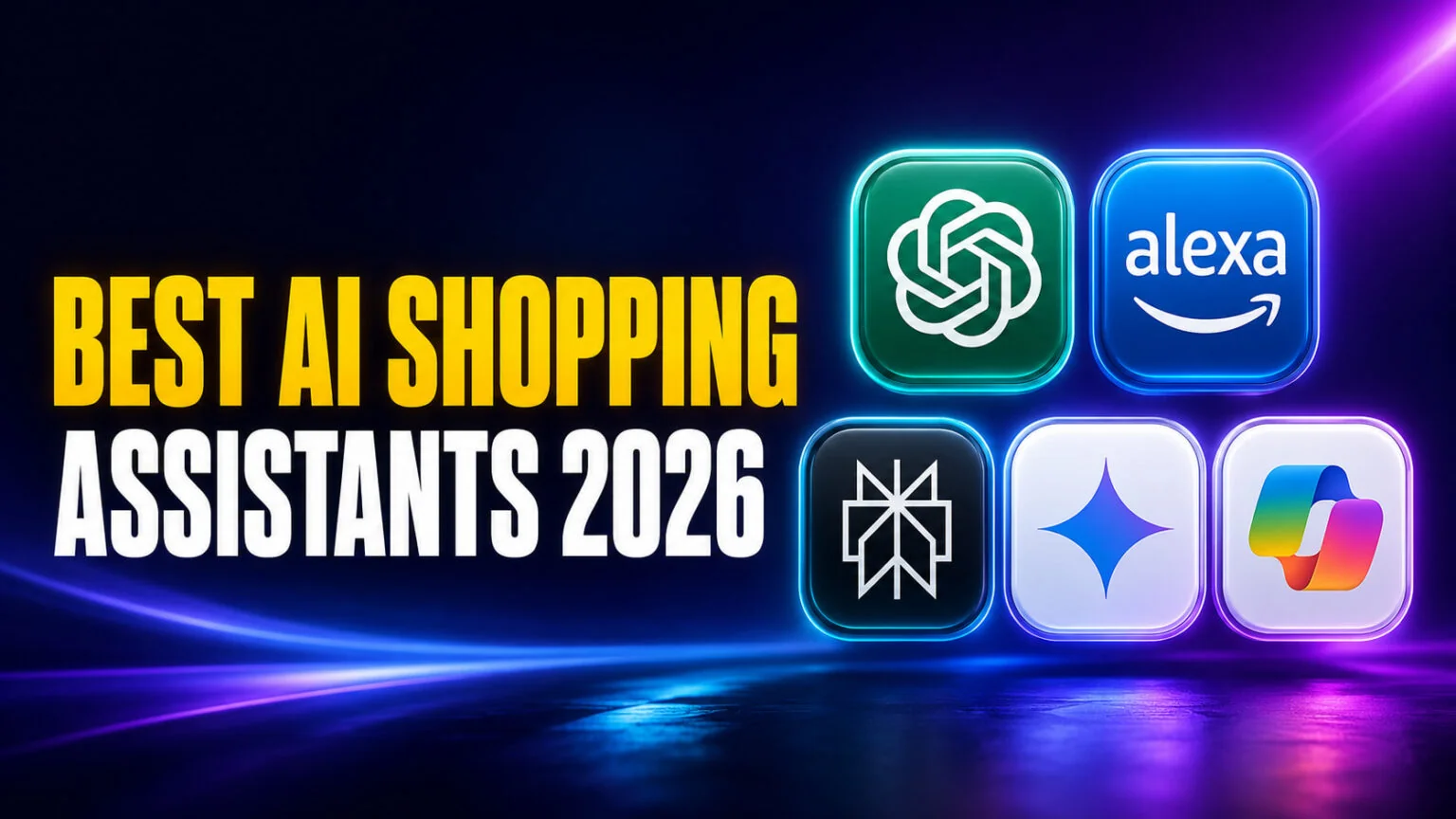
AI shoppers now convert 42% better than everyone else. That is the headline from Adobe’s Q1 2026 analysis of more than a trillion visits to US retail sites, which also found AI-driven traffic up 393% year over year and revenue per visit running 37% above non-AI channels. One year earlier the same traffic converted 38% worse than normal visitors, so this is a complete reversal in twelve months. Five assistants are fighting over those shoppers: ChatGPT, Amazon’s Alexa for Shopping (formerly Rufus), Perplexity, Google’s Gemini, and Microsoft Copilot.
This guide compares the five consumer AI shopping assistants you can actually use today, what each one does well, how their checkout works, and which is the best fit for your shopping style. We focus on the assistants that help you, the shopper, rather than the merchant chatbots that brands bolt onto their own stores. The field looks very different from where it started, because OpenAI killed its in-chat checkout in March while Microsoft quietly grew one to 500,000 merchants, Amazon retired the Rufus name, and Amazon pushed price history out to a full year on 30 June 2026.
The Key Takeaways
- ChatGPT is research-only now. OpenAI shut down in-chat Instant Checkout in March 2026 after roughly 30 merchants ever integrated it, and now routes payment through retailer apps instead.
- Microsoft is the surprise leader on checkout. Copilot Checkout launched 8 January 2026 and had grown to 500,000+ merchants plus a mobile app by April.
- Amazon renamed Rufus to “Alexa for Shopping” on 13 May 2026, folding the old chatbot into one agentic assistant that helped over 300 million customers in 2025 and drove close to $12 billion in extra sales.
- Perplexity Shopping is free, pulls from 5,000+ merchants, and lets you buy instantly through PayPal without a Pro subscription.
- No single winner. Amazon is best inside its own store, Perplexity and ChatGPT are best for unbiased research, Google is best for trying things on, and Copilot is best for buying without leaving the chat.
What Is an AI Shopping Assistant?
An AI shopping assistant is a generative-AI tool that helps you find, compare, and buy products through conversation. Instead of opening a dozen tabs and reading scattered reviews, you describe what you want in plain language and it returns tailored picks, side-by-side comparisons, live prices, and in some cases completes the purchase for you.
A modern consumer assistant can do six core things. It discovers products from a plain-language request, compares options side by side, tracks live prices and deals, answers detailed product questions, reorders past purchases, and increasingly completes agentic checkout on your behalf. Google adds virtual try-on so you can see clothing on your own photo, Perplexity and Microsoft add one-tap buying through PayPal, and Amazon adds a year of price history. These tools are a consumer-facing cousin of the wider wave of AI agents, and they work for you across the whole web rather than for a single merchant.
The Best AI Shopping Assistants at a Glance
Here is how the five leading consumer assistants compare on the things that matter most, what they are best for, how they handle payment, whether they cost anything, and the one feature that sets each apart.
| Assistant | Best for | Checkout model | Free? | Standout feature |
|---|---|---|---|---|
| ChatGPT Shopping | Deep, unbiased product research | Discovery only, links out to merchants | Yes, on Free and paid plans | Buyer’s-guide report from one request |
| Amazon Alexa for Shopping (Rufus) | Buying inside Amazon | Closed loop inside Amazon | Yes, no Prime needed | Year-long price history and reorder |
| Perplexity Shopping | Fast research plus instant buy | Instant Buy via PayPal, 5,000+ merchants | Yes, fully free | One-click PayPal checkout |
| Google / Gemini | Trying products on before buying | Agentic checkout and Universal Cart | Yes | Virtual try-on with your photo |
| Microsoft Copilot | Buying without leaving the chat | Copilot Checkout in-chat, 500,000+ merchants | Yes | No redirect, plus retailer loyalty perks |
ChatGPT Shopping
ChatGPT is the most-used AI assistant in the world, with OpenAI last confirming more than 900 million weekly users in February 2026 and the mobile app passing 1 billion monthly users in June. Its Shopping Research feature turns that reach into a genuine product researcher. You describe what you want, like the quietest cordless vacuum for a small apartment, and it asks a few follow-up questions about budget, brand, and priorities before doing the work.
The feature is powered by a version of GPT-5 mini trained specifically for shopping. OpenAI’s Shopping Research reads trusted review sites, cites its sources, and returns a written buyer’s guide after a few minutes. You can browse results visually, upload an image to find similar items, and compare options side by side on price, reviews, and specs. If you already lean on ChatGPT for other tasks, our look at ChatGPT for personal finance shows the same research strength applied to money decisions.
Why ChatGPT stopped selling things
OpenAI launched Instant Checkout on 29 September 2025 and shut it down on 4 March 2026, and the numbers explain why. Despite promises of a million Shopify storefronts, only around 30 merchants ever wired up the checkout plumbing, and just 8% of US adult ChatGPT users tried it in the first month. Walmart measured buying inside ChatGPT converting roughly three times worse than a plain click through to walmart.com.
OpenAI did not abandon commerce, it moved it. Payment now happens inside retailers’ own ChatGPT apps, of which Walmart’s is the flagship, though Instacart remains one of the very few that completes a purchase in-app. The practical effect for you is that ChatGPT is discovery-first again; you research in the chat and click out to the retailer to pay. That also makes it one of the most neutral assistants here, because it is not trying to keep you inside one store.
Amazon Alexa for Shopping (Formerly Rufus)
The biggest change of 2026 is that Rufus is gone as a name. On May 13, 2026, Amazon renamed its shopping assistant to Alexa for Shopping and retired the standalone Rufus chatbot, merging its product knowledge into a single agentic assistant that lives in the main Amazon search bar. Amazon says the underlying assistant helped over 300 million customers in 2025, making it the most-used shopping assistant by raw reach. It is also the only one with a public sales figure attached, at close to $12 billion in incremental annualised sales, and Amazon says shoppers who use it are 60% more likely to complete a purchase.
Alexa for Shopping is built for buying inside Amazon, and it is very good at it. On 30 June 2026 Amazon extended its price tracker to 365 days, so you now get 30, 90, and full-year views and can tell whether today’s “deal” is real. You can also create a custom shopping guide for a big purchase, get product insights on any listing, and ask it to reorder things you bought before. More than 50 million customers have used the price-history feature since 2024.
It uses account memory to learn whether you are a trail runner or a new parent, then tailors its answers, and its agentic features can build your cart automatically for you to review. It is free for all Amazon customers with no Prime membership or Echo device required. The catch is the walled garden; it shops Amazon, not the open web, so it is the least neutral option here.
Perplexity Shopping
Perplexity built the most shopper-friendly model of the group, and it is completely free. Launched to U.S. users in late 2025, Perplexity Shopping remembers your past shopping conversations. You can ask for the best winter jacket for someone who commutes by ferry in San Francisco, and it keeps that context as you refine.
The standout is Instant Buy, launched with PayPal on 25 November 2025, which lets you purchase directly using payment details stored in PayPal across more than 5,000 merchants. It is free and does not need a Pro subscription, which is worth stressing because Perplexity also runs a separate Pro-only perk called Buy with Pro that adds free shipping. Named retailers include Abercrombie & Fitch, Ashley Furniture, Fabletics, Adorama, and Newegg.
Merchants keep full visibility into who their customers are, stay the merchant of record, and own returns and loyalty, so retailers have a reason to support it rather than block it. A single integration through Firmly.ai is all a store needs to join, with no fees, commissions, or listing costs. For a broader sense of where Perplexity sits against the big labs, our Anthropic vs OpenAI breakdown covers the competitive landscape these assistants grew out of.
Google and Gemini Shopping
Google’s advantage is data, and in 2026 it turned its Shopping Graph into a full shopping assistant inside both Search and the Gemini app. You can brainstorm and browse in Gemini, and Google’s real-time product database means prices and availability are unusually current.
Three features stand out. Agentic checkout rolling out in Search and AI Mode can complete a purchase for you at eligible merchants like Wayfair, Chewy, and select Shopify stores, powered by Google’s Duplex technology. Virtual try-on lets you upload a photo and see clothing on yourself through Google Lens and Gemini. And the Universal Cart, unveiled at Google Marketing Live on 20 May 2026, works across merchants, so you can add items while searching, chatting with Gemini, watching YouTube, or reading Gmail, then check out in one place with deferred payment through Affirm or Klarna. Google built all of this on its open Universal Commerce Protocol, launched 11 January 2026 and co-developed with Shopify, Etsy, Wayfair, Target, and Walmart, with more than 20 partners including Visa, Mastercard, Amex, Best Buy, Macy’s, and Home Depot behind it. If you want the full picture of Google’s model, see our Gemini 3.5 review.
Microsoft Copilot
Copilot is the one most people underestimate, and it is now the strongest pure checkout experience of the five. While OpenAI was retreating from in-chat payment, Microsoft went the other way and built it out. Because Copilot is also baked into Windows and the Edge browser, that checkout sits in front of hundreds of millions of people who never installed anything.
Copilot Checkout
Microsoft launched Copilot Checkout on 8 January 2026 with PayPal, Shopify, and Stripe as launch partners. In Microsoft’s own words it means “no redirect, no friction,” so you ask a question, get a recommendation, see tax and shipping, and pay without ever leaving the conversation. The retailer stays the merchant of record and keeps the customer relationship, which is exactly the concession that made merchants willing to switch it on.
It grew fast. By 22 April 2026 Copilot Checkout covered more than 500,000 merchants and had arrived inside the Copilot mobile app in the US. Microsoft also added loyalty experiences, so retailers can hand Copilot shoppers exclusive discounts and free shipping, with Target among the first to use them. Launch brands include Urban Outfitters, Anthropologie, Ashley Furniture, and Etsy sellers.
Brand Agents
Alongside checkout, Microsoft shipped Brand Agents, AI shopping assistants that retailers deploy on their own websites in a brand’s voice. That matters to you mostly as a warning, because it blurs the line between a neutral assistant working for you and a sales assistant working for the store. Copilot Checkout is the former; a Brand Agent on a retailer’s site is the latter.
Which AI Shopping Assistant Is Best for You?
There is no single best assistant, only the best one for how you shop. If you buy most things on Amazon, Alexa for Shopping is unbeatable for price history and reorders inside that store. In case you want neutral, well-researched recommendations across the whole web, ChatGPT Shopping Research and Perplexity are the two to use, with Perplexity adding the fastest path to actually buying.
If you shop for clothes or want to see something before committing, Google’s Gemini and its virtual try-on are the clear winner, and its Universal Cart is the most ambitious checkout of the group. If what you want is simply to buy something without being bounced to a checkout page, Copilot now does that better than anyone, across 500,000 merchants and inside a mobile app. The honest answer for most people is to use more than one, since each assistant has blind spots the others cover.
Using Several AI Assistants Together
The smartest shoppers do not pick one assistant; they cross-check. ChatGPT might surface a different shortlist than Perplexity, and Google’s live pricing can catch a deal the others miss, so running the same question past two or three models gives you a far more honest picture than trusting any single one.
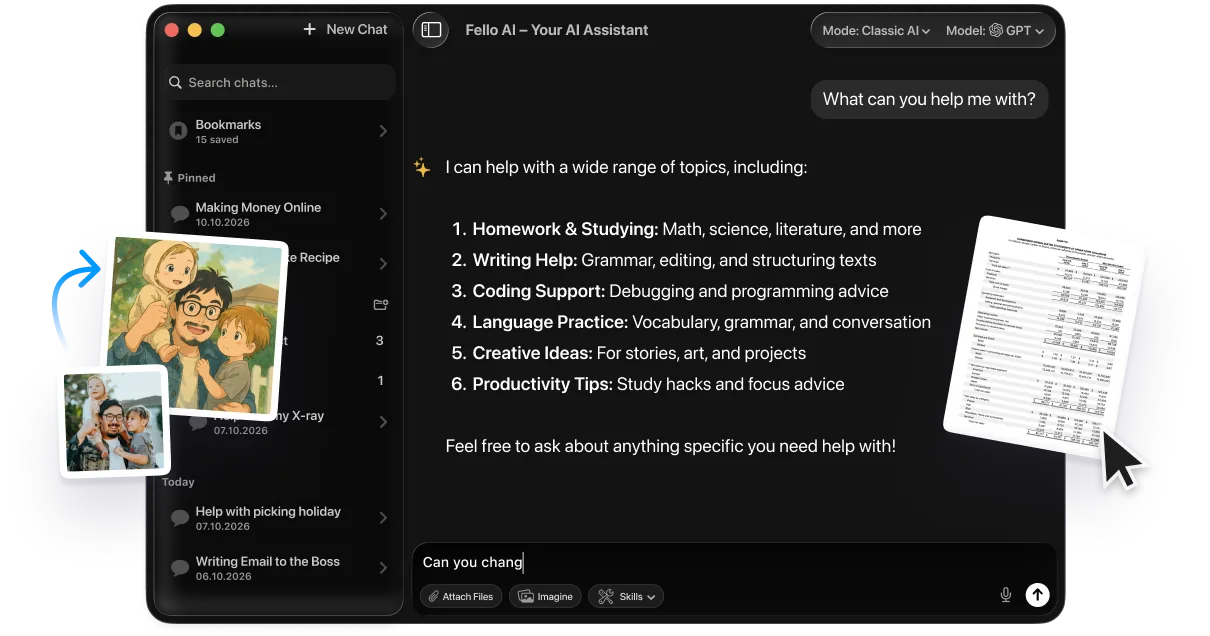
That is the idea behind Fello AI, the Mac app that puts Claude, ChatGPT, Gemini, Grok, and DeepSeek in one window for a single $9.99/month, including models like DeepSeek that usually cost extra elsewhere. For a big purchase, ask the same “help me choose” question across several models side by side and compare their picks in seconds. Then take the shortlist to whichever store assistant handles checkout. It will not buy the item for you, but it makes the research step a lot sharper. To see how the underlying models stack up on their own, our best AI models guide ranks them in depth.
Conclusion
AI shopping assistants went from novelty to mainstream in a single year, and the five that matter, ChatGPT, Alexa for Shopping, Perplexity, Gemini, and Copilot, now cover every step from research to checkout. The lesson of 2026 so far is that the in-chat checkout race has a real winner and a real loser, with Microsoft at 500,000 merchants and OpenAI out of the game entirely. Start with the assistant that matches where you already shop, then add a second for unbiased research, and you will make better buying decisions with far less effort. The easiest first step is to run your next big purchase question through two assistants and compare what they recommend.
FAQ
What is the best AI shopping assistant in 2026?
There is no single best one. Amazon’s Alexa for Shopping wins inside Amazon, ChatGPT and Perplexity are best for unbiased web-wide research, Google’s Gemini is best for virtual try-on, and Microsoft Copilot is best if you want to pay without leaving the chat. Most people get the best results using two together.
What happened to Amazon Rufus?
Amazon renamed Rufus to Alexa for Shopping on 13 May 2026, and retired the standalone Rufus chatbot. Its product knowledge now lives inside a single agentic assistant in the Amazon search bar, and on 30 June 2026 Amazon extended its price history to a full 365 days alongside reorders and automatic cart-building.
Are AI shopping assistants free?
Most are. ChatGPT Shopping Research, Perplexity Shopping, Google’s Gemini, Amazon’s Alexa for Shopping, and Microsoft Copilot all have free shopping features. Perplexity and Alexa for Shopping are fully free with no subscription needed.
Can an AI shopping assistant actually buy things for me?
Several can. Microsoft’s Copilot Checkout completes the purchase in-chat across 500,000-plus merchants, Google’s Gemini and Amazon’s Alexa for Shopping both offer agentic checkout, and Perplexity’s Instant Buy uses PayPal across 5,000-plus merchants. ChatGPT is the exception, having shut its in-chat checkout down in March 2026 to focus on research.
Which AI is best for unbiased product recommendations?
ChatGPT and Perplexity are the most neutral because they research across the open web and link out to many retailers, rather than steering you toward one store. Amazon’s assistant is powerful but only shops within Amazon.