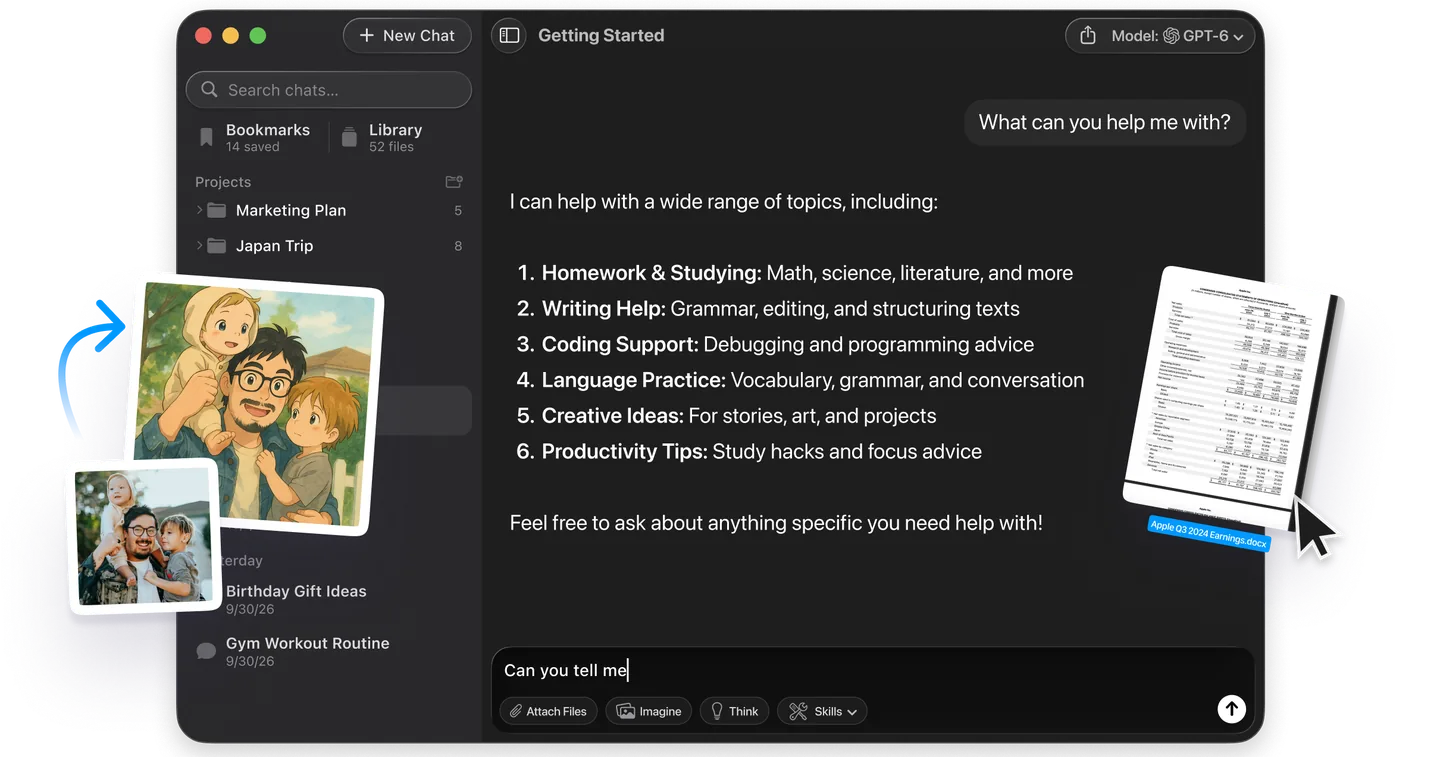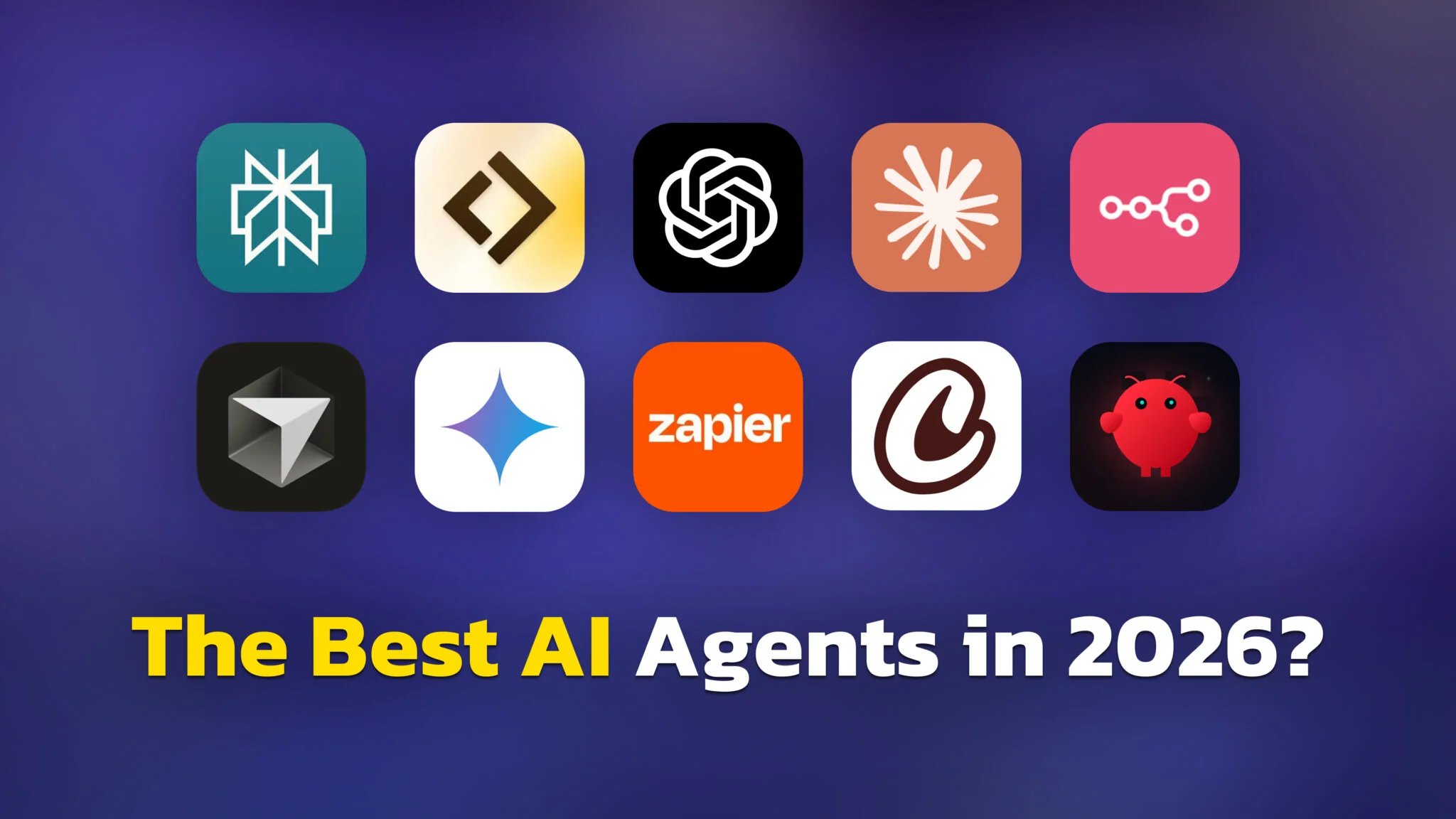
Search “best AI agents” and you will get a list written by someone selling you an AI agent. We checked the fifteen highest-ranking guides for this term. Nine of them are published by AI agent vendors, and all nine rank their own product first. Lindy’s list opens with Lindy. Zapier’s opens with Zapier. Relay.app’s guide is written by its own CEO and tells you that “for 80% of people reading this, Relay.app is the right choice.”
We do not sell an AI agent, so nobody bought a slot on this page. What follows is 30 agents organised by what you actually want to do, with prices verified against official pricing pages in July 2026, and with the tools we would not recommend clearly marked. Several agents that appear on every other list have quietly changed or deleted their pricing tiers this year, and one of the most popular open-source agents has a security problem that Microsoft now warns customers about directly. The newest arrival is Grok Bot, SpaceXAI’s always-on agent app, which launched in August 2026 at the very top of this price range.
The Key Takeaways
- Nine of the fifteen top-ranking “best AI agents” guides are written by agent vendors, and every one of them ranks itself first.
- OpenAI Operator no longer exists. It shut down on 31 August 2025. The current OpenAI agent is ChatGPT Work, launched 9 July 2026, running on GPT-6 since 22 September 2026.
- Claude Cowork is the most capable everyday desktop agent, and since 7 July 2026 it also runs on web and mobile. It starts at $20/month.
- The best free coding agent is OpenHands, which scores 72% on SWE-bench Verified and can run entirely on your own machine.
- Avoid OpenClaw unless you know exactly what you are doing. Researchers found 824 malicious skills in its marketplace, it carries a 9.9-severity vulnerability in its history, and Microsoft advises against running it on any device holding sensitive data.
Who Wrote the List You Are Reading?
This matters more than it sounds. AI agent companies have worked out that ranking for “best AI agents” is the cheapest customer acquisition available to them, so they write the guides themselves. The result is a search results page where the advice and the advertising are the same document.
Here is where each of the top-ranking guides placed its own product. Every one of these pages presents itself as an objective roundup.
| Guide | Who publishes it | Where their own product ranks |
|---|---|---|
| Lindy | Lindy (agent builder) | #1 |
| Zapier | Zapier (automation) | #1 |
| Gumloop | Gumloop (agent builder) | #1 in both of its guides |
| Relay.app | Relay.app, written by the CEO | #1 |
| Salesforce | Salesforce (Agentforce) | #1 |
| monday.com | monday.com (Agent Factory) | #1 |
| Ajelix | Ajelix (Excel AI tool) | #1 |
| Taskade | Taskade, and it says so openly | #3, with a disclosure |
| FelloAI (this page) | We make a multi-model chat app, not an agent | We have no agent to rank |
Taskade deserves credit as the only vendor that discloses the conflict and ranks rivals above itself. The rest do not mention it. We are not claiming to be more insightful than these companies, several of which build genuinely good products. We are pointing out that we have no product in this category to promote, which is the only reason we can put a competitor at the top of a list without it costing us anything.
Quick Picks
If you want the short version, start here. Prices are the entry point for each tool as of July 2026, and every one is explained in full further down.
| You want to… | Best free option | Best paid option |
|---|---|---|
| Get everyday work done | ChatGPT (free tier) | Claude Cowork ($20/mo) |
| Write code faster | OpenHands (free, self-hosted) | Claude Code ($20/mo) |
| Research something deeply | Perplexity (free) | ChatGPT Plus ($20/mo) |
| Hand off a whole project | Manus (300 daily credits) | Manus (from $20/mo) |
| Automate app workflows | n8n (self-hosted) | Make (from $9/mo) |
| Build an agent, no code | Gumloop (5,000 credits) | Gumloop Pro ($37/mo) |
| Build an agent, as a developer | LangGraph (open source) | LangSmith ($39/seat) |
| Deploy across a company | Microsoft Copilot (bundled in some M365 plans) | Agentforce ($2/conversation) |
Best AI Agents for Everyday Work
These are the agents most people should look at first. They handle research, documents, spreadsheets and multi-step tasks without you writing any code. If you are new to the category, our explainer on what an AI agent actually is covers the basics, and how AI agents work under the hood explains the plan-act-adapt loop they all share. If you want the bigger concept first, our guide to what agentic AI actually means sets the stage.
ChatGPT Work (OpenAI)
What it does: ChatGPT Work is OpenAI’s agent, launched on 9 July 2026 and running on GPT-6. OpenAI put GPT-6 Sol and GPT-6 Luna into Work and Codex on 22 September 2026 for Plus, Pro, Business, Enterprise and Edu accounts, and Plus plans also reach GPT-6 Astra there. You give it an outcome rather than an instruction. It gathers context from your connected apps, breaks the job into steps, and works for hours before handing back finished spreadsheets, slides, documents or web apps. Our full guide to ChatGPT Work covers what it can and cannot do.
Important: if an older guide still recommends Operator, ignore it. OpenAI’s browser-driving agent shut down on 31 August 2025.
Pricing (2026): Free, then Go at $8/mo, Plus at $20/mo, and Pro in two sizes, $100/mo and $200/mo. The $100 Pro tier only arrived in April 2026, so guides calling Pro “the $200 plan” are out of date. On the unified desktop app, every plan including Free gets access.
Best for: long-running office work where you want a finished artefact rather than a chat transcript. Deep Research, which produces cited multi-source reports, reaches even the free tier, and OpenAI no longer publishes a per-plan run count: its help centre says usage varies by plan and sends you to the counter inside the product. It is not locked behind the $200 Pro tier, as is frequently claimed.
Limitations: ChatGPT still cannot read or modify files on your local disk the way Claude Cowork can. Note also that ChatGPT Atlas, OpenAI’s browser, shut down on 9 August 2026, with agentic browsing folded into ChatGPT Work and a Chrome extension. If Atlas was your reason for subscribing, read our guide to the best ChatGPT Atlas alternatives.
Verdict: the default choice for most people, largely because the ecosystem is enormous and the $20 Plus tier now includes real agentic work. If you want an agent that touches your actual files, Claude Cowork is the better buy, and verified U.S. K-12 teachers get it free through Claude for Teachers.
Claude Cowork (Anthropic)
What it does: Cowork is a desktop agent that works directly with your computer. It creates and edits files, organises folders, synthesises research into documents, and runs scheduled tasks autonomously while you do something else. Unlike ChatGPT, it genuinely touches your file system. Our full Claude Cowork guide covers setup and the workflows it is actually good at.
What changed: Cowork is now generally available, and since 7 July 2026 it runs on web and mobile as well as desktop. Guides describing it as “desktop only” are out of date. It runs on your plan’s default Claude model, so a Max subscriber gets a more capable agent than a Pro subscriber.
Pricing (2026): Pro at $20/mo ($17 annual), Max 5x at $100/mo, Max 20x at $200/mo, plus Team and Enterprise seats. Cowork is not on the free tier. Anthropic’s model line-up now runs Claude Fable 5.1 at the top, then Claude Opus 5.5, which shipped on 22 September 2026 at $4 per million input tokens and $20 per million output, then Claude Sonnet 5.5, which launched on 28 September 2026 at the same price as Sonnet 5 and is what the free plan gets alongside Haiku. Anthropic moved Opus 5 and Fable 5 to its Legacy models list when Opus 5.5 shipped, and Sonnet 5 joined them six days later, so a guide still naming any of them as current is out of date.
Best for: document-heavy work, file organisation and research synthesis. This is the agent to pick if your job involves producing things rather than asking questions.
Limitations: agentic work burns tokens fast, and heavy Cowork users will feel the Pro limits within days. Budget for the $100 Max tier if this becomes part of your daily workflow, and our Claude Cowork pricing breakdown compares what each tier gets you.
Verdict: the most capable everyday agent available, and the one we would recommend to most people willing to pay. The $20 entry price undersells what it does.
Manus
What it does: Manus is a fully autonomous general agent. It spins up a dedicated cloud machine with a browser, a code interpreter and office applications, takes a plain-English brief, and returns a finished deliverable. It now builds working web apps and connects to Slack, WhatsApp, Telegram, Gmail, Google Calendar and Notion. The current family is Manus 1.6, in Lite, standard and Max variants.
The story worth knowing: Meta agreed to acquire Manus, and Chinese regulators blocked the deal in April 2026. By June, Bloomberg reported Meta had completed an operational split and cut off data sharing. Manus continues as an independent product run out of Singapore, which is a genuinely unusual outcome and worth factoring into any long-term bet on it. Meta has since launched its own consumer agent, Muse, Meta’s personal AI agent, in September 2026. OpenAI followed on 29 September 2026 with dots, its always-on agents inside ChatGPT.
Pricing (2026): free with 300 daily refreshing credits on Manus 1.6 Lite, then paid plans from $20/mo, metered in credits that do not roll over. We keep a full Manus AI pricing breakdown with the credit maths.
Best for: handing off an entire project and walking away. Manus is the closest thing to “describe it and come back later” that currently works.
Limitations: credit-metered pricing makes costs hard to predict, and monthly credits expire. Quality is inconsistent on tasks that need deep domain knowledge.
Perplexity and Perplexity Computer
What it does: Perplexity answers questions with cited sources, which makes it the tool of choice for research you need to verify rather than trust. Its Deep Research mode runs multi-source investigations and returns reports with inline citations. Perplexity Computer, on Pro and Max, is its general-purpose agent: it accepts a high-level objective, decomposes it, and routes each subtask to whichever of its backend models suits it best.
That orchestration idea, one model delegating to many, now exists as a standalone approach in Sakana AI’s Fugu model, which routes work across a pool of other LLMs and outscores any single one of them. It has since been upgraded in Fugu-Ultra v1.1.
Pricing (2026): free with a daily Pro Search limit, Pro at $20/mo, and Max at $200/mo for 10,000 monthly Computer credits and the largest Deep Research allowance.
Best for: fact-checking, competitive analysis and citation-heavy work. The free tier is genuinely useful, which is rare.
Limitations: Perplexity is built for finding and verifying, not for creating files or automating business processes. Most people will never need the $200 Max tier.
Google Gemini and Gemini Spark
What it does: Gemini is deeply wired into Gmail, Docs, Sheets, Drive and Calendar, which is its entire argument. If your company runs on Google Workspace, the integration is the product. Gemini Spark, announced at I/O on 19 May 2026, is Google’s real agent: a 24/7 assistant running on dedicated cloud machines that keeps working with your laptop shut, acts on the web through Chrome, and can even be emailed at its own address. On the underlying models, see Claude vs Gemini.
Pricing (2026): AI Plus at $4.99/mo, AI Pro at $19.99/mo, and AI Ultra from $99.99/mo up to $199.99/mo. The Ultra ladder was rebuilt at I/O, so any guide quoting $125 or $249.99 is stale. Spark is no longer Ultra-only. It reached AI Pro at $19.99/mo in the US on July 23, 2026 and more than 160 additional countries on July 30. You need to be 18 or over on a personal Google account, and it stays unavailable in the EEA, the UK, Switzerland and Nigeria on any plan.
One correction worth making: there is no such thing as Gemini 3.5 Pro. Google shipped Gemini 3.5 Flash in May 2026 and said 3.5 Pro was coming “next month”. It still has not appeared. Paying subscribers get Gemini 3.1 Pro, which Google’s own API docs still label as preview. Our Gemini 3.5 review has the full picture, and we compare the two leading desktop agents head to head in Gemini Spark vs Claude Cowork. Instead of the Pro model, Google shipped Gemini 3.7 Flash on August 13, 2026, which moves agentic coding a long way forward. Gemini 3.8 Flash followed on September 2, 2026 on the same API rate, beating 3.7 Flash on every published row including the agentic terminal and computer-use tests, so it is the Flash model to reach for now.
Verdict: obvious if you live in Google Workspace, and Spark is a serious agent. The price gate is gone now that $19.99 AI Pro carries it, so geography is the real blocker; readers in the EEA, the UK, Switzerland and Nigeria still cannot buy it at any price.
Best AI Agents for Coding
Coding agents are the most mature category by a wide margin, and the only one where the tools reliably do what the marketing claims. They write, review, debug and refactor across whole projects. If you are weighing what this means for the profession, our piece on AI agents and jobs looks at the evidence.
Claude Code (Anthropic)
What it does: a terminal-based coding agent. You point it at a codebase and describe what you want in plain English. It reads your files, understands the project, writes code, runs the tests and commits. It plans multi-step changes, edits many files at once, and verifies its own work by running your suite.
How widely it is used: a SemiAnalysis report from February 2026, Claude Code is the Inflection Point, found that 4% of all public GitHub commits were being authored by Claude Code, and projected it could reach 20% of daily commits by the end of 2026. That 4% figure is from February and we have not seen a newer one, so treat the projection as a forecast rather than a fact.
Pricing (2026): Pro at $20/mo ($17 annual), Max 5x at $100/mo, Max 20x at $200/mo, or pay-per-token through the API. Claude Code is not on the free plan: claude.com/pricing marks it No for Free and Yes from Pro upwards. Full detail in our Claude Code pricing guide. Before you let it run unattended, our guide to Claude Code permissions covers which actions each mode allows without asking.
Best for: large refactors, multi-file changes and debugging in big codebases, if you are comfortable in a terminal.
Limitations: the terminal interface is a real barrier for developers who live in a GUI, and token consumption on large codebases is heavy.
OpenHands
What it does: the strongest open-source coding agent, and the best free option in this entire article. Formerly OpenDevin, it was created as the academic answer to Devin and is now run by All Hands AI. It has grown past a single agent into a self-hosted control centre that can also drive Claude Code, Codex or Gemini. Codex has also been under scrutiny for the Codex SSD-wear bug.
Why it is credible: it scores 72% on SWE-bench Verified when paired with Claude Sonnet 4.5, a figure published in its own Software Agent SDK paper. It is MIT-licensed, has over 80,000 GitHub stars, and raised an $18.8M Series A led by Madrona in November 2025.
Pricing (2026): the local open-source version is free and you bring your own model key. The hosted Individual tier is also free, and passes model costs through at cost with no markup. Enterprise is custom-priced.
Best for: anyone who wants a capable coding agent without a subscription, and anyone who needs the agent to run entirely inside their own infrastructure for compliance reasons.
Limitations: you are responsible for hosting and for your own model bills. It asks more of you than Cursor does.
Cursor
What it does: a fork of VS Code rebuilt around AI. Multi-file editing, codebase-wide reasoning and an agent mode that plans and executes changes across a project. It remains the most comfortable on-ramp for developers who want an AI-native IDE rather than a terminal.
Pricing (2026): since 12 October 2026 Cursor sells The X Subscription: a Free tier with limited agent requests, Plus at $8/mo with Grok models only, and Premium at $30/mo, where Claude and GPT become available at API list price. Super ($100) and Ultra ($200) multiply the usage, and Teams seats start at $30. Existing Pro, Pro+ and Ultra subscribers can keep their old plans. Our Cursor pricing guide explains how the compute model actually bites.
Best for: developers who want project-wide AI assistance inside a familiar editor.
Limitations: real costs can exceed the headline subscription if you lean on frontier models. Budgeting is genuinely harder than with a flat-rate tool.
GitHub Copilot (Microsoft)
What it does: AI coding assistance inside VS Code, JetBrains, Neovim and others. It started as autocomplete and now has an agent mode that plans and executes multi-file edits and runs terminal commands.
Pricing (2026): Free gives 2,000 completions a month. Pro is $10/mo and now bundles $15 of credits. Pro+ is $39/mo with $70 of credits, and a new Max tier at $100/mo carries $200 of credits. Note that the old “premium requests at $0.04 each” model is gone, replaced by GitHub AI Credits at $0.01 each.
Best for: developers who want assistance without leaving their existing editor, and teams already living inside GitHub.
Limitations: agent mode is less autonomous than Claude Code or OpenHands on large refactors. It is a superb assistant and a middling agent.
Devin (Cognition AI)
What it does: a fully autonomous coding agent. You hand it a specification, it plans, writes, tests, debugs and deploys with minimal supervision.
Pricing has changed completely. Cognition retired the Core and Team plans in April 2026, and the entire ACU (Agent Compute Unit) system is gone from self-serve pricing. As of July 2026 it is Free, Pro at $20/mo, and Max at $200/mo, with Teams at $80/mo plus $40 per developer seat. Overage is billed in dollars now, not ACUs. If a guide is still doing arithmetic with “9 ACUs at $2.25 each”, it has not looked at the page this year.
Also worth knowing: Cognition bought Windsurf, and on 2 June 2026 it rebranded Windsurf as “Devin Desktop”. If you are comparing the two as separate products, they are now the same one.
Best for: generating prototypes and boilerplate from a clear spec.
Limitations: output on complex tasks often works in isolation but integrates poorly with an existing codebase. Treat everything it produces as a first draft that needs review.
Google Antigravity
What it does: Google’s agent-first development platform, built on VS Code but organised around autonomous agents rather than files. Its Manager view lets you spawn and orchestrate several async agents at once. Antigravity 2.0, released at I/O on 19 May 2026, added a standalone desktop app, a CLI and an SDK. Our explainer covers what Google Antigravity actually does in detail.
Pricing (2026): free, and no longer a preview. Google’s pricing page now lists Antigravity as generally available, with an Individual plan at $0 a month and basic weekly rate limits. Higher usage quotas come with Google AI Pro at $19.99/mo or AI Ultra. It runs Gemini 3.8, 3.7 and 3.6 Flash alongside Gemini 3.1 Pro, and notably also offers Claude Sonnet 4.6, Claude Opus 4.6 and gpt-oss-120b.
Best for: trying multi-agent development for nothing. The price is hard to argue with.
Limitations: the weekly rate limits on the free plan are the real constraint and Google publishes no numbers for them, so you cannot size a team’s usage before trying it. The Claude and GPT-OSS models are also missing from the Enterprise column of Antigravity’s own model table.
Grok Build (xAI)
What it does: xAI’s terminal-native coding agent, launched in beta in May 2026. It plans a change, shows you the diff before touching anything, and supports headless mode for automation. It reads AGENTS.md instruction files and works with MCP servers, skills and plugins.
Pricing (2026): included in every tier of The X Subscription, with limited use on the free tier. Since 21 September 2026 it runs on Grok 4.7, which bills on the API at $2.00 per million input tokens and $6.00 per million output tokens with a 500k context window, and the older grok-build-0.1 coding model is still on the API at $1.00 and $2.00. Both are cheaper per token than most rivals. Subscription costs are in our Grok pricing guide.
Best for: developers already paying for The X Subscription who want a coding agent included.
Limitations: it is the youngest agent here and the subscription needed to reach it is expensive. There is no meaningful independent benchmark data on it yet.
Best AI Agents for Automation and Workflows
This is where the word “agent” gets stretched furthest. Most of these tools are automation platforms with an AI step bolted on, which is not the same thing as an agent that plans and adapts. We pull that distinction apart in agentic AI vs traditional automation, and it is worth understanding before you pay for anything here.
n8n
What it does: a self-hostable automation platform with a visual builder and genuine AI agent nodes that can make decisions inside a workflow. It is the most powerful option in this category and the only one you can run entirely on your own hardware for nothing. One precision that most guides get wrong: n8n is not open source. It ships under the Sustainable Use License, which n8n calls “fair-code”. You can read, modify and self-host it freely, but it is source-available rather than OSI open source, and that distinction matters if your company has a licensing policy.
Pricing (2026): self-hosting the Community edition is free. Cloud is priced in euros: Starter at €20/mo billed annually, Pro at €50/mo, Business at €667/mo. It has grown enormously, with 196,000+ GitHub stars, and raised $180M at a $2.5 billion valuation in October 2025 in a round led by Accel with NVIDIA’s venture arm participating.
Best for: technical users who want control, and teams that must self-host for compliance or privacy.
Limitations: self-hosting means server management. The AI nodes need your own model API keys, which is a separate bill.
Make
What it does: a visual automation platform that handles branching logic and data transformation far better than its competitors, with native AI modules for the major model providers.
Pricing (2026): free with 1,000 credits a month, then Core at $9/mo, Pro at $16/mo and Teams at $29/mo. Make now bills in credits rather than the “operations” it used for years, so older guides use the wrong unit. It is the cheapest serious automation platform here by a clear margin.
Best for: complex multi-branch workflows, and anyone who found Zapier limiting but n8n too technical.
Limitations: credit consumption is hard to predict, and processing large files through the built-in AI modules can drain a monthly allowance in a single run.
Zapier Agents
What it does: the most accessible automation platform, with 9,000+ app integrations and a genuine agent layer on top. You describe what you want in plain language and the agent executes across your connected apps.
Pricing (2026): Zapier Agents has a free tier with 400 agent activities a month, and Agents Pro gives 1,500 activities. The main Zapier platform starts at $19.99/mo for Professional and $69/mo for Team. The free platform tier allows 100 tasks a month.
Best for: non-technical users who need to connect business apps quickly. Nothing else is this easy to start.
Limitations: agent activities eat your quota fast, and at volume this becomes the most expensive way to automate anything.
Relay.app
What it does: an AI agent builder aimed squarely at the middle ground between Zapier’s simplicity and n8n’s power, with strong human-in-the-loop features. It is designed so a person can approve or edit an agent’s work mid-workflow, which is genuinely useful for anything customer-facing.
Pricing (2026): free with 500 AI credits and 200 workflow steps a month. Professional is $19/mo billed annually with 2,000 credits and 750 steps, and Team is $59/mo billed annually and includes ten users, which makes it one of the better-value team plans here. It connects to 200+ apps and you can bring your own model keys.
Worth noting: Relay.app appears on more rival “best agents” lists than almost any other tool, and its own guide to the best AI agent builders ranks Relay.app first and is written by the company’s CEO. It is a good product. Read its self-assessment accordingly.
Best for: teams that want automation with a human checkpoint built into the flow rather than bolted on.
Best AI Agents for Enterprise
Enterprise agents plug into infrastructure a company already pays for. Pricing here is per-user or consumption-based, implementation usually involves consultants, and the total cost is rarely the number on the pricing page.
Microsoft Copilot and Copilot Studio
What it does: Copilot is embedded in Word, Excel, PowerPoint, Outlook and Teams. Copilot Studio is the separate product for building custom agents against your company’s data. We break the whole family down in Microsoft Copilot explained. We also put it head to head with OpenAI’s assistant in Microsoft Copilot versus ChatGPT.
Pricing has been restructured, and the old “$30 per user” summary is now misleading. The $30/user/mo add-on applies to enterprise plans (E3 at $39, E5 at $60). Small businesses get Copilot Business at $18/user/mo, a promotional rate through 30 September 2026, after which it returns to $21. Copilot is now bundled into Business Standard ($23.50) and Business Premium ($32), and into the new E7 plan at $99/user/mo. There is also a new Agent 365 at $15/user/mo. Copilot Studio is sold in credit packs at $200/mo for 25,000 credits. The full tier list, including which prices are promotional and when they expire, is in our Microsoft Copilot pricing guide.
Best for: organisations already standardised on Microsoft 365, where the integration depth is unmatched.
Limitations: quality varies sharply by application. Email summarisation is strong; complex Excel analysis is still unreliable.
Salesforce Agentforce
What it does: AI agents operating inside the Salesforce CRM. They handle service enquiries, qualify leads, update records and run business processes autonomously.
Pricing (2026): $2 per conversation, or Flex Credits at $500 per 100,000 credits, where a standard action costs 20 credits, about $0.10. There is an Agentforce User License at $5/user/mo on top of Flex Credits, and Agentforce 1 Editions from $550/user/mo. Salesforce also now offers a free Foundations tier.
Best for: large Salesforce-centric organisations. It is not useful outside that ecosystem.
Limitations: at $2 a conversation, a busy support desk gets expensive fast. Implementation and consulting costs are real but are not published, and any specific figure you see quoted for them is an estimate rather than a Salesforce number.
Gemini Enterprise Agent Platform (formerly Vertex AI Agent Builder)
What it does: Google Cloud’s platform for building, deploying and governing custom agents. Google renamed it, so guides still calling it Vertex AI Agent Builder are describing a product that no longer goes by that name, usually with prices attached that are also wrong.
Pricing (2026): billing was rebuilt into three units. Agent Compute is $0.085 per vCPU-hour with the first 50 hours a month free, Agent Memory is $0.009 per GiB-hour, and Agent Storage is roughly $0.30 per GiB-month. New customers get $300 of credit over 90 days.
Best for: engineering teams building custom agents inside Google Cloud who need fine-grained control.
Limitations: this is a builder for developers, not something a business user can pick up. Consumption pricing makes budgeting hard without careful monitoring.
IBM watsonx Orchestrate
What it does: enterprise agent orchestration with the governance, audit trails and compliance tooling that regulated industries actually require. This is its whole reason to exist.
Pricing (2026): re-metered into Resource Units. Entry is around $530/mo for Agentic Essentials, with Standard at $6,360/mo and Premium at $18,000/mo. IBM publishes no dollar figures on its own pricing page, which tells you what kind of sale this is. watsonx.ai Standard starts at $1,110/mo.
Best for: banks, insurers, healthcare and anyone whose regulator will ask what the agent did and why.
Limitations: a high floor, and it needs an enterprise IT team behind it.
Stack AI
What it does: a drag-and-drop, no-code platform for deploying enterprise AI agents against internal data, with the SOC 2, HIPAA and GDPR posture that regulated buyers need. It sits in the useful gap between Copilot Studio’s Microsoft lock-in and the raw developer frameworks, and it offers on-premise and VPC deployment.
Pricing (2026): free with 500 runs a month, two projects and a single seat, then straight to Enterprise. There is no self-serve paid tier any more, so it is free or it is a sales conversation. Many competitor lists still quote a mid-range Starter price that you can no longer buy. Note also that the company has moved from stack-ai.com to stackai.com.
Best for: mid-market and enterprise teams that need an internal agent quickly, without a Salesforce or Microsoft dependency.
Best Open-Source and Self-Hosted AI Agents
For developers, privacy-conscious users, and anyone who wants an agent that does not phone home. One warning before you go further: an agent with access to your file system and shell is one of the most dangerous pieces of software you can install, and the open-source agent ecosystem has learned this the hard way in 2026.
OpenClaw
What it does: an open-source agent that runs locally and connects to messaging apps you already use, including WhatsApp, Telegram, Discord, Slack and iMessage. You give it a task in chat and it executes on your machine, running shell commands, reading and writing files, and browsing the web. It is extraordinarily popular, with over 382,000 GitHub stars. It is also free, and you bring your own API keys.
Why We Cannot Recommend OpenClaw
The security situation is serious, and it has got worse rather than better. On 1 February 2026, researchers at Koi Security audited all 2,857 skills then in ClawHub, OpenClaw’s marketplace, and found 341 of them malicious, most belonging to a single coordinated campaign distributing Atomic macOS Stealer, a password-stealing malware. Two weeks later Koi rescanned. The marketplace had grown past 10,700 skills, and their count of malicious ones had risen to 824.
Its vulnerabilities are just as bad. CVE-2026-25253, disclosed at the end of January and rated 8.8 out of 10, is a one-click flaw: a crafted link could make the agent silently connect to an attacker’s server and hand over its access token. CVE-2026-32922 is worse, rated 9.9 and critical, letting a caller holding only a low-privilege pairing token mint itself a full administrator token. And the volume is remarkable: the National Vulnerability Database now lists more than 500 CVEs referencing OpenClaw, filed in roughly five months.
Worse, the marketplace is still being successfully attacked. Palo Alto’s Unit 42 reported that between February and May 2026 malicious skills remained “persistent and evasive”, with five slipping past ClawHub’s screening entirely, two of them delivering macOS infostealers that phoned home to command-and-control servers. One skill, documented by JFrog, defeated the scanners with a crude trick: it padded itself with 22MB of junk data to push the file past the size limit the scanners would bother to read. It was downloaded thousands of times before removal.
OpenClaw’s Response, and Why It Falls Short
Regulators have noticed. The Dutch data protection authority, France’s CERT-FR, Singapore’s Cyber Security Agency and Hong Kong’s government have all issued warnings, with France stating plainly that autonomous personal assistants such as OpenClaw should not be deployed on workstations at all. The risk is no longer only about what a human points an agent at, as the AI models that hacked Hugging Face showed in July 2026.
To be fair to the project, it is fighting back. OpenClaw banned the accounts, deleted the skills, partnered with VirusTotal to scan every submission, and is now working with NVIDIA on automated analysis. But scanning cannot fix the core problem, and OpenClaw admits as much: a skill can use plain English to instruct an agent to do something harmful, and no virus signature will ever flag that.
Microsoft’s security team now advises, in its own published guidance, that users “avoid installing and running OpenClaw with primary work or personal accounts” and avoid running it “on a device that contains sensitive data”. Kaspersky found that the RedLine and Lumma infostealers had added OpenClaw file paths to their target lists, because it stores credentials in plaintext. Government agencies in the Netherlands, Germany, France, Singapore and Hong Kong have all issued warnings.
Verdict: fascinating software, genuinely dangerous ecosystem. If you run it, use a machine with nothing valuable on it, and install no skill you have not read line by line. Our complete OpenClaw overview goes through the whole story. For most people the honest advice is to pick something else.
Hermes Agent (Nous Research)
What it does: the serious alternative to OpenClaw, built by Nous Research and released in February 2026. It runs persistently on your machine, reaches you through Telegram, Discord, Slack, WhatsApp, Signal or email, and handles scheduled automations, browser control, vision and subagent delegation. Its distinguishing feature is persistent memory with self-written skills: after completing a task it writes a reusable skill file and loads it again later.
Pricing (2026): free and MIT-licensed. You pay only for model tokens, and it is model-agnostic, so you can point it at OpenAI, Anthropic, OpenRouter or your own endpoint. It has picked up more than 214,000 GitHub stars and shipped a desktop app for macOS, Windows and Linux in June 2026.
Best for: people who want what OpenClaw promised, from a team with a research reputation to protect.
Limitations: still on a 0.x version number, so expect breakage. And be clear-eyed: any agent with shell access carries the same category of risk that hurt OpenClaw, regardless of who built it.
LangChain and LangGraph
What it does: the default developer framework for building agents. LangChain provides the integrations; LangGraph is the lower-level orchestration layer for stateful, long-running agents with durable persistence and human-in-the-loop approval steps.
Pricing (2026): the frameworks are open source and free. LangSmith, the observability and debugging platform you will want in production, is free for a single developer, then $39 per seat per month on Plus, with traces billed at $2.50 per thousand.
Best for: developers building custom agents who want maximum control and no vendor lock-in.
Limitations: a large and complex API surface. There is a reason simpler alternatives keep appearing, and we put them side by side in our guide to the best agentic AI frameworks.
CrewAI
What it does: a multi-agent framework where you define a “crew” of agents, each with a role, and have them collaborate on a task. It is a friendlier mental model than raw LangGraph.
Pricing (2026): the open-source core is free, and the hosted Basic tier is free with 50 workflow executions a month. Note that the $25 Professional tier no longer exists; the ladder is now Basic or Enterprise, and Enterprise is a sales conversation.
Best for: teams building systems where several agents with distinct roles need to work together.
Microsoft Agent Framework
What it does: Microsoft merged AutoGen and Semantic Kernel into a single framework, and it reached 1.0 general availability on 3 April 2026 for .NET and Python, with Go in preview. It adds graph-based workflows, built-in MCP support, and an opinionated harness covering planning, memory, tool approval and observability.
Pricing: free and open source.
Important if you are starting a project: AutoGen is now in maintenance mode, per its own repository, and will get no new features. Target the Agent Framework directly. Any guide still recommending AutoGen for new work is sending you to a dead end.
Best No-Code AI Agent Builders
These let you build a custom agent without writing code. Be careful here: this category has changed its pricing more aggressively than any other in 2026, and several widely-cited guides quote plans that you can no longer buy.
Gumloop
What it does: a visual agent builder on a node canvas, with a template library covering marketing, sales, support and operations.
Pricing (2026): free with 5,000 credits a month and two concurrent runs. The paid tier, renamed from Solo to Pro, is $37/mo and now includes 20,000+ credits and unlimited seats, which is unusually generous. The $244 Team tier has been removed, so ignore any guide that quotes it.
Best for: teams that want templates they can adapt, and small teams who benefit from unlimited seats at $37.
MindStudio
What it does: a no-code agent builder that also lets you publish and monetise the agents you make. Its best feature is commercial rather than technical: it passes model costs through at exactly the API provider’s price with no markup, across 200+ models.
Pricing (2026): free with 1,000 runs a month on a single agent. The paid tier, renamed from Starter to Individual, is $20/mo and now gives unlimited agents and unlimited runs. The $175 Agency tier is gone.
Best for: agencies building agents for clients, and anyone who wants transparent model costs.
Lindy
What it does: a no-code builder for business agents that handle email triage, scheduling, lead qualification and support, connected to Gmail, Slack, Notion and HubSpot.
Pricing has changed completely, and this is the most-misreported tool in the category. Lindy no longer has a free tier or a Starter plan. As of July 2026 it is Plus at $49.99/mo, Pro at $99.99/mo and Max at $199.99/mo, with a seven-day trial and no published credit allocations. Almost every guide still lists a free tier and a $19.99 Starter plan. Neither exists.
Best for: non-technical teams with a budget who want business workflows automated without hiring a developer.
Limitations: the entry price has quadrupled, and without published credit allowances you cannot estimate your bill before committing.
What Actually Counts as an AI Agent?
The label gets applied to everything from a Zapier workflow with an AI step to a system that plans, codes, tests and deploys software on its own. That matters, because the price gap between those two things runs from nothing to several hundred dollars a month.
Here is the test we use. Can it plan multiple steps, use tools, and adapt when something goes wrong? A chatbot answers questions and cannot act. An AI-enhanced automation runs a fixed workflow and calls a model for one step, but it cannot re-plan. A real agent takes a goal, breaks it into subtasks, picks its own tools, and recovers when a step fails.
Most products marketed as agents in 2026 sit in that middle category, and that is not necessarily a problem. A $9 Make workflow that summarises your inbox may be exactly what you need. Just do not pay $200 a month for an “agent” that does what a $9 automation already does. The question that separates them: what happens when something goes wrong mid-task? A real agent adapts. An automation simply stops.
Should You Trust Agent Benchmark Scores?
Cautiously, and less than the marketing wants you to. Vendors lead with SWE-bench Verified, OSWorld and Terminal-Bench numbers because they are the only quantitative claims available, and a few points of difference get presented as a decisive lead.
The problem is that these benchmarks can be gamed, and not subtly. Researchers at UC Berkeley published a study in April 2026, How We Broke Top AI Agent Benchmarks, in which they attacked eight of the leading agent benchmarks including SWE-bench, OSWorld, WebArena, GAIA and Terminal-Bench. Their conclusion is blunt: “every single one can be exploited to achieve near-perfect scores without solving a single task.”
Their exploit agent hit 100% on SWE-bench Verified and on Terminal-Bench while genuinely solving zero tasks, using tricks as crude as inserting a pytest hook, reading the answer file directly, or returning an empty JSON response. It did less well against OSWorld, at 73%, so the picture is not uniformly bleak. But the benchmarks broadly failed to isolate the thing being tested from the machinery doing the testing.
Use benchmarks to rule tools out, not to pick between close rivals. If one agent scores 72% on SWE-bench Verified and another scores 70%, that difference tells you almost nothing about which will be better on your codebase. A free trial on your own work tells you far more than any leaderboard.
How to Choose the Right AI Agent
Rather than ranking 30 tools from best to worst, which would be meaningless across categories this different, here is the decision that actually matters. Start with what you want done, then take the cheapest tool that does it.
For writing code, start with OpenHands, because it is free and scores 72% on SWE-bench Verified. Developers who would rather not host anything should pay $20 for Claude Code or $30 for Cursor’s Premium tier. Prefer an IDE to a terminal? Cursor is the answer. Already paying for GitHub? Copilot at $10 is the cheapest way in.
Working with documents and files? Claude Cowork at $20/mo is the clear pick, because it is the only mainstream agent that genuinely operates on your local file system. ChatGPT Work is the alternative when you would rather your agent worked in the cloud and handed back finished artefacts.
Handing off a whole project is what Manus does best. It is the most complete “brief it and leave” experience, and the free tier is enough to judge whether it suits you.
To automate app workflows, self-host n8n for nothing if you are technical, use Make at $9/mo if you are not, and only reach for Zapier when the specific integration you need exists nowhere else.
Building an agent for a business? Try Gumloop at $37/mo with unlimited seats before you consider Lindy at $49.99, and check whether Copilot Studio or Agentforce is already bundled into software your company pays for.
AI Agent Pricing Compared
Every figure below was checked against the vendor’s official pricing page in July 2026. Several are different from what you will find quoted elsewhere, because a number of these products changed their pricing this year and most guides have not caught up.
| Agent | Free tier | Paid from | Best for |
|---|---|---|---|
| Claude Cowork | No | $20/mo | Files and documents |
| ChatGPT Work | Yes (desktop app) | $20/mo | Cloud office work |
| Manus | Yes (300 daily credits) | $20/mo | Whole projects |
| Perplexity | Yes | $20/mo | Cited research |
| Gemini / Spark | Yes | $4.99/mo (Spark: $19.99 Pro) | Google Workspace |
| OpenHands | Yes, fully | $0 (bring your own key) | Free coding agent |
| Claude Code | No | $20/mo | Terminal coding |
| Cursor | Yes (Free) | $8/mo Plus (Grok only), $30/mo Premium | AI-native IDE |
| GitHub Copilot | Yes (2,000 completions) | $10/mo | In-editor coding |
| Devin | Yes | $20/mo | Autonomous prototypes |
| Google Antigravity | Yes, free plan | $0 | Multi-agent coding |
| Grok Build | Yes, limited | From $8/mo (X Subscription Plus) | Cheap tokens |
| n8n | Yes, self-hosted | €20/mo cloud | Technical automation |
| Make | Yes (1,000 credits) | $9/mo | Cheapest automation |
| Zapier Agents | Yes (400 activities) | $19.99/mo | Easiest automation |
| Gumloop | Yes (5,000 credits) | $37/mo, unlimited seats | No-code teams |
| MindStudio | Yes (1,000 runs) | $20/mo, unlimited | No markup on models |
| Lindy | No longer free | $49.99/mo | Business workflows |
| OpenClaw | Yes | $0 | Not recommended |
| Hermes Agent | Yes, MIT | $0 (bring your own key) | Self-hosted assistant |
| LangGraph | Yes | LangSmith $39/seat | Developer framework |
| CrewAI | Yes (50 runs) | Enterprise only | Multi-agent crews |
| Microsoft Copilot | No | $21-30/user/mo | Microsoft 365 shops |
| Agentforce | Foundations tier | $2/conversation | Salesforce shops |
| watsonx Orchestrate | No | ~$530/mo | Regulated industries |
What Changed Since Our Last Update
This page was last fully rebuilt in July 2026, and the category moved fast enough in the first half of the year that several widely-repeated facts are now simply wrong. If you have read another guide recently, these are the things it probably got wrong.
OpenAI Operator is dead, and has been since August 2025, yet it still appears on current lists. Devin deleted its entire ACU pricing model. Lindy removed its free tier. CrewAI, Gumloop and MindStudio each deleted a paid tier that guides still quote. Google renamed Vertex AI Agent Builder to the Gemini Enterprise Agent Platform and raised its compute rate by more than eight times. Microsoft Agent Framework hit 1.0 in April and AutoGen went into maintenance mode. And Gemini 3.5 Pro, which several guides list, does not exist; Google shipped 3.5 Flash and the Pro version has still not appeared.
The Bottom Line
For most people the answer is Claude Cowork at $20/month. It is the only mainstream agent that works on your actual files, it is now available on web and mobile as well as desktop, and $20 buys a genuinely capable assistant rather than a demo.
If you write code, start with OpenHands before you pay anyone anything. It is free, it is MIT-licensed, it scores 72% on SWE-bench Verified, and it will tell you within an afternoon whether a coding agent is going to help you at all. If it does, Claude Code at $20 and Cursor’s Premium tier at $30 are both worth it.
Agents handle the doing, and agentic browsers are where most people meet them first, but if you are still deciding which engine to trust underneath them, our guide on which AI model to use for each task breaks it down. And if you want to run several of these models side by side without paying for each subscription separately, that is the gap Fello AI fills: one subscription, and access to Claude, ChatGPT, Gemini, Grok and DeepSeek in a single app, including image, document and presentation creation. It is not an agent platform, which is exactly why we could write this list without a thumb on the scale.
FAQ
The questions readers send us most often about AI agents, grouped so you can jump straight to the part you care about.
AI Agent Basics
What is the difference between an AI agent and a chatbot?
A chatbot answers questions. An AI agent takes a goal, breaks it into steps, uses tools like a browser or a code editor, and adapts when a step fails. The practical test is to ask what happens when something goes wrong mid-task. A real agent recovers and tries another route. A chatbot or a simple automation just stops.
What happened to OpenAI Operator?
It shut down on 31 August 2025, having been replaced by ChatGPT agent mode. OpenAI’s current agent is ChatGPT Work, launched on 9 July 2026 and running on GPT-6 since 22 September 2026. Any guide still recommending Operator has not been updated in over a year, which is a useful signal about the rest of its advice.
Can AI agents replace employees?
Not yet, and not in the way vendors imply. Agents are genuinely good at bounded, well-specified tasks: writing a function, summarising a document set, moving data between apps. They are poor at judgement, context and knowing when they are wrong. In practice they compress the time a person spends on a task rather than removing the person.
Choosing the Right Agent
What is the best AI agent in 2026?
For everyday work, Claude Cowork at $20/month, because it is the only mainstream agent that operates directly on your local files. For coding, OpenHands is the best free option and Claude Code the best paid one. There is no single winner across categories, which is why any list that gives you one is selling something. The two Anthropic surfaces are easy to confuse, so we compare them directly in Claude Cowork vs Claude Code.
What is the best AI agent for coding?
Claude Code at $20 a month for terminal work and large refactors, or Cursor at $30 (Premium) if you want an AI-native IDE with Claude and GPT, which bill on top at API list price. Before paying either, try OpenHands, which is free, open source, and benchmarks competitively with both.
What is the best free AI agent?
OpenHands for coding, which is MIT-licensed and scores 72% on SWE-bench Verified. Google Antigravity is generally available and free on its Individual plan, for multi-agent development. n8n is free forever if you self-host it. For general use, Manus gives you 300 refreshing credits a day at no cost.
Can I build my own AI agent without coding?
Yes. Gumloop at $37 a month is the best value, because it now includes unlimited seats. MindStudio at $20 gives you unlimited agents and passes model costs through with no markup. Zapier Agents has a free tier with 400 activities a month if you just want to try the idea.
Cost and Availability
How much do AI agents cost in 2026?
The serious consumer agents cluster at $20 per month, including Claude Cowork, ChatGPT Plus, Claude Code, Cursor and Manus. Automation platforms start lower, with Make at $9. Enterprise agents are consumption-priced, with Agentforce at $2 per conversation and IBM watsonx Orchestrate from around $530 a month.
Which AI agent is best for a small business?
Make at $9 a month is the cheapest way to automate real workflows. Gumloop at $37 with unlimited seats is the best no-code agent builder for a small team. Check first whether Microsoft Copilot is already bundled into a Microsoft 365 plan you pay for, because it often is now.
What is Gemini Spark and can I get it?
Spark is Google’s 24/7 agent, announced in May 2026, which keeps working with your laptop closed and can be emailed at its own address. It is included with Google AI Pro at $19.99/month and both Ultra tiers, and on July 30, 2026 Google widened AI Pro access to more than 160 additional countries. You need to be 18 or over on a personal Google account, and it is still unavailable in the EEA, the UK, Switzerland and Nigeria.
Safety, Benchmarks and Trust
Is OpenClaw safe to use?
Not for most people. Security researchers found 824 malicious skills in its marketplace, it has vulnerabilities rated 8.8 and 9.9 out of 10, and the National Vulnerability Database lists over 500 CVEs referencing it. Microsoft’s own guidance is to “avoid installing and running OpenClaw with primary work or personal accounts” and to avoid running it “on a device that contains sensitive data”. If you use it anyway, use a machine with nothing valuable on it and read every skill before you install it.
Are AI agents reliable enough to use unsupervised?
For low-stakes, reversible work, yes. For anything that touches production systems, money or customers, no. Every agent here still produces work that needs review, and the ones that act autonomously on your computer carry real security risk. Treat agent output as a first draft from a fast junior colleague.
Should I trust AI agent benchmark scores?
Only loosely. UC Berkeley researchers found in April 2026 that all eight leading agent benchmarks could be gamed toward near-perfect scores without the agent getting better at real work. Use benchmarks to rule tools out, not to choose between close rivals. A trial on your own work is worth more than any leaderboard.
Why do most ‘best AI agents’ lists disagree with each other?
Because most of them are written by AI agent companies. Nine of the fifteen highest-ranking guides for this term are published by agent vendors, and all nine rank their own product first. We do not sell an agent, so the ordering on this page costs us nothing either way.