The short answer is that Gemini is still the better default for most people, and Grok is the better specialist, but the model gap has moved since September. xAI shipped Grok 4.7 on 21 September 2026, and since 3 October it powers the Expert and Heavy modes in the Grok app. On Google's side, the new flagship Gemini 4 Argon, announced on 30 September for a vetted group of testers, opened to Google AI Pro and Ultra subscribers and the paid API on 13 October. It sits above Gemini 3.8 Flash, released in September, and Gemini 3.1 Pro, still labelled Preview since February.
This Grok vs Gemini comparison uses the numbers both companies publish and the independent Artificial Analysis index, re-read on 12 October 2026. On that index Grok 4.7 beats every Gemini model except Argon, which overtook it the day Google opened it up. Gemini keeps the bigger context window, the cheaper fast model, the more useful free tier and the only real Mac chat app of the two. We also cover the one practical difference that decides it for a lot of Mac owners.
The Key Takeaways
- Verdict: Gemini for most people. Grok 4.7 if you need live data from X, looser content rules or cheaper output tokens. For the strongest reasoning you can subscribe to, Gemini 4 Argon on Google AI Pro now leads.
- Raw reasoning goes to Gemini 4 Argon: 52.6 on the Artificial Analysis Intelligence Index v4.3.2 against 46.4 for Grok 4.7. Below Argon, Grok beats every Gemini, with 40.9 for Gemini 3.8 Flash and 29.7 for Gemini 3.1 Pro.
- Price depends on the Gemini model: Grok 4.7 costs $2 in and $6 out per million tokens. Gemini 3.1 Pro costs $2 and $12, but Gemini 3.8 Flash costs $0.75 and $3.75 until 31 December 2026.
- Context: Gemini takes about 1M tokens in and 65K out. Grok 4.7 handles 500k.
- The Mac gap: Gemini has had a native Mac app since 15 April 2026 with an Option and Space hotkey. xAI still offers no Mac chat app for Grok.
Grok vs Gemini at a Glance
Everything in this table comes from xAI's and Google's own documentation and from Artificial Analysis, checked on 12 October 2026.
| Grok 4.7 | Gemini 4 Argon | Gemini 3.8 Flash | Gemini 3.1 Pro | |
|---|---|---|---|---|
| Maker | xAI | Google DeepMind | Google DeepMind | Google DeepMind |
| Released | 21 September 2026 | 13 October 2026 (announced 30 September) | September 2026 | 19 February 2026 (still Preview) |
| Context window | 500k tokens | 1M shared in and out, 65K out by default | 1M in, 65K out | 1M in, 65K out |
| AA Intelligence Index v4.3.2 | 46.4 | 52.6 | 40.9 | 29.7 |
| API input | $2.00 per million | $2.00 per million† | $0.75 per million* | $2.00 per million |
| API output | $6.00 per million | $10.00 per million† | $3.75 per million* | $12.00 per million |
| Cached input | $0.50 per million | $0.10 per million† | $0.075 per million* | $0.20 per million |
| In the consumer app | Expert and Heavy modes, paid plans | Google AI Pro and Ultra | Google AI Pro and Ultra | Google AI Pro and Ultra |
| Live data source | The X firehose | Google Search | Google Search | Google Search |
| Native Mac chat app | No | Yes, since April 2026 | Yes, since April 2026 | Yes, since April 2026 |
| Best for | Live news, looser rules, cheap output | Hardest reasoning, legal and finance work | Cheap, fast everyday work | Long documents, multimodal work |
*Introductory Gemini 3.8 Flash rates. Google's pricing page says they double on 1 January 2027, to $1.50 in and $7.50 out. †Introductory Gemini 4 Argon rates until 30 November 2026, then $4.00 in, $20.00 out and $0.20 cached. All API rates are for prompts under 200k tokens.
The Models Behind Each One
Both companies have shipped since this comparison first ran in September, and the pairing most articles still use, Grok 4.6 against Gemini 3.1 Pro, no longer describes what you can buy.
Grok 4.7 is xAI's current flagship
xAI released Grok 4.7 on 21 September 2026, and its models page lists it as the flagship "for code and everything else", with a 500k token context window and configurable reasoning. It reached the API first. Since 3 October, Grok's own release notes say it also powers Expert mode on grok.com and Fast mode for paid subscribers, and the app's Heavy mode carries the same Grok 4.7 label. Free users stay on Fast mode.
On the independent Artificial Analysis Intelligence Index, now at v4.3.2, Grok 4.7 at its xhigh setting scores 46.4, up from 44.3 for Grok 4.6. The index has been rescaled twice since August, so the 61 this article used to quote for Grok 4.6 belongs to an older version and cannot be compared with today's numbers.
Gemini has three models you can use
Below Argon, Google's strongest model on that index is Gemini 3.8 Flash, released in September 2026, which Google's API docs call its "most intelligent Flash model". It scores 40.9. Gemini 3.1 Pro, published on 19 February 2026 and still labelled Preview on Google's API pricing page, scores 29.7. Both take up to 1,048,576 tokens of input and return up to 65,536.
Google's newest flagship is Gemini 4 Argon, announced on 30 September 2026. Artificial Analysis scores it 52.6, ahead of Grok 4.7. It went first to cyber defenders in Google's Fairwind Program, and on 13 October Google opened it to Google AI Pro and Ultra subscribers and to the paid API as gemini-4-argon, at $2 in and $10 out per million tokens until 30 November, then $4 and $20.
The context difference is the one that shows up in daily use. A million tokens is roughly a few thousand pages, so Gemini will swallow a full contract set, a codebase or a year of meeting notes in one pass where Grok needs the job split up.
Where Grok Wins
Grok is not trying to be the everything assistant. Its advantages are narrow and sharp, and against every Gemini below Argon, raw model capability is one of them.
Live data from X
Grok reads the X firehose directly. If your question is about something that happened in the last hour, or about what people are actually saying right now, that is a structural advantage Google cannot match by crawling. Gemini grounds its answers in Google Search, which is broader and slower to reflect a live conversation.
Stronger reasoning than every Gemini below Argon
Grok 4.7's 46.4 sits 5.5 points above Gemini 3.8 Flash and nearly 17 above Gemini 3.1 Pro on the same index version. On hard, multi-step problems that gap is real. Gemini 4 Argon, at 52.6, is the exception, and it comes with the same $19.99 Google AI Pro plan, so Grok's lead holds only against Google's cheaper models. The other catch is efficiency: Artificial Analysis rates Grok 4.7 very verbose, so a low rate card does not always mean a cheap job.
Output costs half of Gemini 3.1 Pro's
Against Gemini 3.1 Pro, Grok 4.7 is still the cheaper flagship on output. Both charge $2.00 per million input tokens, and Grok charges $6.00 per million output tokens against Gemini 3.1 Pro's $12.00, and Gemini 4 Argon sits between them at $10.00 until 30 November, then $20.00. On prompts at or above 200k tokens both step up, Grok to $4.00 in and $12.00 out, Gemini 3.1 Pro to $4.00 in and $18.00 out. Gemini 3.8 Flash changes the picture. At an introductory $0.75 in and $3.75 out, it undercuts Grok 4.7 on both sides until Google doubles the rate on 1 January 2027.
Looser content rules
Grok will engage with material Gemini declines, and it has a distinct conversational personality rather than a corporate register. Whether that is a feature depends entirely on what you are doing. For creative work and blunt feedback it helps. For anything client facing it is a risk you have to manage, and Grok Imagine in particular has generated real controversy over what it will produce.
Where Gemini Wins
Gemini's advantages are less dramatic individually and add up to more in practice.
It is already where you work
Gemini runs inside Gmail, Docs, Sheets, Drive and Meet. It is not a separate place you visit, which removes the copy and paste tax that quietly kills most AI habits. Google's consumer plans stack on top of that. Google AI Plus at $4.99 a month adds Gemini 3.6 Flash. Google AI Pro at $19.99 adds Gemini 4 Argon, Gemini 3.1 Pro, Gemini 3.8 Flash and 5 TB of storage. Google AI Ultra at $99.99 or $199.99 raises usage limits to 5x or 20x the Pro plan, with first access to Deep Think and the Gemini Spark agent.
Long documents and multimodal work
The one million token window is not a spec sheet flourish. It changes which jobs are possible in a single conversation, and Gemini was built multimodal rather than having vision bolted on. For reading a long PDF, a video, or a large repository and reasoning across all of it, Gemini is the clearer choice.
The free tier is more useful
Both have free tiers, and Gemini's gives more away. Google's plans page lists Gemini 3.5 Flash-Lite, image generation and editing, Deep Research, Gemini Live and Canvas on the free plan, attached to a Google account most people already have. Free Grok runs Fast mode only, with Expert and Heavy locked behind a subscription. For the details, see our guide to whether Grok is free.
Grok vs Gemini on Price
API rates are published by both vendors and are the figures above. Consumer subscription prices are harder to pin down, and it is worth saying why.
Why the subscription prices are slippery
Neither x.ai nor Google renders its consumer prices in plain HTML. Both pages load them with JavaScript, which is why so many comparison articles print figures that are simply wrong. Read with a renderer on 12 October 2026, grok.com lists SuperGrok Lite at $10, SuperGrok at $30, SuperGrok Plus at $100 and SuperGrok Heavy at $300 a month, and $300 is not a typo.
What the tiers look like
Side by side, xAI's ladder runs from a free tier through those four SuperGrok plans. Google's runs free, then Google AI Plus at $4.99, Google AI Pro at $19.99 and Google AI Ultra at $99.99 or $199.99 a month. At the entry level Gemini is cheaper, and at the top end SuperGrok Heavy costs more than either Ultra tier. For the full picture see our Grok pricing guide and our Gemini pricing breakdown. Check the vendor's own checkout before you buy, because these change without announcement.
Grok vs Gemini on Your Mac
This is the difference that decides it for a lot of people, and most comparison articles skip it.
Gemini has a real Mac app
Google launched a native Gemini app for macOS on 15 April 2026. It is free, it needs macOS Sequoia 15.0 or later on Apple Silicon with 8 GB of RAM, and it opens from anywhere with Option and Space by default. You can share a window or your screen with it, including local files, and generate images with Nano Banana and video with Veo from inside the app. Google has kept adding to it, with the Gemini Spark agent in June and voice editing anywhere on the desktop in July. Our Gemini Mac app review walks through the setup.
Grok does not
xAI's download links cover iPhone, Android and X, but not a Mac chat app. Its only desktop app is Grok Bot, a paid agent product that runs jobs on a cloud computer, not the Grok chatbot. For everyday chat your options are grok.com in a browser tab, the X app, or a third party client. That is a real daily friction difference: one of these two lives behind a global hotkey and the other lives in a tab you have to go find. Our guide to the Grok desktop client for Mac covers the options.
Image Generation
Both generate images and video, but they behave differently. Nano Banana, Google's image model, is the stronger all rounder for editing an existing image and for keeping a subject consistent across several generations. Grok Imagine is faster and much less restricted, which makes it better for concept work and worse for anything you need to stand behind publicly. On video, Gemini uses Veo and Grok uses Grok Imagine, so both apps now cover images and video in one place.
What About ChatGPT and Claude?
Neither of these is the default choice for most people, and it would be dishonest to compare them in a vacuum. ChatGPT still has the largest ecosystem and the best all round consumer experience, and Claude leads on long form writing and code review. If you are choosing between more than two options, our three way comparison of Claude, Gemini and ChatGPT is the better starting point, Grok against ChatGPT covers that pair directly, and Grok against Claude covers the one where the benchmark numbers are hardest to compare honestly. To see how all of them rank on current benchmarks, our best AI models guide is updated monthly.
Which Should You Choose?
Choose Gemini if you live in Gmail and Docs, work with long documents, want the cheapest fast model through the API, care about the free tier, or want a Mac app with a global hotkey. That covers most people, which is why it is the default recommendation.
Choose Grok if you need to know what is happening on X right now, if Gemini's guardrails block work you legitimately need to do, or if you run output heavy API workloads where Grok 4.7's $6 per million tokens beats Gemini 3.1 Pro's $12 and Gemini 4 Argon's $10. For the strongest reasoning model you can subscribe to, the argument swung back to Google on 13 October: Gemini 4 Argon on Google AI Pro.
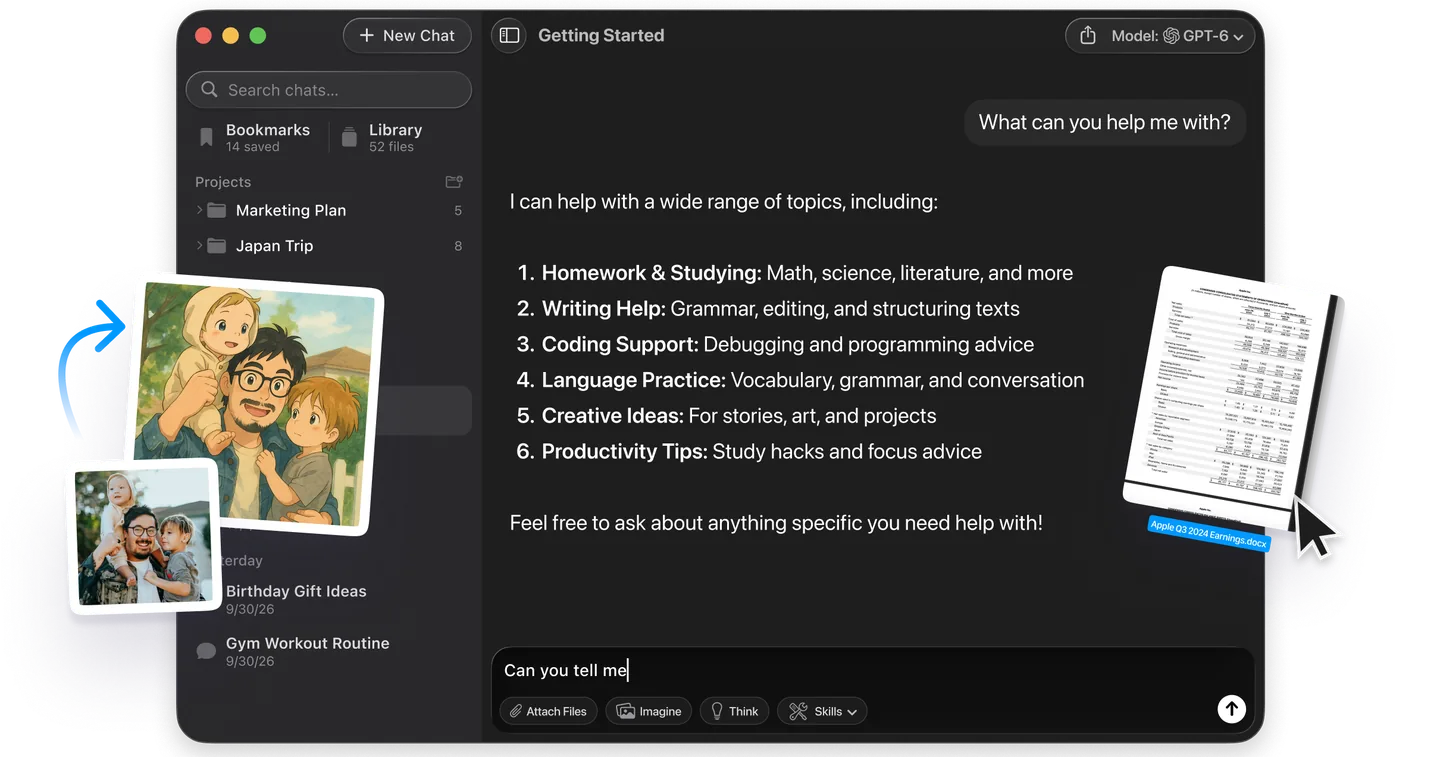
The honest answer for a lot of people is both, because they are strong at different things and neither entry plan is expensive enough to make the choice painful. The problem with running both is that only one of them has a proper Mac chat app, so the other lives in a browser tab you keep losing. A multi model Mac client solves that by putting every model behind one keystroke, and we compared the options here. Fello AI is built for exactly this: Grok, Gemini and the rest in one native window, without juggling four subscriptions and four tabs.
Frequently Asked Questions
Is Grok better than Gemini?
On raw capability, only against Google's cheaper models. Grok 4.7 scores 46.4 on the Artificial Analysis Intelligence Index v4.3.2, against 40.9 for Gemini 3.8 Flash and 29.7 for Gemini 3.1 Pro, but Gemini 4 Argon, on Google AI Pro and Ultra since 13 October, scores 52.6. Grok also wins on real-time X data and content flexibility. Gemini wins on ecosystem integration, multimodal work, long documents, the free tier, the cheap Flash API and Mac support. For most people those practical advantages matter more, which is why Gemini is still the better default.
Which has the bigger context window?
Gemini, by a wide margin. Gemini 3.8 Flash and Gemini 3.1 Pro both accept up to 1,048,576 tokens of input and return up to 65,536. Grok 4.7 runs a 500k token context window. For reading very long documents or whole codebases in a single pass, Gemini is the clearer choice.
Does Grok have a Mac app?
Not for chat. xAI has not released a Mac chat app, and its only desktop app is Grok Bot, a paid agent product. You can use grok.com in a browser, access Grok through the X app, or use a third party desktop client. Gemini, by contrast, has had a free native Mac app since 15 April 2026 that opens with Option and Space.
Which one is newer?
Gemini 4 Argon is the newest model, announced by Google on 30 September 2026 and open to Google AI Pro and Ultra subscribers since 13 October. Grok 4.7 (21 September 2026) and Gemini 3.8 Flash (September 2026) are also recent, while Gemini 3.1 Pro dates from 19 February 2026. Being newer does not automatically make a model better, so the decision still comes down to what you need it for.
Can I use Grok and Gemini at the same time?
Yes, and a lot of people do, because they are good at different things. The friction is that Gemini has a native Mac app and Grok does not, so one sits behind a hotkey and the other sits in a browser tab. A multi model Mac client puts both in the same window.