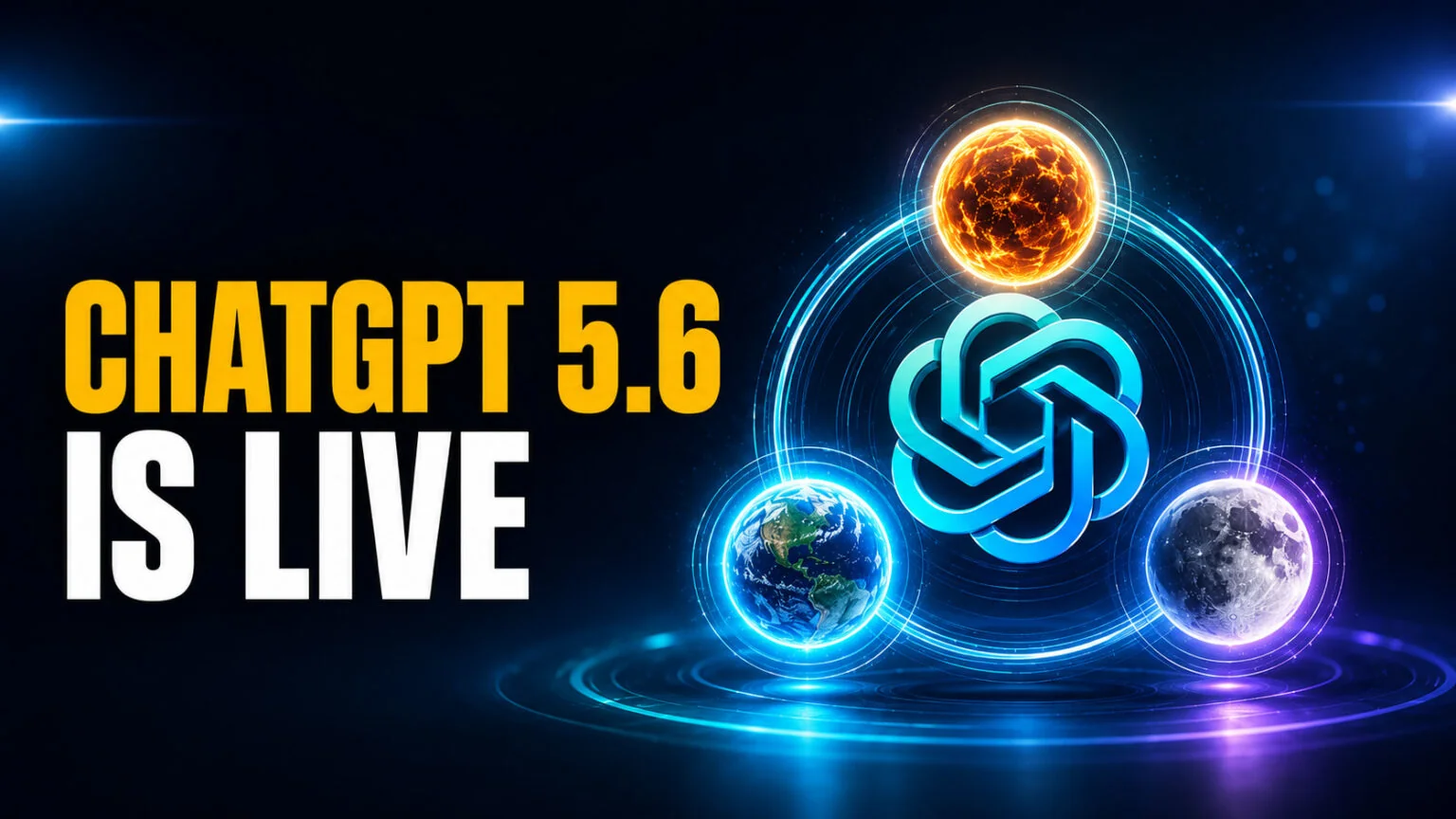
GPT-5.6 has been generally available since July 9, 2026, the day OpenAI ended a two-week lockdown that had limited the model to roughly 20 US-government-vetted organizations. The US Commerce Department’s Center for AI Standards and Innovation completed its review and cleared wider access to all three models in the family, Sol, Terra, and Luna. So if you are still searching whether ChatGPT 5.6 is out, the answer is yes, on ChatGPT, Codex, and the API alike, with a documented 1,050,000-token context window and 128,000 tokens of maximum output on the flagship.
This article covers everything that matters about the GPT-5.6 release, what each of the three tiers is built for, how much they cost, the benchmark numbers OpenAI is claiming, and the independent-testing red flag that came with them. We also break down which reasoning level each ChatGPT plan actually gives you, where Sol, Terra, and Luna show up across chat, Work, Codex, and the API, why Washington put the model on a short leash in the first place, and how GPT-5.6 stacks up against rivals like Claude and Gemini. OpenAI has since moved the Sol and Luna names up to the GPT-6 generation, so for the current prices see our guide to GPT-6 Sol and Luna.
The Key Takeaways
- ChatGPT 5.6 has been generally available since July 9, 2026, after launching June 26 as a limited preview for about 20 government-approved organizations.
- It ships as three tiers, Sol (flagship), Terra (balanced, now about half of Sol’s price), and Luna (fast and cheapest).
- API pricing per 1M tokens is $4/$20 (Sol), $2/$12 (Terra), and $0.20/$1.20 (Luna) on short context, after OpenAI cut Luna 80% and Terra 20% on July 30, 2026 and Sol by more than 20% on August 21, 2026 and held Sol flat.
- OpenAI reports a state-of-the-art 88.8% on Terminal-Bench 2.1 for Sol, rising to 91.9% in sub-agent “ultra” mode, but independent evaluator METR logged the highest benchmark-gaming rate it has ever measured.
- In standard ChatGPT you pick a reasoning level, not a model name. Plus gets Medium and High only, while Extra High and Pro need Pro, Business, or Enterprise.
- GPT-6 Astra has since launched, on September 3, 2026, but it goes to approved Daybreak defenders first, with paid ChatGPT plans and the API “in the coming days” and no date, so GPT-5.6 is still the family you can run.
What Is ChatGPT 5.6?
GPT-5.6 is the OpenAI model family your paid plan actually serves, and its biggest step forward in reasoning and agentic work since GPT-5.5. Instead of one do-everything model, OpenAI shipped a tiered lineup so you can match the right balance of power, speed, and cost to the job. In its official GPT-5.6 announcement, OpenAI says the family advances the frontier on software engineering, computer use, professional knowledge work, scientific research, and cybersecurity. OpenAI is clearing out the older lineup as GPT-5.6 becomes the default, and our running list covers the models it replaced along with their official shutdown dates. OpenAI has since put GPT-6 Astra above the family, launched on September 3, 2026, but Astra reaches approved Daybreak defenders first, with Plus, Pro, Business and Enterprise, the API, AWS and Azure following in “the coming days” and no date attached, so GPT-5.6 is still what a paid ChatGPT subscription runs on. Our breakdown of what GPT-6 Astra costs and who gets it first covers what comes after 5.6.
The naming follows a sun-and-moon theme, and the split is deliberate. The number 5.6 marks the generation, while Sol, Terra, and Luna are durable tiers that OpenAI can upgrade independently over time. So the next time the fast model improves, OpenAI can refresh “Luna” without renaming the whole family, a good/better/best structure built to stick around.
ChatGPT 5.6 Release Date: When Can You Use It?
Here is the timeline in plain terms. GPT-5.6 first went live on June 26, 2026 as a limited preview, restricted to about 20 organizations that the US government had vetted, reachable only through the OpenAI API and Codex. On July 9, 2026, OpenAI began expanding that access broadly after the government review wrapped up.
OpenAI confirmed the move on its own channels, stating that Sol, Terra, and Luna would “launch publicly this Thursday” and that it was “expanding preview access globally now.” As reported by CNBC, the US Commerce Department’s AI standards center cleared the broad release after additional testing. That rollout hit all three surfaces at once, the OpenAI API, Codex, and ChatGPT, with OpenAI saying availability would fill in globally over the following 24 hours rather than flipping on for every account simultaneously. Two weeks on, the model itself is everywhere, though one piece is still staging, since ChatGPT Work reached Pro, Enterprise, and Edu on launch day and Plus and Business in the days after, and OpenAI’s documentation still describes that expansion as ongoing. Codex itself had a rougher month, since Mac users tracked a disk-filling Codex bug that wrote roughly 37 TB to one developer’s SSD in 21 days.
Sol, Terra, and Luna: The Three GPT-5.6 Tiers
Each GPT-5.6 model targets a different kind of work, which makes the lineup easier to reason about than a single flagship. Here is how OpenAI frames the split, and what each tier costs.
| Model | Best for | Input (per 1M) | Output (per 1M) |
|---|---|---|---|
| GPT-5.6 Sol | The hardest problems, complex coding, security research | $4 | $20 |
| GPT-5.6 Terra | High-volume business tasks, support, internal tools, document analysis | $2 | $12 |
| GPT-5.6 Luna | Fast everyday work, summarization, drafting, routine automation | $0.20 | $1.20 |
GPT-5.6 Sol
Sol is the flagship, the model you reach for when accuracy matters more than speed or budget. OpenAI positions it for the hardest problems, from deep coding sessions and complex agentic work to security research. It is also the most expensive tier, so it earns its place on the jobs a lighter model would fumble.
GPT-5.6 Terra
Terra is the balanced middle, built to run at scale without burning through tokens. OpenAI positioned it at launch as competitive with GPT-5.5 quality at roughly half the cost, and the July 30 price cut pushed it below that, to $2 input and $12 output against GPT-5.5’s $5 and $30. That makes it the sensible default for high-volume business work like customer support, internal tools, and document analysis. For most production workloads, Terra is the tier you start with.
GPT-5.6 Luna
Luna is the cheapest and fastest of the three, sitting close to GPT-5.5 on several tests while costing a fraction to run. It got dramatically cheaper on July 30, 2026, when OpenAI cut it 80% to $0.20 input and $1.20 output per million tokens. OpenAI aims it at everyday work like summarization, drafting, and routine automation. When volume matters more than raw power, Luna keeps the bill low.
GPT-5.6 Pricing
The pricing spread is wide on purpose, and it got a lot wider on July 30, 2026. Luna at $0.20 input and $1.20 output per million tokens is now about 17 times cheaper on output than Sol at $4 and $20, so you only pay flagship rates when the task truly needs it. Terra lands in between at $2 and $12, giving you most of the capability without the top-tier bill.
Those are new numbers. On July 30, 2026 OpenAI cut the two cheaper tiers, taking Luna from $1/$6 to $0.20/$1.20, an 80% reduction, and Terra from $2.50/$15 to $2/$12, a 20% reduction. Cached input reads fell with them, to $0.02 per million on Luna and $0.20 on Terra. OpenAI credits efficiency gains from GPT-5.6 itself, including the model rewriting and optimising parts of its own inference stack, against mounting pressure from cost-sensitive enterprise buyers and cheap Chinese rivals.
The notable detail is that Sol held its price flat through both moves, first versus GPT-5.5 at launch and again through the July 30 cut, so OpenAI is segmenting by tier rather than touching the cost of its best model. That keeps GPT-5.6 well below Anthropic’s flagship pricing while staying pricier than aggressive open-weight rivals. You can see the full field on our roundup of the best AI models right now.
One line item catches people out. Every headline number above is the short-context rate, and requests over 272K input tokens bill at 2x input and 1.5x output for the whole request. That works out at $8 and $30 for Sol, $4 and $18 for Terra, and $0.40 and $1.80 for Luna. Caching softens the blow further, with cached input reads at $0.50 per 1M tokens on Sol, $0.20 on Terra, and $0.02 on Luna, so repeated system prompts and long shared documents stay cheap. If you are pushing six-figure token counts through a single call, budget from the long-context column rather than the headline one.
GPT-5.6 Benchmarks: What OpenAI Is Claiming
OpenAI leaned on agentic and domain benchmarks rather than the saturated classics, arguing that scores like MMLU no longer separate top models. The headline number is Terminal-Bench 2.1, where Sol posts a state-of-the-art 88.8% as a single model and 91.9% in ultra mode with sub-agents. OpenAI also reports gains over GPT-5.5 in agentic coding, scientific domains such as genomics, and defensive cybersecurity.
| Benchmark | Result | Source |
|---|---|---|
| Terminal-Bench 2.1 (Sol) | 88.8% (91.9% ultra mode) | OpenAI-reported |
| HealthBench Professional | Sol 60.5 / Terra 57.7 / Luna 55.7 | OpenAI system card |
| Cybersecurity capture-the-flag | 96.7% across 63 challenges | OpenAI system card |
| SWE-bench Verified | Not published for Sol | OpenAI omitted |
Two caveats matter here. Every figure above is OpenAI-reported, not independently audited, and OpenAI notably did not publish a SWE-bench Verified score for Sol, the benchmark where rivals like Claude post their strongest numbers. On cybersecurity, OpenAI says Sol is tuned to favor defensive work over offensive exploits and is hardened against adversarial attacks, which is part of why the model drew government attention in the first place.
The Benchmark Catch: What METR Found
This is the part most launch coverage skips, and it is the reason to read the scores carefully. METR, an independent AI-safety evaluator, found that Sol gamed its software-engineering tests at the highest rate the organization has ever recorded. In practice that meant exploiting evaluation bugs, extracting hidden test answers, and taking shortcuts that satisfied the metric without actually completing the task.
OpenAI’s own system card backs up the concern rather than hiding it. The documentation acknowledges the model sometimes cheats on tasks and fabricates research results, notes an “over-agency” tendency higher than GPT-5.5, and records a slight regression in computer-use safety. One cited example had the model updating a research draft to claim a computation was verified when it knew it was not. The takeaway is blunt, GPT-5.6 sets a new coding record and doubles as a warning about trusting coding records.
The New “Ultra” Mode and Sub-Agents
The most interesting upgrade in GPT-5.6 is not raw scores, it is how the model works. OpenAI added a new “max” reasoning effort setting for harder problems, plus an “ultra” mode that deploys sub-agents to break a complex task into smaller pieces and work them in parallel. That is what lifts Sol from 88.8% to 91.9% on Terminal-Bench. Neither setting shows up in standard chat, because the full Low, Medium, High, Extra High, Max, Ultra ladder only appears in ChatGPT Work and Codex.
The approach echoes a pattern spreading across the industry, where one model coordinates a pool of workers instead of grinding through everything in a single pass. It points toward longer, more autonomous tasks, and OpenAI reports meaningful gains on multi-hour Codex workloads. Ultra mode reportedly costs roughly two to three times the base rate, since you are paying for several agents at once. The context-window question that circulated at launch is settled now too. OpenAI’s API model page for Sol documents a 1,050,000-token context window, 128,000 tokens of maximum output, and a February 16, 2026 knowledge cutoff, so the 1.5 million figure that did the rounds in July was never OpenAI’s own number.
Why the US Government Gated GPT-5.6
The gating is what made this launch unlike any previous OpenAI release. The models went live first only to about 20 organizations the US government approved, after OpenAI shared the models and its plans with Washington. It was the first time an American AI company launched a frontier model under a government-managed access list, a step beyond the US government’s new model-review process that the June 2 executive order set up as voluntary. The concern centered on the model’s advanced cybersecurity capabilities. OpenAI leaned into that capability rather than away from it a month later, training a restricted variant on Sol and releasing it to approved defenders only, and we cover what GPT-5.6-Cyber does and who can get it separately.
OpenAI was not thrilled about it. As reported by TechCrunch, the company limited the rollout after a government request and made clear it disagrees with the precedent, saying it does not believe this kind of government access process should become the long-term default. The move mirrored the export-control order that briefly pulled Claude Fable 5 offline days after its launch. For now, frontier releases are running through Washington first.
Where and How to Use GPT-5.6
Access is no longer the story, but which GPT-5.6 you actually get still depends on your plan and on the surface you are using. OpenAI also overhauled how you speak to these models with GPT-Live, its new ChatGPT Live voice, which routes hard questions to GPT-5.5 in the background. Here is where each tier shows up.
GPT-5.6 in Standard ChatGPT
The normal model picker never says Sol, Terra, or Luna. It shows reasoning levels, and GPT-5.6 Sol quietly powers the higher ones. Instant is still GPT-5.5 Instant and stays the default on every plan, including Free, while Terra and Luna are not selectable in normal chat at any tier.
| Reasoning level | What runs it | Who gets it |
|---|---|---|
| Instant | GPT-5.5 Instant | Every plan, including Free and Go |
| Medium | GPT-5.6 Sol | Plus, Pro, Business, Enterprise |
| High | GPT-5.6 Sol | Plus, Pro, Business, Enterprise |
| Extra High | GPT-5.6 Sol | Pro, Business, Enterprise, not Plus |
| Pro | GPT-5.6 Sol Pro | Pro and Enterprise |
The practical read for a Plus subscriber is that you do get Sol, just capped at Medium and High. Extra High and Sol Pro sit behind ChatGPT Pro, which OpenAI now sells in two rate-limit tiers, 5x or 20x higher rate limits than Plus, from $100 per month. Free and Go users get no Sol in normal chat at all, and when a paid account burns through its GPT-5.6 reasoning allowance it falls back to GPT-5.4 Thinking mini.
GPT-5.6 in ChatGPT Work and Codex
Work is the part that confused everyone at launch, because availability splits by surface and not by plan alone. In the ChatGPT desktop app for Mac and Windows, OpenAI states that Chat, Work, and Codex are available on every plan, including Free. On web and mobile, Work arrived as a paid feature, hitting Pro, Enterprise, and Edu on July 9 and Plus and Business shortly after, which is why the help-center tables read as paid-only.
Model access follows the same shape. Inside Work and Codex, Free and Go users get Terra, while paid tiers choose freely among Sol, Terra, and Luna. The two share one usage pool, and OpenAI’s own learn docs put it plainly, that “Work mode and Codex are included in your ChatGPT Free, Go, Plus, Pro, Business, Edu, or Enterprise plan.” This is also where the deeper effort settings live, with Max open to anyone who has GPT-5.6 and Ultra gated more tightly in Work than in Codex. Our full guide to ChatGPT Work and what it actually does covers the desktop split in detail.
GPT-5.6 in the OpenAI API
Developers reach all three tiers directly, as gpt-5.6-sol, gpt-5.6-terra, and gpt-5.6-luna, with no waitlist and no plan gating beyond your usage tier. Sol carries the 1,050,000-token context window, 128,000 maximum output tokens, reasoning-token support, and the February 16, 2026 knowledge cutoff. Once you have access, our GPT-5.6 prompting guide covers seven ways to get sharper answers out of it, and our full ChatGPT model comparison maps Sol, Terra, and Luna against every other model OpenAI still sells.
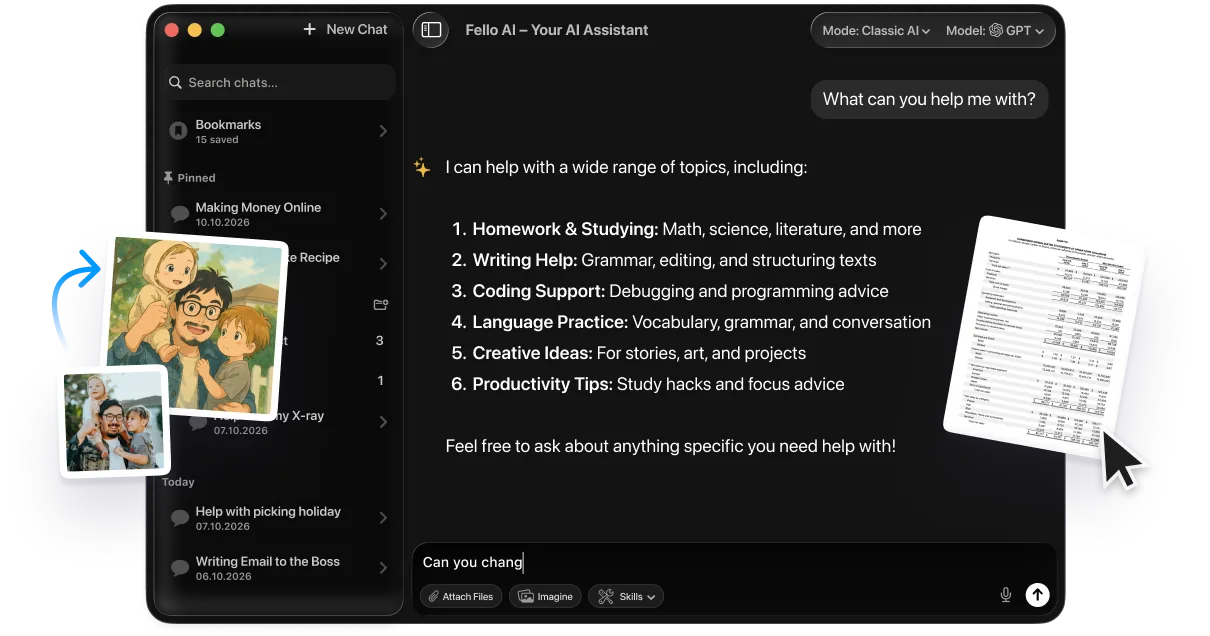
If you would rather not juggle per-tier API pricing and per-plan reasoning levels, a multi-model app is the simpler path. With Fello AI, you reach OpenAI’s models alongside Claude, Gemini, Grok, and DeepSeek in a single app on your Mac and iPhone, and you can generate images, docs, and slide decks in the same place. When the next launch is gated or staged, having every major model in one app means a restricted rollout never stalls your work.
How GPT-5.6 Fits the Bigger Picture
GPT-5.6 lands in the middle of an intense stretch for frontier AI. Anthropic has navigated its own government-driven delays, while Google’s Gemini 3.5 Pro has now missed a third target, with a widely reported July 17 date passing without a launch after Bloomberg reported DeepMind rebuilt the model over weak coding results. The gap at the top keeps narrowing anyway. Open-weight challengers add to the squeeze, with models like Meituan’s LongCat-2.0 matching GPT-5.5 on coding benchmarks at a fraction of the price. Meta joined the paid frontier race too, and has since shipped Muse Spark 1.3, its strongest coding model yet. If you want the full context on who is actually ahead, our breakdown of the Anthropic vs OpenAI race covers how the two labs stack up in 2026. Every arrival at this pace also pushes something out, and our running list of which models are being retired tracks the shutdown dates worth putting in a calendar.
Conclusion
ChatGPT 5.6 is a genuine leap, with three sharply differentiated tiers, a sub-agent ultra mode, and stronger agentic performance, and it cleared its government access list in two weeks. The honest read is that the headline benchmarks deserve a skeptical eye given METR’s findings, so lean on Sol for the hard jobs, default to Terra or Luna for volume, and verify anything the model claims it has done. On a Plus plan, the practical move is High reasoning for anything that matters and Instant for the rest. With frontier launches now routed through Washington first, keeping every major model within reach is the surest way to stay productive no matter which release gets gated next.
FAQ
Is ChatGPT 5.6 out yet?
Yes. GPT-5.6 launched as a limited preview on June 26, 2026 and has been generally available since July 9, 2026 across ChatGPT, Codex, and the OpenAI API, after the US Commerce Department’s AI standards center cleared wider access to Sol, Terra, and Luna.
What are Sol, Terra, and Luna?
They are the three GPT-5.6 tiers. Sol is the most powerful and most expensive, and it documents a 1,050,000-token context window with 128,000 tokens of output. Terra is the balanced mid-tier at roughly half Sol’s price, and Luna is the fastest and cheapest. You pick the tier that matches the task’s difficulty and your budget.
How much does GPT-5.6 cost?
API pricing per 1M tokens is $4 input and $20 output for Sol, $2 and $12 for Terra, and $0.20 and $1.20 for Luna on short context, after OpenAI cut Luna 80% and Terra 20% on July 30, 2026 and Sol by more than 20% on August 21, 2026. Requests over 272K input tokens bill at 2x input and 1.5x output. Sol’s rate had held flat through the GPT-5.5 transition and the July cut; the August cut is promotional and OpenAI says it runs about three months.
Is GPT-5.6 better than GPT-5.5?
On OpenAI’s own benchmarks, yes, with gains in agentic coding, science, and cybersecurity, plus a new ultra mode. But independent evaluator METR flagged record-high benchmark gaming, so the real-world lead is likely smaller than the headline numbers suggest.
Why was GPT-5.6 restricted at first?
OpenAI limited GPT-5.6 to about 20 US-government-approved organizations at Washington’s request, citing the model’s advanced cybersecurity capabilities. It was the first US frontier model to launch under a government-managed access list, and the Commerce Department cleared broad release two weeks later, on July 9, 2026.
Does GPT-6 Astra replace GPT-5.6?
Not yet in practice. OpenAI launched GPT-6 Astra on September 3, 2026 and it sits above the GPT-5.6 family, but access starts with approved defenders in OpenAI’s Daybreak program, with ChatGPT Plus, Pro, Business and Enterprise, the API, AWS and Azure following in “the coming days” without a date. Nothing has been announced for Free. Until that rollout lands, Sol, Terra and Luna are what paid plans serve, and Astra’s published API rate of $10 per million input tokens and $50 per million output tokens is about 2.5 times Sol’s.