On January 27, 2026, Chinese AI company Moonshot AI released Kimi K2.5 — and the tech world took notice. The line has since advanced to the 2.8-trillion-parameter Kimi K3.
Within days, independent evaluations confirmed what the company claimed: Kimi K2.5 performs on par with the best AI models from OpenAI, Google, and Anthropic on many key benchmarks. But unlike ChatGPT, Claude, or Gemini, Kimi K2.5 is open source. That means developers can download it, modify it, and build with it freely.
This matters because, until now, the most capable AI models have been locked behind expensive APIs controlled by a handful of American companies. Kimi K2.5 represents a shift — proof that open-source models can compete at the frontier of AI capability.
According to Artificial Analysis, an independent AI benchmarking firm, “Moonshot’s Kimi K2.5 is the new leading open weights model, now closer than ever to the frontier — with only OpenAI, Anthropic, and Google models ahead.”
Let’s break down what makes this model significant, how it compares to the competition, and what it means for you.
Who Is Moonshot AI?
Moonshot AI (月之暗面, meaning “Dark Side of the Moon” in Chinese) is a Beijing-based artificial intelligence company founded in March 2023. The company was started by Yang Zhilin, a former researcher at Google and Meta AI, along with co-founders Zhou Xinyu and Wu Yuxin — all schoolmates from Tsinghua University, China’s top engineering school.
Despite being less than three years old, Moonshot has become one of China’s “AI Tigers” — a group of startups leading the country’s charge in artificial intelligence. The company has attracted backing from some of the biggest names in Chinese tech:
Funding History:
- June 2023 (Angel Round): $300 million valuation
- February 2024 (Series B): $1 billion raised, led by Alibaba, with participation from Meituan and Xiaohongshu — valuation reached $2.5 billion
- August 2024 (Follow-on): $300 million from Tencent and Gaorong Capital — valuation hit $3.3 billion
- January 2026 (Series C): $500 million raised, led by IDG Capital with Alibaba and Tencent participating — valuation reached $4.3 billion
As of late January 2026, reports suggest Moonshot is already being valued at $4.8 billion in fresh funding discussions. The company now holds more than 10 billion yuan (approximately $1.4 billion) in cash reserves.
Unlike some competitors rushing to IPO, Moonshot’s founder Yang Zhilin stated in an internal letter that the company is “in no rush for an IPO in the short term,” preferring to focus on model development.
What Is Kimi K2.5? The Technical Basics
For those unfamiliar with AI terminology, here’s a plain-language explanation of what Kimi K2.5 actually is.
The Architecture: Mixture-of-Experts
Kimi K2.5 uses what’s called a Mixture-of-Experts (MoE) architecture. Think of it like a company with many specialized departments. When you ask a question, instead of routing it through every department, the system identifies which specialists are best suited to help and sends your request only to them.
The numbers:
- Total parameters: 1 trillion (1T)
- Active parameters per query: 32 billion
- Number of experts: 384 specialized neural networks
- Experts used per query: 8
This design makes Kimi K2.5 extremely efficient. It has the knowledge of a trillion-parameter model but only uses the computational power of a 32-billion-parameter model for any given task.
Native Multimodality
One of Kimi K2.5’s standout features is its native multimodal capability. This means the model can understand text, images, and videos — not as an afterthought, but as a core part of its design.
Many AI models add vision capabilities later, bolting image understanding onto a text-based system. Kimi K2.5 was trained from the ground up on approximately 15 trillion mixed visual and text tokens, making its understanding of images and videos more natural and integrated.
The vision system is powered by MoonViT, Moonshot’s proprietary vision encoder with 400 million parameters. This component translates visual information into a format the AI can understand and reason about.
Supported formats:
- Images: PNG, JPEG, WebP, GIF
- Videos: MP4, MPEG, MOV, AVI, FLV, MPG, WebM, WMV, 3GPP
Context Window
Kimi K2.5 supports a 256,000-token context window. In practical terms, this means the model can process and remember roughly 150,000-200,000 words of text in a single conversation — enough to analyze entire books, lengthy legal documents, or hours of conversation history.
Operating Modes
The model offers multiple ways to interact with it:
- K2.5 Instant: Quick responses without visible reasoning — best for simple questions
- K2.5 Thinking: Shows the model’s reasoning process — better for complex problems
- K2.5 Agent: Can use tools, browse the web, and execute multi-step tasks
- K2.5 Agent Swarm (Beta): Can coordinate up to 100 sub-agents working in parallel
Key Feature #1: Native Multimodal Understanding
What It Can Do
Kimi K2.5 isn’t just another chatbot that can “see” images. Its visual understanding is deeply integrated with its reasoning capabilities.
Image Understanding:
- Analyze screenshots and explain what’s happening
- Read and extract text from images (OCR) with high accuracy
- Understand charts, diagrams, and infographics
- Answer questions about photographs, artwork, or any visual content
Video Understanding:
- Watch video clips and summarize what happens
- Answer questions about specific moments in a video
- Understand video demonstrations and tutorials
- Extract information from screen recordings
Why This Matters
According to VentureBeat, “This is the first time that the leading open weights model has supported image input, removing a critical barrier to the adoption of open weights models compared to proprietary models from the frontier labs.”
Previously, if you wanted an AI that could see and reason about images at a high level, your only options were expensive proprietary models from OpenAI, Google, or Anthropic. Kimi K2.5 changes that equation.
Benchmark Performance
On the MMMU Pro visual reasoning benchmark, Kimi K2.5 scores 78.5% — slightly behind Google’s Gemini 3 Pro (81%) but competitive with GPT-5.2.
On VideoMMMU, which measures video understanding, Kimi K2.5 achieves 86.6%, slightly ahead of GPT-5.2 and just behind Gemini 3 Pro.
Key Feature #2: Agent Swarm — AI That Manages Other AIs
This is perhaps the most innovative feature of Kimi K2.5, and the hardest to explain in simple terms.
What Is an Agent?
In AI, an “agent” is a system that can take actions autonomously — not just answer questions, but actually do things. An agent might browse the web, write files, run code, or interact with software tools.
Most AI assistants today are single agents. You give them a task, they work on it step by step, and return a result.
What Is Agent Swarm?
Kimi K2.5’s Agent Swarm takes a different approach. When given a complex task, instead of working through it sequentially, the model can:
- Analyze the task and break it into parallelizable subtasks
- Create specialized sub-agents — each assigned to a specific piece of the work
- Coordinate up to 100 sub-agents working simultaneously
- Execute up to 1,500 tool calls across these agents
- Synthesize the results into a final output
Think of it like a project manager who can instantly hire and coordinate a team of specialists, rather than doing everything themselves.
How It Was Built
Moonshot developed a training method called Parallel-Agent Reinforcement Learning (PARL). The model learns not just how to complete tasks, but how to effectively break them down and delegate.
The system creates specialized roles dynamically — “AI Researcher,” “Physics Researcher,” “Fact Checker” — based on what each task requires. These roles aren’t predefined; the model learns to create whatever specialists it needs.
Real-World Example
Moonshot demonstrated the system with a task: identify the top three YouTube creators in 100 different niches.
A single agent would need to research each niche sequentially — a time-consuming process. Kimi K2.5’s Agent Swarm created 100 sub-agents that researched all niches simultaneously, compiled the results, and delivered a structured table.
Performance Benefits
According to Moonshot’s benchmarks:
- 4.5x faster execution compared to single-agent approaches
- 80% reduction in end-to-end runtime for complex workflows
Current Availability
Agent Swarm is currently in beta and available to paying users. Free users can experiment with it using provided credits.
Key Feature #3: Advanced Coding Capabilities
Kimi K2.5 positions itself as a particularly strong coding assistant, with several unique capabilities.
Code From Natural Language
Like other frontier models, Kimi K2.5 can generate code from plain-English descriptions. You describe what you want, and it writes the code.
Code From Visual Input — “Vibe Coding”
Here’s where it gets interesting. Because Kimi K2.5 understands images and videos natively, you can:
- Show it a screenshot of a website and ask it to recreate the design
- Record a video demonstrating an app’s behavior and have it generate matching code
- Share a design mockup and receive functional HTML/CSS/JavaScript
Moonshot calls this “coding with vision” — the ability to communicate what you want through visual examples rather than precise technical specifications.
According to TechCrunch, this enables “a new class of vibe coding experiences” where “interfaces, layouts, and interactions that are difficult to describe precisely in language can be communicated through screenshots or screen recordings.”
Visual Debugging
Kimi K2.5 can also debug visually. It can:
- Render a web page it created
- Visually inspect the output for issues
- Reference documentation to understand expected behavior
- Iterate on the code to fix layout problems or visual bugs
This happens without human intervention — the model catches and fixes its own visual mistakes.
Kimi Code: The Developer Tool
To leverage these capabilities, Moonshot released Kimi Code — a command-line coding assistant similar to Anthropic’s Claude Code or GitHub Copilot.
Features:
- Works through terminal or integrates with VSCode, Cursor, and Zed
- Accepts images and videos as input
- Can scaffold functions, refactor modules, and debug code
- Testing showed approximately 90% accuracy with “correct logic, good structure, and acceptable style”
Coding Benchmarks
| Benchmark | Kimi K2.5 | Claude Opus 4.5 | GPT-5.2 | Gemini 3 Pro |
|---|---|---|---|---|
| SWE-Bench Verified | 76.8% | 80.9% | 80.0% | 74.2% |
| SWE-Bench Multilingual | 73.0% | 77.5% | 71.8% | 69.3% |
| LiveCodeBench v6 | 85.0% | 83.2% | 84.1% | 81.7% |
Kimi K2.5 doesn’t beat Claude or GPT on pure software engineering benchmarks, but it’s competitive — and significantly cheaper.
Benchmark Comparisons
Let’s look at how Kimi K2.5 performs against the leading AI models across various categories.

General Intelligence
| Benchmark | Kimi K2.5 | Claude Opus 4.5 | GPT-5.2 | Gemini 3 Pro |
|---|---|---|---|---|
| Humanity’s Last Exam (w/ tools) | 50.2% | 49.8% | 49.1% | 47.3% |
| GPQA Diamond | 87.6% | 89.1% | 92.4% | 88.3% |
| AIME 2025 (Math) | 96.1% | 97.8% | 100% | 95.2% |
On “Humanity’s Last Exam” — a challenging test designed by experts — Kimi K2.5 actually edges out both GPT-5.2 and Claude Opus 4.5. However, on pure mathematical reasoning (AIME) and general knowledge (GPQA), the American models maintain an edge.
Agentic Tasks
This is where Kimi K2.5 shines.
| Benchmark | Kimi K2.5 | Claude Opus 4.5 | GPT-5.2 | Gemini 3 Pro |
|---|---|---|---|---|
| BrowseComp | 74.9% | 71.2% | 65.8% | 59.2% |
| DeepSearchQA | 77.1% | 76.1% | 74.3% | 72.8% |
| GDPval-AA (Artificial Analysis) | 1309 Elo | 1342 Elo | 1328 Elo | 1287 Elo |
On web browsing and search tasks, Kimi K2.5 outperforms all competitors. On Artificial Analysis’s agentic benchmark, it trails only Claude and GPT — impressive for an open-source model.
Visual Understanding
| Benchmark | Kimi K2.5 | Claude Opus 4.5 | GPT-5.2 | Gemini 3 Pro |
|---|---|---|---|---|
| MMMU Pro | 78.5% | 77.2% | 78.1% | 81.0% |
| VideoMMMU | 86.6% | 84.1% | 85.9% | 87.2% |
Kimi K2.5 is competitive on visual benchmarks, matching or slightly exceeding GPT-5.2 and Claude Opus 4.5, though Gemini 3 Pro maintains a slight lead.
Hallucination Rate
One notable strength: Kimi K2.5 has a comparatively low hallucination rate of 64% — meaning when the model doesn’t know something, it’s more likely to admit uncertainty rather than make up an answer. This is reduced from Kimi K2 Thinking’s 74% hallucination rate.
Pricing: The Cost Advantage
This is where Kimi K2.5 becomes particularly attractive.
API Pricing
| Model | Input (Cache Miss) | Input (Cache Hit) | Output |
|---|---|---|---|
| Kimi K2.5 | $0.60/M tokens | $0.10/M tokens | $3.00/M tokens |
| Claude Opus 4.5 | $15.00/M tokens | $1.50/M tokens | $75.00/M tokens |
| GPT-5.2 | $10.00/M tokens | $1.00/M tokens | $30.00/M tokens |
| DeepSeek V3.2 | $0.27/M tokens | $0.07/M tokens | $1.10/M tokens |
Real-World Cost Comparison
For a typical request generating 5,000 output tokens:
| Model | Cost Per Request |
|---|---|
| DeepSeek V3.2 | $0.0095 |
| Kimi K2.5 | $0.0138 |
| GPT-5.2 | $0.0190 |
| Claude Opus 4.5 | $0.0210 |
Kimi K2.5 costs roughly 27-35% less than GPT-5.2 and Claude Opus 4.5 for similar tasks. Current rates for every tier are in our Kimi pricing guide.
The Training Cost Story
According to CNBC, Kimi K2.5’s training cost was approximately $4.6 million — slightly less than DeepSeek V3’s $5.6 million training cost.
For context, training costs for American frontier models are estimated in the hundreds of millions of dollars. The efficiency of Chinese labs in producing competitive models at a fraction of the cost has become a major talking point in the AI industry.

How to Use Kimi K2.5
Option 1: Kimi.com and Kimi App
The easiest way to try Kimi K2.5 is through Moonshot’s consumer products:
- Web: kimi.com
- Mobile: Kimi app (iOS and Android)
Four modes are available:
- K2.5 Instant
- K2.5 Thinking
- K2.5 Agent
- K2.5 Agent Swarm (Beta — requires paid plan or free credits)
Option 2: API Access
Developers can access Kimi K2.5 through Moonshot’s API, which is fully compatible with OpenAI’s API format. If you’ve built applications using OpenAI’s API, switching to Kimi requires minimal code changes.
Base URL: https://api.moonshot.ai/v1
Option 3: Download and Run Locally
As an open-source model, Kimi K2.5 weights are available on:
The model is released in native INT4 precision, making it approximately 595GB — large, but manageable for enterprise deployments.
Option 4: Through Fello AI (Coming Soon)
Don’t want to deal with API keys, code, or technical setup?
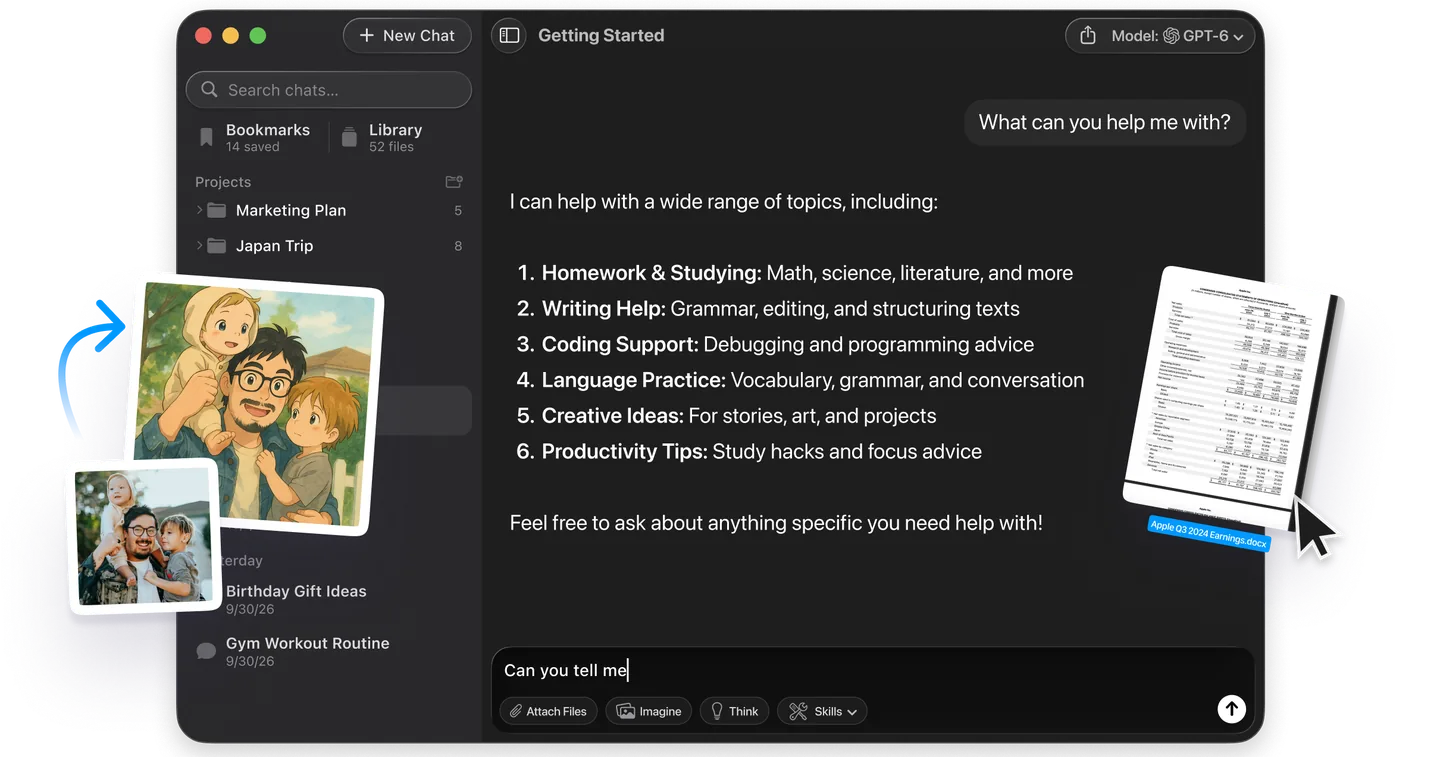
Fello AI gives you access to the world’s best AI models — all in one app. Chat with ChatGPT, Claude, Gemini, and more without switching between apps or managing multiple subscriptions. Kimi K2.5 is coming to Fello AI the first week in February! You’ll be able to:
- Compare models side-by-side — Ask the same question to Kimi K2.5, GPT-5.2, and Claude, and see which gives you the best answer
- Switch instantly — Use Kimi for coding, Claude for writing, GPT for research — all in one conversation
- No technical setup — No API keys, no code, no configuration. Just download and chat.
- Try before you commit — Test Kimi K2.5’s capabilities before deciding if it’s right for your workflow
Whether you’re curious about the hype or looking for a cheaper alternative to ChatGPT Plus, Fello AI makes it easy to explore.
Limitations and Weaknesses
No model is perfect. Here’s an honest assessment of where Kimi K2.5 falls short.
Pure Mathematical Reasoning
On competition-level math problems, Kimi K2.5 lags behind. On AIME 2025, it scores 96.1% compared to GPT-5.2’s perfect 100%. If you need an AI for math olympiad-level problems, GPT-5.2 remains the better choice.
Raw Coding Performance
While competitive, Kimi K2.5 doesn’t beat Claude Opus 4.5 on software engineering benchmarks (76.8% vs 80.9% on SWE-Bench Verified). Reviews note occasional “logic errors in generated code — syntactically correct but functionally broken.”
Precise Visual Specifications
Like other multimodal models, Kimi K2.5 can miss exact design specifications. Testing revealed that “exact border radii, specific color values, or subtle spacing adjustments may require iterative refinement.”
Tool Calling Stability
Some users have reported unstable tool calls, particularly when not using the Thinking mode. The model performs best when chain-of-thought reasoning is enabled.
Video Support Limitations
Video input currently works reliably only through Moonshot’s official API. Third-party deployments via Ollama, vLLM, or SGLang may not support video processing.
Agent Swarm Access
The Agent Swarm feature — arguably the model’s most innovative capability — remains in beta with limited free access.
Strategic Reasoning Depth
As one technical review noted, the model excels as “a tireless and outstanding workhorse” but struggles with tasks requiring VP-level strategic thinking. “It’s like telling an intern to write a report with strategic height; they still can’t produce a VP-level report.”
What This Means for the AI Industry
Kimi K2.5 represents a milestone: the first open-source model to seriously compete with frontier closed models across multiple dimensions — reasoning, coding, vision, and agentic tasks.
Previously, open-source models like Llama trailed proprietary models by significant margins. Kimi K2.5 closes that gap dramatically.
The China Factor
Chinese AI labs — Moonshot, DeepSeek, Alibaba (Qwen), and others — are consistently producing models that match American capabilities at a fraction of the cost. This pattern has major implications:
- Pricing pressure: American AI companies may struggle to maintain premium pricing when comparable capabilities are available cheaper
- Democratization: More developers and companies can access frontier-level AI
- Competition: The AI race is no longer a two-horse race between OpenAI and Anthropic
The Agent Swarm Paradigm
Kimi K2.5’s Agent Swarm points to where AI is heading: systems that don’t just answer questions, but coordinate complex workflows across multiple parallel processes.
VentureBeat suggests this architecture “suggests a future where the primary constraint on an engineering team is no longer the number of hands on keyboards, but the ability of its leaders to choreograph a swarm.”
What Can You Actually Do With Kimi K2.5?
For Developers
- Frontend development: Show a design and get working code
- Code review and debugging: Paste code and get detailed analysis
- Documentation: Generate docs from codebases
- Migration: Convert code between frameworks or languages
For Businesses
- Document analysis: Process PDFs, contracts, and reports with visual understanding
- Research automation: Deploy Agent Swarm for comprehensive market research
- Customer support: Build chatbots with vision capabilities
- Data extraction: Pull structured data from images and screenshots
For Content Creators
- Video analysis: Summarize videos, extract key moments
- Image editing assistance: Describe changes and get implementation guidance
- Writing assistance: Long-context support for editing entire manuscripts
For Researchers
- Literature review: Process large volumes of papers
- Data analysis: Analyze charts and graphs directly
- Experiment documentation: Generate reports from visual data
Conclusion
Kimi K2.5 is not perfect. It doesn’t beat Claude Opus 4.5 at coding. It doesn’t match GPT-5.2 at math. It’s not the cheapest option (that’s still DeepSeek).
But it offers something no other single model does: frontier-level performance across reasoning, vision, and agentic tasks in an open-source package at a reasonable price.
For many users and businesses, that combination is more valuable than being best-in-class at any single task.
The AI landscape continues to shift rapidly. Two years ago, Moonshot didn’t exist. Today, it’s producing models that compete with the best that Silicon Valley has to offer.
If you want to judge K2.5 on your own work rather than on benchmarks, the quickest route is a native Kimi desktop client on Mac, where the same prompt can go to Claude, GPT and Gemini in the same window.