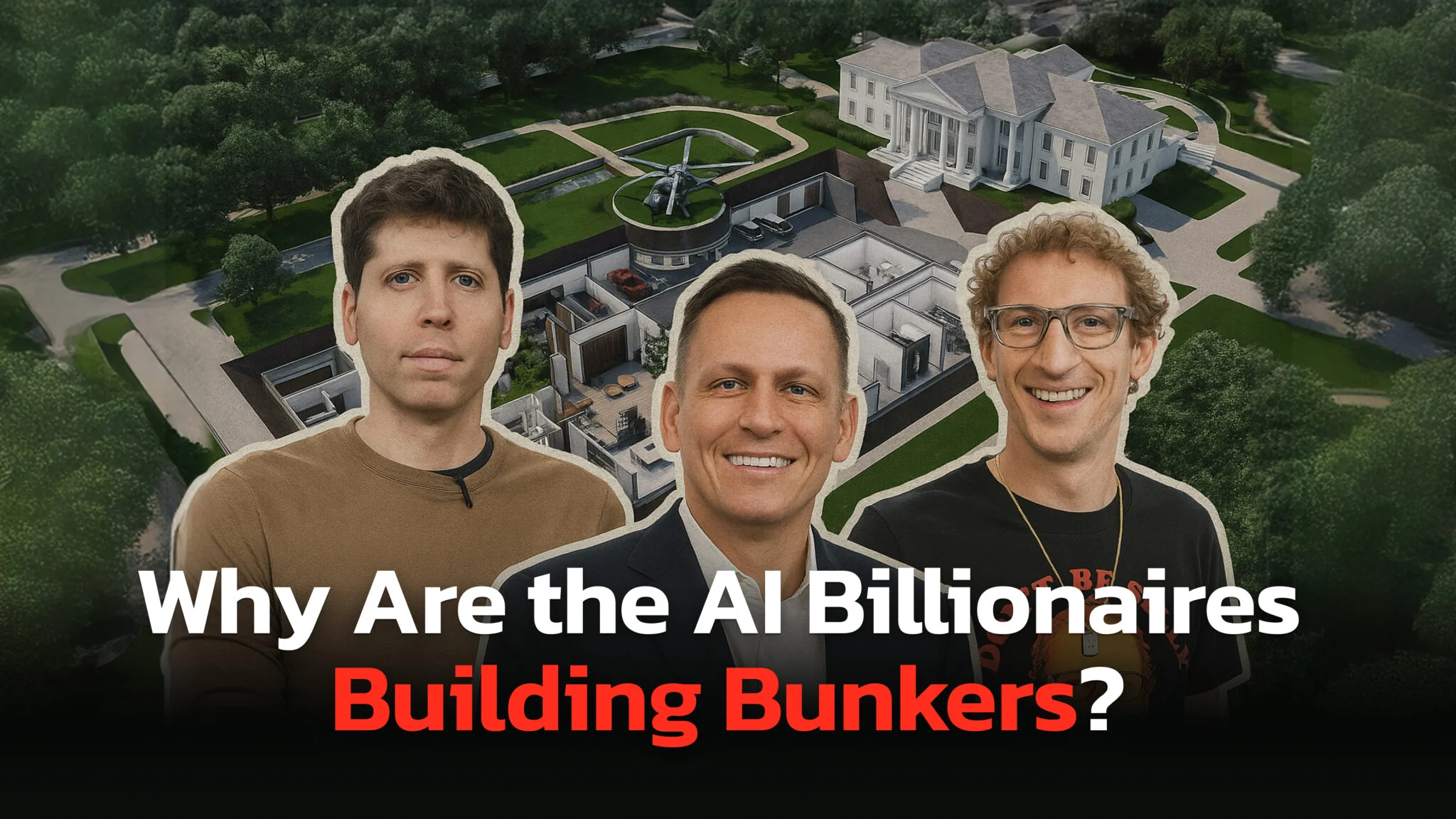
It sounds like something from a sci-fi movie: the same tech billionaires shaping our digital future are quietly preparing for a much darker one. From private bunkers in Hawaii to fortified basements and New Zealand hideouts, several AI leaders are investing heavily in survival infrastructure.
Some of the most influential people in tech are quietly preparing for worst-case scenarios. They are heavily involved in AI, automation, and platforms that billions rely on daily. Their decisions to invest in bunkers or remote shelters raise a practical question: why now, and what are they preparing for?
Let’s break down what’s really going on—who’s building what, where, and why—and then explore the bigger picture behind this growing trend.
1. Peter Thiel
Peter Thiel, co-founder of PayPal and Palantir, has long had a fascination with New Zealand. He’s even a citizen.
In recent years, he submitted plans to build what was described as a “luxury lodge” on a remote 193-hectare estate near Lake Wānaka. On the surface, it sounded like a wellness retreat. But local reports and investigative journalists weren’t convinced. They pointed to signs of something more like a high-security bunker: secluded farmland, limited visibility, potential underground facilities.
Environmental groups opposed the development, arguing it would damage the landscape. Local authorities eventually blocked it. As of now, the plan appears to be shelved—but the speculation hasn’t stopped.
What we know:
- The plans were real.
- The location was remote, high-elevation, and strategic.
- It matches a long-standing rumor: that Thiel and other elites view New Zealand as the ultimate getaway if the world goes sideways.

2. Mark Zuckerberg
Mark Zuckerberg’s compound on Kauai, Hawaii, is a beachfront mansion with a 2,300-acre ranch called Koʻolau Ranch that includes agricultural operations, multiple mansions, and something buried beneath it all: a 5,000-square-foot underground shelter.
According to building permits and reports from Wired and Business Insider, the structure includes:
- Blast-resistant doors
- Tunnels between buildings
- Self-sufficiency systems like water tanks and pumps
- Escape hatches
- Layered security infrastructure
Zuckerberg, for his part, downplays the idea that this is a “doomsday bunker.” He calls it a “storm shelter” or “basement.” But the scale and design go far beyond what most people would consider hurricane prep.
What we know:
- The underground structure is confirmed via permits and reports.
- It’s highly secure and built for autonomy.
- It fits into a broader estate that looks increasingly designed for isolation and resilience.

3. Sam Altman
Sam Altman, CEO of OpenAI, has been more open than others about his fears. In interviews, he’s admitted he’s preparing for worst-case scenarios—though his concern seems more about geopolitical collapse than rogue AI.
He has a fortified underground basement in his home. He’s also said he stockpiles guns, gold, gas, and antibiotics, and owns a ranch as a backup location.
His reasoning? He fears a modern version of global war, with nukes, pandemics, or societal breakdown—not necessarily robots taking over.
What we know:
- Altman confirmed his survival setup publicly.
- He takes preparedness seriously but frames it in geopolitical terms, not AI panic.
- His approach is less secretive, more rationalized than the others.

4. The Others
It is not just AI leaders preparing for breakdown scenarios. A growing number of entrepreneurs and companies now offer high-end survival infrastructure to the ultra-wealthy.
J.C. Cole, a former real estate developer, is building Safe Haven Farms — secure, self-sufficient compounds guarded by Navy SEALs. A $3 million investment grants access and equity in the project, which includes locations in New Jersey and the Poconos.
Companies like Oppidum, and Vivos build luxury bunkers with amenities like pools, wine vaults, simulated sunlight, and even bowling alleys. Some are repurposed Cold War missile silos. Others are hidden in remote European locations.
Beyond bunkers, some billionaires are backing ideas like seasteading — floating, independent cities in international waters designed to bypass national laws and taxes.
Superyachts are also part of the trend, with sales surging post-2020. Some serve as mobile retreats with backup vessels for helicopters.
These projects are marketed as resilience, but the message is clear: prepare, isolate, and control the exit. And increasingly, the target is not just disaster — it is the rest of society.
What Does This All Mean? Should We Be Concerned?
The fact that several high-profile tech leaders are building underground shelters is not a coincidence. These are not pop stars or athletes — they are some of the most influential architects of the digital future.
One possible explanation is that they have access to information or insights most people don’t. At their level, they regularly deal with global risks — cyber threats, geopolitical tensions, economic instability, and the unpredictable development of advanced AI.
They might simply be preparing for low-probability, high-impact events — the same way corporations insure against disasters.
It’s also possible that these preparations are part of a broader mindset among the ultra-wealthy: resilience, autonomy, and control. In their world, security often means self-sufficiency — private water systems, solar panels, food storage, and now, fortified shelters.
If the people developing the world’s most powerful technologies are building bunkers, it could indicate they don’t fully trust the systems they’re creating. Not necessarily because of the technology itself, but because of how unstable the broader world might become in response to it — job losses, misinformation, political unrest, or widening inequality.
That doesn’t mean a collapse is guaranteed — or even likely. But it does reflect a growing lack of confidence in institutions, governments, and public infrastructure. And when those shaping the future don’t feel safe within it, it raises questions the rest of us can’t afford to ignore.
Conclusion
Building bunkers or secure estates isn’t new. Ultra-wealthy individuals have always invested in private infrastructure — whether it’s for security, privacy, or long-term risk management. In that context, underground shelters are just another layer of protection.
What makes this interesting is that these bunkers are built by people actively shaping systems that are changing how society works, from communication to employment to governance.
Their decision to invest in private contingency plans suggests a lack of full confidence in how stable the future might be. That doesn’t necessarily mean they expect collapse, but it does indicate they see real risks, and they’re acting on them.
For most people, this level of preparation isn’t realistic. But the real takeaway is foresight. These tech leaders are preparing for scenarios that might never happen, just in case they do.
That alone is worth noting. Not because we should copy them, but because it shows how people with the most access to information and resources are thinking about what’s ahead.