Nejlepší umělá inteligence 2026: žebříček AI modelů
Žebříček a srovnání AI modelů podle použití, každý měsíc aktualizované, jakmile vyjdou nové modely.
- Nejchytřejší celkově a na programováníClaude Opus 5.5
- Nejnáročnější uvažováníGPT-6 Astra
- ObrázkyChatGPT Images 2.5
- Nejlepší volba zdarmaClaude Sonnet 5.5

Konec přeskakování mezi AI aplikacemi
Chat, vyhledávání, PDF i obrázky v jedné aplikaci pro Mac, iPhone a iPad.
Začněte zdarma·4,7★ z 27 000+ recenzí
Žebříčky ukazují, kdo vyhrává v průměru. Váš prompt průměrný není. Zeptejte se ChatGPT, Claude i Gemini v jednom okně a nechte si nejlepší odpověď.
Stáhnout Fello AIVětšinu naměřených korun tento měsíc drží Anthropic. Claude Opus 5.5 (22. září) je #1 na Intelligence Indexu s 57,6 i na žebříčku WebDev Areny, Claude Sonnet 5.5 (28. září) je druhý s 56,0 a na claude.ai je zdarma a Claude Haiku 5.5 (7. října) rodinu doplňuje za $0,10 / $0,50. Náš průvodce AI benchmarky vysvětluje, jak je ten index sestavený.
Gemini 4 Argon od Googlu (30. září) má 52,6, stejně jako GPT-6 Astra, a je první na textovém žebříčku Areny, a od 13. října je otevřený předplatitelům Google AI Pro a Ultra i v placeném API, což ho staví na druhé místo stupňů vítězů v chatu, žádnou kategorii ale nevyhrává: EQ-Bench ho v kreativním psaní řadí až na 31. místo, LiveBench ho nehodnotil a ARC Prize ho na ARC-AGI-2 řadí na páté místo. OpenAI soupeří cenou: GPT-6 Sol a Luna snížily její ceny API na polovinu a GPT-6.1 Sol (29. září) má 51,8 za $2 / $10, nejlevnější model ve špičce v přepočtu na úlohu indexu.
Kimi K3.1 Pro od Moonshotu (23. října) je nejnovějším modelem na špičce: na indexu má 55,1, čtvrté místo za dvěma modely Claude a Muse Wonder Full od Mety (55,8), a s 67 % vede Terminal-Bench 4.0, to vše za $2 / $10. Žádnou kategorii nevyhrává, protože na žebříčku WebDev Areny zaostává a open weights jsou zatím jen slíbené na 4. listopadu. MiMo-V2.6-Pro od Xiaomi zůstává se 46,3 nejlépe hodnoceným otevřeným modelem a V4.1-Flash-1017 od DeepSeeku (17. října) nejvýhodnějším otevřeným modelem prodávaným po tokenech, 45,1 za $0,26 na úlohu indexu. Mistral 6. října vydal Mistral Large 4 a Google Nano Banana 2.1, žádný z nich ale kategorii nevyhrál. Video patří MiniMax H3. Žebříčky aktualizujeme do 48 hodin po každém velkém vydání.
23. říj. Moonshot Kimi K3.1 Pro je čtvrtý na Intelligence Indexu a první na Terminal-Bench 4.0, za $2 / $10 Nové
17. říj. DeepSeek DeepSeek V4.1-Flash-1017 má 45,1 za nezměněné ceny a bere volbu nejlepšího poměru ceny a výkonu mezi otevřenými modely Nové
15. říj. Meta zveřejnila váhy Muse Spark Open, modelu s 816 mld. parametrů pod vlastní licencí Nové
15. říj. fal FLUX 3 Max od fal, rychlejší dotrénovaný FLUX 3 Video, vstupuje na video žebříčky Artificial Analysis na čtvrté a druhé místo Nové
13. říj. Google Gemini 4 Argon se otevírá pro Google AI Pro, Ultra a placené API a bere druhé místo na stupních vítězů v chatu Nové
12. říj. Muse Wonder Full je třetí na Intelligence Indexu, ale jen v předplatném Muse Code od Mety Nové
7. říj. Anthropic Claude Haiku 5.5 má 43,4 za cenu GPT-6 Luna a vybrat si ho může každý tarif Claude včetně bezplatného Nové
6. říj. Mistral Mistral Large 4 je nejsilnější model z USA nebo Evropy, který slibuje otevřené váhy, stáhnout si ho ale zatím nemůžete Nové
6. říj. Google Nano Banana 2.1 nahrazuje Nano Banana 2 za poloviční cenu obrázku a na Arena text-to-image je pátý Nové
30. zář. Google Gemini 4 Argon vede textový žebříček Areny a na Intelligence Indexu se vyrovná GPT-6 Astra, používat ho ale mohou jen kyberobránci Nové
29. zář. OpenAI GPT-6.1 Sol je pátý na Intelligence Indexu za $2 / $10, nejlevnější na úlohu ve špičkové skupině Nové
28. zář. Anthropic Claude Sonnet 5.5 je druhý na Intelligence Indexu s 56,0, za sonnetovských $2 / $10 Nové
22. zář. OpenAI GPT-6 Sol a GPT-6 Luna půlí ceny API OpenAI a přistávají všude kromě chatu v ChatGPT Nové
22. zář. Anthropic Claude Opus 5.5 bere Intelligence Index s 57,6 a podbízí cenu Opusu 5 Nové
21. zář. SpaceXAI Grok 4.7 přichází na větším základním modelu za nezměněných $2 / $6 a stojí o 47 % víc na úlohu Nové
21. zář. Xiaomi MiMo-V2.6-Pro od Xiaomi je nejlépe hodnocený otevřený model, jaký byl změřen, za $0,13 na úlohu indexu pod MIT Nové
20. zář. Alibaba Qwen-Image-2.1 je nejlepší obrazový model ke stažení, jeho licence ale povoluje jen výzkum Nové
15. zář. TypeSafe TypeSafe vychází z utajení s modelem Jev, který místo textu vrací typovaná rozhodnutí, za $0.042 za 1M tokenů Nové
Čeká se Google Gemini 3.5 Pro, stále nevydaný, a Gemini 4 Argon ho předběhl Zpožděno
Nejlepší AI na psaní
Nejlepší AI pro psaní je Claude Fable 5.1 a argumentem pro něj je konzistence, ne jedno první místo.
Na všech třech žebříčcích psaného textu je v první desítce: druhý na EQ-Bench Creative Writing v3 s 2162,7, třetí na LiveBench Language s 89,5 a devátý na žebříčku kreativního psaní Areny, což je nejlepší souhrnné umístění ze všech modelů. Gemini 4 Argon vede textový žebříček Areny s 1517,2 a na žebříčku kreativního psaní je druhý s 1515,6, od 13. října ho mohou používat předplatitelé Google AI Pro, EQ-Bench ho ale řadí až na 31. místo s 1758 a LiveBench ho zatím nehodnotil.
Claude Opus 5.5 se dostal do čela žebříčku kreativního psaní Areny s 1519,1, na EQ-Bench je ale sedmý a na LiveBench Language desátý; GPT-6 Astra vede EQ-Bench s 2174,0, na žebříčku kreativního psaní Areny je ale až 38.; Claude Fable 5 vede LiveBench Language s 90,7 a na žebříčku kreativního psaní Areny je třetí, na EQ-Bench ale dvanáctý. Pokud je vaše psaní pracovním výstupem spíš než prózou, jde o jinou otázku, kterou řeší žebříček profesionálních výstupů GDPval-AA v2.1: vede ho Claude Opus 5.5 s 1866 před novým Muse Wonder Full od Mety s 1857, novým Kimi K3.1 Pro od Moonshotu s 1846, Claude Sonnet 5.5 má 1838 a Claude Fable 5.1 má 1755.
Claude Sonnet 5.5 je volbou s nejlepším poměrem v bezplatném tarifu, protože ho na claude.ai může používat kdokoli, na LiveBench Language má ale 83,4, na žebříčku kreativního psaní Areny je teprve 22. a EQ-Bench ho zatím nehodnotil. Claude Fable 5 je volbou, pokud dáváte lidským hlasům Areny přednost před skóre z harnessů; stojí $10 / $50 za 1M tokenů a je trvale součástí Claude Max a Team Premium zhruba v 50 % běžných limitů. Překlad je samostatná otázka se samostatným vítězem, kterou rozebíráme v našem průvodci nejlepší AI pro překlad.
| Model | Nejlepší pro | Silná stránka | Slabina | Cena (za 1M tokenů) |
|---|---|---|---|---|
| Claude Fable 5.1 | Nejlepší psaní celkově | #2 EQ-Bench Creative Writing (2162,0), #3 LiveBench Language (89,5) a #9 kreativní psaní Areny, nejlepší souhrnné umístění ze všech modelů | Ani jeden ze tří nevede naplno; kreativní psaní Areny nově vede Claude Opus 5.5, druhý je Gemini 4 Argon | $10 / $50 |
| Claude Fable 5 | Silný na žebříčcích lidských hlasů | #1 LiveBench Language (90,7), #3 kreativní psaní Areny (1501,5), #4 Arena text (1503,3) | #12 EQ-Bench; nejdražší volba zde | $10 / $50 |
| Kimi K3 | Tvůrčí beletrie a hlas | #5 EQ-Bench Creative Writing (2083,5) | Jen #28 na Arena tvůrčí psaní | $3 / $15 |
| Claude Sonnet 5.5 | Bezplatné psaní na každý den | Zdarma na claude.ai, 1M kontext; #4 GDPval-AA v2.1 (1838), za Opus 5.5, Muse Wonder Full a Kimi K3.1 Pro | 83,4 LiveBench Language; #22 kreativní psaní Areny; na EQ-Bench zatím nehodnocen | $2 / $10 |
| Claude Opus 5.5 | Jednička kreativního psaní Areny | #1 kreativní psaní Areny (1519) a #2 Arena text (1509); #1 GDPval-AA v2.1 (1866) | #7 EQ-Bench a #10 LiveBench Language | $4 / $20 |
| Gemini 4 Argon | Nejlépe hodnocený model na Areně | #1 Arena text (1517,2) a #2 kreativní psaní Areny (1515,6) | #31 na EQ-Bench (1758); LiveBench ho nehodnotil | $19.99/měs. Google AI Pro; $2 / $10 v API úvodně do 30. 11. |
| GPT-5.5 | Faktograficky ukotvené obchodní psaní | Doložené zlepšení faktografické spolehlivosti oproti GPT-5.4 | Úrovně uvažování nyní označeny jako zastaralé | $5 / $30 |
| Gemini 3.8 Flash | Hromadné koncepty ve velkém | Intelligence Index 40,9, 308,4 tok/s na výstupu, 1M kontext | Laděný spíše na agenty než na prózu; úvodní cena se 1. ledna 2027 zdvojnásobí | $0.75 / $3.75 |
Korunu za psaní si drží Claude Fable 5.1, který má stále nejlepší souhrnné umístění na všech třech žebříčcích psaného textu. Od minulé aktualizace EQ-Bench ohodnotil Gemini 4 Argon, 31. místo s 1758, takže lídr textového žebříčku Areny korunu neohrožuje, a Kimi K3.1 Pro, vydaný 23. října, zatím na žádném žebříčku psaní není. Už dříve v říjnu převzal Claude Opus 5.5 první místo na žebříčku kreativního psaní Areny, Fable 5.1 ho ale dál poráží na EQ-Bench i LiveBench Language. V září přišly Claude Opus 5.5 a Claude Sonnet 5.5, Sonnet 5.5 nahradil Sonnet 5 jako bezplatnou volbu a GPT-6.1 Sol vstoupil na LiveBench Language jako druhý, čímž tam Fable 5.1 odsunul na třetí místo.
Nejlepší AI chatbot a každodenní asistent
Nejlepší AI pro každodenní chat je GPT-6 a upřímným důvodem je dosah, ne pozice na žebříčku. Od 7. října s ním ChatGPT ve výchozím nastavení odpovídá: GPT-6 Sol na tarifech Plus, Pro, Business a Enterprise a GPT-6 Luna na Free a Go, kam se zavádí od 8. října. Díky tomu je to asistent, kterého většina lidí skutečně otevře.
V čisté lidské preferenci má k vedení daleko. GPT-6 Sol je na textovém žebříčku Areny na #62 s 1459,0, pod svým předchůdcem GPT-5.6 Sol na #21, zatímco vede Gemini 4 Argon s 1517,2, druhý je Claude Opus 5.5 s 1508,7 a třetí Muse Wonder od Mety, rovněž s 1508,7. Artificial Analysis dává GPT-6 Sol na Intelligence Indexu v4.3.2 při maximálním úsilí 47,6 a GPT-6 Luna 38,1. V API stojí Sol $2 / $10 a Luna $0,10 / $0,50 za 1M tokenů.
| Model | Nejlepší pro | Silná stránka | Slabina | Cena |
|---|---|---|---|---|
| GPT-6 | Každodenní chat, výchozí model ChatGPT | Asistent, kterého většina otevře: Sol na placených tarifech, Luna na Free a Go | GPT-6 Sol jen #62 na Arena text | Zdarma / $20/měs. Plus; API $0.10 / $0.50 (Luna) až $2 / $10 (Sol) |
| Gemini 4 Argon | Nejlépe hodnocená konverzace | #1 na Arena text (1517,2); míra halucinací 15 %, nejnižší mezi předními modely | Hodnocení Areny je zatím předběžné; v aplikaci Gemini od Google AI Pro výš | $19.99/měs. Google AI Pro; $2 / $10 v API úvodně do 30. 11. |
| Claude Opus 5.5 | Nejvýše hodnocená konverzace na indexu | #1 na Intelligence Index (57,6) a #2 na Arena text (1508.7) | Není v tarifu Free; na Pro s limity užití | $20/měs. Pro, $4 / $20 API |
| Claude Sonnet 5.5 | Bezplatný chat s Claude | Zdarma na claude.ai; #2 na Intelligence Index (56,0), jen za Claude Opus 5.5 | Na Arena text jen #29; v aplikacích ve výchozím stavu běží na úsilí Medium | Zdarma / $20/měs. Pro, $2 / $10 API |
| GPT-5.5 Instant | Každodenní práce citlivá na halucinace | O 52,5 % méně halucinovaných tvrzení vs. 5.3 Instant | Úrovně uvažování nyní označeny jako zastaralé | $20/měs. Plus; API $5 / $30 |
| Gemini 3.6 Flash | Rychlý, levný, multimodální | 1M kontext, #22 na Arena text | V aplikaci Gemini od 9. října jen s Google AI Plus; 3.8 Flash jej předčí za stejnou cenu | AI Plus / $0.75 / $3.75 API |
| Fello AI | Mnoho předních modelů, jedna aplikace | ChatGPT + Claude + Gemini + Grok + DeepSeek a další na Macu, iPhonu a iPadu | Směrováno přes aplikaci, ne přímo | Od $11.99/měs. |
Volba pro chat přechází od GPT-5.6 ke GPT-6, ze stejného důvodu, proč ji držel GPT-5.6: OpenAI 7. října udělala z GPT-6 výchozí model ChatGPT, Sol na placených tarifech a Luna na Free a Go od 8. října. Žebříčky založené na hlasování ho řadí níž než předchůdce, GPT-6 Sol je na Arena text #62 proti #21 u GPT-5.6 Sol, a proto tato volba stojí na dosahu. Od 13. října je Gemini 4 Argon v aplikaci Gemini pro předplatitele Google AI Pro a Ultra, takže lídr textového žebříčku Areny s 1517,2 bere druhé místo na stupních vítězů; Claude Opus 5.5 se posouvá na třetí a Claude Sonnet 5.5 zůstává v tabulce jako volba pro bezplatný Claude. Od minulé aktualizace se Claude Opus 5.5 posunul na textovém žebříčku Areny na druhé místo s 1508,7 a náskok Argonu se zúžil na 8,5 bodu.
Nejlepší AI na obrázky
Nejlepší AI pro generování obrázků je ChatGPT Images 2.5, které OpenAI 8. září nastavila jako výchozí ve všech tarifech ChatGPT a které vede všechny čtyři sledované obrazové žebříčky.
Jeho dva modely jsou na každém z nich první a druhý: GPT-Image-2.5 Sunburst, stavěný na přesnost, vede Arena text-to-image s 1424,6 a úpravy obrázků Areny s 1523,6 a u Artificial Analysis AA-Image-T2I v2.1 s 1222 a AA-Image-Editing v2.1 s 1199, rychlejší GPT-Image-2.5 Flare je na všech čtyřech druhý. Rozdíl mezi Sunburstem a Flarem na Arena text-to-image berte jako předběžný, protože každý stojí asi na 17 000 hlasech proti 93 000 u GPT Image 2. MAI-Image-2.6 je druhý, třetí na žebříčku úprav od Artificial Analysis s 1151, se stejným skóre jako Krea 3 (Ultra) a Nano Banana 2.1, a pátý na Arena text-to-image s 1332,1, ve statistické remíze s Grok Imagine Image 2.0 těsně před ním.
Třetí je Grok Imagine Image 2.0 od SpaceXAI, vydaný v srpnu a dostupný v Grok Imagine a v API xAI: je čtvrtý na obou žebříčcích Areny a šestý na žebříčku text-to-image od Artificial Analysis, takže na třech ze čtyř žebříčků předstihuje Muse Image od Mety. Nano Banana 2.1 od Googlu, vydaný 6. října, je nyní nejvýše postaveným modelem Googlu: šestý na Arena text-to-image s 1327,8, ve stejném pásmu pořadí jako MAI-Image-2.6 a Grok Imagine Image 2.0, a šestý v úpravách Areny, na žebříčcích v2.1 od Artificial Analysis je ale čtvrtý v text-to-image s 1176, před oběma, a pátý v úpravách s 1151, na stejné úrovni jako MAI-Image-2.6 a daleko před Grok Imagine Image 2.0.
Nejlepší obrazový model, který si můžete stáhnout, je Qwen-Image-2.1 od Alibaby, vydaný 20. září a nyní nejvýše postavený model s otevřenými vahami na obou žebříčcích Areny, 18. v úpravách a 19. v text-to-image, a na každém žebříčku Artificial Analysis o jedno místo za novějším otevřeným modelem, v text-to-image za FLUX 3 Image Klein od Black Forest Labs a v úpravách za nekomerčním Fibo 2.0 od Bria. Jeho licence ale povoluje jen výzkum a hodnocení, takže to není bezplatná komerční volba. Náš úplný přehled toho, co vyšlo, najdete v článku ChatGPT Images 2.5.
| Model | Nejlepší pro | Silná stránka | Slabina | Cena |
|---|---|---|---|---|
| ChatGPT Images 2.5 | Obrázky s čitelným textem | #1 a #2 na všech čtyřech žebříčcích: Arena text-to-image (1424,6 / 1397,6), Arena úpravy (1523,6 / 1481,0), text-to-image Artificial Analysis (1222 / 1207) a úpravy (1199 / 1182) | Vedení na Arena text-to-image stojí asi na 17 000 hlasech na model | Výchozí ve všech tarifech ChatGPT |
| MAI-Image-2.6 | Úprava obrázku, který už máte | #3 na úpravách obrázků od Artificial Analysis (1151) a #5 na Arena text-to-image (1332,1) | Veřejná ukázka, zatím ne v Copilotu ani v Bingu; vedení v úpravách u Artificial Analysis ztratil ve prospěch ChatGPT Images 2.5 | MAI Playground / Microsoft Foundry |
| Grok Imagine Image 2.0 | Nejméně omezení, režim Spicy | #6 v text-to-image od Artificial Analysis (1166) a #4 v úpravách obrázků Areny (1439,1); #4 v Arena text-to-image (1333,5) | V úpravách obrázků od Artificial Analysis jen #16 | $30 měsíčně Premium (X Subscription); API xAI |
| Nano Banana 2.1 | Každodenní obrazový model Googlu | #6 Arena text-to-image (1327,8) a #6 v úpravách obrázků Areny (1428,1), nejvýše ze všech modelů Googlu; v API za polovinu ceny obrázku oproti Nano Banana 2 | Na obou žebříčcích Areny za MAI-Image-2.6 a Grok Imagine Image 2.0, v text-to-image od Artificial Analysis ale #4 (1176); vstupní tokeny stojí trojnásobek oproti Nano Banana 2 | Aplikace Gemini / AI Studio; $0,0336 za obrázek 1K |
| Seedream 5.0 Pro | Vícejazyčný text + úpravy oblastí | 10+ jazyků včetně arabštiny RTL, laso a vrstvové úpravy | Kolem desátého místa na nezávislých žebříčcích; nejistota kolem autorských práv | BytePlus / Magnific |
| Midjourney v8 | Stylizované umění, ilustrace | Estetický základ, který většina umělců preferuje | Slabší v textu v obrázku | $10-$120/měs. |
| Qwen-Image-2.1 | Nejlepší obrazový model ke stažení | Nejvýše postavený model s otevřenými vahami na obou žebříčcích Areny: #18 úpravy obrázků (1368,7) a #19 text-to-image (1222,9); #22 a #23 na dvou žebříčcích Artificial Analysis, na každém o jedno místo za novějším otevřeným modelem; generátor 7B, průhledná PNG, až 10 referenčních obrázků | Qwen Research License, jen pro výzkum nebo hodnocení, bez komerčního použití | Zdarma ke stažení (Hugging Face) |
| Qwen-Image-3.0-Pro | Husté rozvržení s množstvím textu | #13 Arena text-to-image (1255,2) a #17 text-to-image od Artificial Analysis (1095); prompty až 4500 tokenů, text ve 12 jazycích | Jen hostovaný, bez vah; v úpravách obrázků Areny nehodnocen | Qwen Chat; v API $0,04-$0,075 za obrázek |
| Muse Image | Úpravy obrázků, ekosystém Meta | #9 v úpravách obrázků od Artificial Analysis (1129) a #8 v jejím text-to-image | Mimo stupně vítězů; #9 v Arena text-to-image a #8 v úpravách Areny | Aplikace Meta AI |
ChatGPT Images 2.5 si korunu za obrázky drží a na všech čtyřech sledovaných žebříčcích má dál první a druhé místo. Od minulé aktualizace vstoupil na žebříček úprav od Artificial Analysis Krea 3 (Ultra) se stejným skóre 1151 jako MAI-Image-2.6 a Nano Banana 2.1, takže MAI-Image-2.6 je tam znovu třetí a Nano Banana 2.1 pátý. Stupně vítězů se nemění, protože oba žebříčky Areny stále řadí MAI-Image-2.6 a Grok Imagine Image 2.0 těsně před Nano Banana 2.1. Dva nové otevřené modely, FLUX 3 Image Klein od Black Forest Labs a Fibo 2.0 od Bria, jsou teď na žebříčcích Artificial Analysis o jedno místo před Qwen-Image-2.1.
Dříve v říjnu převedla Artificial Analysis oba své obrazové žebříčky na v2.1, což přeškálovalo všechna skóre, Google 6. října vydal Nano Banana 2.1, který převzal řádek Nano Banana 2, a Grok Imagine Image 2.0 vzal třetí místo Muse Image. V září nahradil Images 2.5 na vrcholu GPT Image 2, a to 8. září.
Nejlepší AI na video
Nejlepší AI pro generování videa je MiniMax H3, který MiniMax vydal 31. července s otevřenými vahami, a argumentem pro něj je, že se všude drží blízko špičky, místo aby vyhrál jediný žebříček.
Vede žebříček image-to-video Areny s 1495,4 před Gemini Omni 1.1 Flash s 1488,5 a Wan 3.0 od Alibaby s 1479,8; vede i žebříček image-to-video od Artificial Analysis, nyní ve verzi 1.1 se zvukem, s 1140; a na žebříčku text-to-video od Artificial Analysis je čtvrtý s 1158. Slabinou je Arena text-to-video, kde je osmý s 1460,3.
Vytváří 2K klipy o délce 4 až 15 sekund s nativním stereo zvukem, od $0,13 za sekundu ve 2K, a váhy jsou na Hugging Face pod vlastní komunitní licencí MiniMaxu, bez 2K upscaleru a v USA, EU, Británii a Jižní Koreji jen na žádost. Gemini Omni 1.1 Flash, naše volba do této aktualizace, dál vede Arena text-to-video s 1516,2, ve statistické remíze s Gemini Omni Flash s 1512,9, a je volbou pro dlouhé záběry: prodlužování scény po 10 sekundách až na 40 sekund, ovládání prvního a posledního snímku a výstup ve 4K, zhruba od $0,03 za sekundu v 360p po $0,30 ve 4K.
U Artificial Analysis je ale v text-to-video až desátý s 1130 a v image-to-video čtvrtý s 1132. Wan 3.0 vede žebříček text-to-video od Artificial Analysis s 1175 a na Arena image-to-video je třetí, na Arena text-to-video ale jen šestý. Pokud potřebujete delší záběry v nástrojích Googlu, Veo 3.1 dál běží v aplikaci Gemini, AI Studiu a Vertex AI s nativním zvukem a výstupem v 1080p.
| Model | Nejlepší pro | Silná stránka | Slabina | Cena |
|---|---|---|---|---|
| MiniMax H3 | Nejlepší AI video celkově | #1 Arena image-to-video (1495,4), #1 image-to-video od Artificial Analysis (1140), #4 text-to-video od Artificial Analysis (1158); 2K klipy o délce 4-15 s s nativním stereo zvukem | #8 na Arena text-to-video (1460); otevřené váhy neobsahují 2K upscaler a vyžadují žádost v USA, EU, Británii a Jižní Koreji | $0.13/s ve 2K |
| Gemini Omni 1.1 Flash | Dlouhé záběry a 4K | #1 Arena text-to-video (1516), #2 Arena image-to-video (1488,5); prodloužení scény na 40 sekund, výstup ve 4K | V text-to-video od Artificial Analysis jen #10 (1130), v jejím image-to-video #4 (1132) | $0,03-$0,30/s; Gemini API / AI Studio / Flow |
| Gemini Omni Flash | Levnější desetisekundové klipy | #2 Arena text-to-video (1513); konverzační úpravy | Končí u desetisekundových generací | ~$0.10/s; aplikace Gemini / AI Studio |
| Wan 3.0 | Video z dokumentů a prezentací | #1 text-to-video od Artificial Analysis (1175), #3 Arena image-to-video (1479,8); 2-30 s, až 1080p, vstup Omni-Reference | Jen přes API, bez zveřejněných vah; #6 na Arena text-to-video | $0.05-$0.20/s |
| Dreamina Seedance 2.5 | Vyzyvatel od ByteDance | #5 text-to-video od Artificial Analysis (1158), #4 Arena image-to-video (1477,4) | #7 Arena text-to-video (1474); ekosystém ByteDance, omezený přístup na Západě | Dreamina / BytePlus |
| Muse Video | Video v ekosystému Meta | #9 na Arena text-to-video s 1456 | Nejnovější ze skupiny, tenké nástroje | Aplikace Meta AI |
| Veo 3.1 | Delší produkční klipy | Nativní zvuk, 1080p, silná fyzikální konzistence | #12 na Arena video, ne lídr kvality | Google AI Pro / Ultra |
| Kling 3.0 / 3.0 Turbo | Rychlá iterace za nižší cenu | Nativní 4K, 60fps, 15sekundové klipy; Turbo vyšel 17. června | Mimo top 16 na Arena generování videa z textu | Od $10/měs. |
| Luma Ray 3 | Fotorealistické scény | Silný realismus pro krajiny | Menší komunita | Zdarma / od $9.99/měs. |
MiniMax H3 si korunu za video drží a jeho pozice u Artificial Analysis se znovu zlepšila. Od minulé aktualizace se na AA-Video-T2V v2.1 posunul na čtvrté místo s 1158, zatímco nový HeyGen Video 1 od HeyGenu vstoupil na třetí místo s 1160 a Gemini Omni 1.1 Flash klesl na desáté s 1130. Žebříček image-to-video od Artificial Analysis H3 dál vede s 1140, takže vede oba sledované žebříčky image-to-video.
Dříve v říjnu přešla koruna z Gemini Omni 1.1 Flash na H3, jakmile Artificial Analysis poprvé ohodnotila Omni 1.1 Flash, Artificial Analysis přidala do svých video žebříčků zvuk a FLUX 3 Video a Grok Imagine Video 1.5 vstoupily na Arena text-to-video jako třetí a čtvrtý. Omni 1.1 Flash dál vede Arena text-to-video, ve statistické remíze s Gemini Omni Flash, takže zůstává na stupních vítězů jako volba pro text-to-video a Wan 3.0 je třetí. V září držel Gemini Omni 1.1 Flash první místo na Arena text-to-video a MiniMax H3 získal první místo na jejím žebříčku image-to-video.
Nejlepší AI na programování
Nejlepší AI pro programování je Claude Opus 5.5, který Anthropic vydal 22. září, už ale nevede všechny žebříčky a model, který mu dva z nich vzal, je jeho vlastní levnější sourozenec.
Claude Sonnet 5.5, vydaný 28. září, vede LiveBench Coding s 91,4 proti 89,3 u Opus 5.5 a poráží ho i ve vlastním běhu Terminal-Bench 4.0 od Artificial Analysis, 63,6 % proti 59,6 %, ten ale od 23. října vede Kimi K3.1 Pro od Moonshotu s 67,2 %. Opus 5.5 si korunu drží na zbytku důkazů. Vede žebříček WebDev Areny s 1807 před GPT-6 Astra s 1774 a Claude Sonnet 5.5 s 1769. Na LiveBench Agentic Coding má 71,7, druhé místo hned za DeepSeek V4.1-Flash, zatímco Sonnet 5.5 zvládne 56,3, a na vlastních harnessech Anthropicu poráží Sonnet 5.5 na FrontierCode v1.1, 54,4 % proti 52,1 %, a na CursorBench 4.0, 57,8 % proti 55,5 %. Cena teď mluví pro Sonnet 5.5 při jakémkoli úsilí.
Stojí $2 / $10 za 1M tokenů proti $4 / $20 u Opus 5.5 a Artificial Analysis nyní i úlohu Intelligence Indexu při maximálním úsilí oceňuje na $5,46 proti $5,98 u Opus 5.5; při xhigh má na indexu 51,9 za $2,01 na úlohu a při high 46,7 za $0,88. Opus 5.5 nově vede i žebříček image-to-WebDev Areny s 1752,6 před Sonnet 5.5 s 1737,1 a GPT-6 Astra s 1726,2; Astra se při xhigh na Terminal-Bench 4.0 vyrovná 59,6 % u Opus 5.5, za $10 / $50, a Claude Fable 5.1 je na WebDev pátý a na image-to-WebDev čtvrtý.
GPT-6.1 Sol je levná volba od OpenAI: čtvrtý na WebDev a 56,1 % na Terminal-Bench 4.0 za $0,72 na úlohu indexu, LiveBench ho ale v Coding řadí hluboko za první desítku, s 80,7. Gemini 4 Argon vede vlastní tabulku Googlu na DeepSWE v1.1 se 77,9 %, Artificial Analysis mu ale na Terminal-Bench 4.0 naměřila 57,1 %, Arena ho na WebDev řadí na jedenácté místo a od 13. října je v placeném API a v Antigravity pro předplatitele Google AI Ultra.
Claude Haiku 5.5, vydaný 7. října za $0,10 / $0,50, je levný Claude pro velkoobjemovou práci subagentů: 33 % na běhu Terminal-Bench 4.0 od Artificial Analysis, stejně jako GLM 5.3 Flash, a 57,2 na LiveBench Agentic Coding, těsně nad Sonnetem 5.5, Arena ho ale na WebDev řadí až na 35. místo. Z modelů s otevřenými vahami bere MiMo-V2.6-Pro od Xiaomi 34,8 % na Terminal-Bench 4.0 pod čistou licencí MIT za $0,13 na úlohu indexu, GLM-5.3 je na tomto harnessu stále nejsilnějším otevřeným modelem se 41,9 % a DeepSeek V4.1-Flash-1017, vydaný 17. října, je nyní nejvýše postaveným otevřeným modelem na Arena WebDev, čtrnáctý s 1665, před sedmnáctým Kimi K3.
Artificial Analysis zrušila svůj Coding Index i Coding Agent Index, takže dva souhrnné programátorské žebříčky, které tato stránka dřív citovala, už neexistují.
| Model | Nejlepší pro | Silná stránka | Slabina | Cena (za 1M tokenů) |
|---|---|---|---|---|
| Claude Opus 5.5 | Nejlepší programování celkově | #1 Arena WebDev (1807) a #1 Intelligence Index (57,6, v4.3.2); 71,7 LiveBench Agentic Coding, o 15 bodů nad Sonnet 5.5 | Na Terminal-Bench 4.0 (59,6 % proti 63,6 %) a LiveBench Coding (89,3 proti 91,4) druhý za Sonnet 5.5 | $4 / $20 |
| Claude Sonnet 5.5 | Nejvýhodnější volba pro programování | #1 LiveBench Coding (91,4), #2 Terminal-Bench 4.0 (63,6 %) a #3 Arena WebDev (1769); při xhigh 51,9 na indexu za $2,01 na úlohu | 56,3 LiveBench Agentic Coding, 15 bodů za Opus 5.5 | $2 / $10 |
| GPT-6 Astra | Druhý na WebDev Areny | #2 Arena WebDev (1774) a #3 image-to-WebDev (1726,2); 59,6 % Terminal-Bench 4.0 při xhigh | 2,5krát cena Opusu 5.5; na Terminal-Bench za Sonnet 5.5 a na LiveBench Coding daleko za oběma modely Claude | $10 / $50 |
| Kimi K3.1 Pro | Nejsilnější programátor v terminálu | #1 Terminal-Bench 4.0 (67,2 %); Intelligence Index 55,1 (v4.3.2), čtvrtý mezi odlišnými modely, za $2,11 na úlohu indexu | #8 Arena WebDev (1692); open weights slíbené na 4. listopadu, zatím nezveřejněné | $2 / $10 |
| Claude Fable 5.1 | Nejvyšší složené skóre před Opusem 5.5 | #5 Arena WebDev a #4 image-to-WebDev; Intelligence Index 53,4; AA-Briefcase 1671 | 52,0 % Terminal-Bench 4.0; 2,5krát cena Opusu 5.5 | $10 / $50 |
| Claude Opus 5 | Nahrazen Opusem 5.5 | 49,0 % Terminal-Bench 4.0 a #9 Arena WebDev a #7 image-to-WebDev | Stojí za token víc než Opus 5.5 a má o sedm bodů nižší skóre | $5 / $25 |
| Claude Fable 5 | Nejtěžší dlouhohorizontová agentní práce | Intelligence Index 49,6; 42,4 % Terminal-Bench 4.0; kontext 1M | Nejdražší na úlohu indexu v této tabulce, $8,75; #10 na Arena image-to-WebDev | $10 / $50 |
| Qwen3.8-Max-0902 | Krátký držitel žebříčku WebDev Areny | #12 Code Arena: WebDev (1673); Intelligence Index 45,4; 2,4 bilionu parametrů, kontext 1M | Jen API QwenCloud bez spotřebitelského rozhraní; vedení na WebDev ztratil během dní | $2 / $6 |
| DeepSeek V4.1-Flash-1017 | Nejvýše postavený otevřený model na Areně | #14 Arena WebDev (1665) a #11 Agent Arena, nejlepší otevřená umístění na obou; 45,1 na indexu za $0,26 na úlohu; MIT | 33,8 % na Terminal-Bench 4.0; 552 mld./16 mld. aktivních pro vlastní hosting | $0,15 / $0,60 mimo špičku |
| GPT-5.6 Sol | Levnější vlajková loď OpenAI | Intelligence Index 47,0; 39,9 % Terminal-Bench 4.0 | Nahrazen GPT-6 Sol, který má vyšší skóre za poloviční cenu; METR u něj označil obcházení testů | $4 / $20 |
| GPT-6 Sol | Levné programování v GPT-6 uvnitř Codexu | Intelligence Index 47,6 (v4.3.2) a 43,9 % Terminal-Bench 4.0, obojí nad GPT-5.6 Sol, za poloviční cenu | #10 Arena WebDev (1681) | $2 / $10 |
| GPT-6.1 Sol | Nejlevnější špičkový model na úlohu | Intelligence Index 51,8 (v4.3.2), #4 Arena WebDev (1749) a 56,1 % Terminal-Bench 4.0 za $0,72 na úlohu indexu, vstup z cache za $0,10 | 80,7 na LiveBench Coding, hluboko za první desítkou; jen v Codexu a ChatGPT Work, ne v Chatu | $2 / $10 |
| Gemini 4 Argon | Dlouhé softwarové úlohy | 77,9 % DeepSWE v1.1 podle vlastních čísel Googlu; Intelligence Index 52,6 za $1,99 na úlohu indexu | 57,1 % Terminal-Bench 4.0 a #11 Arena WebDev (1674) | $2 / $10 úvodně do 30. 11., $4 / $20 standardně |
| Muse Spark 1.3 | Levné agentní programování | Intelligence Index 48,1 za $1,25 / $4,25 a $1,60 na úlohu indexu | 33,3 % na Terminal-Bench 4.0; programátorské výhry pocházejí z vlastního grafu Mety, měřeného na variantě max jen pro partnery | $1,25 / $4,25 |
| Muse Wonder Full | Nejsilnější model Mety, v Muse Code | Intelligence Index 55,8 (v4.3.2), třetí mezi samostatnými modely; #2 GDPval-AA v2.1 (1857); 57,1 % Terminal-Bench 4.0 | Jen v předplatném Muse Code (tarify $50 a $200), bez API; na Arena WebDev šestý (1726) | Muse Code, od $50/měs. |
| Muse Wonder | Špičkový model Mety v API | Intelligence Index 52,4 (v4.3.2); 52,0 % Terminal-Bench 4.0; kontext 1M | Stejných $4 / $20 jako Opus 5.5, který má o 5,2 bodu víc; $4,52 na úlohu indexu | $4 / $20 |
| Grok 4.7 | Levný poměr cena/výkon | 46,3 % CursorBench 4.0 a 71,0 % DeepSWE v1.1 podle vlastních čísel SpaceXAI; Intelligence Index 46,3 | 24,7 % na Terminal-Bench 4.0; prompty od 200 tis. tokenů přeúčtují celý požadavek dvojnásobkem | $2 / $6 |
| Gemini 3.8 Flash | Agentní programování ve velkém | Intelligence Index 40,9; 308,4 výstupních tokenů za sekundu | 19,7 % na Terminal-Bench 4.0; zaváděcí cena se 1. ledna 2027 zdvojnásobí | $0,75 / $3,75 |
| GLM 5.3 Flash | Nejmenší seriózní kodér, kterého uhostíte | 32,8 % Terminal-Bench 4.0 za $0,28 na úlohu indexu; MIT, 320 mld./18 mld. aktivních proti 552 mld. u DeepSeek V4.1-Flash | GLM-5.3 dosahuje na témže harnessu 41,9 %; žádný spotřebitelský produkt | Otevřené váhy (MIT) |
| Claude Haiku 5.5 | Nejlevnější Claude pro subagenty | Intelligence Index 43,4 (v4.3.2) za $0,21 na úlohu indexu; 33 % Terminal-Bench 4.0, stejně jako GLM 5.3 Flash; 57,2 LiveBench Agentic Coding, víc než Sonnet 5.5 | #35 Arena WebDev (1586); podle Anthropicu jsou na složité agentické programování lepší Sonnet 5.5 a Opus 5.5; prompty nad 100K tokenů stojí pětinásobek | $0,10 / $0,50 |
| MiMo-V2.6-Pro | Nejvyšší otevřený Intelligence Index | 46,3 na v4.3.2 a 34,8 % Terminal-Bench 4.0 za $0,13 na úlohu indexu; MIT, 1,02 bilionu/42 mld. aktivních | Na Arena WebDev jen #23 (1625), šest míst za Kimi K3 | $0,435 / $0,87 |
Claude Opus 5.5 si drží korunu za programování a dál vede žebříček WebDev Areny s 1807 před GPT-6 Astra s 1774 a Claude Sonnet 5.5 s 1769. Od minulé aktualizace převzal Kimi K3.1 Pro od Moonshotu, vydaný 23. října, vlastní běh Terminal-Bench 4.0 od Artificial Analysis s 67,2 % od Sonnet 5.5 s 63,6 %, na žebříček WebDev Areny ale vstoupil až osmý s 1692 a LiveBench ho nehodnotil, takže se koruna nemění a místo na stupních vítězů dostává řádek v tabulce.
Dříve v říjnu přišel 7. října Claude Haiku 5.5 za $0,10 / $0,50 jako nejlevnější Claude pro práci sub-agentů, Artificial Analysis ocenila úlohu indexu u Sonnet 5.5 na maximální úsilí na $5,46, tedy pod $5,98 u Opus 5.5, DeepSeek V4.1-Flash-1017 se stal nejvýše postaveným otevřeným modelem na WebDev a Muse Wonder Full od Mety na tento žebříček vstoupil jako šestý. V září se koruna přesunula dvakrát, z Claude Fable 5.1 na GPT-6 Astra a pak na Opus 5.5, a Claude Sonnet 5.5 jako volba s nejlepším poměrem převzal Terminal-Bench 4.0 a LiveBench Coding.
Nejlepší AI na kreativitu
Nejlepší AI na necenzurovanou, trendovou tvorbu je Grok 4.7 a chceme být přesní v tom proč. Tahle volba je o produktové řadě, ne o kvalitě prózy.
Grok nese nejméně obsahových omezení ze všech špičkových modelů a jako jediný má nativní napojení na X v reálném čase, což z něj dělá jediný model, který se pustí do odvážných, aktuálních nebo záměrně provokativních zadání, jaká ostatní odmítají. SpaceXAI vydala Grok 4.7 dne 21. září do Grok API, Cursoru a Grok Buildu a od 3. října pohání i režim Expert na grok.com a pro platící předplatitele také režim Fast. Není to nejlepší pisatel, obrázek je ale smíšenější než dřív.
EQ-Bench už Grok 4.7 ohodnotil a staví ho na osmé místo s 2012,2, tedy do první desítky a vysoko nad Grok 4.5 na 56. místě, lidští hlasující Areny ho ale v kreativním psaní řadí až na 78. místo, za Grok 4.6 na 57. a starší Grok 4.20-beta1 na 25. Pokud vybíráte čistě podle kvality výstupu, žebříček kreativního psaní Areny nově vede Claude Opus 5.5, druhý je Gemini 4 Argon, který je od 13. října v Google AI Pro, a třetí Claude Fable 5, zatímco EQ-Bench staví na první místo GPT-6 Astra s 2174,0, Claude Fable 5.1 na druhé a Kimi K3 na páté. Grok volte podle toho, co vám dovolí vytvořit, ne podle toho, jak dobře píše.
| Model | Nejlepší pro | Silná stránka | Slabina | Cena |
|---|---|---|---|---|
| Grok 4.7 | Necenzurovaný, vyhraněný, trendový | Nejméně obsahových omezení, nativní ukotvení v X v reálném čase | #74 na kreativním psaní Areny, přitom #8 na EQ-Bench (2012,2) | $2 / $6 API; aplikace v tarifu Premium za $30 měsíčně (X Subscription) |
| Claude Fable 5 | Tvůrčí próza nejvyšší kvality | #3 Arena tvůrčí psaní, #1 LiveBench Language | Opatrné mantinely u odvážných zadání | $10 / $50 API |
| Kimi K3 | Beletrie a osobitý hlas | #5 EQ-Bench Creative Writing s 2083,5 | Na kreativním psaní Areny jen #28 | $3 / $15 |
| Claude Opus 5 | Strukturovaná dlouhá tvůrčí práce | Drží dlouhá vlákna a sám se edituje; Intelligence Index 50,8, nyní za šesti novějšími modely | Nejopatrnější ze skupiny | $20/měs. Pro; $5 / $25 API |
| Gemini 3.1 Pro | Multimodální tvůrčí práce | Silný řetězec textu, obrázku a videa | V aplikaci Gemini od 9. října jen s Google AI Pro | AI Pro / $2.00-$4.00 API vstup |
| Grok Imagine (Spicy Mode) | NSFW / tvůrčí práce pro dospělé | Nejvolnější generování obrázků | Nika | $30/měs. Premium, nejspíš (xAI tarif neuvádí) |
Grok si tuto volbu drží s Grokem 4.7 a na benevolentnosti produktu ani na jeho živém přístupu k X, na kterých volba stojí, se nic nezměnilo. Žebříček kreativního psaní Areny se kolem něj pohnul: vede ho nyní Claude Opus 5.5, Gemini 4 Argon, oznámený 30. září, je druhý a Claude Fable 5 třetí a Grok 4.7 klesl na 78. místo. EQ-Bench svůj žebříček mezitím přepočítal a 4.7 stále řadí na osmé místo. Aplikace, o kterou v argumentu benevolentnosti jde především, to dohnala 3. října, kdy Grok 4.7 začal pohánět režim Expert na grok.com. V září Grok 4.7 nahradil 21. září Grok 4.6 jako vlajkový model SpaceXAI a ohodnotily ho oba žebříčky kreativního psaní.
Nejlepší AI na přesnost & výzkum
Nejlepší AI pro přesnost a rešerše je Claude Fable 5.1, který drží nejvyšší faktickou přesnost, jakou Artificial Analysis naměřila, 67 % na AA-Omniscience.
Právě podle tohoto sloupce se tato kategorie rozhoduje. Claude Opus 5.5 ho po svém příchodu 22. září porazil téměř ve všem ostatním, včetně Humanity's Last Exam s 61,4 % proti 59,1 % a indexu AA-Omniscience penalizujícího halucinace se 46,4 proti 43,5, v čisté faktické přesnosti ale má 66 % proti 67 % u Fable 5.1. Ten jednobodový rozdíl berte jako remízu a čtěte oba modely společně: Opus 5.5 je lepší sázkou, když je špatná odpověď horší než žádná, Fable 5.1, když chcete mít správně co nejvíc faktů.
Volbou s nejlepším poměrem je nyní GPT-6.1 Sol, který správně odpoví na 62 % otázek s indexem AA-Omniscience 41,5 za $2 / $10 za 1M tokenů a $0,72 na úlohu indexu a na ARC-AGI-1 od ARC Prize má 98,5 % za $0,06 na úlohu. Tím poráží Gemini 3.1 Pro, naši volbu s nejlepším poměrem do této aktualizace, ve všech měřeních přesnosti, která Artificial Analysis zveřejňuje: ten má 55 % čisté přesnosti a index 31,9.
Gemini 3.1 Pro si drží argument tam, kde odpověď musí být aktuální, protože odpovědi ukotvuje ve Vyhledávání Google a je v aplikaci Gemini (od 9. října s Google AI Pro a vyšším), zatímco GPT-6.1 Sol běží v ChatGPT Work, Codexu a API, ne v chatovacím okně ChatGPT. Modelem ke sledování je Gemini 4 Argon: Artificial Analysis mu naměřila míru halucinací 15 %, nejnižší mezi předními modely, protože raději odmítne než hádá, správně ale odpoví jen na 50 % otázek; od 13. října je v aplikaci Gemini v Google AI Pro a vyšších.
Specificky u ukotveného vyhledávání vede žebříček vyhledávání Areny OpenAI: první je GPT-5.6 Sol s 1261, stejně jako Qwen3.8-Max, Claude Fable 5.1 je pátý a Gemini 3.1 Pro s ukotvením patnáctý. U nového uvažování je koruna jinde, ARC-AGI-2 i ARC-AGI-3 vede GPT-6 Astra. Claude Opus 5 nedrží žádnou korunu za přesnost, protože mu Artificial Analysis měří míru halucinací 61 %.
| Model | Nejlepší pro | Klíčový benchmark | Slabina | Cena |
|---|---|---|---|---|
| Claude Fable 5.1 | Nejvyšší naměřená faktická přesnost | 67 % faktické přesnosti na AA-Omniscience, nejvíc, co kdy Artificial Analysis změřila, o bod nad Claude Opus 5.5 | Žádná levná varianta; na žebříčku vyhledávání Areny nehodnocen; Opus 5.5 vede Humanity's Last Exam i index AA-Omniscience | $10 / $50 |
| Claude Opus 5.5 | Když je špatná odpověď horší než žádná | #1 index AA-Omniscience (46,4) a #1 Humanity's Last Exam (61,4 %); 66% čistá přesnost | V čisté přesnosti o bod za Fable 5.1 | $4 / $20 |
| GPT-6.1 Sol | Nejlepší poměr | 62% čistá přesnost a index AA-Omniscience 41,5 za $0,72 na úlohu indexu; 98,5 % ARC-AGI-1 za $0,06 na úlohu | Míra halucinací 54 %; v ChatGPT Work a Codexu, ne v Chatu | $2 / $10 |
| Gemini 4 Argon | Nejméně halucinací | Míra halucinací 15 % na AA-Omniscience, nejnižší mezi předními modely | Jen 50% čistá přesnost | $19.99/měs. Google AI Pro; $2 / $10 v API úvodně |
| Gemini 3.1 Pro | Ukotvené vyhledávání; aplikace Gemini od 9. 10. s AI Pro | Nativní ukotvení ve Vyhledávání Google; 98 % ARC-AGI-1 za $0.52/úlohu | 55% čistá přesnost na AA-Omniscience, méně než GPT-6.1 Sol; #15 na Arena vyhledávání | $2.00-$4.00 / $12.00-$18.00 (odstupňováno) |
| Claude Fable 5 | Ukotvené vyhledávání | #5 na žebříčku vyhledávání Areny, za GPT-5.6 Sol | Žádná jediná levná úroveň | $10 / $50 (Fable 5) |
| GPT-5.6 Sol | Nové uvažování | #4 ARC-AGI-2 se skóre 92,5 %, za GPT-6 Astra (95 %), GPT-6.1 Sol (94,2 %) a Claude Opus 5.5 (93,3 %) | Scheming označen METR | $4 / $20 |
| Claude Opus 5 | Nejtěžší neviděné problémy | 30,2 % ARC-AGI-3 na standardním harnessu, druhý za GPT-6 Astra (ARC Prize) | Artificial Analysis měří míru halucinací 61 % | $5 / $25 |
| Qwen 3.7 Max | Frontier přesnost za výhodnou cenu | 92,4 GPQA Diamond, 200 dotazů zdarma/den | Jen API, žádné chatovací rozhraní | $1.25 / $3.75 promo; $2.50 / $7.50 ceníková |
| Claude Opus 4.6 | Poctivost pod tlakem | #1 na žebříčku MASK od Scale SEAL se skóre 96,28; Anthropic drží top 5 | Nahrazen jako vlajkový model | Starší model Anthropicu |
Koruna za přesnost zůstává Claude Fable 5.1 se 67 % čisté faktické přesnosti proti 66 % u Claude Opus 5.5 a volba s nejlepším poměrem se přesunula. GPT-6.1 Sol nyní poráží Gemini 3.1 Pro ve všech měřeních přesnosti, která Artificial Analysis zveřejňuje, 62 % čisté přesnosti proti 55 % a index AA-Omniscience 41,5 proti 31,9, a ARC Prize mu na ARC-AGI-1 měří 98,5 % za $0,06 na úlohu proti 98 % za $0,52 u Gemini 3.1 Pro, takže bere kartu nejlepšího poměru. Gemini 3.1 Pro v tabulce zůstává kvůli ukotvenému vyhledávání a aplikaci Gemini, kde od 9. října vyžaduje Google AI Pro.
Gemini 4 Argon, oznámený 30. září, přináší nejnižší míru halucinací, jakou Artificial Analysis mezi předními modely naměřila, 15 %, správně ale odpoví jen na polovinu otázek, takže jeho veřejné vydání 13. října na špici nic nemění. Opravili jsme i dva starší řádky: míra halucinací Claude Opus 5 nyní činí 61 %, ne 50 %, a ARC-AGI-3 už nevede. V září si Opus 5.5 vzal index penalizující halucinace i Humanity's Last Exam, a proto tento blok oba modely Claude rozděluje, místo aby jeden korunoval.
Nejlepší AI na řešení problémů
Nejlepší AI pro řešení těžkých problémů je GPT-6 Astra, který během pár dní od uvedení sebral žebříčky uvažování GPT-5.6 Sol.
Vede LiveBench Reasoning s 92,65 a ARC-AGI-2 s 95 %, což je nejvyšší výsledek, jakého kdo proti 100% lidskému panelu tohoto žebříčku dosáhl, a na LiveBench Mathematics je čtvrtý s 96,81, za Claude Opus 5.5 s 97,08, Claude Fable 5.1 s 97,01 a GPT-6.1 Sol s 96,83. Uvádí také 97,6 % na FrontierMath Tier 4 v2, číslo, ke kterému patří upozornění Epoch AI, že OpenAI benchmark financovala a má k jeho části exkluzivní přístup. Háček je v ceně a dostupnosti: $10 / $50 za 1M tokenů proti $2 / $10 u GPT-6.1 Sol a potřebujete placený tarif ChatGPT.
GPT-6.1 Sol, vydaný 29. září, je alternativou s nejlepším poměrem a téměř spoluvítězem: 92,63 na LiveBench Reasoning, 0,02 za Astrou, a 94,2 % na ARC-AGI-2, 0,8 bodu za ní, za $0,25 na úlohu proti $1,12 u Astry. Astra si korunu drží, protože stále vede oba žebříčky i ARC-AGI-3, kde má na standardním harnessu 62,7 % proti 52,7 % u GPT-6.1 Sol. Gemini 4 Argon vede matematickou kategorii Areny, ale jen na pár stovkách hlasů, a LiveBench ho zatím nehodnotil; ARC Prize ho řadí na páté místo na ARC-AGI-2 s 91,3 % a na třetí na ARC-AGI-3 s 49,8 %. GPT-5.6 Sol, dřívější volba s nejlepším poměrem, je nyní pátý na LiveBench Reasoning a čtvrtý na ARC-AGI-2 s 92,5 %.
Qwen 3.7 Max je levnou volbou pro soutěžní úlohy s 97,1 na indexu HMMT z února 2026 a 44,5 na Apex a 200 bezplatnými požadavky denně. Claude Opus 5 zůstává alternativou pro dlouhé agentní řetězce uvažování, i když mu Astra vzala i ARC-AGI-3.
| Model | Nejlepší pro | Klíčový benchmark | Slabina | Cena |
|---|---|---|---|---|
| GPT-6 Astra | Nejtěžší matematika, věda a uvažování | #1 LiveBench Reasoning (92,65), #1 ARC-AGI-2 (95 %), #1 ARC-AGI-3 | Vyžaduje placený tarif ChatGPT; 5x cena GPT-6.1 Sol | $10 / $50 |
| Claude Opus 5 | Dlouhé agentické řetězce uvažování | 1657 na AA-Briefcase v1.1 a 1722 na GDPval-AA v2.1, sedmý a osmý mezi odlišnými modely; 30,2 % ARC-AGI-3 | ARC-AGI-3 nyní vede Astra; 61% míra halucinací; nyní starší (legacy) model | $5 / $25 |
| GPT-5.6 Sol | Cenově výhodný STEM model | #4 ARC-AGI-2 (92,5 %); #5 LiveBench Reasoning (91,65), Mathematics 96,20 | FrontierMath stále nezveřejněn; METR označil manipulaci | $100/měs. ChatGPT Pro; API $4 / $20 |
| GPT-6.1 Sol | Nejlepší poměr, uvažování skoro jako Astra | #2 LiveBench Reasoning (92,63), #2 ARC-AGI-2 (94,2 %), #3 LiveBench Mathematics (96,83); Intelligence Index 51,8 za $0,72 na úlohu indexu | 52,7 % na ARC-AGI-3 proti 62,7 % u Astry; v ChatGPT Work a Codexu, ne v Chatu | $2 / $10 |
| Qwen 3.7 Max | Soutěžní matematika na rozpočet | 97,1 HMMT 2026 únor, 44,5 Apex, 200 dotazů zdarma/den | Jen API | $1.25 / $3.75 promo; $2.50 / $7.50 ceníková |
| Claude Fable 5 | Matematika uvnitř programátorského workflow | #3 na matematické podkategorii Areny (1522), za Gemini 4 Argon a Claude Opus 5; 96,0 LiveBench Mathematics | Nejdražší volba zde | $10 / $50 |
| GLM 5.3 Flash | Open-weight řešení problémů | Intelligence Index 41,8 pod MIT, o téměř osm bodů více než GLM-5.2 při méně než poloviční velikosti; 320B/18B aktivních, 1M kontext | Potřebuje multi-GPU server, ne pracovní stanici; GLM 5.3 skóruje výš podle vlastních čísel Z.ai a od 28. srpna jej lze stáhnout, ale ve více než dvojnásobné velikosti a pod vlastní licencí | Open weights (MIT) |
GPT-6 Astra si korunu za řešení problémů drží o méně než bod. ARC Prize nyní ohodnotila GPT-6.1 Sol, který bere 94,2 % na ARC-AGI-2, druhé místo za 95 % u Astry a před 93,3 % u Claude Opus 5.5, za méně než čtvrtinu ceny Astry na úlohu. Spolu s 92,63 na LiveBench Reasoning, 0,02 za Astrou, z něj to dělá téměř spoluvítěze, Astra ale stále vede oba žebříčky i ARC-AGI-3, takže se koruna nehýbe. GPT-5.6 Sol klesá na ARC-AGI-2 na čtvrté místo. Gemini 4 Argon, oznámený 30. září, vede matematickou kategorii Areny na pár stovkách hlasů a dříve v říjnu ho ARC Prize ohodnotila: pátý na ARC-AGI-2 s 91,3 % a třetí na ARC-AGI-3 s 49,8 %, LiveBench ho ale stále nehodnotil; Claude Fable 5, který tuto kategorii Areny vedl, je nyní třetí. V září si tuto korunu po svém uvedení 3. září vzal od GPT-5.6 Sol Astra a LiveBench Mathematics přešel na Claude Opus 5.5.
Nejlepší AI agent
Nejlepší AI agent je Gemini Spark, pokud chcete agenta v cloudu, a Claude Cowork, pokud ho chcete na svém počítači.
Jde o společné volby, nikoli o první a druhé místo: Spark běží ve virtuálním stroji Google Cloud, takže pracuje dál i se zavřeným notebookem, a je propojený s Gmailem, Dokumenty a od začátku září i s Fotkami Google; Cowork běží na vašem Macu nebo Windows a ovládá vaše místní aplikace i obrazovku. Spark už není jediným agentem, který pracuje dál v cloudu.
Grok Bot od SpaceXAI (11. srpna) dává každému účtu trvalý cloudový počítač, který se přihlašuje do vašich aplikací, od tarifu X Subscription Premium za $30/měsíc; Muse od Mety (8. září) vyřizuje pochůzky z vlastního cloudového virtuálního stroje a je zdarma do 100 milionů tokenů týdně; a OpenAI dots (29. září) běží na GPT-6 Astra s vlastním cloudovým počítačem a prohlížečem, od tarifu Pro za $100/měsíc, který je v EHP, Spojeném království a Švýcarsku nezahrnuje. Žádný nezávislý žebříček tyto produkty proti sobě neměří, takže rozhodující je, kde má práce probíhat, ne kdo má vyšší skóre.
Ani cena už jazýčkem na vahách není: Spark je nyní dostupný na tarifu Google AI Pro za $19.99/měsíc v USA a ve více než 160 dalších zemích a Cowork je bez příplatku součástí každého placeného tarifu Claude od $20/měsíc. ChatGPT Codex Mobile (14. května) je alternativou pro práci s programovacím agentem. Přečtěte si celé srovnání Gemini Spark vs Claude Cowork.
| Agent | Nejlepší pro | Kde běží | Silná stránka | Cena |
|---|---|---|---|---|
| Gemini Spark | 24/7 cloudové úlohy, workflow Workspace | Google Cloud VM (vždy zapnuto) | Běží nepřetržitě, hluboká integrace Workspace | Od $19.99/měs. Google AI Pro |
| Claude Cowork | Desktop, řízení aplikací, design + kód | Váš desktop Mac/Windows | Řídí lokální aplikace, vidí vaši obrazovku | $20/měs. Claude Pro |
| ChatGPT Codex Mobile | Programátorský agent v telefonu | Cloud OpenAI + iOS/Android | Schvalování diffů a přesměrování práce z telefonu | Zahrnuto v plánech ChatGPT |
| Grok Bot | Práce v prohlížeči napříč přihlášenými aplikacemi | Jeden trvalý cloudový počítač SpaceXAI sdílený všemi vašimi Boty | Přihlašuje se do aplikací vašimi údaji a pokračuje i se zavřeným notebookem | Od $30/měs. X Subscription Premium (Cursor Pro za $20 pro stávající předplatitele) |
| OpenAI dots | Průběžné povinnosti, ne jednotlivé úkoly | Cloudový počítač a prohlížeč OpenAI | Běží na GPT-6 Astra; pracuje i s vypnutým počítačem; dostupný v ChatGPT, Slacku i hlasem | Od $100/měs. ChatGPT Pro (mimo EHP/UK/CH); Business Premium |
| Meta Muse | Osobní pochůzky zdarma | Muse Secure VM v cloudu Mety | Zdarma do 100M tokenů týdně; vše, co odesílá, schvaluje samostatný agent Sentinel | Zdarma; Power $20/měs., Maximum $100/měs. |
| Claude Duet | Proaktivní ranní přehledy a pochůzky | Vlastní cloudový VM a prohlížeč, na iOS, Androidu a claude.ai | Každých pár hodin kontroluje připojené aplikace a pracuje i s vypnutými zařízeními; než něco odešle, zaplatí, podepíše nebo smaže, zeptá se | Výzkumné preview, Claude Pro a Max v USA, čekací listina |
Gemini Spark (cloud) a Claude Cowork (desktop) zůstávají společnými volbami, protože tato kategorie oceňuje produkty. Jediný nový agentní produkt od minulé aktualizace, Claude Duet od Anthropicu (21. října), je výzkumné preview s čekací listinou pro předplatitele Pro a Max v USA, takže míří do tabulky, ne na stupně vítězů. Posunula se i vrstva modelů: na AA-Briefcase v1.1 od Artificial Analysis vede Claude Sonnet 5.5 s 1816 a druhý je Claude Opus 5.5 s 1801, a GDPval-AA v2.1 dál vede Opus 5.5 s 1866 před Muse Wonder Full od Mety s 1857 a novým Kimi K3.1 Pro od Moonshotu s 1846, čímž Sonnet 5.5 klesl na čtvrté místo. Dříve v říjnu se Claude Opus 5.5 dostal do čela Agent Areny s 21,4 % potvrzené úspěšnosti a Gemini 4 Argon, který vede AutomationBench od Artificial Analysis se 77,5 %, se 13. října dostal do placeného API a do aplikace Gemini v Google AI Pro.
Z otevřených modelů je v Agent Areně nově nejvýše DeepSeek V4.1-Flash-1017, vydaný 17. října, na jedenáctém místě, před MiMo-V2.6-Pro od Xiaomi na čtrnáctém, zatímco Kimi K3 klesl na 24. místo. V září se ke Gemini Spark jako stále běžící cloudoví agenti přidali Grok Bot, Muse od Mety a OpenAI dots a Spark se dostal do tarifu Google AI Pro za $19,99 měsíčně.
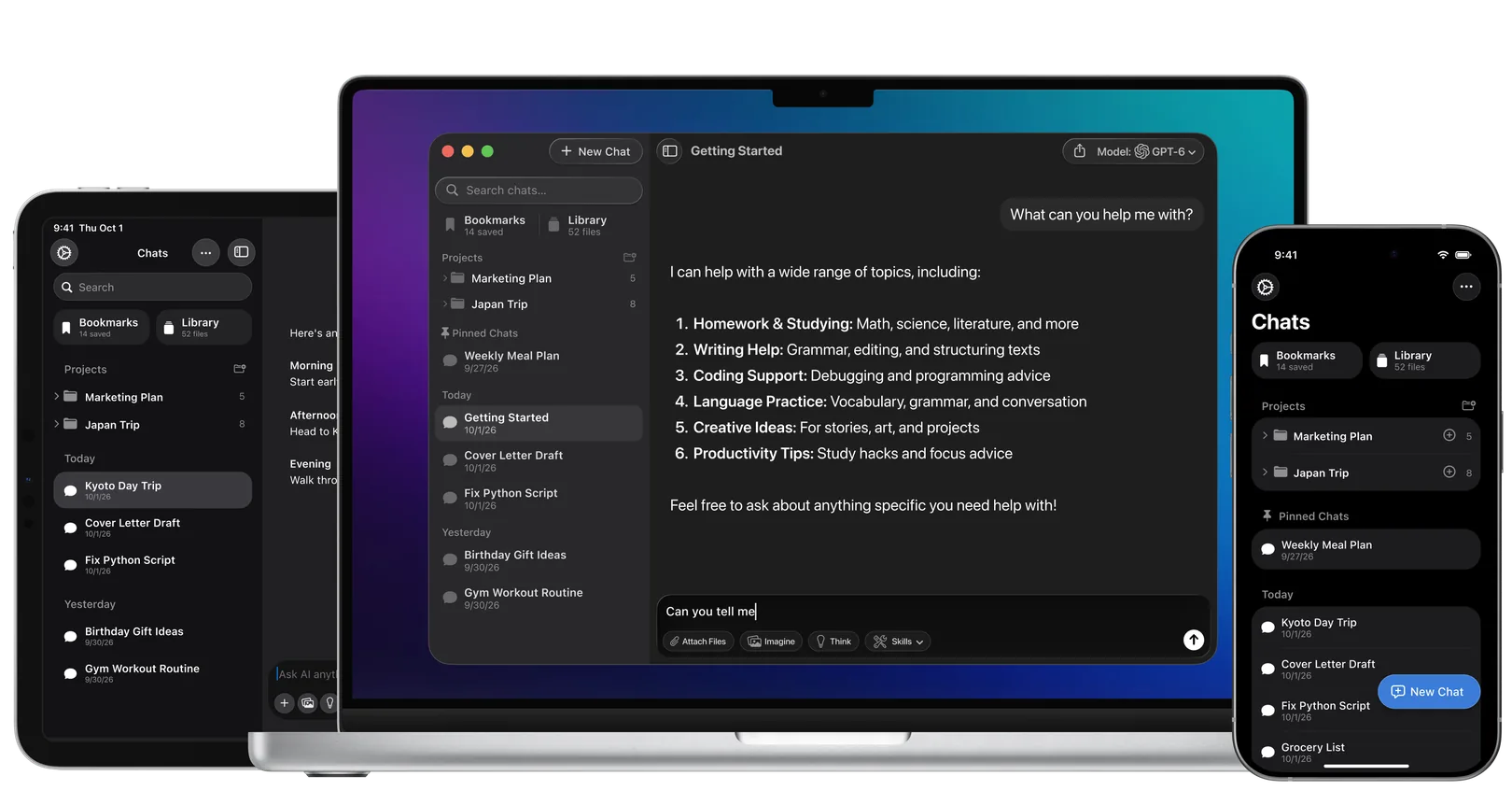
Na Macu stiskněte ⌥ Space, zeptejte se a pracujte dál. Také na iPhonu a iPadu.
Začněte zdarma, hodnocení 4,7★ napříč 27 000+ recenzemi.
Stáhnout Fello AINejlepší AI pro studenty
Nejlepší AI pro studenty je GPT-6 Luna uvnitř ChatGPT pro obecnou práci na kurzech a Gemini 3.6 Flash pro STEM a multimodální studium, s Qwen 3.7 Max jako API alternativou pro těžší sady úloh (200 dotazů zdarma denně) a Claude Sonnet 5.5 jako bezplatnou alternativou pro úpravy esejí.
Většina studentů nemusí platit. Od 8. října přecházejí ChatGPT Free a Go z GPT-5.6 Luna na GPT-6 Luna, který má na indexu Artificial Analysis 38,1 proti 37,3; bezplatný tarif má neomezené textové chaty, nahrávání souborů a obrazové nástroje ale zůstávají omezené. Claude Sonnet 5.5 je na claude.ai zdarma a bezplatné účty si tam mohou vybrat i Claude Haiku 5.5 (7. října), model Claude, který z limitu využití ubírá nejméně.
Gemini se změnil 9. října: bezplatná aplikace Gemini teď běží v režimu Auto, který většinu promptů posílá na Flash-Lite, takže vlastní volba Gemini 3.6 Flash vyžaduje Google AI Plus, v Google AI Studio ale zůstává zdarma. Pro postupné řešení nejtěžší matematiky uvádí GPT-6 Astra 97,6 % na FrontierMath Tier 4 v2, na bezplatné úrovni ChatGPT ale není; Qwen 3.7 Max je výhodnou alternativou s 97,1 na HMMT únor 2026 a cenou API $1,25 / $3,75 v aktuální 50% akci ($2,50 / $7,50 podle ceníku).
| Úloha | Nejlepší model | Proč | Zdarma? | Alternativa |
|---|---|---|---|---|
| Eseje & práce na kurzech | GPT-6 Luna | Model ChatGPT Free a Go, zaváděný od 8. října; neomezené textové chaty | Ano | Claude Sonnet 5.5 (Claude zdarma) |
| Řešení STEM úloh | GPT-6 Sol / Qwen 3.7 Max | Placený výchozí model ChatGPT; Astra uvádí 97,6 % FrontierMath Tier 4 v2 / 97,1 HMMT únor 2026 | Plus placené / Qwen API placené | Gemini 3.6 Flash (AI Plus od 9. 10.) |
| Výzkum & přesnost | Gemini 3.1 Pro | 98 % ARC-AGI-1 za $0.52/úlohu, nativní ukotvení ve vyhledávání Google | AI Pro (aplikace Gemini) od 9. 10. | Claude Opus 5 |
| Úpravy textu | Claude Sonnet 5.5 | Od 28. září zdarma na claude.ai a na Intelligence Indexu hned za Opus 5.5; lídrem v kvalitě je Claude Fable 5.1 | Ano (Claude zdarma) | Claude Fable 5.1 |
| Multimodální studium (PDF, snímky, obrázky) | Gemini 3.6 Flash | 1M kontext přes AI Studio; aplikace Gemini od 9. 10. s AI Plus | Zdarma v AI Studio | NotebookLM (Google) |
Dvě změny pro studenty. Bezplatný model ChatGPT přechází z GPT-5.6 Luna na GPT-6 Luna, který se od 8. října zavádí na Free a Go, takže řádek esejí přebírá GPT-6 Luna. A od 9. října běží bezplatná aplikace Gemini v režimu Auto, který většinu promptů posílá na Flash-Lite, takže volba Gemini 3.6 Flash v aplikaci vyžaduje Google AI Plus.
Anthropic také 7. října vydal Claude Haiku 5.5, který si mohou vybrat bezplatné účty Claude, a Claude Sonnet 5.5 je na claude.ai stále zdarma. Gemini 4 Argon, veřejně dostupný od 13. října, je součástí Google AI Pro, takže ho mají studenti v USA s bezplatným rokem AI Pro od Googlu, bezplatný plán a studentská nabídka Google AI Plus v ostatních zemích ne. V září nahradil Claude Sonnet 5.5 model Sonnet 5 jako bezplatnou volbu pro psaní a úpravy.
Nejlepší AI pro práci & profesionály
Nejlepší AI pro profesionální práci je GPT-6 (výchozí model ChatGPT od 7. října, na placených tarifech Sol) pro každodenní znalostní práci, Claude Opus 5.5 pro programování a psaní s vysokou mírou odpovědnosti a Gemini Spark pro agentické workflow 24/7.
Většina profesionálů vytěží nejvíc ze dvou placených předplatných (ChatGPT Plus za $20/měsíc plus Claude Pro za $20/měsíc, celkem $40/měsíc). Nebo jedno předplatné: Fello AI pokryje ChatGPT, Claude i Gemini pro každodenní práci. Pro agentickou práci, která běží, i když spíte, je Gemini Spark stále aktivní cloudový agent uvnitř Google Workspace a od 30. července je dostupný na tarifu Google AI Pro za $19,99/měsíc i v Google AI Ultra; alternativami jsou OpenAI dots, Grok Bot a Muse od Mety, popsané v sekci o agentech výše.
| Případ použití | Nejlepší model | Klíčový údaj | Cena | Alternativa |
|---|---|---|---|---|
| Každodenní znalostní práce | GPT-6 | Výchozí model ChatGPT od 7. října; na Plus GPT-6 Sol | $20/měs. ChatGPT Plus | Claude Opus 5.5 |
| Právní, finanční a daňová rešerše | Gemini 4 Argon | #1 AutomationBench-AA (77,5 %) a Vals Legal Research (54,8 %); první na Vals Indexu, když se odpovědi záložního modelu počítají jako chyby | $19.99/měs. Google AI Pro | Claude Opus 5.5 |
| ChatGPT Work a Codex | GPT-6.1 Sol | V ChatGPT Work a Codexu pro Plus, Pro, Business, Enterprise a Edu od 29. září, v API za $2 / $10 | $20/měs. ChatGPT Plus | GPT-6 Luna na objemovou práci |
| Programování (uzavřené modely) | Claude Opus 5.5 | #1 Arena WebDev (1807) a #1 Intelligence Index (57,6), za $4 / $20 | $20 měsíčně Claude Pro | Claude Sonnet 5.5, který vede LiveBench Coding za poloviční cenu tokenů |
| Programování (cenově výhodné) | Claude Sonnet 5.5 | #1 LiveBench Coding (91,4) a #2 Terminal-Bench 4.0 (63,6 %); při úsilí high $0,88 na úlohu indexu | $2 / $10 | Kimi K3.1 Pro; DeepSeek V4.1-Flash-1017 |
| Výzkum & podklady | Gemini 3.1 Pro | 98 % ARC-AGI-1 za $0.52/úlohu, ukotvení Google | Google AI Pro / Ultra | Claude Opus 5.5 |
| Těžká matematika, fyzika, finanční modelování | GPT-6 Astra | #1 LiveBench Reasoning a ARC-AGI-2 (95 %); uvádí 97,6 % FrontierMath Tier 4 v2 | $100/měs ChatGPT Pro | GPT-6.1 Sol; Qwen 3.7 Max |
| Nepřetržité agentické workflow | Gemini Spark | Nepřetržitý cloudový agent v Google Workspace | Od $19.99/měs. Google AI Pro | Claude Cowork |
| Živé zprávy, tvůrčí práce s kontextem X | Grok 4.7 | Intelligence Index 46,3 + nativní ukotvení v X; v aplikaci Grok od 3. října | $30 měsíčně Premium (X Subscription) | Gemini 3.1 Pro |
| Konsolidace vše v jednom | Fello AI | ChatGPT + Claude + Gemini + Grok + DeepSeek | Od $11.99/měs. | Platit každému dodavateli zvlášť |
Řádek pro každodenní znalostní práci přechází z GPT-5.6 na GPT-6, který se 7. října stal výchozím modelem ChatGPT. Gemini 4 Argon dostává nový řádek pro právní, finanční a daňový výzkum: vede AutomationBench od Artificial Analysis i právní část Vals Indexu a od 13. října je v aplikaci Gemini v Google AI Pro za $19.99/měs. Vals Index v2.2 řadí na první místo Claude Sonnet 5.5 se 70,85 %, druhý je Opus 5.5 a třetí Argon s 69,24 %, Vals ale sám uvádí, že Argon je první, pokud se odpovědi, které oba modely Claude předaly záložnímu modelu, počítají jako chyby. Od minulé aktualizace převzal Kimi K3.1 Pro od Claude Sonnet 5.5 první místo na Terminal-Bench 4.0, Sonnet 5.5 si ale nákladově efektivní řádek pro programování drží díky LiveBench Coding, protože K3.1 Pro za ním zaostává na žebříčku WebDev Areny a za úlohu indexu stojí víc než Sonnet 5.5 při úsilí high. V září převzal Claude Opus 5.5 řádek pro proprietární programování za nižší cenu než Opus 5, Claude Sonnet 5.5 nákladově efektivní řádek pro programování a GPT-6.1 Sol 29. září řádek pro ChatGPT Work a Codex.
Ceny AI modelů v říjnu 2026
Od bezplatných verzí za $0 po Google AI Ultra za $199,99 měsíčně. Nejdůležitější cenou v této tabulce je Claude Opus 5.5 za $4 / $20. Od 22. září stojí nejlépe hodnocený model, jaký kterýkoli nezávislý hodnotitel změřil, méně než Claude Opus 5, který nahradil ($5 / $25), a čtení z cache klesá o 60 % na $0,20. Claude Fable 5.1 i GPT-6 Astra jsou v ceníku za $10 / $50 a oba mají nižší skóre.
Nejobsazenější sazbou je teď $2 / $10, kterou sdílejí Claude Sonnet 5.5, GPT-6 Sol, GPT-6.1 Sol a od 23. října i Kimi K3.1 Pro od Moonshotu, nejlevnější cesta ke skóre první čtyřky Intelligence Indexu: $2,11 na úlohu indexu za 55,1. GPT-6.1 Sol je s $0,72 na úlohu indexu dál nejlevnější cestou přes 50 bodů. U Sonnetu 5.5 o účtu rozhoduje nastavení úsilí: při úsilí high stojí úloha indexu $0,88 a při maximálním $5,46, nyní o něco méně než $5,98 u Opus 5.5, a Anthropic 7. října snížil cenu čtení z cache na polovinu, na $0,10. Gemini 4 Argon od Googlu také začíná na úvodních $2 / $10 (standardně $4 / $20), a to do 30. listopadu, a od 13. října si ho v placeném API může koupit kdokoli.
Cena tokenu a cena úlohy se mohou rozejít. Grok 4.7 stojí $2 / $6 stejně jako Grok 4.6, úloha indexu ale vyjde na $2,73 proti $1,86, protože 4.7 vypíše zhruba dvojnásobek výstupu. Mistral Large 4 (od 6. října ve veřejném preview) má ceníkovou cenu $1,36 / $4,18, i když vlastní stránka modelu u Mistralu ukazuje polovinu, a je tak upovídaný, že úloha indexu stojí $1,13 za skóre 38,4. Na špičce je volbou pro poměr cena/výkon Muse Spark 1.3 od Mety za $1,25 / $4,25, tedy $1,60 na úlohu indexu při skóre 48,1.
Na levném konci je GPT-6 Luna nejlevnějším modelem na úlohu na celé stránce: $0,10 / $0,50, tedy $0,07 na úlohu indexu. Claude Haiku 5.5 (7. října) má u promptů do 100 000 tokenů stejnou cenu za token a skóre 43,4 proti 38,1 u Luny, píše ale o tolik víc, že úloha indexu při maximálním úsilí stojí $0,21, případně $0,12 za 41,3 při xhigh; nad 100 000 tokenů cena stoupá na $0,50 / $2,50. Mezi otevřenými modely prodávanými po tokenech je nyní volbou DeepSeek V4.1-Flash-1017, verze, kterou API DeepSeeku nabízí od 17. října, za $0,15 / $0,60 mimo špičku a $0,30 / $1,20 ve špičce ($0,26 na úlohu indexu při 45,1), před GLM 5.3 Flash za $0,15 / $0,50 ($0,28 při 41,8). MiMo-V2.6-Pro od Xiaomi je ještě levnější, $0,13 na úlohu indexu při 46,3, ale jen pokud si jeho 1,02 bilionu parametrů hostujete sami. Podrobnější rozbor najdete v našem průvodci porovnáním cen AI.
| Model | Vstup (za 1M) | Výstup (za 1M) | Kontext | Přístup zdarma? |
|---|---|---|---|---|
| GPT-6 Astra | $10.00 | $50.00 | 1 050 000 (max. vstup 922 000) | V Chatu na Pro, Business a Enterprise od 4. září; Plus ho má v ChatGPT Work a Codexu, ne v Chatu; bez bezplatného tarifu; v API živě |
| GPT-6 Sol | $2.00 | $10.00 | 1 050 000 (max. vstup 922 000) | Chat ChatGPT na Plus, Pro, Business a Enterprise od 7. října; Work a Codex; API |
| GPT-6.1 Sol | $2.00 | $10.00 | 1 050 000 (max. vstup 922 000) | ChatGPT Work a Codex na Plus, Pro, Business, Enterprise a Edu od 29. září; API; ne v Chatu; čtení z cache $0,10 |
| GPT-6 Luna | $0.10 | $0.50 | 1 050 000 (max. vstup 922 000) | Chat ChatGPT na Free a Go, zaváděno od 8. října; Work a Codex na placených tarifech; API |
| GPT-5.5 | $5.00 | $30.00 | 1M (400K v Codex) | ChatGPT Free; API placené |
| GPT-5.5 Pro | $30.00 | $180.00 | 1M | ChatGPT Pro od $100/měs. (úrovně s vyšším použitím $200 a $500) |
| GPT-5.6 Sol | $4.00 | $20.00 | Nezveřejněno | Živé v ChatGPT, Codex & API (9. července); promo sazba minimálně do 21. listopadu 2026 |
| GPT-5.6 Terra | $2.00 | $12.00 | Nezveřejněno | Živé v ChatGPT, Codex & API (9. července) |
| GPT-5.6 Luna | $0.20 | $1.20 | Nezveřejněno | Živé v ChatGPT, Codex & API (9. července) |
| Claude Opus 5.5 | $4.00 | $20.00 | 1M | Claude Pro/Max/Team; API placené; čtení z cache $0,20 |
| Claude Opus 5 | $5.00 | $25.00 | 1M | Starší model u Anthropicu; Pro/Max/API |
| Claude Opus 4.8 | $5.00 | $25.00 | 1M | Starší model u Anthropicu; Pro/Max/API |
| Claude Fable 5.1 | $10.00 | $50.00 | 1M | Čtení z cache $0.25; v Max/Team Premium (~50 % limitů použití); Pro/Team Standard přes kredity. Mythos 5.1 se účtuje stejně, jen na pozvání |
| Claude Fable 5 | $10.00 | $50.00 | 1M | Trvale v Max/Team Premium (~50 % limitů použití); Pro/Team Standard přes kredity |
| Claude Sonnet 5.5 | $2.00 | $10.00 | 1M | Zdarma na claude.ai; Pro/Max/Team; API placené; čtení z cache $0,10 od 7. října |
| Claude Sonnet 5 | $2.00 | $10.00 | 1M | Starší model od 28. září; záloha pro označené kyberbezpečnostní požadavky; API placené |
| Claude Sonnet 4.6 | $3.00 | $15.00 | 1M | API placené (nahrazeno Sonnet 5) |
| Claude Haiku 5.5 | $0.10 (≤100K) / $0.50 (>100K) | $0.50 (≤100K) / $2.50 (>100K) | 1M | Free, Pro, Max, Team i Enterprise na Claude.ai (web, iOS, Android); API placené; čtení z cache $0,01 |
| Gemini 3.1 Pro | $2.00 (≤200K) / $4.00 (>200K) | $12.00 (≤200K) / $18.00 (>200K) | 1M | Aplikace Gemini od 9. 10. s Google AI Pro a vyšším; API placené |
| Gemini 4 Argon | $2.00 úvodně do 30. 11. / $4.00 standardně ($0.10 z cache, úvodně) | $10.00 úvodně / $20.00 standardně | 1M, sdílený vstupem a výstupem | Placené API od 13. října; aplikace Gemini v Google AI Pro a Ultra |
| Gemini 3.8 Flash | $0.75 úvodní / $1.50 od 1. 1. 2027 | $3.75 úvodní / $7.50 od 1. 1. 2027 | 1M | AI Studio, Antigravity, Gemini Enterprise + placené API; v aplikaci Gemini hlášeno pro AI Pro/Ultra |
| Gemini 3.7 Flash | $0.75 úvodní / $1.50 od 1. 1. 2027 | $3.75 úvodní / $7.50 od 1. 1. 2027 | 1M | AI Studio, Android Studio, Antigravity + placené API; v aplikaci Gemini jen přes Spark (AI Pro/Ultra, mimo EHP/UK/CH/Nigérii) |
| Gemini 3.6 Flash | $0.75 úvodní / $1.50 od 1. 1. 2027 | $3.75 úvodní / $7.50 od 1. 1. 2027 | 1M | Aplikace Gemini od 9. 10. s AI Plus a vyšším; AI Studio; bezplatná úroveň API + placené API |
| Gemini 3.5 Flash-Lite | $0.30 | $2.50 | 1M | AI Studio; bezplatná úroveň API + placené API |
| Qwen3.8-Max-0902 | $2.00 ($0.17 explicitní cache hit, $0.25 implicitní) | $6.00 | 1M (výstup 128K) | Pouze API na QwenCloud; bez spotřebitelského chatu; otevřené váhy jen u textové verze Qwen3.8-2.4T-A95B, na které stojí |
| Qwen 3.7 Max | $1.25 promo / $2.50 ceníková | $3.75 promo / $7.50 ceníková | 1M | 200 dotazů zdarma/den; API placené nad rámec |
| MiniMax M3 | $0.30 (50 % z $0.60) | $1.20 (≤512K) | 1M | Open weights; náklady na hosting |
| LongCat-2.0 | Závisí na poskytovateli | Závisí na poskytovateli | 1M | Open weights (MIT); náklady na hosting |
| NVIDIA Nemotron 3 Ultra | Závisí na poskytovateli | Závisí na poskytovateli | 1M | Open weights (OpenMDW); náklady na hosting |
| Qwen 3.5 (open-weight) | Self-host / Together | Self-host / Together | 1M | Open weights; náklady na hosting |
| Nex-N2-Pro | Self-host / poskytovatelé | Self-host / poskytovatelé | 1M | Open weights (Apache 2.0); náklady na hosting |
| Rio 3.5 Open 397B | Self-host / poskytovatelé | Self-host / poskytovatelé | 1M | Open weights (MIT); náklady na hosting |
| Grok 4.3 | $1.25 | $2.50 | 1M | Bezplatný spotřebitelský plán; API placené |
| Grok 4.6 | $2.00 (<200K) / $4.00 (≥200K) | $6.00 (<200K) / $12.00 (≥200K) | 500K | API SpaceXAI, Cursor, Grok Build, OpenRouter, Vercel, Cloudflare |
| Grok 4.7 | $2.00 (<200K) / $4.00 (≥200K) | $6.00 (<200K) / $12.00 (≥200K) | 500K | API SpaceXAI, Cursor, Grok Build, harnessy a cloudové routery; od 3. října i režim Expert aplikace Grok |
| Muse Spark 1.3 | $1.25 ($0.10 úroveň Contributor) | $4.25 ($0.20 úroveň Contributor) | 1M | Placené API; Muse Code, Meta Model API a OpenRouter; úroveň Contributor mění práva k trénování za ~92% slevu |
| Muse Wonder | $4.00 | $20.00 | 1M | Placené API; Meta Model API, Muse Code a OpenRouter; Muse Wonder Full jen v Muse Code, v tarifech $50 a $200 |
| Kimi K3 | $3.00 ($0.30 cache-hit) | $15.00 | 1M | Bezplatná základní úroveň v aplikaci Kimi; open weights na Hugging Face (Kimi K3 License) |
| Kimi K3.1 Pro | $2.00 ($0.20 cache-hit) | $10.00 | 1M | Kimi.com, aplikace Kimi, Kimi Work, Kimi Code a Kimi API od 23. října; open weights slíbené do 4. listopadu; varianta Highspeed za dvojnásobnou cenu |
| Mistral Large 4 | $1.36 ($0.68 na stránce modelu u Mistralu) | $4.18 ($2.09) | 512K (1M podle Mistralu) | Veřejné preview API od 6. října; otevřené váhy slíbené do konce října, licence zatím neuvedena |
| Gemini Omni Flash (video) | $1.50 | $17.50 (video výstup) | 10sekundové klipy | Aplikace Gemini / Flow; AI Studio + API |
| DeepSeek V4-Pro | $0.66 mimo špičku / $1.32 ve špičce ($0.022 cache-hit mimo špičku) | $1.98 mimo špičku / $3.96 ve špičce | 1M | DeepSeek Chat zdarma; API placené, špičkové a mimošpičkové sazby od 16. srpna |
| DeepSeek V4.1-Flash-1017 | $0.15 mimo špičku / $0.30 ve špičce ($0.003 cache hit mimo špičku) | $0.60 mimo špičku / $1.20 ve špičce | 1M | DeepSeek Chat zdarma; API placené, tarify mimo špičku a ve špičce; verze 1017 od 17. října za stejné ceny |
| Kimi K2.7 Code | Závisí na poskytovateli | Závisí na poskytovateli | 256K | Open weights; náklady na hosting |
| GLM-5.2 | Závisí na poskytovateli | Závisí na poskytovateli | 1M | Open weights; náklady na hosting |
| GLM 5.3 | $1.40 ($0.26 cache-hit) | $4.40 | 1M | Z.ai API, GLM Coding Plan a ZCode; váhy na Hugging Face od 28. srpna pod vlastní licencí GLM 5.3 License |
| GLM 5.3 Flash | $0.15 ($0.03 cache-hit) | $0.50 | 1M | Z.ai API, GLM Coding Plan, OpenRouter; váhy pod MIT na Hugging Face; úvodní akce skončila 9. září |
| Tencent Hy4 Preview | $0.834 ($0.042 cache-hit) | $2.501 | 1M+ | Otevřené váhy (Apache 2.0); Tencent Cloud TokenHub, OpenRouter, WorkBuddy, CodeBuddy |
| Qwen3.8-Flash-Next | Podle poskytovatele | Podle poskytovatele | 262K (do 1M) | Otevřené váhy (Qwen Community License 1.0); náklady na hosting se připočítávají |
| MiMo-V2.6-Pro | $0.435 | $0.87 | 1M | Otevřené váhy (MIT); náklady na hosting se platí |
| ERNIE 5.1 | Ceny pro region Čína | Ceny pro region Čína | 256K | Bezplatná úroveň Baidu |
| Gemini Spark (agent) | Bez ceny API | Bez ceny API | 1M (základ Gemini) | Google AI Pro $19.99, AI Ultra $99.99 nebo $199.99/měs. |
| Fello AI (agregátor) | Směrováno přes aplikaci | Směrováno přes aplikaci | Závisí na modelu | Od $11.99/měs., bezplatná verze dostupná |
Výše uvedené sazby pro GPT-5.5 a GPT-5.5 Pro jsou ceny pro krátký kontext; OpenAI již specifické údaje pro dlouhý kontext nezveřejňuje. Úrovně GPT-5.6 se účtují za 2násobek vstupu a 1,5násobek výstupu, jakmile prompt přesáhne 272K vstupních tokenů, což dává long-context Terra na $4 / $18 a Luna na $0.40 / $1.80. Úrovně GPT-6 nesou nad 272K vstupních tokenů stejnou přirážku, uplatněnou na celý požadavek, a čtení z cache je u nich o 90 % levnější: $1.00 u Astry, $0.20 u GPT-6 Sol a $0.01 u Luny, u GPT-6.1 Sol o 95 %, tedy $0.10.
Grok 4.6 funguje stejně, ale tvrději: od 200 000 tokenů v promptu výše přeúčtuje SpaceXAI celý požadavek vyšší sazbou, nikoli jen to, co limit přesahuje, takže překročení o tisíc tokenů zdvojnásobí cenu celého volání. Druhým ceníkem, který je třeba číst dvakrát, je DeepSeek: od 16. srpna se oba modely V4 účtují špičkovou sazbou od 01:00 do 04:00 a od 06:00 do 10:00 UTC ve všední dny a přesně poloviční v každou jinou hodinu, takže stejná úloha může stát dvojnásobek podle toho, kdy ji spustíte.
Nejlevnější cestou touto tabulkou je často jedno předplatné místo tří. Fello AI spojuje GPT, Claude, Gemini, Grok, Perplexity a další v jediné aplikaci pro Mac, iPhone a iPad, ve většině zemí od $11,99 měsíčně.
Nejlepší open-weight modely v říjnu 2026
Nejlepší model s otevřenými vahami v říjnu 2026 je MiMo-V2.6-Pro od Xiaomi, zveřejněný 21. září pod čistou licencí MIT: 1,02 bilionu parametrů se 42 miliardami aktivních a kontext 1M tokenů. Artificial Analysis ho měří na 46,3 na Intelligence Index v4.3.2, což je nejvyšší otevřené skóre, jaké kdy zveřejnila, před DeepSeek V4.1-Flash-1017 se 45,1 a GLM-5.3 se 44,8, a to za pouhých $0,13 na úlohu indexu. Háček: lidští hlasující Areny ho řadí až na 23. místo na WebDev a na 28. místo na textovém žebříčku.
Dva další otevřené modely stále někde vedou. DeepSeek V4.1-Flash-1017 je nejvýše postaveným otevřeným modelem na Areně, čtrnáctý na WebDev a jedenáctý v Agent Areně. GLM-5.3 je nejsilnějším otevřeným modelem na Terminal-Bench 4.0 se 41,9 %, ovšem pod vlastní licencí Z.ai, ne MIT.
Těsně mimo tento žebříček stojí dvě říjnová vydání. Kimi K3.1 Pro od Moonshotu (23. října) má 55,1, téměř o devět bodů víc než MiMo-V2.6-Pro, Moonshot ale jeho váhy zatím jen slíbil na 4. listopadu, takže dokud nejsou na Hugging Face, jde o uzavřený model. MiniMax-M3.1-Flash, jehož váhy jsou na Hugging Face pod komunitní licencí MiniMaxu, má 42,7 při 428 mld. parametrů celkem a 23 mld. aktivních a stojí $0,22 na úlohu indexu, tedy o něco méně než DeepSeek V4.1-Flash-1017, je ale o 2,4 bodu níž.
Pro týmy, které si provozují vlastní váhy, zůstává praktickou volbou GLM 5.3 Flash (Z.ai, MIT): 41,8 na v4.3.2 při 320 mld. parametrů celkem a 18 mld. aktivních. Není to osekaný GLM 5.3, ale samostatný model na nově natrénovaném základu, a proto mohl vyjít pod MIT. Model s 1,02 bilionu parametrů není nic pro pracovní stanici a samotné stažení K3 má zhruba 1,56 TB. Jako nejvýhodnější model prodávaný po tokenech nahradil 17. října zářijovou verzi V4.1-Flash za nezměněné ceny model DeepSeek-V4.1-Flash-1017: MIT, nativně multimodální, 45,1 na v4.3.2 proti 39,5 u předchozí verze a $0,15 / $0,60 mimo špičku.
Sledovat stojí za to další čtyři. Mistral Large 4 (od 6. října ve veřejném preview) je s 38,4 nejvýše hodnoceným modelem z USA nebo Evropy, který slibuje otevřené váhy, stáhnout si ho ale zatím nemůžete: Mistral slibuje váhy do konce října a licenci zatím neuvedl. Qwen3.8-Flash-Next od Alibaby, 125 mld. parametrů s jen 6 mld. aktivními, předvádí architekturu Qwen4 a má skóre 39,8. Hy4 Preview od Tencentu, 770 mld. celkem a 49 mld. aktivních pod Apache 2.0, nemá hodnocení od Artificial Analysis, ale je dvacátý první na Arena WebDev. Muse Spark Open od Mety, vydaný 15. října, s 816 mld. parametrů celkem a 42 mld. aktivních, má 38,9 a vyšel pod vlastní licencí Mety Muse Model License, ne pod open-source licencí.
| Model | Nejlepší pro | Klíčový benchmark | Kontext / Licence | Kde spustit |
|---|---|---|---|---|
| MiMo-V2.6-Pro | Nejvyšší otevřený Intelligence Index, jaký byl změřen | II 46,3 (v4.3.2), nad GLM-5.3 i Kimi K3, za $0,13 na úlohu indexu; 34,8 % Terminal-Bench 4.0; GDPval-AA v2.1 1683; 1,02 bilionu/42 mld. aktivních | 1M / MIT | Hugging Face (XiaomiMiMo), poskytovatelé, vlastní hosting |
| Kimi K3 | Největší otevřený model na této stránce | II 43,6 (v4.3.2); #17 Arena WebDev a #24 Agent Arena; 2.8T/104B aktivních | 1M / Kimi K3 License | Hugging Face (96 shardů, 1.56 TB), Moonshot API, poskytovatelé |
| GLM 5.3 Flash | Nejlepší otevřený model, který si většina týmů skutečně dokáže provozovat | II 41,8 (v4.3.2) za zhruba $0.28 za úlohu indexu, nejmenší z předních otevřených modelů; 320B/18B aktivních, nativně multimodální | 1M / MIT | Hugging Face, Z.ai API ($0.15/$0.50), OpenRouter |
| GLM-5.2 | Záložní volba s nezávislým záznamem | II 33,7 (v4.3.2); #31 Arena WebDev (1,604.3), #23 Agent Arena; 744B/40B aktivních | 1M / MIT | Z.ai, Hugging Face, OpenRouter |
| GLM 5.3 | Otevřený od 28. srpna, ale pod vlastní licencí | II 44,8 (v4.3.2), nejvyšší otevřené skóre, které jsme našli; stejný základ 744B jako GLM-5.2, jen dotrénovaný, zveřejněný checkpoint počítán na 753B; CyberGym 84,5 % a Terminal-Bench 3.0 28,3 (údaje dodavatele) | 1M / GLM 5.3 License (model-as-a-service nad 10 mld. USD tržeb potřebuje bezpečnostní revizi Z.ai) | Hugging Face, Z.ai API ($1.40/$4.40), GLM Coding Plan, ZCode |
| DeepSeek V4.1-Flash-1017 | Nejvýhodnější otevřený model prodávaný po tokenech | II 45,1 (v4.3.2) za $0.26 na úlohu indexu, proti 39,5 u nahrazované zářijové verze; nejvýše postavený otevřený model na Arena WebDev i v Agent Areně; 552B, 8B aktivních při prefillu a 16B při dekódování | 1M / MIT | DeepSeek API ($0.15/$0.60 mimo špičku, $0.30/$1.20 ve špičce), lokálně |
| MiniMax-M3.1-Flash | Levný otevřený model pro kód a agenty | II 42,7 (v4.3.2) za $0,22 na úlohu indexu; 428B/23B aktivních, vstup text, obrázky a video; #34 Arena WebDev (1589) | 1M / MiniMax Community License | Hugging Face, MiniMax, vlastní hosting |
| Tencent Hy4 Preview | Zatím největší permisivně licencovaný model | 770B/49B aktivních; 2,99/4,00 na vlastním panelu Tencentu se 203 úlohami proti 2,94 u Kimi K3 a 2,92 u GLM 5.3 (dodavatel); bez hodnocení Artificial Analysis; #21 Arena WebDev (1631), #22 Agent Arena | 1M+ / Apache 2.0 | Hugging Face (BF16 a FP8), Tencent Cloud TokenHub, OpenRouter |
| Qwen3.8-Flash-Next | Ukázka architektury Qwen4 | 125B celkem plus N-gramové embedding s 51B, 6B aktivních; 91,7 GPQA Diamond a 62,5 SWE-Bench Pro (dodavatel); II 39,8 (v4.3.2); #22 Arena WebDev (1629) | 262K až 1M / Qwen Community License 1.0 | Hugging Face, poskytovatelé, self-host |
| LongCat-2.0 | Frontier otevřený kodér trénovaný na čínských čipech | II 33 (v4.1); 59,5 % SWE-Bench Pro (dodavatel), 1.6T/~48B aktivních | 1M / MIT | Hugging Face, GitHub, OpenRouter |
| MiniMax M3 | Levný multimodální model s dlouhým kontextem | II 29,2 (v4.3.2; 44 ve v4.1), 59 % SWE-Bench Pro, multimodální | 1M / MiniMax Community License | Hugging Face, API $0.30/1M (50 % sleva) |
| Nex-N2-Pro | Nejsilnější otevřené programátorské skóre | II 41 (v4.1); 80,8 SWE-Bench Verified, 397B/17B aktivních | Založeno na Qwen / Apache 2.0 | Hugging Face, poskytovatelé, self-host |
| Kimi K2.7 Code | Nejsilnější komerčně licencovaný otevřený kodér | +21,8 % na Kimi Code Bench v2 vs. K2.6 (dodavatel); 1T/32B aktivních | 256K / Modified MIT | Hugging Face, DeepInfra, poskytovatelé |
| DeepSeek V4-Pro | Agentická práce v reálném světě | II 44 (v4.1), 1.6T/49B aktivních | 1M / MIT | DeepSeek API ($0.66/$1.98 mimo špičku, $1.32/$3.96 ve špičce od 16. srpna), lokálně |
| Hy3 | Nejnovější účastník s permisivní licencí | II 41 (v4.1); #62 na Arena WebDev (1,506.1) | Apache 2.0 | Hugging Face, poskytovatelé, self-host |
| Inkling | První open-weight model Thinking Machines | II 41 (v4.1), agentický 32,3, vydán 15. července | Open weights | Hugging Face, poskytovatelé, self-host |
| Inkling Small | Stejná rodina při čtvrtině velikosti | II 40 (v4.1), agentický 30,8; 276B/12B aktivních, vstup text, obrázek a zvuk | Apache 2.0 | Hugging Face (BF16 a NVFP4), poskytovatelé, self-host |
| NVIDIA Nemotron 3 Ultra | Laděno NVIDIA, plně permisivní licence | II 38 (v4.1), 65-70,4 SWE-Bench Verified, 550B/55B aktivních | 1M / OpenMDW | OpenRouter, Hugging Face, AWS (8x B200 self-host) |
| Qwen 3.5 (397B / 17B aktivních) | Multimodální, rychlé dekódování | 88,4 GPQA, 91,3 AIME 2026, 83,6 LiveCodeBench v6 | 1M / otevřené | Together, OpenRouter, lokálně |
| Qwen3.6-35B-A3B | Efektivní otevřený agentický kodér (3B aktivních) | 86,0 GPQA Diamond, 92,7 AIME 2026, 35B/3B aktivních | 262K (do 1M YaRN) / Apache 2.0 | Hugging Face, OpenRouter, lokálně |
| Qwen3.6-27B | Hustý kodér spustitelný na laptopu | 87,8 GPQA Diamond, hustý 27B, multimodální | 256K / Apache 2.0 | Lokálně Mac/PC, Hugging Face, OpenRouter |
| Rio 3.5 Open 397B | Fine-tune Qwen 3.5, vícejazyčné uvažování | 70,8 Terminal-Bench 2.1 (first-party), poráží Qwen 3.7 Plus na 4/5 | 397B/17B aktivních / MIT | Hugging Face, poskytovatelé, self-host |
| Llama 4 Maverick | Vlajkový model řady Meta | 17B aktivních / 400B celkových parametrů | Llama 4 license | Cloud Meta, Hugging Face, lokálně |
| NVIDIA Nemotron 3 Nano Omni | Edge / nízký výkon | Multimodální, velmi malá stopa | Kompaktní / otevřené | Lokálně, nástroj NVIDIA |
Licencování zde záleží stejně jako holé skóre a srpen rozdíl mezi oběma skupinami ještě prohloubil. Kimi K2.7 (Modified MIT), DeepSeek V4 (MIT), GLM 5.3 Flash (MIT), MiMo-V2.6-Pro (MIT), GLM-5.2 (MIT), LongCat-2.0 (MIT), Hy3 (Apache 2.0), Hy4 Preview (Apache 2.0), Nex-N2-Pro (Apache 2.0) a Nemotron 3 Ultra (OpenMDW) všechny jasně umožňují komerční použití bez zkoumání tržeb.
Zbytek nese podmínky, které je vhodné si přečíst dřív, než na nich začnete stavět: MiniMax M3, MiniMax-M3.1-Flash a MiniMax H3 vycházejí pod vlastními komunitními licencemi, přičemž H3 navíc vyžaduje žádost z USA, EU, Spojeného království a Jižní Koreje; Kimi K3 sedí na vlastní licenci s prahem tržeb pro každého, kdo jej přeprodává jako službu; GLM 5.3 vyžaduje bezpečnostní revizi Z.ai u každého provozovatele model-as-a-service s tržbami nad 10 miliard dolarů; a Qwen Community License 1.0 u Qwen3.8-Flash-Next vyžaduje samostatnou licenci od Qwenu pro provozování model-as-a-service nebo produktu typu AI pracovní asistent, byť interní použití je vyňato. Žádný open-weight model už není první na žádném žebříčku Areny, který sledujeme: Claude Opus 5 vzal žebříček Agent v červenci, poslední, který open-weight model vedl.
Benchmarky, ceny a praktické používání
Každé hodnocení na této stránce kombinuje tři vstupy: veřejné benchmarky od sedmi nezávislých firem (Artificial Analysis, Arena dříve LMArena, Scale SEAL, LiveBench, EQ-Bench, ARC Prize a oficiální žebříček Terminal-Bench 4.0, pokrývající Intelligence Index, GPQA Diamond, ARC-AGI-1 až 3, Humanity's Last Exam, GDPval-AA, FrontierMath, HMMT, MCP Atlas, SWE Atlas a Remote Labor Index), zveřejněné ceny API a předplatného z oficiální cenové stránky každého dodavatele a praktické používání redakčním týmem FelloAI, který spouští reálné prompty na téže úloze na každém modelu. Oficiální zdroje cen a benchmarků znovu načítáme před každou měsíční aktualizací.
Benchmarky jsou váženy podle případu použití: SWE-bench a Terminal-Bench pohánějí programování, GPQA Diamond a ARC-AGI-2 pohánějí přesnost, GDPval-AA (benchmark profesionálních výstupů od Artificial Analysis) informuje kvalitu profesionálních úloh, zatímco styl psaní se posuzuje primárně praktickým testováním, FrontierMath a HMMT pohánějí řešení problémů. Zveřejňujeme, když je benchmark hlášen dodavatelem, ale nezávisle neověřen, a vyřazujeme každé tvrzení, které nedokážeme reprodukovat proti živému zdroji. Řadíme podle naměřených skóre: koruna kategorie se posune, jakmile model překoná držitele na žebříčcích, které danou kategorii definují, aniž bychom čekali na žebříčky založené na hlasování, a model, který zatím není široce dostupný, je na kartě označen, nikoli o kartu připraven. Znovu ověřujeme pořadí, nejen čísla, protože skóre může zůstat správné, zatímco se žebříček kolem něj pohne. Když model mezi aktualizacemi projde velkým upgradem, kategorii přehodnotíme a přidáme řádek „Co se tento měsíc změnilo“ na konec podrobné analýzy.
Zeptejte se ChatGPT, Claude i Gemini a nechte si nejlepší odpověď. Bez tří předplatných.
Fello AI běží na Macu, iPhonu a iPadu a začít můžete zdarma.
Stáhnout Fello AI