TL;DR: High-quality ChatGPT prompts for writers rely on specific constraints, role definitions, and output specifications. Instead of generic requests, use “mega-prompts” to handle complex tasks like character psychology, scene beats, and style mirroring. For a deeper dive into structure, explore our guide on How to Make the Best Prompt.
Quick Prompt Ingredient Checklist
| Ingredient | Why it matters | Example |
|---|---|---|
| Role | Sets the expertise level. | “Act as a developmental editor…” |
| Context | Grounds the AI in your story. | “Genre is Noir, setting is 1940s LA…” |
| Constraints | Prevents generic tropes. | “Avoid clichés; focus on sensory details.” |
| Output Spec | formats the answer for usability. | “Output as a bulleted list of beats.” |
| Refinement | Ensures quality control. | “Critique your own output before printing.” |
Opening
Have you ever found yourself staring at a blank page with no idea where or how to start your next writing project? Whether it’s a novel that’s been sitting in your mind for months, a short story with a great premise but no clear direction, or a screenplay that needs realistic dialogue, every writer knows the frustration of having ideas but struggling to put them into words.
This is where ChatGPT writing prompts become valuable. Instead of using basic requests that give you generic content, context-filled prompts can help you break through creative blocks, develop interesting characters, write better dialogue, and improve your writing. The trick is knowing How to Ask ChatGPT a Question in the right way.
We’ve tested over a hundred different prompt variations across GPT-4, Claude 3.5, and Gemini to distill them into these seven “mega-prompts.” Each is designed to give you real creative insights while preserving your unique voice.
The Key Takeaways
- Context is King: The more specific your backstory and constraints, the less generic the AI output will be.
- Iterative Prompting: Use follow-up constraints to refine tone and voice.
- Safety First: Always anonymize personal data and understand data controls before pasting drafts.
- Workflow Integration: Use prompts for “unblocking” and “outlining,” but retain creative control over the final prose.
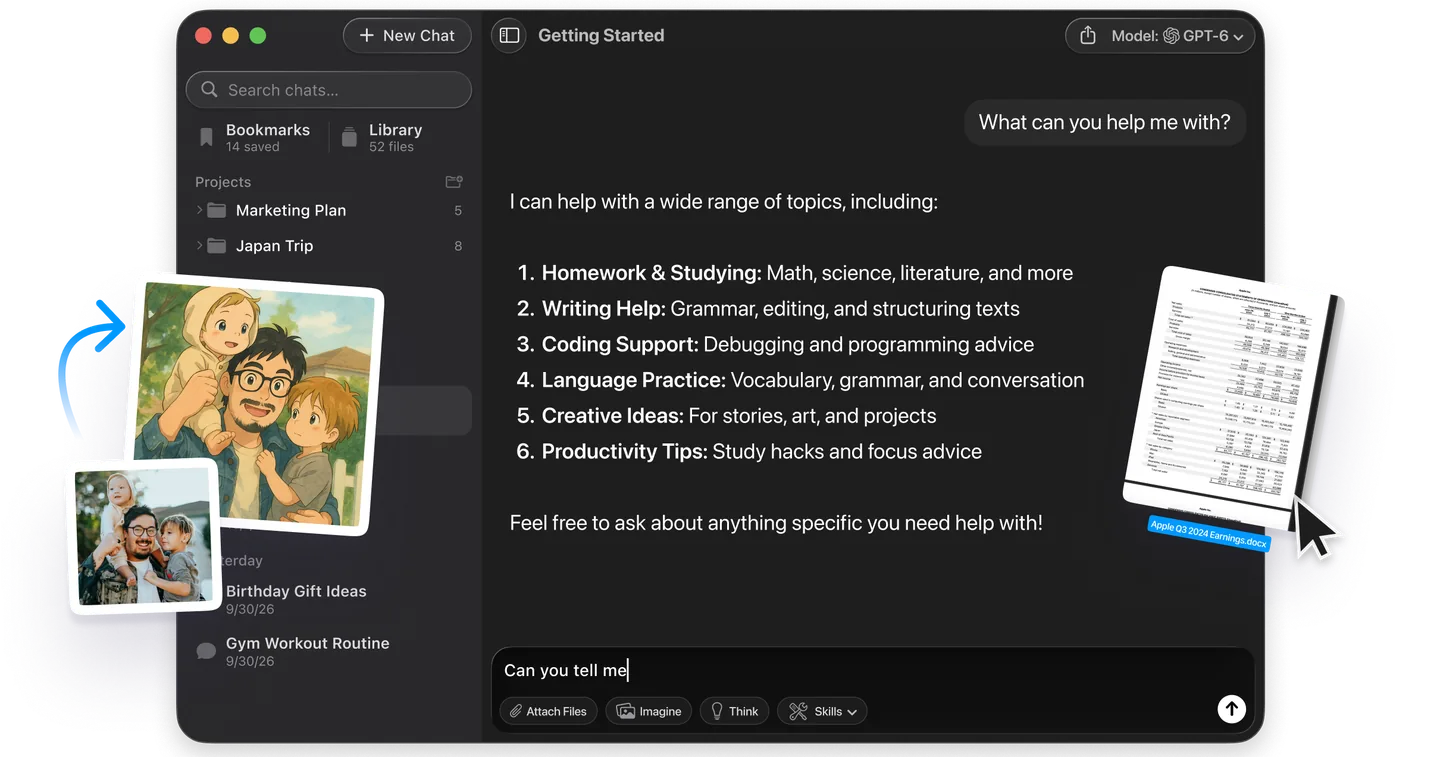
Pro Tip: Ready to test these prompts? You can get started with Fello AI to run the same prompt across GPT-Claude and Gemini simultaneously.
1. Creative Block Breakthrough and Story Ideation
This prompt helps you break through creative blocks when you’re stuck staring at a blank page or need fresh story directions. It generates multiple unique story concepts based on your preferred themes, genres, or starting elements. The prompt is designed to give you concrete starting points you can develop further. Use this when you need initial inspiration or want help overcoming writer’s block with ChatGPT.
The Prompt: “I’m a professional writer experiencing creative block while working on a [genre] story. I’m interested in exploring themes around [theme 1] and [theme 2], and I’m drawn to stories that feature [character type or situation].
Generate 5 unique story concepts that incorporate these elements. For each concept, provide:
- A compelling premise in 2-3 sentences.
- The main character’s central motivation.
- The primary conflict they’ll face.
- One unexpected twist that could drive the narrative.
Constraints: Make each concept distinct in tone and approach, ranging from [tone 1] to [tone 2]. Focus on originality and emotional depth rather than familiar motifs.”
2. Plot Structure and Story Arc Development
This prompt creates a detailed story outline with proper pacing, dramatic tension, and narrative flow. It breaks down your story into clear acts while ensuring each plot point serves the overall narrative arc. The structure includes character development, conflict escalation, and resolution points that keep readers engaged.
The Prompt: “I’m developing a [genre] story about [brief story premise]. The main character is [character description] who wants [primary goal] but faces [main obstacle].
Create a detailed three-act structure with the following specifications:
- Act 1: Establish the world, introduce key characters, and present the inciting incident around [specific page/word count].
- Act 2: Include [number] major plot points that escalate tension, a midpoint reversal that changes everything, and character development moments where [protagonist] grows/changes.
- Act 3: Feature the climactic confrontation with [antagonist/obstacle] and resolution of both external plot and internal character arc.
Include specific pacing, suggested emotional tones for each section, and how each act connects to the central theme of [theme].”
3. Character Development and Psychology
This character development prompt template creates complex, three-dimensional characters with realistic motivations, flaws, and growth arcs. It dives deeper into their traits to explore psychology, backstory, and how past experiences shape current behavior.
The Prompt: “I need to develop a complex character for my [genre] story. This character is a [age]-year-old [profession/role] named [name] who serves as the [protagonist/antagonist/supporting character]. Their primary motivation is [goal/desire] stemming from [background event/trauma/experience].
Create a comprehensive character profile including:
- Detailed physical appearance that reflects their personality.
- Core personality traits with both strengths and compelling flaws.
- A backstory that explains their current worldview and fears.
- Relationship dynamics with [other character types in your story].
- Internal conflicts that will create character growth.
- Specific mannerisms and speech patterns.
Output Requirement: Ensure this character can drive the plot forward through their choices and has clear potential for change throughout the story.”
4. Scene Setting and World Building
This worldbuilding prompt checklist builds vivid, immersive environments that bring out your story’s mood and support the narrative. It creates settings that feel cohesive to the plot and characters, focusing on sensory details rather than dry exposition.
Device Tip: If you have existing research material, you can upload your notes and chat with PDFs to extract specific world details or check for lore consistency before generating new scenes.
The Prompt: “I’m writing a [genre] story set in [time period/world type]. Create a detailed description of [specific location – e.g., “the protagonist’s childhood home”]. This location is significant because [importance to plot/character].
Include:
- Sensory Details: Sight, sound, smell, and texture that establish mood.
- Architecture/Geography: Features that reflect the world’s culture and history.
- Atmosphere: Elements that support the [emotional tone] of scenes taking place here.
- Narrative Function: Hidden details that could become plot elements later.
- Character Connection: How this setting reflects or contrasts with [character name]’s internal state.
The description should feel authentic to [specific cultural/historical context] while serving the story’s themes of [theme].”
5. Story Theme and Conflict Development
This prompt connects the main themes throughout your narrative while creating layered conflicts that drive character growth. It develops both external plot conflicts and internal character struggles that reinforce your story’s deeper meaning.
The Prompt: “My [genre] story explores the theme of [primary theme] through the journey of [protagonist description]. The main external conflict involves [plot conflict], while the internal conflict centers on [character’s internal struggle].
Develop a multi-layered conflict structure that includes:
- The surface-level external conflict with clear stakes and obstacles.
- Deeper internal conflicts that challenge the protagonist’s beliefs about [specific belief/value].
- Secondary conflicts involving [supporting characters] that mirror or contrast the main theme.
- Symbolic elements and recurring motifs that reinforce [theme] without being heavy-handed.
- Key scenes where external plot and internal growth intersect.
Ensure all conflicts feel organic to the story world and characters rather than artificially imposed.”
6. Authentic Dialogue Creation
This dialogue prompt that sounds human generates natural, character-specific dialogue that reveals personality, advances the plot, and creates emotional impact. It ensures each character has a recognizable voice while maintaining realistic speech patterns and subtext.
The Prompt: “I need to write a crucial dialogue scene between [character A description] and [character B description] taking place in [setting] during [story context/situation]. The scene’s purpose is to [reveal information/create conflict/show character growth]. Character A wants [specific goal] while Character B wants [different/opposing goal].
Create a dialogue exchange that includes:
- Distinct speech patterns reflecting each character’s background and education.
- Subtext: Where characters don’t directly state their true feelings or intentions.
- Natural interruptions, pauses, and realistic speech pace.
This should be a dialogue that reveals [specific character trait] about Character A and [specific trait] about Character B without stating it directly, escalating tension that builds to [desired emotional peak].”
7. Narrative and Style Refinement
This prompt helps establish a consistent narrative and refines your writing style. It can adapt your prose to different tones or narrative perspectives. Use this rewrite in your voice prompt to polish your writing style or experiment with different narrative approaches.
To ensure high-quality outputs, consider using prompting techniques that reduce hallucinations, such as asking the model to verify its own style choices.
The Prompt: “I’m writing a [genre] story told from [narrative perspective] with a [tone] tone. I want to refine my writing style to better match [specific style goal].
Take this sample passage from my work: [insert 2-3 paragraphs of your writing].
Rewrite it to demonstrate:
- Improved sentence variety and rhythm appropriate for [genre].
- Word choice that enhances [mood/atmosphere].
- Better pacing for [desired reading experience].
Explain the specific changes made and why they improve the prose. Then provide 3 additional techniques I can use to maintain this refined style.”
How to Create Your Own ChatGPT Prompts for Writing
To create effective writing prompts, you need to understand what makes ChatGPT produce useful responses. The most important part is providing clear context, specific constraints, and detailed instructions that guide the AI toward exactly what you need for your project. This is often referred to as a prompt engineering checklist for writers.
Step-by-Step Process:
- Start with your role and context: Tell ChatGPT you’re a writer working on a specific project and describe the details of your current challenge.
- Define the specific task: Be explicit about what you want (e.g., “Create a character profile,” not just “Help me write”).
- Provide relevant details: Include genre, tone, character information, and plot context.
- Set clear constraints: Specify length, format, style, or any limitations (e.g., “No adverbs,” “Use short sentences”).
- Request structured output: Ask for organized information like bullet points, numbered lists, or tables.
- Include examples: Reference styles, authors, or specific elements you want to emulate.
- Refine and Iterate: If the output isn’t perfect, use follow-up prompts to tweak the result.
Workflow Tip: If you have extensive interview notes or background research, you can summarize a PDF with AI to quickly extract key themes before you start drafting.
Example Prompt Using These Steps:
“I’m a professional writer developing a detective novel set in 1940s Los Angeles. The story involves the theft of valuable wartime documents… Provide a detailed character profile… The character should feel authentic to noir fiction but avoid clichéd archetypes.”
Prompt Packs People Also Like
If you are looking for more specific use cases, check out these curated collections:
| Prompt Pack | Best For | Link |
|---|---|---|
| Sales Copy (2026) | Persuasive writing + offers | 7 Best ChatGPT Prompts for Sales Copy |
| Marketing (Jan 2026) | Content creation + growth | 400+ Best AI Prompts for Marketing |
| YouTube Scripts | Scriptwriting + hooks | 7 Best Gemini Prompts for YouTube Scripts |
| Podcasters (2026) | Audio-to-content repurposing | 50 Essential AI Prompts for Podcasters |
Conclusion
ChatGPT can provide a great starting point for overcoming creative challenges, but it works best when combined with your unique creative vision. The AI can generate character profiles, plot structures, and dialogue foundations, but it’s your human insight and personal touch that transform it into compelling, authentic stories.
Start by experimenting with the Prompt Packs above. Keep a dedicated document for AI-generated ideas, and remember: use what serves your story and discard what doesn’t.
Next Step: Ready to take your writing workflow to the next level? Get started with Fello AI to run these prompts across multiple AI models simultaneously and find the perfect voice for your story. If you draft on a Mac, our guide to the ChatGPT desktop client for Mac shows how to keep the chat window docked next to your manuscript.
FAQ
What are the best ChatGPT prompts for writers?
The best ChatGPT prompts for writers are role-based and constraint-heavy. They specify the genre, target tone, POV, and the specific story purpose of the scene. Instead of asking “Write a story,” ask for “A 3-act outline for a Sci-Fi thriller with a twist ending.”
Is it safe to paste my writing into ChatGPT?
Generally, yes, but you should use caution with unreleased or confidential work. Ensure you have adjusted your privacy settings to prevent your data from being used to train the model. Refer to the official OpenAI Help Center for instructions on how to toggle off chat history and training.
What is the best AI writing assistant on Mac?
While web interfaces are popular, many writers prefer dedicated desktop apps. Check out our comparative review of AI writing assistants on macOS to see which tools integrate best with your workflow.
Can ChatGPT help with dialogue that sounds real?
Yes, ChatGPT can draft dialogue effectively if you define each character’s goal, voice, and subtext. Ask the AI to include interruptions, incomplete sentences, and “what they really mean vs. what they say” to avoid robotic exchanges.
How do I stop ChatGPT from sounding generic?
To stop ChatGPT from sounding generic, provide specific “negative constraints.” Explicitly tell the AI what not to do (e.g., “Avoid flowery adjectives,” “Do not start sentences with ‘In the end'”). You can also feed it a sample of your own writing and ask it to rewrite in your voice.
Which AI model is best for writers?
Many writers prefer Claude for creative nuance and natural-sounding prose, while ChatGPT (GPT-4) excels at structure, outlining, and brainstorming. We recommend you test prompts across GPT and Claude to see which style suits your specific project.
Methodology & Sources
Our creative writing mega-prompts were developed through rigorous testing across multiple Large Language Models (LLMs), including GPT-5, Claude 4.5 Sonnet, and Gemini 3 Pro. We evaluated outputs based on three criteria:
- Adherence to Constraints: Did the AI follow negative constraints (e.g., “avoid clichés”)?
- Voice Consistency: Could the AI maintain a specific narrative voice over 500 words?
- Actionability: Was the output ready to use in a draft, or did it require heavy editing?
- OpenAI Data Controls: Official guide on how to turn off model training and manage chat history.
- Anthropic Privacy Center: Details on how Claude uses data and commercial usage terms.
- Prompt Engineering Research: We aligned our testing with industry standards for “role-based prompting” and “chain-of-thought” reasoning found in technical documentation from major labs.
Note on Safety: When using AI for writing, always be mindful of data privacy. ChatGPT now edits drafts inline in writing blocks, the feature that replaced Canvas, but we recommend familiarizing yourself with OpenAI’s data controls and opting out of model training if you are working on sensitive or proprietary manuscripts.