TL;DR: Don’t have time to read? Copy these 7 essential prompts to go from idea to uploaded video in minutes.
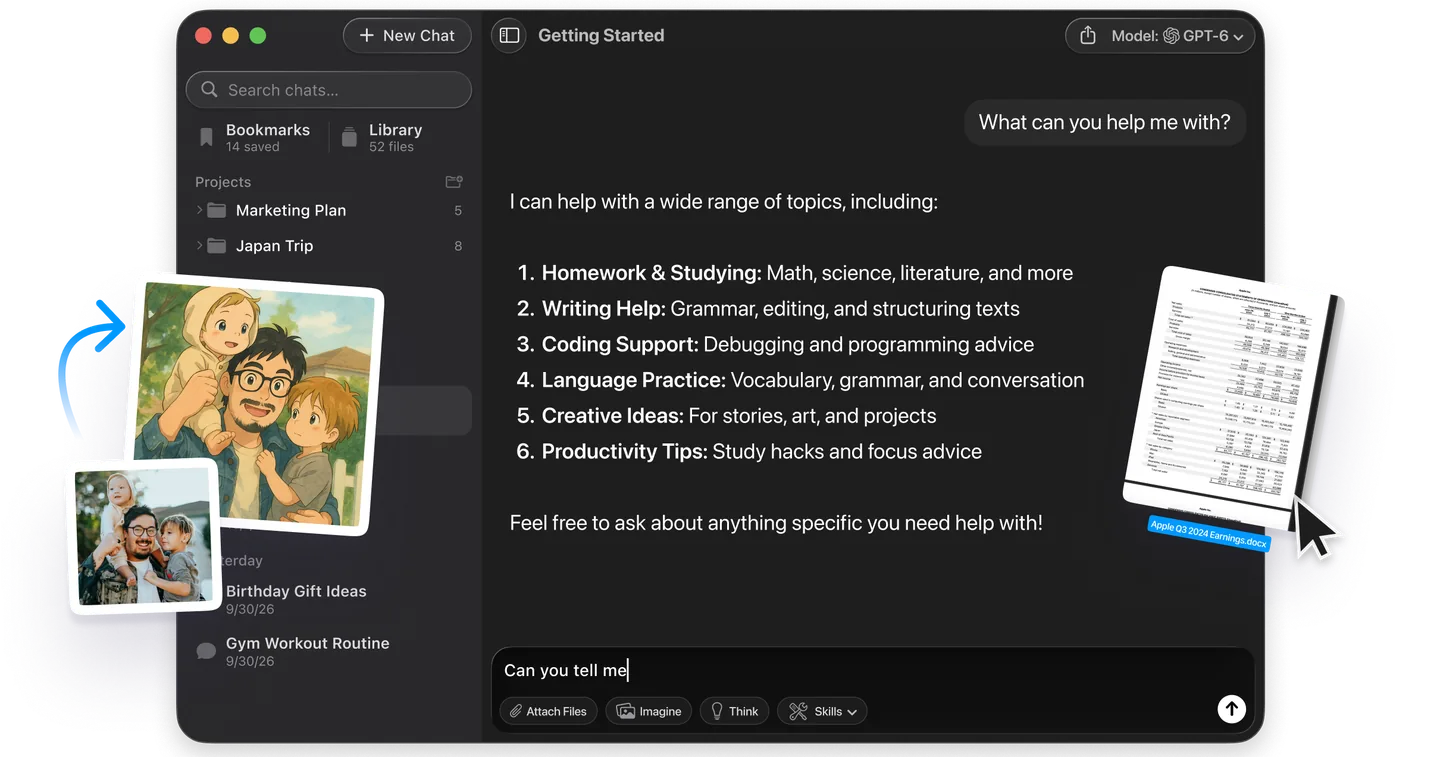
Pro Tip: Run these prompts in Fello AI to test them against Gemini 3 Pro, Claude 4.5, and GPT-5.2 side-by-side to see which model matches your voice best.
| Step | Prompt Purpose | Key Input Variables | Best For |
|---|---|---|---|
| 1 | Brainstorming | [Niche], [Audience] | Finding high-volume, low-competition topic gaps. |
| 2 | The Hook | [Topic], [Pain Point] | Creating 15-second intros that stop the scroll. |
| 3 | The Outline | [Video Length], [Format] | Structuring flow (Tutorial vs. Story vs. Review). |
| 4 | Full Script | [Tone], [Speaker Style] | Generating the spoken content with voice cues. |
| 5 | YouTube Shorts | [Topic], [Hard Limit: 60s] | Condensed, fast-paced vertical video scripts. |
| 6 | Chapters (SEO) | [Finished Script] | Creating clickable 0:00 timestamps for Google Search. |
| 7 | Metadata Pack | [Keywords], [Competitors] | Titles, Descriptions, and Caption file formatting. |
Opening
Writing YouTube scripts with Gemini in 2026 is less about “one perfect prompt” and more about a repeatable workflow: topic gap → hook → timed outline → section writing → Shorts cutdowns → chapters → metadata + captions. Below are 7 copy-paste Gemini prompts built around role, context, and constraints so you get scripts that are tighter, more natural, and ready to publish with fewer edits.
We have updated our library for 2026. These prompts utilize Structured Prompting principles (Role, Context, Constraints) which perform significantly better in Gemini 3 and Gemini 2.5 Pro than older, generic prompts.
The Key Takeaways
- Use constraints + structure to avoid overly long or vague scripts.
- If you need current trends, turn on Search grounding / URL context (otherwise the model may rely on older knowledge).
- Chapters require 00:00 first, ≥3 timestamps, and ≥10s per chapter to work reliably.
- Uploading SRT captions is supported and can improve accessibility.
- Google may surface “Key moments” based on creator timestamps (including YouTube descriptions).
1. The “Blue Ocean” Topic Finder
Why it works: If you enable Search grounding / URL context, Gemini can use up-to-date sources to analyze current trends. This prompt forces the AI to look for gaps, not just popular topics that are already saturated.
Copy this prompt:
Act as a YouTube Strategist for the [Insert Niche, e.g., Vegan Cooking] niche. I want to create a video that targets [Insert Target Audience, e.g., busy college students]. If browsing/grounding is available, use it to base ideas on current 2026 interest and include 1 short source note per idea. If not available, say so and generate evergreen topics.

Please generate 10 video topic ideas that are:
1. Searchable: High interest in 2026.
2. Unique: Not covered by every major competitor.
3. Visual: Have clear potential for strong thumbnails.

For each topic, write a 1-sentence 'Clickable Title' concept.
2. The “Retention Hook” Generator
Why it works: YouTube retention data confirms the first 15-30 seconds are critical. This prompt uses proven “pattern interrupt” formulas to prevent viewers from swiping away.
Copy this prompt:
I am making a YouTube video about [Insert Topic]. Write 5 different hook scripts (spoken length: 15-20 seconds).

Use these specific frameworks:
- The Negative Bias: 'Stop doing X if you want Y...'
- The Story Tease: 'I almost lost everything when...'
- The Bold Claim: 'Everything you know about [Topic] is wrong.'

Constraint: Keep the language simple (Grade 6 reading level) and include a visual direction cue in brackets like [Cut to black] or [Show result].
3. The “Timed Beat” Outline
Why it works: AI models can sometimes hallucinate length, giving you a script that is too short or too long. This prompt enforces time constraints to ensure your pacing matches a standard 8-10 minute video.
Copy this prompt:
Create a detailed outline for a [Insert Length, e.g., 8-minute] video about [Topic].

Structure the outline with these estimated timestamps:
- 0:00-0:45: Hook & Intro
- 0:45-2:00: Context/Problem
- 2:00-6:00: The Meat (Break into 3 clear steps/tips)
- 6:00-7:30: The Verdict/Result
- 7:30-8:00: CTA & Outro

For each section, list 3 bullet points of what I should say and 1 idea for B-roll footage.
4. The “Deep Dive” Script Writer (Long-Form)
Why it works: It uses style constraints + section-by-section drafting to reduce generic “AI voice.” This is the best way to prevent the robotic “AI accent” often associated with generated content.
Copy this prompt:
Write the full script for the [Section Name] section of my outline.

Tone Guidelines:
- Speak like [Insert Persona, e.g., a helpful friend / a sarcastic expert].
- Use short sentences.
- Avoid corporate jargon.
- Include 'breathing room' - mark pauses with [PAUSE].

Input Context: Here is my outline for this section: [Paste Outline Section].
5. The “Viral Shorts” Looper
Why it works: YouTube Shorts must be under 60 seconds. This prompt targets a 58-second “safe zone” and creates a perfect loop (where the end flows back to the start) to encourage replays.
Copy this prompt:
Write a YouTube Shorts script about [Topic].

Strict Constraints:
1. Total Word Count: Maximum 140 words (to fit <58 seconds).
2. Structure: Hook (3s) → Value (45s) → CTA (10s).
3. The Loop: The last sentence of the script must seamlessly flow back into the first sentence to encourage re-watching.

Output format: A two-column table with 'Visual' on the left and 'Audio' on the right.
6. The “Chapter Timestamp” Builder (SEO)
Why it works: Google Search uses chapters for “Key Moments” indexing. This prompt enforces YouTube’s strict formatting rules (00:00 start, ascending order) so your video is indexed correctly.
Copy this prompt:
Read the script above and generate a list of YouTube Chapters for the video description.

YouTube Formatting Rules:
1. The first timestamp MUST be 00:00 and labeled 'Intro'.
2. Timestamps must be in MM:SS format.
3. Chapters must be at least 10 seconds apart.
4. Use descriptive keywords in the chapter titles for SEO (e.g., instead of 'Tip 1', use 'How to fix [Problem]').
5. Include at least 3 timestamps total.
7. The “SRT & Metadata” Pack
Why it works: Accessibility boosts reach. This prompt generates a raw .SRT file structure you can save as a file and upload, which is far more accurate than relying on auto-captions.
Copy this prompt:
Generate two things for this video:

1. 5 SEO-Optimized Titles: Under 60 characters, high CTR, including the keyword [Keyword].

2. SRT Caption Formatting: Take the first minute of the script and format it as a valid SubRip (.srt) file.
   Example:
   1
   00:00:00,000 --> 00:00:03,000
   Here is the spoken text.

(I will use this format to correct my auto-captions).
Prompt Debugging & Quality Control
Is Gemini sounding too robotic? Try these fixes.
Even the best models like Gemini 2.5 Pro or Gemini 3 can sometimes sound generic. If your script feels “soulless,” use this debugging checklist based on Google’s Prompting Strategies.
If you are struggling with generic outputs, consider checking our Prompt Engineering Hub for advanced techniques.
- The “Robot” Fix: Add a specific constraint to your prompt: “Do not use words like ‘unleash’, ‘unlock’, ‘delve’, or ‘game-changer’.”
- The “Hallucination” Fix: If Gemini invents facts, add: “Answer only using the information provided in the context below. If you don’t know, state ‘I don’t know’.”
- The “Format” Fix: If the output is a messy wall of text, ask for: “Break this down into a Markdown table with columns for Visuals and Audio.”
Bonus: 15 Proven Viral Opener Hooks
The first few seconds of your video determine whether viewers stay or scroll away, which is why all successful creators obsess over creating the most attention-grabbing hooks possible. We’ve identified these 15 opener hooks that consistently achieve high retention rates and boost your video’s performance in the algorithm.
15 Viral Hook Templates:
- “Excuse me, this app just predicted my breakdown before I even knew it was coming”
- “Why did no one tell me I could outsource my decision-making to AI”
- “Somebody really created an app that makes me actually want to meal prep”
- “What do you mean I can practice difficult conversations before having them”
- “Somebody made an app that reminds you to eat when you’re hyperfocused”
- “What do you mean I can practice setting boundaries through roleplay scenarios”
- “What do you mean I can learn to enjoy my own company through guided activities”
- “Girl, this thing just showed me how to stop seeking approval from unavailable people”
- “Bestie discovered an app that helps you identify your stress responses before they escalate”
- “Sis really created something that teaches you to stop rushing your healing”
- “What do you mean I can learn to stop fixing people through daily reminders”
- “Sis really created something that makes you comfortable with being misunderstood”
- “Bestie discovered an app that stops you from over-explaining everything”
- “Girl, this thing just showed me how to stop comparing my behind-the-scenes to others’ highlight reels”
- “Bestie found an app that helps you practice sitting with uncertainty”
Adapt These Hooks to Your Content:
You can modify any of these hooks to fit your specific video using this simple prompt:
The Prompt: Analyze this viral hook example: [paste your chosen hook from the list above]. Identify the psychological triggers and structure that make it effective. Now create 3 similar hooks for my [niche] YouTube channel about [specific video topic]. My audience is [demographic] and the main benefit they’ll get from this video is [key outcome]. Maintain the same psychological appeal and structure as the example but adapt the language and subject matter to fit my content and speaking style: [brief description of your typical tone or script].
Create Your Own Prompts for YouTube Scripts
Creating effective YouTube script prompts requires giving Gemini specific context about your channel, audience, and content goals. The more detailed information you provide, the more targeted and useful your generated result will be.
Step-by-Step Checklist:
- Define your channel context – Specify your niche, subscriber count, and target audience demographics.
- Describe your content style – Include examples of your previous scripts, speaking patterns, or successful content.
- State your specific goal – Clarify whether you want hooks, outlines, full scripts, or optimization elements.
- Provide topic details – Include the subject matter, key points to cover, and any unique angles.
- Set format constraints – Specify video length, platform requirements, and any technical limitations.
- Include audience considerations – Detail their knowledge level, interests, and what they expect from your content.
- Request structured output – Ask for organized sections, alternatives, and implementation guidance.
Example Prompt Using This Checklist:
Create a complete script for my iPhone 17 review video targeting tech enthusiasts aged 18-35. I run a tech YouTube channel with 150K subscribers focused on honest, detailed product reviews. Here’s an example of my speaking style: [example script]. My audience expects in-depth analysis, real-world testing scenarios, and honest pros/cons without fanboy bias. The script should: open with a hook questioning Apple’s biggest claims about the iPhone 16, structure the review around camera improvements, battery life, new AI features, and unique value proposition, include natural transition phrases like my example shows, incorporate moments for B-roll footage of hands-on testing, maintain my conversational but informative tone throughout, and end with a clear recommendation for different user types. Suggest optimal points for engagement CTAs and sponsor integrations.
Prompt packs you may like
| Prompt pack | Best for |
|---|---|
| 6 Gemini Prompts For LinkedIn Posts That Don’t Sound like AI | Repurposing your video into a LinkedIn post that drives traffic back to YouTube |
| 7 Perplexity Prompts That Will 10x Your Productivity | Faster research + source-backed angles before you write the script |
| 7 Effective Gemini Prompts for Ad Copy That Actually Bring Results | Punchier hooks + CTA variants (great for titles + sponsor reads + end CTAs) |
| 7 Best ChatGPT Prompts for Sales Copy That Will Save You Hours | Stronger calls-to-action + conversion language for offers and sponsor segments |
| 50 Essential AI Prompts for Podcasters (Updated 2026) | Converting podcast episodes into YouTube scripts + clips |
| 400+ Best AI Prompts for Marketing (Updated January 2026) | A full library for creators doing YouTube + email + SEO + social promotion |
| 7 Best ChatGPT Prompts for Writers That You Can Use Today | Better storytelling, pacing, and dialogue for long-form scripts |
Conclusion
Mastering YouTube scripting with Gemini in 2026 isn’t about finding one magic prompt; it’s about adopting a reliable, repeatable workflow. By breaking the process downm locking in your hook first, enforcing strict timing with a beat outline, and generating scripts section-by-section. You avoid the common pitfalls of hallucinated lengths and robotic pacing. This structured approach allows you to scale your content production while keeping the personal touch that builds a loyal audience.
Ready to take the next step? Pick a video idea you’ve been procrastinating on and test the “Blue Ocean” and “Retention Hook” prompts today. To streamline the process even further, run this entire workflow in Fello AI. You can compare Gemini 3 Pro’s creative angles side-by-side with Claude 4.5’s writing style, ensuring you choose the absolute best version of your script before you ever hit record. If you write on a Mac, our Gemini desktop client guide for macOS shows how to keep Gemini in a native window instead of a browser tab.
Frequently Asked Questions
Can Gemini write a YouTube script from a video link?
Yes. In Gemini, you can paste a YouTube video URL (or upload a video file) and ask it to “Analyze this video’s pacing and write a script for a similar video on a new topic.” This uses Gemini’s multimodal capabilities to understand the video’s structure.
How do I make my AI script sound natural?
The key is “Few-Shot Prompting.” Instead of just asking for a script, provide Gemini with 2-3 examples of your previous scripts or a transcript of you speaking. Tell it: “Analyze my speaking style in these examples and write the new script matching this tone.”
What is the best Gemini model for YouTube scripts?
For long scripts, Gemini 3 Pro (or Gemini 1.5 Pro) is best because of its massive context window – you can upload entire books or research papers as source material. For quick titles or hooks, the faster Gemini Flash models are sufficient.
Does Gemini actually support analyzing YouTube videos by URL?
Yes in supported surfaces/workflows; Gemini can analyze video inputs and YouTube URLs in supported implementations, but results may vary by video type and access.
What caption file format should I upload to YouTube?
SubRip (.srt) is a common default and is supported by YouTube.
How do I stop Gemini from inventing facts in scripts?
Require citations when grounded, or instruct it to use only provided sources and say “I don’t know” when uncertain.
Q: What should I give Gemini to match my voice fastest? A: 1–2 short transcripts + “do/don’t” word list + pacing notes (e.g., short sentences, rhetorical questions).
Methodology & Sources
These prompts were tested in late 2025–January 2026 across multiple Gemini models (Pro/fast variants) and iterated until outputs consistently met the same constraints (timing, formatting, tone control, and ready-to-use YouTube assets). We scored outputs on:
- Constraint adherence: e.g., Shorts length and word count targets; chapter rules
- Tone consistency: matches the requested persona; avoids filler
- Formatting compliance: chapters and captions are immediately usable in YouTube
Sources:
- Google AI for Developers: Prompt design strategies (few-shot, constraints, output control)
- YouTube Help: Video Chapters requirements (00:00 first, ≥3 timestamps, ≥10s)
- YouTube Help: Supported subtitle/caption file formats (including SubRip/SRT)
- Google Search documentation: Key moments prioritization (creator timestamps / structured data)