TL;DR: To set up your new Mac in 2026, update your iPhone first, then use the “Set up with iPhone” feature during the initial boot for a seamless handshake. Immediately update to macOS Tahoe 26, enable FileVault for disk encryption, verify Apple Intelligence settings (on supported Apple Silicon Macs), and configure the new native Phone app to sync calls and voicemail across devices.
| Metric | Details |
|---|---|
| Primary OS | macOS Tahoe 26 (or point updates like 26.1) |
| Setup Time | Approx. 45–60 minutes (depending on data migration) |
| Key New Feature | Liquid Glass Design & Native Phone App |
| Backup Tool | Time Machine (Built-in) |
| Difficulty | Beginner / Easy |
Quick Setup Checklist (New Mac in 8 Steps)
- Turn on your Mac and choose “Set up with iPhone” instead of typing credentials manually.
- Decide on migration: Clean slate is best; use Migration Assistant only if you need every old file.
- Create your user account, enable Touch ID, and set a strong password.
- Go to System Settings → General → Software Update and install the latest macOS Tahoe point release (e.g., 26.1).
- Turn on / confirm FileVault is enabled and review Privacy permissions.
- Open Apple Intelligence & Siri to customize how AI works across the system.
- Tweak Trackpad, Keyboard, Dock, and Liquid Glass appearance settings.
- Set up iPhone Mirroring and the Phone app so you can leave your iPhone on the desk.
Once you have mentally ticked these off, you are ready to dive into the details of getting your machine running perfectly.
Unboxing the Future: Your First Steps with macOS Tahoe
Unboxing a new Mac is always an exciting moment, but staring at that fresh screen can feel a little overwhelming. In 2026, Apple has made the process smoother than ever with the release of macOS Tahoe, but there are still vital settings you need to change immediately to get the best performance and security.
Whether you are moving from an older Intel model, which is now reaching the end of its support life, or switching entirely from Windows, getting the first hour right sets the tone for the life of your computer.
This guide covers everything you need to know to get started. We will answer the most common questions: How do I transfer my old data safely without bringing over “digital clutter”? What is the new “Liquid Glass” look everyone is talking about? And most importantly, how do I turn on and use the new Apple Intelligence features that have redefined the Mac experience?
The Key Takeaways
There are four critical pillars to a successful setup this year:
- Update First: Always make sure you have the latest macOS Tahoe point release (e.g., 26.1) immediately to fix bugs that shipped from the factory.
- Use Your iPhone: The “Set up with iPhone” feature is now the fastest way to sync your account, Wi-Fi, and preferences.
- Secure It: Turning on FileVault encryption is non-negotiable for keeping your private data safe from physical theft.
- Go AI: Enable Apple Intelligence early to start indexing your data for writing tools and summaries in Mail and Notes.
With these priorities in mind, let’s start the process properly before you even press the power button.
1. First Boot: Make the Setup Assistant Work for You
When you turn on your Mac, the Setup Assistant will greet you. This tool walks you through the basics like region and language, but the most important step is how you choose to sign in. In previous years, this involved a lot of typing. Now, it is almost entirely automated.
Use “Set up with iPhone or iPad”
The easiest method in 2026 is to select “Set up with iPhone or iPad” when prompted by the assistant. Simply unlock your updated iPhone and hold it near your Mac. A floating particle cloud pattern will appear on your Mac screen, scan this with your iPhone camera. It will automatically transfer your Wi-Fi settings, Apple Account credentials, and iCloud preferences without you needing to type in complex passwords. This “handshake” ensures that your new Mac is instantly trusted by your other devices.
Migration Assistant vs. Clean Slate
Eventually, the system will ask how you want to transfer data. You have three main choices, and picking the right one depends on the state of your old computer:
- Migration Assistant (Recommended): If you have your old Mac and new Mac side-by-side, turn them both on. During the setup process, macOS will ask if you want to transfer data from another Mac. This is the easiest method—they connect wirelessly and move everything (apps, accounts, passwords) automatically.
- From a Mac or Time Machine: This is the “clone” option. It is best if you want your new computer to look exactly like your old one. However, be warned: this also copies over old “junk” files, “cruft,” and outdated preferences that might slow down a new machine.
- From a Windows PC: You will need to use the Migration Assistant app for Windows (download Apple’s free Windows Migration Assistant from their support site) to move basic files like photos and documents.
- Don’t transfer now (Clean Slate): This gives you a fresh start. This is often the best choice for 2026. By setting up as a new Mac, you avoid importing years of digital clutter. You can always drag and drop specific important files from your backup drive later, ensuring only the things you actually need make it onto your new machine.
We generally recommend the clean slate approach for a major upgrade year like 2026, as it ensures you get to experience the new OS without legacy bugs or software conflicts.
Create Your Local User
If you choose a clean slate, you will create a local user account. Use a strong password that you will remember; this password unlocks your disk encryption. If your Mac keyboard has Touch ID, the assistant will guide you to register your fingerprint. Do this now, it saves time every time you log in or pay for something online.
2. Immediately Check Out Your macOS Tahoe
If you bought your Mac brand new on launch day, it likely has the latest software. However, if you bought it second-hand or if it has been sitting in a store for a few months, it might need an update.
If an update is available, install it to ensure you have the latest security patches.
- Go to System Settings > General.
- Click Software Update.
- Go to System Settings → General → Software Update.
You are looking for the latest build of macOS Tahoe 26. If 26.1 or later is available, install that immediately. It includes a brand new Liquid Glass controls and dozens of critical security fixes that weren’t ready when the physical hardware was boxed up. Attempting to install complex apps or sync large libraries before updating can sometimes lead to conflicts, so get this out of the way first.
3. Essential Settings to Change on Day One
Now that your software is current, it is time to connect your digital life. The 2026 ecosystem relies heavily on iCloud synchronization and the new on-device AI capabilities.
Apple Intelligence and iCloud
Open System Settings and click your name at the top to verify your Apple Account settings. Navigate to the iCloud section and make deliberate choices about what to sync. We recommend turning on sync for Photos, Passwords & Keychain, Notes, and Messages. This ensures that a photo you take on your phone appears instantly on your desktop, and your 2FA codes are available everywhere.
Next, check the Apple Intelligence & Siri menu.
- Works on: Macs with Apple Silicon (M-series only, check Apple’s compatibility page for the latest list).
- Default State: On most new Macs, Apple Intelligence will already be turned on — but open System Settings → Apple Intelligence & Siri to confirm and customize what it can access.
- Region Check: If you don’t see Apple Intelligence options, your Mac may not be in a supported region or language yet.
- If you don’t see it: Check System Settings → General → Software Update (you may still be on macOS Sequoia) and check Apple’s regional availability page, as features roll out slowly to some countries.
- Features: This enables Writing Tools for proofreading, Genmoji for custom reactions, and smart summaries in Mail and Notes.
Taking a moment to verify these settings now ensures that your Mac’s AI features are ready to assist you the moment you start working.
Note for EU Users: Apple Intelligence is available in the EU on the Mac. What Apple has held back is the rebuilt Siri AI, which is not available in the EU on iPhone, iPad or Apple Watch at launch. EU Macs and Vision Pro do get it.
Spotlight: The Super-Powered Launcher
In macOS Tahoe, Spotlight has evolved into a command center. It can now toggle system settings, run shortcuts, and access clipboard history. Go to System Settings → Siri & Spotlight to ensure it is enabled. Memorize the shortcut Command + Space. it is the fastest way to launch apps, find files, or run shortcuts (including triggering Shazam to identify a song) on your new Mac.
In Tahoe, Launchpad’s grid of apps has effectively moved into Spotlight’s new Applications view, so Command + Space is now both your search box and your app launcher. You can browse apps by category and even see iPhone apps when iPhone Mirroring is active.
4. Customizing the “Liquid Glass” Look
macOS Tahoe introduced a distinct new design language called “Liquid Glass.” It moves away from the flat opacity of previous versions, introducing translucent, glass-like menus and softer, tinted icons that dynamically reflect your wallpaper’s color palette.
Appearance and Widgets
Go to System Settings → Appearance. Most users prefer “Auto” mode, which shifts the interface from light to dark as the day progresses.
You can also customize the “Liquid Glass” look. In System Settings → Appearance (and, for stronger changes, Accessibility → Display → Reduce Transparency), you can switch Liquid Glass between clearer or more tinted looks, or make the UI much more opaque if the translucency bothers you.
Desktop Widgets
Widgets are no longer stuck in the notification center. You can right-click anywhere on your wallpaper and select “Edit Widgets.” From here, you can drag and drop widgets—like your Calendar, Weather, or Home controls—directly onto your desktop. In Tahoe, these widgets are interactive, meaning you can check off a reminder or pause a podcast without opening the full app.
Trackpad and Keyboard Tuning
Don’t suffer through the default input settings, which are often too slow for modern workflows.
- Trackpad: Go to System Settings → Trackpad and enable “Tap to click.” This allows you to lightly tap the surface instead of physically depressing the hinge, which is faster and quieter.
- Keyboard: If you do a lot of writing or coding, go to System Settings → Keyboard. Adjust the “Key Repeat” to Fast and “Delay Until Repeat” to Short. This makes navigating text with arrow keys and deleting backspaces significantly snappier.
These small adjustments might seem minor, but they significantly reduce friction and fatigue during long work sessions.

5. Privacy & Security: Do This Early
Apple ships Macs with robust security defaults, but you can harden them with just a few clicks to ensure your personal data remains private.
Go to System Settings → Privacy & Security and look for FileVault. Click Turn On. This encrypts your entire hard drive at rest. If your MacBook is ever lost or stolen, the thief cannot access your data without your password, even if they remove the drive. Modern Apple Silicon Macs handle this encryption with zero performance penalty, so there is no reason to leave it off.
Review App Permissions
In the same Privacy & Security menu, take a moment to audit the permissions lists.
- Location Services: Only check apps that truly need to know where you are (like Maps, Weather, or Find My).
- Screen Recording: This is a powerful permission. Ensure only trusted apps (like Zoom, Teams, or specialized screenshot tools) have this access.
- Microphone & Camera: verify that no unexpected apps have access to your sensors.
Regularly auditing these lists is a good habit to build, ensuring that no old or unused apps retain access to your personal sensors or data.
Passwords App
macOS now includes a dedicated Passwords app. It is end-to-end encrypted and syncs with your iPhone. Open it to import passwords from other browsers or managers if you are switching ecosystems. On Tahoe, the new Passwords app sits on top of system-level protections (like “Sensitive Data Isolation” in newer macOS versions), which keep high-value secrets separated from the rest of the OS for added security.
6. Continuity and iPhone Connection
In 2026, the line between your Mac and iPhone is blurrier than ever. macOS Tahoe includes a native Phone app and powerful mirroring capabilities that let you leave your phone in your pocket while you work.
iPhone Mirroring
This feature lets you view and control your iPhone screen directly from your Mac desktop.
- How to enable: Click the iPhone Mirroring icon in your Dock. Ensure both devices are on the same Wi-Fi and signed into the same Apple Account.
- Why use it: It allows you to use mobile-only apps (like Instagram, TikTok, or specific banking apps) using your Mac’s keyboard and trackpad. Crucially, your physical iPhone remains locked and dark, protecting your privacy while you access it remotely.
This seamless integration means you can stay focused on your Mac screen without constantly picking up your phone for notifications.
Note for EU Users: Similar to Apple Intelligence, iPhone Mirroring is blocked in the EU at this time.
The Native Phone App
Tahoe brings a full-featured Phone app to the Mac, distinct from the old FaceTime interface. Open the app and follow the prompts to pair it with your iPhone. Once set up, you can make and receive cellular calls using your Mac’s high-quality microphone and speakers. It supports features like Call Screening and Live Voicemail.
- Troubleshooting: If you don’t see the Phone app, double-check that your iPhone is signed into the same Apple Account, has Wi-Fi Calling enabled with your carrier, and is on the minimum iOS version required.
Once paired, your Mac effectively becomes a high-fidelity speakerphone for all your cellular calls.
Don’t Forget Classic Continuity
Beyond the new features, make sure these classics are working (System Settings → General → AirDrop & Handoff):
- Handoff: Start an email or note on iPhone, finish on Mac immediately.
- Universal Clipboard: Copy text on your phone, paste it on your Mac (Cmd + V).
- OTP Autofill: Let your Mac auto-fill 2FA SMS codes that arrive on your iPhone.
These features usually work automatically, but checking them now ensures you won’t be frustrated when you need them later.
Note on Regional Availability: Some features like iPhone Mirroring and parts of the new Phone app may not be available in all regions (especially the EU due to DMA regulations). Always check Apple’s regional feature list if these features are missing for you.
7. Essential Apps & Maintenance
Finally, install the tools you need to actually do work. Whether you use the App Store or download from the web, stick to reputable sources to keep your new installation clean.
Still deciding on a machine? See our MacBook vs Googlebook vs Chromebook comparison.
- Safari: In Tahoe, use the new Highlights and Summarize features, click the Reader/Page menu, then “Summarize” to get a quick AI-generated recap of any article.
- Mail: Add all your email accounts here. The new AI features can prioritize your inbox and help draft professional replies.
- Notes: Now supports live audio transcription and a Math Notes folder that syncs equations solved in the Calculator app on your iPhone or iPad.
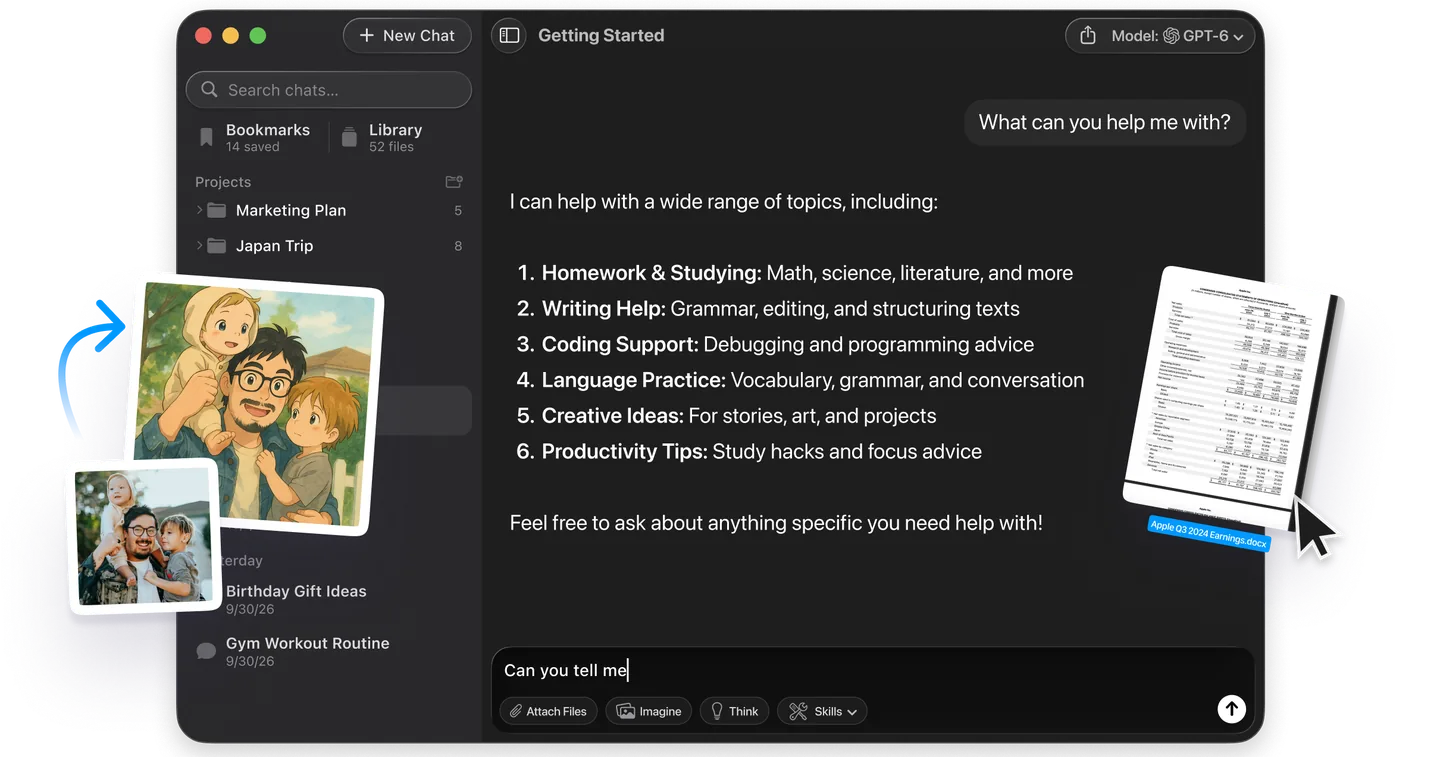
- Fello AI: While Apple Intelligence handles system tasks, setting up Fello AI gives you immediate access to powerful cloud models (like GPT, Claude, Gemini and more) in a single native interface, perfect for complex reasoning or coding tasks that go beyond Siri’s capabilities.
- Configuring these tools first allows you to be productive immediately, providing a solid baseline for both basic communication and advanced AI workflows.
Configuring these native tools first allows you to be productive immediately, even before you start downloading third-party software.
For a “general user” setup, consider these categories:
| Use Case | Built-in Option | Third-Party Upgrade |
|---|---|---|
| Writing & Email | Mail + Apple Intelligence | Spark, Superhuman |
| Passwords | Passwords App | 1Password, Bitwarden |
| AI Client | Siri / Writing Tools | Fello AI |
| Window Tiling | Built-in Tiling | Magnet, Rectangle |
| Maintenance | Storage Management | AppCleaner (for uninstalling) |
Conclusion
Setting up a new Mac in 2026 is faster and more intuitive than ever thanks to tight iPhone integration and smarter onboard software. By taking the 45 minutes to properly configure FileVault, Apple Intelligence, and your Time Machine backups now, you are ensuring a smooth, secure, and productive experience for years to come.
One simple next step: Now that your system is secure and updated, right-click your desktop wallpaper and try adding your first interactive widget to truly personalize your new workspace!
FAQ
How do I set up a new MacBook in 2026 step-by-step (macOS Tahoe 26)?
Start by running the Setup Assistant and using the “Set up with iPhone” option for a quick login. Once logged in, update macOS immediately via System Settings, enable FileVault for security, verify Apple Intelligence settings, and configure Time Machine backup.
Should I use Migration Assistant or start fresh on a new Mac in 2026?
If your old computer was slow, buggy, or cluttered with files you no longer need, starting fresh is significantly better. You can manually drag important files over later. Use Migration Assistant only if you absolutely need to keep all your old apps and complex settings exactly as they were.
Why don’t I see Apple Intelligence in System Settings on my Mac?
Apple Intelligence requires a Mac with an M1 chip or newer (Apple Silicon), a supported region/language, and an up-to-date system (macOS Sequoia 15.1 or later or macOS Tahoe 26.1+). If you’re on an Intel Mac, or your language/region isn’t supported yet, the options won’t appear. Check System Settings → General → Software Update to verify your version, and then consult Apple’s Apple Intelligence compatibility page.
How do I turn off or reduce the Liquid Glass effect on macOS Tahoe 26?
Go to System Settings → Appearance to adjust the tinting. For a more traditional opaque look, go to System Settings → Accessibility → Display and toggle “Reduce Transparency.”
Where did Launchpad go in macOS Tahoe and how do I open my apps now?
While Launchpad still exists, macOS Tahoe encourages using the new Applications view in Spotlight. Press Command + Space to search for and launch any app instantly, which is faster than swiping through pages of icons.
Why is iPhone Mirroring not available in my country/region on macOS 26?
As of 2025, Apple has restricted iPhone Mirroring and some advanced Continuity features in certain regions (especially the EU) due to regulations like the Digital Markets Act.
What privacy settings should I change first on macOS Tahoe (FileVault, Location, Screen Recording)?
Immediately enable FileVault in System Settings → Privacy & Security to encrypt your disk. Then, review Location Services to limit tracking and audit Screen Recording permissions to ensure only trusted apps (like Zoom) can see your screen.
Methodology & Sources
To create this comprehensive setup guide for 2026, we analyzed the progression of macOS features from macOS Sequoia (2025) into the current macOS Tahoe 26 release.
- Feature Verification: Feature verification is based on Apple’s macOS Tahoe feature overview and the “What’s new in macOS Tahoe 26.1” support article, plus coverage from The Verge, WIRED, and MacRumors.
- Support Protocols: Setup steps follow the standard Apple Support protocols for migration, iCloud configuration, and FileVault encryption.
- Compatibility: Hardware support for Apple Intelligence and the strategic phase-out of Intel chips is based on Apple’s published silicon transition roadmaps.
This rigorous approach ensures the advice provided is not just theoretical but practical for real-world users setting up their machines today.