Gemini 4 es real, Google lo ha nombrado y se está entrenando ahora mismo. El 21 de julio de 2026, escondido en el anuncio de un modelo mucho más pequeño, Google escribió que «hemos iniciado nuestra tanda de preentrenamiento más ambiciosa hasta la fecha, la de Gemini 4, y estamos entusiasmados con los avances». Es la primera vez que Google confirma el nombre con sus propias palabras.
Un preentrenamiento confirmado no es un lanzamiento, sin embargo, y en la brecha entre ambos vive cada rumor. Todavía no hay ningún modelo Gemini 4, ni documentación, ni acceso por API, y Google no ha puesto fecha a nada de esto. Esta guía separa lo que Google ha dicho realmente de lo que internet se ha inventado. En ella respondemos si Google Gemini 4 ya se ha lanzado, qué nuevas funciones y mejoras esperar, y qué modelos de IA deberías usar hoy hasta que salga.
Conclusiones clave
- Confirmado, no lanzado: Google confirmó el 21 de julio de 2026 que el preentrenamiento de Gemini 4 ha comenzado, pero todavía no hay documentación ni lanzamiento de la API a fecha del 20 de agosto de 2026.
- El modelo más reciente: Google lanzó Gemini 3.7 Flash el 13 de agosto de 2026 a un precio introductorio de 0,75 $ de entrada / 3,75 $ de salida por millón de tokens, y puso Gemini 3.6 Flash en la misma tarifa. Ambas se duplican el 1 de enero de 2027. Gemini 3.5 Pro, prometido para junio, sigue sin lanzarse.
- Más grande, no solo más rápido: en la conferencia de resultados del 22 de julio de 2026, Sundar Pichai dijo que el siguiente salto exige «modelos base mucho más grandes» y señaló la programación y la programación agéntica como la brecha que Google tiene que cerrar.
- Usa lo que funciona: ya puedes replicar la mayoría de los flujos de trabajo esperados de Gemini 4 con Gemini 3.7 Flash vía API, o con Gemini 3.1 Pro y Gemini Omni Flash en Fello AI.
Estado actual de Google Gemini 4
Está confirmado que Gemini 4 existe y que está en entrenamiento, pero no está lanzado como modelo público en los catálogos de la API de Gemini de Google. Son dos cosas distintas, y la mayor parte de la confusión en internet viene de mezclarlas. La forma más rápida de verificar un lanzamiento real es consultar la documentación oficial y las entradas fechadas de las notas de versión oficiales.
A fecha del 20 de agosto de 2026, no hay documentación pública oficial de un modelo llamado explícitamente «Google Gemini 4» en los catálogos para desarrolladores ni en las notas de versión de la API, ni ninguna cadena gemini-4 en las listas de modelos de la API de Gemini ni de Vertex AI. Si buscas hoy en las listas oficiales de modelos, verás el más reciente Gemini 3.7 Flash como estable, junto a Gemini 3.6 Flash, Gemini 3.5 Flash y Gemini 3.5 Flash-Lite, la serie Gemini Omni, Gemini 3.1 Pro todavía con su sufijo -preview, y las versiones estables de Gemini 2.5.
Qué ha cambiado hace poco (cronología oficial)
Para entender dónde estamos, fíjate en el ritmo de lanzamientos oficiales reciente de Google.
| Fecha | Lanzamiento | Qué añadió | Estado |
|---|---|---|---|
| 13 ago 2026 | Gemini 3.7 Flash | Puntuaciones de programación muy al alza en un ciclo de 23 días; entrada introductoria de 0,75 $ / salida de 3,75 $. En la app de Gemini solo corre dentro de Spark | El más reciente |
| 21 jul 2026 | Gemini 3.6 Flash | Los mismos 1,50 $ de entrada, salida rebajada a 7,50 $; alrededor de un 17 % menos de tokens de salida. Lanzado junto a 3.5 Flash-Lite y 3.5 Flash Cyber. Después rebajado a 0,75 $ / 3,75 $ para igualar a 3.7 Flash | Superado en la API, todavía el modelo por defecto de la app gratuita |
| 19 may 2026 | Gemini 3.5 Flash + Gemini Omni | Inteligencia de frontera a velocidad Flash; nueva serie de creación de vídeo | Superado por 3.6 Flash |
| 15 abr 2026 | Gemini para macOS | App de escritorio nativa | Disponible |
| 19 feb 2026 | Gemini 3.1 Pro | Razonamiento avanzado para tareas complejas | El Pro más reciente, todavía en preview |
| 29 ene 2026 | Computer Use | Control del navegador y de apps para los modelos preview de Gemini 3 | Disponible |
| 17 dic 2025 | Gemini 3 Flash | Nuevo modelo por defecto, razonamiento rápido de nivel doctorado | Superado |
| 18 nov 2025 | Gemini 3 Pro | El modelo más inteligente, límites más altos para Pro/Ultra | Superado |
Anuncios oficiales frente a rumores de las redes
Internet está lleno de especulaciones. Puede que veas una publicación sobre un anuncio de Gemini 4 en redes sociales, pero suelen ser predicciones más que hechos. Google normalmente lanza nuevos modelos actualizando su documentación técnica y publicando una entrada de blog en The Keyword.
Es importante entender la diferencia entre una «actualización de modelo» y una «nueva generación». Google publica con frecuencia actualizaciones de los modelos existentes sin cambiar el número de versión principal, y el reciente salto de Gemini 3 Pro a Gemini 3.1 Pro y a Gemini 3.5 Flash es un ejemplo perfecto. El lanzamiento de una nueva generación «Gemini 4» iría acompañado de actualizaciones de la documentación oficial y de una entrada fechada en las notas de versión, y probablemente coincidiría con un gran evento de producto de Google. Que Google nombre el modelo en una entrada de blog, como hizo el 21 de julio, es una señal genuina, pero es una señal sobre la hoja de ruta y no sobre la disponibilidad.
Cómo comprobar el lanzamiento
Si quieres saber si Gemini 4 se ha lanzado de verdad, no te fíes de los hashtags de tendencia. Para confirmar la disponibilidad de Gemini 4, recurre a fuentes oficiales. Los consumidores deberían vigilar las notas de versión fechadas de Gemini, los desarrolladores deberían consultar el catálogo de modelos de la API y el registro de cambios en busca de nuevos IDs de modelo, y los usuarios empresariales deberían vigilar las listas oficiales de modelos empresariales y la página de planes de Google AI.
Funciones y capacidades esperadas
Nota: lo que sigue es una inferencia basada en la dirección pública de Google en agentes, creación y uso del ordenador (por ejemplo, Project Mariner (prototipo de agente)) y en las señales actuales de la hoja de ruta de Gemini, no una filtración.
Aunque el modelo no ha salido, podemos formarnos expectativas fundamentadas sobre las funciones de Gemini 4 a partir de las capacidades que ya están llegando. Los lanzamientos 3.5, 3.6 y 3.7 Flash subieron el listón con inteligencia de frontera a velocidad Flash, y Gemini Omni introdujo la generación de vídeo nativa. El siguiente paso probablemente se centre en cómo actúa y razona la IA a lo largo de tareas más largas, pasando de «chatbots» a auténticos «agentes». Pichai apuntó en la misma dirección en la conferencia de resultados del 22 de julio de 2026, al calificar la programación y la programación agéntica como un área en la que Google «ha reconocido que necesita mejorar» y decir que la siguiente frontera depende de «modelos base mucho más grandes».
Avances en razonamiento y contexto
Los usuarios esperan una ventana de contexto de Gemini 4 más potente. Los modelos actuales de la API de Gemini, tanto 3.7 como 3.6, 3.5, 3.1 y 2.5, admiten en general 1.048.576 tokens de entrada (≈1M). Conviene saber, antes de planificar en torno a esa cifra, que Gemini 3.6 Flash solo recupera un 54,0 % en GDM-MRCR v2 en la marca completa de 1M, así que una ventana enorme no es lo mismo que una recuperación fiable en toda ella. Los primeros lanzamientos de Gemini 1.5 Pro admitían históricamente ventanas de contexto de hasta 2M de tokens, pero el foco competitivo de hoy se ha desplazado al razonamiento y las herramientas. Esperamos grandes mejoras en un pensamiento «Sistema 2» más profundo, en el que el modelo se toma tiempo para razonar antes de responder, mayor fiabilidad con menos alucinaciones para el uso empresarial, y un Computer Use más rico que se apoye en las herramientas de Gemini 2.5 Computer Use: automatiza tu navegador y en los avances agénticos que ya traen los lanzamientos 3.6 y 3.7 Flash.
Mejoras multimodales
También esperamos que las capacidades multimodales de Gemini 4 superen la base actual. Gemini Omni Flash ya acepta entrada de imagen, audio, vídeo y texto y genera vídeo editable, y Google ha añadido desde entonces un Gemini 3.5 Flash Cyber afinado para ciberseguridad, así que Gemini 4 probablemente se extienda hacia el vídeo de formato más largo, el streaming en tiempo real y una integración más estrecha con los agentes. Imagina mostrarle a la IA un vídeo de un electrodoméstico averiado y preguntarle cómo arreglarlo. Un futuro agente Gemini 4 podría ver el vídeo, identificar la pieza y navegar por la web para encontrar el repuesto sin que se lo pidan.
Rumores, filtraciones y especulación
Es fundamental practicar la «higiene de rumores» al leer sobre una filtración de Gemini 4. No todas las fuentes son iguales.
Registro de rumores: confirmado frente a sin verificar
| Afirmación | Tipo de fuente | Evidencia | Estado | Última comprobación |
|---|---|---|---|---|
| «El preentrenamiento de Gemini 4 ha comenzado» | Oficial | Blog de Google, 21 de julio de 2026 | Confirmado | 20 ago 2026 |
| «Lanzamiento a finales de 2026» | Analistas | Ritmo histórico | Especulativo | 20 ago 2026 |
| «Nuevo ID de modelo en la API» | Rastreadores de código | Ninguna cadena gemini-4-* en ninguno de los dos catálogos | Falso | 20 ago 2026 |
| «Gemini 4 anunciado en I/O 2026» | Redes, blogs | Resumen oficial de I/O y notas de versión | Falso (en su lugar se lanzaron 3.5 Flash + Omni) | 20 ago 2026 |
| «Soporte de Computer Use» | Oficial | Notas de versión | Confirmado (disponible en Gemini 3, 3.5, 3.6 y 3.7) | 20 ago 2026 |
| «Project Mariner (agente)» | Oficial | Encontrado en investigación oficial | Confirmado (prototipo) | 20 ago 2026 |
| «Gemini 4 necesita un modelo base mucho más grande» | Oficial | Sundar Pichai, conferencia de resultados del Q2 2026 de Alphabet, 22 de julio de 2026 | Confirmado | 20 ago 2026 |
Nota sobre Project Mariner: es evidencia de la dirección de Google hacia los agentes (uso del ordenador), no una confirmación de Gemini 4.
Precios y acceso para desarrolladores
El dinero importa. Cuando por fin se anuncien los precios de Gemini 4, probablemente seguirán los niveles habituales del sector, pero la nomenclatura ya ha evolucionado.
Las suscripciones se describen ahora mediante los niveles de plan de Google AI, y la escala actual va de Free a 0 $, Google AI Plus a 4,99 $, Google AI Pro a 19,99 $ y Google AI Ultra desde 99,99 $, con un nivel de 199,99 $ por encima que ofrece 20 veces los límites de Pro. Un modelo gratuito de nivel Flash es el punto de entrada para el consumidor, y la página de planes de Google ahora indica «Acceso a 3.6 Flash» para el nivel gratuito, así que la variante de mayor capacidad probablemente quedaría detrás de Google AI Pro y Google AI Ultra cuando salga Gemini 4. Gemini 3.7 Flash ya funciona así: en la app de Gemini solo llegas a él a través de Spark, que exige AI Pro o Ultra, y Google excluye de ese despliegue al Espacio Económico Europeo, el Reino Unido, Suiza y Nigeria. También puedes aprender cómo conseguir Google AI Pro gratis para estudiantes para ir por delante de estas novedades, y nuestra guía de precios de Gemini y la comparativa de precios de IA más amplia cubren los planes en detalle.
Mientras esperamos la confirmación oficial de los precios de Gemini 4, es muy probable que Google mantenga su enfoque de varios niveles para que todo siga siendo accesible para los usuarios ocasionales, ofreciendo a la vez capacidades de gama alta para usuarios avanzados y empresas. El paso del antiguo «AI Premium» a los actuales niveles «Pro» y «Ultra» apunta a un futuro más especializado para el ecosistema de suscripciones de Google.
Mejores alternativas para usar hoy
No necesitas esperar a una fecha de lanzamiento para sacar trabajo adelante. Para entender lo que ya es posible, consulta nuestro análisis de Gemini 3.5 sobre lo que Google lanzó en I/O 2026 y nuestra explicación de Gemini 2.5 vs Gemini 3.
| Modelo | Estado | Ideal para |
|---|---|---|
gemini-3.7-flash | El más reciente (estable) | La mejor relación global: 0,75 $ de entrada y 3,75 $ de salida hasta el 1 de enero de 2027, y un Intelligence Index de Artificial Analysis de 56 frente a 52 de 3.6 Flash. Consulta nuestro análisis de Gemini 3.7 Flash. |
gemini-3.6-flash | Estable, superado | El modelo por defecto de la app gratuita: ahora en la misma tarifa de 0,75 $ / 3,75 $ que 3.7 Flash, y sigue siendo lo que corre en la app gratuita de Gemini y en el modo IA de la Búsqueda. Consulta nuestro análisis de Gemini 3.6 Flash. |
gemini-3.5-flash | Estable, superado | Sigue siendo sólido: superó a Gemini 3.1 Pro en benchmarks de programación, agénticos y multimodales, y Google todavía lo lista como estable. |
gemini-3.1-pro | El Pro más reciente, en preview | Razonamiento exigente: lógica compleja y análisis largos. Consulta nuestro análisis de Gemini 3.1 Pro. |
| Gemini Omni Flash | Nueva serie | Creación de vídeo: entrada de imagen, audio, vídeo y texto para generar vídeo editable. Consulta Gemini Omni. |
gemini-2.5-flash | Estable (GA) | Eficiencia de costes: la mejor relación precio/rendimiento para cargas de trabajo en producción. |
Nota: usa con cuidado los alias *-latest, ya que han cambiado automáticamente a modelos de Gemini más nuevos con cada lanzamiento.
Flujos de trabajo reales que puedes montar ahora
No necesitas Gemini 4 para empezar con automatizaciones de alto valor. Ya puedes chatear con PDF usando IA para analizar documentos grandes o usar nuestros 7 mejores prompts de Gemini para guiones de YouTube para acelerar la creación de contenido.
Para quienes quieren una experiencia fluida, el cliente de escritorio de Gemini AI para macOS es la mejor forma de integrar estos modelos en tu flujo de trabajo diario.
Los modelos estables (GA) tienen guías publicadas sobre las versiones de modelo, y los modelos en preview pueden cambiar o quedar obsoletos rápidamente. Si estás montando un negocio, quédate con los IDs de Gemini 2.5 Stable, Gemini 3.5 Flash, Gemini 3.6 Flash o Gemini 3.7 Flash, los cuatro que Google lista como estables, y trata cualquier cosa con un sufijo -preview como cambiante.
Conclusión
El resumen honesto es que Google Gemini 4 ha pasado de rumor a hoja de ruta, y nada más. Google lo nombró y confirmó el preentrenamiento el 21 de julio de 2026, junto al lanzamiento de Gemini 3.6 Flash, y ese es todo el registro oficial. Ajusta tus expectativas al propio historial de Google en esto, porque Gemini 3.5 Pro se prometió para junio de 2026 y todavía no ha salido. La jugada más inteligente es dominar las herramientas que ya existen, empezando por Gemini 3.7 Flash y los modelos de creación Gemini Omni.
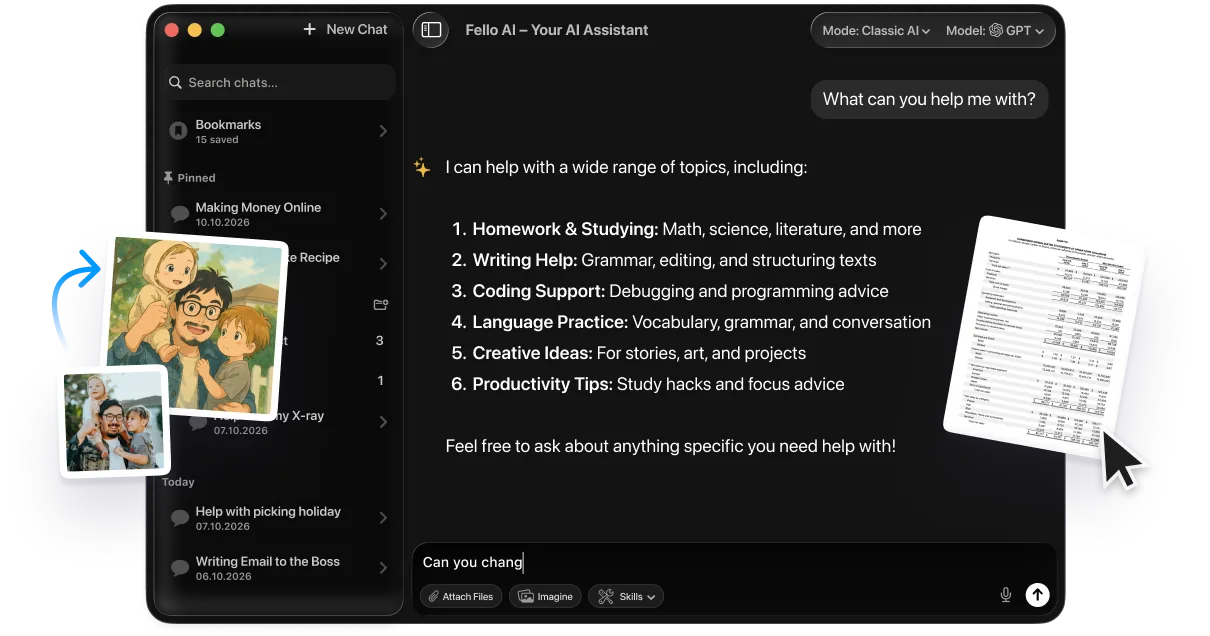
Siguiente paso: no tienes que esperar para mejorar tu flujo de trabajo. Empezar con Fello AI es la mejor forma de probar hoy los últimos modelos de Gemini disponibles y estar listo para cambiar a Gemini 4 en cuanto se lance.
Preguntas frecuentes
¿Se ha lanzado Gemini 4 oficialmente?
No. Google confirmó el 21 de julio de 2026 que el preentrenamiento de Gemini 4 ha comenzado, pero a fecha del 20 de agosto de 2026 no hay documentación pública ni acceso por API, ni ninguna entrada gemini-4 en las listas de modelos de la API de Gemini o de Vertex AI. El último lanzamiento de Google es Gemini 3.7 Flash, que salió el 13 de agosto de 2026.
¿Cuál es la fecha de lanzamiento de Gemini 4?
Google no ha anunciado una fecha para Gemini 4, solo que su tanda de preentrenamiento ha comenzado. Gemini 3.5 Pro se prometió para junio de 2026 y sigue sin lanzarse, y Google se limita a decir que «actualmente lo está probando con socios», así que trata como especulación cualquier fecha de Gemini 4 que leas.
¿Será Gemini 4 gratis?
Google suele ofrecer una versión Flash gratis, y su página de planes lista actualmente «Acceso a 3.6 Flash» para el nivel gratuito, mientras que la versión más potente normalmente requiere Google AI Pro a 19,99 $/mes o Google AI Ultra desde 99,99 $/mes. El más nuevo Gemini 3.7 Flash ya es de pago en la app, accesible a través de Spark en esos dos mismos planes. Para comprobar qué incluye el plan gratuito actual, consulta si Gemini es gratis. Puedes comparar ChatGPT vs Gemini para estudiantes para ver cómo se comparan estos niveles de pago.
¿Cómo protejo mi privacidad frente a «filtraciones» sin verificar?
Consulta nuestra guía sobre 7 prompts potentes que revelan lo que Google Gemini sabe de ti para entender tu huella de datos antes de usar nuevas herramientas de IA.