GLM 5.3 Flash: Z.ai Ships Ox Alpha as a 320B Open Model
Z.ai released GLM 5.3 Flash on August 26, 2026, and confirmed it is the stealth model that had been running on OpenRouter as Ox Alpha. It is a 320B model with 18B…
GLM 5.3: What Z.ai Shipped, and the Weights It Held Back
Update, August 26, 2026: the two-week deadline has passed and GLM 5.3’s weights are still not out. Z.ai released a different model instead, the 320B multimodal GLM…
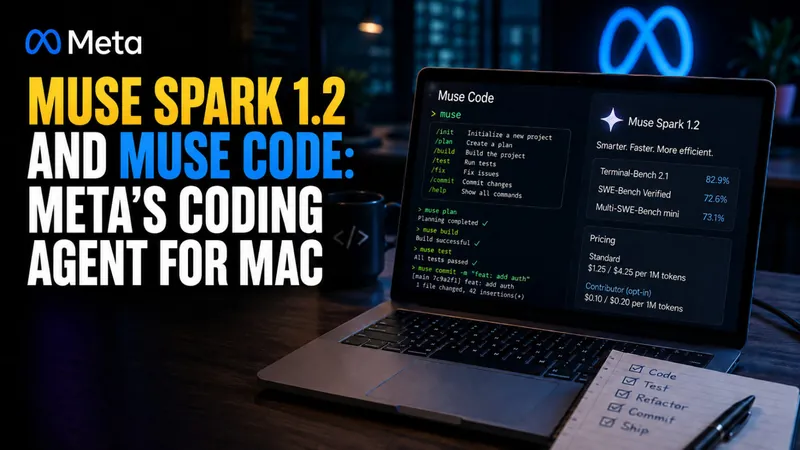
Muse Spark 1.2 and Muse Code: Meta’s Coding Agent for Mac
Meta shipped Muse Spark 1.2 on 5 August 2026 alongside Muse Code, its first terminal coding agent, and the launch charts tell a more honest story than the headlines…

Agentic AI Frameworks: 8 Best Options Compared (2026)
The agentic AI framework landscape consolidated hard in 2026, and if you are a student or self-taught developer learning to build agents, that is good news. Fewer…
Claude Cowork vs Claude Code: Which One Should You Use in 2026?
Anthropic now ships three separate ways to use Claude, and picking the wrong one costs you both time and usage allowance. The Claude Cowork vs Claude Code question…
Sakana AI’s Fugu-Ultra v1.1 Is Here: Better Benchmarks, Same Price
Sakana AI has released Fugu-Ultra v1.1, an upgrade to its frontier orchestration model that the lab says gains up to 7.9 points over v1.0 across every benchmark it…
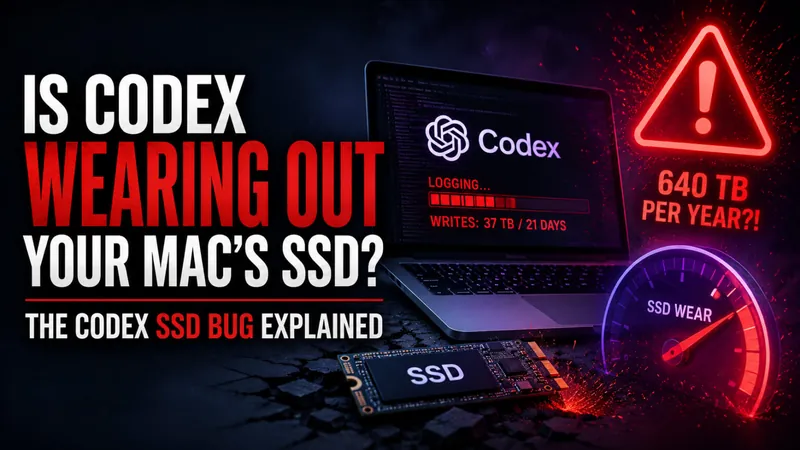
Is Codex Wearing Out Your Mac’s SSD? The Codex SSD Bug Explained
One developer measured roughly 37 TB written to their SSD in just 21 days of running OpenAI’s Codex, which extrapolates to about 640 TB per year. That is a problem…
Muse Spark 1.1: Meta’s Strongest Coding and Agentic AI Yet
Muse Spark 1.1 landed on July 9, 2026, and Meta is calling it its strongest model yet for real-world coding and agentic work. The upgrade comes from Meta…
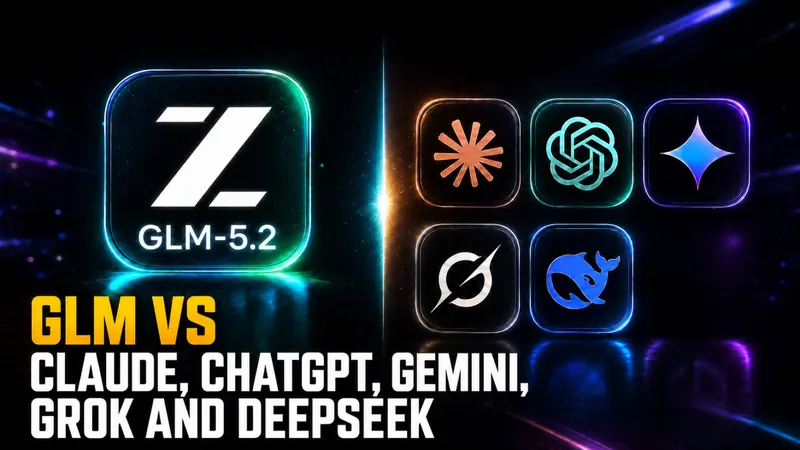
GLM vs Claude, GPT, Gemini, Grok and DeepSeek: How Zhipu’s Open Model Compares
GLM-5.2 is the top open-weight model on the Artificial Analysis Intelligence Index, scoring 51 while costing a fraction of the closed flagships, and that gap is why…

GLM 5.5: Release Rumors and What to Expect Next
GLM 5.5 is reportedly expected in August 2026, according to a June 30 report from CGTN on Zhipu AI. That would make it the direct successor to GLM-5.2, the…

GLM Pricing in 2026: API Costs, Coding Plan, and Free Tier Explained
GLM pricing is the headline reason developers keep switching to Zhipu AI’s models. The top-end GLM-5.2 costs just $1.40 per million input tokens and $4.40 per…
LongCat-2.0: Meituan’s 1.6 Trillion-Parameter Open-Source Coding Model
Meituan has open-sourced LongCat-2.0, a 1.6 trillion-parameter Mixture-of-Experts model with a native 1-million-token context window, released on June 30, 2026…

What Is GLM? Every Zhipu AI’s Open Model Explained
GLM is the family of large language models built by Zhipu AI, the Chinese lab now trading as Z.ai. If you typed “what is GLM” expecting the statistics term or the…

What Is Open Source AI? A Clear 2026 Guide
Most AI models people call “open source” are not actually open source. They are open-weight, a narrower thing, and the gap between the two decides what you can…

Seed 2.1 Pro Review: ByteDance’s New Model Matching Claude Opus 4.6
ByteDance’s new Seed 2.1 Pro scored 1539 on Code Arena: Frontend, landing at #8 in the world and drawing level with Claude Opus 4.6. That is a remarkable result for…
Best Open Source AI Models in 2026, Ranked and Compared
The best open source AI models just closed most of the remaining gap to the closed frontier. Moonshot published the weights for Kimi K3 on July 27, 2026, and…

How to Learn Claude and Claude Code in 2026: A Free Beginner’s Guide
You can learn Claude from zero to seriously useful in about a week of evenings, and you can do it without paying a cent. Anthropic runs its own free training…
GLM 5.2: Zhipu’s 1M-Context Open-Source Model Explained
Update, July 28, 2026: GLM 5.2 is no longer the strongest open-weight model. Kimi K3 shipped its weights on July 27, 2026 and outscores it on the Artificial…
Kimi K2.7 Code Review: Moonshot AI’s 1T Open-Weight Coding Model
Moonshot AI released Kimi K2.7 Code on June 12, 2026, and it is one of the largest open-weight coding models you can download right now, though it has since been…

What Is Google Antigravity? The Agent-First AI Coding Platform Explained
Google Antigravity lets you hand a coding task to a team of AI agents, walk away, and come back to finished work. Instead of typing code line by line with an…
Nex-N2-Pro: The Free Open-Source Model That Goes Toe-to-Toe With GPT-5.5
A Chinese AI lab just released a free model that scores 80.8 on SWE-Bench Verified and 75.3 on Terminal-Bench 2.1, putting it in the same league as GPT-5.5 and…
Qwen3.7-Max Review: Alibaba’s New Flagship Just Beat Claude and Gemini on These Benchmarks
Alibaba’s Qwen3.7-Max launched on May 20, 2026 at the Alibaba Cloud Summit in Hangzhou, and the numbers are loud. It scored 56.6 on the Artificial Analysis…

Cursor Student Discount 2026: What Changed and What Students Get Now
Cursor ended its free student discount for new sign-ups on June 25, 2026. The offer that gave verified university students a full year of Cursor Pro at no cost, a…
Best Free AI for Coding in 2026: DeepSeek V4 Pro, Qwen 3.6 & Kimi K2.6 Tested
The best free AI for coding in 2026 is three open-weight models you can use without a credit card. DeepSeek V4 Pro scores 80.6% on SWE-Bench Verified, Kimi K2.6…

How to Use Claude Code on Your Phone: 3 Methods That Actually Work
On February 25, 2026, Anthropic shipped Remote Control, the official way to connect Claude Code running on your desktop to your iPhone or Android. One command, one…

PewDiePie’s AI Model Beats GPT-4o: How He Fine-Tuned a Coding AI at Home
PewDiePie’s AI model scored 39% on the Aider Polyglot benchmark, outperforming GPT-4o (23.1%) and Gemini 2.0 Pro Exp (35.6%) on a coding test widely used in AI…
MiniMax M2.5: A New Chinese Open-Source Model That Claims to Beat Claude & GPT at Coding
MiniMax M2.5 scores 80.2% on SWE-Bench Verified, runs at 100 tokens/sec, and costs $1/hour. Here’s what we know — and what’s still unverified.
Haiku 4.5 on GitHub Copilot: Code Faster, Spend Less
Imagine your AI coding assistant responding the instant you finish typing. No more lag, no more waiting—just seamless, real-time help that feels like a natural…