One developer measured roughly 37 TB written to their SSD in just 21 days of running OpenAI’s Codex, which extrapolates to about 640 TB per year. That is a problem because a typical 1 TB consumer SSD is rated for around 600 TBW of total lifetime writes, so left unchecked the Codex SSD bug could burn through a drive’s entire warranted endurance in under a year. The culprit was a runaway logging system quietly hammering the disk in the background, not the actual coding work you asked it to do.
The panic on Reddit is understandable, but the full picture is more useful than the headline. This article breaks down what the Codex SSD bug actually is, how serious the wear really is for your Mac, how to check whether you are affected, and how to fix it in a couple of minutes. We also cover a lighter, cloud-based way to use frontier AI models on your Mac that never touches your SSD like this.
The Key Takeaways
- Codex logged diagnostics at TRACE level into a local SQLite file, writing up to 640 TB per year in the worst case.
- Around 71% of that data was pure noise with no diagnostic value, made worse by SQLite write amplification.
- A typical 1 TB SSD is rated for ~600 TBW, and Apple Silicon Macs have soldered drives you cannot replace.
- Fixes shipped in the 0.142.x release line (June 22, 2026) and cut the excess writes by about 85%.
- Fello AI runs in the cloud and routes to top models, so the heavy lifting never lands on your local disk.
What Is the Codex SSD Bug?
The Codex SSD bug is a logging regression, not a flaw in how the tool writes your code. Codex defaulted its internal logger to global TRACE level, the noisiest possible setting, and streamed those diagnostics into a local SQLite database at ~/.codex/logs_2.sqlite. Worse, that logger ignored the standard RUST_LOG environment variable, so there was no obvious way to turn the volume down.
Analysis of the retained data found that around 71% of it was TRACE-level noise with no real diagnostic purpose. The biggest offenders were mirrored telemetry logs and raw websocket payloads that got persisted to disk on every session. In short, Codex was recording an enormous, detailed diary of its own internal chatter and saving all of it to your drive.
The damage is amplified by how databases physically write to flash storage. The SQLite log performed tens of thousands of insert-and-delete operations per minute, and combined with Write-Ahead Logging that generates far more physical flash writes than the small file size suggests. This effect, called write amplification, is why a log file that looks like a few hundred megabytes on disk can quietly consume terabytes of real SSD endurance over time.
How Bad Is It Really? The 640 TB Figure Explained
The 640 TB number is the one setting off alarms, so let us break down exactly where it comes from and what it does and does not mean for your machine. The short version is that the write rate was extreme, but the real-world impact depends heavily on how you run Codex.
Where the Number Comes From
The headline figure traces back to one developer who measured their own machine. Over 21 days of uptime with Codex running, their SSD took on roughly 37 TB of writes, which scales to about 640 TB across a full year. The figure was documented in an OpenAI GitHub issue, and tech outlets estimated the regression collectively burned through a meaningful chunk of SSD endurance across affected users.
To be precise here, the 640 TB figure is a worst-case extrapolation from continuous, around-the-clock uptime, so a developer who only fires up Codex for a few hours a day will see a fraction of that. The point is not that every user lost a drive, but that the write rate was orders of magnitude higher than a background logger should ever produce.
What That Means for Your Mac
A typical 1 TB consumer SSD is warranted for roughly 600 terabytes written (TBW) over its lifetime. At the worst-case 640 TB per year, an always-on Codex session could theoretically exhaust that entire budget in under twelve months. Most drives keep working well past their rated TBW, but you are spending endurance you can never get back.
This matters more on a Mac than on a typical PC. Apple Silicon machines use soldered, non-replaceable SSDs, so a worn drive is not a cheap part swap, it is a logic-board repair or a new machine. If you are picking hardware for heavy AI work, our guide to the best MacBook for AI is a good starting point, but no amount of hardware fixes a background process writing terabytes of junk.
The Mac App, JetBrains, and the Lag Problem
The write issue is not limited to the command-line tool. A separate GitHub report flagged the same behavior in the Codex macOS app and the JetBrains Codex integration, where a temporary code_sign_clone file ballooned to around 12 GB before cleanup. That is why some users see the problem even if they never touch a terminal.
A second, related complaint keeps surfacing on Reddit. Users report that running Codex causes noticeable lag on their Mac, and that the sluggishness lingers even after they quit the app, forcing a full restart to get back to normal. On Windows machines the same behavior shows up as sustained 100% disk usage during sessions. This part does not look like SSD wear itself, it points more toward heavy background I/O and processes that do not release resources cleanly. Codex-style agents are powerful, and you can see how they compare in our roundup of the best AI coding agents, but a tool that keeps thrashing your disk after you close it is a real workflow problem.
How to Check and Fix the Codex SSD Bug
The good news is that the fix for the Codex SSD issue is fast and OpenAI has already shipped most of it. Two of the three fixes landed in the 0.142.x release line on June 22, 2026, removing roughly 85% of the excess logging. Here is how to make sure you are protected.
- Check your version. Run
codex --version. Anything older than 0.142.0 is still running the unpatched logging behavior. - Update Codex. Upgrade to the current stable release, which is v0.142.2 or newer. This is the real fix and should be your first step.
- Redirect the log to RAM. On macOS and Linux you can symlink
~/.codex/logs_2.sqliteto a path in/tmp/, which lives in RAM. The file holds no conversation data, so losing it on reboot is harmless. - Watch for the final patch. A third fix (PR #29599) is slated for the 0.143.0 release, which clears the last slice of noisy logging once it goes stable.
If you want to confirm the fix worked, macOS users can watch write activity in Activity Monitor under the Disk tab. A patched, idle Codex should sit near zero writes rather than churning hundreds of megabytes a minute.
A Lighter Way to Use AI on Your Mac: Fello AI
The deeper lesson is that a local AI agent runs on your machine, which means its bugs land on your machine too. A lot of everyday AI work does not need a local agent chewing through your disk at all. When you want to chat with a model, get code written or explained, draft documents, or generate images, a cloud-based app does the heavy lifting on remote servers and leaves your SSD alone.
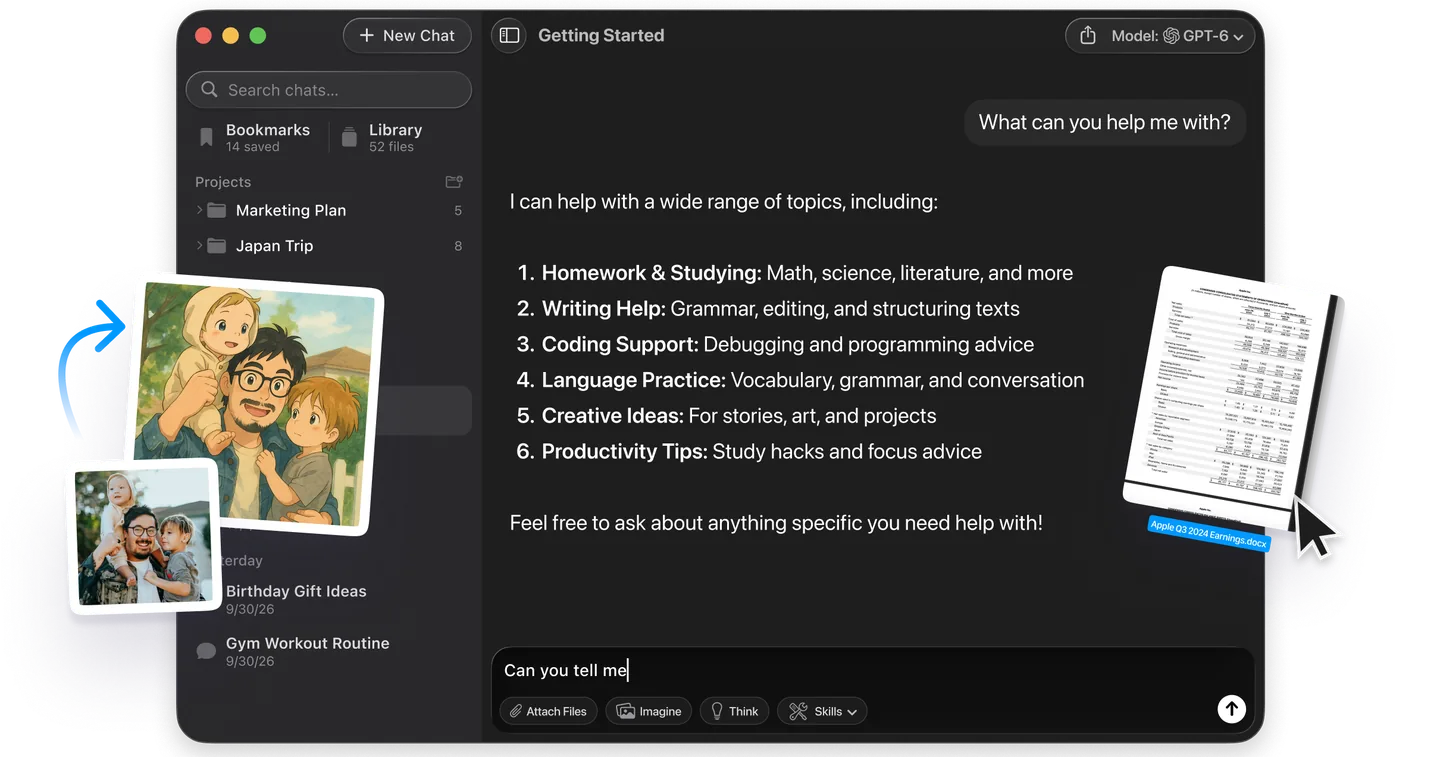
That is exactly where Fello AI fits. It is a native Mac app that routes your prompts to top models in the cloud, so the compute, the logging, and the churn all happen on the provider side, not on your drive. There is no runaway TRACE logger writing terabytes to your SSD, because the work simply is not running locally. For an always-online alternative to a browser-style agent, it sits alongside options in our list of ChatGPT Atlas alternatives for Mac.
Fello ships a Free AI model that stays free with no message limits, so you can test it without a meter running. If you want the full set of frontier models in one place, the paid plan is $9.99 a month, and the app holds a 4.7-star rating across 27,000+ reviews. It is not a full replacement for an in-repo coding agent, so keep a tool like Codex for deep automation inside a codebase, and let a cloud app handle the large share of AI work that never needed to touch your disk.
Codex vs a Cloud App: SSD Footprint
| Factor | Codex (local agent) | Fello AI (cloud app) |
|---|---|---|
| Where it runs | On your Mac | On remote servers |
| Local disk writes | Heavy when logging bug is active | Minimal, just the app itself |
| SSD wear risk | Real if unpatched | Negligible |
| Best for | Deep in-repo coding automation | Chat, coding help, docs, images |
| Free option | Usage-based | Free AI, no message limits |
Conclusion
The Codex SSD bug is real, it was caused by out-of-control TRACE logging, and at its worst it could write up to 640 TB a year to a drive rated for around 600 TBW. It is not the apocalypse the Reddit threads suggest, especially now that the 0.142.x updates have cut the excess writes by about 85%, but it is a genuine reason to update immediately and check your version.
If you would rather not gamble your soldered Mac SSD on a background process behaving itself, offload the bulk of your AI work to the cloud. Download Fello AI to run frontier models from your Mac without a local agent writing terabytes to your disk, and reserve heavy local tools for the jobs that need it most.
FAQ
Is Codex really killing my SSD?
It was writing far more than it should. At the worst-case rate of 640 TB a year it could exhaust a 1 TB drive’s rated endurance in under twelve months, but most users saw only a fraction of that. The updated 0.142.x releases cut the excess writes by about 85%, so a patched, up-to-date Codex is no longer a serious threat.
How do I know if I am affected by the Codex SSD bug?
Run codex --version first. Any version older than 0.142.0 has the unpatched logging behavior. You can also open Activity Monitor on your Mac and watch the Disk tab while Codex is idle, since a buggy build writes hundreds of megabytes per minute doing nothing.
Does updating Codex fix the problem?
Yes, updating is the real fix. Two of the three fixes shipped in the 0.142.x line and removed roughly 85% of the excess logging. A final fix is slated for 0.143.0, and macOS or Linux users can also symlink the log file to a RAM path in /tmp/ for extra safety.
Is it safe to keep using Codex?
On a patched version, yes. Codex remains a capable in-repo coding agent, and the disk-write regression is largely resolved once you update. Just keep an eye out for the lag some users still report, where the app keeps consuming resources after you close it and a restart clears it.
Does Fello AI wear out my SSD too?
No. Fello AI routes your prompts to models running in the cloud, so the compute and logging happen on remote servers, not your Mac. The only local footprint is the lightweight app itself, so there is no runaway logger writing terabytes to your drive.