More and more people are asking the same question – what actually is the best AI chatbot? With new AI models launching constantly and each company claiming theirs is the breakthrough everyone’s been waiting for, getting a straight answer feels harder and harder. Most “best of” lists online are either outdated, biased, or based on someone’s personal opinion rather than actual data.
But we might finally have a clear answer. A recent study by Onelittleweb analyzed over 10,500 AI tools and nearly 100 billion web visits to figure out which chatbots are actually winning. Instead of relying on marketing claims or gut feelings, the study focused on real metrics – web traffic, user engagement, growth rates, and media coverage over the past 12 months.
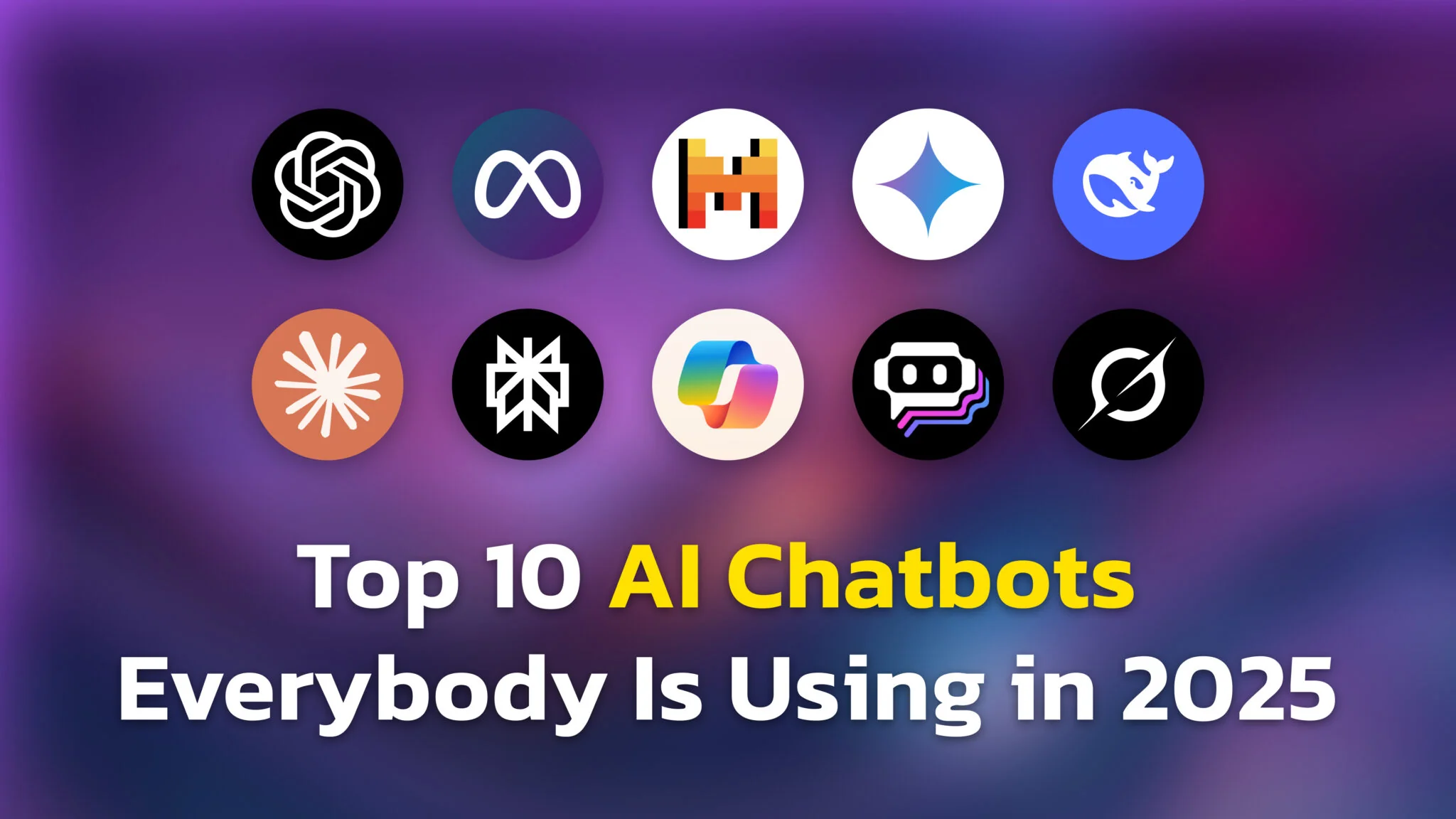
The competition between major players like ChatGPT, Grok, and Gemini has intensified, while some chatbots dominate the headlines, others are quietly building loyal user bases. And a few surprises made the top 10 that most people probably wouldn’t even think of. Here’s what the data actually shows about the 10 most popular AI chatbots right now, ranked by their real-world performance rather than their PR budgets.
How the Models Were Ranked
Before we jump into the leaderboard, let’s have a look at how these AI chatbots were ranked. This system comes from real data analysis of over 55 billion web visits across the last 12 months. The study looked at eight different metrics to get a complete picture of how each chatbot actually performs in the real world.
The ranking system examined three main areas:
Visibility & Awareness (30% of score): How many people actually visit and talk about each chatbot, measured through web traffic and media mentions
Momentum (35% of score): How fast each platform is growing, including year-over-year growth, recent monthly growth, and overall market share
User Experience (35% of score): How satisfied users actually are, based on session duration, app store reviews, and ratings
Each chatbot got scored across all eight metrics, with the data normalized and weighted to create a final ranking. So when we say ChatGPT is #1 or Grok is #2, that’s based on measurable performance across multiple dimensions, not just which one got the most headlines or funding.
1/ ChatGPT
From the publisher
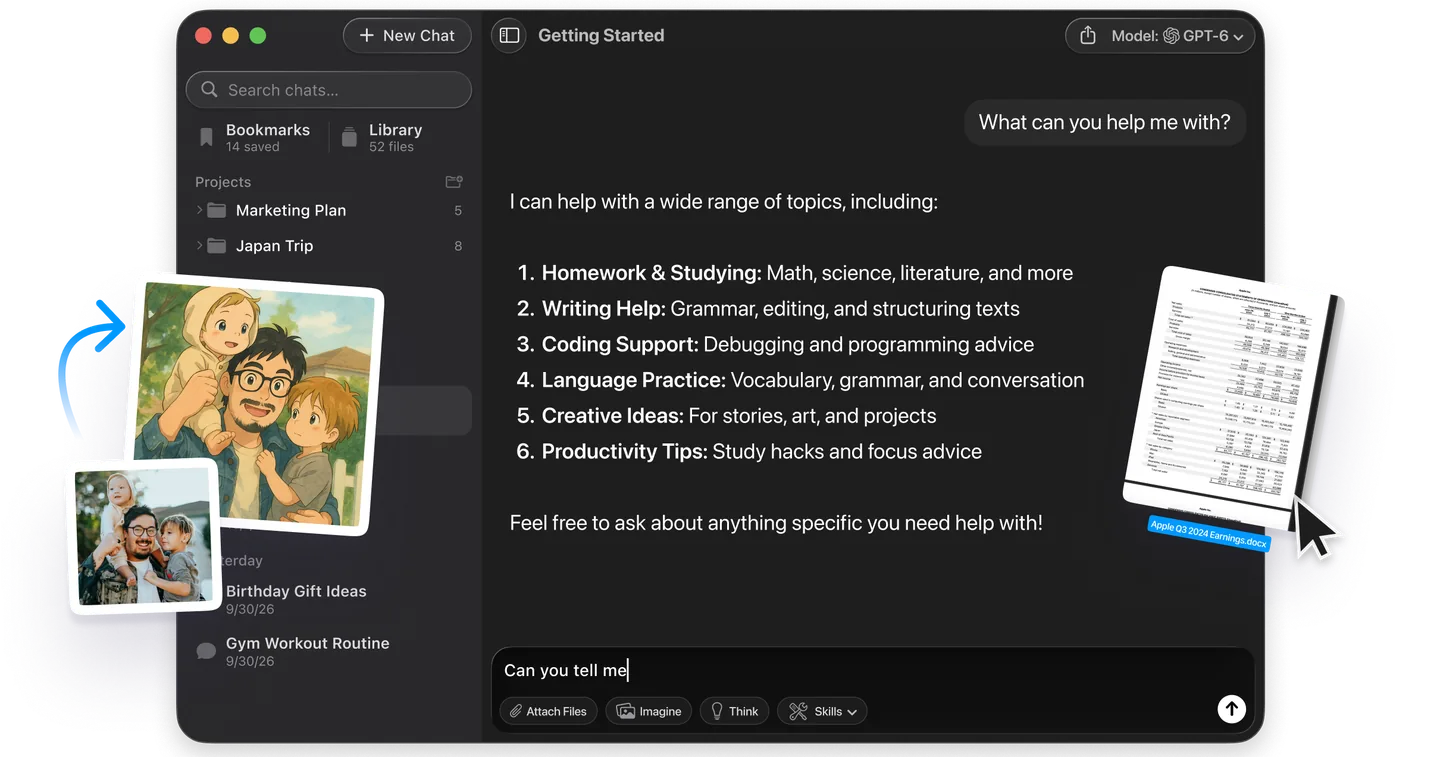
Every AI model in one app
Fello AI puts GPT-6, Claude 5.5, Gemini 4 Argon, Grok 4.7 and more in one native Mac and iPhone app.
ChatGPT completely dominates in popularity. With nearly 47 billion web visits over the past year, it captured almost half of all AI tool traffic worldwide. That’s more than the next nine chatbots combined, which shows just how far ahead it really is.
The numbers show sustained dominance rather than shortlived virality. ChatGPT grew 106% year-over-year, which is impressive for any platform, but especially remarkable for one that was already the clear market leader. It’s averaging over 5 billion visits per month now, and that number keeps climbing.
What makes ChatGPT’s position so strong is the consistency across every metric. High user engagement with 15+ minute average session duration, massive media coverage with 2.4 million citations, and 26 million app store reviews. People actually use it, stick with it, and talk about it more than any other AI tool out there.
Metric
Performance
Annual Web Visits
46.59 billion
Year-over-Year Growth
106%
Market Share
48.36%
Average Session Duration
15:25 minutes
Media Citations
2.4 million
App Store Reviews
26.2 million
App Store Rating
9.7/10
Final Weighted Score
0.81/1.00
2/ Grok
Grok pulled off one of the most impressive launches in tech history. Going from virtually zero to 687 million visits in a single year is the type of growth that most companies can only dream about. The 1.3 million percent year-over-year increase sounds almost fake, but the data backs it up.
What makes Grok’s rise even more remarkable is that it entered a market already dominated by established players. While most new chatbots struggle to get noticed, Grok leveraged its integration with X (formerly Twitter) to reach users where they already spend time. This platform advantage helped it skip the usual slow-build phase that other startups face.
The engagement numbers show people aren’t just trying Grok once and leaving. With an average session time of nearly 16 minutes and 1.4 million app store reviews already, it’s building real user loyalty. The combination of Elon Musk‘s backing, X platform integration, and solid performance metrics earned it the #2 spot despite being the newest player in the top 10.
Metric
Performance
Annual Web Visits
686.91 million
Year-over-Year Growth
1,343,408%
Market Share
1.17%
Average Session Duration
15:43 minutes
Media Citations
319.5K
App Store Reviews
1.4 million
App Store Rating
9.7/10
Final Weighted Score
0.42/1.00
3/ Gemini
Gemini represents Google‘s serious attempt to challenge ChatGPT’s dominance, and the data shows it’s working. With 1.66 billion visits over the past year and 156% growth, it’s building momentum the steady way – through consistent improvements and deep integration with Google’s ecosystem.
What sets Gemini apart is its mobile-heavy approach and Google’s distribution advantages:
Strong mobile adoption: 9.4 million app store reviews put it well ahead of most competitors
Accelerating growth: Recent jump to over 246 million monthly visits shows the curve is getting steeper
Platform integration: Built directly into Search, Android, and Workspace apps
Strategic positioning: Growing market share without fighting for standalone attention
When you can integrate AI directly into tools that billions of people already use daily, you don’t need to fight for user attention the same way standalone chatbots do. The 1.74% market share might seem small compared to ChatGPT, but for a relative newcomer going up against an established giant, it’s actually pretty impressive progress.
Metric
Performance
Annual Web Visits
1.66 billion
Year-over-Year Growth
156%
Market Share
1.74%
Average Session Duration
11:13 minutes
Media Citations
1.8 million
App Store Reviews
9.4 million
App Store Rating
9.3/10
Final Weighted Score
0.32/1.00
4/ Claude
Claude wins on quality over quantity. While it doesn’t have the massive user base of ChatGPT or the explosive growth of Grok, it has something more valuable – the highest user engagement of any chatbot in the study. It has a 16 minutes and 44 seconds average session time that beats everyone else, including the market leaders.
The 201% year-over-year growth shows Claude is steadily building its audience, but what’s more interesting is how those users behave once they find it. People clearly turn to Claude for deeper, more thoughtful conversations rather than quick questions. That kind of engagement suggests strong user satisfaction and loyalty that’s hard to fake.
Anthropic‘s focus on safety and reliability seems to be paying off, even if it means slower adoption. With over 1 billion visits and consistent growth, Claude has carved out a valuable niche as the chatbot people use when they need nuanced, caring responses or some serious coding help. The relatively low app store review count shows there’s still room to grow on mobile, but the desktop experience is clearly resonating with users.
Claude’s momentum got a major boost in February 2026 with the release of Claude Sonnet 4.6, which delivers Opus-level performance at a fraction of the cost. The model scored 72.5% on OSWorld for computer use (up from 14.9%), and early users preferred it over the previous flagship Opus 4.5 model 59% of the time for coding tasks. With a 1 million token context window and a spot as the new default on Claude’s free and Pro plans, Sonnet 4.6 could be the push Claude needs to close the gap with the top three.
Metric
Performance
Annual Web Visits
1.15 billion
Year-over-Year Growth
201%
Market Share
1.07%
Average Session Duration
16:44 minutes
Media Citations
1.0 million
App Store Reviews
118.9K
App Store Rating
9.4/10
Final Weighted Score
0.27/1.00
Wanna Use All AI Chatbots in one app on your Mac?
Fello AI is the ultimate desktop client that gives you unlimited access to ChatGPT, Claude, Gemini, DeepSeek, and more, powerful search, prompt library, bookmarks, and file support — everything you need to work, learn, and create smarter.
5/ DeepSeek
DeepSeek‘s story is a perfect example of how viral attention doesn’t guarantee lasting success. The 48,848% year-over-year growth sounds incredible until you realize it peaked in February and has been declining ever since. From a high of 520 million visits that month, it dropped to 314 million by July – a 39% decline that mirrors its fading media coverage.
The massive 2.74 billion total visits show DeepSeek definitely caught people’s attention, especially during its peak months when it dominated tech headlines. The problem is that initial curiosity didn’t translate into sustained usage. While other chatbots have built steady growth curves, DeepSeek’s chart looks more like a mountain with a sharp drop-off.
That said, even with the decline, DeepSeek still pulls in over 300 million monthly visits, which puts it ahead of several established competitors. The question is whether this represents a new baseline or if the downward trend will continue. The relatively low app store review count suggests it never really caught on with mobile users, which could partly explain why the momentum didn’t stick.
Metric
Performance
Annual Web Visits
2.74 billion
Year-over-Year Growth
48,848%
Market Share
3.96%
Average Session Duration
12:54 minutes
Media Citations
1.4 million
App Store Reviews
186.1K
App Store Rating
8.0/10
Final Weighted Score
0.24/1.00
6/ Perplexity
Perplexity has found its lane and is sticking to it. While other chatbots try to be the best all-rounder, Perplexity focuses on research and fact-checking – and the 227% year-over-year growth shows that approach is working. People know what they’re getting when they use Perplexity: citation-backed answers that you can actually trust.
The 1.47 billion visits over the past year put it in solid territory among the major players, but what’s more interesting is the consistency of that growth. Unlike some competitors that had big spikes followed by declines, Perplexity’s growth curve has been steady and upward throughout the year. That suggests they’re building a real user base rather than riding temporary hype.
The research-focused positioning means Perplexity users tend to have longer, more purposeful sessions at over 13 minutes each on average. They’re coming to dig into topics and get comprehensive answers, not for a simple chit chat. Intentional usage like this creates strong user loyalty and explains why Perplexity is staying focused on its core strength.
Metric
Performance
Annual Web Visits
1.47 billion
Year-over-Year Growth
227%
Market Share
1.42%
Average Session Duration
13:14 minutes
Media Citations
215.0K
App Store Reviews
1.1 million
App Store Rating
9.6/10
Final Weighted Score
0.23/1.00
7/ Microsoft Copilot
Microsoft Copilot has a different success story than the other chatbots on this list. While everyone else is fighting for consumer attention, Copilot quietly grew 348% year-over-year by embedding itself directly into the tools people already use for work. With 957 million visits, it’s building serious enterprise traction.
The key insight from Copilot’s data is that workplace AI follows different rules than consumer AI:
Shorter sessions work better: The 9:04 average session time is the lowest in the top 10, but that’s actually fine for quick work tasks
Integration beats standalone apps: Users don’t need to visit a separate website when AI is built into Word, Excel, and Outlook
Enterprise adoption is more predictable: The steady growth pattern shows companies gradually utilising AI features rather than viral consumer spikes
What makes Copilot’s position interesting is the distribution advantage. Microsoft doesn’t need to convince people to try a new app – they just need to turn on AI features in Office 365, which over a billion people already use. The 1.7 million app store reviews show decent mobile adoption, but the real action happens on desktop where people do most of their work.
The relatively low weighted score reflects the methodology’s consumer focus, but in the enterprise world, Copilot is becoming an essential tool. Sometimes the most successful products are the ones you barely notice because they just work where they need to.
Metric
Performance
Annual Web Visits
957.19 million
Year-over-Year Growth
348%
Market Share
0.86%
Average Session Duration
9:04 minutes
Media Citations
113.1K
App Store Reviews
1.7 million
App Store Rating
9.6/10
Final Weighted Score
0.20/1.00
8/ Poe
While Poe‘s web traffic dropped 46% year-over-year to 378 million visits, it’s actually maintained a surprisingly strong presence on mobile. It has 479,000 app store reviews, which put it ahead of several higher-ranked chatbots. This shows that losing web traffic doesn’t necessarily mean losing users entirely.
What makes Poe unique is its approach as a multi-AI hub. Instead of building one chatbot, Quora created a platform where users can access multiple AI models in one place. It has:
Access to ChatGPT, Claude, Gemini, and others through a single interface
Strong mobile-first design that works better as an app than a website
Decent user engagement with nearly14-minute average sessions
The challenge for Poe is that being a middleman is tough when the AI companies themselves offer direct access to their models. The declining web presence suggests users might prefer going straight to the source rather than using an aggregator. Still, the solid app store performance shows there’s clearly a group of users who value the convenience of having multiple AIs in one place.
Metric
Performance
Annual Web Visits
378.05 million
Year-over-Year Growth
-46%
Market Share
0.00%
Average Session Duration
13:56 minutes
Media Citations
39.6K
App Store Reviews
479.1K
App Store Rating
9.3/10
Final Weighted Score
0.18/1.00
9/ Mistral
Mistral is Europe’s best shot at competing with the AI giants from Silicon Valley and China. The 420% year-over-year growth shows serious momentum, even if the absolute numbers are still relatively small at 101 million visits. For an open-source project coming out of France, those growth rates are actually pretty impressive.
What sets Mistral apart is its focus on transparency and developer-friendly approaches. The 199,600 media citations put it ahead of much larger platforms like Poe and Microsoft Copilot, which suggests it’s punching above its weight in terms of industry attention. This level of media coverage usually indicates strong respect within the tech community.
The downside is clear in the user adoption numbers. With only 10,200 app store reviews – the lowest in the entire top 10 – Mistral hasn’t made the jump to mainstream tool just yet. The 11:34 average session time shows decent engagement among the people who do use it, but the overall user base remains pretty niche. For now, Mistral seems to be building credibility and technical reputation before making a bigger push for consumer adoption.
Metric
Performance
Annual Web Visits
101.39 million
Year-over-Year Growth
420%
Market Share
0.07%
Average Session Duration
11:34 minutes
Media Citations
199.6K
App Store Reviews
10.2K
App Store Rating
9.5/10
Final Weighted Score
0.18/1.00
10/ Meta AI
Meta AI might be the biggest disappointment on this list. With all of Meta’s resources, distribution channels, and billions of users across Facebook, Instagram, and WhatsApp, you’d expect much better performance than 130 million visits and a 0.16% market share. The 468% growth sounds impressive until you realize it started from almost nothing.
The numbers reveal a classic case of having every advantage but failing to execute:
Massive distribution potential: Built into platforms with billions of daily users
Unlimited resources: Meta can outspend almost any competitor
Poor adoption: Only 38,300 app store reviews, the second-lowest in the top 10
What’s particularly interesting is that newcomer Grok managed to completely outrun Meta AI despite launching much later and having access to just one platform (X/Twitter). Meta has been trying to crack AI assistants for years, but users just don’t seem to want what they’re offering. The decent 12:36 session time shows that people who do try it aren’t immediately running away, but getting them to try it in the first place seems to be the real challenge. If you are on the other side of that equation and the blue circle is in your way, see how to turn off Meta AI on every Meta surface.
Metric
Performance
Annual Web Visits
130.35 million
Year-over-Year Growth
468%
Market Share
0.16%
Average Session Duration
12:36 minutes
Media Citations
197.6K
App Store Reviews
38.3K
App Store Rating
8.2/10
Final Weighted Score
0.17/1.00
Conclusion
ChatGPT’s dominance with nearly half of all AI traffic shows that first-mover advantage can create lasting market leadership. Grok’s explosive rise proves that newcomers can still break through with the right platform integration and backing. Meanwhile, tools like Claude and Perplexity are building loyal user bases by focusing on specific strengths rather than trying to be generic all-rounders.
What’s interesting is how different chatbots excel in different areas. Claude leads in user engagement time, Copilot dominates enterprise integration, and Perplexity owns the research niche. Even declining platforms like DeepSeek still serve hundreds of millions of users monthly. This suggests the market is big enough to support multiple successful approaches rather than one winner taking everything.
The most important takeaway is that “most popular” doesn’t necessarily mean “best for you.” ChatGPT might be the safe choice for casual users, but professionals who work in Microsoft’s ecosystem might get more value from Copilot. Researchers might prefer Perplexity’s citation-backed answers, while people who want help with coding might gravitate toward Claude. The best move is to test a few options and see which one actually fits your workflow rather than just going with the biggest name.
One option worth tracking outside the top 10 is EcoGPT, the regenerative AI chatbot that runs small open-source models on Google Cloud servers in Finland and funds a tree for every 200 prompts, a small but growing eco-AI niche worth keeping on your radar.
ChatGPT, Claude, Gemini, Grok, DeepSeek, Perplexity, and more in one lightweight native app for Mac, iPhone, and iPad. Upload files, create documents, search the web. Free to start.