Gemini 1.5 Pro was Google’s mid-size multimodal model, announced on February 15, 2024. It shipped with a standard 128,000-token context window, tested up to 1 million tokens in preview, and opened a 2 million token window to all developers in June 2024. Google shut it down in the Gemini API on September 29, 2025. As of November 2026, Google’s current line-up is the Gemini 4 family.
Gemini itself dates back to Google I/O on May 10, 2023, when Google previewed it as a model “still in training” from the newly formed Google DeepMind. The first version, Gemini 1.0, launched on December 6, 2023, in three sizes: Gemini Ultra, Gemini Pro and Gemini Nano.
Gemini 1.5 Pro was the first model of the Gemini 1.5 generation of this large language model (LLM) family, and for most of 2024 it was Google’s flagship.
Gemini 1.5 Pro combined natural language processing with multimodal input, and it was one of the strongest generative AI models of 2024. Google said it performed at a broadly similar level to Gemini 1.0 Ultra, its largest model at the time, while using less compute.
Gemini 1.5 Pro reached people through Google AI Studio, Vertex AI and the Gemini API, and from May 2024 Google also built it into Gemini Advanced and Workspace apps.
Gemini 1.5 Pro is a sparse mixture-of-experts (MoE) Transformer, a type of neural network architecture that sends each input to only part of the model. It accepted text, images, audio and video as input and answered in text.
This guide covers what Gemini 1.5 Pro could do, its specifications, how it compared with the 2024 versions of ChatGPT, Claude and Llama, and which Gemini models replaced it.
The Key Takeaways
- Announced February 15, 2024: Gemini 1.5 Pro was a mid-size mixture-of-experts model that Google said matched Gemini 1.0 Ultra on its benchmarks with less compute.
- Context window: 128,000 tokens standard, 1 million in preview, and 2 million tokens for all developers from June 27, 2024.
- Input, not output: it read text, images, audio and video, but answered in text only. It never generated images.
- No public parameter count: Google never published one, so “200 billion parameters” is not a Google figure.
- Retired: Google shut down gemini-1.5-pro in the Gemini API on September 29, 2025. The Gemini app now runs Gemini 4 Hydrogen, Neon and Carbon, depending on your plan (as of November 2026).
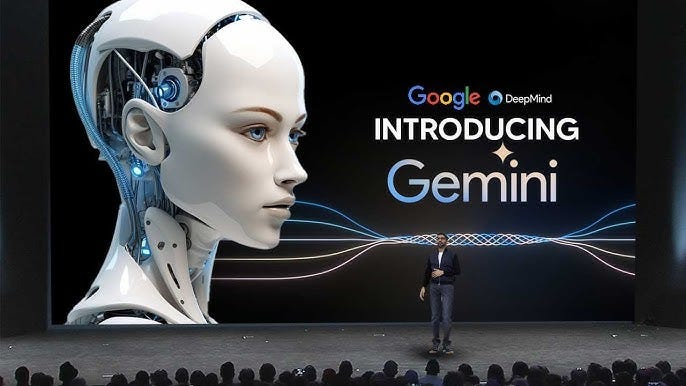
Overview of Gemini 1.5 Pro
Gemini 1.5 Pro is a generative AI model that handled text generation, image understanding, long-document analysis and coding help.
Google DeepMind built Gemini 1.5 Pro to be multimodal. It could take text, images, audio and video in a single prompt, and Google’s model page listed its output as text.
Gemini 1.5 Pro paired a very large context window with a knowledge cutoff of November 2023, so it knew little about events after that month. The specifications below explain each part.
Key Specifications
- Model Size: Google never published a parameter count for Gemini 1.5 Pro. Its technical report describes a sparse mixture-of-experts design, which routes each input to a subset of the model’s parameters. Figures such as “200 billion parameters” that circulate online do not come from Google.
- Context Window: Gemini 1.5 Pro launched with a standard context window of 128,000 tokens, and a limited group of developers and enterprise customers could test up to 1 million tokens in private preview. Google announced a two-million-token context window at I/O on May 14, 2024, behind a waitlist, and opened it to all developers on June 27, 2024. At launch Google called 1 million tokens the longest context window of any large-scale foundation model.
- Knowledge Cutoff: Gemini 1.5 Pro’s knowledge cutoff was November 2023. Google’s documentation said its knowledge of events after that date was limited.
- Multimodal Capabilities: Gemini 1.5 Pro accepted text, images, audio and video, and returned text. Google’s model page listed up to 2 hours of video, about 19 hours of audio and 7,200 images per prompt.
- What that meant in practice:
- Text: Articles, reports and marketing copy for blogs, newsletters and social media.
- Images (input only): Describing photos, reading charts and screenshots, and comparing images. Gemini 1.5 Pro did not create images.
- Audio (input only): Transcribing and summarizing long recordings, such as meetings or podcasts.
- Video (input only): Finding moments in, and answering questions about, long video files. Google’s launch demo analyzed a 44-minute silent Buster Keaton film.
- What that meant in practice:
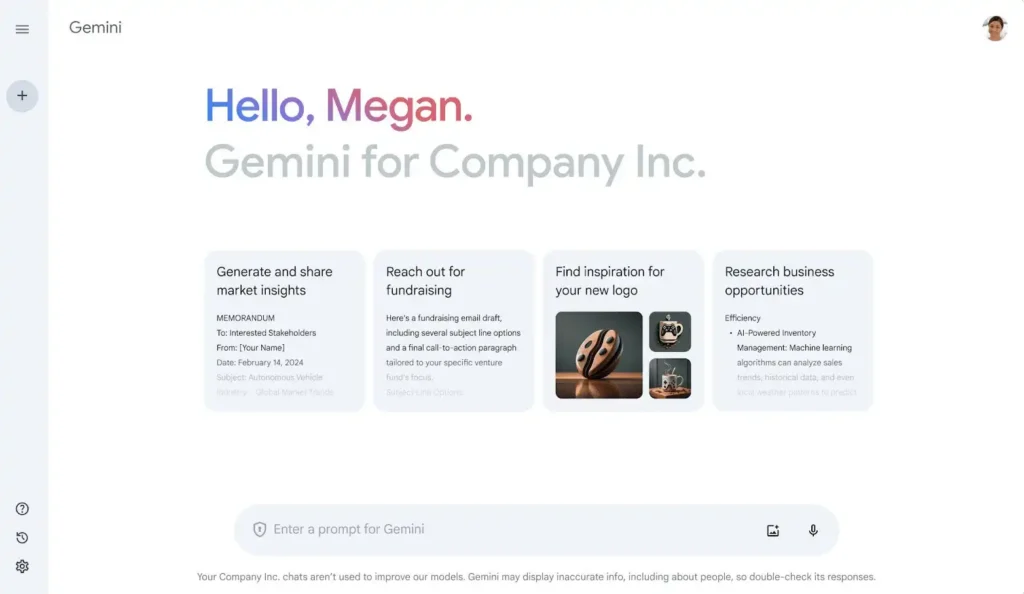
Company Background
Google, the company behind Gemini, worked on artificial intelligence (AI) research for many years before the Gemini AI suite.
Google Search ranked pages with PageRank from the start. Sergey Brin and Larry Page described PageRank, a quality ranking calculated from the link structure of the web, in their 1998 Stanford paper on Google.
That foundation shaped later work at Google. Over the years, the company added machine learning features across its products.
Google Assistant brought natural language processing (NLP) to phones and smart speakers, letting people ask questions in plain speech.
In November 2018, Google open-sourced BERT (Bidirectional Encoder Representations from Transformers), an NLP model that improved how systems understand the context of words in a sentence.
These projects led to Gemini, which Google first previewed at Google I/O in May 2023.
Google is one of the largest AI research organizations in the world.
Its in-house Tensor Processing Units (TPUs) and its research teams let it train very large models.
Gemini comes from Google DeepMind, the unit Google formed in 2023 by bringing together the Brain team and DeepMind. Google built Gemini from the ground up to be multimodal, so one model can work across text, images, audio, video and code.
Capabilities of Gemini 1.5 Pro
Gemini 1.5 Pro’s main strength was reasoning over very long, mixed inputs. Its capabilities covered six areas:
Natural Language Processing and Generation: Gemini 1.5 Pro understood complex queries and wrote coherent, relevant responses. It could draft emails, write articles and create content for different platforms, and it could write poems and scripts while adapting its style and tone.
Multimodal Interaction: Gemini 1.5 Pro could interpret text, images, audio and video in the same conversation. That made it a good fit for assistants and chatbots that work with files, not just typed questions.
Image Understanding: Gemini 1.5 Pro could read images, charts, diagrams and screenshots and answer questions about them. Its output was text only, so it did not create images itself.
Coding Assistance: Gemini 1.5 Pro could write, explain and debug code, and its long context let it read whole codebases of more than 30,000 lines at launch. Google’s technical report lists 84.1% on HumanEval and 82.6% on Natural2Code for the May 2024 version, useful numbers for comparing it with dedicated AI coding assistants.
Multilingual Processing: Gemini 1.5 Pro was trained on multilingual data and handled many languages. Google’s technical report tested it on multilingual math (MGSM) and machine translation (WMT23), which makes it useful for teams that work across languages.
Question Answering and Information Retrieval: Gemini 1.5 Pro could answer open-ended questions and pull specific facts out of very long documents. In Google’s needle-in-a-haystack test, it found a planted fact 99% of the time in blocks of up to 1 million tokens.
History of the Gemini Model Family
Gemini 1.5 Pro sits in a line of models that began with Gemini 1.0 in December 2023. These are the steps around it, in order:
Gemini 1.0 (December 6, 2023): The first Gemini came in three sizes, Ultra, Pro and Nano, and was multimodal from the start. Its context window was 32,000 tokens.
Gemini 1.0 Ultra and Gemini Advanced (February 2024): Google rolled out Gemini 1.0 Ultra, then its most capable model, starting with the paid Gemini Advanced service. A week later developers and Cloud customers could build with 1.0 Ultra too.
Gemini 1.5 Pro (February 15, 2024): Gemini 1.5 Pro introduced the mixture-of-experts architecture and the long context window. It became generally available in the Gemini API on May 23, 2024. The updated May 2024 version scored 85.9% (5-shot) on MMLU, a test of knowledge across 57 subjects, according to Google’s technical report. A week after the February launch, Google paused the Gemini app’s images of people after historically inaccurate results drew criticism.
Gemini 1.5 Flash (May 14, 2024): Google introduced Gemini 1.5 Flash at I/O as a lighter model trained from 1.5 Pro through distillation. Google called it the fastest Gemini model in the API, built for high-volume tasks such as summarization, chat and data extraction.
Gemini 1.5 Pro-002 (September 24, 2024): Google released gemini-1.5-pro-002, a new stable version, and pointed the gemini-1.5-pro-latest alias to it.
Gemini 2.0 (December 11, 2024): Google introduced Gemini 2.0 for “the agentic era”. Its first model, Gemini 2.0 Flash Experimental, was twice as fast as Gemini 1.5 Pro according to Google’s changelog, and added image and speech output.
Use Cases for Gemini 1.5 Pro
Gemini 1.5 Pro was used in six main areas:
Content Creation: Gemini 1.5 Pro could draft articles, reports and marketing materials and cut the time spent on content production. Writers and marketers used it for both niche and general topics.
Visual Analysis: Gemini 1.5 Pro’s image and video understanding suited jobs such as tagging product photos, reading charts, and pulling key moments out of long recordings. For image creation, people needed a separate image model.
Education: Educators used Gemini to create learning materials, quizzes and presentations. Its explanations and summaries helped with complex concepts and self-paced learning.
Customer Support: Developers built Gemini 1.5 Pro into customer service tools to answer questions and resolve issues, often grounding it in long product manuals.
Software Development: Developers used Gemini 1.5 Pro to generate code snippets, debug errors and explain unfamiliar code, helped by a context window large enough for a whole repository.
Global Communication: With its multilingual skills, Gemini 1.5 Pro helped international teams translate and draft across languages.
Comparative Analysis
This section compares Gemini 1.5 Pro with ChatGPT (GPT-4 and GPT-4o), Claude and Llama 3.1 as they stood in 2024. All four have newer successors today.
Gemini vs. ChatGPT
- Model Architecture: Gemini 1.5 Pro took text, images, audio and video as input and answered in text. GPT-4o, which OpenAI announced on May 13, 2024, accepted any combination of text, audio, image and video and could output text, audio and images. Gemini 1.5 Pro’s edge was input length, not output types.
- Parameter Count: Neither company published a parameter count. OpenAI’s GPT-4 technical report withholds model size, and Google’s Gemini 1.5 report gives none, so any size comparison between the two is guesswork.
- Mathematical Reasoning: Gemini 1.5 Pro scored 67.7% on the MATH benchmark in Google’s May 2024 report. In everyday use, both models sometimes needed a follow-up prompt to fix an arithmetic slip.
- Code Generation: Both Gemini 1.5 Pro and ChatGPT handled coding tasks well. Gemini 1.5 Pro could read a whole codebase in one prompt and explain how its parts fit together, which helped people learning unfamiliar code.
Gemini vs. Claude AI
- Focus and Strengths: Gemini 1.5 Pro was known for multimodal input and long context. Claude AI, from Anthropic, put its emphasis on safe, helpful conversation and careful writing.
- Performance on Benchmarks: Claude 3.5 Sonnet, released on June 21, 2024, set new highs on GPQA, MMLU and HumanEval in Anthropic’s own testing, at $3 per million input tokens and $15 per million output tokens. Gemini 1.5 Pro’s advantage was context: 2 million tokens against Claude 3.5 Sonnet’s 200,000.
- Safety and Alignment: Anthropic built Claude around safety and alignment, which appealed to teams in sensitive fields such as healthcare and finance. Google also ran extensive ethics and safety tests and red-teaming on Gemini 1.5 Pro before release.
Gemini vs. LLaMA 3.1
- Model Size: LLaMA 3.1, released by Meta on July 23, 2024, has a largest version with 405 billion parameters. Google never disclosed Gemini 1.5 Pro’s size, so the two cannot be compared on parameters.
- Context Window: Llama 3.1 supports 128,000 tokens. Gemini 1.5 Pro matched that as its standard window and went up to 2 million tokens, about 16 times more.
- Multimodal Interaction: Gemini 1.5 Pro could read images, audio and video. Meta’s Llama 3.1 launch post describes text models with support for eight languages and no image features.
- Integration and Ecosystem: Gemini 1.5 Pro was built into Google products such as Gemini Advanced and Workspace. Llama 3.1’s open weights let developers download, customize and run it themselves.
Summary of Comparisons
In 2024, each model had a clear strength:
- Gemini 1.5 Pro led on context length and multimodal input, with room for hours of video or audio in one prompt.
- ChatGPT with GPT-4o led on voice and conversation, and it could output images and audio.
- Claude 3.5 Sonnet was strong on coding and visual reasoning, with a 200,000-token context window.
- LLaMA 3.1 stood out for its published 405 billion parameter size and open weights, which gave developers full control.
The right choice depended on the job, the features needed and how much control a developer or organization wanted.
Technical Specifications
Gemini 1.5 Pro is a sparse mixture-of-experts Transformer. Its technical specifications were:
- Parameter Count: Not published. Google’s technical report explains that a mixture-of-experts model can grow its total parameter count while keeping the number of parameters used for each input constant.
- Context Window: 128,000 tokens standard. The 2 million token window (2,097,152 input tokens) opened to all developers on June 27, 2024. Output was capped at 8,192 tokens.
- Processing Speed: Gemini 1.5 Pro was the larger, slower model of the 1.5 generation. Google built Gemini 1.5 Flash for jobs that needed lower latency and lower cost.
- Safety Measures: Google said Gemini 1.5 Pro went through extensive ethics and safety tests and new red-teaming techniques before release.
- Training Infrastructure: Gemini 1.5 models were trained on multiple 4096-chip pods of Google’s TPU v4 accelerators, spread across several data centers. Gemini 1.0 had used TPU v4 and v5e.
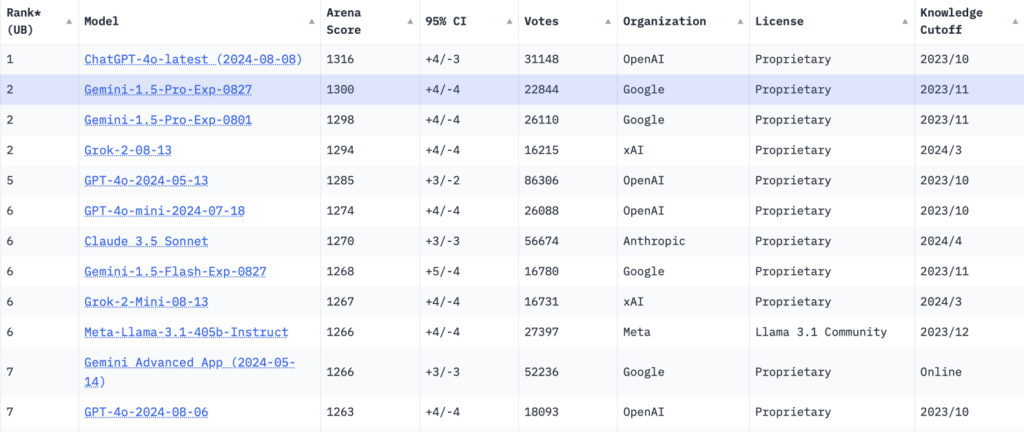
What Happened to Gemini 1.5 Pro?
Google shut down Gemini 1.5 Pro in the Gemini API on September 29, 2025, together with Gemini 1.5 Flash and 1.5 Flash-8B. Code that still calls gemini-1.5-pro no longer works. Google had already moved on to Gemini 2.0, introduced in December 2024.
Since then (as of November 21, 2026): Google’s Pro line continued with Gemini 2.5 Pro, Gemini 3 Pro and Gemini 3.1 Pro, which the Gemini API still lists as gemini-3.1-pro-preview. The newest generation is Gemini 4: Gemini 4 Argon became generally available on October 13, 2026, Carbon on November 10, Hydrogen on November 12 and Neon on November 18. Our Gemini 4 models compared guide explains which one does what.
In the Gemini app, the model you get depends on your Google AI plan. This is Google’s current list:
| Google AI plan | Models in chats | Models in tasks |
|---|---|---|
| No plan | Auto | Hydrogen |
| Google AI Plus | Auto, Hydrogen | Hydrogen |
| Google AI Pro | Auto, Hydrogen, Neon | Hydrogen, Neon |
| Google AI Ultra | Auto, Hydrogen, Neon, Carbon | Hydrogen, Neon, Carbon |
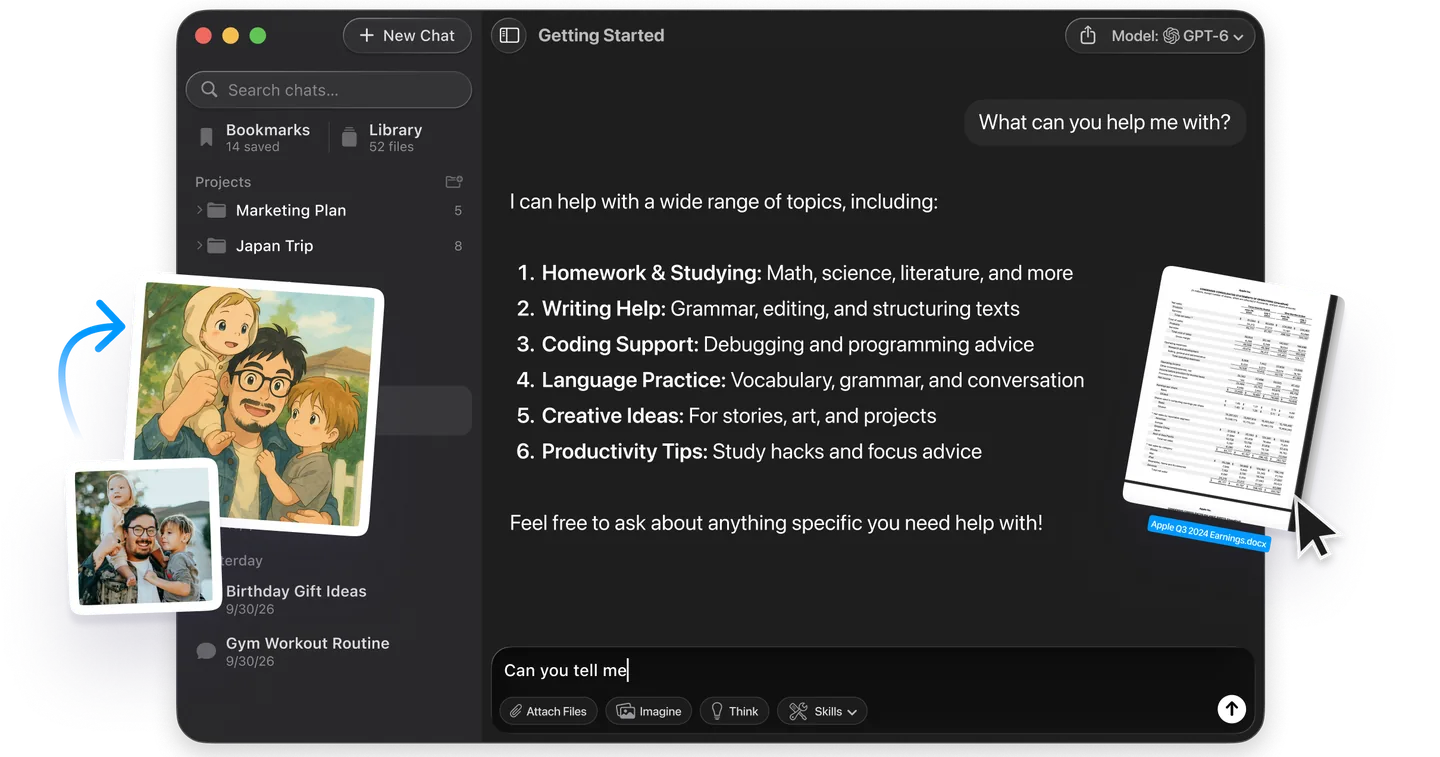
If you landed here looking for “Gemini Pro” and just want a current model, you don’t have to pick a Google plan first. Fello AI puts Gemini, ChatGPT and Claude in one Mac, iPhone and iPad app, so you can ask the same question to each without a second subscription.
FAQs
Is Gemini 1.5 Pro still available?
No. Google shut down gemini-1.5-pro in the Gemini API on September 29, 2025. Google’s current models are the Gemini 4 family, and the Gemini app offers Hydrogen, Neon and Carbon depending on your plan (as of November 2026).
Can Gemini 1.5 Pro generate images?
No. Gemini 1.5 Pro accepted images as input, but Google’s model page listed its output as text only. Native image output arrived with the Gemini 2.0 generation in December 2024.
Who owns Gemini AI?
Google owns Gemini. Google DeepMind, Google’s AI research unit, develops the models.
Where can I download Gemini AI?
Gemini 1.5 Pro was never a download, and it is now shut down. For today’s Gemini, use the web app at gemini.google.com or Google’s Gemini mobile app, which is listed as Google Gemini on the iPhone App Store.
Do I need a Google Account to use Gemini?
To sign in to Gemini Apps, Google’s help page says you need a personal Google Account, or a work or school account where your administrator has turned Gemini on. Work accounts require you to be 18 or over.
What’s the difference between Gemini AI and Google Assistant?
Gemini is a family of large language models and the app built on them, and it handles open-ended writing, analysis and multimodal questions. Google Assistant is Google’s older voice assistant, built for quick answers and simple device tasks.
When did Gemini 2.0 come out?
Google introduced Gemini 2.0 on December 11, 2024, starting with Gemini 2.0 Flash Experimental for developers. Google’s changelog said it was twice as fast as Gemini 1.5 Pro.
The featured image for this article was created with the help of AI.