DeepSeek, a Chinese artificial intelligence platform, has skyrocketed in popularity, even topping the US App Store charts as the most downloaded app. With its powerful chatbots and open-source large language models, it promises innovation at an unprecedented scale and cost.
However, President Donald Trump warned in January 2025 that the sudden rise of DeepSeek “should be a wake-up call” for America’s tech companies. While its runaway success highlights China’s rapid advancements in AI, it also raises serious concerns for users in the US and Europe. Recent investigations confirm that DeepSeek explicitly sends US user data to China, raising alarms about privacy risks, compliance with Western data protection laws, and potential government oversight. Could this seemingly harmless app become the next major digital threat to Western privacy and security?
In this article, we’ll dive deep into the facts behind DeepSeek’s rapid rise, its data practices, and what it means for citizens in Europe and the US. Whether you’re a casual user or considering it for business, we’ll break down all the details you need to know to stay safe and informed.
The Key Takeaways
- Banned on government systems, not for the public: US federal civilian agencies, Texas, Taiwan, Australia and Czechia bar DeepSeek from official devices or systems. None of them bans people from using it at home.
- The US order is new: the Department of Homeland Security ordered civilian agencies to remove DeepSeek and third-party products built on it. The order was signed on 24 July 2026 and published on 20 October 2026.
- Italy went further: its data protection authority ordered DeepSeek to stop processing data of people in Italy on 30 January 2025, after the app had left Italian app stores.
- Your data goes to China: DeepSeek stores what you type and upload on servers in the People’s Republic of China, where the law lets the state demand company data.
- Local use is the exception: Czechia’s cyber agency exempts DeepSeek’s open models run locally with no connection to DeepSeek’s servers, which is the safer way to use them.
What Is DeepSeek?
DeepSeek is an ambitious Chinese AI startup founded in 2023 in Hangzhou by its founder Liang Wenfeng, a graduate of Zhejiang University and co-founder of High-Flyer, one of China’s leading hedge funds. The company focuses on creating state-of-the-art large language models (LLMs) that directly compete with dominant US-based systems like OpenAI’s ChatGPT and Google’s Gemini. What sets DeepSeek apart is its emphasis on efficiency, claiming to develop cutting-edge AI models at a fraction of the cost of its Western competitors.
Key Features and Technology
DeepSeek’s models use a mixture-of-experts design, which activates only the most relevant parts of the model for each query. This approach reduces costs and computation power while maintaining high performance. DeepSeek-R1 and DeepSeek-V3 made the company famous in January 2025. Its current models are DeepSeek V4 Pro and V4.1 Flash.
DeepSeek offers several services aimed at different user segments:
- AI Chat and Creativity Tools: Users can ask questions, generate creative content, summarize information, or solve logic problems through its app or web interface.
- Developer APIs: Businesses and developers can integrate DeepSeek’s models into their workflows via APIs, allowing for customized solutions.
- Open-Source Options: For tech-savvy users, DeepSeek provides downloadable models that can run locally, giving more control over data and usage.
This multi-tiered approach has helped DeepSeek appeal to both casual users and technical communities. The app quickly rose to prominence, becoming the top download on the US App Store shortly after its release, demonstrating its global appeal.
Cost-Effective Innovation
DeepSeek’s ability to create competitive AI models at a lower cost is central to its success. The company claims to have developed its R1 model for just $6 million, a fraction of the reported $100 million spent by OpenAI on its latest models. By relying on advanced optimization techniques and using less powerful Nvidia chips, such as the H800 or A100, DeepSeek has positioned itself as a disruptor in the AI space.
However, there are skeptics. Some experts argue that these claims may be exaggerated, suggesting that DeepSeek might have access to restricted Nvidia H100 GPUs despite export controls. Others believe that its efficiency claims omit significant upfront research costs, potentially making the development process less transparent.
Privacy and Security Concerns
As DeepSeek gains popularity worldwide, questions about its safety and data privacy practices have come under intense scrutiny, particularly from users in the US and Europe.
The platform’s data collection policies, its compliance with Chinese laws, and its potential relationship with the Chinese government have raised serious concerns. For comparison, our ChatGPT privacy guide sets out what a US provider collects and how much of it you can switch off.
DeepSeek’s privacy policy says it collects, processes and stores your personal data in the People’s Republic of China. TikTok moved US user data to domestic cloud hosting to ease similar concerns; DeepSeek has not. WIRED concluded in January 2025 that DeepSeek was likely sending more data back to China than TikTok had in recent years.
Data Collection and Storage
In January 2025, a WIRED review of DeepSeek’s privacy policy found that the conversations you send, and the answers DeepSeek generates, are sent to China or can be. That version of the policy also let DeepSeek record your “keystroke patterns or rhythms”; the policy updated on 10 February 2026 no longer lists them. The current policy says DeepSeek uses your data to train and improve its models. Where OpenAI and Google offer user controls over data retention, DeepSeek gives no fixed retention period and says only that it keeps personal data “for as long as necessary”.
This is standard practice for many AI platforms, but what sets DeepSeek apart is its jurisdiction. Chinese laws, such as the 2017 National Intelligence Law, allow the government to request access to company-held data, raising concerns about how secure this information truly is.
Government Access and Compliance
DeepSeek acknowledges that it will comply with legal obligations, which could include handing over user data to Chinese authorities.
Security researchers warn that DeepSeek’s compliance with Chinese laws, particularly the 2017 National Intelligence Law, makes its international expansion a significant security risk. Unlike Western AI platforms that disclose their content moderation policies, DeepSeek operates under an opaque regulatory environment where the Chinese government can compel companies to share data for national security purposes. This level of potential oversight raises alarms not only in the US but also in Europe, where GDPR regulations impose strict restrictions on the transfer of user data outside the EU.
For users in the US or Europe, this presents a significant risk:
- In the US: Policymakers have already flagged Chinese tech companies like TikTok over fears of surveillance or data misuse. DeepSeek’s practices may invite similar scrutiny.
- In the EU: Data storage in China could conflict with the GDPR, which mandates strict rules for transferring data outside the European Economic Area. Without adequate safeguards, DeepSeek may be non-compliant with EU regulations.
DeepSeek’s Position in China
DeepSeek has rapidly become a symbol of China’s growing ambitions in artificial intelligence. Its success aligns with the country’s broader strategy to become a global leader in AI innovation and reduce dependence on foreign technology. By developing competitive AI models domestically, DeepSeek contributes to the Chinese government’s goal of achieving technological self-sufficiency.
While the company operates independently, its growth benefits from an environment where AI development is actively encouraged through state funding, favorable policies, and strategic initiatives. This alignment with national priorities has raised concerns in the West about the potential influence of the Chinese government over the company’s operations.
Relationship With the Chinese Government
Though there’s no direct evidence of DeepSeek’s collaboration with the Chinese government, its operations exist within a regulatory framework that enables state oversight. Chinese laws, such as the 2017 National Intelligence Law, require companies to cooperate with national security investigations if requested. This has led to fears that DeepSeek could be obligated to share user data or allow indirect government influence over its AI models.
These concerns are compounded by reports of censorship in DeepSeek’s chat responses, which often avoid politically sensitive topics like the 1989 Tiananmen Square protests or Taiwan’s sovereignty. Such behavior reflects the strict regulatory environment within which Chinese tech companies must operate, further raising questions about DeepSeek’s neutrality and independence.
In the same January 2025 review, WIRED found that the DeepSeek website appeared to send data to Baidu Tongji, Baidu’s web analytics tool, and to Volces, a Chinese cloud infrastructure firm. DeepSeek’s current privacy policy names neither company. Even so, the finding raises the question of whether third-party firms, some potentially tied to government agencies, may have access to user interactions with the AI.
Is DeepSeek Biased or Censored?
DeepSeek has faced criticism for its approach to politically sensitive topics, particularly those involving China. Users report that the platform avoids answering questions about events like the 1989 Tiananmen Square protests, Taiwan’s sovereignty, or human rights controversies.
WIRED’s analysis found that DeepSeek not only refuses to engage with these topics but also structures responses in a way that aligns with official Chinese state narratives. Given that all chat logs are stored in China, this raises further concerns about potential government oversight of the AI’s output.
Instead, these queries are met with vague refusals or apologies, aligning with Chinese regulatory requirements to suppress such discussions.
In contrast, DeepSeek provides detailed answers on similar issues related to other countries, highlighting selective censorship that raises key concerns:
- Bias in AI Responses: DeepSeek’s answers may subtly align with Chinese state narratives, potentially influencing users’ understanding of geopolitical issues.
- Erosion of Trust: Censorship undermines the perception of the platform as a neutral, reliable source of information.
- Global Influence: The AI’s compliance with Chinese content laws sparks concerns about its potential role in spreading state-influenced narratives internationally.
Why Does This Matter?
The selective moderation of politically sensitive content raises several important concerns:
1. Bias in AI Outputs
By refusing to address topics critical of China, DeepSeek’s responses may subtly reinforce narratives aligned with Chinese state policies. This bias could influence users’ understanding of geopolitical issues, particularly for those who rely heavily on AI-generated information.
For instance:
- A user unfamiliar with the Tiananmen Square protests might receive no useful information about the event, leaving them unaware of its historical significance.
- Similarly, questions about Taiwan’s sovereignty could lead to incomplete or one-sided answers, depending on how the AI is programmed to frame the issue.
This bias not only impacts individual understanding but also raises broader concerns about how AI systems might shape public opinion over time.
2. Erosion of User Trust
Censorship undermines confidence in the platform’s ability to provide balanced and accurate information. Users seeking a reliable tool for education, research, or debate may feel betrayed if they discover that certain topics are off-limits or distorted. Trust is particularly crucial for AI platforms marketed as neutral and innovative, and any perception of hidden agendas could alienate users.
3. Global Concerns About Propaganda
For Western governments and regulators, DeepSeek’s content moderation policies raise red flags about the potential for AI platforms to act as tools of soft power or propaganda. Even if DeepSeek itself is not explicitly designed to push a political agenda, its compliance with Chinese censorship laws may lead to unintended consequences:
Casual vs. Critical Use Cases
The impact of this censorship varies depending on how users interact with the platform. For casual users focused on tasks like creative writing, coding, or document summarization, these limitations may not be a significant issue. Such activities are typically unaffected by political bias or content moderation policies.
However, for those engaging in sensitive research, historical analysis, or political discussions, DeepSeek’s limitations can create significant barriers:
- Students and academics seeking information about events like Tiananmen Square may find the AI’s responses unhelpful or misleading.
- Activists or journalists looking for context on Chinese policies may encounter roadblocks, reducing the platform’s utility for investigative work.
DeepSeek’s Censorship vs. Other Platforms
While all AI platforms moderate content to some degree, DeepSeek’s approach appears more restrictive compared to Western competitors like ChatGPT or Google Gemini. For a full side-by-side on capabilities and pricing, read our DeepSeek vs ChatGPT comparison. These platforms may still avoid certain controversial topics, but their moderation policies often reflect global ethical standards rather than the legal requirements of a single country.
For example:
- OpenAI’s ChatGPT sometimes avoids controversial issues, but it provides nuanced explanations about why certain responses are limited.
- Google’s AI platforms have been criticized for certain biases but generally attempt to maintain a global perspective on politically sensitive issues.
DeepSeek, in contrast, provides less transparency and fewer explanations about why specific content is restricted. This lack of clarity can make users feel uncertain about the platform’s reliability.
Where Is DeepSeek Banned?
DeepSeek is banned on government devices and systems in the US federal civilian government, Texas, Taiwan, Australia and Czechia. Italy is the one country where a regulator acted against the DeepSeek service itself. No government on this list stops ordinary people from using DeepSeek on their own phone or computer.
| Where | When | What the ban covers | Personal use |
|---|---|---|---|
| United States (federal civilian agencies) | Signed 24 July 2026, published 20 October 2026 | Removal of DeepSeek products, and third-party products built on DeepSeek, from agency IT; no new purchases | Not covered |
| Texas | 31 January 2025 | State-issued devices, plus state employees and contractors on personal devices used for work | Not covered |
| Italy | 30 January 2025 | The data protection authority ordered DeepSeek to stop processing data of people in Italy | Restricted: the order targets the service in Italy |
| Taiwan | 3 February 2025 | Government agencies, public schools and state-owned enterprises, including cloud, app and locally downloaded versions | Not covered |
| Australia | 4 February 2025 | All Australian Government systems and devices | Not covered |
| South Korea | 15 February to 28 April 2025 | New app downloads paused while DeepSeek fixed privacy problems the regulator found | Existing users kept access; the app is back |
| Czechia | 9 July 2025 | All state administration, plus a cyber agency warning for critical infrastructure | Not banned; high-profile officials told to avoid it |
| Germany | 27 June 2025 | Berlin’s data protection authority asked Apple and Google to remove the app | Not banned; both stores declined |
What the 2026 US Order Covers
The US order removes DeepSeek from federal civilian IT and blocks agencies from buying it. Homeland Security Secretary Markwayne Mullin signed Exclusion and Removal Order 2026-01 on 24 July 2026 under the Federal Acquisition Supply Chain Security Act. The Federal Register published it on 20 October 2026.
The order reaches further than the DeepSeek app. It also covers third-party products and services developed using DeepSeek, so an agency tool built on DeepSeek’s models has to go too. Agencies had 60 days to request an exception. National security systems sit outside it, because the Department of War and the intelligence community issue their own orders.
The order gives its reasons plainly. DeepSeek’s servers are in China, Chinese law gives the state broad access to company infrastructure, and the account process collects personal data and may fingerprint users.
Is DeepSeek Banned for Personal Use?
No, with one exception. None of the government bans above covers private use, and Italy’s order against the service is the only measure aimed at ordinary users. Taiwan’s digital ministry says outright that its ban does not restrict private use. Czechia’s NÚKIB, the national cyber security agency, recommends that the public think carefully about what they type into DeepSeek, and advises people in high political or public positions to avoid it altogether.
The same Czech warning draws a useful line. It does not apply to DeepSeek’s open-source models run locally, with no connection to DeepSeek’s servers. That is the practical answer for anyone who wants the models without the data risk.
Conclusion: Should You Use DeepSeek?
While DeepSeek offers innovative features and cost-effective solutions, its data practices and compliance with Chinese regulations raise serious concerns for users in the US and Europe.
DeepSeek’s own privacy policy says it stores user data in China, which makes it a poor home for anything sensitive. For users in regions with strict data protection laws, such as the EU, this could make DeepSeek non-compliant with GDPR regulations, potentially exposing companies and individuals to legal risks.
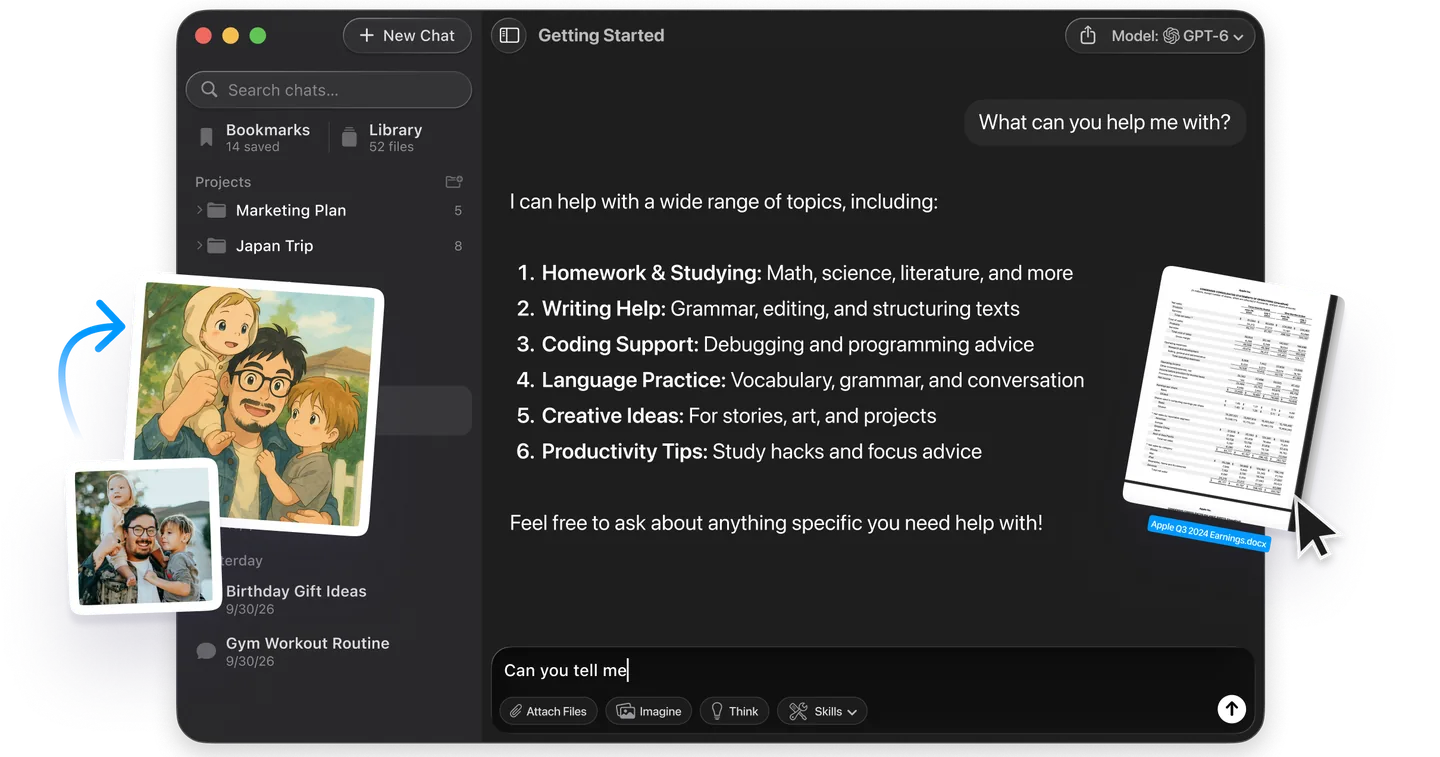
For a safer alternative to DeepSeek’s app, users can host its open-source models locally or use third party platforms which keep data within Western data centers, avoiding Chinese data risks and censorship. If you would rather not pick one model for everything, Fello AI puts DeepSeek next to GPT, Claude, Gemini and Grok in one Mac, iPhone and iPad app, so sensitive work can go to a different model without opening another app.
Recommendations
- Avoid sharing sensitive or confidential information: DeepSeek’s privacy policy says your data is stored in China, so assume that any input can be accessed by Chinese entities.
- Consider US-based alternatives: Platforms like ChatGPT or Google Gemini offer more transparent data policies and align better with Western privacy regulations.
- Use sandboxed or hosted versions: If you must use DeepSeek, consider running its open-source models locally on your device to avoid data transmission. Perplexity said it hosted DeepSeek in US and EU data centers in early 2025, but its September 2026 model list no longer includes any DeepSeek model, so check which provider hosts DeepSeek’s open models outside China today.
DeepSeek’s rise highlights the importance of understanding the legal and regulatory frameworks behind the tools we use. While its technology is impressive, users should weigh the risks carefully before relying on it for critical applications.