The creator economy is projected to surpass $250B in 2025 and continue compounding >20% annually through the 2030s. Rising creator tools, cheaper AI models, and new distribution channels are making it easier than ever to build lean online businesses. If you’re looking for a low-cost, high-leverage way to test ideas or build passive income streams, 2026 is shaping up to be one of the best years to start.
If you know how to prompt ChatGPT correctly, you can uncover real business opportunities long before they hit the mainstream. We spent hours “reverse-engineering” ChatGPT to pull out the patterns, niches, and product types that are projected to explode in 2026. Then I combined that with market data, search trends, and traffic benchmarks from tools like SimilarWeb, Google Trends, and public revenue estimates. For a full breakdown, see 9 proven ways to make money with ChatGPT.
If you’re serious about launching a digital-product side business in 2026, this is your must read guide, and our list of 40 digital product ideas is the fastest way to find one worth building. Digital products are one of many routes, and our guide on how to make money with AI lays out the other 11. Ready to launch one? Our full guide on how to sell digital products walks through pricing, platforms, and delivery.
Why Digital Products Will Surge in 2026
AI adoption is growing fast. Grand View Research expects 35%+ annual growth in AI tools through the late 2020s, which pushes millions of users to look for ready-made templates, spreadsheets, ebooks, and prompt packs. If you are still unsure what digital products are, our guide breaks down every category. These are exactly the types of products small creators can produce quickly.
Discovery has shifted toward social. TikTok now influences more purchase decisions for Gen Z than Google, and Google’s own AI Overviews boost niche, helpful content. Instagram comment-to-DM funnels convert 10–30% of viewers into clicks, making distribution easier for small operators.
Production costs are near zero. ChatGPT can outline ebooks, build spreadsheets, or generate planners in minutes. Independent creators like Nomadic Matt and Passion Planner thrive because lean storefronts now scale with almost no overhead.
The result is a perfect setup for 2026: high demand, new distribution channels, and cheaper production all moving in favor of individuals, not big teams.

TOP 2026 Digital Products According to ChatGPT
To pick the best digital products for 2026, we didn’t rely on random ideas. We pushed ChatGPT with strict prompts that asked for real websites, traffic sources, estimated revenue, and niche clarity. Then we checked those results against Google Trends and SimilarWeb to make sure the demand is actually growing, not just AI hallucinations.
After removing niches with low margins or heavy competition, four categories kept showing up again and again: ebooks, spreadsheets, digital planners, and AI prompt packs. These products already sell well today, they’re rising in search demand, and ChatGPT makes them fast to create even if you’re a beginner. These are the categories worth copying right now.
1) E-Books (PDF first; bundle audio + workbook later)
Why it works. E-books are cheap to produce, fast to ship, and easy to update. They also pair well with AI-era SEO: concise, structured answers in your blogs can earn visibility in Google’s AI surfaces and push readers into your funnel. A classic example is Nomadic Matt—the site’s blog → email capture → e-book flow shows how independent sites can compound traffic and sales over time.
Production with ChatGPT. Give ChatGPT your audience, goal, and outcomes, then ask for an outline → chapter drafts → worksheets → resource index. You can also have it write beta-reader surveys, endorsement requests, and launch emails so the whole publishing pipeline is covered.
Specific e-book ideas (angles you can ship fast):
- Short-Form to Sales — 7 scripts + hook frameworks for Reels/TikTok that end in a DM conversion.
- No-Savings Travel Hacking for Couples — weekend getaways using points (U.S./EU editions).
- ADHD Work Systems — 30-day routines for focus, chores, budgeting (practical, no fluff).
- Freelancer’s First 10 Clients — outreach templates, scope docs, objection handling.
- Beginner’s Prompt Handbook — 200 utility prompts organized by role and outcome.
- Zero-to-Newsletter — 4-week plan to 1,000 subs with comment-to-DM + lead magnet.
- Side-Hustle Tax Prep Pack — checklists + organizer sheets (country-specific variants).
- Home Fitness Periodization for Busy Parents — 12-week plan + printable trackers.
- Creator Legal Basics — contracts, usage rights, and template clauses (jurisdictional notes).
- AI-Ready Job Search — ATS-friendly resume bullets + portfolio prompts.
Delivery. If you’re on Shopify, the official Digital Downloads app makes fulfillment simple. If you want hosted checkout, taxes, and licenses out of the box, use Lemon Squeezy.
2) Spreadsheets (Google Sheets / Excel templates)
Why it works. A well-built template solves a very specific job (budgeting, pricing, validation) and has near-zero marginal cost. Many top sellers run on vanilla Sheets with clear instructions and a short loom-style walkthrough.
Production with ChatGPT. Paste your spec (columns, formulas, named ranges, protections). Ask for exact formulas, ARRAYFORMULA patterns, conditional formatting, sample data, and a README tab with edge-case notes. ChatGPT is excellent at turning fuzzy requirements into precise spreadsheet logic.
20 spreadsheet ideas buyers pay for:
- Paycheck-to-Paycheck Budgeter (rolling two-week cashflow)
- Sinking Funds Tracker (vacation, car, medical)
- Debt Snowball Optimizer (payment sequencing + charts)
- Subscription Audit (CSV import + waste highlights)
- Content Calendar + Script Bank (hooks, CTAs, internal links)
- TikTok/IG Reels Test Board (hook variant → watch-time → CTR)
- Pricing Calculator (cost-plus, value-based, competitor compare)
- Freelance Capacity Planner (hours, rates, margins)
- Course Cohort Ops (enrollments, completion, upsells)
- Airbnb Clean/Turnover SOPs (checklists + time estimates)
- Amazon Affil Dashboard (ASIN list → clicks, EPC, rev)
- Crypto/ETF DCA Tracker (allocation targets + drift)
- Wedding Budget + Vendor Scorecard
- Home Reno Estimator (itemized BOM + contingency)
- Meal-Prep Costing & Macro Planner
- Local Service Lead Tracker (quote rate → win rate → ROI)
- Real-Estate Deal Analyzer (BRRRR/STR)
- SaaS KPI Pack (MRR, churn, cohort LTV, runway)
- Shopify Launch Checklist + KPI Radar
- Non-profit Grant Pipeline Tracker
3) Digital Planners (Notion / GoodNotes / PDF systems)
Why it works. Planners sit at the intersection of habits, identity, and daily repetition—that’s behavioral gold. Brands like Passion Planner show a playbook that still works: SEO-backed content, free downloads for email capture, then monetization through premium planners and inserts (yearly refresh = recurring revenue).
Production with ChatGPT. Specify sections (annual → monthly → weekly → daily), rituals (weekly review, quarterly planning), and trackers (habits, finance, health). ChatGPT will draft page copy, prompts, and instructions; you assemble in Notion/GoodNotes or export as a polished PDF.
10 planner ideas with strong positioning:
- ADHD-Friendly Planner (time-boxing, dopamine tasks, visual priority cues)
- Creator OS (content ideation, briefs, analytics review)
- Student Semester System (study sprints, spaced-repetition planner)
- Career-Change Playbook (skills matrix, networking cadence)
- Wellness Reset (sleep, hydration, mobility streaks)
- Finance Reboot (bill calendar, snowball, sinking funds)
- Busy Parent Planner (shared chores, meals, ride-sharing)
- Sales Pipeline Journal (daily prospecting, objection log)
- Language Learning Companion (CEFR goals, vocab decks)
- Wedding Command Center (timeline, vendor comms, budget guardrails)
Traffic tip. Publish monthly Q&A posts that answer planner-related searches and link to your products. Tools like Ahrefs make it easy to find intent keywords (e.g., “best digital planner for students”) that can surface in AI search results and buying guides.
4) Prompt Packs (ChatGPT / Claude / Midjourney use-cases)
Why it works. As professionals adopt AI, field-tested prompt frameworks save time and make outputs consistent. The existence of marketplaces and tools like AIPRM signals durable demand for organized prompts by role, task, and outcome.
Production with ChatGPT. Define the user role, input fields, constraints, and output format you want (e.g., JSON spec, table, bullet SOP). Ask ChatGPT to generate dozens of prompts with placeholders, plus usage notes, quality checks, and “when not to use” guidance. This turns a loose idea into a repeatable system.
10 pack ideas with ready buyers:
- UGC Creators — ad briefs, shot lists, concept iterators
- DTC Marketers — offer angles, PDP rewrites, email flows
- HR/Recruiting — structured interview kits, scoring rubrics
- Local Services — GMB posts, quote emails, follow-ups
- B2B SaaS — persona pain maps, demo scripts, case studies
- Sales — cold email variants, objection trees, mutual action plans
- Designers — portfolio narratives, client intake, scope control
- Teachers — lesson plans, rubrics, differentiated tasks
- Law-Adjacent — clause comparison prompts (with clear disclaimers)
- Medical Admin — intake triage, policy summaries (strictly non-diagnostic)
Monetization. Sell as a download or host a members library with ongoing updates. For subscriptions, license keys, and taxes handled for you, use Lemon Squeezy.
Bonus: Turn Reels into Revenue with Auto-DM
Pair your product with an Instagram Reels call-to-action like “Comment SAVINGS to get the template.” Then wire a comment keyword flow in ManyChat so every comment receives an automatic DM with your link (plus a friendly public reply to boost engagement). This is a simple, repeatable bridge from attention to checkout.
The Essential Tool Stack
You don’t need a huge tech stack to succeed with digital products, but using the right tools saves time, removes friction, and helps you ship faster. Below is a short list of extra platforms that make research, design, sales, and automation much easier. These tools aren’t mandatory, just highly practical additions that can streamline your workflow and help you grow smoother. If you are at the build stage, our step-by-step guide on how to create digital products covers the process itself.

Gamma
Gamma turns your text into polished PDFs, planners, or presentations in minutes. It’s ideal for creators who want a clean, modern look without learning design tools. Just paste your content, choose a style, and export your e-book or planner in a ready-to-sell format.
Shopify
If you want a long-term, brand-owned storefront, Shopify paired with its simple Digital Downloads app is the best choice. It handles product pages, payments, file delivery, and analytics. Perfect if you plan to grow with SEO and build a real business asset you fully control. If you also stock physical goods alongside your downloads, our 200 ChatGPT prompts for dropshipping and e-commerce cover product research, store copy and customer emails.
Lemon Squeezy
Lemon Squeezy is the easiest way to sell digital files, prompt packs, subscriptions, and updates without running a whole store. It handles VAT/GST, downloads, licensing keys, and subscriptions for you. Great for creators who want a quick, no-maintenance setup.
ManyChat
ManyChat is essential if you’re using Instagram Reels to drive sales. The “comment keyword → automatic DM” workflow turns engagement into conversions instantly. Someone comments “BUDGET,” “PLANNER,” or “PROMPTS,” and they get your link or freebie right away. This funnel consistently works for spreadsheets, planners, and prompt packs.
Fello AI
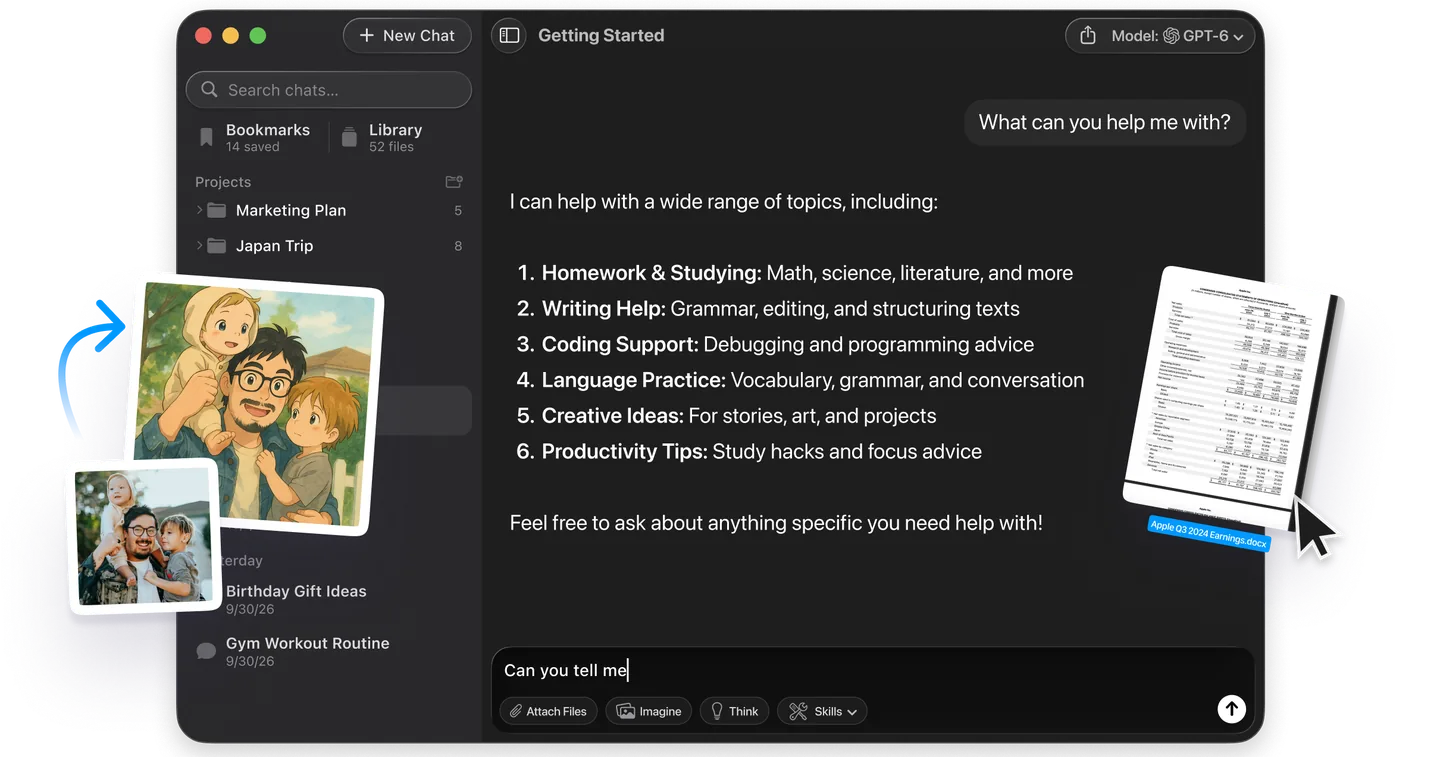
Fello AI is the fastest way to brainstorm, draft, and refine digital products because it puts multiple top models—GPT-5, Claude 4.5, Gemini 2.5 Pro, Grok 4—into one workspace. You can compare answers, rewrite drafts, analyze files, and generate variations without switching tools. For creators, this means faster outlines, better revisions, and higher-quality final products.
Canva
Canva is perfect when you need quick, good-looking assets without hiring a designer. Use it to create planner pages, worksheet templates, e-book covers, product previews, Pinterest graphics, and social ads. The drag-and-drop system makes it insanely fast to test designs, and their template library speeds up production even more.
Notion
Notion is great for creators who want to sell interactive planners instead of just PDFs. You can package custom dashboards, habit trackers, finance systems, student planners, and creator hubs. Notion templates have huge demand and very low production cost. Once you build a good template, you can duplicate, customize, and sell multiple versions easily.
Etsy
Etsy isn’t always ideal long term, but it’s fantastic for early visibility. The marketplace already has search intent for digital planners, spreadsheets, e-books, and templates. If your product is visual, whether that is planners, worksheets or calendars, Etsy can drive your first 100 customers without paid ads. Then send them to your main site later. Listing copy is where most sellers lose that traffic, so work through our 400 AI prompts for Etsy shop owners before you publish a single listing.
Gumroad
Gumroad is still one of the easiest ways to sell digital goods if you want a simple link-based store. No website needed. Upload the product, set the price, and share the link. Great for smaller items, mini e-books, single spreadsheets, or standalone prompt packs.
Teachable
Teachable is ideal if you want to expand into mini-courses or guided versions of your products. For example:
- E-book → “Video walkthrough” course
- Planner → “Productivity Bootcamp”
- Spreadsheet → “Finance Basics 101”
Turn your digital product into a higher-ticket offer with minimal extra work.
ThriveCart
ThriveCart gives you beautiful checkout pages, upsells, bump offers, and affiliate tools. Perfect if you want:
- One-click upsells
- Bundle offers
- Affiliate partners promoting your products
It’s especially good for creators selling multiple related products.
Pinterest consistently drives traffic to digital products like planners, calendars, budgeting tools, and e-books—sometimes for years. Create pins using Canva, link them to your Shopify or Gumroad page, and stack passive monthly traffic. Pinterest users actively search for templates.
Tally
Tally is a clean, no-code form builder perfect for gathering product ideas, collecting testimonials, or letting customers request versions of your product. It’s fast, simple, and free for most use cases. Great for “What should I build next?”
How to Pick the Right Digital Product
The simplest way to choose is to match the product with how you naturally think and work.
If writing feels natural, ebooks are the easiest starting point. ChatGPT can outline chapters and create the bulk of the text, while you focus on shaping the message. Works well for travel hacks, ADHD routines, and beginner-friendly guides.
If you prefer structure, spreadsheets are a better fit. ChatGPT can generate formulas and build the first version. You refine the workflow and turn it into something people can use daily. Budget tools and freelancer income trackers are strong performers.
If you’re more visual, digital planners make sense. You design the layout, and ChatGPT fills it with prompts, routines, and explanations. This niche performs well on TikTok and Pinterest where aesthetics matter.
If you like automation, prompt packs are the fastest route. No design or long writing. You package AI workflows for a specific group (e.g., marketers, real estate agents, coaches).
Most Common Beginner Mistakes (and Quick Fixes)
1. Building the Entire Product Before Testing Demand
Beginners often create full e-books or templates without confirming whether anyone wants them. This leads to wasted time and low sales.
Quick Fix: Share a preview, outline, or sample page on social media. Track comments, saves, and replies. If engagement is low, adjust the idea before you build more.
2. Targeting Broad Categories Instead of Specific Problems
Generic products like “budget planner” or “productivity workbook” compete with thousands of similar items.
Quick Fix: Focus on a micro-niche with a clear use case, such as “freelancer income tracker” or “ADHD weekly planner.” Specific products get higher conversions and face less competition.
3. Skipping Content and Relying Only on the Product Page
Many creators launch a product but produce no content that drives traffic to it. With no attention, even good products fail.
Quick Fix: Post 3–5 short, practical tips each week based on your product. Use a ManyChat keyword (e.g., “BUDGET”) to turn reel engagement into direct link clicks or leads.
4. Overcomplicating Templates and Workflows
Overbuilt products with too many tabs, pages, or steps create confusion and refunds. Most customers want simplicity.
Quick Fix: Reduce the product to the essential features. Add a one-page “Start Here” guide. Use Fello AI or ChatGPT to identify unclear sections and simplify them.
5. Pricing Too Low
Beginners often underprice (e.g., $5–$9), which positions the product as low value and limits revenue.
Quick Fix: Use standard digital-product ranges: $12–$29 for single templates, $29–$59 for full systems or bundles. Offer a low-cost “Lite Version” only as an entry point, not your main offer.
Final Recommendations
If you want to build a digital-product business in 2026, the path is clear: keep it simple, validate fast, and use AI to remove the heavy lifting. The tools are mature, production costs are near zero, and demand for ready-made systems keeps rising across every niche—from budgeting to productivity to AI workflows.
Pick one product category that matches how you naturally think (writing → e-books, structure → spreadsheets, visual → planners, systems → prompt packs). Build a minimal version, test it with real people, and improve based on actual feedback. Consistency matters more than originality. Most successful sellers didn’t invent new formats; they delivered familiar products with clearer structure, better explanations, and cleaner workflows.
Use AI tools like Fello AI and ChatGPT to accelerate every stage—research, drafting, prompts, formulas, product copy, instructions, and content marketing. Pair your product with simple distribution: daily micro-content, Instagram comment-to-DM flows, Pinterest pins, or blog posts that answer real search intent.
Start narrow, launch fast, improve often, and price confidently. With even one solid product and a consistent publishing rhythm, you can build a lean, profitable digital business in 2026—without a big team, without high costs, and without waiting months to see traction.
The opportunity is real, and the window is wide open. The only variable left is whether you start.