Digital products carry profit margins close to 100%, and you can start selling them for $0 using platforms that only take a cut once you make a sale. That combination, no inventory, no shipping, and near-total margins, is why creators are pouring into the space and why learning how to sell digital products has become one of the most practical online income skills of 2026. If you are still choosing a storefront, compare your options in our guide to where to sell digital products.
This guide walks you through the whole journey, from picking a product idea to making your first sale. You’ll get a clear 7-step plan, a verified 2026 comparison of the main selling platforms and their fees, an AI-assisted workflow for creating your product fast, and honest numbers on what sellers actually earn. Everything here works whether you have an audience or you’re starting completely from scratch.
The Key Takeaways
- Near-100% margins. Digital products have no manufacturing or shipping costs, so almost all revenue is profit after platform fees.
- Start for $0. Gumroad, Payhip, and Ko-fi let you list products free and take a percentage only when you sell.
- Fees range from 5% to 10%+. Payhip is cheapest at 5%, Gumroad charges 10% + $0.50, and Etsy takes 6.5% + $0.20 per listing plus payment processing.
- Creation is only 20% of the work. The other 80% is marketing, mainly free content and email.
- AI makes production fast. Tools like ChatGPT, Claude, and Gemini can draft an ebook, planner, or prompt pack in an afternoon.
What Are Digital Products?
Digital products are intangible goods you create once and sell an unlimited number of times, delivered as downloads or online access. Because there’s no inventory to restock and nothing to ship, margins run close to 100% after platform fees, and you never run out of stock.
Common examples include ebooks, Canva templates, printables, Notion dashboards, online courses, photo presets, and prompt packs for AI tools. The market has shifted away from generic ebooks toward specialized, actionable tools that solve one specific problem for one specific person. A wedding budget tracker, an ADHD-friendly daily planner, or a library of tested prompts for marketers will outsell a broad “productivity guide” almost every time. Our full breakdown of the main types of digital products groups every category with examples.
Why Sell Digital Products in 2026?
The economics are the main draw. You invest time once to build the product, then every sale after that is almost pure profit. There’s no cost of goods, no packaging, no returns to process, and no shipping delays. A single planner or template can sell for years with zero extra work, which is why digital products are one of the most reliable ways to build semi-passive income online.
Barriers to entry have also collapsed. You no longer need design skills, a developer, or a budget. AI tools handle the writing and design, free platforms handle the storefront and payments, and social media handles distribution. If you can identify a problem people will pay to solve, you can build and list a product this week. That’s a very different setup from the physical-product businesses and easy business ideas for 2026 that still need upfront stock or overhead.
How to Sell Digital Products in 7 Steps
Selling a digital product breaks down into seven repeatable steps. Follow them in order the first time, then compress the cycle as you learn what your audience buys.
1. Pick a Product Idea and Niche
Start with a specific problem a specific group wants solved, then match it to a format you can produce. The sweet spot is the intersection of what people need and what you already know how to do well. Narrow beats broad every time. “Meal-prep templates for busy nurses” will always outperform “healthy eating guide” because the buyer instantly sees themselves in it. If nothing springs to mind, our list of 40 digital product ideas sorts each one by buyer, effort, and realistic price.
2. Validate Demand Before You Build
Confirm people are already searching for and buying your idea before you spend hours creating it. Browse existing marketplaces to see what’s selling, read the reviews on competing products to find gaps, and check search volume for your topic. If similar products have hundreds of sales and buyers are complaining about what’s missing, you’ve found your opening.
3. Create the Product
The best first products for beginners are ebooks, templates, printables, and short mini-courses because they need no inventory and cost almost nothing to make. This is where AI does the heavy lifting, and we cover the full workflow in the section below. Aim for a polished, genuinely helpful product rather than a bloated one. A tight 15-page guide that solves the problem beats a padded 80-page one nobody finishes.
4. Price It for Profit
Price low enough that saying yes is easy, then raise prices as your brand grows and your reviews stack up. Most first digital products land between $9 and $49. Templates and printables sit at the lower end, while courses and comprehensive toolkits command more. Because your margins are near-total, even low price points are profitable, and volume does the rest.
5. Choose Your Selling Platform
You have two paths, a marketplace with built-in traffic like Etsy, or a creator platform like Gumroad or Payhip where you bring your own audience. Beginners with no following usually start on a marketplace for the free discovery, then add a direct platform once they have an email list. The full fee-by-fee breakdown is in the comparison section below.
6. Automate Delivery
Set up automatic file delivery so buyers get their download the instant they pay, with no manual work from you. Every platform in this guide handles this out of the box. Connect a payment processor like Stripe or PayPal, upload your file, and the platform sends the download link and receipt automatically. This is what makes the income semi-passive.
7. Market Your Product
Creating the product is only 20% of the job; the other 80% is marketing. The two channels that matter most are content and email. Post free, useful content on TikTok, YouTube, or a blog that solves part of the problem, then pitch your product as the complete solution. Collect emails with a small freebie and use a simple automated sequence to convert subscribers over time. The same content playbook powers most guides on how to make money with ChatGPT.
Where to Sell Digital Products: 2026 Fees Compared
The best platform depends entirely on where your buyers come from. Marketplaces give you built-in traffic but charge listing and ad fees, while creator platforms are cheaper but need you to bring the audience. Here’s how the main options compare on cost in 2026.
| Platform | Cost to start | Fee per sale | Best for |
|---|---|---|---|
| Etsy | $0.20 per listing | 6.5% + $0.20 listing (+ ~3% + $0.25 processing) | Beginners who want built-in buyers |
| Gumroad | Free | 10% + $0.50 (30% via Discover) | Creators with their own audience |
| Payhip | Free | 5% free plan (2% at $29/mo, 0% at $99/mo) | Lowest fees on a budget |
| Ko-fi | Free | 5% shop fee (0% on paid Gold plan) | Creators and tip-based audiences |
| Shopify | $39/mo | Subscription + app for delivery | Scaled, standalone brands |
Etsy
Etsy is the best starting point if you have no audience, because it’s a marketplace where buyers are already searching for downloads. You pay a $0.20 listing fee, a 6.5% transaction fee, and roughly 3% + $0.25 in payment processing per sale, per Etsy’s fees policy. Offsite Ads can add 12% to 15% on the sales they generate. The trade-off for that discovery is the highest effective fees in this list.
Gumroad
Gumroad is purpose-built for digital products and has the simplest setup of any platform here. It charges 10% + $0.50 per sale with no monthly fee, per Gumroad’s pricing page, jumping to 30% only when a buyer finds you through the Gumroad Discover marketplace. It shines once you already have around 1,000 email subscribers or a few thousand engaged followers to send to your product page.
Payhip
Payhip is the cheapest way to start, with a free-forever plan that takes just 5% per sale, per Payhip’s pricing. If your volume grows, the $29/month Plus plan drops that to 2% and the $99/month Pro plan removes the transaction fee entirely. It handles unlimited products and revenue on every tier, so it scales without forcing an upgrade.
Ko-fi
Ko-fi blends a tip jar with a storefront, which makes it a natural fit for creators whose audience already supports them directly. The shop takes a 5% cut on the free plan, and the paid Ko-fi Gold membership removes that fee entirely. It’s less of a discovery engine than Etsy, so it works best when you’re driving your own traffic.
Shopify
Shopify is built for scaled, standalone brands rather than first-time sellers. Plans start at $39/month, and because the platform is designed for physical goods, you need a third-party app to handle digital file delivery. That overhead only makes sense once digital products are a serious, growing part of your business and you want full control over your store.
How to Create Digital Products with AI
AI has turned product creation from the slowest step into the fastest. What used to take weeks now takes an afternoon, and you don’t need writing or design skills to get a professional result. The workflow is the same whether you’re making an ebook, a planner, a worksheet pack, or a prompt library.
Start with a chat model to generate and structure the content. Ask it to outline a 15 to 20 page guide on your topic, then expand each section, refine the tone, and tighten the writing. Different models have different strengths, so it pays to compare a draft from ChatGPT, Claude, and Gemini and take the best of each. From there, drop the text into a design tool, add a cover and layout, and export a clean PDF. Prompt packs are the fastest product of all, since you can generate 50 to 100 tested prompts for a niche audience in a single session.
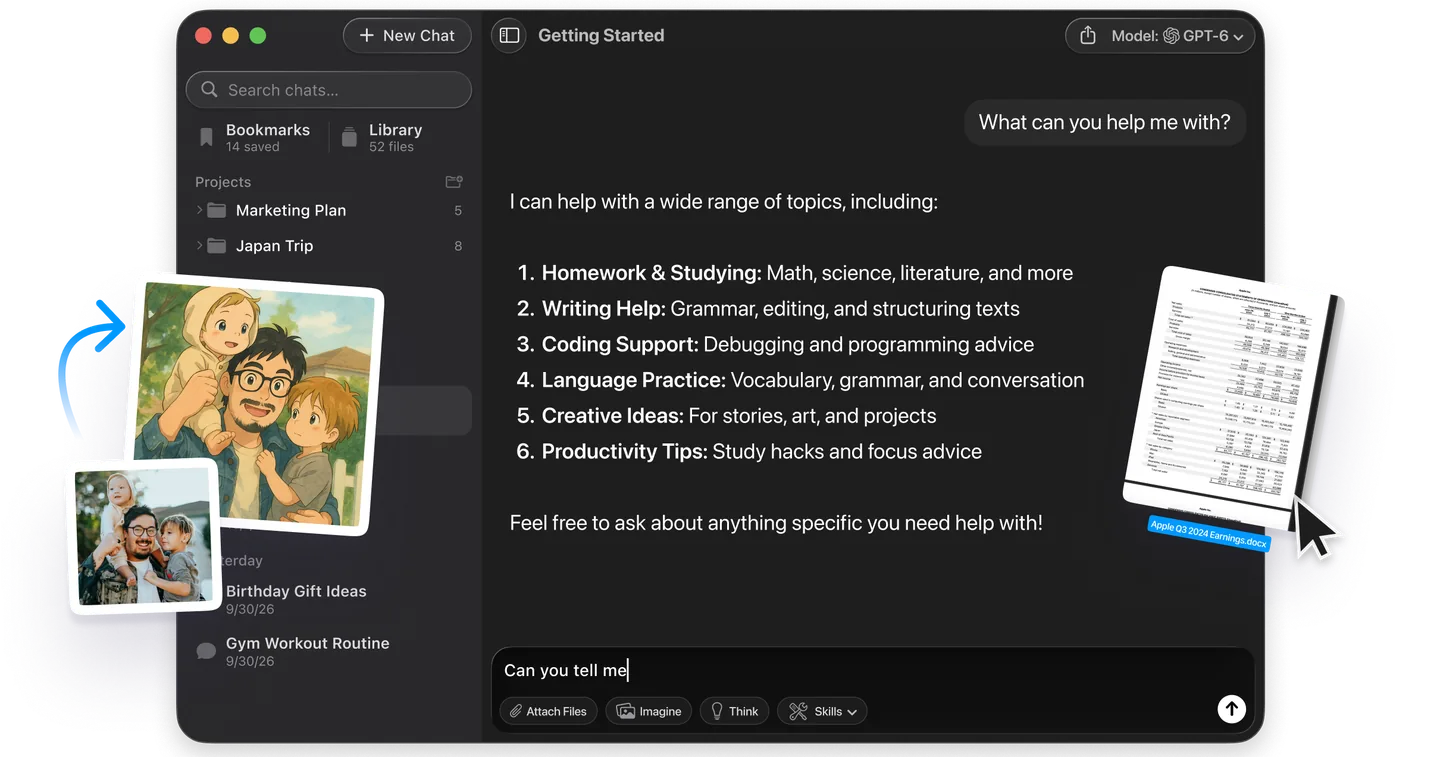
This is where running every model in one place saves real time. Fello AI puts ChatGPT, Claude, Gemini, Grok, and more behind a single app, and it generates images too. You can draft your ebook copy, rewrite it in a second model for a sharper version, and create the cover art without ever leaving the app. It’s a complement to your design and selling tools, not a replacement for them, handling the heavy creative lifting so you can move straight to listing. For a real example of an AI-built product from start to finish, see how we created a printable murder mystery case file using AI.
How Much Can You Make Selling Digital Products?
Earnings vary enormously, so treat any single number with caution. Plenty of sellers make nothing because they skip the marketing, while creators who commit to the content-and-email playbook commonly report $2,000 to $8,000 per month within six months of consistent effort. The product is the easy part; the income tracks almost entirely with how well you market it.
Set realistic expectations for the timeline. The first 30 days are usually slow while you learn what converts, the next 30 are about optimizing based on early signals, and by day 90 you’re building consistent traffic. Sellers who quit in week two never see the compounding that makes digital products worthwhile. Because your costs are near zero, every sale past your setup effort is profit, which is why the model rewards patience.
Start Selling Your First Digital Product
The fastest path from here is to pick one specific problem, validate that people are already paying to solve it, and build a small, focused product this week. Start free on Payhip or Etsy, price it low, and put your energy into the free content that drives buyers to it. You can always raise prices and add products once the first one sells.
If the creation step is what’s holding you back, let AI carry it. Draft your ebook, planner, or prompt pack across Fello AI’s models, generate the cover, and export it ready to list. Need inspiration first? Browse which digital products are set to explode in 2026 and copy a proven format.
FAQ
How much does it cost to start selling digital products?
You can start for $0. Free platforms like Gumroad, Payhip, and Ko-fi let you list products with no upfront cost and take a small percentage only when you make a sale. Your only real investment is the time to create and market the product.
What is the easiest digital product to sell?
Templates, printables, and prompt packs are the easiest to make and sell. They require no inventory, cost almost nothing to produce, and can be built in tools like Canva or a chat model in a single afternoon.
Where can I sell digital products for free?
Gumroad, Payhip, and Ko-fi all let you list products with no monthly fee and take only a percentage per sale. Payhip is the cheapest at 5% on its free plan. Etsy has no subscription but charges a $0.20 listing fee plus transaction and processing fees.
Do I need an LLC to sell digital products?
No. Most people start as a sole proprietor and can sell on Etsy, Gumroad, or Payhip without forming a company. An LLC can add liability protection and tax benefits later, but it isn’t required to make your first sale. Check the rules for your own country.
Can I create digital products with AI?
Yes. Chat models like ChatGPT, Claude, and Gemini can draft ebooks, planners, worksheets, and prompt packs, and image tools generate the covers and graphics. An app like Fello AI runs several models in one place, so you can write, refine, and design a product in an afternoon.