A digital product sells an unlimited number of times without ever running out of stock, and after fees, sellers often keep 80% to 90% of every sale. There is no warehouse, no shipping label, and no restocking. That combination of near-zero overhead and infinite scale is why creators, teachers, designers, and side-hustlers keep flocking to digital products. Online courses alone have grown into a market worth more than $370 billion worldwide.
If you have heard the phrase but you are still not totally sure what counts as a digital product, this guide clears it up. You will get a plain definition, a grouped list of real examples, a side-by-side comparison with physical products, and a quick look at how people create and sell them (including with AI). By the end you will know exactly what a digital product is and which ones you could realistically make yourself. When you are ready to list one, our guide on where to sell digital products compares the best platforms.
The Key Takeaways
- A digital product is an intangible item created, sold, and delivered entirely online, with no physical form.
- Sellers often keep 80% to 90% of each sale because there is no inventory, shipping, or manufacturing.
- Common examples include ebooks, online courses, templates, presets, stock photos, software, and AI prompt packs.
- One file can be sold an unlimited number of times, which is what makes digital products so scalable.
- You can now create many digital products with AI in minutes, then sell them on Etsy, Gumroad, Shopify, or your own site.
What Is a Digital Product?
A digital product is an intangible item that is created, sold, and delivered entirely online, with no physical form. Think ebooks, online courses, templates, presets, stock photos, software, and AI prompt packs. Because there is no inventory or shipping, one digital file can be sold an unlimited number of times, which is what makes digital products so scalable and profitable.
Buyers usually receive a digital product in one of three ways, by instant download, by email, or through gated access to an online platform such as a course portal or membership site. The moment someone pays, an automated system delivers the file, so you can make sales while you sleep. That is the core appeal, you do the work once and the product keeps earning.
Almost anything you can store as a file or stream online can be a digital product. A PDF planner, a Lightroom preset, a Notion template, a sample pack, a stock video clip, a software licence, and a pack of ChatGPT prompts all qualify. If it delivers value without ever being physically shipped, it counts.
Types of Digital Products (Grouped Examples)
The easiest way to understand digital products is to group them by what they do for the buyer. Here are the six main categories, with real examples in each, so you can quickly spot which ones fit your skills.
Educational Products
These teach a skill or share knowledge, and they are among the most profitable digital products you can sell. Examples include ebooks, online courses, workshops, guides, tutorials, and worksheets. Online courses in particular are a giant category worth hundreds of billions of dollars, so there is real money in packaging what you know.
Templates and Tools
Templates save buyers time by giving them a ready-made starting point. This bucket includes Notion templates, spreadsheets, resume and CV templates, social media templates, planners, and printables. Printables sound simple, but budget trackers, wall art, and party games sell surprisingly well in niche markets. A good example is a printable murder mystery game made with AI, which turns a few prompts into a product people happily pay for.
Creative and Design Assets
Creators and marketers constantly need visual assets, which makes this a reliable seller. Examples include presets, LUTs, fonts, icons, illustrations, digital art, wallpapers, and Canva templates. Designers can build an asset once and sell it on marketplaces like Creative Market or Etsy to thousands of buyers.
Media and Audio
Anything meant to be watched or heard lives here, and audio is one of the fastest-growing digital segments. Examples include stock photos, stock video, music tracks, sound effects, sample packs, podcasts, and audiobooks. Content creators pay for high-quality media constantly, so stock libraries and sample packs generate steady passive income.
Software and Access
This is the most technical category, but also the stickiest, because it often earns recurring revenue. Examples include apps, plugins, browser extensions, software licences, SaaS subscriptions, and memberships. A membership or subscription turns a one-time buyer into a monthly customer, which is why creators love this model.
AI-Enhanced Products
The newest category, and one of the hottest in 2026, is products built around AI. Examples include AI prompt packs, custom GPTs, AI art collections, and AI-generated templates or worksheets. A well-organised prompt pack for a specific job, like real-estate listings or Etsy SEO, can sell for a premium because it saves buyers hours of trial and error.
Digital Products vs Physical Products
The clearest way to understand a digital product is to compare it with a physical one. A physical product has to be made, stored, and shipped, and every single sale costs you money in materials and postage. A digital product removes all of that, which changes the economics completely.
| Feature | Digital product | Physical product |
|---|---|---|
| Inventory | None, unlimited copies | Must be stocked and tracked |
| Delivery | Instant, automated download | Days of shipping |
| Shipping cost | Zero | Paid on every order |
| Profit margin | Often 80% to 90% | Typically much lower |
| Scalability | Near-infinite, sell to anyone | Limited by stock and logistics |
| Restocking | Never needed | Ongoing |
| Environmental impact | Very low | Higher, materials and transport |
That table explains the whole appeal in one glance. With a physical product your costs grow every time you sell, but with a digital product your costs stay flat while your revenue can climb without limit. It is the difference between trading time for money and building something that earns on its own.
Why People Sell Digital Products
The two biggest advantages of selling digital products are near-zero overhead and unlimited scalability. There is no inventory, shipping, or manufacturing, so profit margins often reach 80% to 90% after fees, and a single file can be sold to unlimited buyers without any extra cost per sale.
Beyond the margins, digital products are as close to passive income as it gets. Once the file is made and the checkout is set up, the same product can sell at 3am to a customer on the other side of the world with no effort from you. That global reach, with no borders and no postage, is impossible with physical goods. Our step-by-step guide on how to sell digital products covers where to list them and what each platform takes in fees.
They are also low-risk to start. You do not need to buy stock upfront or gamble on a shipment, you just need to create the product once. If it flops you have lost time, not thousands in inventory, which is why digital products are such a popular first step for anyone wanting to start an easy online business.
Which Digital Products Are in Demand in 2026?
Demand keeps shifting, but a few categories stand out this year. AI prompt packs and AI-generated templates are booming as more people adopt tools like ChatGPT and want shortcuts. Audio products, including audiobooks and sample packs, are one of the fastest-growing segments as listeners consume content on the go. For a shortlist you can pick from today, our roundup of 40 digital product ideas breaks each one down by buyer and price.
Evergreen categories are still strong too. Templates, planners, and printables sell year-round because they solve small, specific problems, and online courses keep growing as people pay to learn new skills. If you want a deeper breakdown, see our guide on the digital products that are set to explode in 2026.
How to Create Digital Products With AI
The biggest change in the last two years is that you no longer need design or coding skills to make a digital product. AI can draft an ebook, design a planner, generate images and cover art, write course scripts, and build prompt packs, which removes the hardest part of getting started. The work that used to take a week can now take an afternoon.
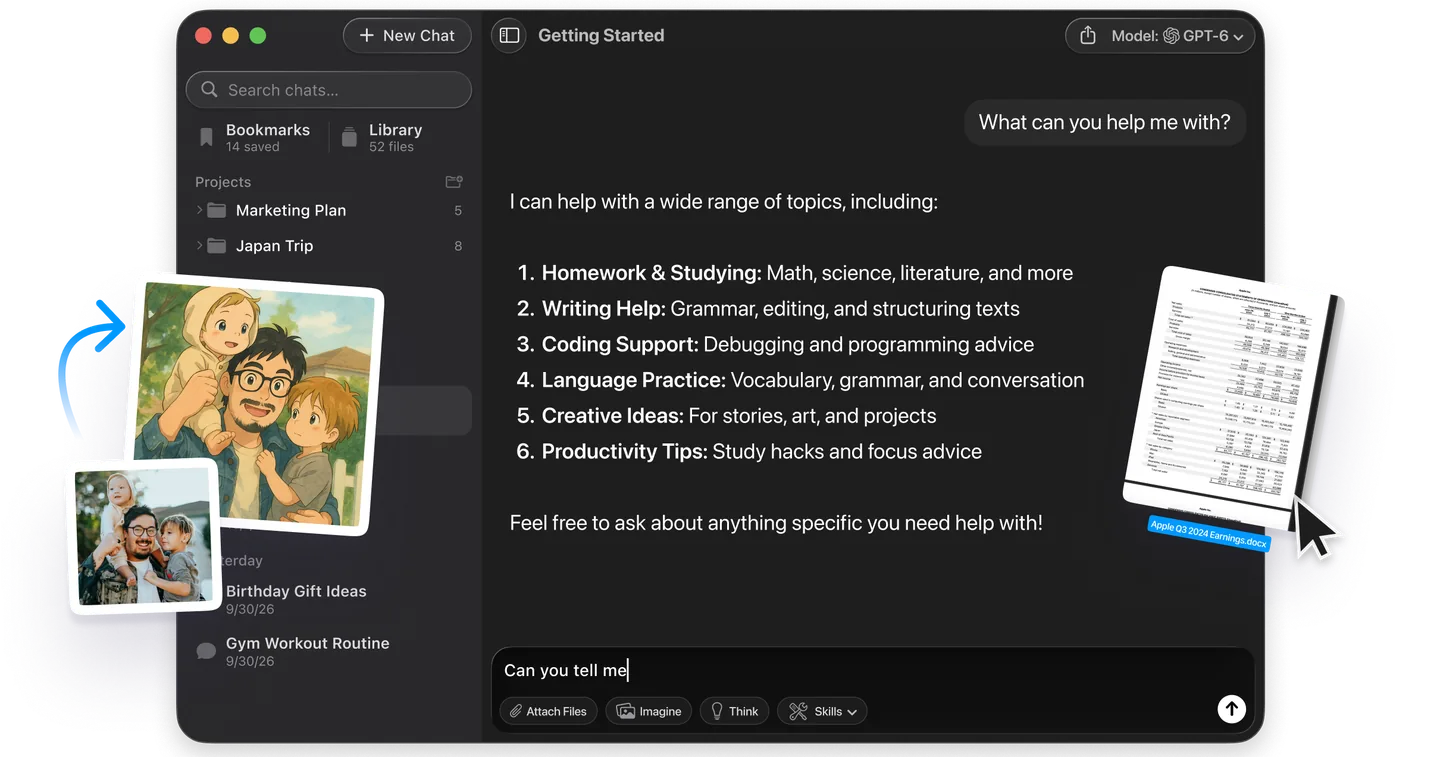
A tool like Fello AI is handy here because it puts leading models from ChatGPT, Claude, Gemini, and more in one app, and it does not just chat. You can use it to generate the actual assets, ebooks, images, documents, spreadsheets, and PDFs, that become your product. That means you can brainstorm an idea, write the content, and design the visuals without juggling five different subscriptions.
Once your product exists as a file, selling it is the easy part. You upload it to a marketplace like Gumroad or your own store, set a price, and the platform handles delivery and payment. To see this in action, read how creators make money with ChatGPT by turning prompts into products people pay for.
Conclusion
A digital product is simply something valuable you create once and sell online forever, an ebook, a template, a course, a preset, a prompt pack, with no inventory and margins that physical products cannot match. That is why they have become the go-to option for anyone who wants to earn online without the cost and hassle of shipping.
The best next step is to pick one category that matches your skills and make a single small product to test the waters. If you want a head start, use AI to create the file, then see how people turn that into real income in our guide on making over $1,500 a day with ChatGPT automation.
FAQ
What is considered a digital product?
Anything intangible that is created and delivered online counts as a digital product. That includes ebooks, courses, templates, presets, stock photos, music, software, memberships, and AI prompt packs. If it has no physical form and is downloaded or accessed online, it is a digital product.
What are examples of digital products you can sell?
Popular examples include ebooks and guides, online courses, Notion and spreadsheet templates, printables and planners, Lightroom presets, stock photos and video, music and sample packs, software and plugins, and AI prompt packs. Beginners often start with a simple printable or template.
Are digital products profitable?
Yes, digital products are among the most profitable things to sell online. Because there is no inventory, shipping, or manufacturing, sellers often keep 80% to 90% of each sale after fees. Since one file can be sold unlimited times, profit grows without extra cost.
What is the difference between a digital and physical product?
A physical product must be manufactured, stored, and shipped, so it costs money on every sale. A digital product is delivered instantly online with no inventory or shipping, so margins are far higher and it can scale to unlimited buyers without added cost.
Can I make digital products with AI?
Yes. AI can write ebooks, design planners and templates, generate images and cover art, and build prompt packs, which removes the need for design or coding skills. Apps like Fello AI let you create the actual files, then you upload them to a marketplace or your own store to sell.