xAI replaced its Grok plans on October 12, 2026. Grok is now sold through The X Subscription, one plan that bundles Grok, the Cursor code editor and X Premium perks in five tiers: Free at $0, Plus at $8 per month, Premium at $30 per month, Super at $100 per month and Ultra at $200 per month. The old SuperGrok and X Premium plans, from SuperGrok Lite at $10 to SuperGrok Heavy at $300, are no longer on xAI’s pricing page, though existing subscribers can keep them. Grok Bot now starts at Premium, and we break down what Grok Bot costs and who can access it.
On the API side, the current flagship Grok 4.7 (released September 21, 2026) runs $2 per million input tokens and $6 per million output tokens at a 500k token context window, exactly what the previous flagship Grok 4.6 charged, with the older Grok 4.3 still available cheaper at $1.25 / $2.50. The cheap workhorses many guides still recommend, including Grok 4.1 Fast, Grok 4 and Grok 3, were retired on May 15, 2026 and now silently bill at Grok 4.3 rates. If you just want to know what you get without paying, see our full breakdown of whether Grok is free.
This guide covers every part of Grok pricing in 2026. We walk through the five X Subscription tiers and what each one adds, how the old SuperGrok and X Premium plans map onto them, the Teams and Enterprise plans, the full Grok API token rates, the shared weekly usage pool, Grok Imagine video pricing, and how Grok stacks up against ChatGPT, Claude, Gemini and DeepSeek. We also show the simplest way to use Grok alongside the other major models in one Mac app for one flat monthly fee.
The Key Takeaways
- The X Subscription replaced SuperGrok and X Premium as Grok’s paid plans on October 12, 2026: Plus $8, Premium $30, Super $100 and Ultra $200 a month.
- Premium at $30/month is the tier xAI recommends for new AI users. xAI says it carries the benefits of SuperGrok, Cursor Pro and X Premium+, “previously $90/month combined”, and it is where Grok Bot and video generation begin.
- Plus at $8/month is the cheapest paid tier. It includes Grok Chat, Voice, Imagine images, Grok Build, API access and Cursor, but no video generation and no Grok Bot.
- Super at $100/month gives 15x the usage of Plus and priority access at peak times, and Ultra at $200/month gives 50x, $100 less than the old SuperGrok Heavy.
- Existing SuperGrok, Cursor and X Premium subscribers can keep their plan or switch with a prorated refund. grok.com/plans still showed the SuperGrok plans on October 14 while the rollout finishes.
- Grok 4.7, the flagship since September 21, 2026, keeps Grok 4.6’s API pricing to the cent: $2 / $6 per million tokens with a 500k token context and $0.50 cached input (a 75% cache discount); the older Grok 4.3 stays available cheaper at $1.25 / $2.50 with a 1M context.
- Every plan draws on one usage pool shared across Grok and Cursor that refreshes weekly, and within Grok it covers Chat, Imagine, Voice and Bot. The per-2-hour prompt caps most guides still quote were retired in June 2026.
What is Grok pricing?
Grok pricing is split across three product surfaces, each metered differently. The X Subscription charges a flat monthly fee and covers Grok on grok.com and in the apps, the Cursor code editor and X Premium perks. The xAI API is pay-per-token, billed per million input and output tokens, even for subscribers. Grok Imagine is metered separately on the API, billed per second of video, while on the X Subscription it draws from the same shared weekly allowance as everything else.
Prices vary widely between these surfaces, and the model names do not line up across them. Grok 4.7 is now the flagship on both: it reached the API on September 21 and grok.com’s Expert and Heavy modes on October 3. The older Grok 4 line was retired in May 2026 and every API request now lands on Grok 4.3 or newer. On the subscription side, the old choice between SuperGrok at $30 and X Premium+ at $40 is gone, because Premium at $30 now covers both. Picking the right surface is most of the optimization work, and we walk through each one below.
Grok plans 2026: The X Subscription (Free, Plus, Premium, Super, Ultra)
The X Subscription has five individual tiers. xAI’s own advice is short: Premium for new AI users, Super for daily agent users, Ultra for power users, and Plus for “social creators with limited AI usage”. Each step up multiplies the shared usage pool and unlocks more of Grok and Cursor. The table comes from the feature grid on x.ai/pricing, read on October 14, 2026.
| Plan | Price (US) | What it adds | Usage | Best for |
|---|---|---|---|---|
| Free | $0 | Limited Chat, image generation and Grok Build; Cursor’s agent; post, reply and follow on X | Limited | Trying Grok |
| Plus | $8/month | Grok Chat, Voice, Imagine and Build; Grok API access; Cursor (Grok models only); X checkmark and fewer ads | Basic | X creators with light AI use |
| Premium | $30/month | Grok Bot; video generation; latest Grok models; Cursor cloud agents, code hosting and Bugbot reviews; third-party models in Cursor at API list price; ad-free X on most surfaces | 4x Plus | Most paid Grok users |
| Super | $100/month | Everything in Premium, plus priority model access at peak times | 15x Plus | Daily agent users |
| Ultra | $200/month | Everything in Super, plus earliest access to new products and models | 50x Plus | Power users |
Every tier draws on one usage pool shared across Grok and Cursor. Within Grok it covers Chat, Imagine, Voice and Bot, and xAI says the allowance refreshes weekly, “so one heavy day never wipes out your whole month”. When it runs out you can buy top-ups or wait for the refresh, and settings always show what is left. Paid plans include Grok API access, but API calls are billed separately at standard model rates and do not touch the pool. No tier includes an allowance for third-party models in Cursor; from Premium up you can use them at API list prices. Prices exclude tax.
Grok free tier
The free tier costs $0. On xAI’s new pricing grid it includes limited Grok Chat, limited image generation with Grok Imagine and limited Grok Build, plus Cursor’s coding agent and the basic X features of posting, replying and following. Video generation, Grok Bot and API access are not included. xAI does not publish the free numbers anywhere; the grid only says “Limited”.
The image allowance is a change. xAI removed free image generation on March 19, 2026, and the new grid lists a limited allowance on Free again, so check the app before you rely on it. There is no credit card required. It is enough to test Grok before paying, but the ceiling arrives fast for anyone using it daily.
Plus at $8/month
Plus at $8/month is the cheapest paid tier and takes over the price of the old X Premium. It adds Grok Chat, Voice, Imagine and Build at a “Basic” usage level, Grok API access and Cursor, where only Grok models are available. On X it brings the checkmark, fewer ads and creator tools. What it leaves out matters more: no video generation, no Grok Bot and no Cursor cloud agents. xAI recommends Plus for social creators with limited AI usage, and that is an honest description. If you mainly want Grok itself, start at Premium.
Premium at $30/month
Premium is the sweet-spot plan for most readers and the one xAI labels “Most popular”. At $30/month you get 4x the usage of Plus, Grok Bot, the latest Grok models, faster Chat responses and image and video generation. In Cursor it adds cloud agents and automations, code hosting via Origin, AI code reviews via Bugbot and third-party models at API list price. On X it removes ads on most surfaces. xAI’s launch post says Premium carries “the benefits of SuperGrok, Cursor Pro, and X Premium+, previously $90/month combined”. For a deeper look at the model behind it, see our Grok 4.7 breakdown and our long-form Grok vs ChatGPT comparison.
Super at $100/month
Super costs $100/month, the same as the old SuperGrok Plus, and gives 15x the usage of Plus with priority model access at peak times. Everything else matches Premium. xAI recommends it for daily agent users, which makes sense: Grok Bot and Cursor’s cloud agents burn through a pool far faster than chat does. Pick Super if you keep buying top-ups on Premium.
Ultra at $200/month
Ultra is the top individual tier at $200/month, with 50x the usage of Plus and the earliest access to new products and models. It takes SuperGrok Heavy’s place at the top of the ladder for $100 less, but xAI’s grid no longer lists Heavy mode or X Premium+ as tier features, so do not assume Ultra is Heavy renamed. xAI pitches it at power users. Most paid users do not need it.
The old plans: SuperGrok, X Premium and X Premium+
Until October 12, xAI sold Grok in six paid tiers: X Premium at $8, SuperGrok Lite at $10, SuperGrok at $30, X Premium+ at $40, SuperGrok Plus at $100 and SuperGrok Heavy at $300 a month, with annual billing at 16.7% off every tier. The table maps each one to its closest X Subscription tier.
| Old plan | Old price | Closest X Subscription tier |
|---|---|---|
| X Premium | $8/month | Plus, $8: same price, adds Grok usage, API access and Cursor |
| SuperGrok Lite | $10/month | Plus, $8, without video; or Premium, $30 |
| SuperGrok | $30/month | Premium, $30 (xAI: includes SuperGrok’s benefits) |
| X Premium+ | $40/month | Premium, $30 (xAI: includes X Premium+’s benefits) |
| SuperGrok Plus | $100/month | Super, $100: same price |
| SuperGrok Heavy | $300/month | Ultra, $200: top tier, not named by xAI as the replacement |
Two of those mappings come from xAI, whose launch post says Premium includes the benefits of both SuperGrok and X Premium+. The rest are ours, matched on price and features. xAI says “nothing changes” for existing SuperGrok, Cursor or X Premium subscribers, so you can keep your current plan, price and features. Do not buy an old plan from a reseller: xAI says subscriptions are sold only directly through X Subscription Corp, and accounts bought elsewhere may be suspended.
Should you switch?
If you pay for X Premium+ at $40, switch: Premium is $10 cheaper and xAI says it includes the same X benefits plus SuperGrok’s. SuperGrok at $30 moves to Premium at the same price with Cursor added. SuperGrok Lite at $10 is the awkward one, because Plus at $8 drops video generation. SuperGrok Heavy costs $100 a month more than Ultra, but check that Ultra still gives you the Heavy reasoning mode before you switch. You switch in your billing settings, where xAI also shows limited-time switching offers, and the old plan is refunded on a prorated basis. The switch is permanent, though, and a Cursor plan billed by Apple keeps charging, so read what switching to The X Subscription involves first.
Teams and Enterprise pricing
xAI’s pricing page has three tabs: Individual, Teams and API. Every tier above sits under Individual. If you are buying for more than yourself, the Teams and Enterprise plans are the ones that matter.
| Plan | Price | Usage | What it adds |
|---|---|---|---|
| Teams | From $30 per seat/month | Premium, Super or Ultra seats, 4x to 50x Plus | Centralized billing and administration, usage analytics, team-wide privacy settings, custom Chat data retention, SAML/OIDC SSO, mixed seat types, a team marketplace for rules, skills and plugins in Cursor |
| Enterprise | No list price | Pooled | Everything in Teams, plus invoice/PO billing, SCIM, granular spend controls, audit logs and service accounts, access controls for Grok Bot and priority support |
Teams starts at $30 per seat per month because each seat is a Premium, Super or Ultra seat at the same price as the individual plan, and you can mix seat types. xAI says that is cheaper per seat than the old Cursor Teams plan while including 3x more coding usage, plus SSO, admin controls, consolidated billing, usage analytics and SOC 2 compliance. The previous team plan, SuperGrok Business, cost $30 per seat ($25 on annual billing) and was built on SuperGrok.
Enterprise has no published price. xAI asks you to contact sales, and what that tier sells is control: invoice and PO billing, SCIM seat management, granular spend controls and group-level spend limits, repository, model and MCP access controls in Cursor, audit logs and service accounts, network and audit controls for Grok Bot, and priority support. The sales section adds custom rate limits, dedicated infrastructure, SSO, data residency and volume pricing.
Grok API pricing 2026 (per million tokens)
The Grok API is billed per million input and output tokens, with separate rates for cached input and a batch discount on some models. Below are the current rates from the official xAI pricing documentation. All figures are USD per 1,000,000 tokens, and xAI charges double on every model once a prompt reaches 200k tokens.
| Model | Input | Cached input | Output | Context | Notes |
|---|---|---|---|---|---|
| Grok 4.7 | $2.00 | $0.50 | $6.00 | 500k | Flagship (September 21, 2026), agentic tool calling and configurable reasoning; no batch discount |
| Grok 4.6 | $2.00 | $0.50 | $6.00 | 500k | Prior flagship (August 12, 2026), still billable at identical rates; no batch discount |
| Grok 4.5 | $2.00 | $0.30 | $6.00 | 500k | Prior flagship, still billable but no longer listed on the xAI models page; no batch discount |
| Grok 4.3 | $1.25 | $0.20 | $2.50 | 1M | Prior flagship, lowest current-gen reasoning rate; 20% batch discount |
| Grok 4.20 (reasoning) | $1.25 | $0.20 | $2.50 | 1M | Agentic long-context option; 20% batch discount |
| Grok 4.20 (non-reasoning) | $1.25 | $0.20 | $2.50 | 1M | Same rates without reasoning tokens |
| Grok 4.20 (multi-agent) | $1.25 | $0.20 | $2.50 | 1M | Multi-agent variant; 20% batch discount |
| Grok Build 0.1 | $1.00 | $0.20 | $2.00 | 256k | Coding model behind the Grok Build CLI |
Batch mode takes 20% off, and only on Grok 4.3 and the three Grok 4.20 variants; xAI states plainly that models not on that list get no batch discount, and that includes Grok 4.7, Grok 4.6 and Grok 4.5. Cached input is $0.50 per million on Grok 4.7 and Grok 4.6, $0.30 on Grok 4.5 and $0.20 on the rest, the single biggest lever for high-volume workloads with repeated context. Priority Processing runs the other way, billing 2x standard rates for lower latency. xAI also bills server-side tools separately. Web Search, X Search and Code Execution are $5 per 1,000 calls, File Attachments are $10 per 1,000 calls, and Collections Search is $2.50 per 1,000 calls.
Grok 4.7 vs Grok 4.6 vs Grok 4.3 pricing
Grok 4.7 is the flagship, and xAI’s own model page calls it its flagship for code and everything else. Grok 4.6 is still billable at the identical $2 / $6 headline rate, as is Grok 4.5, and Grok 4.3 stays in service as the cheaper long-context option. There is no longer a budget tier beneath them. Grok 4.7 carries a 75% cache discount that drops cached input to $0.50 per million, and that is the one number to watch, because it is higher than the $0.30 Grok 4.5 charges for cached input. On a cache-heavy workload the newer flagship is the more expensive model. It carries a 500k token context window, narrower than Grok 4.3’s 1M, which points it squarely at coding and agentic work rather than bulk long-document jobs. One caveat is worth budgeting for, because Grok 4.7 pricing doubles for inputs longer than 200k tokens.
At $2 / $6 it costs more than Grok 4.3 at $1.25 / $2.50, so reach for the older Grok 4.3 when you want the lowest current-gen reasoning rate, which it shares with the Grok 4.20 line, or its full 1M-token context, and step up to Grok 4.7 for the strongest coding and agentic performance. The cheap tier that used to sit below them is gone. Grok 4.1 Fast, Grok 4 Fast, Grok 4 and Grok 3 were all retired on May 15, 2026, and their slugs now redirect to Grok 4.3, so old code keeps working but bills at $1.25 / $2.50 instead of the rates people remember.
Grok 4.7 is 50% cheaper on input and 70% on output than Claude Opus 5.5, and it matches GPT-6.1 Sol on input while undercutting it 40% on output. It scores 46.3 on Artificial Analysis Intelligence Index v4.3.2 against 44.3 for Grok 4.6, ahead of Gemini 3.8 Flash at 40.9 and the open-weight Kimi K3 at 43.6. The per-token price of the two Grok models is identical, but the cost of getting an answer is not: at the same default reasoning effort Grok 4.7 emits far more output tokens, so one run of that index costs $2.73 against Grok 4.6’s $1.86. Our Grok 4.7 breakdown works that gap through in full.
Example of Rates
A worked example on the current rates. A 100K-token input prompt with a 2K-token answer costs $0.212 on Grok 4.7, Grok 4.6 and Grok 4.5 alike ($0.20 input + $0.012 output) and $0.130 on Grok 4.3 ($0.125 input + $0.005 output). Run that same job a million times a month and the difference is $212,000 against $130,000. Picking the right model is still the single biggest cost lever you have, so send only the coding and agentic work that truly needs the flagship to Grok 4.7 and route everything else to 4.3.
How does Grok API pricing work?
Grok API pricing has five levers, and each one moves the needle.
- Tokens. Every request is metered in input tokens (what you send) and output tokens (what the model generates). One million tokens is roughly 750,000 English words.
- Cached input. Repeated context (system prompts, shared retrieval chunks) is billed at $0.50 per million on Grok 4.7 and Grok 4.6, $0.30 on Grok 4.5, and $0.20 on Grok 4.3, Grok 4.20 and Grok Build. Pin your prompts to compound the discount.
- Batch mode. Non-urgent jobs get 20% off on Grok 4.3 and the Grok 4.20 variants with up to a 24-hour SLA, and nothing at all on Grok 4.7, Grok 4.6 or Grok 4.5. Run nightly summaries, classification jobs and bulk transformations in batch.
- Server-side tools. Web Search, X Search, Code Execution and File Attachments are billed separately at $2.50-$10 per 1,000 calls. Strip them from prompts where you do not need them.
- Long-context surcharge. Every model doubles once a prompt reaches 200k tokens, and the doubled rate applies to every token in that request rather than only the ones past the line. Grok 4.7 goes from $2 / $6 to $4 / $12.
There is no free API tier to lean on any more. xAI used to hand out up to $150/month in credits through a data-sharing program in exchange for training on your traffic, and plenty of guides still quote it, but it now appears nowhere in xAI’s documentation, not in the pricing page, the billing guide or the developer FAQ. The quickstart tells you plainly to load an account with credits before your first request. Billing is prepaid by default, with auto top-ups from $25 and monthly invoiced billing available on request. X Subscription paid plans include Grok API access, but the API is still billed separately at standard model rates and does not draw from the plan’s usage pool.
Grok Imagine pricing (image and video generation)
Grok Imagine is xAI’s image and video generation engine. On the X Subscription, image generation is limited on Free and included from Plus, while video generation starts at Premium ($30/month). That partly reverses a March change: xAI removed free image generation on March 19, 2026, and the new grid lists a limited allowance on Free again. Generation draws on the shared weekly pool, so Super and Ultra simply give you more of it. One quirk is worth knowing before you budget, because xAI’s docs say 720p videos silently fall back to 480p once you hit your tier’s 720p cap.
On the Grok Imagine API, video is billed by the second rather than the minute, starting at $0.05 per second for grok-imagine-video and $0.08 per second for grok-imagine-video-1.5 at 480p, so a full minute runs $3.00 to $4.80. Resolution drives the rest of the bill, because grok-imagine-video-1.5 costs $0.14 per second at 720p and $0.25 per second at 1080p, which works out to $15 a minute. Stills are $0.02 per image, or $0.05 to $0.07 on the quality model depending on whether you render at 1K or 2K. Resolution is what decides whether Grok wins on price. At 480p it heavily undercuts Google Veo 3.1 Preview at $12 per minute with audio.
At 1080p, Grok’s $15 per minute lands above Veo and still well under Sora 2 Pro, so budget by output resolution rather than by model name. The R-rated Grok Imagine Spicy Mode came with SuperGrok and X Premium+ for paid users on iOS and Android, and xAI’s new pricing grid does not mention it. For the full lineup head-to-head, see our best AI video generators comparison.
How Grok pricing compares to ChatGPT, Claude and Gemini
| Model | Input/M | Output/M | vs Grok 4.3 |
|---|---|---|---|
| DeepSeek V4.1 Flash | $0.15 / $0.30 | $0.60 / $1.20 | ~4-8x cheaper off-peak, ~2-4x peak |
| GPT-6 Luna | $0.10 | $0.50 | ~5-12x cheaper |
| Gemini 3 Flash | $0.50 | $3.00 | cheaper in, ~1.2x out |
| Grok Build 0.1 | $1.00 | $2.00 | ~1.25x cheaper |
| Grok 4.3 | $1.25 | $2.50 | 1x baseline |
| Grok 4.20 | $1.25 | $2.50 | same rates, same 1M context |
| Grok 4.7 | $2.00 | $6.00 | ~1.6-2.4x more (flagship; 4.6 and 4.5 identical) |
| GPT-5.6 Terra | $2.00 | $12.00 | ~1.6-4.8x more |
| Gemini 3.1 Pro | $2.00 | $12.00 | ~1.6-4.8x more |
| Claude Sonnet 5.5 | $2.00* | $10.00* | ~1.6-4x more |
| Claude Opus 5.5 | $4.00 | $20.00 | ~3-8x more |
| GPT-6.1 Sol | $2.00 | $10.00 | ~1.6-4x more |
*Claude Sonnet 5.5, released on 28 September 2026, keeps the $2 / $10 price of Sonnet 5. DeepSeek V4.1 Flash is shown as off-peak / peak: peak runs 01:00 to 04:00 and 06:00 to 10:00 UTC, Monday to Friday, and has cost double the off-peak rate since 16 August 2026. DeepSeek cut the Flash rate again on 10 September 2026 and retired the old V4 Flash model ID, so those calls now run on DeepSeek-V4.1-Flash. OpenAI replaced the GPT-5.6 Sol and Luna rates with GPT-6 Sol at $2 / $10 and GPT-6 Luna at $0.10 / $0.50 on 22 September 2026, and GPT-5.6 Sol stays callable at its promotional $4 / $20 at least through 21 November 2026.
Grok sits in the mid-cheap band at the API level. Current flagship Grok 4.7 at $2 / $6 is 50% cheaper on input and 70% on output than Claude Opus 5.5 ($4 / $20), while Grok 4.3 and Grok 4.20 both carry a 1M context at $1.25 / $2.50. OpenAI’s 22 September 2026 cut closed the input gap entirely, though: GPT-6 Sol, GPT-5.6 Terra and Grok 4.7 all charge $2.00 per million input tokens, and Grok keeps the comparison only on output, where $6 beats Sol’s $10 and Terra’s $12.
Below both, GPT-6 Luna at $0.10 / $0.50 undercuts every model in xAI’s current catalog. On the consumer side, Premium at $30/month is $10 more than ChatGPT Plus or Claude Pro at $20/month, and $10 more than Google AI Pro at $19.99/month, while Plus at $8 undercuts all three but has no video and no Grok Bot. The gap is paying for Grok’s specific strengths, namely real-time X knowledge, Grok Imagine video, and Voice mode. For more on how Grok compares head-to-head, see our long-form Grok vs ChatGPT comparison and our Gemini pricing guide for the Google side.
How to optimize Grok API costs
A few simple moves can cut a Grok bill by 50 to 90 percent.
- Default to Grok 4.3 for high-volume work. At $1.25 / $2.50 it handles most chat, retrieval and classification at roughly a third of Grok 4.7’s output cost, and it carries the wider 1M context. Escalate to Grok 4.7 only for the strongest coding and agentic runs.
- Cache your system prompt. Cached input drops to $0.50 per million on Grok 4.7 and Grok 4.6 (a 75% discount), $0.30 on Grok 4.5 and $0.20 per million on Grok 4.3 and Grok 4.20, a huge saving on every repeated prefix.
- Use batch mode for non-urgent jobs. 20% off Grok 4.3 and the Grok 4.20 variants on the Batch API with up to 24-hour turnaround. Perfect for nightly classification, summarization and ETL jobs.
- Strip server-side tools you do not need. Web Search and X Search at $5 per 1K calls add up fast. Disable them when the model can answer from prompt context.
- Leave Priority Processing switched off unless latency pays for itself. Priority bills at 2x standard rates across input, output, cached and reasoning tokens, and you are only charged the premium when the response confirms it actually ran at the priority tier. Background and batch work never needs it.
- Check which slug your code actually sends. The retired Grok 3 and Grok 4 slugs still resolve, so nothing breaks, but every one of those requests is now billed at Grok 4.3 rates. Audit your model strings before you trust an old cost estimate.
When it comes to subscription, there is no paid Grok free trial; see our AI free trials master list for what does have one.
Want Grok without juggling subscriptions? Try Fello AI
Most readers do not actually want to manage four pricing surfaces and three subscriptions. They want to chat with Grok when Grok wins, then swap to ChatGPT, Claude, or Gemini when those are the better tool. Tab-juggling, account-switching and prompt-history fragmentation eat all the productivity gains.
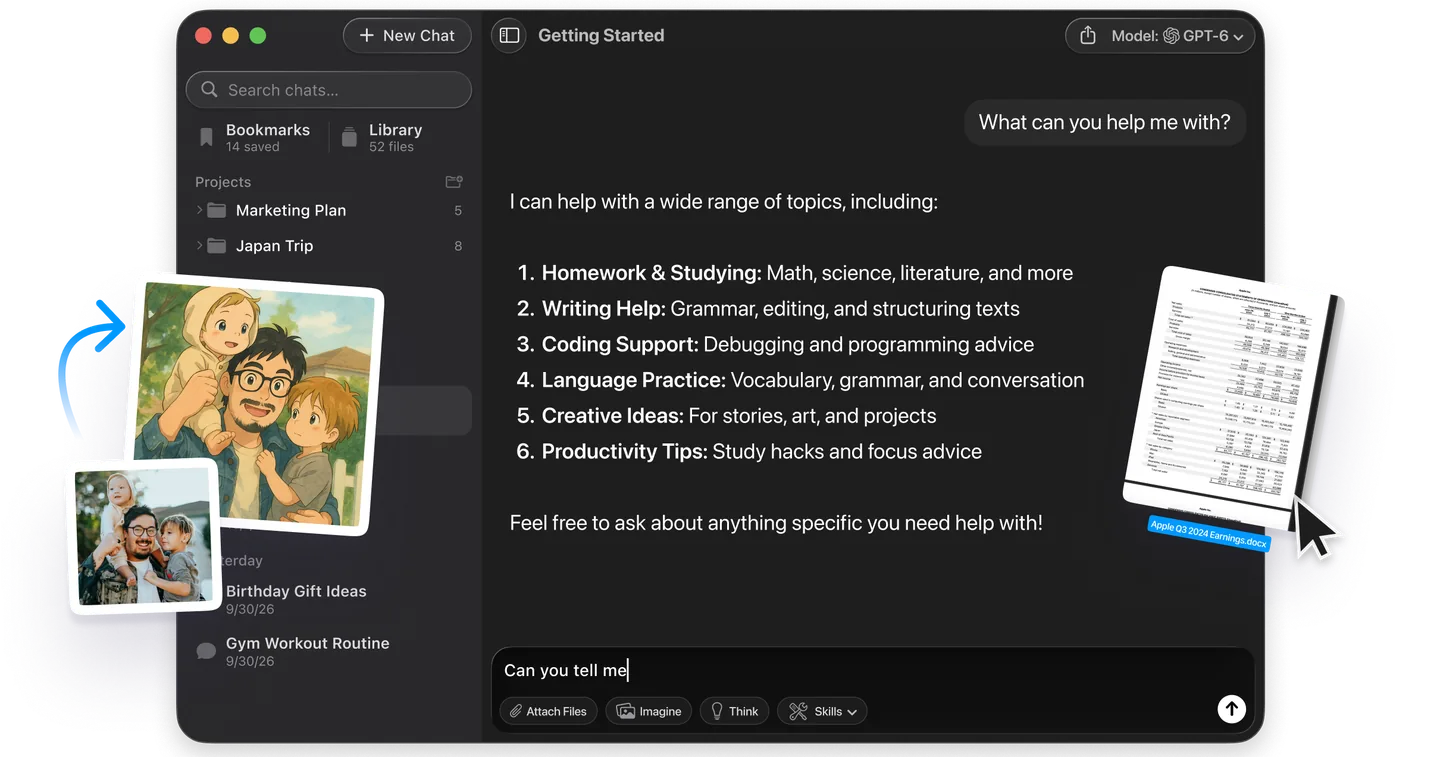
Fello AI is the simplest fix. One subscription gets you Grok, ChatGPT, Claude, Gemini, DeepSeek, Perplexity and several other top models in a single Mac, iPhone and iPad app for $11.99 per month. There is no per-token billing, no usage cap to budget around, and no separate account to manage for each provider. Everything lives in one chat window with one shared history.
Why Fello AI works well for Grok users
The free Grok tier is throttled, Premium at $30/month is a real chunk of money, and The X Subscription makes you pay for X and Cursor features you may not need. Fello AI gives you Grok inside a polished Mac-native experience for less than half the price of Premium, with prompt history, file uploads, image analysis and voice input. You can also switch models mid-conversation when Grok is not the right tool for the next question. If your prompt is better suited to Claude’s writing or DeepSeek’s cheap reasoning, swap models without losing context. We also keep an up-to-date guide on Grok for Mac for users who want a Grok-only setup.
What it actually saves you
Stack the standard subscription cost of the major consumer plans together. Grok’s Premium tier is $30/month, ChatGPT Plus is $20/month, Claude Pro is $20/month, Google AI Pro is $19.99/month, and Perplexity Pro is $20/month. That is roughly $110 per month just to cover the headline tier of each. Fello AI compresses the same lineup, plus DeepSeek, into $11.99/month, with 27,000+ five-star reviews across the App Store and Mac App Store. It is the most-loved AI bundle app in the Apple ecosystem.
Conclusion
Grok pricing in 2026 looks complicated on paper but lands on a simple decision tree. The free tier covers casual use. Premium at $30/month is the right pick for serious paid Grok use, and it now includes the X Premium+ perks that used to cost $40. Plus at $8/month suits X users who want a little Grok on the side. Super at $100 and Ultra at $200 are for the small group running agents all day. The API starts at $1 per million input tokens, dropping to $0.20 on cached input, and it is prepaid with no free credit tier left to fall back on.
If you build software, head to docs.x.ai and start with Grok Build 0.1 at $1 / $2 for the cheap baseline and Grok 4.7 when you need the current flagship’s coding and agentic strength (or the cheaper Grok 4.3 for current-gen reasoning and its full 1M-token context). On the consumer side the choice is simpler, because Premium at $30 is xAI’s own recommendation for new users and the tier where Grok Bot and video start, and since October 3 Grok’s Expert and Heavy modes run on Grok 4.7, the same model as the API flagship.
And if you want Grok alongside ChatGPT, Claude, Gemini and DeepSeek in one Mac app for less than half the price of Premium, Fello AI is the simplest route. For more on what just shipped, see our hub of the best AI models in 2026, and our full AI pricing comparison for how every major AI tool stacks up plan-by-plan.
FAQ
Is Grok free?
The free tier on grok.com gives every user limited Chat, image generation and Grok Build, plus Cursor’s coding agent. Video, Grok Bot and API access need a paid plan.
How much does Grok cost per month?
Since October 12, 2026, Grok is sold through The X Subscription: Plus at $8, Premium at $30, Super at $100 and Ultra at $200 a month, with Teams from $30 per seat. Every tier shares a weekly usage pool with Cursor, and you can buy top-ups when it runs out. The old SuperGrok plans, from $10 to $300, are no longer on xAI’s pricing page.
What is the difference between SuperGrok and X Premium+?
SuperGrok at $30/month was a standalone Grok subscription with no X perks, and X Premium+ at $40/month bundled Grok with X perks like ad-free browsing and creator monetization. Since October 12, 2026 both are being replaced by The X Subscription, and xAI says its Premium tier at $30 includes the benefits of both.
How much does the Grok API cost?
Grok 4.7 costs $2 per million input tokens and $6 per million output tokens with a 500k context window, and a 75% cache discount drops cached input to $0.50 per million (pricing doubles above 200k tokens). Grok 4.6 is billable at exactly the same rates, and Grok 4.5 at the same $2/$6 with cheaper $0.30 cached input. Grok 4.3 and the Grok 4.20 variants are cheaper at $1.25/$2.50 with a 1M context, and Grok Build 0.1 is $1/$2.
Is Grok cheaper than ChatGPT?
At the API level, yes, but the margin narrowed on 22 September 2026. Grok 4.7 at $2/$6 is 50% cheaper on input and 70% on output than Claude Opus 5.5 at $4/$20 per token, and Grok Build 0.1 at $1/$2 is 5x cheaper on input. Against OpenAI the input advantage is gone: GPT-6.1 Sol and GPT-5.6 Terra both match Grok 4.7’s $2 input, and Grok wins only on output, where $6 beats Sol’s $10 and Terra’s $12. GPT-6 Luna at $0.10/$0.50 undercuts every current Grok model.
What is the cheapest Grok model?
Grok Build 0.1 at $1 per million input tokens and $2 per million output tokens is the cheapest model in the current catalog, with Grok 4.3 and the Grok 4.20 variants just above it at $1.25/$2.50.
Is SuperGrok still available?
Not for new customers. xAI is replacing it with The X Subscription, launched on October 12, 2026. If you already pay for SuperGrok, you can keep your plan or switch to the new tiers and get a prorated refund. Premium at $30 is the tier xAI says carries the benefits of SuperGrok.
Does the Grok API require X Premium?
No. The xAI API is prepaid and billed per token at standard model rates. Paid X Subscription plans include API access, but API usage does not come out of the plan’s usage pool.