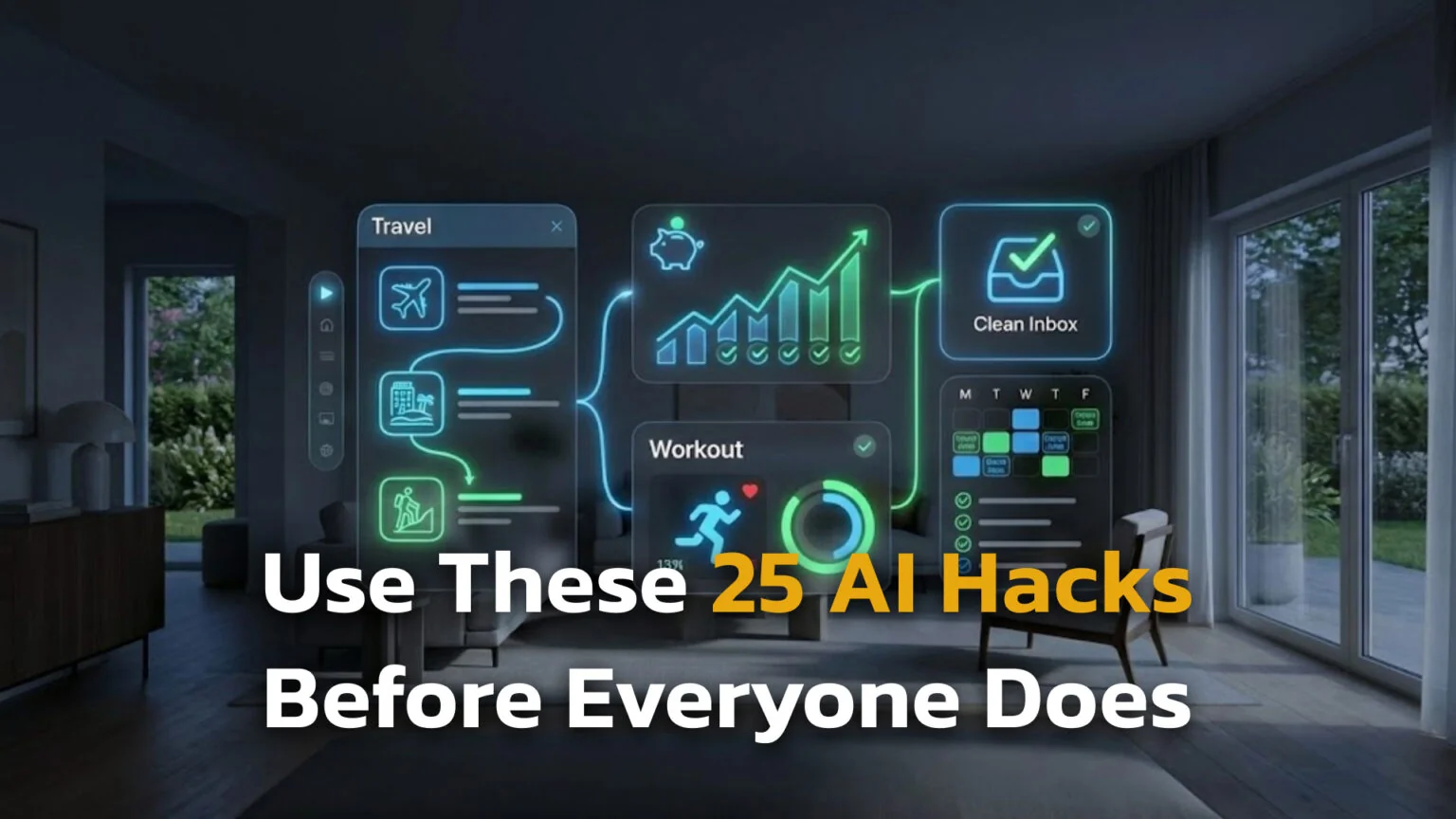
TL;DR: You can use AI to upgrade your life today by automating routine tasks like email and scheduling, learning new skills with a personal tutor, managing your budget, and simplifying travel planning. Modern tools act as a “chief of staff” to reduce decision fatigue and free up time for what matters most.
Quick-Glance Use Cases
| Category | Top Use Case | Difficulty | Primary Benefit |
|---|---|---|---|
| Productivity | Calendar/Email sorting | Low | Saves 5+ hours/week |
| Health | Meal & Workout plans | Medium | Personalized guidance |
| Money | Budget categorization | Low | Clearer financial view |
| Learning | 24/7 Personal Tutor | Low | Faster skill acquisition |
| Creativity | Image & Writing help | Medium | Overcomes writer’s block |
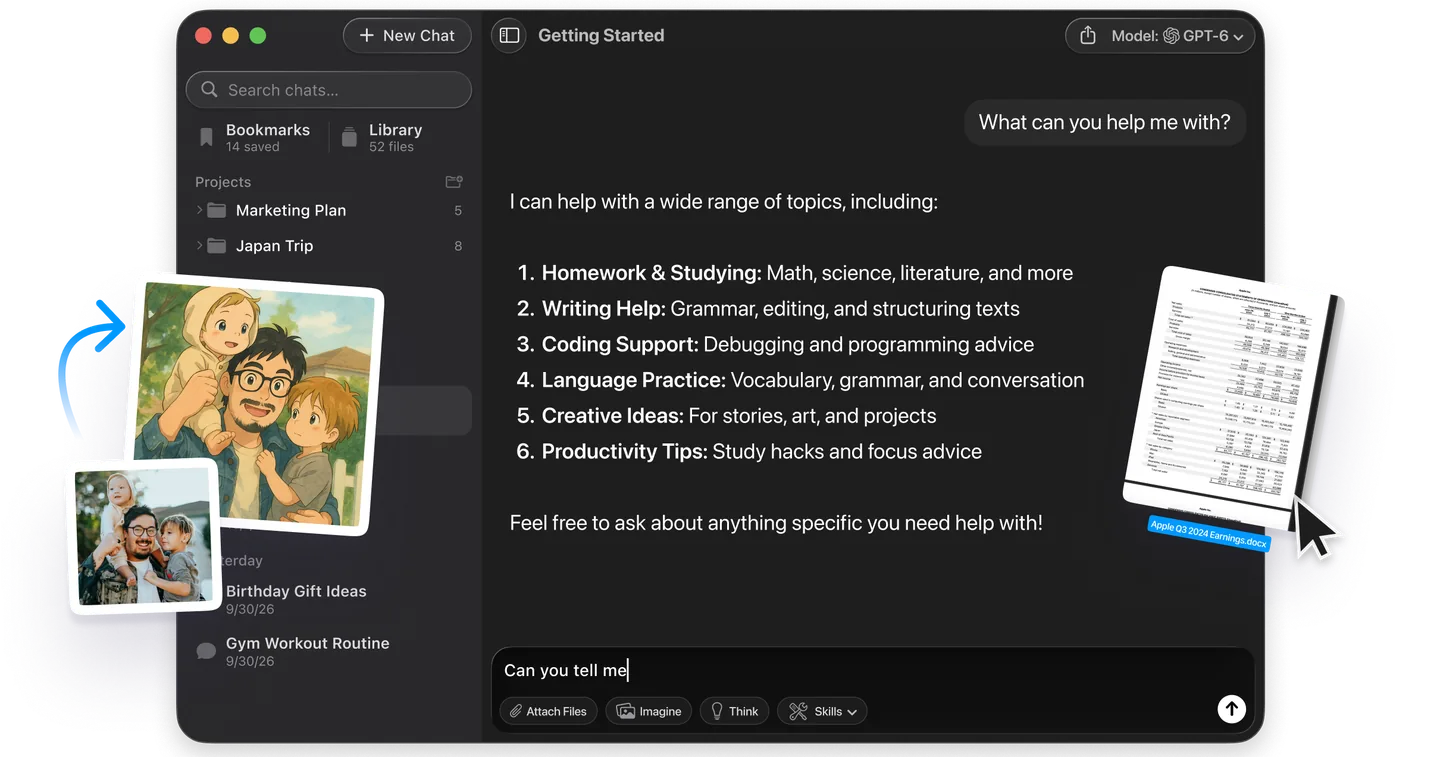
On Apple devices, you can run all of these prompts directly inside Fello AI, which brings multiple top AI models and tools (chat with PDFs, image generation, web search) into one app.
Opening
Artificial intelligence is no longer just a futuristic concept from sci-fi movies; it is a practical tool people use right now. By mid-2025, hundreds of millions of people were using tools like ChatGPT every week, and more than half of surveyed consumers say they use generative AI at least occasionally in daily life – not just for work, but for learning, shopping, and planning.
The goal is not to replace human effort but to remove the friction from your daily routine.
By the end of this guide, you will know:
- How can you automate boring tasks at work?
- Which tools help you manage money and health better?
- What simple prompts can save you hours this week?
The Key Takeaways
- Work smarter: Use AI as a “chief of staff” to handle emails, meetings, and calendar conflicts automatically.
- Live better: Deploy AI to plan healthy meals, track sleep patterns, and manage personal budgets.
- Create faster: Use creative assistants to draft emails, write code, or generate images in seconds.
What Using AI To Upgrade Your Life Means
Many people think AI is only for tech wizards, but “everyday AI” is actually designed for normal tasks. It refers to tools like chatbots, smart assistants, and predictive apps that handle micro-tasks for you.
Adoption is growing fast because these tools reduce mental load. Instead of spending twenty minutes writing a difficult email, you spend two minutes editing a draft the AI wrote. This shift allows you to focus on high-value activities while the software handles the repetitive grind.
Recent reports from Zapier show that 97% of their own employees now use AI in their day-to-day work, and external studies suggest around 77% of SMBs globally have adopted AI tools in at least one function. This isn’t just a big-tech experiment anymore – it’s becoming standard infrastructure for everyday businesses.
If you’re on Mac, iPhone or iPad, an all-in-one app like Fello AI makes everyday AI even easier. Instead of jumping between different websites, Fello lets you access top models such as ChatGPT, Claude, Gemini, Grok and others, chat with PDFs and images, generate visuals, and run online research in a single interface. That means many of the 25 use cases in this guide – from summarizing documents to planning trips – can live inside one app rather than a dozen open tabs.
Work And Productivity: Everyday Ways To Use AI
Most people feel the impact of AI first at work. Your inbox, meetings, calendar, and documents are exactly the kinds of repetitive, text-heavy tasks that machines are good at assisting with. Instead of jumping between twenty tabs and firefighting all day, you can let AI handle the routine work and keep you focused on the few tasks that actually move the needle.
Think of it as hiring a junior assistant that never sleeps: it drafts emails, proposes meeting times, summarizes calls, and turns messy notes into clean documents. You still make the decisions and maintain relationships, but you’re no longer drowning in admin.
1. Turn AI into your personal “chief of staff”
Stop drowning in administrative chaos by delegating the role of “Chief of Staff” to AI. Tools like Lindy and Saner.AI don’t just store tasks; they understand context. You can connect them to your email, calendar, and project management tools, allowing them to triage requests before they even reach your attention.
Instead of manually checking three apps to see if you have time for a project, you simply ask: “Plan my week around deep work in the mornings, move low-priority meetings to Friday, and remind me about that client proposal on Wednesday.” This high-level command allows the AI to shuffle specific slots, freeing you from the mental tetris of schedule management.
2. Put your inbox on autopilot
Email is the biggest time-sink for most professionals, but AI can reclaim that time. AI email assistants can now auto-sort messages by importance, summarize long threads into three bullet points, and draft replies that match your specific tone. Google Workspace users now have access to a “Help me schedule” button directly in the Gmail toolbar.
It scans your calendar for open slots and inserts them into your email with one click, eliminating the “when are you free?” dance. Beyond scheduling, these tools can flag which emails actually require action versus those that are just “FYI,” helping you reach Inbox Zero without the stress.
Try this prompt: “Act as my executive assistant. Using the calendar and email summaries below, design a schedule for next week that protects three 2-hour deep-work blocks in the mornings, moves non-urgent meetings to afternoons, and lists any meetings you’d cancel or delegate. Return the plan as a bulleted list by day.”
3. Use an AI meeting copilot
Taking notes while trying to actively listen is a recipe for missing important details. AI meeting assistants join calls, record audio, transcribe the conversation in real-time, and extract action items automatically. No more “who’s doing what?” at the end of a call.
2026 reviews show that the best AI meeting tools can reliably distinguish speakers and generate solid summaries, though accuracy still depends on audio quality, accents, and how technical the conversation is. You end up with a searchable archive of every decision made, meaning you never have to rely on faulty memory again.
4. Let AI run your calendar like air traffic control
Static calendars are a thing of the past. Modern AI scheduling assistants actively manage your time like air traffic control. They look at your preferences to protect focus time (e.g., “no meetings before 10 AM”) and auto-schedule recurring habits like exercise or deep work blocks.
If a meeting runs long or a conflict arises, these agents can negotiate new times with other participants via email without you ever opening your calendar. They dynamically adjust your day to ensure you aren’t just busy, but productive.
5. Supercharge your Office / Google Suite
The blank page is the enemy of productivity. Built-in copilots in suites like Microsoft 365 and Google Workspace can draft documents from a simple bullet list, turn raw data into charts in Excel, and generate entire slide decks from a text brief.
Instead of staring at a blank page, you start with a solid first draft and spend your energy refining the message. You can say, “Turn this Word document into a 10-slide presentation,” and the AI will handle the layout, design, and bullet points, leaving you to just polish the final delivery.
6. Turn spreadsheets into instant insights
Data analysis used to require complex formulas and hours of staring at rows and columns. Modern AI tools are increasingly used to read your data and tell you what matters in plain English. You can upload a CSV and ask plain questions like “Which customer segment grew fastest last quarter?” or “Show me the top 10 expenses.” The AI generates the pivot tables, charts, and formulas for you, instantly revealing trends that might have taken hours to find manually.
Try this prompt (Work): “You are my executive assistant. I’m a [role, e.g. marketing manager] working 9–5, and my priorities this week are: [top 3 priorities].
- Read the email thread(s) below.
- Draft clear replies in my usual tone: friendly, concise, and professional.
- Mark each email as ‘respond now’, ‘respond later’, or ‘ignore’, with a one-line reason.
- For any conversation that really needs a meeting, propose 3 time slots that fit around my existing calendar (mornings for deep work, meetings after 13:00).
Return your answer in this format:
- Email subject: [your draft reply]
- Action: [respond now / later / ignore] – [reason]
- Suggested time slots (if needed): [list]”
If you’re on Mac or iOS, you can run a prompt like this directly in Fello AI to handle multiple models and emails from one place.
Learning And Creativity Hacks
Learning used to mean carving out big blocks of time and hoping you could find a good teacher or course. With AI, you get an on-demand tutor that can explain things at your level, quiz you, and adapt to your pace – any time of day. Whether you’re cramming for exams, upskilling for your career, or just following curiosity, AI can dramatically lower the friction to “sit down and learn.”
Apps such as Fello AI even let you upload PDFs or screenshots directly and ask questions about them, which is perfect for students or anyone reading complex documents.
On the creative side, AI shines as a brainstorming partner and first-draft machine. It’s not about replacing human originality, but about killing the blank page: you get 10 rough ideas in seconds, then spend your energy editing, combining, and polishing the best ones.
Here are the best AI tools for students.
7. Use AI as a 24/7 private tutor
Whether you are a student or a lifelong learner, you can use AI as a 24/7 private tutor that adapts to your specific learning style. People already use chatbots like ChatGPT or Claude to explain concepts in different ways, asking for analogies, simplifications, or deep dives.
You can ask it to “explain this concept like I’m 5,” and then “explain it like I’m a PhD student,” to fully grasp the spectrum of a topic. It allows you to use the Socratic method, where you ask the AI to quiz you and guide you to the answer rather than just giving it to you.
Try this prompt: “You are a patient tutor. Explain quantum entanglement to me like I’m 12 years old, using a real-world analogy and no equations. Then give me 5 quiz questions (with answers) to check I understood.”
8. Turn AI into a language partner
Language apps are great, but they often lack the nuance of real conversation. AI chatbots can act as an infinite conversation partner. Ask AI to correct your writing, generate example sentences, or role-play specific scenarios. You can say, “Act as a waiter in a Parisian café, correct my French grammar gently, and keep the conversation going.”
It removes the anxiety of speaking with a real person before you are ready, allowing you to practice pronunciation (with voice features) and colloquialisms in a safe environment.
9. Brainstorm with an idea machine
Creative block often comes from staring at a blank canvas. AI acts as an endless idea machine. Use it to generate content ideas, hooks, angles, and headlines. It is like whiteboarding with a partner who has infinite suggestions and zero ego. You can ask for “20 metaphors about resilience” or “10 unique angles for a blog post about coffee.” You keep the 10% that resonate and discard the rest, speeding up the ideation phase significantly.
Try this prompt: “Act as a content strategist. Generate 5 blog post title ideas about urban gardening for busy city professionals, each under 60 characters and optimized for SEO. Then suggest one article outline for your strongest title.”
10. Create images and mockups on demand
Visual communication is powerful, but creating assets takes time and skill. Image generators are now incredibly fast and precise, allowing non-designers to visualize concepts instantly. Models like Google’s Nano Banana let you make complex edits like “add a yellow hard hat to this photo” in seconds. This lowers the barrier for creating social graphics, mood boards, or presentation visuals, letting you iterate on visual ideas as fast as you can type.
11. Use AI as your coding and automation copilot
Coding is no longer a superpower reserved for computer science graduates. AI coding assistants are now a significant portion of workplace AI use because they allow anyone to script simple solutions. You can ask for scripts to automate boring tasks, get explanations for existing code, or build small tools like file converters. This lets non-engineers automate more of their work and helps engineers move much faster by handling the boilerplate code, leaving the complex architecture to humans.
12. Turn chaos into smart summaries
We live in an age of information overload. AI is widely used to summarize long PDFs, research papers, and news articles, acting as a filter for your attention. Instead of reading everything in full, you skim AI summaries and then deep-dive only where it really matters.
You can upload a 50-page report and ask, “What are the three biggest risks mentioned in this document?” or “Summarize the methodology section in 200 words,” instantly extracting the value without the time investment.
Try this prompt (Learning): “Act as a strict but helpful editor. I’ll paste a draft article below.
- First, correct grammar, spelling, and punctuation.
- Second, make the tone clear, confident, and professional, but keep my personality.
- Third, shorten any sentences longer than 25 words.
- Finally, give me a brief summary of the 3 main points in bullet form.
Please return:
- The improved version of the text.
- A ‘3 key points’ summary.
- 2–3 suggestions on how I could make the argument stronger.”
Health, Habits And Self-Improvement With AI
Most of us know what we “should” do for our health – sleep more, move more, eat better – but the execution falls apart in the details. Planning meals, tracking habits, and interpreting health data is where people get stuck. AI is incredibly helpful here because it loves patterns and logistics, exactly the bits humans tend to procrastinate on.
Instead of guessing what went wrong with your sleep or workout routine, you can ask AI to look at your data and suggest realistic next steps. It won’t replace doctors or therapists, but it can be a friendly coach that removes friction, reminds you of your goals, and helps you experiment in smarter ways. If you would rather it read your actual numbers than your description of them, our guide covers how to connect Apple Health to ChatGPT.
13. Get an AI habit coach that actually adapts to you
Standard habit trackers are rigid; if you break a streak, they just reset. The habit-tracking market is adding AI features that detect when you are dropping off and adjust your goals dynamically. If you miss a week of running due to illness, the AI might suggest a lighter “recovery” week to get you back on track rather than guilt-tripping you. It acts as a compassionate coach that understands life happens, helping you maintain long-term consistency over short-term perfection.
14. Use AI to understand your sleep and energy
Wearables collect mountains of data, but few of us know what to do with it. Feed AI your sleep tracker data and ask for pattern detection. You can ask, “What correlates most with my bad sleep scores?” or “Does my heart rate variability drop after I drink alcohol?” It acts as a data analyst for your body, turning raw numbers into actionable insights like “You sleep 30 minutes less on days you have late meetings; try moving your wind-down routine earlier.”
15. Build smarter nutrition and meal plans
Meal planning is often the first thing to go when life gets busy. Many people use AI to generate recipes from what is in the fridge (“I have eggs, spinach, and half a jar of salsa”). You can also ask for meal plans that hit specific macro goals or avoid allergens, instantly creating a grocery list to match. You can tell the AI, “I need a high-protein vegetarian meal plan for $50 a week,” and it will optimize the ingredients to reduce waste and save money.
Try this prompt: “You are a certified trainer and nutrition coach. Create a 30-minute, no-equipment workout plan for a beginner with mild back pain and a desk job, plus a simple 2-meal example day that supports recovery. Use clear exercise names and short instructions.”
16. Use AI as a journaling and reflection companion
Journaling is powerful, but reviewing your own entries for patterns is hard. You can paste journal entries and ask AI to highlight recurring themes or triggers. It can suggest reframes for negative thoughts or offer gratitude prompts based on what you’ve written. This turns journaling from a passive activity into an active dialogue with yourself, helping you gain perspective on emotional loops you might be stuck in.
Try this prompt (Health): “You are a sleep coach (not a doctor). I want to sleep 8 hours and need to wake up at 7:00 AM on weekdays.
- Design a realistic evening routine starting at 20:00 that helps me wind down without screens.
- I work at a desk all day and tend to scroll my phone late at night.
- Include small, specific actions in 20–30 minute blocks (e.g. light stretching, reading, journaling), and 3 backup ideas for ‘bad days’ when I feel stressed.
- At the end, summarize the 3 most important rules I should follow every night.
Note: Avoid medical advice – keep it at lifestyle tips only.“
Money, Career, And Side Hustles
Money stress isn’t only about how much you earn – it’s often about not having a clear picture. Manually categorizing transactions, updating spreadsheets, and writing CVs is tedious work, so people put it off. AI can do the boring parsing and drafting for you, so you can make actual decisions: what to cut, where to invest, which roles to apply for.
Whether you’re trying to get a promotion, land your first job, or grow a side hustle, AI can help you research markets, polish your professional presence, and move from vague ideas to concrete plans much faster.
17. Let AI clean up and explain your finances
Financial clarity usually requires hours of spreadsheet work. AI tools can connect to your transaction exports to categorize spending and identify trends instantly. Ask questions like, “How much did I spend on subscriptions last year vs. this year?” or “Where is my biggest leakage in the ‘entertainment’ category?” to find instant savings. It can highlight “zombie subscriptions”. Those small monthly charges you forgot about that giving you an immediate raise just by cancelling them.
Try this prompt: “Act as my personal finance assistant. Analyze the transaction list below, group each item into categories (housing, food, transport, fun, subscriptions, etc.), then summarize monthly totals and highlight any subscriptions I could potentially cancel. Return a short table + 3 bullet recommendations.”
18. Upgrade your CV, LinkedIn and cover letters
Job hunting is a numbers game, and customization is key. AI can rewrite bullet points to emphasize impact (“increased sales by 20%”) and tailor a CV to a specific job description. It helps you get past the automated screeners used by HR departments by ensuring your resume speaks the same language as the job posting. You can paste your resume and a job description and ask, “What keywords am I missing?” for instant feedback.
19. Grow side hustles with AI research & content
Starting a business usually involves weeks of market research. Founders and solo creators use AI to speed-run this phase. Use it for product research, keyword analysis, and generating content calendars. Tools can help you analyze competitors or draft landing page copy in minutes, allowing you to test business ideas faster. For job seekers, AI is an equalizer: it can help you practice for interviews by generating questions based on the job posting and letting you rehearse answers before the real thing.
Try this prompt (Money): “Act as my personal finance assistant. Below is a CSV-style list of my monthly expenses over the last 12 months (date, merchant, category if known, amount, currency).
- Group recurring payments into subscriptions (streaming, software, gym, etc.).
- Show me which subscriptions have increased in price, and by how much.
- List any subscriptions I haven’t used in at least 3 months (if obvious from the data) as ‘cancellation candidates’.
- Suggest 3–5 practical steps I can take next month to reduce my spending without drastically changing my lifestyle.
Present your findings as:
- A short table of subscriptions + price changes.
- A bullet list of ‘cancellation candidates’.
- A final paragraph with your recommendations.”
AI For Home, Travel And Everyday Decisions
Outside of work, life is full of tiny decisions: what to cook, what to buy, where to go, how to plan holidays. Decision fatigue adds up, and it’s exactly the kind of low-stakes, high-volume thinking that AI can help with. When an assistant can propose three good options instead of you digging through twenty tabs, everything suddenly feels lighter.
From planning a weekend getaway to structuring your weekly grocery list, AI can act like a personal concierge. You give it your preferences, budget, and constraints; it returns curated options and a plan.
20. Streamline shopping with smart agents
Online shopping often involves opening dozens of tabs to compare specs and prices. AI can compare products, track price drops, and generate shopping lists from recipes in seconds. Some tools can even suggest cheaper or greener alternatives to items in your cart. You can ask, “Find me the best rated espresso machine under $500 that heats up in under 3 seconds,” and get a curated recommendation list instead of scrolling through endless reviews.
21. Use AI as a travel concierge
Travel planning is fun until you have to coordinate flights, hotels, and dinner reservations. Our guide on how to find cheap flights with AI covers the pricing side in depth, and our complete travel apps list covers the full app stack. Planning a trip is easier with tools like Roam Around (now part of Layla) for quick itineraries, or Layla.ai as a full AI travel agent that can help you find and book flights, hotels and activities. You can say, “Plan a 5-day trip to Kyoto for a foodie couple on a medium budget,” and get a day-by-day schedule with restaurant reservations and transit tips. It’s like having a local guide in your pocket who knows your budget perfectly. For a ranked comparison, see the best AI travel itinerary generators.
22. Orchestrate your smart home more intelligently
Smart homes can be dumb if you have to manually control every light. Beyond simple on/off switches, AI helps you design complex automations. You can tell your system, “Start my ‘focus mode’ routine,” which might dim the lights, play white noise, and silence your phone notifications all at once. AI can analyze your usage patterns to suggest automations you hadn’t thought of, like turning down the thermostat when you leave for work based on your location data.
Try this prompt (Travel): “You are my travel concierge. Plan a detailed 3-day itinerary for a foodie couple visiting Kyoto for the first time.
Constraints:
- Medium budget overall.
- One special ‘splurge’ dinner at a mid- to high-end restaurant.
- The rest should be mostly street food or casual spots.
- We like walking and public transport, not taxis.
For each day, include:
- Morning: 2–3 activities or sights in the same area + 1 breakfast / coffee suggestion.
- Afternoon: 2–3 activities + 1 lunch suggestion.
- Evening: 1–2 activities + 1 dinner suggestion (mark the splurge dinner clearly).
- Any key tips about reservations, crowds, or local etiquette.”
Communication And Second Brain
We’re all overwhelmed by information – messages, notes, links, ideas. Remembering everything and always knowing “the right thing to say” is impossible, but AI can support both. It can clean up your wording before you hit send and help you store and search your knowledge like a personal wiki.
Over time, this turns into a kind of “second brain” that remembers details so you don’t have to. You still choose the tone, values, and priorities, but AI takes care of the mechanics: phrasing, searching, and structuring.
23. Use AI as a tone and empathy filter
We’ve all sent an email we regretted or struggled to find the right words for a difficult message. Before sending a difficult text or email, ask AI to soften the wording. “Make this sound less passive-aggressive and more collaborative” is a common use case that saves relationships. It acts as an emotional buffer, helping you communicate your intent clearly without the risk of misinterpretation that comes with written text.
24. Build a searchable “second brain”
Our digital lives are scattered across apps, making it hard to find that one specific document. Personal AI workspaces like Saner.AI combine notes, emails, and files into one hub. You can query everything conversationally: “Find the notes from that marketing meeting where we discussed Q3 goals.”
By offloading the task of remembering every detail, you free up mental space to be more present in your conversations and relationships. It’s like having a photographic memory that you can query with natural language.
25. Use AI as a personal strategy partner
It’s easy to get lost in the weeds of daily life and lose sight of the big picture. You can run structured self-reviews with AI to stay aligned with your long-term goals. Paste your weekly to-do list and ask, “What did I actually accomplish? What should I focus on next week to hit my monthly goals?” It acts as an accountability partner that helps you identify if you are being productive or just busy.
Try this prompt (Communication): “Act as my communications coach. I’ll paste an email draft below where I need to decline a meeting request.
Please:
- Rewrite it to be firm but polite, keeping the relationship positive.
- Avoid over-apologizing, but show appreciation for the invitation.
- Offer 1–2 realistic alternatives (e.g. shorter call, async update, later date).
- After the revised email, briefly explain in 2–3 bullet points why your version is more effective (tone, clarity, boundaries).”
Where AI Shouldn’t Replace Humans
While AI is a powerful assistant, it isn’t a replacement for professional judgment.
- Medical & Mental Health: AI can spot patterns in your sleep or mood, but it cannot diagnose illness. In a crisis, always contact a professional.
- Legal & Financial Decisions: Use AI to organize data or simulate budget scenarios, but do not rely on it for final investment decisions or legal advice without verification.
- High-Stakes Relationships: AI can suggest tone edits, but genuine apologies and deep conversations should come from you, not a chatbot.
Conclusion
The true “upgrade” to your life doesn’t come from finding one magic application that does everything. Instead, it comes from strategically letting AI handle the dozens of small, repetitive micro-tasks that chip away at your energy every day. Whether it is sorting your calendar, planning your meals, or drafting difficult emails, these tools aren’t just about efficiency – they are about giving you back your most valuable and non-renewable resource: time.
By offloading the cognitive load of logistics and administration, you free up mental space for the things machines can’t do: deep creative work, genuine connection with others, and actual rest.
Next step: Don’t try to change everything at once. Pick just one area from this list – like your chaotic inbox or your weekly grocery list – and try an AI tool for that specific task today. You’ll likely find that saving just 15 minutes a day feels like a massive victory.
FAQ
How can I start using AI if I am a complete beginner?
Start with one simple text-based chatbot (like ChatGPT or Gemini). Use it for one specific task, such as “Draft an email to my boss” or “Plan a dinner menu.” Once you get comfortable with chatting, you can try specialized apps for images or scheduling.
Is it safe to put my financial data into AI?
You should be cautious. Do not paste bank passwords or sensitive ID numbers into public chatbots. Use dedicated financial apps that use AI technology securely on the back end, as they often have stricter privacy protections than general chat tools.
How can I use AI in my daily life?
- Create: Draft emails, write code snippets, or edit photos instantly.
- Organize: Use it to sort emails, schedule meetings, and create to-do lists.
- Learn: Treat it as a private tutor for languages or complex topics.
- Plan: Generate meal plans, travel itineraries, and workout routines.
Can AI really save me time on emails?
Yes. Most users find that AI helps them get past the “blank page” problem. Even if you have to edit the AI’s draft, it is usually much faster than writing everything from scratch, saving hours per week.
What are the best free tools to use?
For general writing and planning, the free versions of ChatGPT, Claude, and Microsoft Copilot are excellent. For travel, Roam Around AI offers free itineraries. Many email and calendar apps also have free tiers with basic AI features.
Will AI make me lazy?
Not necessarily. Think of it as a calculator for words and tasks. You still have to do the thinking and decision-making, but the AI handles the repetitive execution, allowing you to focus on more creative or difficult work.
Methodology & Sources
- Selection Criteria: We selected these 25 tips based on current user adoption rates and feature availability in major AI tools (ChatGPT, Gemini, Copilot, Lindy) as of late 2025.
- Testing: Use cases were verified against the capabilities of leading “everyday AI” applications, focusing on features that are accessible to general users, not just developers.
- Sources:
- Workplace Usage: Zapier’s “AI in Business” reports (2025), which highlight the shift toward agentic AI and widespread internal adoption.
- Market Trends: Menlo Ventures’ 2025: The State of Generative AI in the Enterprise report, which estimates that enterprise spending on generative AI hit $37 billion in 2025, up from $11.5 billion in 2024 – more than tripling in a single year.
- Tool Capabilities: Official changelogs and feature reviews for Google Workspace (Gemini), Lindy, Fello AI, Saner.AI, Layla, and similar everyday AI platforms.