TL;DR: The 2026 Prompt Cheat Sheet
Short on time? Use this cheat sheet to instantly upgrade your LinkedIn workflow without reading the deep-dive details. These six steps cover everything from ideation to final polish, ensuring your content always sounds authentic and professional.
| Step | Prompt Purpose | Key “Human” Constraint to Use |
|---|---|---|
| 1. Ideation | Finding non-boring angles | “Focus on contrarian takes and specific mistakes.” |
| 2. Research | Fact-checking & citations | “Find 2026 stats and reference real case studies.” |
| 3. Drafting | Writing the core post | “Use the ‘Hook-Tension-Payoff’ framework; no buzzwords.” |
| 4. Visuals | Briefing creative assets | “Avoid stock photo clichés; describe a simple chart.” |
| 5. Editing | The ‘Human Voice’ Pass | “Remove passive voice; add one sensory detail; delete ‘delve’.” |
| 6. Feedback | Pre-publish roasting | “Roast this post for being boring; rate the hook 1-10.” |
Opening
You’re tired of spending hours writing LinkedIn posts from scratch, so you decide to try AI. You feed your topic into a tool, hit generate, and get back something that sounds like a corporate robot wrote it. “I’m thrilled to announce…” and “landscape of synergies” everywhere.
Quick privacy note: If you’re pasting client details or sensitive drafts into AI tools, set your data controls first. Learn how to stop AI from training on your data.
By 2026, the “AI fatigue” on LinkedIn is real. Readers scroll past anything that smells synthetic. The bar has been raised: to win attention now, your content needs opinion, specific details, and a distinct human voice.
We’ve tested every major model, from ChatGPT 5.2 to Gemini 3 Pro, and discovered that Gemini is often the superior tool for professional content because of its factual grounding and Google Workspace integration. We also tested this across models; here’s which AI sounds most human (and why). But only if you prompt it to stop sounding like a PR machine.
Below are the 6 essential Gemini prompts/workflows to build a high-performing LinkedIn content engine in 2026.
The 6 Gemini Prompts for LinkedIn Posts
We’ve broken down the content creation process into a modular workflow. You don’t need to use all six prompts every time; mix and match them based on whether you’re starting from scratch, researching a complex topic, or just need to polish an existing draft. Here is the complete toolkit to take you from blank page to published post.
1. Brainstorming Post Ideas (The “Anti-Boring” Generator)
Most people ask AI for “topics.” That leads to generic lists. In 2026, you need angles: specific, often opinionated perspectives that start conversations.
The Prompt:
“You are an expert LinkedIn ghostwriter. I work in [Industry/Role] and target [Audience].
Generate 10 specific LinkedIn post ideas. Do NOT give me generic topics like ‘The future of X’. Instead, give me:
- 3 Contrarian Takes: Common advice in my industry that is actually wrong.
- 3 ‘In the Trenches’ Stories: Specific mistakes or lessons from daily work.
- 3 Analysis Angles: A breakdown of a recent 2026 trend or news event.
- 1 ‘Personal Win/Loss’: A vulnerable behind-the-scenes moment.
For each, write a ‘Sample Hook’ (first sentence) that is under 12 words and uses active language.”
2. Research & Information Gathering (The “Fact-Checker”)
Note: With LinkedIn’s 2026 data training policies, never paste confidential client data or sensitive IP into a public LLM. Use anonymized placeholders.
Use Gemini’s connection to Google Search to add weight to your arguments. If your research includes anything private (client numbers, internal plans), run the workflow in Gemini Anonymous Mode.
The Prompt:
“I am writing a LinkedIn post about [Topic].
Act as a rigorous researcher. Find 3 recent statistics, data points, or news events from late 2025 or 2026 that support the argument that [Your Argument].
- Cite the source and date for each.
- Find one ‘Counter-point’ or opposing view to help me build a balanced argument.
- Extract one specific quote from an industry leader on this topic.
Constraint: Only use credible sources (Tier 1 publications or primary research).”
3. Writing the Actual Post (The “Master Draft”)
This is the core workflow. We’ve combined “Thought Leadership” and “Storytelling” into one master prompt that forces structure.
The Prompt:
“You are a senior copywriter. Write a LinkedIn post about [Chosen Topic] for [Audience].
Style & Tone: Conversational, professional but punchy. Sentence length should vary.
Structure (Strictly follow this):
- ** The Hook:** A short, scroll-stopping statement (under 10 words). No ‘I’m excited to share.’
- The Tension: Briefly explain the problem or old way of thinking.
- The Shift: Introduce the new insight/solution (My core message: [Insert Message]).
- The Evidence: Use bullet points to list 3 specific reasons/steps.
- The Takeaway: One final punchy line summarizing the value.
- The Ask: A simple question to drive comments.
Anti-Robot Rules:
- No buzzwords (e.g., ‘leverage’, ‘synergy’, ‘landscape’, ‘delve’, ‘uncover’).
- Do not use emojis in every sentence (max 2 total).
- Keep paragraphs under 2 lines.
- Write like a human talking to a peer, not a press release.”
Bonus: The Repurposing Variant If you are turning a blog post or video into a LinkedIn post:
“Analyze the uploaded text/transcript. Extract the single most surprising insight. Rewrite it as a LinkedIn post using the structure above. Do not summarize the whole article; focus on that one insight.”
4. Adding Visual Elements
Text-only posts work, but visual carousels and charts dominate 2026 feeds.
The Prompt:
“Analyze the LinkedIn post draft above. Suggest 3 visual concepts to accompany it:
- A Data Chart: Describe a simple bar or line chart that visualizes the ‘Evidence’ section.
- A Carousel Structure: Outline a 5-slide PDF carousel (Title slide + 3 points + Summary).
- A ‘Scroll-Stopper’ Image: Describe a metaphorical image that represents the ‘Hook’ without looking like a generic stock photo.”
5. Optimizing & Editing (The “Human Voice” Pass)
This is the most critical step in 2026. AI drafts are rarely ready to publish. This prompt acts as your ruthless editor.
The Prompt:
“Act as a ruthless book editor. Review my draft below and apply the ‘Human Voice’ pass:
- Cut the Fluff: Remove any adverbs (really, very, deeply) and passive voice.
- Specifics over Generics: Where I said something vague (e.g., ‘saved time’), ask me to insert a specific number or detail.
- Tone Check: If it sounds like a lecture, rewrite it to sound like a conversation.
- Formatting: Ensure plenty of white space.
Critically: Remove these banned words if found: delve, tapestry, game-changer, unlock, elevate, realm.
[Paste Draft]”
6. Post Feedback & Improvement (The “Roast”)
Before you hit publish, get an objective critique.
The Prompt:
“Roast this LinkedIn post.
Rate the Hook on a scale of 1-10 (1 = boring, 10 = impossible to ignore). Rate the Value on a scale of 1-10.
Tell me:
- Where does the reader get bored?
- Is the CTA (Call to Action) weak?
- Does it sound like AI? (If yes, which specific sentence gave it away?)
Be harsh. I want engagement, not compliments.”
How to Create Your Own Gemini Prompts?
The best prompts follow a clear formula: Role + Goal + Context + Output + Review. Want the full 2026 prompt framework to make these templates even stronger? Learn how to make the best prompt.
Another prompt packs you may like
| Prompt pack | Best for |
|---|---|
| 7 Effective Gemini Prompts for Ad Copy That Actually Bring Results | Punchier hooks + CTA variants (great for post endings) |
| 400+ Best AI Prompts for Marketing Updated January 2026 | Full library for content + growth workflows |
| 7 Secret ChatGPT Prompts for Business Strategy and Growth | Includes a LinkedIn growth prompt + positioning prompts |
| 7 Perplexity Prompts That Will 10x Your Productivity | Faster research + source-backed angles before posting |
| 7 Best ChatGPT Prompts for Sales Copy That Will Save You Hours | Persuasion frameworks you can adapt to LinkedIn posts |
| 7 Best Gemini Prompts for YouTube Scripts That You Can Try Today | Repurpose a post into video scripts + hooks |
| 50 Essential AI Prompts for Podcasters Updated 2026 | Turn long-form ideas into social promo + clips |
| Unlock DeepSeek’s Power 30 Prompt Hacks That 10x Results | Advanced prompt “hacks” you can reuse anywhere |
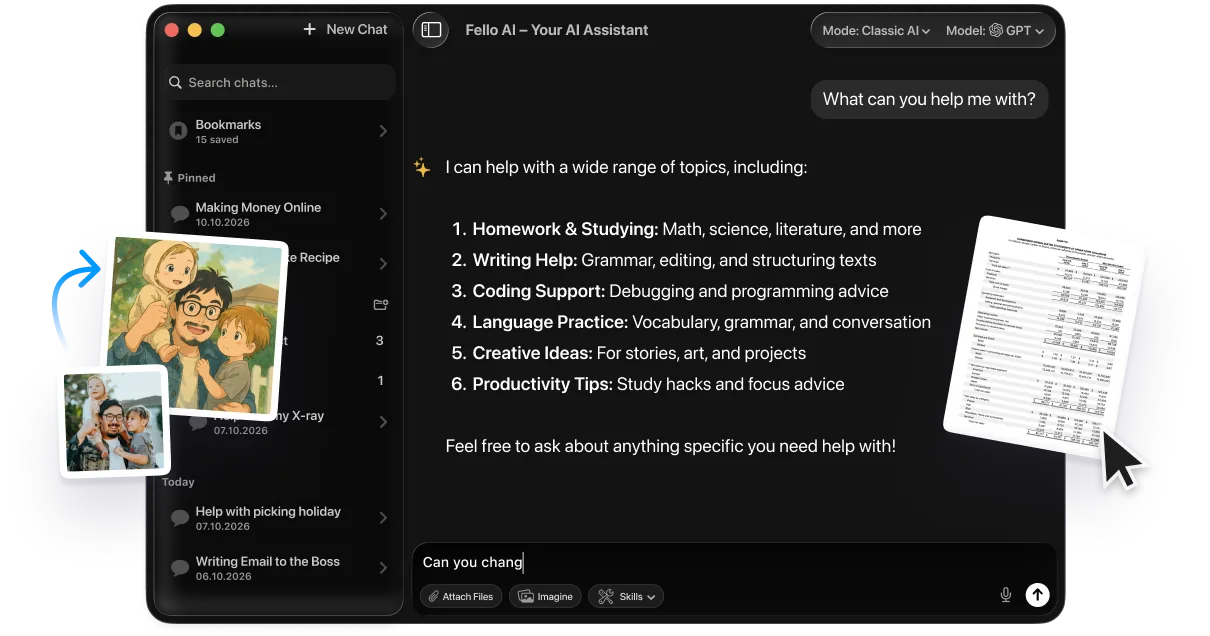
Ready to write? Open Fello AI to access Gemini, ChatGPT, and Claude all in one interface, and start building your personal brand today.
Gemini vs. ChatGPT for LinkedIn: The 2026 Verdict
Which tool should you use for your workflow?
| Feature | Gemini 3 Pro | ChatGPT 5.2 |
|---|---|---|
| Best For | Research & Workflows. Connecting to live Google data, checking facts, and citing sources. | Creative Nuance. Nuanced storytelling, varying tone, and creative hooks. |
| Tone | Tends to be more factual, direct, and professional. (Good for B2B). | Can be more “chatty” but prone to flowery adjectives if not checked. |
| Ecosystem | High. Pulls directly from your Docs/Drive for repurposing. | Medium. requires manual uploads or API connections. |
| Usage Limits | Watch Out. Complex “reasoning” prompts can eat quota fast. Use batching (ask for 5 ideas in one prompt, not 5 separate chats). | Flexible. Generally higher message caps for standard models. |
Our Recommendation: Use Gemini for Step 1 (Brainstorming) and Step 2 (Research) due to its live internet access. Use Gemini or ChatGPT for drafting, but always use the “Human Voice” prompt (Step 5) regardless of the model. If you want to try them both, use FelloAI.
Conclusion
Let’s be honest – AI-generated content usually needs quite a few edits and iterations before it’s ready to post. Even with these prompts, you might occasionally catch an “AI word” that slipped through. But you’ll find that the content requires way less tweaking than what you’d get from generic prompts. The main goal here is to reduce the robotic tone that makes people scroll past your posts.
You might be surprised when you use these prompts and find yourself reading the output thinking, “Actually, there isn’t much I need to change here.” That’s exactly what we designed these prompts to achieve – content that doesn’t need major surgery to feel natural.
Ready to test this out? Pick one of these prompts for your next LinkedIn post, or try creating your own using our step-by-step checklist. It might be pleasant to see how much better your engagement gets when your posts sound like they actually came from a real person with experiences to share. And if the personal brand work is part of a job search, our test of resume writing with AI covers which model handles the CV itself best, and we ran the same test for the best AI for a cover letter.
Frequently Asked Questions (FAQ)
Can I use the free version of Gemini for these prompts?
Yes, the free version of Gemini works well for drafting and brainstorming. However, for deep research (Step 2) and analyzing large documents, the Advanced/Pro tier is recommended for better reasoning capabilities. Download FelloAI and try all the frontier AI models in one app.
How do I stop my posts from sounding like AI?
The biggest giveaway is generic language (“In today’s fast-paced digital landscape…”). Use Step 5 (The Human Voice Pass) to strip these out. Also, manually insert one personal story or opinion that an AI couldn’t possibly know.
How often should I post on LinkedIn in 2026?
Quality > Quantity. The algorithm currently favors “dwell time” (people reading your post/comments) over raw frequency. 3-4 high-value posts per week is better than 7 mediocre AI-generated ones.
Is it safe to use client data in prompts?
No. Unless you have a specific enterprise agreement, treat all public AI chats as non-private. Anonymize all data (e.g., change “Client X” to “a major retail brand”) before prompting.
Methodology & Sources
How we crafted these prompts: These prompts were tested on Gemini 3 Pro and ChatGPT 5.2 throughout late 2025 and early 2026. We evaluated outputs based on three criteria:
- Perplexity: How predictable is the text? (Lower predictability = more human).
- Formatting: Does it follow modern LinkedIn mobile readability standards.
- Hallucination Rate: Does it invent facts? (Gemini performed best here for research).
A Note on Privacy:
- LinkedIn Data Training: As of late 2025, LinkedIn uses platform data to train its AI models by default in many regions (including the US and parts of the UK).
- Opt-Out: Check your LinkedIn Data Privacy settings to opt out of Generative AI training.
- Your Inputs: Never paste sensitive company data, financial figures, or private client names into any AI prompt unless you are on an Enterprise instance with zero-retention policies.