Six in ten US teachers now use AI for their work. The ones who use it at least weekly estimate they save 5.9 hours every week, roughly six weeks of reclaimed time across a school year. Yet only 18% have ever received formal guidance from their school on how to use it, according to Gallup polling of 2,069 US public school teachers in February and March 2026. That gap, near universal adoption paired with almost no direction, is the real state of AI for teachers right now.
This guide is the map nobody handed you. We cover which tools are worth your time, what each costs as of August 2026, the programs that give teachers premium AI free, and what to do when you suspect a student used AI.
One disclosure before the list. Fello AI is our own app and it appears below, clearly marked. Every other tool here is ranked on merit with nothing riding on it. That is more than most guides on this topic can say, because almost all of them are published by a company quietly placing its own product at number one.
The Key Takeaways
- 60% of US teachers used an AI tool for work in the 2024-25 school year, and 3 in 10 use one weekly, saving 5.9 hours per week.
- Four vendors now give teachers premium AI at no cost. ChatGPT for Teachers is free for verified US K-12 staff through June 2028, Claude for Teachers gives a free year to anyone signing up by 30 June 2027, Gemini for Education is free through Google’s Education Fundamentals, and Khanmigo is free for teachers permanently.
- Fello AI is the best value at $9.99 a month, because it is the only option that gives you every major model in one app for less than a single vendor’s plan. MagicSchool AI is the strongest teacher-specific platform, at $12.99 a month.
- AI detectors are not proof. Stanford researchers found seven detectors flagged 61.22% of real TOEFL essays by non-native English speakers as AI-generated.
- Only 18% of teachers have formal AI guidance from their district, so in most schools the classroom policy is whatever you decide it is.
Best AI for Teachers at a Glance
Every price below was checked against the vendor’s own pricing page in August 2026. Where a vendor does not publish a number, we say so rather than repeating a figure from a secondary source.
| Tool | Best for | Free tier | Monthly price | Student-facing? |
|---|---|---|---|---|
| Fello AI (our app) | Every major model on one plan | Yes, unlimited free model | $9.99 | No |
| MagicSchool AI | Teacher-specific tooling | Yes, 80+ tools, capped generations | $12.99 | Yes |
| ChatGPT for Teachers | Single-vendor assistant with FERPA cover | Free through June 2028 | Free for now | No |
| Claude for Teachers | Standards-aligned planning | Free year, sign up by 30 Jun 2027 | Free for now | No |
| Diffit | Differentiated reading and worksheets | Yes, limited to last 90 days | $14.99 | Yes |
| Brisk Teaching | In-browser feedback and grading | Yes, free forever | Quote only | Yes |
| Khanmigo | One-to-one student tutoring | Free for teachers | $4 for families | Yes |
| Gemini for Education | Schools already on Google Workspace | Yes, via Education Fundamentals | Paid Workspace tiers | Yes |
| NotebookLM | Grounding AI in your own documents | Yes | Google AI plans | Yes |
| Gradescope | Grading at scale | Limited | Institutional | No |
| Eduaide.AI | Resource generation variety | Yes, capped | Paid tier | No |
Every paid figure above is the standard monthly rate. Several of these tools advertise a lower number that only applies if you pay twelve months upfront. That is not how most teachers buy software, and comparing a discounted annual rate against a monthly one would flatter the wrong tools.
The Best AI Tools for Teachers, Ranked
These are grouped by what they replace in your week rather than by company. Most teachers end up running two or three, typically one planning platform, one general assistant and one thing that handles feedback.
1. Fello AI, best overall value
This one is ours, so weigh it accordingly. It takes the top spot for a specific reason, and the reason is not that it has the most teacher-shaped buttons.
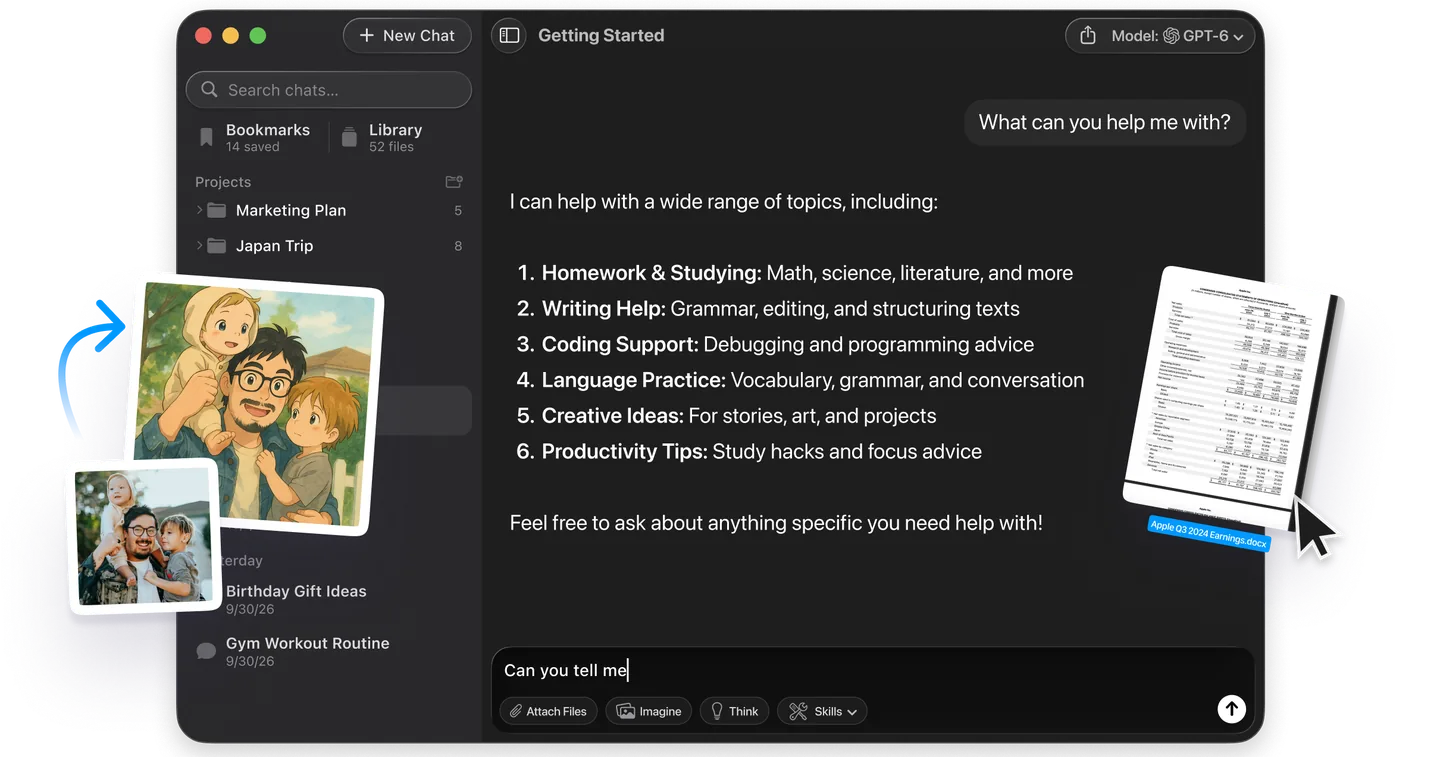
Every other tool on this list ties you to one company’s model. That is fine while the free teacher programs last, but the models are not interchangeable and the good ones are not free forever. Claude writes better feedback and long-form plans. Gemini moves faster on anything sitting in your Google files. ChatGPT is the steadiest all-rounder. Wanting two of them is normal, and paying for two of them is about $20 a month each.
Fello AI puts Claude, ChatGPT, Gemini, Grok, DeepSeek and Perplexity behind one $9.99 a month plan. That is less than a single vendor’s subscription for access to all of them.
The practical payoff is being able to run the same lesson idea through two models and keep the better answer. No single-vendor plan can do that, and it is the closest thing to a quality check you get when you are planning alone at nine at night.
There is also a Free AI model with no message limits and no meter running. Most free AI tiers cut you off after a handful of messages a day, so if your use is occasional, that tier is enough on its own.
It is a creation app rather than a chat window, so it also produces the artefacts teachers actually need, images, presentations, documents, PDFs and spreadsheets, without a separate subscription for each format.
Two honest limits. It is a staff tool, not student-facing, and it is not an education tier with a FERPA agreement. It is Mac and iPhone native. Get it on the App Store, or read the setup walkthrough first.
2. MagicSchool AI, best teacher-specific platform
If you want software built for the job rather than a general assistant pointed at it, this is the one. The free plan gives you more than 80 teacher tools and 50 student tools, the Raina chatbot, quizzes, class writing feedback and unlimited student rooms, according to MagicSchool’s pricing page. The only real free-tier limits are capped generations and a shortened output history.
Plus costs $12.99 a month, dropping to $8.33 if you commit to a full year upfront. It lifts the generation cap, adds unlimited output history and opens MagicSchool Labs. For most individual teachers the free tier holds up for a full term before the caps start to bite.
On compliance it covers FERPA, COPPA, SOC-2, GDPR and Ed Law 2-D. That is the real argument for it. The moment you put named student information into anything, this is the category of tool it belongs in.
3. ChatGPT for Teachers, best free single-vendor assistant
OpenAI’s dedicated teacher workspace is free for verified US K-12 educators through June 2028. It is a full workspace rather than a stripped-down chatbot, with file uploads, image generation, search, and connectors into Google Workspace and Microsoft 365. Anything you put into it is not used to train OpenAI’s models.
Verification runs through your school or district email address. The practical draw is that it handles the unstructured half of the job, the parent emails, the differentiated reading passage, the behaviour report, without you paying $20 a month for ChatGPT Plus.
We walk through the eligibility rules and the sign-up flow in our guide to how to claim free ChatGPT for Teachers.
If you want a running start, our list of ChatGPT prompts for teachers that actually save time covers the seven prompts that reliably cut the most time, and they work in any of these assistants.
4. Claude for Teachers, best for standards alignment
Anthropic launched this on 14 July 2026 and it is the most interesting entry of the year. Verified US K-12 educators get a free year of premium Claude access, and per Anthropic’s announcement, anyone signing up by 30 June 2027 gets the full twelve months.
The differentiator is Learning Commons, a connector that grounds Claude in academic standards across all 50 states plus curricula like OpenSciEd and Illustrative Mathematics. That is the difference between a lesson plan that reads well and one that actually maps to what you are required to teach. It also connects to nine classroom tools including MagicSchool, Diffit, Brisk Teaching and Canva Education.
Teacher inputs are excluded from model training and student information sits under a FERPA-aligned data processing addendum. There is no schools or districts tier yet. Our full breakdown of eligibility and features is in Claude for Teachers.
5. Diffit, best for differentiation
Diffit does one job better than any general assistant, taking any text and rewriting it at multiple reading levels with matching vocabulary, questions and activities. If you teach a mixed-ability class, this is the tool that saves the most hours per dollar.
The Basic plan is free but only lets you reach content created in the last 90 days, and it blocks export to Google Docs, Slides, Forms and Classroom as well as Microsoft formats. The individual teacher subscription runs $14.99 per month or $149.99 per year. School pricing is tiered by student enrollment and quoted separately.
6. Brisk Teaching, best for feedback in the browser
Brisk is a Chrome extension rather than a destination site, which is the whole point. It layers onto Google Docs and Classroom so you give feedback where the work already lives instead of copying text into another tab. Inline commenting on a student draft takes seconds.
The Educator Free plan is $0 per month, free forever. Brisk’s own plans page lists two higher tiers, Premium and Intelligence, both at custom pricing with no public figure. You will see a specific annual price for Brisk quoted around the web; it is not on Brisk’s plans page, so treat it as unconfirmed and request a quote.
7. Khanmigo, best for student tutoring
Khanmigo is free for teachers, permanently, through Khan Academy’s educator verification. Learners and parents pay $4 per month or $44 per year, and a parent subscription covers multiple children.
Its strength is Socratic tutoring, meaning it refuses to hand over answers and instead walks a student toward one. That makes it the safest student-facing option on this list for homework support. For the study-side companion tools students reach for on their own, see our guide to the best AI tools for students.
8. Gemini for Education, best if your school runs Google
If your school is already on Google Workspace, this is the lowest-friction option available. Institutions get Gemini for Education at no cost by signing up for Google for Education Fundamentals, even if they use a different primary productivity suite.
There is a date worth marking. Per Google’s Workspace Updates blog, Gemini in Classroom opens to K-12 and higher education students of all ages from 10 August 2026, provided an administrator has granted access. Students can then turn class materials into flashcards and practice quizzes themselves. Our dedicated guide to Google Classroom’s AI features separates the two products Google ships under similar names and explains which one your administrator controls.
On the teacher side you get lesson plans, quizzes, rubrics, vocabulary lists and differentiated assignments generated against real class context rather than a generic prompt.
9. NotebookLM, best for grounding AI in your own material
NotebookLM only answers from documents you upload, which structurally reduces the chance of it inventing something. Load your textbook chapters, your slide deck and your standards document, then ask it to build a revision guide or a set of comprehension questions. Every answer cites the source line it came from.
For teachers who have been burned by a chatbot confidently making up a historical date, this is the fix. It is also the tool students use most for exam prep, alongside ChatGPT Study Mode.
Free AI for Teachers: Every Program That Costs Nothing Right Now
This is the part most guides skip. Four major AI companies currently give teachers premium access free, and three of those offers carry an expiry date. If you are going to claim them, claim them this school year.
| Program | Who qualifies | Free until | What you get |
|---|---|---|---|
| ChatGPT for Teachers | Verified US K-12 educators | June 2028 | Full workspace, file uploads, image generation, Workspace and Microsoft 365 connectors |
| Claude for Teachers | Verified US K-12 educators | One year from sign-up, register by 30 Jun 2027 | Premium Claude, Learning Commons standards connector, teaching skills library |
| Gemini for Education | Institutions on Google Education Fundamentals | No stated end date | Gemini across Workspace, Gemini in Classroom from 10 Aug 2026 |
| Khanmigo | Verified teachers | No stated end date | Lesson planning, rubrics, student progress summaries |
| MagicSchool Free | Anyone | Permanent | 80+ teacher tools, capped generations |
| Brisk Educator Free | Anyone | Permanent | Core planning and feedback tools in-browser |
| Fello AI (Free AI model) (our app) | Anyone, any country | Permanent | Unlimited messages with no daily cap |
Two of those offers carry a deadline, and they are the ones to move on. ChatGPT for Teachers is free through June 2028, a year later than the June 2027 end date OpenAI first announced. OpenAI has said only that it will give advance notice before pricing changes, which is not the same as a commitment to keep it free, so treat the new date as real.
Claude for Teachers works differently. The free year runs from the day you register, so signing up later still buys you twelve full months. The registration window itself closes on 30 June 2027.
How to Use AI for Teachers’ Lesson Plans
Almost everyone makes the same mistake, asking for a finished lesson plan in one prompt. You get something generic, rewrite most of it, and conclude AI is not worth the effort.
Feed it constraints in stages instead.
- State the boundaries first. Grade level, subject, lesson length, class size and any specific standard code. A standard code alone changes the output more than any other single input.
- Give it your actual materials. Paste the text you are teaching from, or upload the chapter. Grounded output beats invented output every time.
- Ask for the skeleton, not the prose. Request objectives, a hook, the main activity, a check for understanding and an exit ticket, as a bare outline you can react to.
- Push back once. Tell it what is wrong with the draft, usually that the activity is too passive or the timing is unrealistic, and let it revise. The second draft is almost always the usable one.
- Generate the differentiated versions last. Once the plan is right, ask for the below-level and above-level variants and the vocabulary list. This is where Diffit outperforms a general chatbot.
Expect to spend around ten minutes on this rather than the ninety a plan from scratch takes. The teachers in the Gallup and the Walton Family Foundation survey who report the biggest time savings are the ones doing exactly this, using AI for the first draft and keeping the judgement for themselves.
AI for Worksheets, Slides and Classroom Materials
Worksheet and slide generation is where the time savings are most obvious, because the work is repetitive. Diffit handles reading passages and comprehension questions best. MagicSchool covers the widest range of formats, from vocabulary lists to IEP goal drafts to behaviour intervention suggestions.
For slides, skip the dedicated tools. The built-in generators in PowerPoint and Google Slides have caught up, and we cover that workflow in how to use AI in PowerPoint. Canva for Education stays the strongest free option when a resource needs to look good rather than merely exist.
Making something visual is a different job from talking to a chatbot about it, which is the gap Fello AI fills at the budget end. Keep the two tasks separate in your head and you will pick the right tool faster.
AI Grading Tools for Teachers
Grading is the use case teachers trust least, and the data backs them up. Per Gallup it is where teachers report the smallest quality improvement, 57% against 74% for administrative work. The tools that work treat AI as a first pass rather than a verdict.
Gradescope is the established option at scale, especially for problem sets where answers cluster into groups you can grade once. Brisk Teaching is stronger for written work, because the feedback lands inline in the student’s own document.
Either way, the final grade stays with you.
The pattern that holds up is simple. Let the tool score against your rubric and draft the comments, then read every one before it goes out. The time saved is in the drafting, not the deciding. Skip the review step and you inherit whatever the model got wrong.
How Do Teachers Check for AI?
Teachers check for AI mainly through detectors built into tools they already use, with Turnitin, GPTZero and Originality.ai the most common. Most also compare a submission against the student’s earlier work, check the version history in Google Docs for a single giant paste, and simply ask the student to explain their reasoning. The conversation catches more than the software does.
The detectors teachers actually use
Turnitin is the default because it is already embedded in most institutional workflows and it shows an AI score alongside the familiarity plagiarism report. GPTZero is the most common standalone choice for individual teachers, and Originality.ai skews toward higher education and publishing. ZeroGPT and the various free web checkers are the least reliable of the group.
We have tested these individually. Our review of best free AI detector ranks seven free checkers on the same test set, and our GPTZero review covers the tool most teachers land on first.
Why a detector score is not proof
This is the part no vendor page will tell you.
Stanford researchers tested seven widely used detectors on 91 TOEFL essays written by real human students who were non-native English speakers. The average false positive rate was 61.22%. All seven detectors unanimously misclassified 18 of the 91 essays, and 97.80% were flagged by at least one detector.
The same detectors showed near-perfect accuracy on a comparison set of 88 essays by US eighth graders writing in their first language. The bias is structural rather than a bug, because detectors key on predictable, low-variance prose, which is exactly what careful second-language writing and formal academic writing look like.
Turnitin’s own position is different. It says the detector runs above 98% accuracy with a false positive rate under 1%, measured on documents containing more than 20% AI content. Scores between 1% and 19% are suppressed rather than shown at all.
Those two pictures are not really in conflict. Vendor accuracy figures come from curated internal test sets, and your classroom is not one. We go deeper on the methodology in our piece on whether AI detectors are actually accurate.
So treat a score as a reason to open a conversation, never as evidence on its own. Ask for the drafts, look at the document history, and talk to the student.
There is a ceiling on how much any score deserves, too, because AI humanizers exist specifically to defeat these tools. The students most likely to be caught by a detector are the ones not trying to evade it.
Best AI for Teachers by Grade Band and Subject
The right tool shifts noticeably with the age you teach and, to a lesser extent, the subject. This is the shortest route to a decision.
| You teach | Start with | Why |
|---|---|---|
| Elementary | MagicSchool AI, Diffit | Reading level control and parent communication carry the most weight |
| Middle school | MagicSchool AI, Brisk Teaching | Differentiation plus fast written feedback on short assignments |
| High school | Claude for Teachers, Brisk Teaching | Standards alignment and essay feedback matter more than worksheet volume |
| Maths | Khanmigo, Gradescope | Socratic tutoring and grouped grading of problem sets |
| English and humanities | Claude for Teachers, Brisk Teaching | Long-form feedback and source-grounded planning |
| Science | Claude for Teachers, NotebookLM | OpenSciEd alignment and grounding answers in your own materials |
| New teachers | ChatGPT for Teachers, MagicSchool AI | Free, broad, and no purchase decision required in year one |
| Anyone on one budget | Fello AI | Every major model on a single $9.99 plan, no per-vendor stacking |
What AI Still Gets Wrong in the Classroom
Four failure modes come up repeatedly. Knowing them in advance is most of the defence.
Invented specifics
Dates, citations, quotations and statistics are the most common hallucinations. Anything factual that goes in front of students needs a second source. This is precisely why document-grounded tools like NotebookLM are safer than an open chatbot for content generation.
Standards drift
A plan can look immaculate and still not map to what you are required to teach. It is the most expensive kind of error, because you only find it late. Learning Commons in Claude for Teachers was built to solve exactly this.
Reading level that misses
Ask for a Year 4 text and you will often get something closer to Year 6. Check the output against a readability measure instead of trusting the label the model puts on it.
Student data exposure
Free consumer chatbots are not covered by FERPA agreements. Named student information belongs only in education tiers with a signed data processing addendum. That is the practical reason the teacher-specific versions of ChatGPT and Claude exist at all.
Then there is what students are running on the other side of the desk. If you teach younger pupils, read the setup and safety controls in ChatGPT for Kids. Older students mostly live in the tools covered in our guide to AI tools for students and researchers.
Where to Start With AI for Teachers
Do one thing this week. Claim the free access before it expires, because ChatGPT for Teachers and Claude for Teachers both cost nothing for verified US K-12 staff and both carry a deadline: Claude registration closes on 30 June 2027, and ChatGPT’s free period ends in June 2028.
Add MagicSchool’s free tier alongside them for the structured jobs, planning, rubrics and differentiation.
If you want one paid tool rather than a shelf of them, make it Fello AI at $9.99 a month. Every major model in one place costs less than a single vendor’s plan, and it keeps working when the free teacher windows close.
Two tools used properly beat six tried once. Come back for Diffit or Brisk only when you can name the specific task still eating your evenings.
On detection, set your position now rather than mid-argument. Detectors misfire on more than half of genuine non-native English writing, so a score is a prompt for a conversation and never a verdict. That is the only defensible line to hold.
FAQ
What is the best AI for teachers?
On value, our own app Fello AI at $9.99 a month, because it is the only one that gives you Claude, ChatGPT, Gemini, Grok, DeepSeek and Perplexity together for less than a single vendor’s plan. On teacher-specific tooling, MagicSchool AI, with more than 80 tools on a free plan and Plus at $12.99 a month. If you only want something free, ChatGPT for Teachers is free for verified US K-12 educators through June 2028.
Is there a genuinely free AI for teachers?
Yes, several. ChatGPT for Teachers is free for verified US K-12 staff through June 2028, Claude for Teachers gives a free year to anyone registering by 30 June 2027, Khanmigo is permanently free for teachers, and Gemini for Education comes at no cost through Google Education Fundamentals. MagicSchool and Brisk Teaching also run permanent free tiers.
How do teachers check for AI?
Most use a detector built into an existing tool, usually Turnitin, GPTZero or Originality.ai. Alongside that, teachers compare the submission with the student’s earlier writing, check Google Docs version history for a single large paste, and ask the student to explain their reasoning.
Are AI detectors accurate enough to accuse a student?
No. Stanford researchers tested seven common detectors on 91 genuine TOEFL essays by non-native English speakers and recorded an average false positive rate of 61.22%, while the same detectors were near-perfect on essays by US eighth graders writing in their first language. Treat any score as a reason to talk to the student, not as evidence.
Can AI write lesson plans that actually match my standards?
Only if you give it the standard. Pasting a specific standard code changes the output more than any other input. Claude for Teachers goes furthest here with its Learning Commons connector, which grounds plans in academic standards across all 50 US states plus curricula including OpenSciEd and Illustrative Mathematics.
Do I need to pay for several AI subscriptions?
No. Claim the free teacher programs first, since ChatGPT for Teachers, Claude for Teachers, Khanmigo and Gemini for Education cover most of what you need at no cost. Our own app, Fello AI, bundles Claude, ChatGPT, Gemini, Grok, DeepSeek and Perplexity into one $9.99 a month plan, and its Free AI model has no message limit.
Is it safe to put student data into AI tools?
Only into education tiers with a signed data processing agreement. ChatGPT for Teachers and Claude for Teachers both exclude teacher inputs from model training and operate under FERPA-aligned terms, and MagicSchool covers FERPA, COPPA, SOC-2 and GDPR. Free consumer chatbots carry none of that protection, so named student information should never go into them.